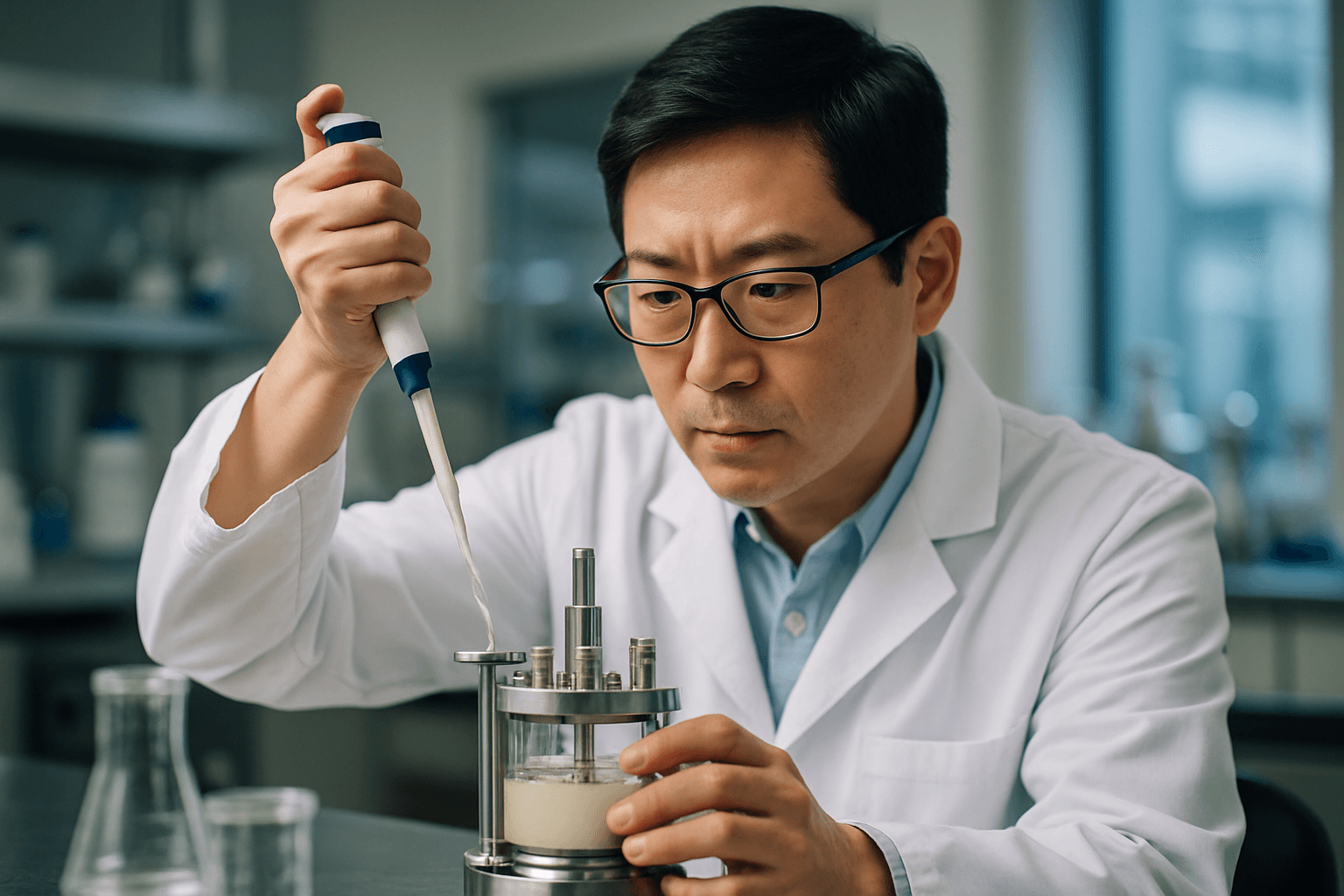
The food industry is constantly seeking innovative solutions to enhance product quality, improve efficiency, and meet evolving consumer demands for natural and sustainable products. Enzymatic processing offers a powerful avenue, utilizing biological catalysts to transform raw ingredients into desirable food products. However, successfully integrating these delicate biological tools into industrial manufacturing requires a rigorous and strategic approach to development, where prototyping plays a pivotal role.
Enzymes, as nature’s highly specific and efficient biocatalysts, are revolutionizing food production, from enhancing flavors and textures to extending shelf life and increasing nutritional value. Yet, translating groundbreaking enzyme research from the lab bench to commercial scale in food manufacturing isn’t without its challenges. This is where comprehensive prototyping, a critical process in engineering design and product development, becomes indispensable. It allows for the systematic testing, refinement, and validation of enzymatic processes, mitigating risks and ensuring successful commercialization.
What is Enzymatic Processing in Food Manufacturing?
Enzymatic processing involves using enzymes to induce or accelerate specific biochemical reactions in food production. Enzymes are proteins that act as biological catalysts, speeding up chemical reactions without being consumed in the process. They are naturally occurring, operate under mild conditions (temperature, pH), and exhibit high specificity, leading to fewer unwanted by-products compared to traditional chemical methods.
Diverse Applications of Enzymes in the Food Industry
Enzymes are utilized across a vast array of food manufacturing sectors:
- Bakery: Amylases improve dough handling, enhance texture and volume of bread, and extend shelf life by breaking down starches into sugars. Proteases modify gluten, making dough easier to work with.
- Dairy: Lactase produces lactose-free milk and dairy products, while rennet is crucial for cheese production.
- Brewing: Amylases convert starches into fermentable sugars, leading to clearer beer with better flavor and efficient fermentation.
- Juice Production: Pectinases increase juice yield and clarity by breaking down fruit cell walls.
- Meat Processing: Proteases can be used for meat tenderization and flavor enhancement.
- Plant-Based Products: Enzymes are crucial for improving the texture and nutritional profiles of plant-based alternatives.
These applications highlight enzymes’ ability to improve product quality, increase efficiency, and enable natural and sustainable processing.
Why is Prototyping Critical for Enzymatic Food Processes?
Prototyping in food technology involves creating preliminary versions of a food product or process to test its feasibility, functionality, and market appeal. For enzymatic processes, this is particularly vital due to the inherent biological nature and sensitivity of enzymes.
Risk Mitigation and Optimization
Testing prototypes allows companies to identify and address potential flaws and inefficiencies early in the development cycle, significantly reducing the risk of costly failures or product recalls during full-scale production. Prototyping helps optimize critical parameters such as enzyme concentration, reaction time, temperature, and pH, which are essential for consistent and effective enzymatic activity.
Cost-Effectiveness and Scalability
By refining formulations and processes during the prototyping phase, manufacturers can avoid expensive mistakes later in the production cycle. Prototyping helps ensure that an enzymatic process developed at a small scale can be successfully scaled up to industrial volumes without compromising product quality or efficiency. It helps bridge the gap between lab-scale and commercial-scale production.
Regulatory Compliance and Consumer Acceptance
Prototypes undergo thorough testing to ensure they meet all specifications and regulatory requirements. Sensory testing with consumer panels evaluates taste, texture, aroma, and appearance, ensuring the final product meets consumer expectations and preferences.
Key Stages of Prototyping for Enzymatic Food Processes
The prototyping journey for enzymatic food manufacturing typically follows a structured, iterative approach, moving from small-scale experiments to full-scale production.
Bench-Scale Experimentation
This initial stage involves laboratory-based studies to understand the fundamental interactions of enzymes with substrates. It focuses on:
- Enzyme Selection and Characterization: Identifying suitable enzymes, assessing their activity, specificity, and stability under various conditions (e.g., pH, temperature, presence of inhibitors).
- Formulation Development: Experimenting with ingredient ratios and enzyme dosages to achieve desired product attributes (e.g., taste, texture, nutritional profile).
- Reaction Kinetics: Studying the rate of enzymatic reactions and optimizing parameters in a controlled environment.
Pilot Plant Development
Once bench-scale results are promising, the process moves to a pilot plant, a miniature version of a commercial production facility. This stage aims to:
- Process Optimization and Equipment Validation: Testing the enzymatic process with larger quantities of raw materials and validating the performance of industrial-scale equipment like bioreactors and mixers.
- Yield and Efficiency Assessment: Evaluating the yield, efficiency, and consistency of the enzymatic process under more realistic operating conditions.
- Early-Stage Sensory and Quality Testing: Conducting more extensive sensory evaluations and quality control tests to ensure product consistency and consumer acceptance.
Production-Scale Validation
The final stage involves validating the enzymatic process at full production scale, often in collaboration with actual manufacturing facilities.
- Commercial Scale-Up: Ensuring the process can be efficiently and consistently executed at commercial volumes, managing potential issues related to enzyme stability, substrate variability, and process control.
- Shelf-Life and Stability Studies: Comprehensive testing of the final product’s shelf life, microbial stability, and sensory attributes under real-world storage and distribution conditions.
- Regulatory Submission and Compliance: Gathering all necessary data for regulatory approval and ensuring the process adheres to food safety and labeling standards.
Tools and Technologies in Enzymatic Prototyping
Advancements in various fields have provided powerful tools to accelerate and refine enzymatic prototyping.
Bioreactors and Fermenters
These controlled vessels are essential for optimizing enzyme production (especially from microbial sources) and for conducting enzymatic reactions at various scales. They allow for precise control of parameters like temperature, pH, aeration, and agitation, which are critical for enzyme activity and stability.
Analytical Techniques
Advanced analytical methods are vital for monitoring enzymatic reactions and characterizing product changes:
- Spectroscopy (e.g., FTIR, UV-Vis): For real-time monitoring of substrate consumption and product formation.
- Chromatography (e.g., HPLC, GC-MS): For detailed analysis of molecular changes, identification of by-products, and quantification of specific compounds.
- Rheology and Texture Analyzers: To measure changes in food texture and consistency influenced by enzymes.
Computational Modeling and Simulation
In silico tools are becoming increasingly important:
- Enzyme Engineering Software: AI and machine learning are revolutionizing enzyme design, allowing for the prediction of enzyme interactions, optimization of specificity, and modeling of biochemical cascades, reducing experimental development time and cost. Tools like ZymCTRL can generate novel enzyme sequences with desired characteristics.
- Process Simulation Software: To model and predict the behavior of enzymatic processes at different scales, aiding in efficient scale-up and optimization.
Challenges in Prototyping Enzymatic Food Systems
Despite the numerous benefits, prototyping enzymatic processes presents unique challenges.
Enzyme Stability and Activity
Enzymes are sensitive to environmental factors like temperature, pH, and ionic strength. Maintaining optimal enzyme activity and stability throughout the processing chain, especially during scale-up, can be difficult. Innovations in enzyme immobilization and protein engineering are crucial to stabilize enzymes under harsh industrial conditions.
Substrate Complexity and Variability
Food matrices are complex and can vary significantly in composition, affecting enzyme performance. The presence of inhibitors or activators in raw materials can lead to inconsistent results. Understanding these interactions is key to designing robust enzymatic processes.
Scaling Up Difficulties
Transitioning from bench-scale to pilot and industrial production often introduces new challenges. Factors like mixing efficiency, heat transfer, and mass transfer limitations become more pronounced at larger scales, impacting enzyme performance and product consistency. The high initial cost of specialized enzymes and the need for significant capital investment in bioreactors and monitoring equipment also present economic barriers.
Future Trends and Innovations
The field of enzymatic processing and its prototyping is continuously evolving, driven by technological advancements and increasing demand for sustainable food solutions.
AI and Machine Learning in Enzyme Design
Artificial intelligence (AI) and machine learning (ML) are set to revolutionize enzyme discovery and engineering. These technologies can predict enzyme interactions, optimize enzyme specificity, and even design novel enzymes with desired characteristics, significantly accelerating R&D timelines and reducing costs.
High-Throughput Screening
Automated high-throughput screening platforms allow for rapid testing of thousands of enzyme variants and reaction conditions simultaneously, identifying optimal enzymes and process parameters much faster than traditional methods.
Sustainable and Circular Economy Approaches
Enzymatic processes naturally align with sustainability goals by reducing energy consumption, minimizing waste, and replacing harsh chemicals. Future innovations will focus on utilizing enzymes for waste valorization, upcycling food by-products, and creating new food product categories with enhanced nutritional profiles. Precision fermentation is becoming a backbone for new enzyme development, allowing for rapid iteration of variants with refined specificity and higher thermostability.
Conclusion
Prototyping is an indispensable cornerstone in the successful integration of enzymatic processing into modern food manufacturing. From initial bench-scale characterization to pilot plant optimization and full production-scale validation, a systematic prototyping approach minimizes risks, enhances efficiency, and ensures both regulatory compliance and consumer acceptance. As the food industry continues its push towards more sustainable, efficient, and high-quality products, the role of advanced prototyping, powered by innovative tools like AI and sophisticated analytical techniques, will only grow in importance, catalyzing the next wave of enzymatic food innovation.