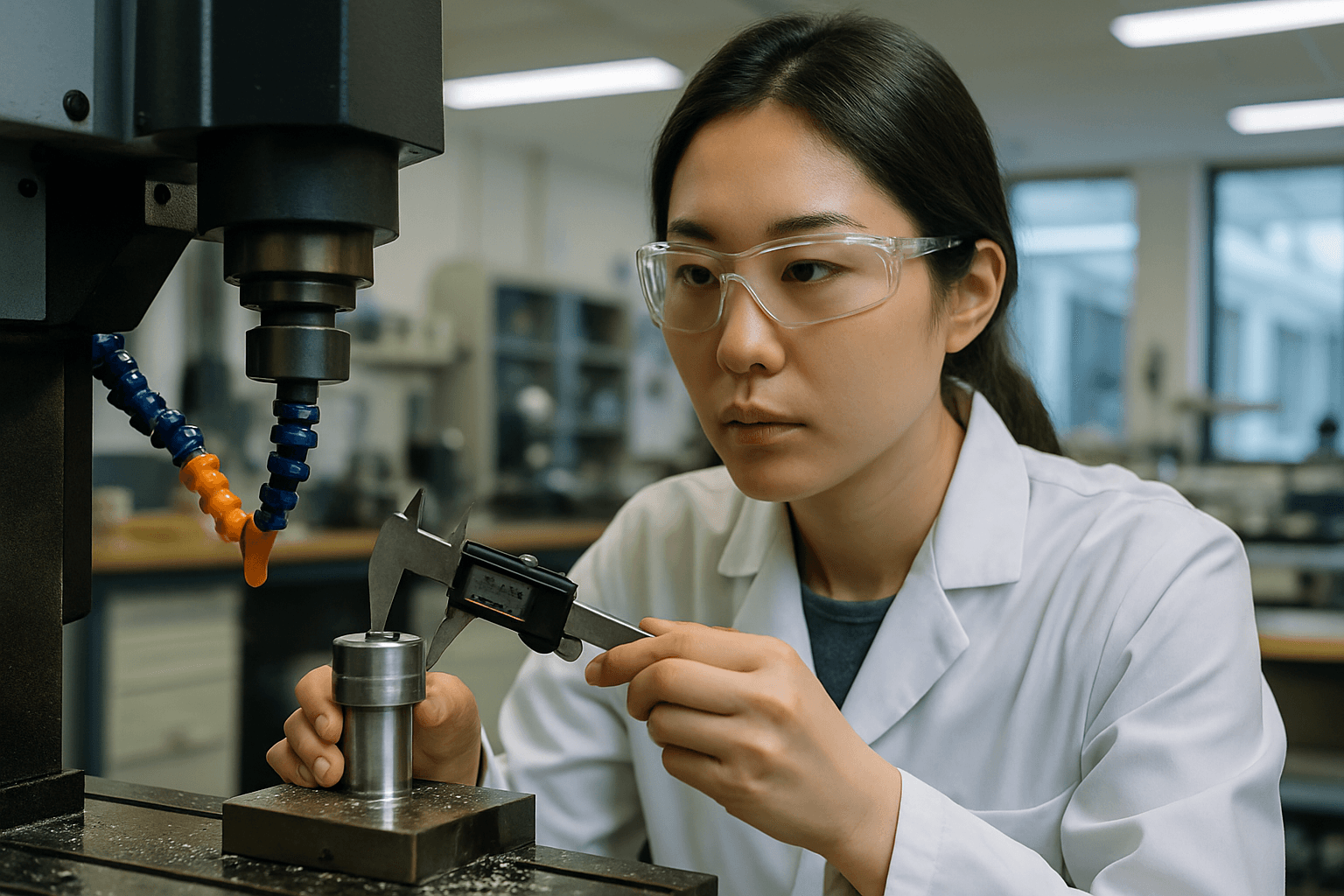
In the realm of industrial manufacturing, achieving peak efficiency and superior product quality often hinges on the performance of cutting fluids. These unsung heroes of machining play a vital role in cooling, lubrication, chip evacuation, and corrosion prevention. However, their optimal utilization is far from a one-size-fits-all solution. This is where the robust methodology of Design of Experiments (DOE) emerges as a powerful tool, enabling engineers to systematically optimize cutting fluid performance and elevate machining processes to new levels of precision and productivity.
The Indispensable Role of Cutting Fluids in Machining
Machining operations inherently generate significant heat and friction at the tool-workpiece interface. Without proper management, these conditions can lead to rapid tool wear, poor surface finish, dimensional inaccuracies, and even damage to the workpiece. Cutting fluids, also known as metalworking fluids or coolants, are specifically engineered to mitigate these challenges.
Their primary functions include:
- Cooling: Dissipating the intense heat generated during material deformation and chip formation, preventing overheating of both the tool and workpiece, which extends tool life and maintains part integrity.
- Lubrication: Reducing friction between the cutting tool and the workpiece, minimizing wear, lowering cutting forces, and preventing built-up edge formation, thereby improving surface finish and overall efficiency.
- Chip Evacuation: Flushing away metal chips and debris from the cutting zone, preventing re-cutting, tool damage, and surface defects.
- Corrosion Prevention: Containing additives that protect machine components and workpieces from rust and oxidation, especially important in moisture-rich environments.
- Surface Finish Improvement: Contributing to a smoother surface finish by reducing heat-induced deformations and vibrations.
The type of cutting fluid (e.g., straight oils, emulsions, semi-synthetics, synthetics) and its delivery method (e.g., flood cooling, MQL) are chosen based on the specific machining operation, workpiece material, and tooling.
What is Design of Experiments (DOE)?
Design of Experiments (DOE) is a systematic statistical approach for planning, conducting, analyzing, and interpreting controlled tests to evaluate the factors that control the value of a parameter or group of parameters. In the context of cutting fluid optimization, DOE allows manufacturers to efficiently determine the ideal combination of cutting fluid properties and machining parameters to achieve desired performance outcomes. Rather than changing one factor at a time, which can be time-consuming and may miss crucial interactions, DOE enables the simultaneous study of multiple input variables and their effects on one or more output responses.
Benefits of Employing DOE for Cutting Fluid Optimization
Utilizing DOE offers several significant advantages for optimizing cutting fluid performance:
- Efficiency: DOE reduces the number of experiments required, saving time and resources compared to traditional trial-and-error methods.
- Identification of Key Factors: It effectively pinpoints which factors (e.g., cutting fluid concentration, flow rate, cutting speed) have the most significant impact on performance metrics like tool wear, surface roughness, and cutting forces.
- Understanding Interactions: DOE reveals complex interactions between different factors, allowing for a holistic understanding of the machining process that might otherwise be overlooked. For instance, a particular cutting fluid concentration might perform optimally only when combined with a specific cutting speed.
- Robustness: It helps in identifying parameter settings that lead to robust processes, meaning the performance remains stable even with slight variations in uncontrolled factors.
- Cost Reduction: By optimizing parameters, DOE can lead to extended tool life, reduced fluid consumption, lower energy consumption, and improved part quality, all contributing to significant cost savings.
- Enhanced Performance: Ultimately, DOE facilitates achieving superior machining performance, leading to higher productivity and better quality components.
Key Factors for Cutting Fluid Optimization through DOE
To effectively optimize cutting fluid performance using DOE, it’s crucial to identify and vary relevant input factors. These typically fall into several categories:
Cutting Fluid Parameters
- Concentration: The ratio of concentrate to water in water-miscible fluids is critical. An incorrect concentration can impair lubricating and cooling properties, leading to issues like foaming, corrosion, or reduced stability.
- Type of Fluid: Different base oils (e.g., mineral, vegetable, synthetic) and additive packages offer varying lubrication, cooling, and environmental profiles.
- Flow Rate and Pressure: Adequate pressure ensures the fluid reaches the cutting zone effectively, while proper flow rate is essential for heat and chip removal.
- Temperature: Maintaining the cutting fluid at an optimal temperature is important for its stability and effectiveness.
Machining Parameters
- Cutting Speed: The speed at which the cutting tool moves relative to the workpiece.
- Feed Rate: The rate at which the cutting tool advances into the workpiece per revolution or stroke.
- Depth of Cut: The amount of material removed by the cutting tool in a single pass.
- Tool Material and Geometry: The properties of the cutting tool can significantly influence the effectiveness of the cutting fluid.
- Workpiece Material: Different materials respond differently to cutting fluids and machining parameters.
Steps in Applying Design of Experiments for Cutting Fluid Optimization
A typical DOE methodology for optimizing cutting fluids involves several stages:
1. Define Objectives and Responses
Clearly state what needs to be optimized (e.g., minimize tool wear, improve surface finish, reduce cutting forces, optimize temperature in the cutting zone). Identify measurable output responses (dependent variables) such as:
- Tool Wear: Flank wear, crater wear, tool life.
- Surface Finish: Roughness parameters (Ra, Rz, Rq).
- Cutting Forces: Main cutting force, feed force, thrust force.
- Temperature: Temperature in the cutting zone.
- Chip Evacuation Efficiency: Visual inspection or automated assessment.
- Material Removal Rate (MRR): Quantity of material removed per unit time.
- Energy Consumption: Power consumption during machining.
2. Identify Factors and Levels
Brainstorm all potential input factors (independent variables) that might influence the responses. For each factor, define a range of at least two levels (e.g., low/high, or low/medium/high concentration).
3. Select an Experimental Design
Choose an appropriate DOE design based on the number of factors, levels, and desired interactions to study. Common designs include:
- Full Factorial Designs: Evaluate all possible combinations of factors at their chosen levels, providing comprehensive data but requiring many runs for many factors.
- Fractional Factorial Designs: A subset of a full factorial design, useful for screening a large number of factors to identify the most significant ones with fewer experiments.
- Taguchi Methods: Often used for robust design, aiming to make processes less sensitive to uncontrolled variations. It utilizes orthogonal arrays to reduce the number of experiments.
- Response Surface Methodology (RSM): Used to further explore significant factors, model the relationship between factors and responses, and find optimal settings. Designs like Central Composite Design (CCD) are common in RSM.
4. Conduct the Experiments
Perform the machining tests meticulously according to the chosen experimental design, ensuring precise control of all parameters and accurate measurement of responses.
5. Analyze the Data
Use statistical software to analyze the experimental results. Techniques like Analysis of Variance (ANOVA) are commonly employed to determine the statistical significance of each factor and their interactions on the measured responses. Regression analysis can be used to develop mathematical models that predict performance based on input parameters.
6. Optimize and Verify
Based on the analysis, identify the optimal combination of cutting fluid and machining parameters to meet the defined objectives. Further confirmation runs may be conducted to validate the predicted optimal settings.
Advanced Considerations and Future Trends
The field of cutting fluid optimization is continuously evolving. Researchers are exploring:
- Sustainable Cutting Fluids: Developing environmentally friendly alternatives like vegetable oil-based fluids, nano-fluids, and minimum quantity lubrication (MQL) systems to reduce environmental impact and health hazards.
- Smart Manufacturing: Integrating machine learning and real-time temperature monitoring to dynamically adjust coolant application for optimal performance and reduced consumption.
- Hybrid Cooling Techniques: Combining MQL with cryogenic cooling or other methods to enhance cooling efficiency, especially for difficult-to-machine materials.
By embracing Design of Experiments, industrial manufacturers can move beyond guesswork, systematically unlocking the full potential of cutting fluids to achieve superior machining performance, reduce operational costs, and contribute to more sustainable manufacturing practices.