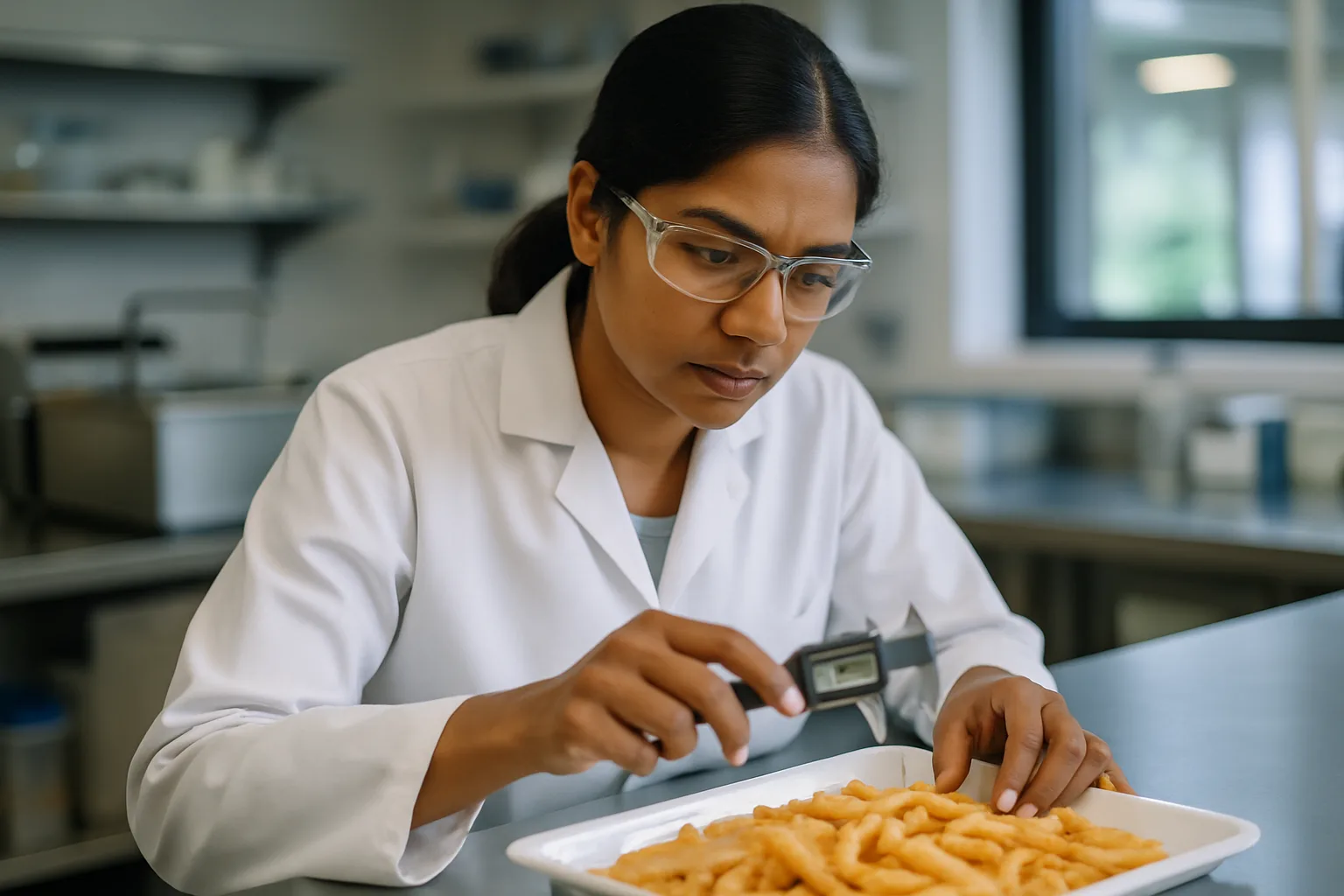
The irresistible aroma and crispy texture of fried foods are a cornerstone of culinary enjoyment worldwide. However, lurking within these golden-brown delights is a concerning compound: acrylamide. Discovered in foods in 2002, acrylamide is a chemical that naturally forms in starchy foods cooked at high temperatures, raising significant health concerns, including its classification as a probable human carcinogen. For the industrial food manufacturing sector, the challenge lies in mitigating acrylamide formation while preserving the desirable sensory attributes that consumers expect. This is where Design of Experiments (DOE) emerges as an indispensable tool, offering a systematic and statistically robust approach to unravel the complex interplay of factors influencing acrylamide levels and optimize food processing for enhanced safety.
Understanding Acrylamide Formation: The Maillard Reaction at Play
Acrylamide primarily forms through the Maillard reaction, a complex non-enzymatic browning reaction responsible for the characteristic flavors, colors, and aromas in thermally processed foods.
Crucial Precursors: Asparagine and Reducing Sugars
The primary culprits in acrylamide formation are two naturally occurring precursors: the amino acid asparagine and reducing sugars like glucose and fructose. When carbohydrate-rich foods, particularly those high in these precursors (such as potatoes and cereal products), are heated above 120°C (and especially above 170°C), asparagine reacts with the carbonyl group of reducing sugars. This reaction rapidly accelerates under low moisture conditions, characteristic of frying. Lipid degradation during frying can also contribute to acrylamide synthesis.
Factors Influencing Acrylamide Levels
The amount of acrylamide formed in fried foods is a delicate balance of numerous interacting factors:
- Frying Temperature and Time: These are perhaps the most critical parameters. Higher temperatures and longer frying durations consistently lead to significantly increased acrylamide levels, with sharp increases observed above 175°C. However, some studies suggest that at very high temperatures (e.g., above 200°C), acrylamide content might begin to decrease due to degradation.
- Raw Material Composition: The specific variety of potato or grain, its inherent levels of reducing sugars and asparagine, and even its surface-to-volume ratio play a significant role.
- Storage Conditions: Storing raw potatoes at low temperatures (below 6-8°C) can increase their reducing sugar content, subsequently elevating acrylamide formation during frying.
- Moisture Content: Low moisture conditions promote the Maillard reaction. Pre-drying methods or the inherent moisture of the food matrix can therefore influence acrylamide levels.
- pH: Lower pH values in the food matrix tend to inhibit acrylamide formation by affecting the protonation of the amine group in asparagine, which is crucial for the Maillard reaction.
- Frying Oil Type and Quality: While the type of oil may have a minor effect, the repeated use of oil and the presence of oxidation/hydrolysis products can influence acrylamide levels.
- Pre-treatments and Additives: Various methods like blanching, soaking, and the addition of certain enzymes or chemicals can significantly alter precursor availability and reaction kinetics.
The Imperative for Acrylamide Reduction in Food Manufacturing
Health Concerns and Regulatory Landscape
Acrylamide has been classified as “probably carcinogenic to humans” (Group 2A) by the International Agency for Research on Cancer (IARC). While human epidemiological evidence is still being gathered, health agencies like the FDA and EFSA recommend reducing dietary exposure as a precautionary measure. Regulatory bodies, such as the European Union, have implemented benchmark levels and require food businesses to apply mitigation measures to keep acrylamide levels “as low as reasonably achievable” (ALARA). This places a significant onus on food manufacturers to develop and implement effective strategies.
Balancing Safety with Product Quality
The challenge for manufacturers is complex: reducing acrylamide must not come at the expense of product quality, including texture, flavor, and appearance. Many factors that reduce acrylamide (e.g., lower frying temperatures) can also impact the desired crispness or browning that consumers associate with fried foods. This delicate balance necessitates a precise and scientific approach to process optimization.
Introducing Design of Experiments (DOE): A Powerful Optimization Tool
Design of Experiments (DOE) is a systematic statistical methodology that enables researchers and engineers to efficiently identify and quantify the effects of multiple input variables (factors) on one or more output responses, as well as to uncover interactions between these factors. Instead of changing one factor at a time, DOE allows for the simultaneous variation of multiple factors in a structured manner.
Why DOE for Acrylamide Mitigation?
DOE is particularly well-suited for tackling the complexity of acrylamide reduction in fried foods due to several key advantages:
- Efficiency: DOE reduces the number of experimental runs required compared to one-factor-at-a-time approaches, saving time, resources, and materials.
- Multifactor Analysis: It effectively handles multiple interacting process parameters, a common scenario in food processing where factors like temperature, time, and ingredient composition all influence the final product.
- Identification of Significant Factors: DOE helps pinpoint which factors have the most significant impact on acrylamide formation, allowing resources to be focused on controlling these critical variables.
- Uncovering Interactions: Crucially, DOE can detect synergistic or antagonistic interactions between factors. For instance, a particular pre-treatment might be highly effective at one frying temperature but less so at another, an insight often missed by simpler experimental approaches.
- Optimization: Beyond just identifying significant factors, DOE helps determine the optimal combination of factor settings to achieve desired outcomes (e.g., minimum acrylamide with acceptable sensory qualities).
- Robustness: It can help develop processes that are less sensitive to uncontrollable variations, leading to more consistent product quality and safety.
Key DOE Methodologies for Acrylamide Reduction
Several DOE methodologies can be applied depending on the stage of research and the number of factors under consideration:
1. Factorial Designs (Full and Fractional)
- Full Factorial Designs: These designs investigate all possible combinations of factor levels. For example, a 2^3 factorial design examines three factors, each at two levels (low and high), requiring 2x2x2 = 8 experimental runs. They provide comprehensive information about main effects and all possible interactions.
- Fractional Factorial Designs: When dealing with many factors, full factorial designs can become prohibitively large. Fractional factorial designs investigate a subset of the full factorial combinations, allowing for the efficient screening of many factors to identify the most important ones with fewer runs. This is often used in initial stages to narrow down critical variables. Studies have successfully used factorial designs to investigate mitigation strategies, such as the impact of leavening agents, baking temperature programs, and steam release on acrylamide in biscuits, achieving significant reductions.
2. Response Surface Methodology (RSM)
Once significant factors are identified (often through screening designs), RSM is used to model and optimize the response. It involves conducting a series of experiments, fitting a polynomial equation to the experimental data, and then using graphical representations (response surface plots) to visualize the relationship between factors and responses. This allows for finding optimal conditions for complex, curvilinear relationships, which are common in chemical reactions like acrylamide formation. RSM can precisely define optimal temperature-time profiles or ingredient concentrations.
3. Taguchi Methods
Taguchi methods are a robust design approach focusing on minimizing variation and optimizing product or process quality, often through the use of orthogonal arrays. They are particularly useful for making a process or product insensitive to uncontrollable “noise” factors. For acrylamide, this could mean developing a frying process that consistently produces low acrylamide levels despite minor variations in raw material or equipment. Taguchi’s L9 design, for instance, has been applied to study the effects of temperature, frying time, and meat content on acrylamide levels in fried beef burgers, highlighting temperature as the most influential factor.
4. Other Relevant Designs
- Screening Designs: Beyond fractional factorials, Plackett-Burman designs are often employed for initial screening when many factors (e.g., more than 10) are suspected to have an influence.
- Mixture Designs: If the formulation of ingredients (e.g., different types of flour, additives) is a key aspect, mixture designs can be used to optimize the proportions of components within a blend while keeping the total amount constant.
Applying DOE to Frying Processes: Critical Parameters
Implementing DOE for acrylamide reduction involves carefully selecting and varying the key parameters across the entire food production chain.
Raw Material Characteristics
- Potato Variety Selection: Different potato varieties naturally contain varying levels of reducing sugars and asparagine. DOE can help evaluate and select varieties that intrinsically lead to lower acrylamide formation under industrial frying conditions.
- Storage Conditions: Optimizing storage temperature and humidity of raw potatoes (e.g., maintaining above 6-8°C to prevent cold-induced sweetening) can be investigated through DOE to minimize precursor accumulation.
Pre-treatment Variables
- Soaking and Blanching Parameters: DOE can optimize the temperature, time, and type of soaking/blanching solutions (e.g., water, acid solutions like citric or acetic acid, or salt solutions like calcium chloride) to maximize the removal of reducing sugars and asparagine while maintaining potato texture.
- Enzymatic Treatments: The application of L-asparaginase to convert asparagine into aspartic acid is a highly effective strategy. DOE can determine optimal enzyme concentration, incubation time, and temperature for maximum acrylamide reduction.
- Addition of Amino Acids/Other Agents: Soaking in solutions containing amino acids like glycine, lysine, or cysteine, or other agents like sodium bisulfite, can interfere with acrylamide formation. DOE is crucial for optimizing their concentration and application method.
- Advanced Physical Methods: Techniques like Pulsed Electric Fields (PEF) and ultrasound can enhance the removal of precursors. DOE can be used to optimize the intensity and duration of these treatments.
Frying Conditions
- Temperature and Time Profile: DOE is essential for mapping the relationship between frying temperature, duration, and acrylamide formation, allowing manufacturers to identify optimal parameters that minimize acrylamide while achieving desired product attributes. This often involves finding a balance, as reducing both can lead to lower acrylamide. For instance, frying at 160°C for a certain duration might significantly cut acrylamide compared to 190°C.
- Oil Type and Quality Management: Investigating the impact of different frying oils, oil turnover rates, and filtration systems through DOE can help optimize oil management to reduce acrylamide precursors and maintain oil stability.
- Load and Batch Size: The amount of product being fried at once can affect temperature recovery and overall heat transfer. DOE can optimize these factors for consistency.
- Frying Method: Comparing conventional deep frying with alternative methods like vacuum frying (which allows for lower temperatures) or air frying can be systematically evaluated using DOE.
Post-Treatment/Additives
- Antioxidants and pH Modifiers: The addition of certain antioxidants (e.g., rosemary extract, green tea polyphenols) or pH-adjusting agents can be optimized via DOE to inhibit acrylamide formation during or after frying.
Case Studies and Practical Applications
Several studies highlight the effectiveness of DOE in acrylamide reduction:
- Optimizing Frying Parameters in Potato Products: Research has consistently shown that reducing frying temperatures, even slightly, can significantly decrease acrylamide levels. For example, optimizing temperature-time combinations can cut acrylamide formation by a substantial percentage in potato products. DOE allows manufacturers to precisely model these relationships to find the “sweet spot” that minimizes acrylamide without compromising the product’s appealing golden-brown color or texture.
- Impact of Pre-treatments and Additives: DOE has been instrumental in quantifying the benefits of various pre-treatments. Soaking potatoes in solutions of citric acid, glycine, or calcium chloride, for instance, has been shown to reduce acrylamide by up to 80-90%. Industrial-scale trials using CaCl2 in blanching have demonstrated over 85% reduction in fried crisps. DOE helps optimize the concentration and contact time of these agents for maximum effect.
- Multi-factor Optimization for Commercial Products: In biscuit production, factorial designs have successfully demonstrated that partially replacing ammonium bicarbonate with sodium bicarbonate, lowering baking temperature, and introducing steam can lead to an 87.2% reduction in acrylamide concentration. This exemplifies how DOE can combine multiple strategies to achieve significant mitigation while considering other quality attributes like color and water activity as predictive markers.
Benefits of Implementing DOE for Acrylamide Mitigation
The strategic application of DOE offers substantial benefits for food manufacturers:
- Scientific Basis for Decision Making: DOE provides data-driven insights, moving away from trial-and-error approaches and leading to more informed decisions regarding process and formulation changes.
- Cost-Effectiveness and Efficiency: By systematically exploring multiple factors and their interactions, DOE minimizes the number of experiments, reducing material usage, energy consumption, and labor costs associated with R&D.
- Enhanced Product Safety and Quality: Optimized processes lead to consistently lower acrylamide levels, improving food safety while maintaining or even enhancing desirable sensory attributes, thereby boosting consumer confidence and brand reputation.
- Regulatory Compliance: Having a scientifically optimized process that demonstrates due diligence in acrylamide reduction is critical for meeting stringent regulatory requirements and avoiding potential penalties.
Challenges and Future Directions
Despite its power, implementing DOE for acrylamide reduction presents challenges:
- Balancing Reduction with Sensory Attributes: The trade-off between minimizing acrylamide and maintaining appealing color, texture, and flavor remains a key hurdle. DOE helps quantify this trade-off, enabling manufacturers to make informed decisions.
- Complexity of Food Matrices: Food products are complex matrices with many interacting components, which can make modeling and optimization challenging.
- Integration with Advanced Technologies: Future directions include integrating DOE with advanced analytical techniques for real-time monitoring of acrylamide precursors and formation, as well as incorporating artificial intelligence and machine learning to predict and control acrylamide levels more dynamically.
Conclusion
Acrylamide formation in fried foods is a significant concern for public health and the food industry. Design of Experiments provides a rigorous, efficient, and scientifically sound methodology to address this challenge. By systematically investigating and optimizing raw material characteristics, pre-treatment methods, and critical frying parameters, manufacturers can effectively reduce acrylamide levels while safeguarding the sensory appeal and quality of their products. As regulatory scrutiny intensifies and consumer awareness grows, the strategic adoption of DOE will continue to be a cornerstone for developing safer, higher-quality fried foods in the industrial manufacturing landscape.