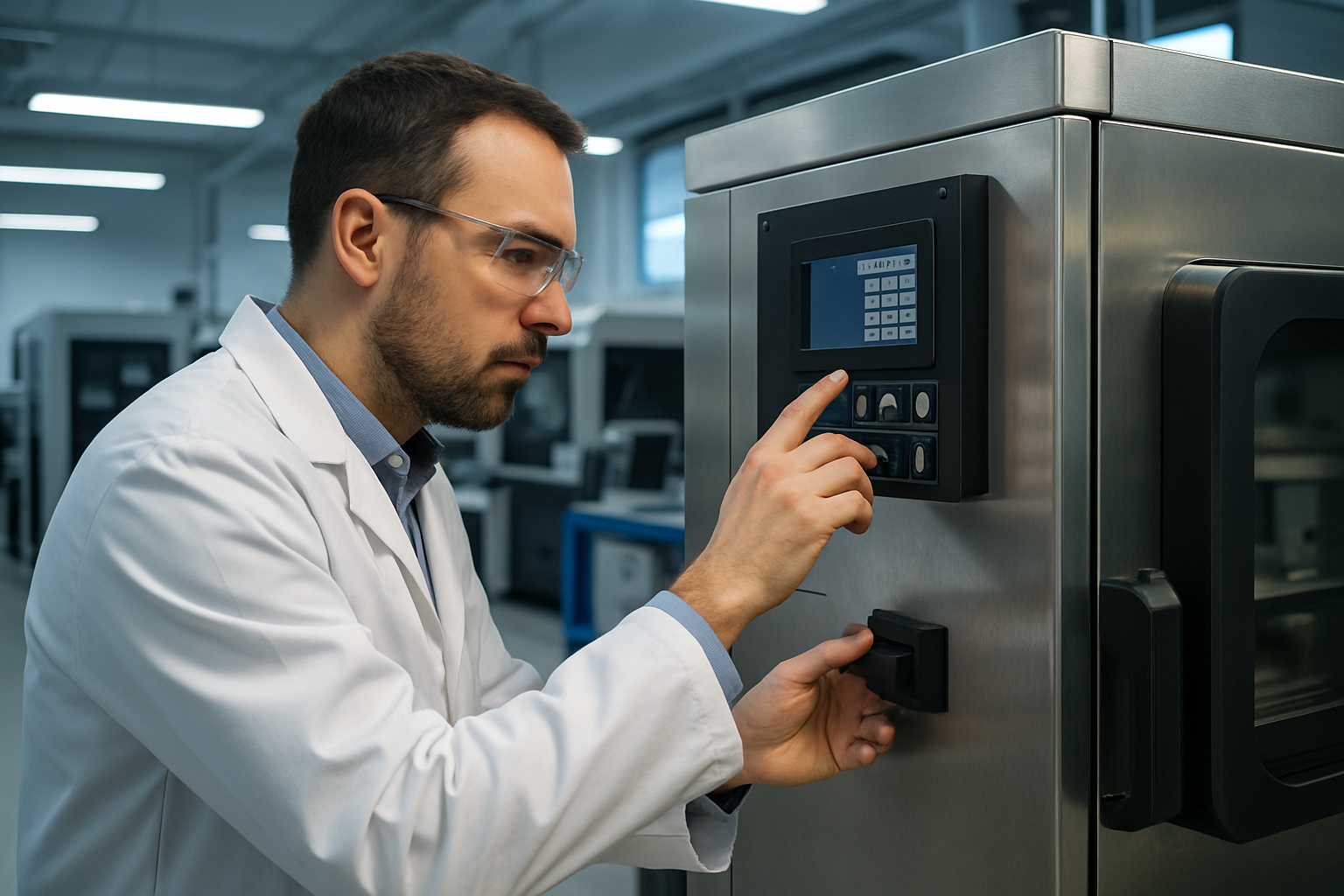
The revolutionary world of additive manufacturing (AM), commonly known as 3D printing, promises unprecedented design freedom and rapid prototyping. However, the integrity and performance of 3D-printed parts hinge on a often-overlooked factor: the quality of the raw material powders. Moisture, even in trace amounts, poses a significant threat to these powders, potentially leading to compromised final products. This is where industrial dehydrators, specifically designed for additive manufacturing powders, emerge as critical thermal engineering solutions, ensuring optimal material conditions and unlocking the full potential of AM processes.
The Critical Role of Powder Drying in Additive Manufacturing
relies on precisely controlled layer-by-layer deposition and solidification of powders, whether metal, polymer, ceramic, or composite. The intrinsic quality of these powders, particularly their dryness, directly impacts key characteristics like flowability and laser sintering ability, which in turn affect the final printed result. Without proper moisture control, the entire AM process can be jeopardized.
Why Moisture is a Menace to AM Powders
Powders used in additive manufacturing, especially metal powders such as titanium, aluminum, cobalt chrome, and nickel, are often hydrophilic, meaning they readily absorb moisture from the surrounding atmosphere. This absorption can occur during storage, handling, or even within the manufacturing environment itself if humidity is not rigorously controlled. The consequences of moist powders are far-reaching and detrimental to both the printing process and the final product’s quality:
- Degraded Mechanical Properties: Moist printing powder can lead to brittleness, cracks, and inhomogeneity in the printed parts. This is particularly problematic for components requiring maximum strength and consistent high quality, such as those used in toolmaking, mechanical engineering, aviation, aerospace, automotive, and medical industries. Studies have shown that humid powder can decrease part density significantly.
- Poor Surface Finish and Defects: Visible defects like “zebra stripes” and poor component surfaces are common indicators of moisture-affected powders.
- Reduced Powder Flowability: Moisture on powder surfaces can cause agglomeration, where particles stick together, and reduce the powder’s flowability. Good powder flow is crucial for creating consistent layers in powder bed fusion processes, and poor flow can lead to insufficient packing and pores in the melted part.
- Oxidation and Chemical Changes: Reactive metal powders can be highly influenced by humidity, leading to the formation of oxides and a degradation of flowability. This unwanted oxidation can alter the chemical composition and, consequently, the physical properties of the final product.
- Process Instability and Failures: High moisture content can lead to low relative density and increase the likelihood of process failures during additive manufacturing.
Industrial Dehydrators: The Solution for Optimal Powder Quality
To combat the challenges posed by moisture, industrial dehydration systems are indispensable in the additive manufacturing workflow. These specialized machines meticulously remove moisture from powders, restoring and maintaining their optimal properties for printing.
Key Benefits of Advanced Powder Dehydration Systems
Implementing a robust industrial dehydrator offers numerous advantages for AM operations:
- Enhanced Part Quality: By ensuring dry powder feedstock, dehydrators help produce parts with superior mechanical properties, improved surface finish, and greater structural integrity, free from defects caused by moisture.
- Improved Powder Flowability: Dehydrated powders exhibit better flow characteristics, leading to more uniform layering during printing and preventing issues like agglomeration and inconsistent density.
- Reduced Material Waste: Properly dried and reconditioned powders can often be reused, reducing the cost of expensive materials like titanium and platinum alloys, which would otherwise be deemed unfit due to moisture contamination.
- Increased Process Reliability: Stable powder conditions contribute to more predictable and repeatable manufacturing processes, minimizing downtime and costly post-processing or production rework.
- Energy Efficiency and Cost Savings: Modern industrial dehydrators are designed with energy efficiency in mind, leveraging advanced technologies to minimize consumption while maintaining precise control.
Exploring Dehydration Technologies for AM Powders
Various thermal engineering approaches are employed in industrial dehydrators, each suited for different powder types and production scales.
Common Drying Methods
- Vacuum Drying: This method involves placing materials in a vacuum chamber, reducing pressure to boil off water at lower temperatures. It is particularly ideal for drying high-quality and delicate materials like metal powders, as it prevents oxygen inclusions and maintains material integrity.
- Fluid Bed Drying: Raw material is sprayed onto a bed of hot, fluidized particles, which circulate around the material to dry it quickly and evenly.
- Tray Drying (Hot Air Circulation): Liquid feedstock is spread onto trays in a chamber where hot air is circulated to evaporate water. These can range from small single-door units to large industrial ovens with numerous trays.
- Spray Drying: Converts liquids, slurries, or pastes into dry powders by atomizing the liquid into a hot air stream for rapid evaporation. This is often used for large-scale production.
- Freeze Drying (Lyophilization): Materials are frozen, and then subjected to a vacuum, causing ice to sublimate directly into gas, leaving behind a dry, porous powder. This is a gentler method for thermo-sensitive materials.
- Sorption Dehumidification: For drying process air within the production room, sorption dehumidifiers pass moist air through a rotating, adsorbent-coated wheel, effectively ensuring continuous treatment of the air to be dried.
ThermDry TDS Equipment: A Glimpse into Advanced Industrial Dehydration
Innovative systems like the ThermDry TDS-3500 Industrial Dehydrator exemplify the advancements in drying technology for critical industrial applications, including additive manufacturing. This particular equipment highlights features crucial for high-performance powder dehydration:
- Energy Efficiency and Intelligent Control: The ThermDry TDS-3500 is designed for energy efficiency, incorporating AI and Machine Learning (ML) technologies. Its multi-zone recipe system minimizes energy consumption while maintaining consistent temperatures and precise control over humidity levels.
- Robust Construction: Built from durable stainless steel, known for its superior corrosion resistance, and featuring industrial-grade insulation, the system ensures longevity, uniform temperatures, and ease of maintenance.
- Versatile Operation: With a dehydrator temperature range from ambient up to 120°C, and flexible loading options with adjustable tray spacing, it can accommodate various powder types and batch sizes.
- Uniform Dehydration: Such advanced systems are engineered to provide uniform dehydration, which is key to reducing waste and maximizing efficiency throughout the drying process.
These capabilities underscore how modern industrial dehydrators move beyond simple drying, offering sophisticated solutions tailored to the stringent demands of additive manufacturing.
Conclusion
The pursuit of excellence in additive manufacturing necessitates meticulous control over every aspect of the production chain, with powder quality standing as a foundational pillar. Industrial dehydrators are no longer optional but essential equipment, acting as silent guardians of print quality, process stability, and material integrity. By effectively managing moisture content through advanced thermal engineering, these systems enable manufacturers to unlock the full potential of additive manufacturing, delivering high-performance, defect-free parts that meet the most demanding industry standards. As AM continues to evolve, the role of sophisticated dehydration technology will only grow in importance, securing the future of this transformative manufacturing paradigm.