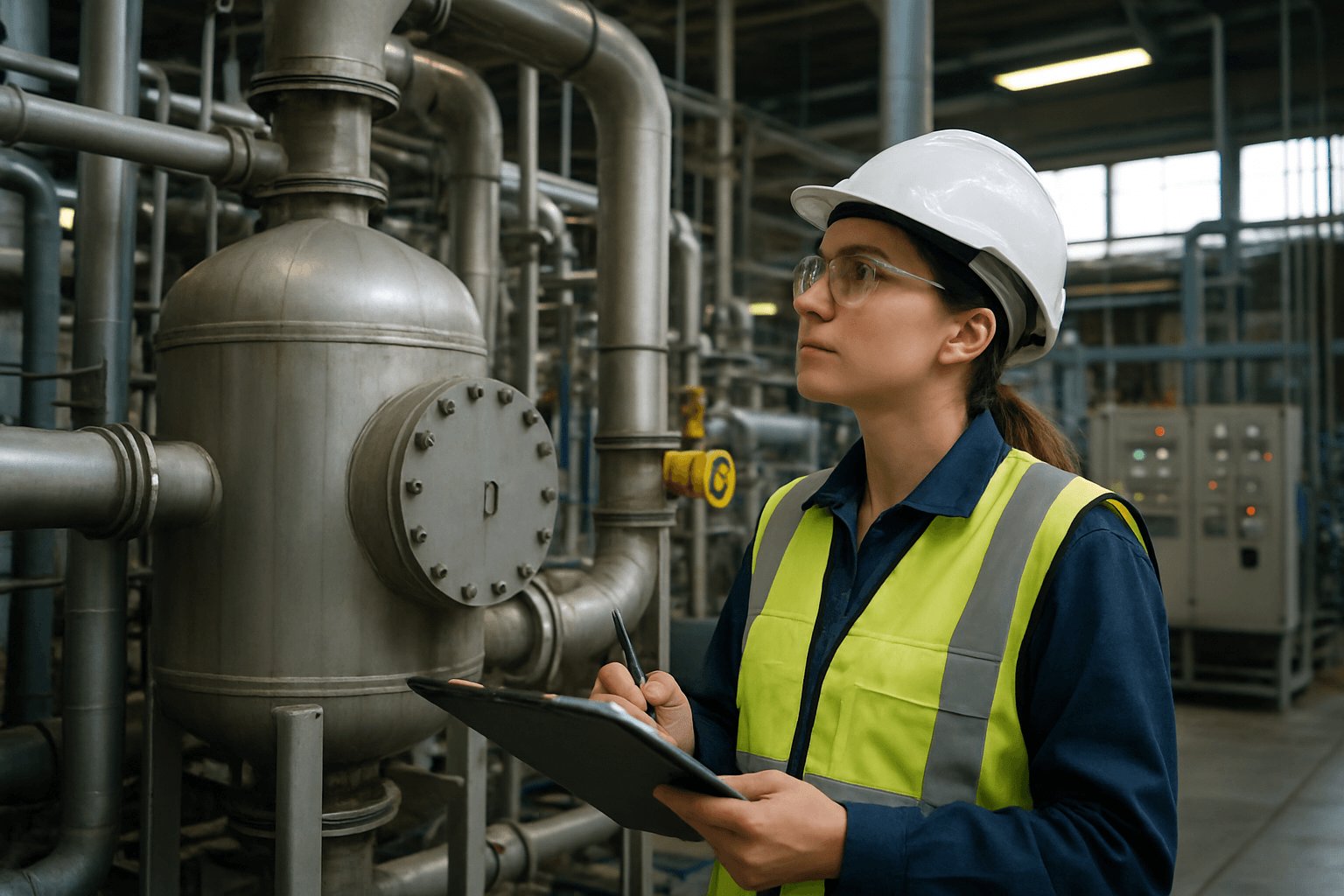
The production of polymers, the building blocks of countless modern materials, is a complex chemical process that, unfortunately, often generates undesirable byproducts. Volatile Organic Compounds (VOCs) and Hazardous Air Pollutants (HAPs) are common emissions from polymer manufacturing, posing significant environmental and health risks. Addressing these emissions is not merely a regulatory burden but a critical component of sustainable and responsible industrial operation. Thermal oxidizers stand out as a robust and highly effective solution for air pollution control, playing a pivotal role in transforming harmful industrial exhaust into benign substances.
Understanding Emissions in Polymer Production
Polymer production involves various chemical reactions and processes, such as polymerization, curing, and solvent evaporation, which are inherent sources of air pollutants. These processes can release a range of VOCs and HAPs into the atmosphere. Common examples include residual monomers, solvents, and degradation products from the polymers themselves. For instance, styrene is a well-known VOC emitted during the manufacturing of polystyrene and unsaturated polyester resins, often associated with strong odors even at low concentrations. Other hazardous compounds can include monochlorobenzene, phthalates (used as plasticizers in PVC), and isocyanates (in polyurethane foam production).
These emissions contribute to poor air quality, can lead to respiratory and other health issues for plant workers and nearby communities, and can form smog when reacting with other atmospheric components. Beyond the immediate health concerns, they also contribute to environmental degradation. Consequently, stringent regulations are in place globally to limit these industrial emissions, making effective abatement technologies essential for polymer manufacturers.
What is a Thermal Oxidizer?
A thermal oxidizer, often referred to as a thermal incinerator or fume incinerator, is an industrial air pollution control device specifically engineered to destroy harmful organic compounds in industrial exhaust streams. Its fundamental purpose is to treat air pollutants, primarily VOCs and HAPs, which are frequently byproducts of manufacturing and chemical processing operations.
The core principle behind a thermal oxidizer is thermal oxidation, a combustion process that uses elevated temperatures to initiate a chemical reaction. In this reaction, hydrocarbon-based pollutants combine with oxygen, breaking them down into less harmful substances: carbon dioxide (CO2) and water vapor (H2O), along with heat. This conversion process ensures that industrial emissions are significantly cleaned before being released into the environment, helping industries meet crucial air quality standards and reduce their environmental footprint.
How Thermal Oxidation Works: The 3 T’s of Destruction
The effectiveness of a thermal oxidizer hinges on three interdependent and critical factors, often called the “3 T’s”: Temperature, Time (Residence Time), and Turbulence.
Optimal Temperature for Oxidation
For complete oxidation of VOCs and HAPs, the exhaust gases must be heated to a sufficiently high temperature. This temperature typically ranges between 1,400°F and 1,800°F (760°C and 980°C), though some applications requiring maximum destruction may reach up to 2,010°F (1,100°C). Maintaining this high temperature ensures that the waste gas ignites and the chemical reactions proceed efficiently, converting the pollutants into CO2 and H2O.
Sufficient Residence Time
Residence time, also known as dwell time, refers to the duration the polluted gas remains at the target oxidation temperature within the combustion chamber. This factor is crucial to ensure there is enough time for the combustion reaction to occur fully. Most thermal oxidizers are designed with a residence time of 0.5 to 1.0 seconds for effective VOC destruction.
Ensuring Proper Turbulence
Turbulence is essential for effective mixing. It ensures that the pollutant compounds thoroughly combine with oxygen and heat, facilitating the chemical reaction that breaks them down. Good turbulence leads to better mixing and heat distribution, which, in turn, results in higher VOC destruction efficiency. Various oxidizer designs incorporate features to induce turbulence, such as introducing process air at an angle or creating internal choke points.
Key Types of Thermal Oxidizers for Polymer Manufacturing
While all thermal oxidizers perform the essential function of pollutant destruction, they vary in design and energy recovery mechanisms, making certain types more suitable for specific applications in polymer manufacturing.
Direct Fired Thermal Oxidizers (DFTOs)
Also known as afterburners, DFTOs are the simplest type of thermal oxidizer. They consist primarily of a burner and a combustion chamber where contaminated exhaust air is directly heated to high temperatures. While DFTOs are cost-effective in terms of capital investment and maintenance, they lack heat recovery systems, making them less fuel-efficient and more expensive to operate for continuous, high-volume applications. They are often chosen for batch processing or applications with high VOC concentrations where the heat generated can sometimes be used elsewhere in the plant.
Recuperative Thermal Oxidizers
Recuperative oxidizers enhance efficiency by incorporating a primary and/or secondary heat exchanger. This heat exchanger preheats the incoming dirty air using the heat from the exiting clean air, which has already passed through the combustion chamber. By recovering heat, these systems reduce the amount of auxiliary fuel needed to reach the required oxidation temperature, leading to lower operating costs compared to DFTOs. Recuperative systems are available in various configurations to handle different contaminants and are efficient for moderate-to-high VOC emission streams.
Regenerative Thermal Oxidizers (RTOs)
Regenerative Thermal Oxidizers (RTOs) are widely considered the most popular and energy-efficient air pollution control technology for many industrial applications, including polymer manufacturing. RTOs utilize ceramic media beds to achieve very high thermal heat recovery, often exceeding 95%. The polluted airstream passes through a heated ceramic bed, which preheats the gases before they enter the combustion chamber. After oxidation, the hot, clean air exits through a second ceramic bed, transferring its heat to that bed for the next cycle. This regenerative heat exchange significantly reduces fuel consumption and operating costs, making RTOs ideal for applications with lower VOC concentrations but high airflow volumes.
Catalytic Oxidizers (RCOs/CATOX)
Catalytic oxidizers, including Regenerative Catalytic Oxidizers (RCOs) and Catalytic Recuperative Oxidizers (CATOX), employ a catalyst material within the combustion chamber. The catalyst facilitates the oxidation reaction at significantly lower temperatures (e.g., typically between 600°F and 650°F or 260°C to 1,000°C) compared to thermal-only systems. This lower operating temperature translates to reduced fuel consumption and lower operating costs. However, catalytic oxidizers are best suited for cleaner applications, as certain substances (like halogens, sulfur, silicon, or particulates) can “poison” or deactivate the catalyst, reducing its effectiveness and requiring costly replacement. RCOs are commonly found in chemical, pharmaceutical, and coating industries for low-VOC process airstreams.
Rotary Concentrators (Pre-treatment)
For scenarios involving large volumes of air with very low concentrations of VOCs, a rotary concentrator can be integrated as a pre-treatment step. These systems use zeolite rotors to adsorb VOCs from the airflow, releasing them into a smaller, more concentrated airstream. This concentrated stream then feeds into a thermal oxidizer, making the oxidation process more efficient and cost-effective than treating the dilute stream directly.
Benefits of Thermal Oxidizers in Polymer Plants
Implementing thermal oxidizers in polymer production plants offers a multitude of benefits, extending from environmental protection to operational efficiency.
Enhanced Environmental Compliance
One of the primary drivers for installing thermal oxidizers is to achieve and maintain compliance with increasingly stringent air quality regulations. Government bodies, such as the U.S. Environmental Protection Agency (EPA), set standards like New Source Performance Standards (NSPS) and National Emission Standards for Hazardous Air Pollutants (NESHAP) specifically for the polymer manufacturing industry. Thermal oxidizers effectively destroy the regulated VOCs and HAPs, ensuring that facilities meet these critical emission limits and avoid penalties for non-compliance.
Superior Pollution Control
Thermal oxidizers are highly effective at converting harmful pollutants into benign substances like CO2 and water vapor. Depending on the type and design, destruction efficiencies can exceed 99%, significantly reducing the release of toxic emissions into the atmosphere. This robust control mechanism helps to prevent air and soil contamination, contributing to a healthier environment.
Significant Energy Efficiency and Cost Savings
Modern thermal oxidizers, especially recuperative and regenerative designs, incorporate advanced heat recovery systems. By preheating incoming polluted air with the heat from the outgoing clean exhaust, these systems drastically reduce the need for auxiliary fuel. This energy reuse not only lowers operational costs but also improves the overall sustainability of the manufacturing process by reducing the plant’s energy consumption and carbon footprint.
Effective Odor Control
Beyond regulated pollutants, many substances emitted during polymer manufacturing, such as styrene, can produce strong, unpleasant odors. Thermal oxidizers are highly effective at eliminating these odor-causing compounds, which is particularly important for plants located near residential areas. Proactive odor control helps maintain positive community relations and prevents nuisance complaints.
Improved Health and Safety
By neutralizing hazardous air pollutants, thermal oxidizers create a safer working environment for employees and protect the health of surrounding fenceline communities. Reducing exposure to VOCs and HAPs mitigates risks associated with various health problems, including respiratory issues, neurological effects, and potential carcinogenic impacts.
Regulatory Landscape and Compliance for Polymer Producers
The chemical processing and polymer manufacturing industries are subject to evolving and increasingly stringent environmental regulations. In the United States, the EPA’s Clean Air Act mandates specific controls for stationary sources of air pollution.
Key Regulations
- New Source Performance Standards (NSPS): These standards limit VOC emissions from new, modified, or reconstructed facilities within polymer manufacturing plants that produce specific polymers like polypropylene, polyethylene, polystyrene, and poly(ethylene terephthalate) (PET).
- National Emission Standards for Hazardous Air Pollutants (NESHAP): NESHAP regulations target specific HAPs from major sources within the polymer and resins sectors, often referred to as the Hazardous Organic NESHAP (HON) for synthetic organic chemical manufacturing. These standards include requirements for process vents, storage vessels, and equipment leaks.
Recent Regulatory Updates
Recent amendments to EPA regulations, particularly in April 2024, have intensified the focus on chemical plant emissions, including those from polymer and resin manufacturers. These updates mandate new air monitoring requirements, including fenceline monitoring for certain contaminants like ethylene oxide, benzene, 1,3-butadiene, ethylene dichloride, and vinyl chloride. Facilities are required to conduct fenceline monitoring and take measures to reduce emissions if action levels are exceeded, underscoring the need for highly effective abatement technologies like thermal oxidizers.
Selecting the Right Thermal Oxidizer System
Choosing the optimal thermal oxidizer for a polymer production plant requires a careful evaluation of several factors to ensure both technical effectiveness and cost efficiency.
Factors to Consider:
- Pollutant Characteristics: The type and concentration of VOCs and HAPs present in the exhaust stream are paramount. Some pollutants may require higher temperatures, longer residence times, or may be unsuitable for catalytic systems due to potential catalyst poisoning.
- Airflow Volume: The volume of the exhaust air to be treated directly impacts the size and design of the oxidizer. RTOs are generally favored for high airflow applications with lower VOC concentrations.
- Energy Efficiency Requirements: The desire to minimize operating costs through fuel savings will dictate the level of heat recovery incorporated into the system. Recuperative and regenerative oxidizers offer superior energy efficiency compared to direct-fired units.
- Capital vs. Operating Costs: While DFTOs have lower capital costs, their operating expenses (primarily fuel) can be significantly higher over time. RTOs, despite a higher initial investment, typically offer the lowest long-term operating costs due to their exceptional heat recovery.
- Presence of Particulates or Catalyst Poisons: If the exhaust stream contains particulates or compounds known to deactivate catalysts (e.g., sulfur, halogens, silicon), catalytic oxidizers may not be the appropriate choice. In such cases, thermal-only systems like RTOs or recuperative oxidizers would be preferred.
- Process Conditions: The variability of emission loadings and process cycles (batch vs. continuous) can influence the oxidizer design, requiring systems capable of handling a wide range of operating conditions.
Expert assessment of a plant’s unique process challenges is crucial to determine the most suitable thermal oxidizer technology, ensuring both compliance and operational efficiency for the long term.
Conclusion
Thermal oxidizers are an indispensable tool for polymer production plants committed to environmental stewardship and regulatory compliance. By efficiently destroying volatile organic compounds and hazardous air pollutants, these advanced air pollution control systems not only safeguard public health and the environment but also help companies achieve significant energy savings through heat recovery. As environmental regulations continue to evolve and become more stringent, investing in the right thermal oxidizer technology is not just a necessity but a strategic decision for ensuring sustainable and responsible polymer manufacturing operations.