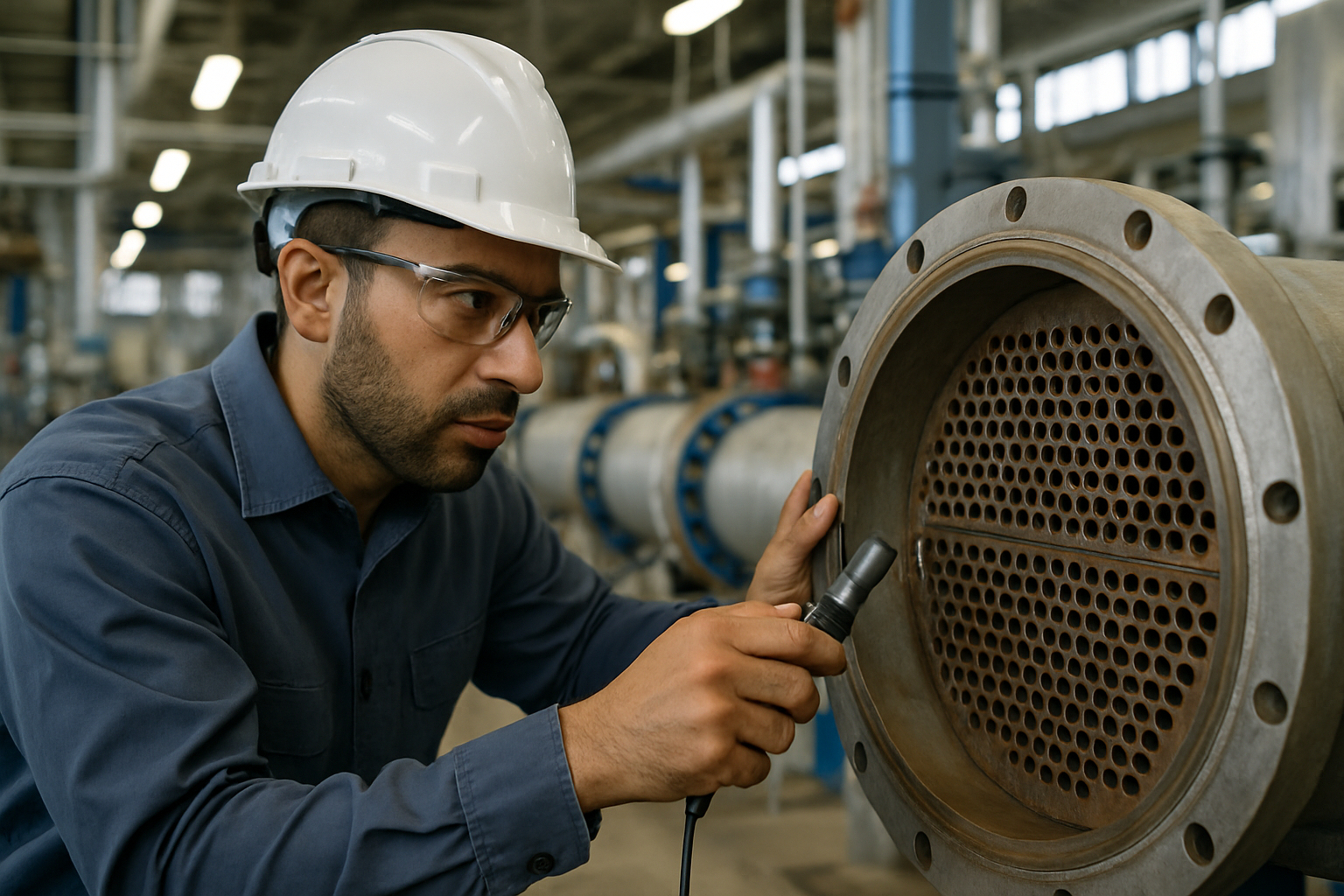
Shell and tube heat exchangers are indispensable components across diverse industrial sectors, including chemical processing, oil and gas, and power generation, valued for their robust construction and adaptability. However, a persistent challenge in their design and operation is vibration, which, if left unaddressed, can lead to severe consequences such as acoustic noise, accelerated mechanical wear, and even catastrophic tube failure. Understanding the mechanisms behind shell and tube heat exchanger vibration, accurately analyzing its potential, and implementing effective mitigation strategies are paramount to ensuring equipment longevity, operational efficiency, and safety.
Understanding the Roots of Heat Exchanger Vibration
Vibration in shell and tube heat exchangers primarily originates from fluid-induced forces and, less commonly, external mechanical sources. The interaction between the flowing fluids and the heat exchanger tubes can generate dynamic forces that, under certain conditions, excite the tubes into damaging oscillations.
Primary Causes of Flow-Induced Vibration (FIV)
Flow-induced vibration (FIV) is the most significant concern in shell and tube heat exchangers. There are three main mechanisms recognized for FIV:
- Vortex Shedding: As fluid flows across the tubes, alternating vortices (Karman vortex streets) form downstream, creating periodic exciting forces perpendicular to the flow direction. If the frequency of this vortex shedding matches the natural frequency of the tubes, resonance can occur, leading to violent vibrations.
- Fluid-Elastic Instability: This is often considered the most severe form of FIV. It occurs when the fluid-elastic forces acting on the tubes become self-excited, leading to a sudden, rapid increase in vibration amplitude once a critical flow velocity is exceeded. The tubes are fluid-elastically coupled via the intervening fluid, behaving like springs.
- Turbulent Buffeting: Turbulent flow within the shell side, especially at high velocities, creates random pressure fluctuations that constantly apply force to the tubes. While these vibrations are often irregular and of lower amplitude, sustained turbulent buffeting can still cause long-term damage through abrasion and wear, particularly where tubes contact baffle plates.
- Acoustic Vibration: In heat exchangers handling high-velocity gases or vapors, the frequency of the sound produced can generate acoustic (sound) vibration within the shell. This acoustic resonance can range from a low hum to a piercing scream and, if it matches a structural resonant frequency, can amplify vibrations significantly.
Other Contributing Factors to Heat Exchanger Vibration
Beyond flow-induced phenomena, several other factors can contribute to or exacerbate vibration issues:
- External Excitation Sources: Pulsations from reciprocating mechanical equipment can transmit vibrations through supporting components or connecting pipes to the heat exchanger tubes. Unstable foundations or inadequate equipment securing can also contribute to structural transmission effects.
- Mechanical Looseness: Loose components like bolts, fasteners, or supports can generate vibrations.
- Misalignment: Improper alignment of heat exchanger components, such as tubes, tube sheets, baffles, or support structures, can lead to vibrations.
- Tube-to-Tubesheet Clearance: Insufficient clearance can cause frictional forces and induce vibrations when tubes expand or contract due to temperature changes.
- U-Bend Areas: In U-tube heat exchangers, the U-bend area can be particularly vulnerable due to longer unsupported spans and lower natural frequencies, making them prone to significant vibration-related damage.
The Detrimental Impacts of Excessive Vibration
Excessive vibration in shell and tube heat exchangers can lead to a cascade of problems, impacting operational reliability, maintenance costs, and safety:
- Tube Wear: Vibrations can cause tubes to rub against baffles or adjacent tubes, leading to fretting wear and thinning of tube walls, eventually resulting in perforations and leaks. This wear is particularly pronounced at maximum displacement locations, such as the mid-span of unsupported tube sections.
- Fatigue Failure: Repeated stressing of tubes, especially near rigid supports like tubesheets, can lead to fatigue cracks.
- Tube Joint Leakage: Vibrations can loosen tube-to-tubesheet joints, causing leaks between the shell side and tube side fluids.
- Acoustic Noise: High-frequency acoustic vibrations can produce intense noise, posing environmental and occupational health concerns.
- Reduced Heat Transfer Efficiency: While slight vibration can sometimes enhance heat transfer and reduce fouling, severe vibration disrupts optimal flow patterns and can compromise performance.
- Catastrophic Failure: In extreme cases, unchecked vibration can lead to localized failure or even complete scrapping of the heat exchanger, incurring substantial economic losses.
Advanced Vibration Analysis Techniques
Predicting and preventing vibration in shell and tube heat exchangers is a critical aspect of safe operation, often integrated into the mechanical and thermal design process. While slight vibration is often inevitable and even beneficial, destructive vibrations can largely be avoided through proper analysis.
Key Analytical Methods
Comprehensive vibration analysis typically involves a multi-step approach:
- Natural Frequency Calculation: Determining the natural frequency of the tubes is fundamental. Resonance occurs when a flow-induced excitation frequency matches the tube’s natural frequency. The natural frequency is inversely proportional to the square of the unsupported tube span, meaning shorter spans lead to higher natural frequencies.
- Critical Velocity Determination: For fluid-elastic instability, the critical flow velocity at which tubes begin to vibrate with unacceptably large amplitudes must be determined. Shell-side cross-flow velocity should ideally be kept below this critical velocity.
- Vortex Shedding Frequency Prediction: Calculating the vortex shedding frequency allows comparison with the tube’s natural frequency to identify potential resonance.
- Turbulent Buffeting Frequency Analysis: Understanding the dominant turbulent buffeting frequency helps assess the potential for resonance with the tube’s natural frequency or acoustic resonance if gas is the shell-side fluid.
- Acoustic Frequency Analysis: For gas or vapor shell-side fluids, the acoustic frequency of the shell needs to be compared against vortex shedding and turbulent buffeting frequencies. If these are within 20% of the acoustic frequency, acoustic vibration is possible.
Industry Standards and Software Tools
- TEMA Standards: The Tubular Exchanger Manufacturers Association (TEMA) provides standards that include a section on flow-induced vibration, offering recommended procedures for checking shell and tube heat exchangers for potential tube and acoustic vibration problems. It’s important to note that TEMA acknowledges the complexity of the problem and its warranty typically does not cover vibration damage, emphasizing the need for thorough analysis beyond basic compliance.
- Specialized Software: Advanced software packages like HTRI (Heat Transfer Research, Inc.) and CHEMCAD are widely used for detailed flow-induced vibration analysis, providing routine assessments as part of thermal design. These tools help optimize designs by predicting vibration mechanisms like cross-flow velocity, critical velocity, turbulent buffeting frequency, and vortex shedding frequency against tube natural frequency.
Effective Vibration Mitigation Strategies
Mitigating shell and tube heat exchanger vibration involves a combination of design modifications and operational adjustments. The goal is to detune the system by altering either the excitation frequency or the natural frequency of the tubes, or by introducing damping.
Design-Based Mitigation
Many effective mitigation techniques are integrated during the design phase:
- Optimizing Baffle Design and Spacing:
- Reducing Unsupported Span: Decreasing baffle spacing is one of the most economical and effective ways to increase the natural frequency of the tubes, as natural frequency is inversely proportional to the square of the support span.
- No-Tube-In-Window (NTIW) Baffle Layouts: These designs can help reduce maximum unsupported tubing spans.
- Double-Segmental Baffles: Shifting from segmental to double-segmental baffles can split the flow, reduce velocities, and allow for shorter unsupported tube spans while maintaining allowable pressure drop.
- Rod-Type or Spiral Baffles: These designs can improve tube support conditions and reduce vibration effects.
- Derresonating/Detuning Baffles: Introducing baffles that run lengthwise along the shell can increase the acoustic frequency of the shell, preventing resonance with flow-induced frequencies.
- Reducing Shell-Side Flow Velocity: Lowering the fluid velocity on the shell side directly reduces the forces acting on the tubes, thereby decreasing the potential for flow-induced vibrations. This can be achieved through:
- Larger nozzles.
- Increased baffle cuts or baffle spans.
- Increasing the tubing pitch.
- Dividing the flow, such as using a divided-flow heat exchanger configuration where the inlet is in the middle and outlets at both ends.
- Increasing Tube Natural Frequency: Besides reducing baffle spacing, other methods to increase the natural frequency include:
- Changing tube material or geometry.
- Adding intermediate baffle supports or specifically placed tube supports (e.g., FIVERS – Flow Induced Vibration Supports) in areas of high velocity or larger spans.
- For U-tube bundles, adding strips or inserting rods or plates between tubes can increase support and natural frequency.
- U-Bend Supports: Providing specific supports in the U-bend area of U-tube exchangers is crucial, as this region often has long unsupported spans and a low natural frequency.
- Enhanced Damping: Structurally, increasing the thickness of baffles or intermediate support plates can relieve shear stress on tubes and increase system damping. Beveling the sides of baffle holes can also help reduce vibration damage.
- Anti-Vibration Technologies (AVT): Companies like ExxonMobil have developed patented AVT that can be retrofitted into existing exchangers or incorporated into new designs to mitigate vibration, even allowing for smaller exchangers or reduced pressure drop.
Operational Considerations
- Avoid Exceeding Design Flow Limits: Operating the heat exchanger beyond its design flow rates can significantly increase the risk of flow-induced vibration.
- Regular Monitoring: Continuous or periodic vibration monitoring can help detect potential issues early, allowing for timely intervention before severe damage occurs.
By integrating rigorous analysis during the design phase and implementing appropriate mitigation strategies, the operational stability, reliability, and lifespan of shell and tube heat exchangers can be significantly enhanced, preventing costly failures and ensuring efficient heat transfer. The collaboration between mechanical and thermal design engineers, utilizing current research and established standards like TEMA, is key to overcoming these complex vibration challenges.