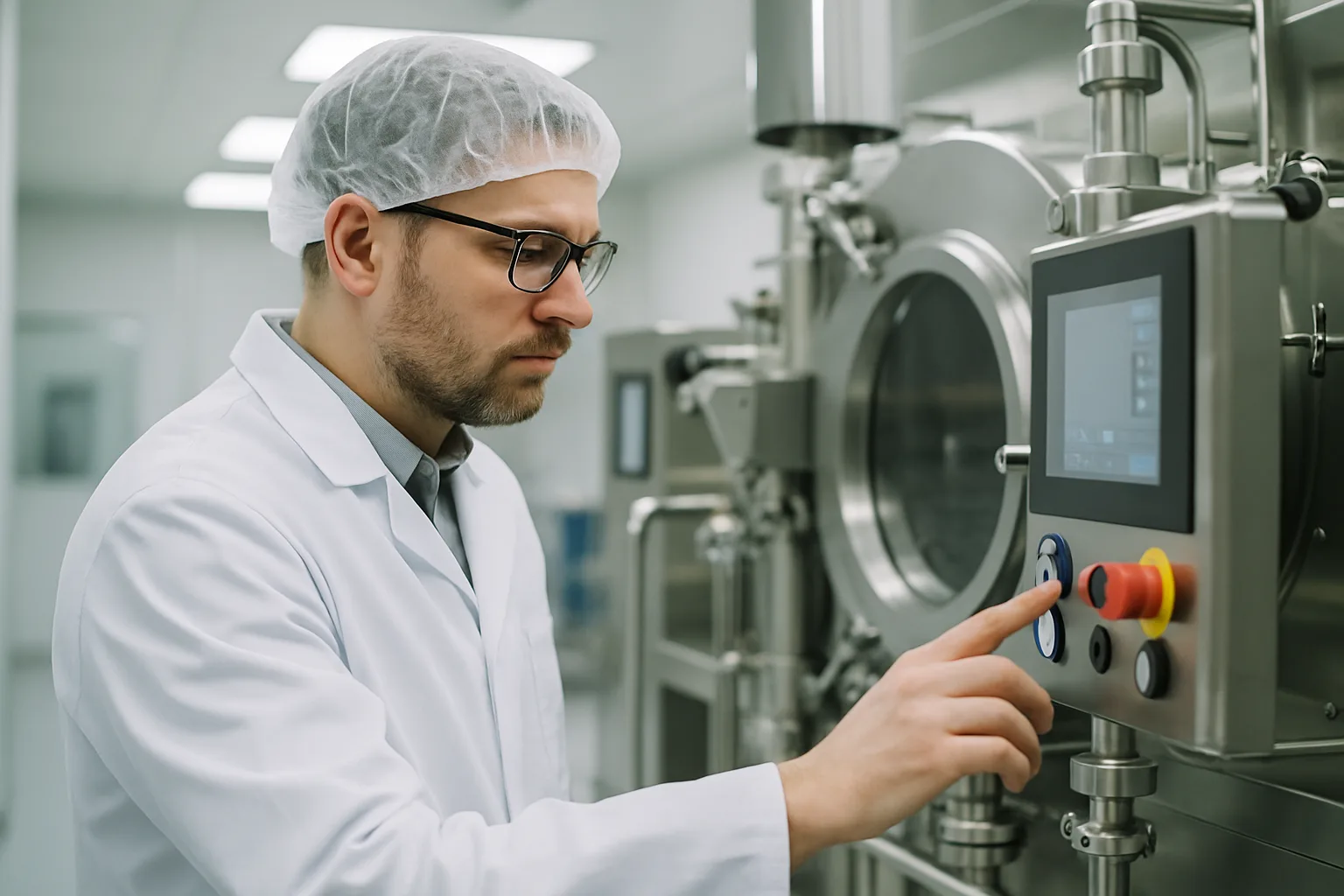
In the intricate world of pharmaceutical manufacturing, the humble tablet undergoes a critical transformation: coating. Far from a mere aesthetic enhancement, tablet coating is a sophisticated process that can dictate a drug’s efficacy, stability, and patient compliance. However, achieving a perfectly uniform and defect-free coating consistently remains a significant challenge. This is where process modeling, a powerful tool in process engineering, steps in to revolutionize optimization, reduce costs, and accelerate drug development.
The Critical Role of Tablet Coating in Pharmaceutical Products
Tablet coating involves applying a thin, polymer-based film onto the surface of a tablet core. This process serves multiple vital purposes:
- Protection: Shielding the active pharmaceutical ingredient (API) from environmental factors like moisture, light, and oxygen, thereby extending shelf life.
- Taste Masking: Covering unpleasant tastes or odors of certain APIs to improve palatability and patient adherence.
- Controlled Release: Modifying the drug release profile, enabling sustained, delayed, or enteric release based on therapeutic requirements.
- Identification and Aesthetics: Providing distinct colors for brand recognition, dosage differentiation, and an appealing appearance.
- Mechanical Strength: Enhancing the tablet’s durability, making it easier to handle and less prone to breakage during packaging and transport.
Despite its importance, the tablet coating process is fraught with potential issues such as uneven coating distribution, peeling, cracking, sticking, logo bridging, and extended drying times. These defects can lead to product rejection, increased waste, and substantial financial losses, emphasizing the need for robust optimization strategies.
What is Process Modelling in Industrial Manufacturing?
Process modeling involves creating a mathematical or computational representation of a real-world system or process. In industrial manufacturing, these models act as virtual laboratories, allowing engineers to predict how changes in process parameters, equipment design, or material properties will affect the final product without the need for costly and time-consuming physical experiments.
The core idea is to understand the underlying physics, chemistry, and mechanics of a process. For tablet coating, this means understanding everything from the movement of tablets within a rotating pan to the atomization of the coating spray, its impact on the tablet surface, and the subsequent drying of the film.
Applying Process Modelling to Tablet Coating Operations
Process modeling for tablet coating primarily leverages sophisticated simulation techniques to predict and optimize critical quality attributes (CQAs) like coating uniformity, film thickness, drying efficiency, and tablet integrity. These methods enable a deeper, mechanistic understanding of the process, moving beyond traditional trial-and-error approaches.
Discrete Element Method (DEM) for Tablet Dynamics
One of the most widely used modeling techniques in tablet coating optimization is the Discrete Element Method (DEM). DEM simulates the motion and interactions of individual tablets within the coating pan. Key insights gained from DEM simulations include:
- Tablet Movement and Mixing: Understanding how factors like pan speed, fill level, and tablet shape influence the tumbling and mixing patterns of tablets in the coater. Even rotation and consistent movement are crucial for uniform coating distribution.
- Residence Time Distribution: Analyzing how long tablets spend in the spray zone, which directly impacts the amount of coating applied to each tablet and inter-tablet coating variability.
- Impact Forces and Tablet Breakage: Predicting mechanical stress on tablets to identify conditions that may lead to chipping, edge erosion, or complete tablet fracture, allowing for modifications to equipment design or process conditions to mitigate damage.
Accurate DEM simulations require precise experimental determination of material properties such as Young’s modulus, coefficient of restitution, and coefficients of friction for the tablets.
Computational Fluid Dynamics (CFD) for Airflow and Spray Dynamics
Computational Fluid Dynamics (CFD) focuses on the fluid flow aspects of the coating process, specifically the airflow within the coater and the dynamics of the coating spray. CFD simulations help to:
- Optimize Air Distribution: Ensure uniform airflow throughout the drum, which is critical for consistent drying and preventing over-wetting or spray drying defects.
- Analyze Spray Characteristics: Model the atomization of the coating suspension into fine droplets, their trajectory, and impingement onto the tablet bed. This helps in understanding how spray rate, atomizing air pressure, and nozzle placement affect droplet size, spray pattern, and coating uniformity.
- Heat and Mass Transfer: Predict the evaporation rate of solvent from the coating film and the absorption of water into the tablet core, which are essential for controlling film adhesion and tablet shelf-life.
Coupled CFD-DEM Simulations
For a truly comprehensive understanding, DEM and CFD are often coupled. This approach allows for the simultaneous simulation of both particle (tablet) movement and fluid (air and spray) dynamics, capturing their complex interactions. A coupled CFD-DEM model can investigate how process air properties (temperature, velocity) influence spray characteristics, average coating rate, and the uniformity of coating and temperature distributions on tablets. This holistic view is crucial for achieving optimal process efficiency and product quality.
Mathematical Modelling for Film Formation and Drying Kinetics
Beyond discrete particle and fluid dynamics, mathematical models are developed to describe the fundamental phenomena at the tablet-coating interface. These models can predict:
- Coating Film Application: Simulate film motion and drying on tablet surfaces, considering factors like solvent evaporation and its impact on density and viscosity of the coating suspension.
- Water Penetration and Evaporation: Provide insights into the amount of coating suspension (water and polymer particles) that penetrates into the tablet and the percentage of water that evaporates, crucial for controlling shelf-life and film adhesion.
- Droplet Behavior: Analyze the initial kinematic phase after spray impact and the subsequent capillary phase, which governs droplet flow, evaporation, and absorption.
Benefits of Process Modelling for Tablet Coating Optimization
Integrating process modeling and simulation into tablet coating development and manufacturing offers numerous advantages:
- Enhanced Process Understanding: Provides a detailed, mechanistic view of critical phenomena, allowing manufacturers to identify critical process parameters (CPPs) and critical material attributes (CMAs) more effectively.
- Reduced Development Time and Cost: By experimenting virtually, the need for extensive and expensive laboratory and pilot-plant trials is significantly reduced. This allows for rapid evaluation of alternative process setups and operating conditions.
- Optimized Process Parameters: Enables the identification of optimal operating conditions (e.g., spray rate, pan speed, inlet air temperature, atomizing air pressure) that yield desired product quality, high efficiency, and minimal defects.
- Improved Coating Uniformity: Addresses challenges like inter-tablet and intra-tablet coating variability, which are crucial for drug content uniformity, especially for active coatings.
- Facilitated Scale-Up: Process models can be used to predict performance at different scales, ensuring a smooth and successful transfer from laboratory to commercial manufacturing by adjusting batch sizes and optimizing cycle times.
- Troubleshooting and Defect Mitigation: Helps in diagnosing the root causes of coating defects (e.g., sticking, cracking, unevenness) and virtually testing remedies before implementation.
- Quality by Design (QbD) Implementation: Supports a QbD approach by providing a robust framework for understanding process variability and defining a robust design space, leading to more consistent product quality and streamlined regulatory compliance.
- Cost Savings: By optimizing production efficiency, reducing waste, and minimizing the risk of product failures, process modeling directly contributes to lower manufacturing costs.
Key Steps and Considerations in Process Modelling
Implementing process modeling effectively involves several critical steps:
- Define Objectives: Clearly identify the specific problems to solve or aspects to optimize (e.g., reduce coating variability, increase throughput, mitigate breakage).
- Gather Data: Collect comprehensive experimental data on tablet properties, coating solution characteristics, and equipment specifications. This data is essential for model development and validation.
- Model Selection: Choose appropriate modeling techniques (DEM, CFD, coupled CFD-DEM, mathematical models) based on the complexity and specific aspects of the process to be studied.
- Model Development and Calibration: Build the virtual model and calibrate it using experimental data to ensure its accuracy in representing the real process.
- Simulation and Analysis: Run simulations under various operating conditions and analyze the results to gain insights, identify optimal parameters, and predict performance. Sensitivity analysis and “what-if” studies are crucial here.
- Validation: Critically compare simulation predictions with real-world experimental data to validate the model’s reliability and predictive power.
- Implementation and Continuous Improvement: Apply the optimized parameters in actual manufacturing and continuously refine the models as new data becomes available or processes evolve.
The Future of Tablet Coating Optimization
The pharmaceutical industry is increasingly embracing digitalization and digital twin technologies. Process modeling is at the forefront of this transformation, enabling a continuous optimization loop from drug discovery to commercial manufacturing. Future advancements will likely involve:
- More Sophisticated Coupled Models: Enhanced integration of various simulation techniques to capture an even wider range of multiphysics phenomena with higher fidelity.
- Real-time Decision Support: Development of predictive and prescriptive models that can provide real-time insights and decision-making support during ongoing manufacturing processes.
- AI and Machine Learning Integration: Combining process models with AI and machine learning algorithms to analyze vast datasets, identify complex relationships, and further optimize process parameters autonomously.
- Personalized Medicine Manufacturing: Utilizing modeling to adapt coating processes for smaller batch sizes and customized drug products, catering to the growing trend of personalized medicine.
By harnessing the power of process modeling, pharmaceutical manufacturers can move towards more robust, efficient, and cost-effective tablet coating processes, ultimately delivering higher quality medicines to patients.