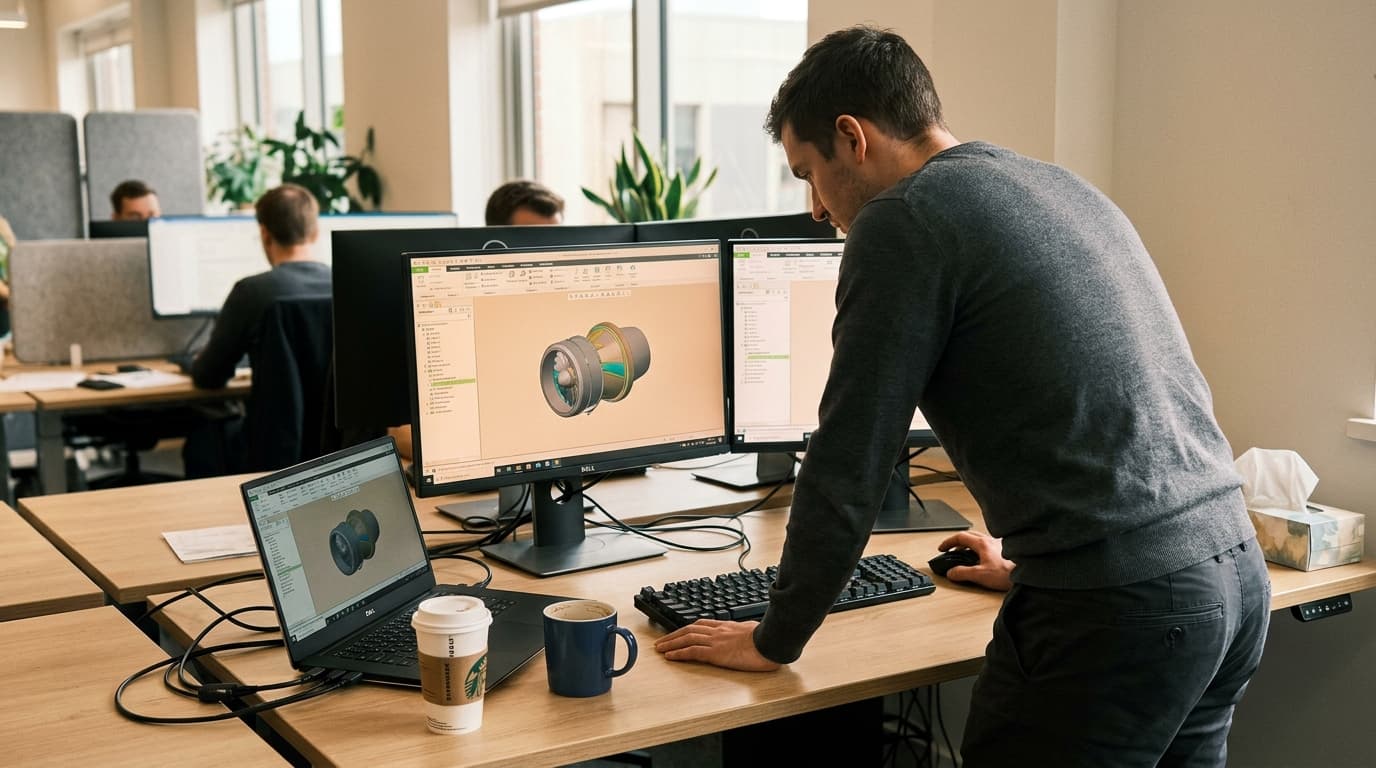
Aerospace
Design Prototyping
Aerospace components demand the highest levels of simulation fidelity and design validation. Our engineers deliver turbine blade thermal analysis, structural load simulation, and material fatigue testing — ensuring designs meet AS9100 quality standards and certification requirements before manufacture.
Prototyping Challenges
in Aerospace
Certification requirements, extreme operating conditions, and material limits drive aerospace prototyping needs.
Turbine Blade Thermal Analysis
Turbine blades operate at temperatures close to material limits. We simulate thermal distribution, cooling channel effectiveness, and thermal barrier coating performance under operating conditions.
Structural Load Simulation
Aerospace structures must withstand complex loading scenarios. We analyse static, dynamic, and fatigue loads to validate structural integrity and identify design optimisation opportunities.
Material Fatigue Testing
High-cycle fatigue and creep behaviour are critical for flight-critical components. We model material degradation under operational conditions to predict component life.
Certification Support
Design substantiation data must support airworthiness certification. Our simulation reports are structured to support DO-160 and other certification requirements.
Our 5-Step
Approach
A simulation-driven prototyping methodology tailored for aerospace component certification.
Define Objectives
Collaborate with stakeholders to define measurable performance criteria, boundary conditions, and key deliverables that will guide every subsequent engineering decision.
Through structured workshops and technical scoping sessions, we translate business goals into quantifiable engineering targets — covering thermal efficiency, structural integrity, and regulatory compliance. This upfront alignment eliminates costly mid-project scope changes and ensures all parties share a unified vision of success.
Initial Simulations
Deploy CFD, FEA, and thermodynamic modelling tools to evaluate prototype behaviour across a full range of operating scenarios before any physical build.
Our simulation phase systematically sweeps critical process variables — air temperature, flow velocity, humidity, and differential pressure — to identify optimal design parameters. By resolving performance bottlenecks in the virtual environment first, we typically reduce physical iteration cycles by 40-60%, saving significant time and material costs.
Testing & Iteration
Execute rigorous physical test campaigns under controlled and edge-case conditions, benchmarking real-world results against simulation predictions.
Each prototype undergoes structured test protocols that measure pressure drop, thermal uniformity, mechanical fatigue, and environmental resilience across a matrix of operating conditions. Deviations between simulated and measured performance are systematically analysed, feeding directly into targeted design refinements that close the gap between theory and practice.
Data Analysis
Consolidate simulation outputs, sensor data, and test observations into a comprehensive performance report that validates — or challenges — every design assumption.
Our engineers apply statistical methods and trend analysis to pinpoint root causes of any performance shortfall, quantify safety margins, and verify compliance with applicable standards. The resulting data package provides a clear, auditable evidence base that de-risks the transition from prototype to full-scale industrial production.
Final Adjustments
Implement targeted design refinements and produce production-ready documentation, ensuring the prototype transitions seamlessly to manufacturing.
Final adjustments address manufacturability, material selection optimisation, and tolerance stack-up analysis to guarantee consistent quality at scale. We deliver complete technical packages — including CAD models, BOM specifications, and process control guidelines — so your production team can ramp up with confidence and minimal lead time.
What You
Receive
Certification-ready prototyping deliverables for aerospace component validation.
Thermal Analysis Report
Temperature distribution, thermal stress analysis, and cooling system effectiveness evaluation under flight conditions.
Structural FEA Package
Multi-load case analysis with stress, displacement, and buckling results supporting structural substantiation.
Fatigue Life Prediction
High-cycle and low-cycle fatigue analysis with crack initiation and propagation modelling for life prediction.
Aerodynamic CFD Analysis
External and internal flow analysis with pressure, velocity, and heat transfer coefficient mapping.
Material Selection Report
Material trade study with performance comparison, weight implications, and cost-benefit analysis.
Certification Data Package
Simulation data structured for certification submission with analysis methods, assumptions, and validation evidence.
Proven Results in
Aerospace
Based on design prototyping projects for engine, airframe, and systems components.
Related Products
& Services
Complementary equipment and engineering services for your process.





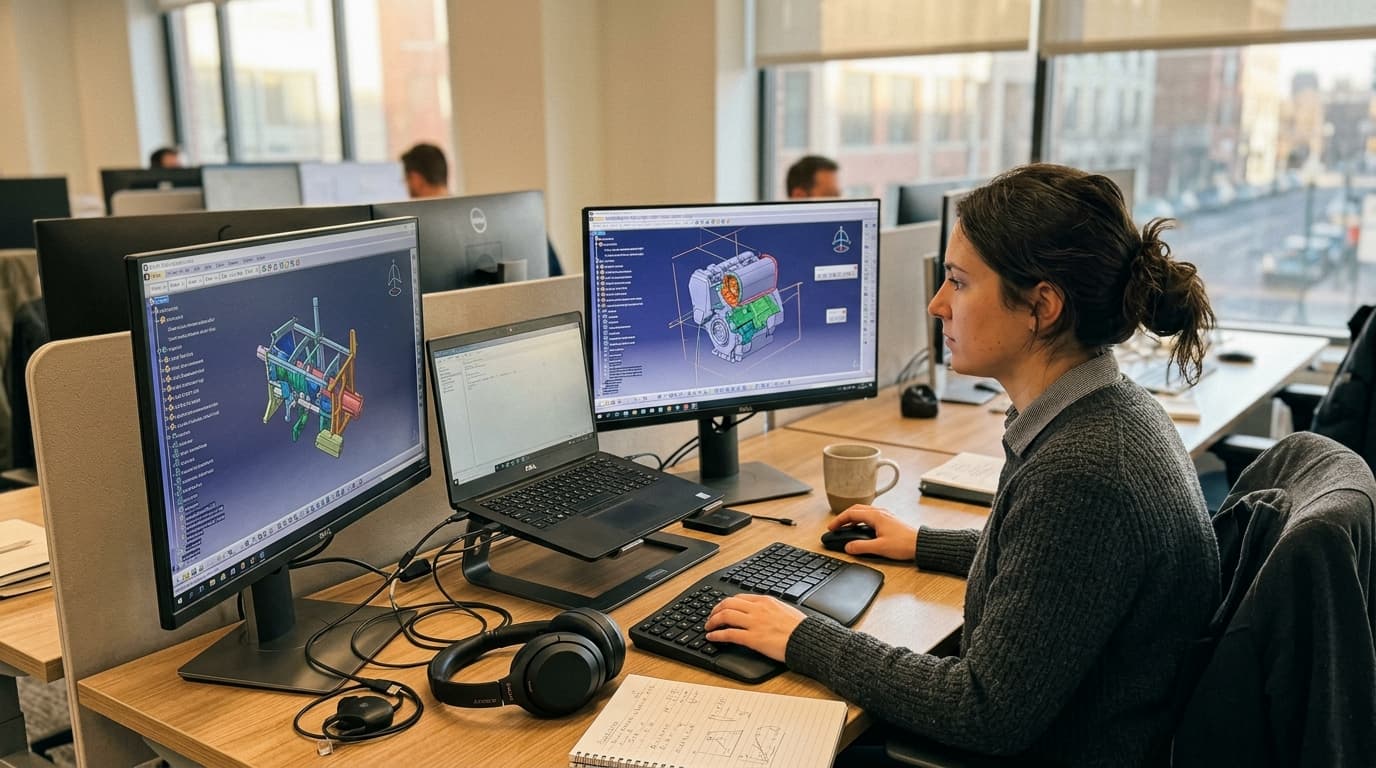
Aerospace
Prototyping FAQ
Common questions about design prototyping for aerospace applications.
Yes. Our simulation reports include full methodology documentation, assumption tracking, and results formatted for airworthiness certification submission in accordance with relevant standards.
We model nickel superalloys, titanium alloys, aluminium, composites (CFRP/GFRP), and ceramic matrix composites. Our material models include temperature-dependent properties, creep, and fatigue behaviour.
Yes. We model multi-layer TBC systems including bond coat, thermally grown oxide, and top coat. Analysis includes thermal cycling, spallation risk, and life prediction.
Our simulation processes align with AS9100 quality management requirements. We maintain full traceability of analysis methods, software versions, and validation evidence.
Ready to
Prototype?
Our aerospace engineers validate your component designs with certification-grade simulation-driven prototyping.
- Simulation-driven design validation
- Aerospace-specific performance criteria
- Scalable concept-to-production transition