
Food & Beverage
Pinch Analysis
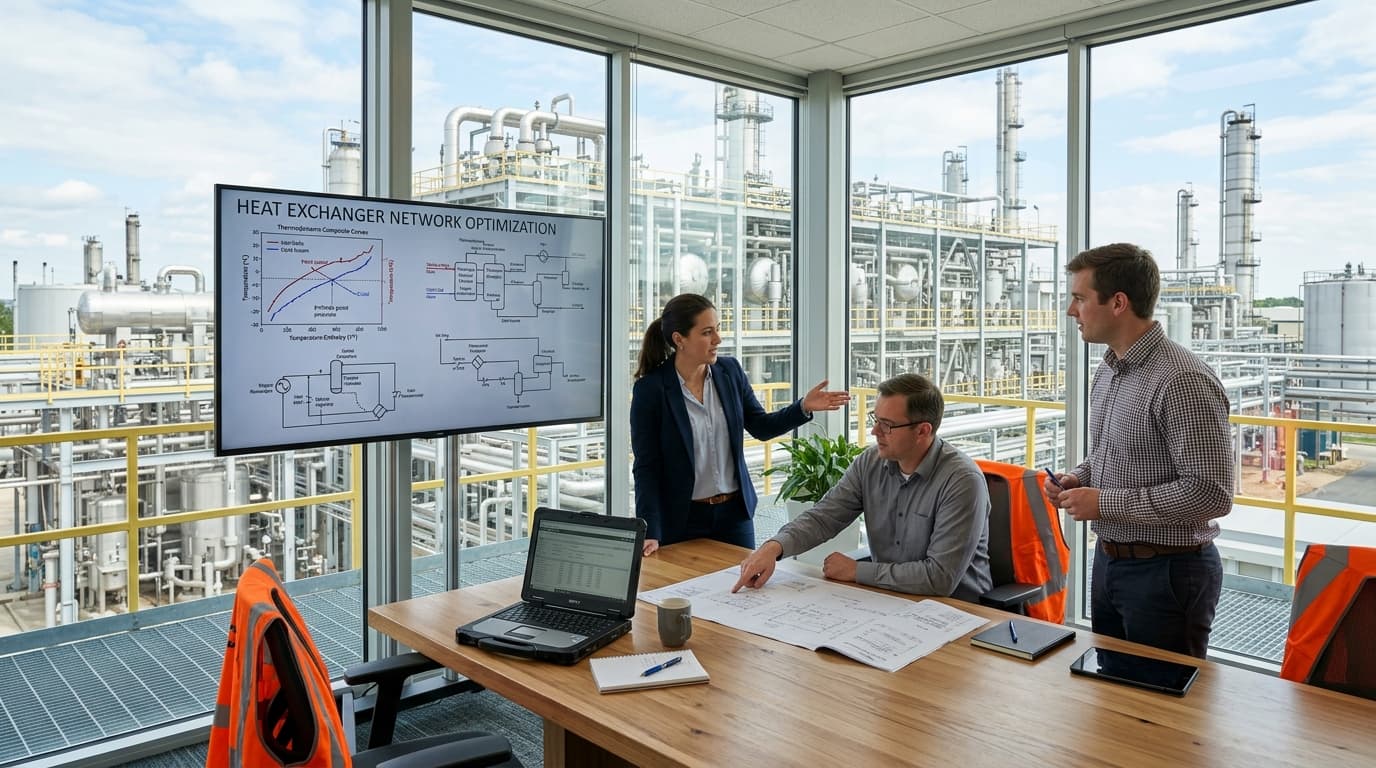
Food and beverage manufacturing involves energy-intensive processes — ovens, dryers, pasteurisers, steam systems, and refrigeration — with significant untapped heat recovery potential. Our pinch analysis studies for the food sector set thermodynamic energy targets, design optimal heat exchanger networks, and evaluate CHP integration to deliver measurable cost savings and sustainability improvements.
Heat Integration Challenges
in Food & Beverage
From oven exhaust recovery to steam optimisation and CHP, food processors can unlock major energy savings through systematic analysis.
Oven Exhaust Heat Recovery
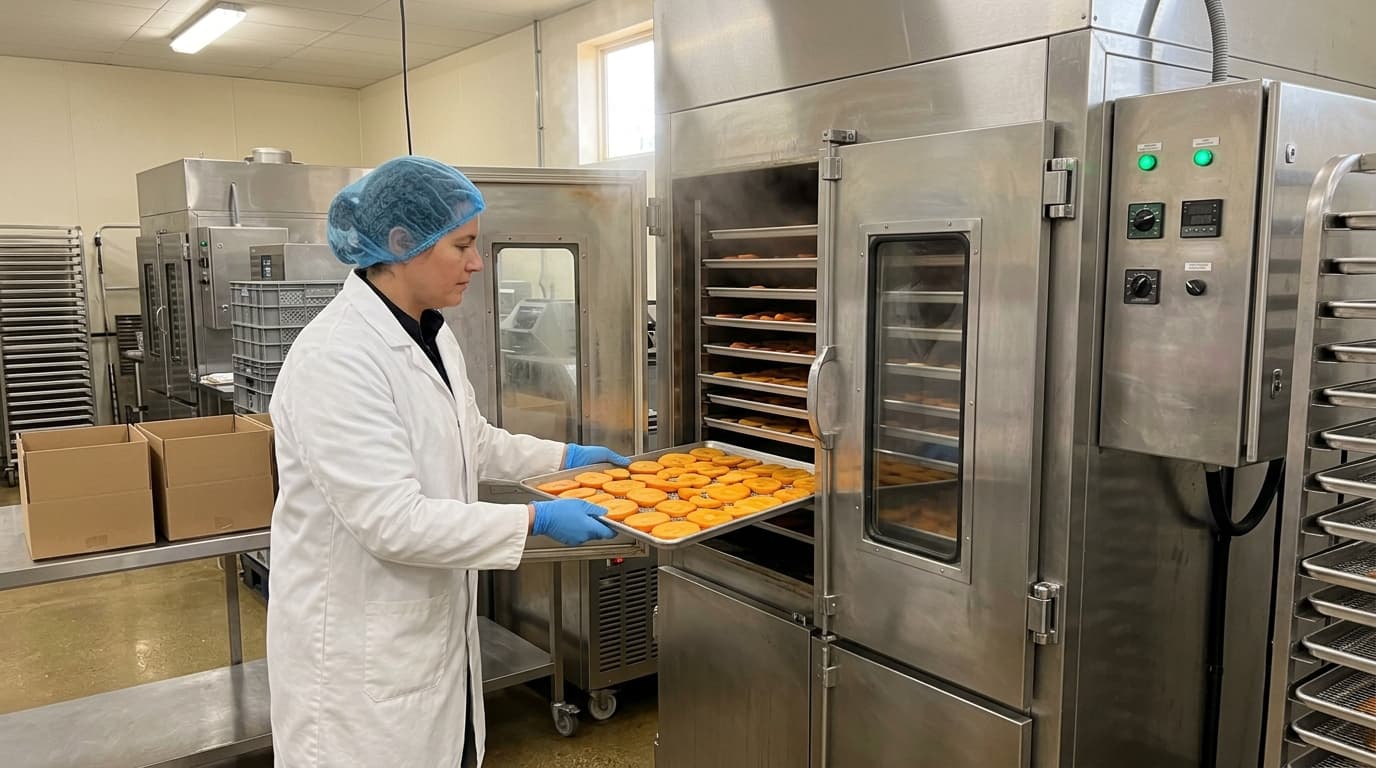
Industrial ovens, fryers, and dryers exhaust large quantities of hot air with significant recoverable energy. Without pinch analysis, this heat is typically wasted through stack losses.
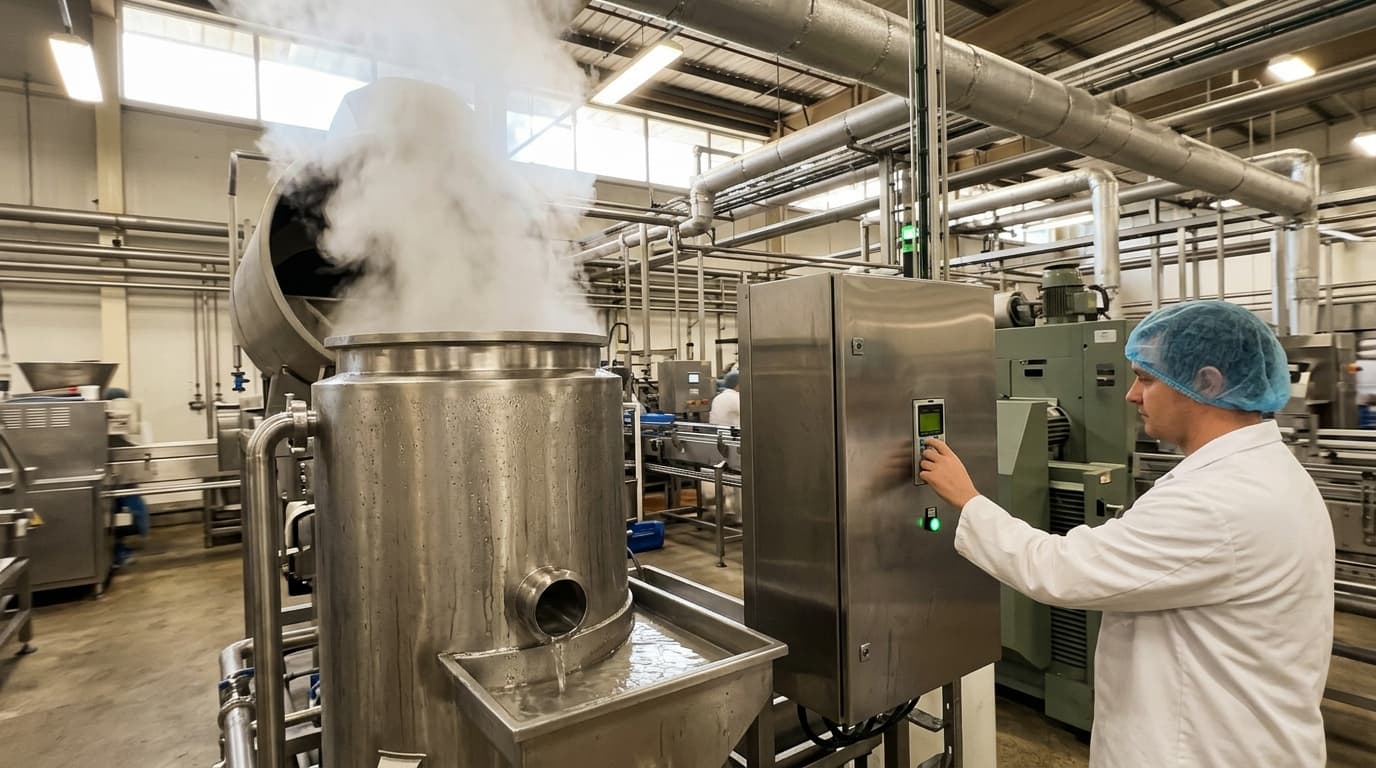
Steam System Inefficiency
Steam generation and distribution networks in food plants are often oversized and poorly matched to actual process demands. Pinch targeting reveals the true minimum steam requirement.
Refrigeration & Heating Mismatch
Simultaneous heating and cooling demands create natural heat recovery opportunities. Condenser heat from refrigeration can often supply low-grade process heating needs.
CHP Integration Potential
Combined heat and power systems can dramatically reduce site energy costs, but sizing and integration must be optimised. The grand composite curve identifies the ideal CHP placement.
Our 8-Step
Methodology
A rigorous approach tailored to food and beverage manufacturing environments.
Data Extraction & Stream Identification
Systematically extract thermal data from P&IDs, heat and mass balances, and operational logs to build a complete stream inventory. Every heating and cooling duty across the facility is catalogued for analysis.
Our engineers conduct on-site audits and review simulation models to map all hot and cold process streams, capturing supply temperatures, target temperatures, mass flowrates, and specific heat capacity data. Seasonal and turndown operating cases are included to ensure the analysis reflects real-world variability. The deliverable is a validated stream data table that forms the foundation for all subsequent pinch calculations.
Problem Table Algorithm
Apply the cascade algorithm to calculate thermodynamically rigorous minimum heating and cooling utility targets. This step reveals the theoretical best-case energy performance for your process.
Using the validated stream data, we construct temperature interval diagrams and run the heat cascade to pinpoint the exact pinch temperature and quantify the minimum hot and cold utility demands. The results establish an absolute benchmark against which the current utility consumption is compared, immediately highlighting the energy saving potential. A sensitivity analysis on the minimum approach temperature (ΔTmin) is performed to understand how target values shift with exchanger sizing.
Composite Curve Construction
Construct temperature-enthalpy composite curves that graphically reveal the maximum recoverable heat and the driving forces available across the process. These curves are the central diagnostic tool in pinch analysis.
Hot and cold streams are aggregated into composite profiles and plotted on a temperature-enthalpy diagram, making it straightforward to visualise the overlap region where process-to-process heat exchange is thermodynamically feasible. The gap between the curves at the pinch defines the minimum approach temperature, while the non-overlapping tails quantify the irreducible utility demands. This graphical output is a powerful communication tool for stakeholders, translating complex thermodynamic data into an intuitive visual.
Grand Composite Curve
Generate the grand composite curve to identify the optimal temperature levels at which utilities should be supplied and to reveal pockets of heat surplus or deficit. This guides the selection of steam grades, hot oil circuits, and cooling water tiers.
The grand composite curve plots net enthalpy deficit against shifted temperature, exposing where high-grade utilities can be replaced by lower-cost alternatives such as low-pressure steam or waste heat sources. It also highlights opportunities for heat pump placement, process integration across different pressure levels, and cascading of rejected heat. The result is a utility strategy that minimises both energy cost and exergy destruction across the plant.
Heat Exchanger Network Design
Synthesise a heat exchanger network that achieves maximum energy recovery by rigorously applying the pinch design rules. The resulting network captures all thermodynamically feasible heat exchange between process streams.
Starting from the pinch point, matches are made separately above and below the pinch to ensure no cross-pinch heat transfer, no external cooling above the pinch, and no external heating below it. Each match specifies exchanger duty, inlet/outlet temperatures, and required surface area using appropriate correlations for shell-and-tube, plate, or compact exchanger geometries. The initial MER design serves as the theoretical benchmark from which practical network simplification and costing proceed.
Network Optimisation & Relaxation
Evolve the MER network into a practical, cost-effective design by relaxing constraints and reducing the number of exchanger units. This step balances thermodynamic ideality with real-world capital and operability considerations.
Small-duty exchangers and loop-breaking strategies are evaluated to reduce the total number of units while keeping the energy penalty within acceptable limits. Heat load paths are re-routed using energy relaxation techniques, and split-stream fractions are adjusted to improve controllability and reduce piping complexity. The outcome is a streamlined network with fewer units, lower capital expenditure, and a clear understanding of the marginal energy cost of each simplification.
Utility Integration & CHP Targeting
Evaluate the integration of combined heat and power, heat pumps, absorption chillers, and other utility technologies to further reduce primary energy consumption. Placement is guided by the grand composite curve to ensure thermodynamic and economic viability.
CHP systems are sized and placed so that shaft power is generated from the temperature difference between high-grade heat supply and the process pinch, maximising cogeneration efficiency. Heat pumps are assessed across the pinch where the temperature lift is modest enough to deliver a favourable coefficient of performance, and absorption refrigeration cycles are considered where sub-ambient cooling is required. Each option is benchmarked against conventional utility supply to quantify carbon, cost, and reliability impacts.
Economic Evaluation & Reporting
Compile a detailed techno-economic report covering capital estimates, operational savings, payback periods, and a phased implementation roadmap. The report provides the business case needed to secure investment approval.
Each proposed heat exchanger, utility modification, and CHP option is costed using vendor data and factored estimation methods, then ranked by net present value, simple payback, and internal rate of return. Risk factors such as fouling margins, turndown flexibility, and maintenance access are incorporated into the evaluation to ensure robust recommendations. The final deliverable includes an executive summary, detailed engineering appendices, and a prioritised project schedule aligned with planned shutdown windows.
What You
Receive
Actionable intelligence for food & beverage heat integration — from composite curves to CHP sizing.
Stream Data & Energy Targets
Complete process stream analysis with composite curves and minimum energy targets for heating, cooling, and refrigeration duties.
Composite Curve Analysis
Hot and cold composite curves showing maximum heat recovery potential across all thermal processes including baking, drying, pasteurisation, and CIP.
Grand Composite & CHP Sizing
Grand composite curve analysis identifying optimal CHP sizing, heat pump opportunities, and utility level selection.
HEN Design
Practical heat exchanger network design suitable for food-grade service, with hygienic design considerations and material specifications.
Refrigeration Integration
Analysis of refrigeration system condenser heat recovery potential and integration with process heating demands.
ROI & Implementation Roadmap
Phased investment plan with NPV, IRR, and payback periods, aligned with production schedules and maintenance windows.
Proven Results in
Food & Beverage
Based on pinch studies across bakeries, dairies, snack manufacturers, and beverage facilities.
Related Products
& Services
Complementary equipment and engineering services for your process.





Food & Beverage
Pinch Analysis FAQ
Common questions from food and beverage manufacturers about pinch analysis.
Yes — this is one of the most valuable applications. The grand composite curve shows exactly how much power generation capacity can be economically supported by your process heat demands, and identifies the optimal steam conditions for CHP integration.
Absolutely. Our heat exchanger recommendations use food-grade materials, hygienic design principles, and comply with relevant food safety standards. All proposed modifications consider cleaning-in-place (CIP) requirements and cross-contamination prevention.
Yes. We model seasonal and campaign-based production profiles to ensure heat integration solutions remain effective across all operating scenarios. The analysis identifies robust designs that perform well under varying production loads.
Oven and dryer exhaust streams are included as hot streams in the composite curve analysis. We identify the most thermodynamically and economically effective use for this recovered heat — whether for combustion air preheating, process water heating, or space heating.
Ready to
Optimise?
Our food & beverage specialists are ready to identify energy targets and design heat integration solutions for your facility.
- Thermodynamic energy targeting
- Food & Beverage-specific heat integration
- Detailed ROI & implementation roadmap