Pharmaceutical
Thermal Simulation
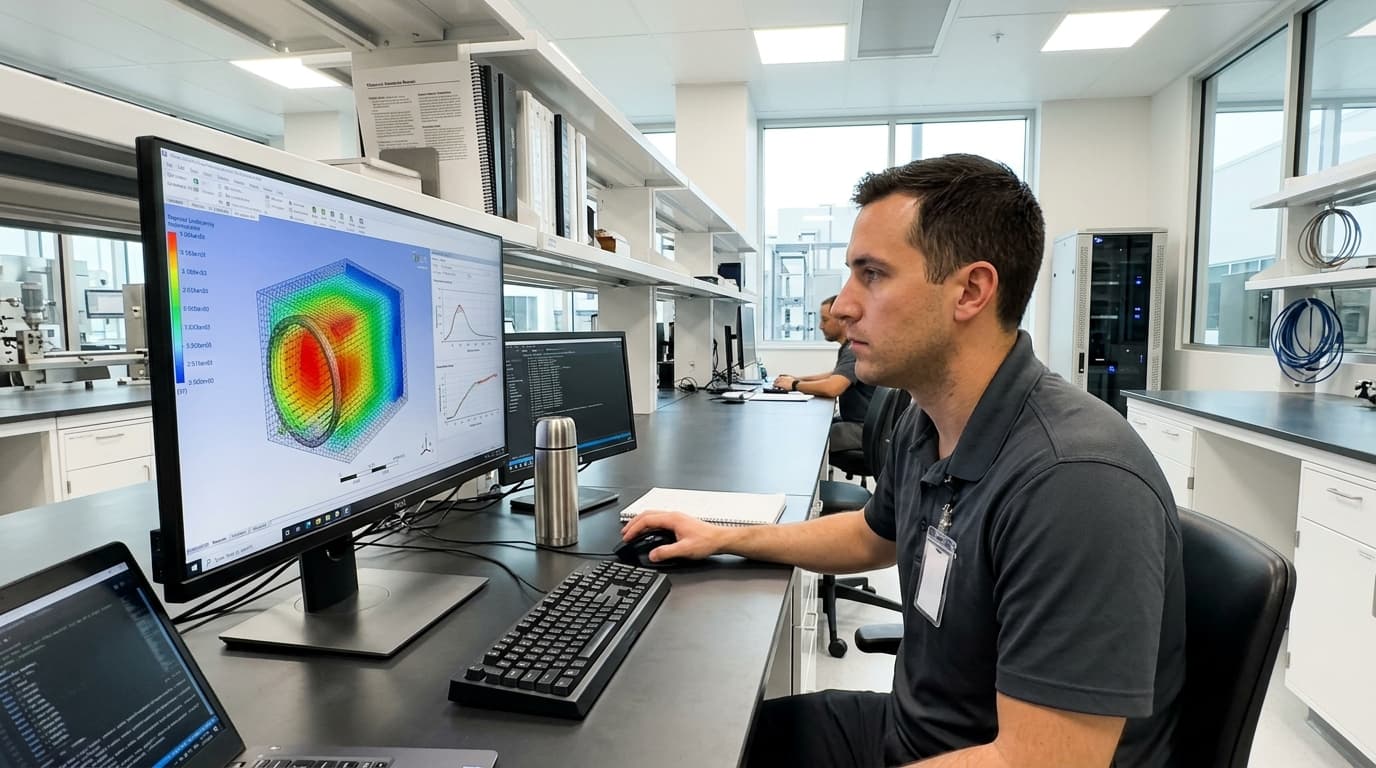
Pharmaceutical manufacturing requires validated thermal processes that meet GMP standards. Our engineers simulate cleanroom HVAC systems, freeze-dryer thermal performance, and autoclave sterilisation cycles — ensuring process validation, product quality, and regulatory compliance through rigorous computational modelling.
Thermal Challenges
in Pharmaceutical
GMP validation, sterility assurance, and precise thermal control are non-negotiable in pharma.
Cleanroom HVAC Simulation
Cleanroom environments require precise temperature, humidity, and airflow control. Our CFD models predict air change rates, particle dispersion, and temperature uniformity to ensure GMP classification compliance.
Freeze-Dryer Thermal Design
Lyophilisation requires carefully controlled shelf temperatures and chamber pressures. We model heat transfer through shelves, vials, and product to optimise cycle times while maintaining product quality.
Autoclave Cycle Modelling
Steam sterilisation must achieve validated F₀ values at the coldest point within the load. Our thermal models predict heat penetration profiles and validate sterilisation cycle effectiveness.
Process Validation Support
Thermal simulation provides computational evidence for IQ/OQ/PQ validation. Our models demonstrate thermal performance under design conditions, worst-case scenarios, and edge cases.
Our 11-Step
Methodology
A systematic approach designed for GMP environments and pharmaceutical validation requirements.
Define Objectives
Collaborate with clients to understand their operational goals, thermal challenges, and critical areas of concern through structured discovery workshops.
We define clear, measurable objectives for the optimisation project, including target energy savings, throughput improvements, and compliance milestones. This alignment ensures every subsequent phase delivers against your strategic priorities.
Data Collection Planning
Audit existing data sources and design a tailored instrumentation plan that identifies gaps in temperature, pressure, and flow measurement coverage.
We specify and install thermocouples, heat flux sensors, flow meters, and data loggers at critical process nodes. The resulting measurement architecture ensures every relevant thermal parameter is captured with the accuracy required for high-fidelity modelling.
Comprehensive Data Gathering
Collect granular operational data spanning energy consumption, material throughput, heat loss profiles, and environmental boundary conditions across all relevant process stages.
Our engineers capture steady-state and transient thermal profiles, equipment duty cycles, and fuel or electricity consumption at each process unit. This comprehensive dataset forms the foundation for accurate simulation and benchmarking against industry best practices.
Real-Time Monitoring
Deploy real-time monitoring dashboards and alerting systems to capture dynamic process behaviours, load variations, and thermal transients as they happen.
Continuous data streaming enables our team to detect performance bottlenecks, unexpected heat losses, and equipment cycling patterns that batch sampling would miss. This live visibility accelerates root cause identification and informs more responsive process adjustments.
Data Validation
Verify the accuracy and consistency of all collected data using statistical validation, energy balance reconciliation, and sensor cross-referencing techniques.
We apply outlier detection, redundancy checks, and mass-energy balance closures to confirm data integrity before it enters our simulation models. Validated datasets ensure that every design recommendation is grounded in reliable, auditable measurements.
In-Depth Analysis
Apply advanced computational tools to build detailed thermal models, quantify performance losses, and pinpoint inefficiencies across your process chain.
Using Computational Fluid Dynamics (CFD), Finite Element Analysis (FEA), and proprietary process simulation software, we model heat transfer, fluid flow, and structural stress under steady-state and transient operating conditions. Scenario analysis reveals how design modifications affect efficiency, emissions, and equipment longevity.
Identifying Improvement Opportunities
Perform structured root cause analysis to translate simulation findings into prioritised, actionable improvement recommendations with quantified benefit projections.
Each opportunity is ranked by energy savings potential, implementation complexity, and payback period. Deliverables include a detailed improvement register with projected reductions in fuel consumption, carbon emissions, and maintenance costs for every proposed intervention.
Implementation Planning
Develop a phased implementation roadmap with resource allocation, procurement specifications, and milestone-driven timelines tailored to your operational schedule.
We sequence modifications to minimise production downtime and prioritise quick-win interventions that fund subsequent phases. The plan includes vendor specifications, capital and operating cost estimates, and risk mitigation strategies for each implementation stage.
Practical Implementation
Execute approved modifications on-site with our engineering team, coordinating closely with your operations staff to ensure seamless integration and minimal disruption.
We oversee equipment installation, control system reconfiguration, and insulation upgrades while monitoring key performance indicators in real time. Continuous commissioning verifies that each change delivers the predicted thermal and energy performance before proceeding to the next.
Post-Implementation Review
Conduct a comprehensive post-implementation audit comparing actual performance against baseline data and projected targets to validate achieved savings.
We produce a detailed performance report documenting energy reductions, throughput improvements, and emissions decreases with supporting measurement data. Any variance from projections triggers a corrective action plan to fine-tune configurations and safeguard long-term sustainability.
Training and Support
Deliver structured training programmes for operators, maintenance technicians, and engineering staff covering new equipment, updated procedures, and monitoring best practices.
Training includes hands-on workshops, standard operating procedure documentation, and troubleshooting guides tailored to your facility. We also provide ongoing technical support and periodic review visits to ensure sustained performance and continuous improvement over time.
What You
Receive
GMP-compatible thermal simulation deliverables supporting validation and regulatory compliance.
Cleanroom CFD Model
3D airflow simulation showing velocity vectors, temperature distribution, and particle trajectory analysis for GMP classification.
Freeze-Dryer Thermal Model
Shelf temperature uniformity analysis, primary/secondary drying optimisation, and cycle time reduction recommendations.
Sterilisation Validation
Thermal penetration modelling with F₀ value predictions for autoclave loads, showing worst-case cold spots.
HVAC Design Verification
Air handling unit sizing verification, duct pressure drop analysis, and energy consumption optimisation.
Validation Support Documentation
Simulation methodology, model verification, and results formatted to support IQ/OQ/PQ qualification activities.
Energy Optimisation Report
Quantified energy savings from HVAC setback, heat recovery, and optimised process scheduling.
Proven Results in
Pharmaceutical
Based on thermal simulation projects across API, formulation, and sterile manufacturing facilities.
Related Products
& Services
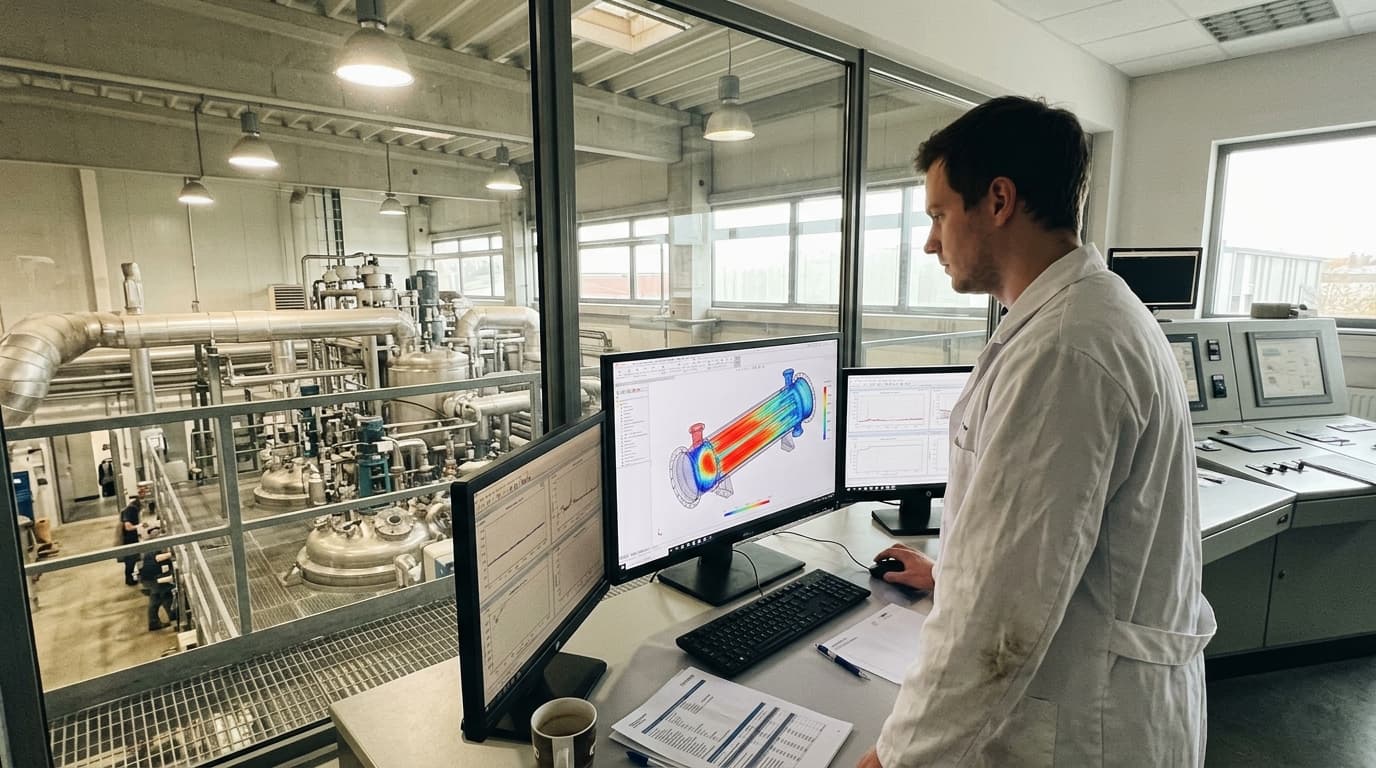
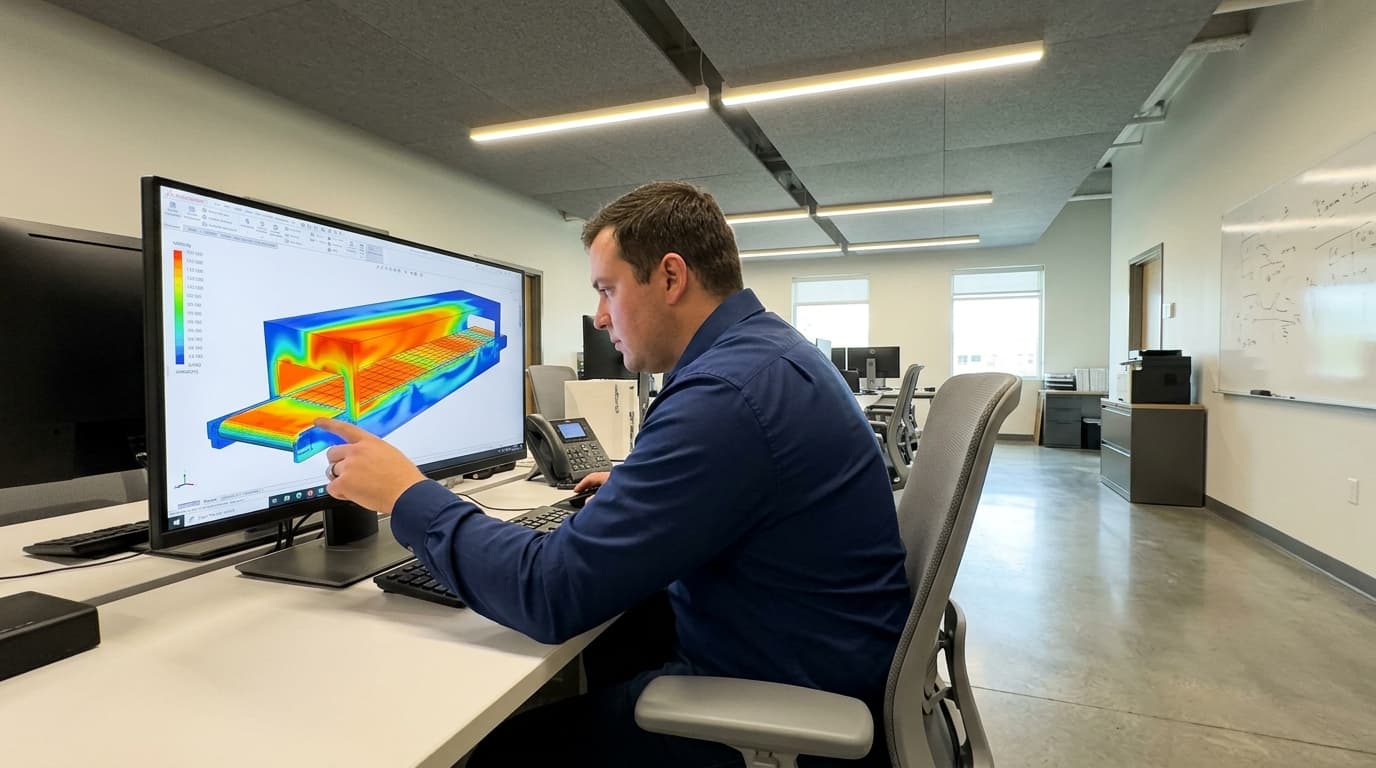
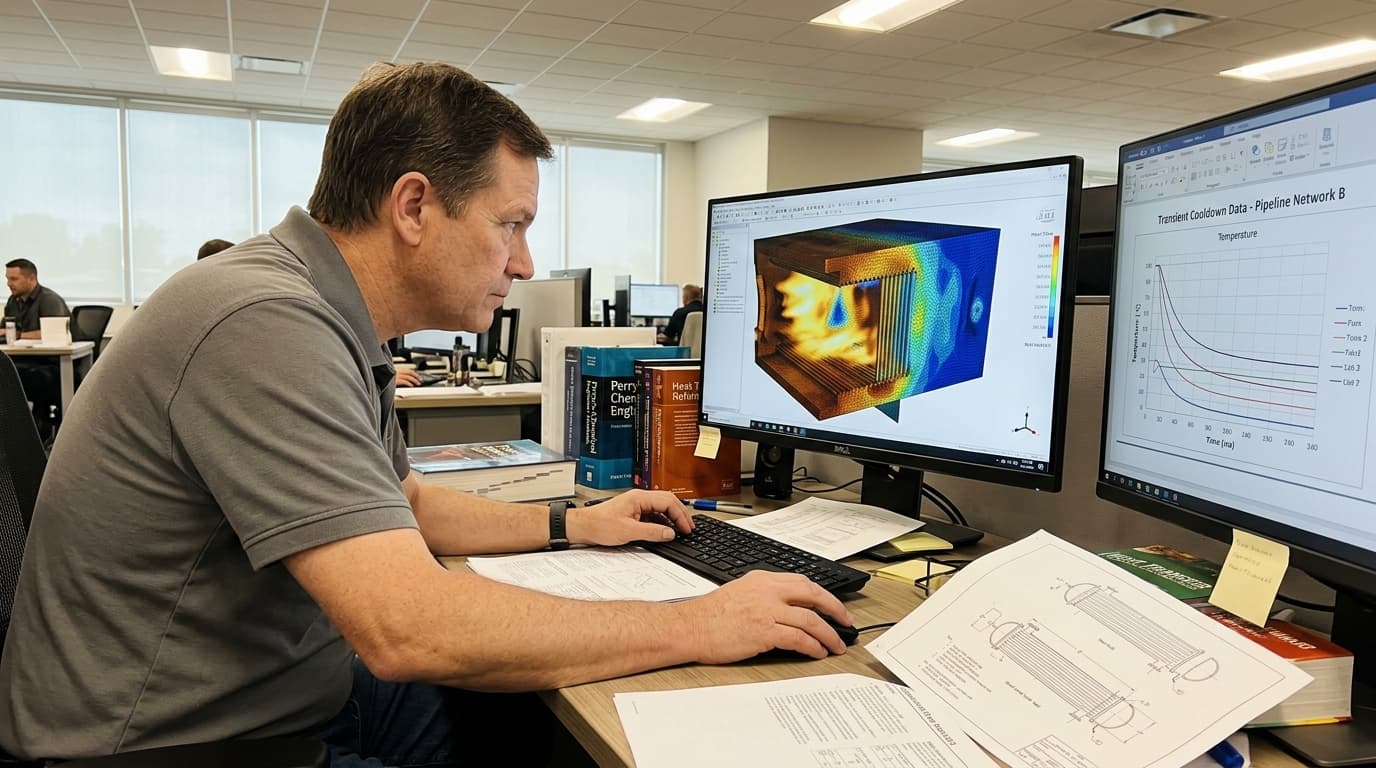
Complementary equipment and engineering services for your process.

Pharmaceutical
Simulation FAQ
Common questions about thermal simulation for pharmaceutical manufacturing.
Yes. Our simulation methodology is documented to support validation activities. We provide verification evidence, sensitivity analysis, and results formatted for inclusion in IQ/OQ/PQ protocols. Our approach follows GAMP 5 principles for computational tools.
Yes. We model heat transfer from shelf to vial to product, predicting sublimation rates and product temperature. This allows cycle optimisation that reduces drying time while maintaining product quality — typically achieving 15-25% cycle time reduction.
We create 3D CFD models of your cleanroom including HEPA filter locations, return air positions, equipment, and personnel. The simulation predicts air velocity profiles, temperature uniformity, and particle transport to verify GMP classification.
Absolutely. We model heat penetration into different load configurations to identify the coldest point (worst-case location). This supports load pattern validation and helps optimise sterilisation cycle parameters.
Ready to
Simulate?
Our pharmaceutical engineers deliver GMP-validated thermal simulations that ensure process compliance and optimise performance.
- Advanced CFD & FEA thermal simulation
- Pharmaceutical-specific process optimisation
- Comprehensive implementation & training support