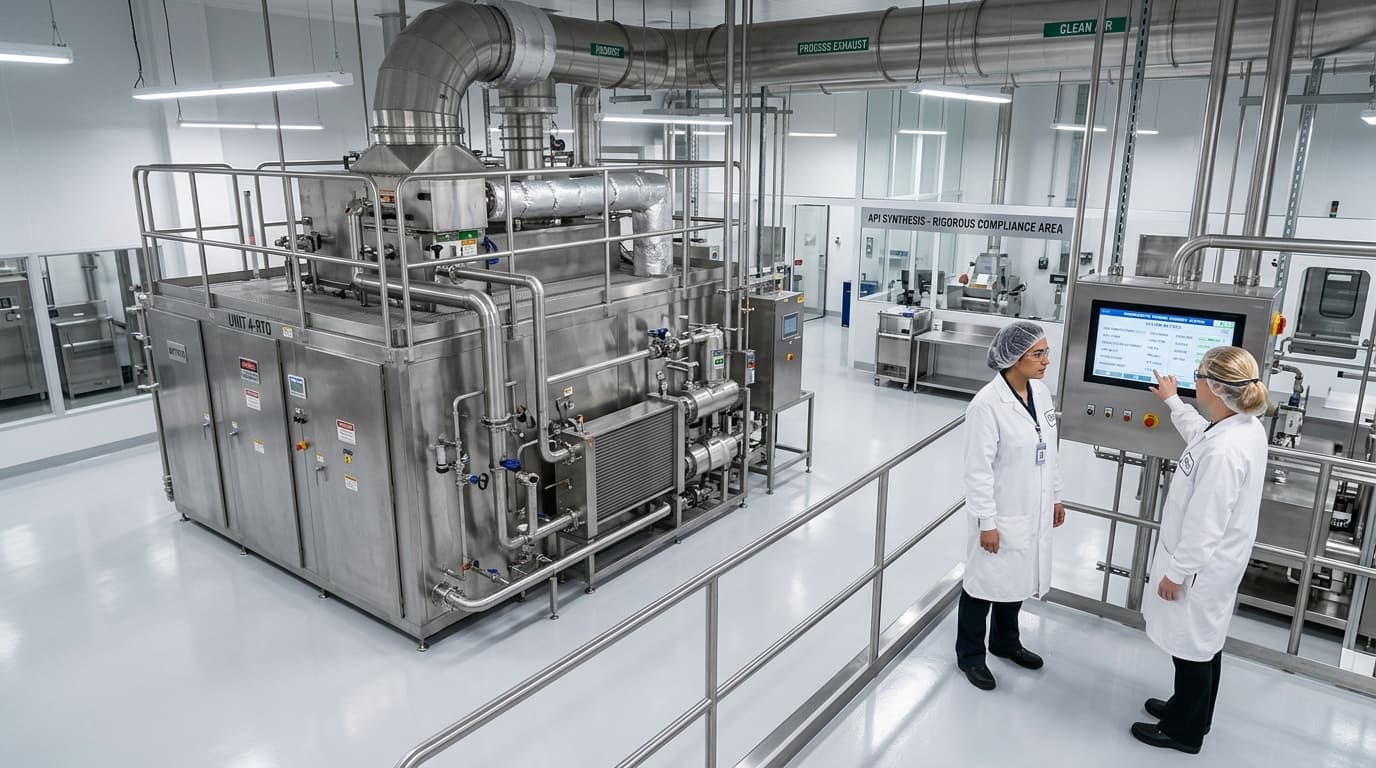
Pharmaceutical
Emission Control
Regenerative thermal oxidisers for solvent recovery off-gas, API synthesis vents, and GMP facility compliance.
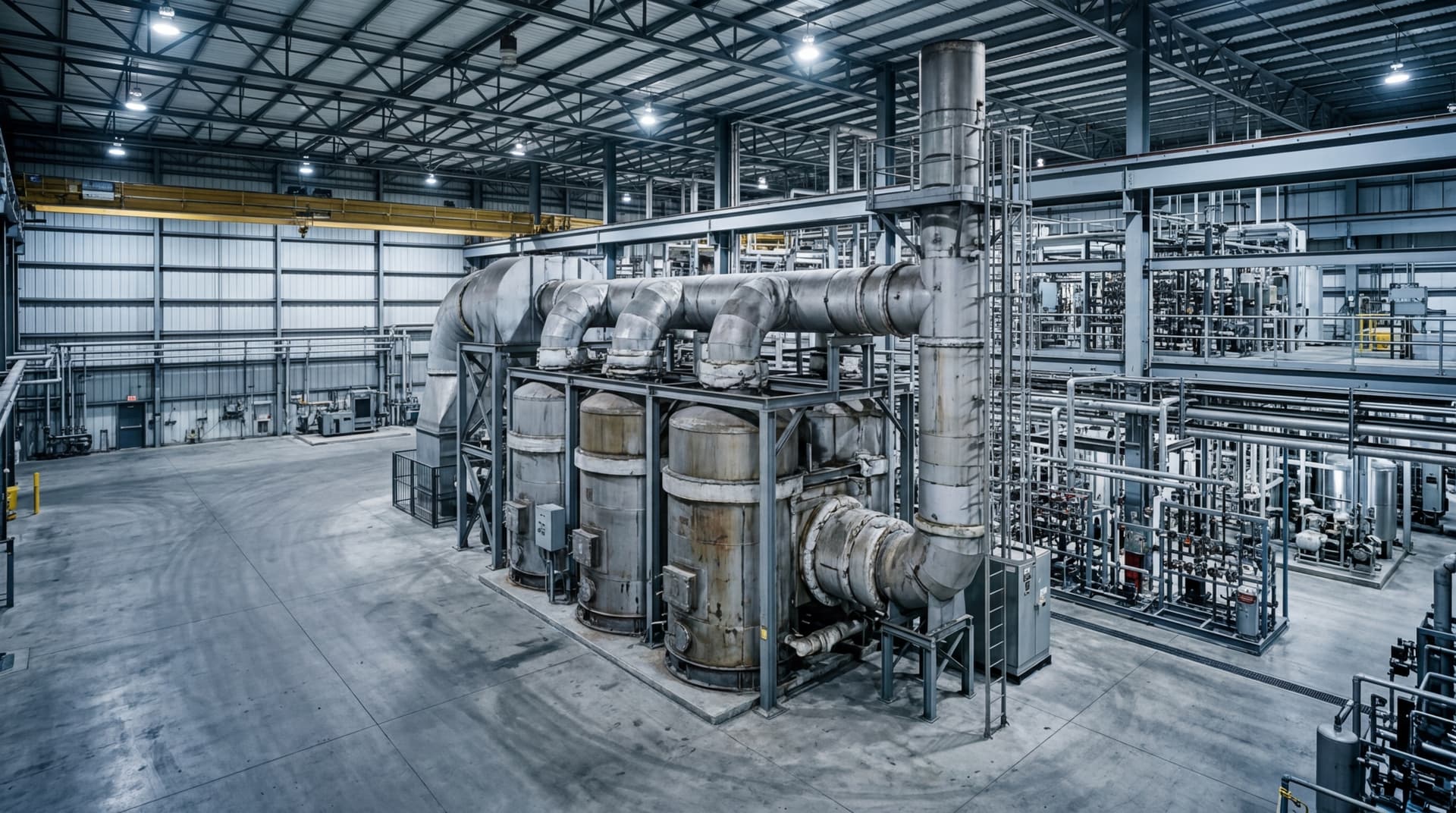
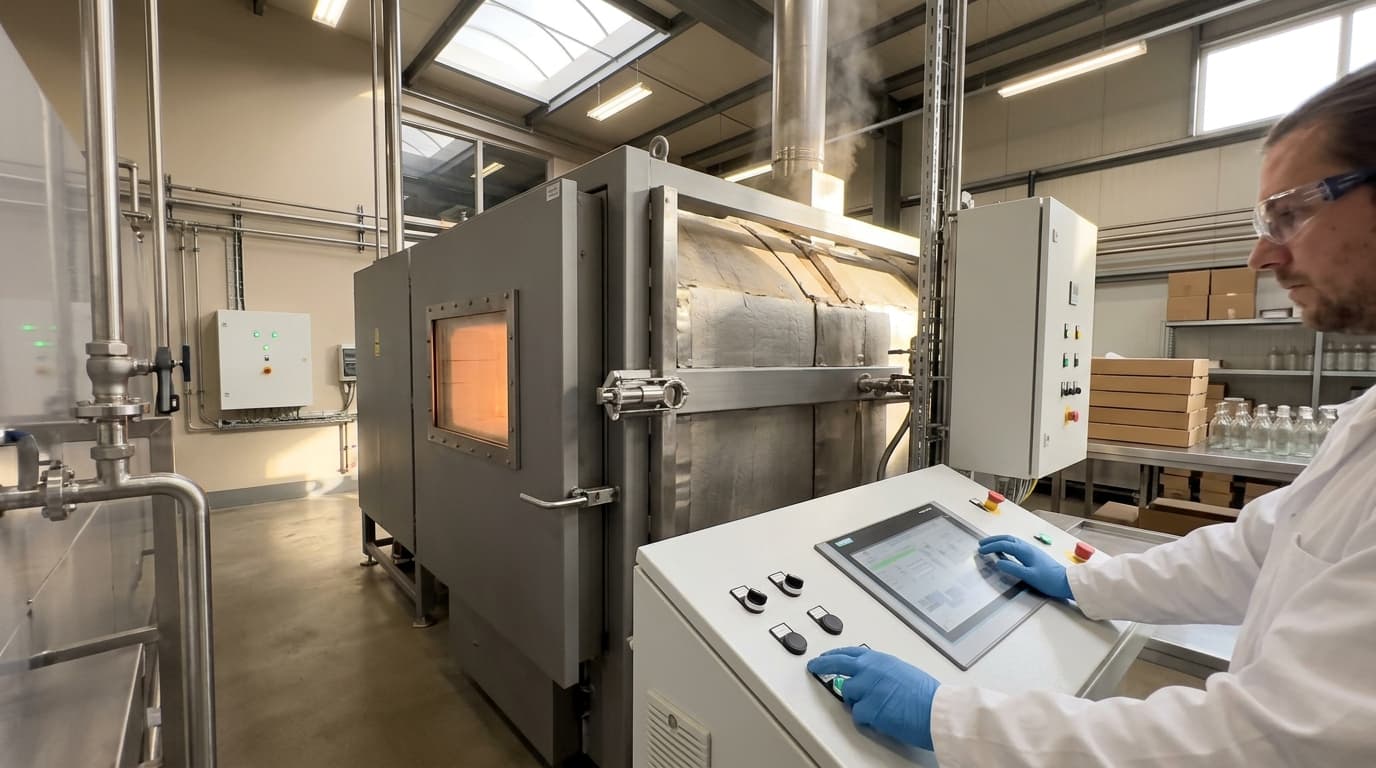
OxiTherm RTOs for pharmaceutical manufacturing. Destroy 99%+ of process solvents (DCM, methanol, ethanol, THF, acetone) and API intermediates with 98% energy recovery — meeting cGMP documentation requirements and environmental permit conditions simultaneously.
Three Models,
One Solution
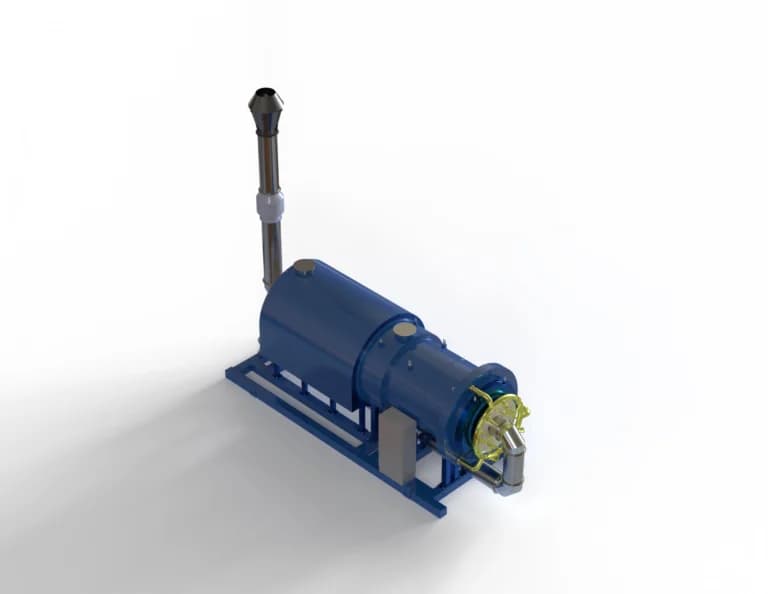
Mid-range thermal oxidiser for VOC abatement — 200 sm³/min volumetric flow with 99% destruction efficiency.
High-capacity thermal oxidiser — 300 sm³/min for medium-scale industrial VOC destruction applications.
Maximum-capacity thermal oxidiser — 500 sm³/min for large-scale industrial VOC abatement requirements.
Pharmaceutical
Applications
Select an application to see how OxiTherm thermal oxidisers address your specific pharmaceutical emission challenges.
Pharmaceutical solvent recovery systems capture the bulk of process solvents (methanol, ethanol, IPA, DCM, acetone, THF, ethyl acetate), but the residual tail-gas exiting the condenser or carbon bed still contains solvent vapours that exceed stack emission limits. This dilute, variable-concentration stream requires high-efficiency destruction without wasting fuel on lean mixtures. OxiTherm regenerative thermal oxidisers handle pharmaceutical recovery off-gas from 0.3 g/m³ to 20 g/m³, achieving 99% destruction with 98% heat recovery.
cGMP Compatible
Validated controls with 21 CFR Part 11 data logging
DCM Capable
Acid-resistant materials for halogenated solvents
Multi-Solvent
Handles the full pharmaceutical solvent palette
CEMS Integrated
Real-time monitoring for continuous audit readiness
Built for
Pharma
Manufacturing
Key advantages of OxiTherm regenerative thermal oxidisers for pharmaceutical emission control and cGMP compliance.
99%+ Solvent Destruction
Regenerative thermal oxidation at 850–1,100°C destroys the full pharmaceutical solvent palette — methanol, DCM, THF, acetone, ethyl acetate, toluene — meeting the strictest IED and EPA emission limits.
98% Energy Recovery
Ceramic heat exchange media captures and returns 98% of combustion energy — enabling near-autothermal operation on concentrated solvent recovery tail-gas streams.
cGMP Compatible Design
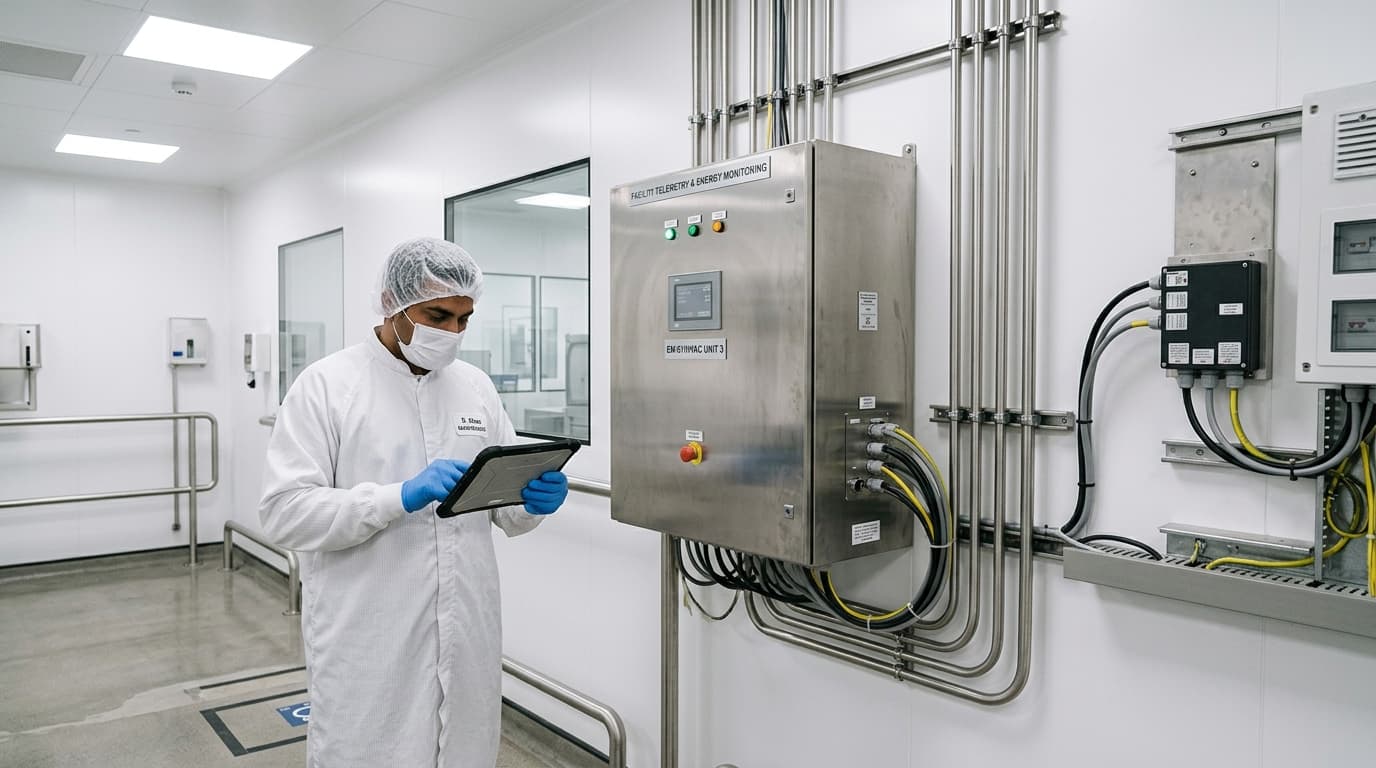
Control system designed for pharmaceutical environments — validated PLC, 21 CFR Part 11 compliant data logging, change management documentation, and qualification (IQ/OQ/PQ) support.
Halogenated Solvent Capable
For DCM, chloroform, and other halogenated solvents — acid-resistant construction with integrated HCl scrubbing on the outlet to neutralise combustion byproducts.
Multi-Source Manifold
Single system handles combined exhaust from reactors, filter-dryers, centrifuges, coaters, and granulators — with individual source isolation and flow control dampers.
Continuous Monitoring
Integrated CEMS with real-time VOC, CO, O₂, and HCl monitoring — providing audit-ready compliance data for environmental permit reviews and regulatory inspections.
Your Solvents Fund
Your Energy Bill
Pharmaceutical sites consume massive amounts of steam and hot water. Our oxidisers capture the energy from destroying your solvents and route it back into the systems already draining your utility budget.
Waste Heat Becomes
Pharma Plant Energy.
Pharmaceutical manufacturing sites run significant steam, hot water, and HVAC systems — particularly for cleanroom conditioning and CIP processes. The OxiTherm captures 98% of the thermal energy from solvent destruction and routes it directly into these high-demand systems, turning your emission abatement cost into a net energy contributor.
A waste-heat boiler generates 2–6 bar(g) steam from oxidiser exhaust — supplementing your existing boiler plant for CIP, sterilisation, and process heating applications.
An air-to-water heat exchanger generates 60–85°C hot water for Clean-In-Place systems, reducing the load on your dedicated CIP heating plant.
Recovered heat supplies air handling unit (AHU) coils for cleanroom conditioning — reducing the primary heating load on your HVAC system during winter months.
Recovered energy pre-heats reactor feeds, distillation column reboiler circuits, and dryer inlet air — displacing fired heater duty and reducing utility steam consumption.
Related Products
& Services
Complementary equipment and engineering services for your process.
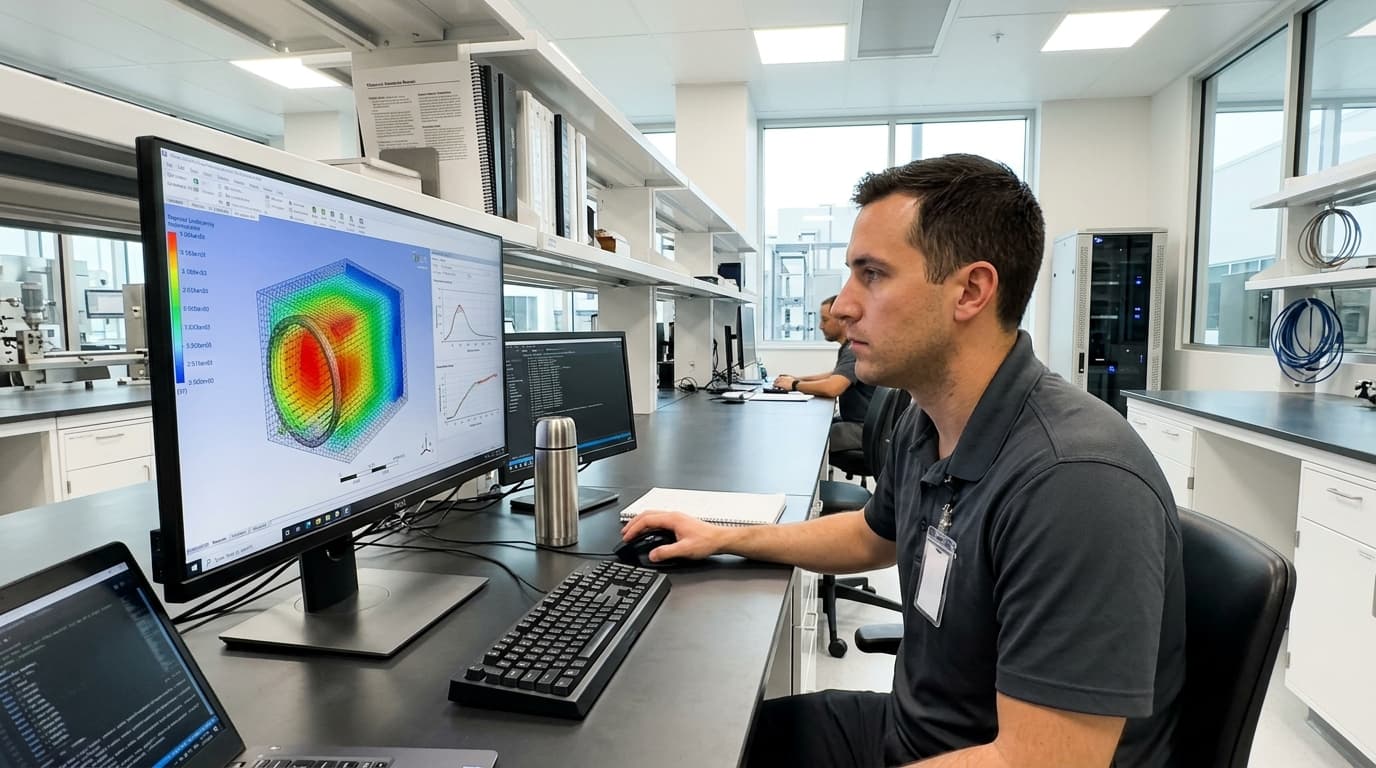
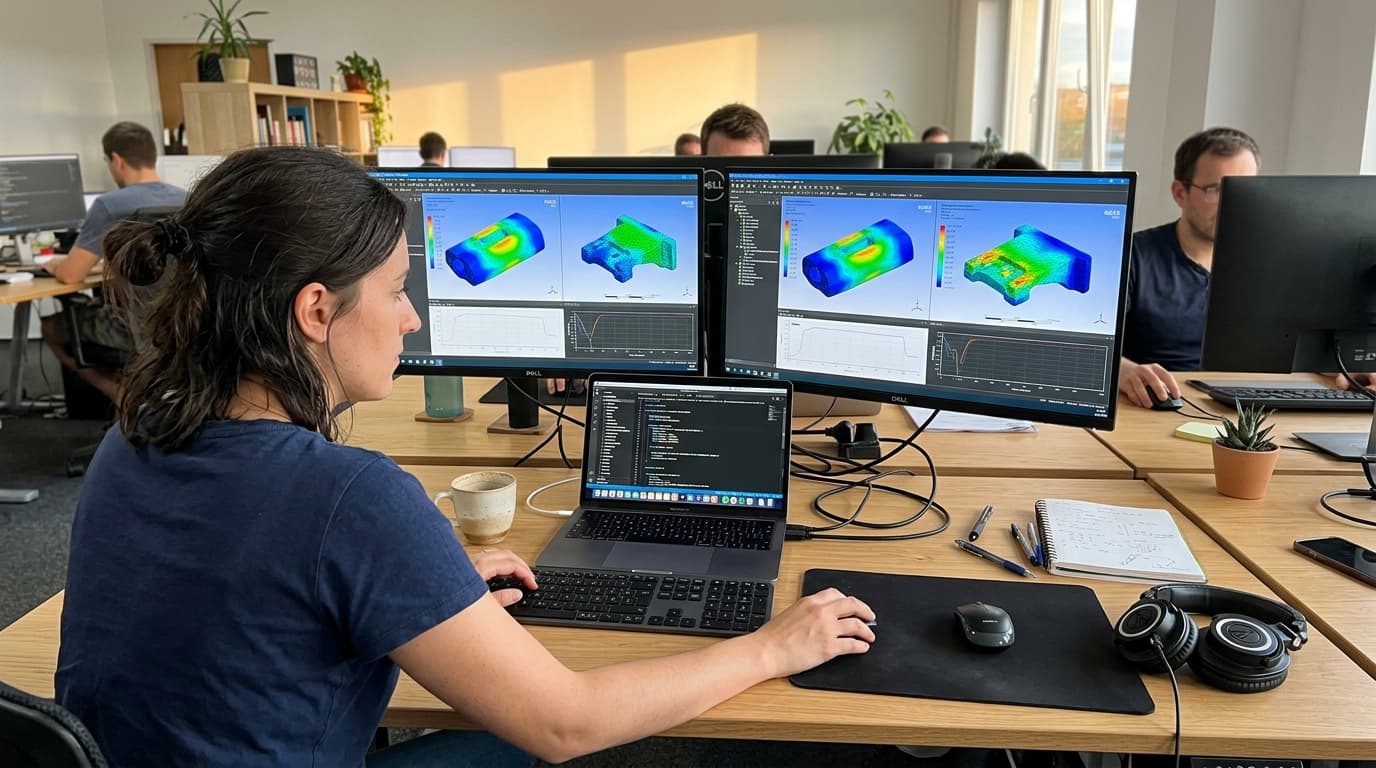
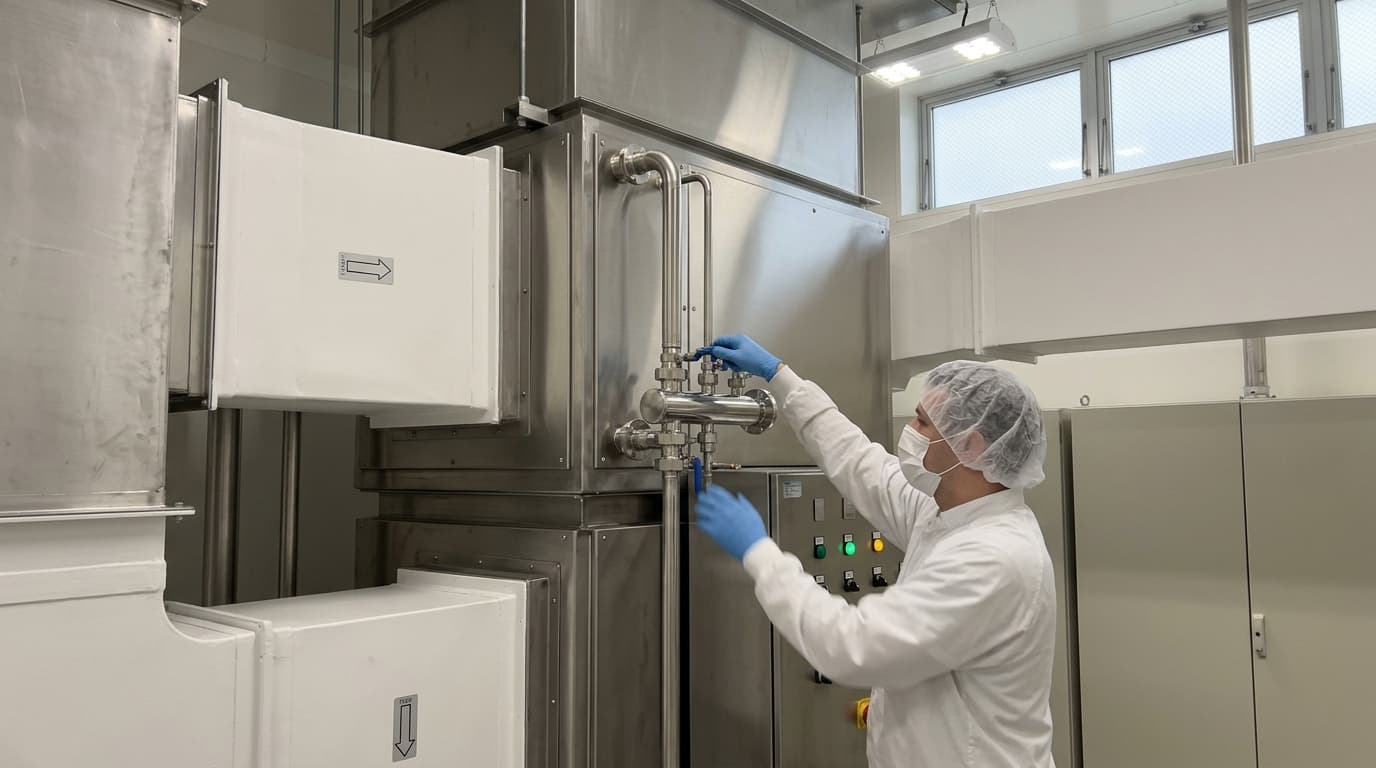
Pharmaceutical
Manufacturing
FAQs
Common technical questions about OxiTherm regenerative thermal oxidisers in pharmaceutical manufacturing environments.
Yes. Dichloromethane (DCM) and chloroform are widely used in pharmaceutical API synthesis and extraction. The OxiTherm destroys these compounds at 99%+ efficiency, with the resulting hydrogen chloride (HCl) gas neutralised by an integrated packed-bed scrubber on the oxidiser outlet. All downstream components use high-alloy stainless steels and acid-resistant coatings rated for HCl exposure.
The OxiTherm is designed for pharmaceutical cGMP environments. The control system features a validated PLC with 21 CFR Part 11 compliant data logging, electronic signatures, and audit trail functionality. We provide full IQ/OQ/PQ documentation packages and support your site's change management and commissioning qualification processes.
Pharmaceutical manufacturing is inherently batch-driven, with solvent loads varying dramatically between reaction, distillation, drying, and cleaning phases. The OxiTherm modulating burner system responds in seconds to concentration swings, maintaining combustion chamber temperature and destruction efficiency. Hot-gas bypass protection handles extreme concentration spikes during solvent charging or vacuum break events.
Yes. A manifold system collects exhaust from multiple GMP suites — reactors, filter-dryers, centrifuges, and fluid-bed equipment — through dedicated ducting with individual isolation dampers. This centralised approach is far more cost-effective than installing dedicated abatement at each production suite, while maintaining the process isolation required for cGMP operations.
OxiTherm systems destroy the full pharmaceutical solvent palette: methanol, ethanol, IPA, acetone, MEK, ethyl acetate, THF, toluene, DCM, chloroform, DMSO, DMF, and n-hexane. The 850–1,100°C operating temperature and 2.0-second residence time ensure complete oxidation regardless of the solvent mixture.
Routine maintenance includes burner inspection, ceramic media condition checks, scrubber packing assessment (for halogenated applications), and CEMS calibration. Typical intervals are 6–12 months for inspection and 5–10 years for ceramic media replacement. All maintenance activities are documented to cGMP standards with electronic records.
Pharmaceutical Emission Consultation
Our engineers specialise in pharmaceutical emission compliance. Tell us about your solvent species, process vent sources, containment requirements, and regulatory permit limits.
- Solvent recovery off-gas destruction
- API synthesis vent treatment
- Halogenated solvent (DCM) capability
- cGMP documentation & qualification support