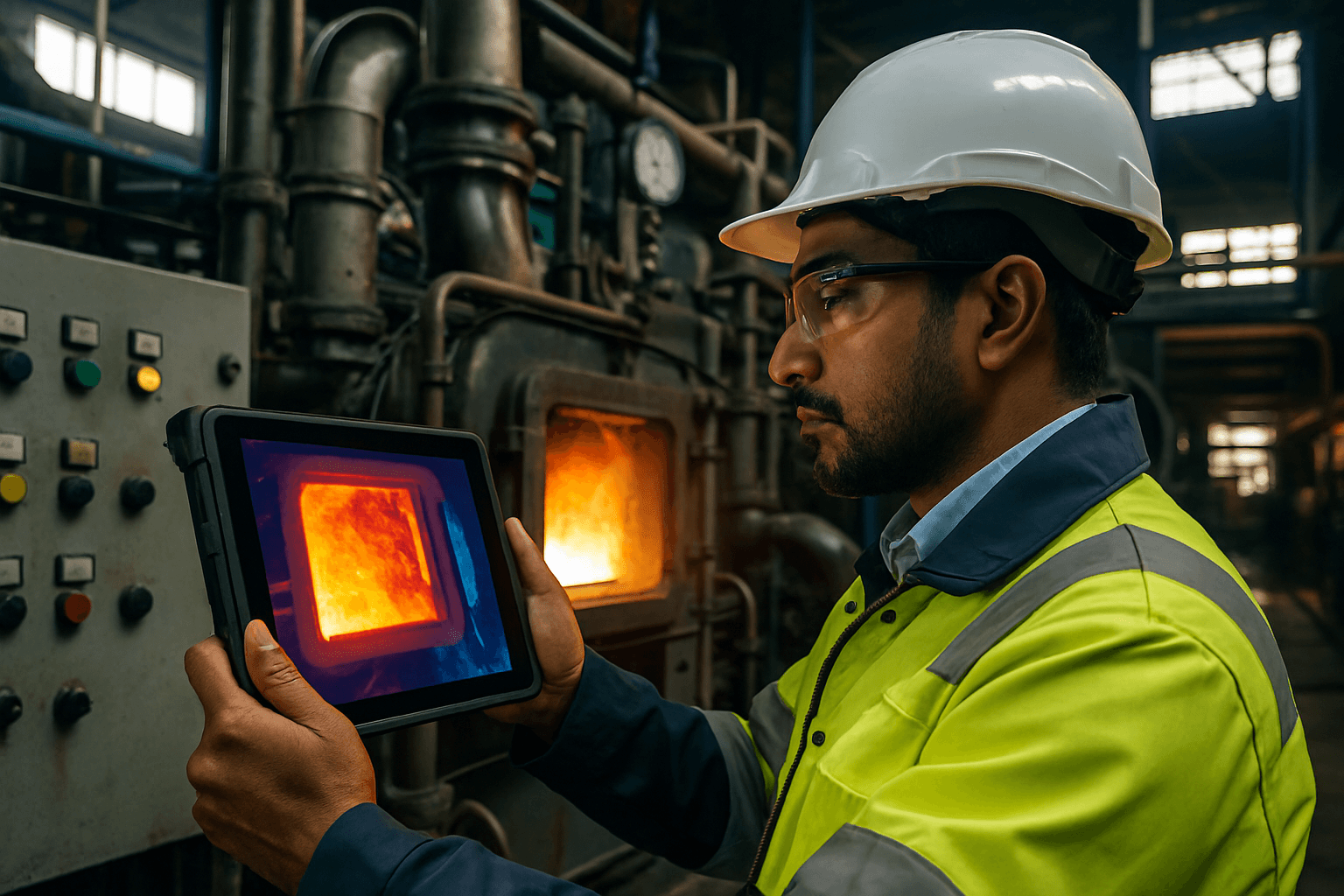
Maintaining optimal temperature profiles within incinerators is a critical challenge in waste management and thermal processing, particularly for sensitive applications like animal carcass incineration and waste-to-energy facilities. Inconsistent temperatures can lead to incomplete combustion, increased emissions, and reduced energy recovery, posing significant environmental and operational risks. Infrared thermography (IRT) emerges as a powerful, non-contact solution, offering real-time, comprehensive thermal insights to ensure efficient, compliant, and safe incineration processes.
Understanding Infrared Thermography in Incinerators
Infrared thermography is a non-contact method that visualizes temperature differences by detecting the infrared radiation emitted by objects. All matter at a temperature above absolute zero emits electromagnetic radiation, and thermal cameras convert this captured infrared energy into visible displays called thermograms, which represent temperature variations. In the context of incinerators, IRT allows operators to “see” the heat distribution inside the combustion chambers without direct contact, providing crucial data for process control.
Unlike traditional contact thermometers like thermocouples, which measure temperature at a single point and are susceptible to harsh incinerator environments, IRT provides a two-dimensional thermal image of the entire combustion zone. This is especially valuable for monitoring combustion gas temperatures and detecting temperature imbalances within the chamber.
The Critical Role of Temperature in Incineration
Precise temperature control is paramount in incinerator operations across various sectors:
Ensuring Complete Combustion and Pathogen Destruction
For waste incineration, especially animal carcasses and by-products, maintaining sufficiently high temperatures is essential for complete combustion. Incomplete combustion can lead to the formation of harmful by-products like carbon monoxide (CO), volatile organic compounds (VOCs), and dioxins. For hazardous waste or animal waste with halogenated organic matter, temperatures of at least 1100°C are often required to ensure destruction of residual persistent organic pollutants. For general animal waste, a minimum of 850°C in the secondary combustion chamber is typically required for complete combustion and elimination of harmful pollutants and odors. Accurate temperature monitoring prevents cold spots where waste might not fully oxidize, ensuring pathogen destruction and minimizing hazardous emissions.
Maximizing Waste-to-Energy Efficiency
In waste-to-energy (WtE) plants, incinerators convert waste into valuable energy, such as heat (steam) and power. Optimal combustion temperatures directly impact the efficiency of energy recovery. By maintaining consistent and high temperatures, operators can increase steam production per ton of waste and enhance the quality of the slag, making it more valuable. Infrared thermography helps to optimize the combustion phase, leading to improved boiler efficiency and higher power generation.
Emission Control and Regulatory Compliance
Environmental regulations strictly limit emissions from incinerators. Maintaining specific temperature ranges and residence times (e.g., 2 seconds at ≥850 °C per EU directive) is crucial for meeting these emission standards and reducing pollutants such as NOx, SO2, and particulate matter. IRT provides real-time data that enables operators to dynamically adjust combustion parameters, such as grate speed and airflow, to ensure compliance and minimize the release of harmful gases.
Benefits of Infrared Thermography for Incinerator Monitoring
Implementing infrared thermography in incinerator operations offers a multitude of advantages:
Real-time Temperature Profile Visualization
IRT cameras provide instant, visual thermal maps of the incinerator’s interior, allowing operators to see the temperature distribution across the grate, within the combustion gases, and on refractory linings. This real-time visibility helps in detecting temperature imbalances or localized hot/cold spots that conventional point sensors might miss.
Enhanced Combustion Efficiency and Fuel Optimization
By accurately monitoring the flame front and overall temperature profiles, operators can make precise adjustments to air supply and waste feed rates, optimizing combustion and minimizing unburned residues. This leads to more efficient fuel utilization and improved energy recovery in waste-to-energy processes. For example, in one study, an AI-based intelligent combustion control system utilizing data including incinerator flue gas temperature reduced CO emissions by 60.72% and increased power generation by 3.09%.
Improved Emission Control and Regulatory Compliance
The ability to maintain stable and appropriate temperatures directly contributes to reducing harmful emissions. IRT helps ensure that gases remain at sufficiently high temperatures for the required residence time, breaking down pollutants effectively and ensuring compliance with stringent environmental regulations.
Early Fault Detection and Predictive Maintenance
Thermal imaging can identify overheating components, such as refractory degradation or issues with burner operation, long before they become critical failures. This proactive approach enables predictive maintenance, reducing the risk of costly breakdowns, unplanned downtime, and extending the lifespan of valuable equipment.
Enhanced Safety Measures
Operating incinerators involves extreme temperatures and hazardous materials. Non-contact IRT allows monitoring from a safe distance, protecting personnel from dangerous environments. It can also detect potential fire hazards in waste storage bunkers, enabling early intervention and preventing significant damage.
Applications in Animal Carcass Incineration and Waste-to-Energy
The principles and benefits of infrared thermography are particularly relevant to the specialized fields of animal carcass incineration and waste-to-energy in animal processing:
Animal Carcass Incineration
For efficient and safe disposal of animal carcasses, maintaining precise temperatures is crucial for sterilizing waste and destroying pathogens, in addition to reducing volume. IRT can ensure the intense heat, often exceeding 1000°C in primary chambers and 850°C in secondary chambers, is consistently achieved across the entire load, ensuring complete destruction of organic matter and rendering. While infrared thermography is extensively used in veterinary medicine for assessing animal health and welfare by detecting thermal variations on live animals, its application in monitoring the incineration of animal by-products is focused on process control rather than biological diagnostics.
Waste-to-Energy in Animal Processing
Animal by-products can be a valuable resource for waste-to-energy conversion. By optimizing the incineration process with IRT, facilities can maximize the energy yield (heat and electricity) from animal waste while ensuring minimal environmental impact. The real-time feedback from thermal cameras facilitates dynamic adjustments to combustion, turning environmental compliance into operational excellence and increased profitability.
Implementation Considerations and Challenges
While highly beneficial, successful implementation of infrared thermography in incinerators requires careful consideration:
- Harsh Environments: Incinerators present challenging conditions with high temperatures, dust, and corrosive gases. IR cameras designed for such industrial environments are necessary, often featuring ruggedized enclosures and specialized optics.
- Emissivity and Reflectivity: Accurate temperature readings depend on understanding the emissivity of the materials being measured, as different materials emit infrared radiation differently. Reflective surfaces can also lead to misleading readings. Proper calibration and expert interpretation are crucial.
- Expertise: Interpreting thermographic images and understanding their implications for incinerator operation requires trained personnel. Misinterpretation can lead to incorrect decisions or overlooked critical issues.
- Integration with Control Systems: For maximum benefit, IRT data should be seamlessly integrated with existing plant control systems, allowing for automated adjustments and intelligent combustion control.
Conclusion
Infrared thermography offers an indispensable tool for advanced temperature monitoring in incinerators, revolutionizing how waste management and animal processing facilities achieve operational excellence. By providing real-time, non-contact visualization of temperature profiles, IRT empowers operators to ensure complete combustion, optimize energy recovery, enhance emission control, and improve overall safety and equipment reliability. As industries continue to seek more efficient and environmentally responsible thermal processing solutions, the role of infrared thermography in illuminating and controlling the heart of incineration will only grow in importance.