Chemical Processing
Research & Development
Chemical process R&D requires rigorous experimental methodology, advanced simulation, and scalable prototyping to de-risk new chemistries, optimise reaction conditions, and validate equipment designs before capital commitment. EnerTherm Engineering delivers the integrated R&D capability to take your process from bench scale to production.
R&D Challenges in
Chemical Processing
Complex reaction kinetics, multi-phase systems, and strict safety requirements drive chemical R&D methodology.
Reaction Optimisation
Temperature, pressure, catalyst loading, residence time, and feed ratios all interact to determine yield and selectivity. DOE identifies the optimal operating window systematically.
Scale-Up Risk
Bench-scale results rarely translate directly to production. Simulation and pilot prototyping bridge the gap, identifying heat transfer limitations and mixing challenges before capital commitment.
Safety & Hazard Assessment
New chemistries and process conditions require HAZOP-aligned feasibility assessment to ensure inherent safety is built into the design from the earliest R&D stage.
Regulatory & Environmental
REACH, COMAH, and emissions regulations demand validated process data and environmental impact assessments as part of any new process development programme.
Our 6-Step
R&D Framework
A systematic R&D methodology from discovery through experimental design, simulation, prototyping, and production-ready validation.
Discovery & Scoping
Collaborate with stakeholders to define research objectives, success criteria, and the technical boundaries of the investigation.
Through structured workshops and technical reviews, we translate business challenges into research questions with quantifiable targets. We identify existing knowledge gaps, review prior art and published literature, and define the experimental or analytical approach that will yield actionable answers within budget and timeline constraints.
Experimental Design
Plan rigorous experiments using statistical methods to maximise information gained per test run while minimising cost and time.
We apply Design of Experiments (DOE) methodology — factorial, fractional factorial, and response surface designs — to systematically explore the design space. Each experiment is planned with randomisation, replication, and blocking strategies that ensure statistically valid conclusions and protect against systematic bias.
Simulation & Modelling
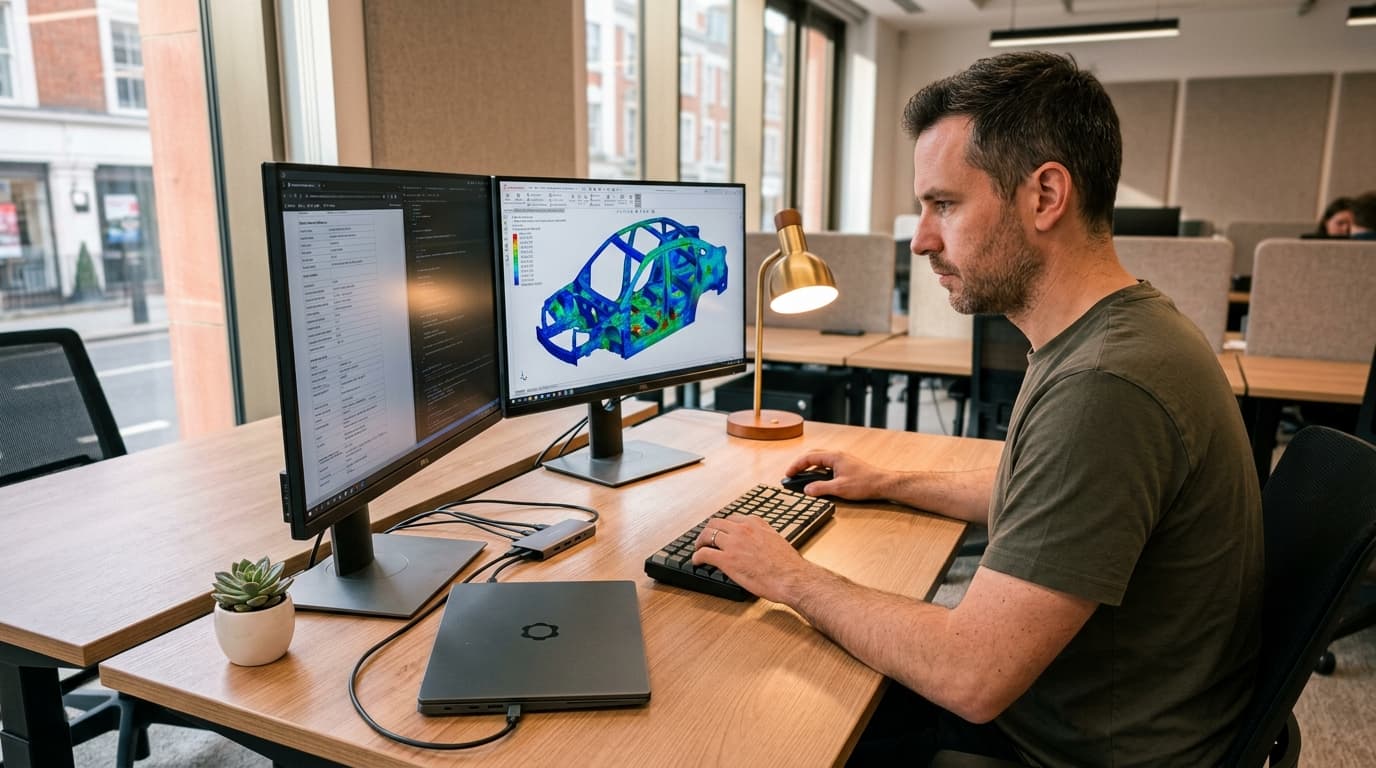
Deploy CFD, FEA, and thermodynamic models to predict performance and narrow the experimental matrix before physical testing.
High-fidelity simulations sweep critical process variables — temperature, pressure, flow rate, geometry — to identify the most promising design candidates. Virtual prototyping typically reduces physical test cycles by 40-60%, saving significant material and time costs while accelerating the path to a validated solution.
Prototyping & Testing
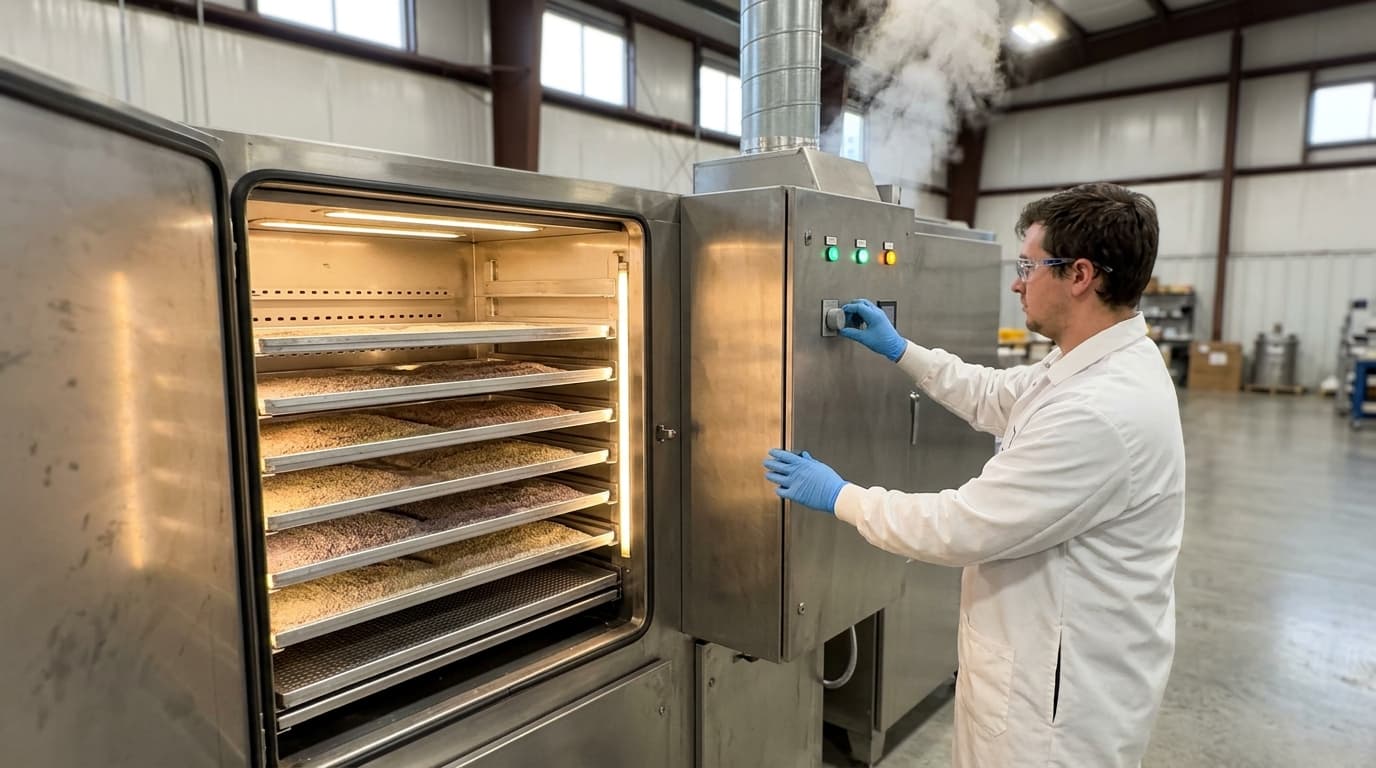
Build and test physical prototypes under controlled conditions, benchmarking real-world results against simulation predictions.
Each prototype undergoes structured test protocols measuring thermal performance, mechanical integrity, and process efficiency across a matrix of operating conditions. Deviations between simulated and measured performance are systematically analysed, feeding directly into targeted design refinements.
Analysis & Optimisation
Consolidate simulation, sensor data, and test observations to validate assumptions and optimise the final design.
Statistical analysis, AI/ML pattern recognition, and response surface methodology are applied to extract actionable insights from the data. Multi-objective optimisation balances competing performance targets — cost vs. efficiency, weight vs. durability — to converge on the best overall solution.
Validation & Scale-Up
Confirm results through confirmation runs, produce production-ready documentation, and support the transition from R&D to industrial deployment.
Final validation ensures performance meets all agreed criteria under realistic operating conditions. We deliver complete technical packages — process specifications, CAD models, control guidelines, and risk assessments — so the solution transitions seamlessly from laboratory or pilot scale to full production.
What You
Receive
Chemical process R&D deliverables for scale-up confidence and regulatory compliance.
Feasibility & Viability Report
Technical assessment covering reaction chemistry, thermodynamics, safety classification, and financial viability with ROI projections.
DOE Optimisation Study
Statistical analysis of reaction parameters with interaction effects, response surfaces, and validated optimal operating conditions.
Process Simulation Model
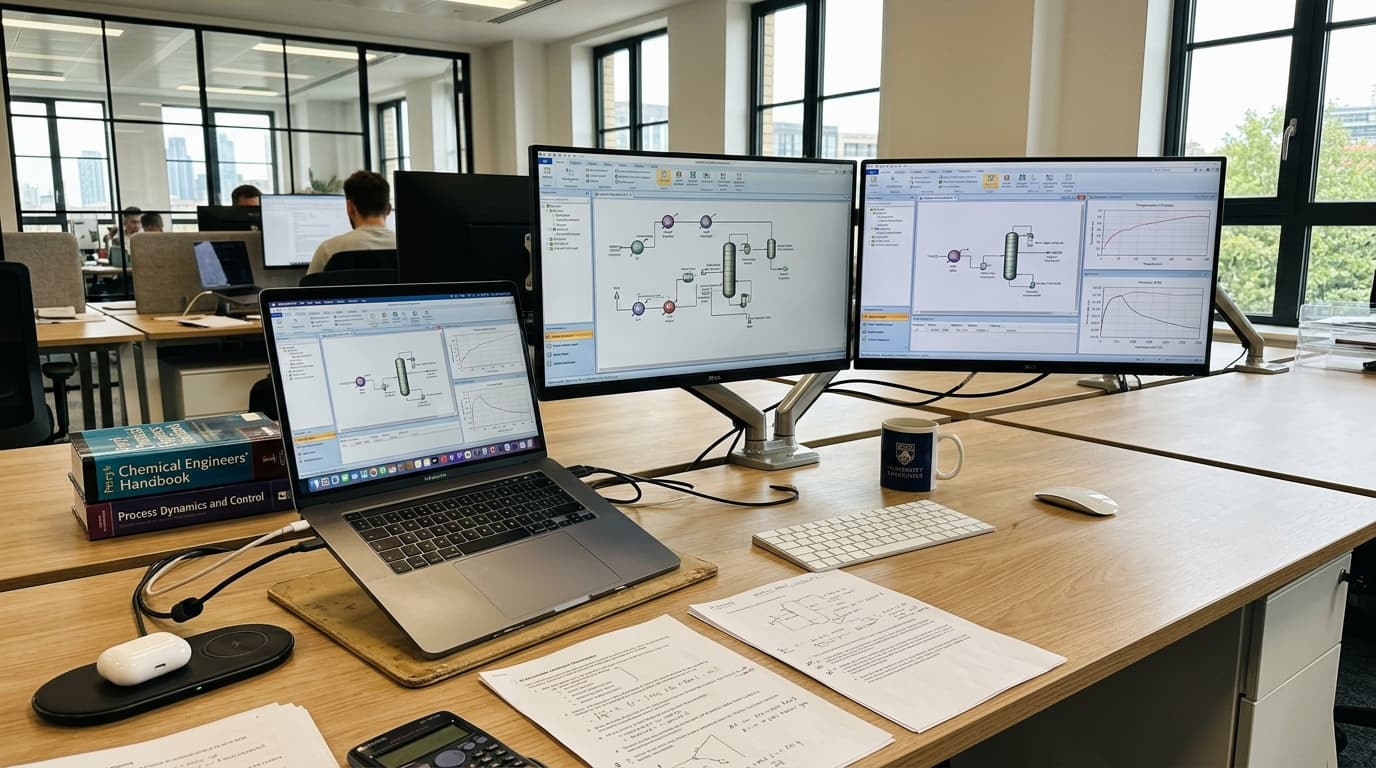
Aspen Plus or HYSYS flowsheet validated against experimental data, including heat and mass balances for all operating scenarios.
Pilot-Scale Test Report
Physical test campaign results with performance data, deviation analysis, and correlation to simulation predictions.
Equipment Specification Package
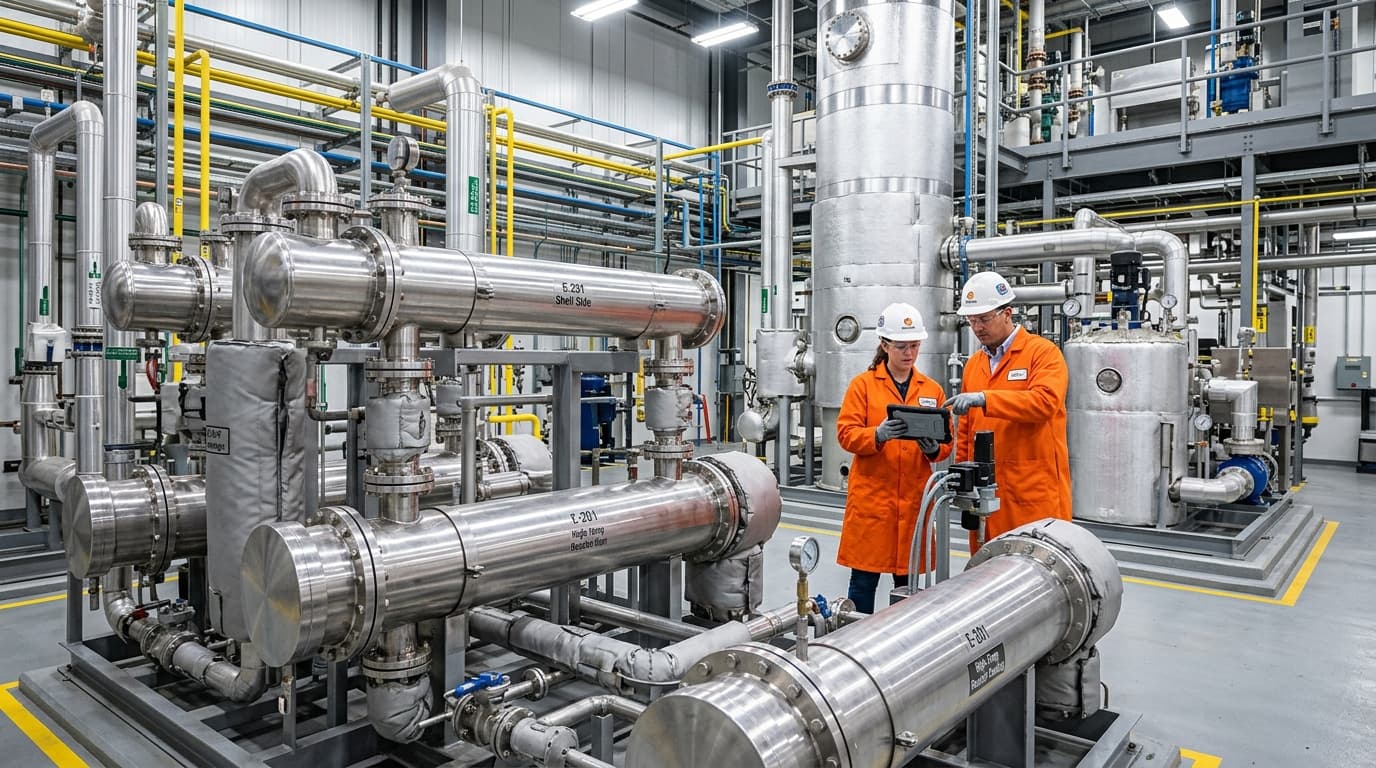
Reactor, heat exchanger, and ancillary equipment specifications sized from validated simulation and pilot data.
Scale-Up Documentation
Complete technical package including P&IDs, control philosophy, HAZOP inputs, and commissioning procedures for production-scale implementation.
Proven Results in
Chemical Processing
Based on R&D projects across speciality chemicals, bulk processing, and catalyst development.
Related Products
& Services
Complementary equipment and engineering services for your process.



Chemical Processing
R&D FAQ
Common questions about research and development for chemical process applications.
DOE systematically tests multiple reaction parameters simultaneously — temperature, pressure, catalyst concentration, residence time — revealing interaction effects that one-variable-at-a-time testing misses. This typically identifies 15-30% yield improvements within the existing operating envelope.
We use Aspen Plus and HYSYS for steady-state and dynamic process simulation, ANSYS Fluent for reactor CFD (mixing, heat transfer), and Minitab/JMP for DOE analysis. Tool selection depends on the specific chemistry and scale of the problem.
Safety is embedded from day one. Feasibility studies include preliminary HAZOP inputs, and all experimental work follows structured risk assessments. Simulation identifies thermal runaway scenarios and pressure excursions before any physical testing begins.
Yes — our R&D deliverables include the validated process data, safety assessments, and environmental impact analyses that regulatory submissions require. We work with your compliance team to ensure documentation meets specific regulatory frameworks.
Ready to
Scale Up?
Our chemical process R&D team delivers DOE optimisation, simulation, and pilot-scale validation for confident scale-up decisions.
- Integrated DOE, feasibility, and prototyping
- Chemical Processing-specific R&D methodology
- Simulation-led development with physical validation