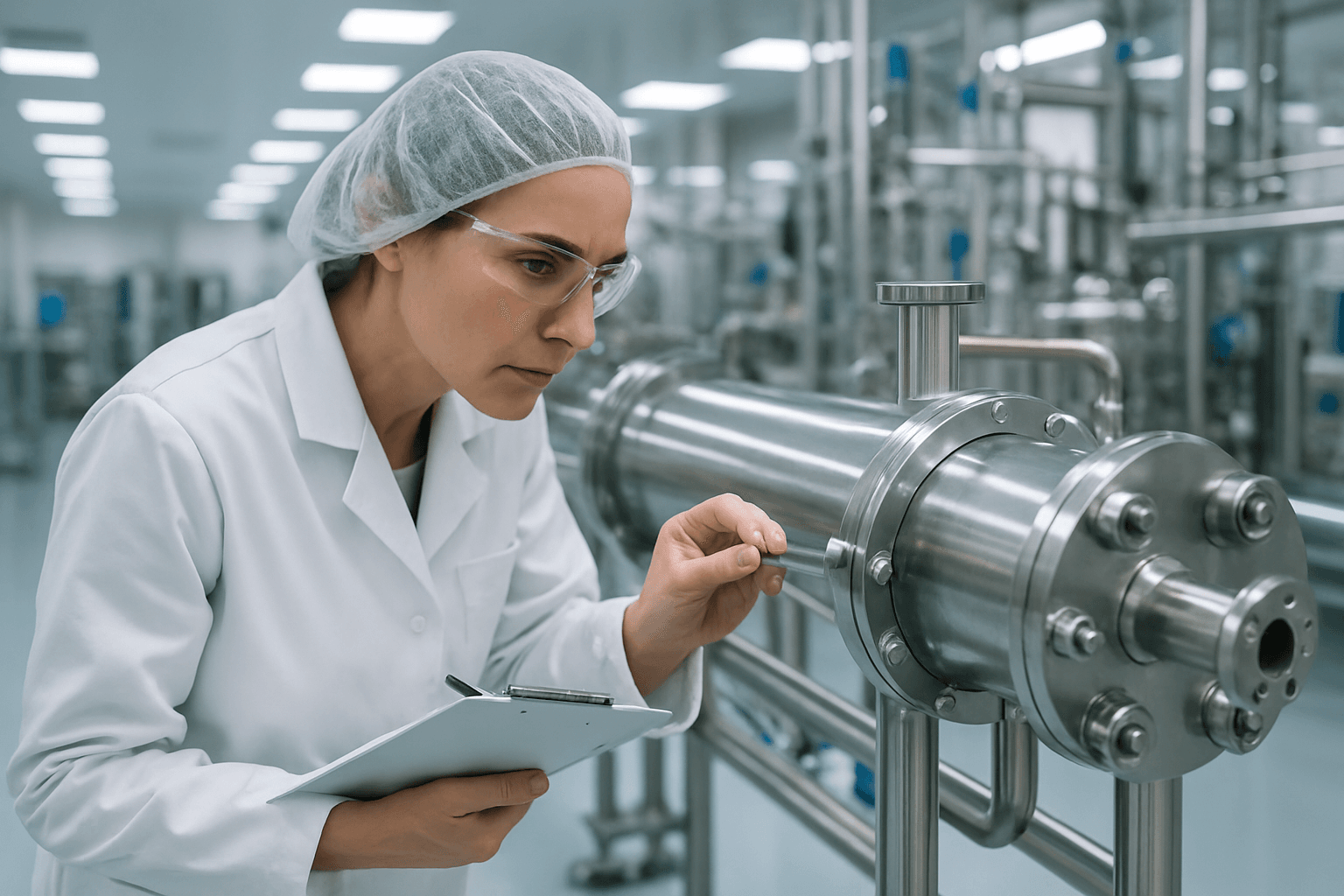
In the intricate world of pharmaceutical manufacturing, where product integrity, precise temperature control, and rigorous regulatory compliance are paramount, shell and tube heat exchangers stand out as indispensable equipment. These robust devices facilitate efficient heat transfer between process fluids, playing a critical role in various stages of drug production, from fermentation to sterilization and solvent recovery. Their design, materials of construction, and operational characteristics are uniquely adapted to meet the stringent demands of the pharmaceutical industry, ensuring both product quality and operational efficiency.
Understanding Shell and Tube Heat Exchangers
A shell and tube heat exchanger is a class of heat exchanger designs. It consists of a bundle of tubes housed within a cylindrical shell. One fluid flows through the tubes (the “tube side”), while another fluid flows over the outside of the tubes within the shell (the “shell side”). Heat is transferred between the two fluids through the tube walls without direct mixing, making them ideal for applications where fluid separation is critical. This design allows for effective heat transfer, even with large flow rates and high thermal loads.
The primary components of a shell and tube heat exchanger include:
- Shell: The outer cylindrical casing that contains the tube bundle.
- Tube Bundle: A collection of tubes through which one fluid flows. These can be straight or U-shaped.
- Tube Sheets: Plates that hold the ends of the tubes and separate the tube-side fluid from the shell-side fluid.
- Baffles: Plates placed within the shell to direct the shell-side fluid flow across the tubes, enhancing heat transfer and preventing vibration.
- Headers/Channels: End caps or bonnets that direct the tube-side fluid into and out of the tubes.
Critical Applications in Pharmaceutical Manufacturing
Shell and tube heat exchangers are widely utilized across the pharmaceutical industry for their versatility and ability to handle various process conditions. Key applications include:
- Water-for-Injection (WFI) and Purified Water (PW) Systems: Essential for heating and cooling in the production of high-purity water, which is critical for injectable drugs and other pharmaceutical processes.
- Clean-in-Place (CIP) and Sterilize-in-Place (SIP) Systems: Used for heating cleaning solutions and generating pure steam for sterilization of equipment, ensuring aseptic conditions.
- Fermentation Processes: Maintaining precise temperature control is crucial for optimal cell growth and product yield in biotechnological fermentation.
- Crystallization: Heat exchangers regulate cooling profiles to control particle size, purity, and performance of Active Pharmaceutical Ingredients (APIs).
- Solvent Recovery: Condensers, often shell and tube designs, are used to capture and condense vapors in solvent recovery and distillation processes.
- Process Heating and Cooling: General heating and cooling of various pharmaceutical intermediates and final products.
Key Design and Material Considerations for Pharma-Grade Heat Exchangers
“Pharma-grade” for shell and tube heat exchangers implies adherence to exceptionally high standards of material purity, surface finish, and design to prevent contamination and ensure ease of cleaning.
Materials of Construction
The selection of materials is paramount to prevent product contamination and ensure compatibility with aggressive cleaning agents.
- Stainless Steel (316L): This is the most common material for pharmaceutical-grade heat exchangers due to its excellent corrosion resistance and compatibility with cleaning chemicals. Seamless tubes are often preferred, finished to specific roughness average (Ra) values (e.g., 25Ra) to minimize bacterial adhesion.
- Higher Alloys: For extreme corrosion resistance or specialized applications, materials like Hastelloy, Inconel, titanium, zirconium, or tantalum may be considered.
- Passivation: This process improves the corrosion resistance of stainless steel surfaces.
Surface Finish and Cleanability
Smooth internal surfaces are critical to prevent biofilm formation and ensure thorough cleaning.
- Electropolishing: Often applied to product contact surfaces to achieve an even smoother finish (e.g., Ra ≤ 0.4 μm), further minimizing bacterial adhesion.
- Seamless Tubing and Sanitary Fittings: These features reduce potential crevices where contaminants could accumulate.
- Drainability: Designs must ensure complete drainability on the product side, eliminating dead spots where fluids could stagnate.
Design Features for Enhanced Purity and Safety
Several design elements are incorporated to meet pharmaceutical standards:
- Double Tube Sheets: These provide a visible leak detection mechanism, preventing the mixing of process fluid and utility fluid in case of a tube leak.
- Sanitary Connections: Tri-clamp connections are commonly used for easy disassembly, cleaning, and reassembly.
- Removable Bundles: While fixed tube sheet designs are simple and cost-effective, removable tube bundles facilitate mechanical or manual cleaning of both the tube and shell sides, which is crucial for sanitary applications. Square tube layouts are preferred when mechanical cleaning of the tube surface is required.
- Design Flexibility: Heat exchangers need to be adaptable to various process conditions, flow rates, terminal temperatures, and physical properties of fluids, including their fouling tendencies and allowable pressure drops.
Advantages and Disadvantages in Pharmaceutical Settings
While shell and tube heat exchangers are highly valued, it’s important to consider their specific advantages and disadvantages for pharmaceutical applications.
Advantages
- Robust Design and Durability: They are known for their strong construction, allowing them to handle high pressures and temperatures, often exceeding the capabilities of plate heat exchangers.
- Versatility: With numerous configurations and material options, they can be tailored to a wide range of pharmaceutical processes.
- Reliable Performance: They provide consistent and efficient heat transfer for stable process conditions.
- Long Service Life: When constructed from corrosion-resistant materials, they exhibit good mechanical strength and durability, leading to a long operational life.
- Ease of Cleaning (with proper design): While complex in structure, designs with removable bundles can be mechanically or manually cleaned, which is crucial for sanitary applications. CIP systems can effectively clean them without disassembly, reducing downtime.
Disadvantages
- Larger Footprint: Compared to plate heat exchangers, shell and tube units typically require more space, which can be a consideration in facilities with limited area.
- Higher Initial Cost: Their complex design and high-quality material requirements can lead to a higher upfront manufacturing cost.
- Maintenance Complexity (for some configurations): While overall maintenance can be straightforward, cleaning the shell side of fixed tube sheet exchangers, for example, often requires chemical agents due to limited mechanical access.
- Potential for Fouling: Depending on the process fluid, fouling can occur, reducing heat transfer efficiency and requiring regular cleaning.
Regulatory Compliance and Standards
The pharmaceutical industry operates under strict regulatory frameworks to ensure product safety, efficacy, and quality. Shell and tube heat exchangers must comply with several key standards:
- ASME-BPE (American Society of Mechanical Engineers – Bioprocessing Equipment): This standard provides comprehensive guidelines for the design, materials, fabrication, inspection, and testing of equipment used in biopharmaceutical production, including surface finish requirements and drainability.
- TEMA (Tubular Exchanger Manufacturers Association): TEMA standards (Classes B, C, R) cover the mechanical design and construction of shell and tube heat exchangers, ensuring structural integrity and performance. Pharmaceutical applications often align with TEMA Class B (chemical processing) or C (general commercial use) with additional sanitary requirements.
- cGMP (Current Good Manufacturing Practices): These regulations from bodies like the FDA require equipment to be designed, installed, and operated to prevent contamination, facilitate cleaning, and ensure consistent product quality.
- USP (United States Pharmacopeia): Relevant for material compatibility and the quality of water used in pharmaceutical processes, impacting the design of WFI and PW heat exchangers.
- EHEDG (European Hygienic Engineering & Design Group): These guidelines promote hygienic design in food and pharmaceutical processing equipment, often influencing aspects like surface finish and cleanability.
- 3-A Sanitary Standards: Originally for the dairy industry, these standards are now also applicable to pharmaceutical equipment, ensuring components are cleanable and hygienic.
Compliance with these standards is not merely a formality; it is essential for the validation protocols (Installation Qualification, Operational Qualification, Performance Qualification) that confirm a system’s reliable performance over time and under real production conditions. Comprehensive documentation of materials, fabrication records, and test results is also a mandatory part of ensuring traceability and audit readiness.
Conclusion
Shell and tube heat exchangers are foundational to modern pharmaceutical manufacturing, providing the reliable and precise temperature control necessary for producing safe and effective medicines. Their evolution has led to specialized “pharma-grade” designs that prioritize material purity, hygienic surface finishes, and robust construction to meet the industry’s rigorous regulatory demands. By carefully considering design factors, material selection, and adherence to international standards, pharmaceutical companies can leverage these critical assets to optimize their processes, maintain product integrity, and achieve continuous compliance in a highly regulated environment.