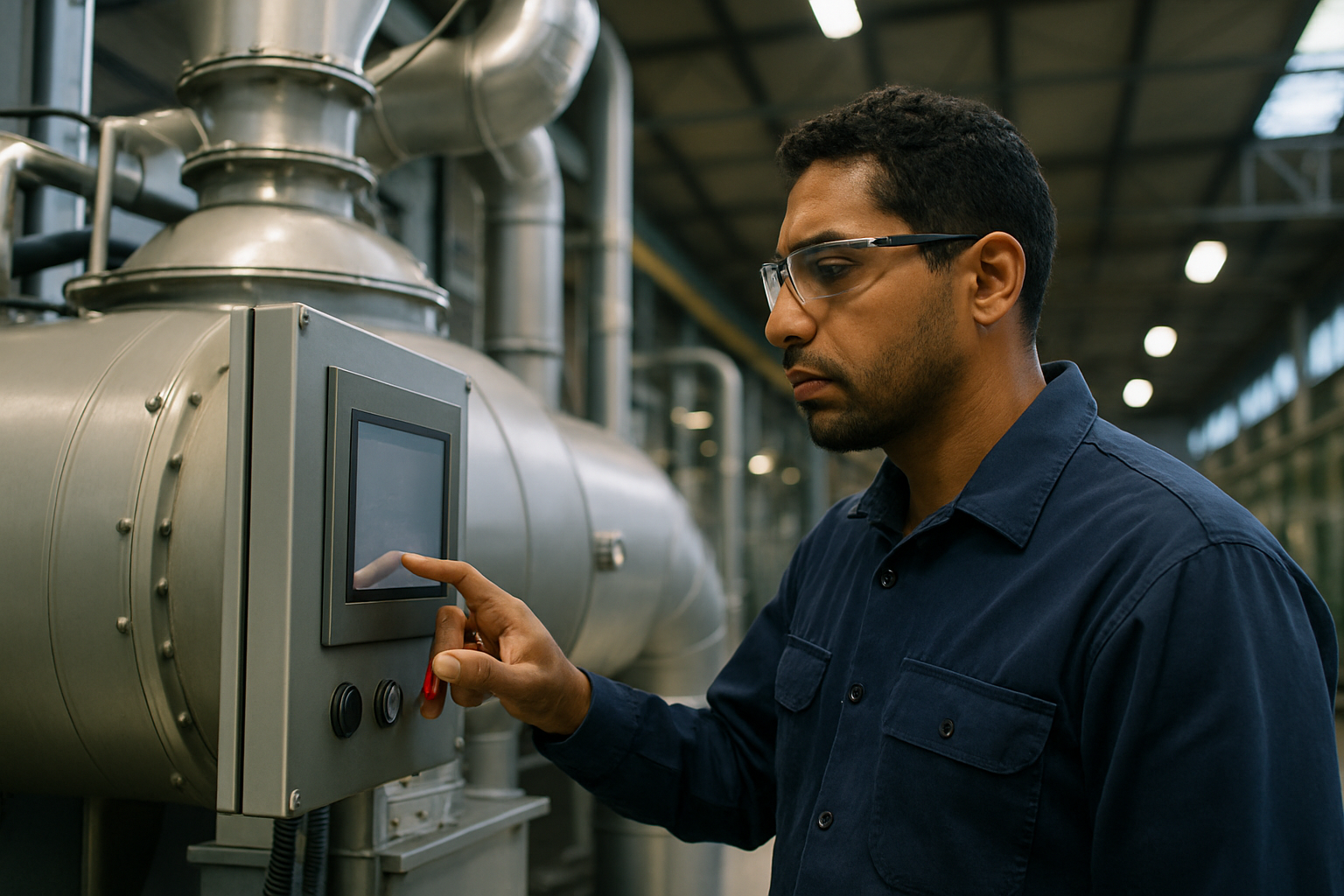
In the complex landscape of industrial operations, cleaning and degreasing processes are indispensable. However, these essential activities often release a cocktail of airborne pollutants, primarily volatile organic compounds (VOCs) and hazardous air pollutants (HAPs), into the atmosphere. Left unchecked, these emissions pose significant environmental and health risks, while also leading to regulatory non-compliance. Enter the thermal oxidizer: a robust air pollution control technology that harnesses the power of heat to break down these harmful contaminants, transforming them into benign byproducts like carbon dioxide and water vapor.
This article delves into the critical role thermal oxidizers play in abating emissions from cleaning and degreasing operations, exploring their fundamental principles, diverse types, and the considerable benefits they offer in achieving both environmental stewardship and operational efficiency.
Understanding Volatile Organic Compounds (VOCs) in Industrial Cleaning
Cleaning and degreasing activities across various industries, from automotive manufacturing and metal coating to pharmaceuticals and electronics, frequently utilize solvents and chemical agents. Many of these agents contain VOCs, which are organic chemicals that have a high vapor pressure at ordinary room temperature. These compounds readily evaporate into the atmosphere during processing, drying, and storage. Examples range from alcohols and ketones to chlorinated solvents, all contributing to air pollution, smog formation, and potential health issues. Abating these VOCs is a global priority due to increasing pressure from stricter air quality regulations.
The Core Principle of Thermal Oxidation
A thermal oxidizer is essentially a combustion device designed to control VOC, CO, and volatile HAP emissions. Its fundamental principle is straightforward: it heats contaminated exhaust gases to a high temperature, typically between 1,400°F and 1,800°F (760°C to 982°C). At these elevated temperatures, the hydrocarbon-based pollutants (VOCs and HAPs) react with oxygen in a process called thermal combustion or oxidation. This reaction chemically breaks down the complex organic compounds into simpler, less harmful substances: carbon dioxide (CO2) and water (H2O), releasing heat in the process.
For effective destruction of pollutants, three critical factors, often referred to as the “Three Ts,” must be meticulously managed:
- Temperature: High enough to initiate and sustain the oxidation reaction. Most organic compounds ignite between 1,094°F and 1,202°F (590°C and 650°C), but oxidizers operate at much higher temperatures to ensure near-complete destruction.
- Residence Time: Sufficient time for the combustion reaction to occur completely.
- Turbulence: Adequate mixing of the combustion air with the hazardous gases to ensure all pollutants come into contact with oxygen at the required temperature.
Thermal Oxidizer Types for Cleaning and Degreasing Applications
While all thermal oxidizers perform the same essential function of pollutant destruction, different types are engineered to optimize performance, energy efficiency, and cost-effectiveness for varying industrial applications and pollutant characteristics.
Direct-Fired Thermal Oxidizers (DFTOs)
Direct-Fired Thermal Oxidizers, also known as afterburners or fume incinerators, represent the simplest form of thermal oxidation. In a DFTO, contaminated exhaust gases are directed into a combustion chamber where they are heated by a burner to extremely high temperatures, often exceeding 2,200°F (1,200°C), to incinerate pollutants directly.
- Applications: Best suited for processes with high concentrations of VOCs and consistent flow rates.
- Advantages: Lower capital and maintenance costs due to their straightforward design.
- Considerations: Lack heat recovery systems, making them less fuel-efficient and resulting in higher operating costs compared to other types.
Recuperative Thermal Oxidizers
Recuperative thermal oxidizers enhance energy efficiency by incorporating a heat exchanger. The polluted airstream first passes through this heat exchanger, where it is preheated by the hot, clean exhaust gases exiting the combustion chamber. This preheating significantly reduces the amount of supplemental fuel needed to reach the required oxidation temperature (typically 1,400°F to 1,600°F or 760°C to 871°C).
- Applications: Ideal for moderate VOC concentrations and variable flow rates. Commonly used in chemical manufacturing, pharmaceuticals, and painting/coating applications.
- Advantages: Achieve thermal efficiencies of up to 70-80%, leading to lower operating costs and reduced carbon footprint compared to DFTOs.
- Considerations: Higher capital costs than DFTOs due to the heat exchanger.
Regenerative Thermal Oxidizers (RTOs)
Regenerative Thermal Oxidizers are renowned for their exceptional energy efficiency. RTOs use multiple ceramic media beds (typically two or three) to recover and store thermal energy from the oxidation process. Incoming polluted air passes through a heated ceramic bed, which preheats it before it enters the combustion chamber. After oxidation, the hot, clean air passes through another ceramic bed, transferring its heat to the ceramic media before exiting the system. The airflow then alternates, allowing the heated bed to preheat the incoming air and the cooled bed to absorb heat.
- Applications: Versatile and widely accepted, suitable for a broad range of low to high VOC concentrations and large air volumes.
- Advantages: Can achieve thermal efficiencies as high as 97%, significantly reducing fuel consumption and operating costs. They also boast destruction efficiencies of over 99.5%.
- Considerations: Higher capital investment due to their complex design and ceramic media.
Catalytic Oxidizers (CTOs / RCOs)
Catalytic Oxidizers (CatOx) differ from traditional thermal oxidizers by utilizing a catalyst bed to promote the oxidation reaction at much lower temperatures, typically between 500-600°F (260-315°C), though some systems operate up to 1,830°F (1,000°C). The catalyst (often platinum or palladium) allows VOCs to convert into CO2 and H2O with significantly less heat input. Catalytic oxidizers can be designed in recuperative or regenerative configurations (Regenerative Catalytic Oxidizers – RCOs) to further improve energy efficiency.
- Applications: Highly effective for processes with lower concentrations of VOCs (e.g., below 2,500 ppm) and HAPs, and when there’s a need for reduced fuel consumption and lower NOx emissions. Suitable for paint and coating, chemical manufacturing, and pharmaceutical industries.
- Advantages: Significantly lower operating temperatures lead to reduced fuel consumption, lower operating costs, and potentially lower NOx and CO emissions. They can achieve destruction efficiencies of up to 99%.
- Considerations: The catalyst material can be susceptible to poisoning from certain compounds (e.g., sulfur, phosphorus, silicon), requiring careful analysis of the waste stream. Catalysts also require periodic maintenance or replacement.
Benefits of Thermal Oxidation in Cleaning and Degreasing
Integrating thermal oxidizers into cleaning and degreasing operations offers a multitude of advantages:
- Environmental Compliance: Thermal oxidizers effectively destroy VOCs and HAPs, enabling facilities to meet stringent air quality regulations and avoid costly fines for non-compliance.
- High Destruction Efficiency: Well-designed thermal oxidizers can achieve destruction efficiencies exceeding 99%, ensuring that nearly all harmful pollutants are converted into harmless substances.
- Improved Air Quality: By reducing the release of toxic emissions, thermal oxidizers contribute directly to cleaner air, benefiting public health and the surrounding environment.
- Energy Recovery Potential: Many modern thermal oxidizer systems, particularly recuperative and regenerative types, incorporate heat recovery systems. This recovered heat can be repurposed within the facility, reducing overall energy consumption and operational costs, and improving sustainability.
- Reduced Liability: Proactive implementation of emission control technologies like thermal oxidizers mitigates environmental risks and reduces a company’s potential liability.
- Waste Stream Reduction: For some operations, switching from solvent-based degreasing to thermal cleaning coupled with thermal oxidizers can eliminate hazardous waste streams and simplify waste handling.
Selecting the Right Thermal Oxidizer System
Choosing the optimal thermal oxidizer for cleaning and degreasing operations requires a thorough evaluation of several factors:
- VOC Concentration and Flow Rate: The volume and concentration of pollutants in the exhaust stream are crucial. DFTOs suit high concentrations, RTOs handle a wide range, and catalytic oxidizers are often preferred for lower concentrations.
- Waste Stream Composition: The presence of catalyst poisons or particulates can influence the choice between thermal and catalytic options.
- Energy Efficiency Goals: For operations seeking significant energy savings and lower operating costs, RTOs and RCOs are generally the most efficient.
- Capital vs. Operating Costs: A comprehensive lifecycle cost analysis, considering both upfront equipment and installation costs, as well as recurring expenses for fuel, electricity, and maintenance, is essential.
- Space Availability: The footprint of different oxidizer types can vary, which is a consideration for facilities with limited space.
Conclusion
Thermal oxidizers are an indispensable technology in modern industrial environmental engineering, particularly for controlling air pollution from cleaning and degreasing operations. By effectively destroying VOCs and HAPs, they not only ensure compliance with increasingly stringent environmental regulations but also contribute to a cleaner, healthier environment. With a variety of designs available—from the simplicity of direct-fired units to the high efficiency of regenerative and catalytic systems—industries can select a thermal oxidizer solution tailored to their specific needs, thereby transforming hazardous emissions into harmless byproducts and fostering sustainable industrial practices.