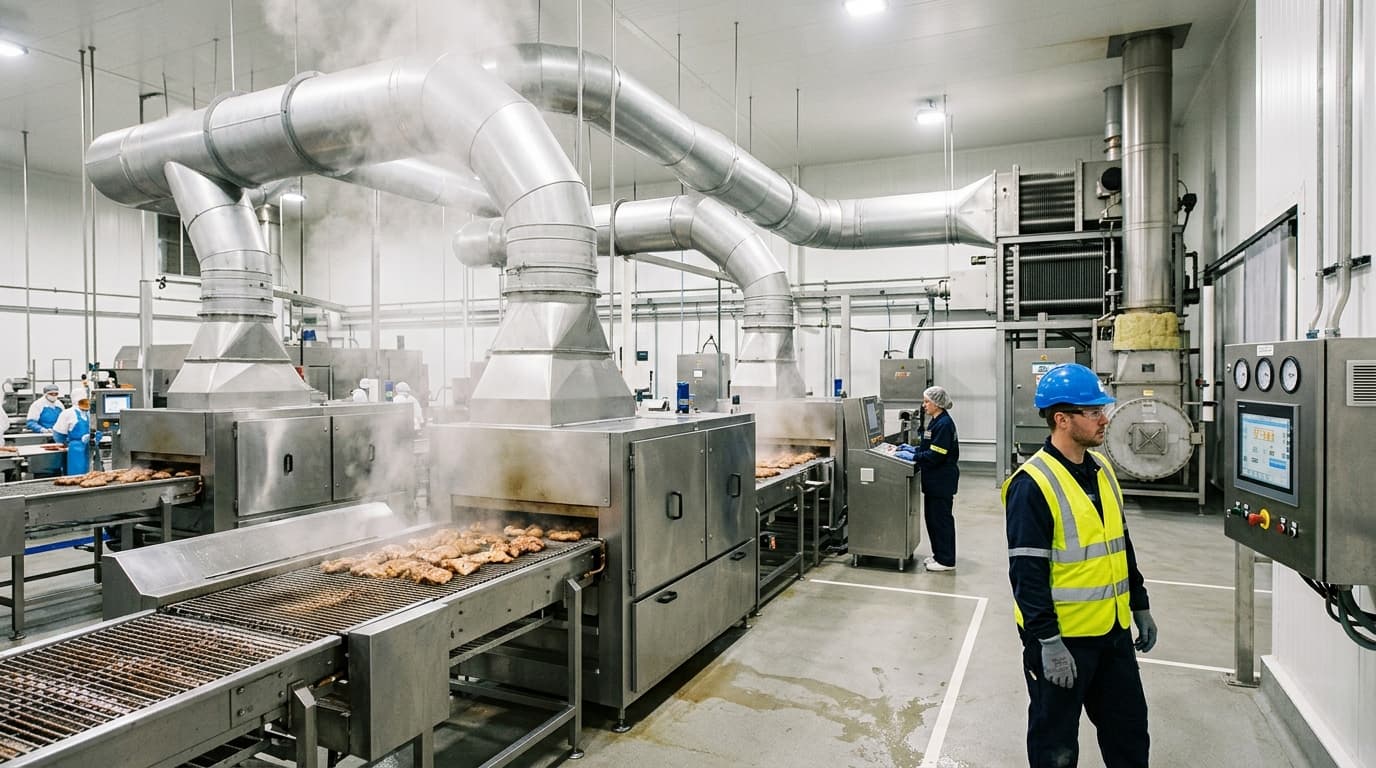
Food Processing
Emission Control
Regenerative thermal oxidisers for cooking exhaust, rendering odour, and food production VOC abatement.
Purpose-built OxiTherm regenerative thermal oxidisers for the food processing industry. 99% odour and VOC destruction with 98% energy recovery — eliminating community complaints, protecting your operating permit, and recovering waste heat to offset your facility's energy costs.
Three Models,
One Solution
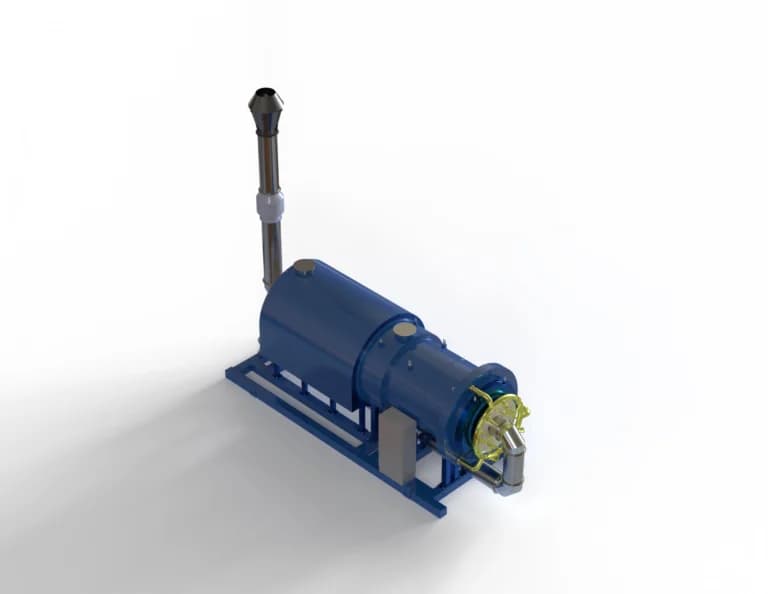
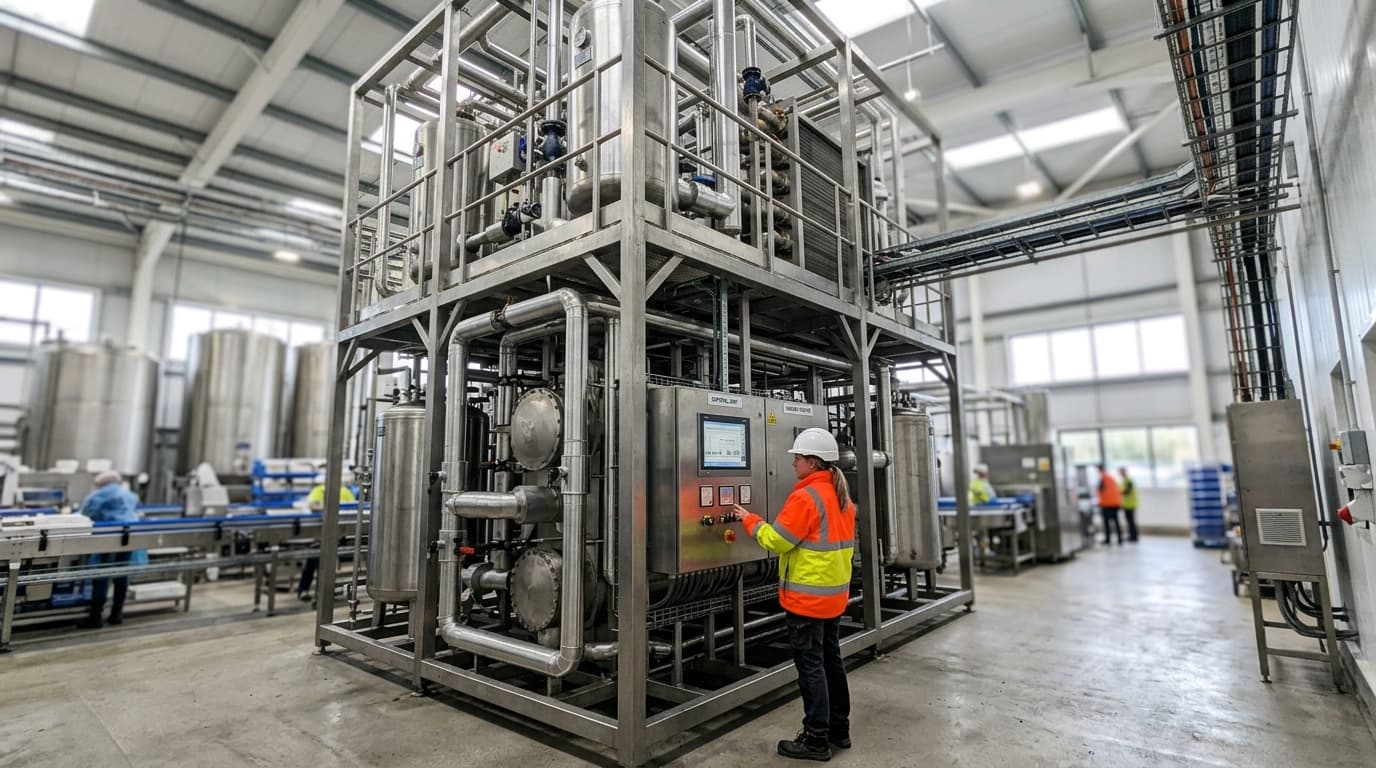
Mid-range thermal oxidiser for VOC abatement — 200 sm³/min volumetric flow with 99% destruction efficiency.
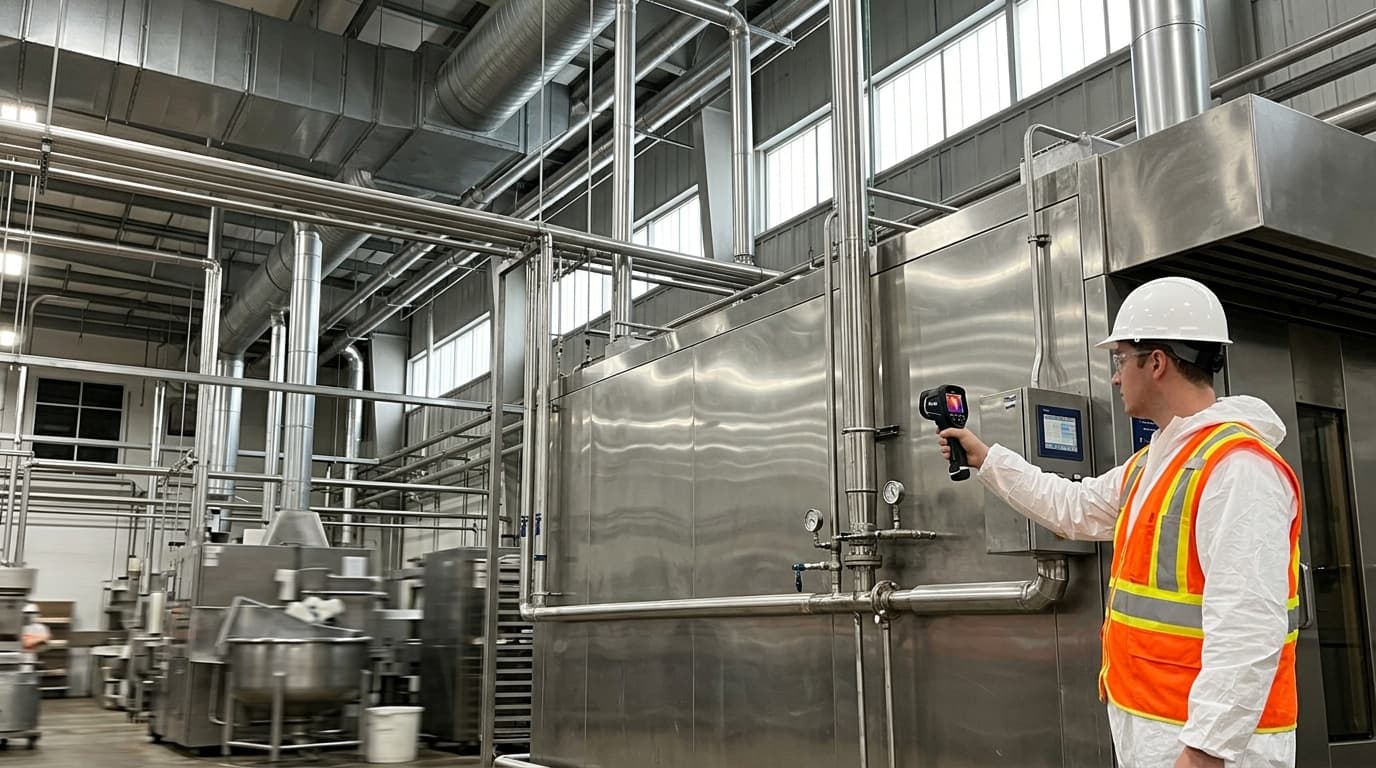
High-capacity thermal oxidiser — 300 sm³/min for medium-scale industrial VOC destruction applications.
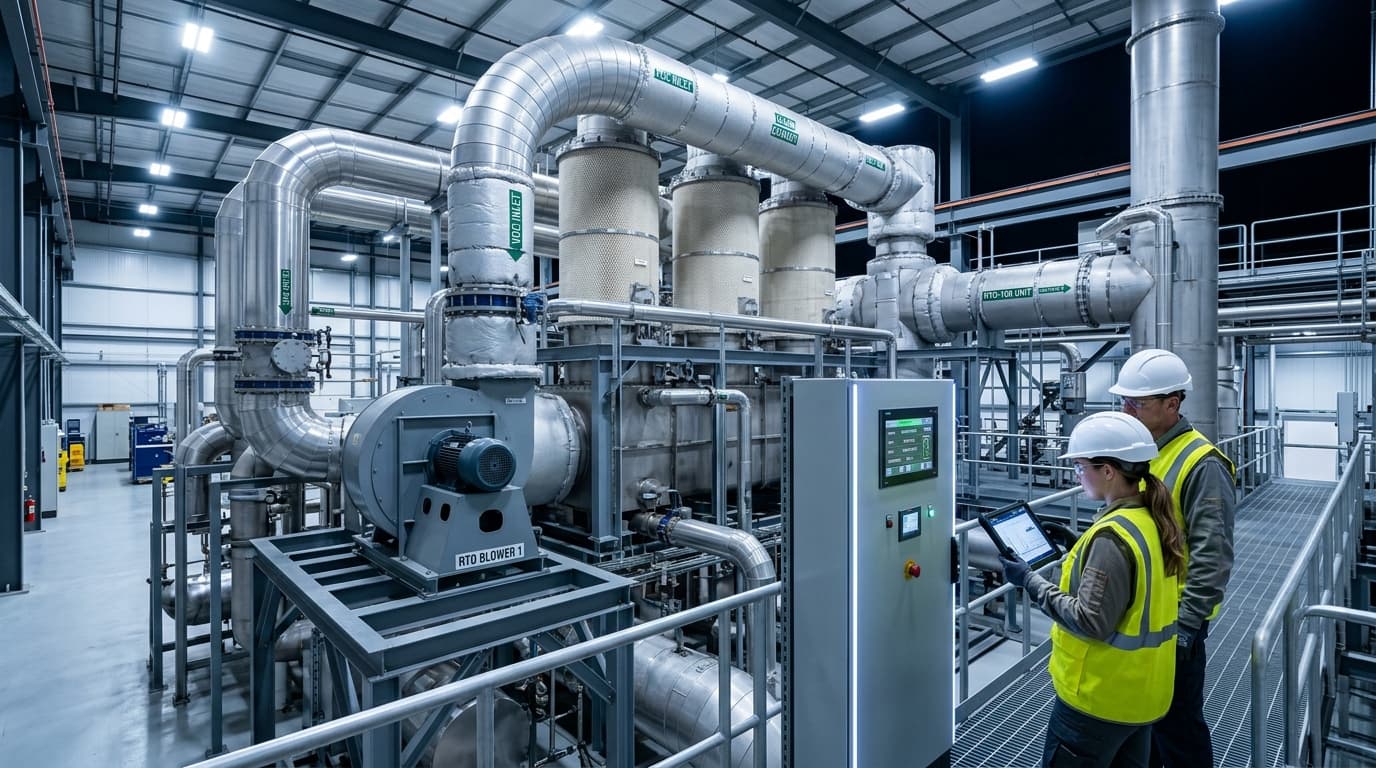
Maximum-capacity thermal oxidiser — 500 sm³/min for large-scale industrial VOC abatement requirements.
Food Processing
Applications
Select an application to see how OxiTherm thermal oxidisers address your specific food processing emission challenges.
Industrial cooking, frying, and roasting operations generate dense exhaust streams laden with oil mist, grease vapours, aldehydes, and acrolein. These emissions create intense odour, visible plumes, and sticky deposits that foul ductwork and conventional filters. Our OxiTherm regenerative thermal oxidisers destroy 99%+ of cooking exhausts at 850–1,100°C with 2.0-second residence time — eliminating odour, visible emissions, and the fire risk associated with grease-laden extraction systems.
Zero Odour
Complete elimination of community complaints
Grease Tolerant
Pre-filtration protects ceramic media from fouling
99%+ Destruction
All cooking VOCs, aldehydes, and amines destroyed
Heat Recovery
Recovered energy offsets factory hot water and heating
Built for
Food
Processing
Key advantages of OxiTherm regenerative thermal oxidisers for food industry odour and emission control.
99%+ Odour Destruction
Regenerative thermal oxidation at 850–1,100°C destroys all odorous compounds — volatile fatty acids, amines, mercaptans, aldehydes, and H₂S — guaranteeing zero fence-line odour.
98% Energy Recovery
Ceramic heat exchange media captures and returns 98% of combustion energy — enabling near-autothermal operation on concentrated food processing exhaust streams.
Grease & Particulate Tolerant
Engineered pre-filtration and insulated plenums protect ceramic media from sticky cooking oils, grease aerosols, and food particulate — maintaining long media life.
Community Complaint Elimination
Thermal oxidation is the only technology that guarantees complete odour destruction — protecting your operating permit and community relationships.
Process Heat Recovery
Recovered thermal energy generates hot water for cleaning, pasteurisation, and blanching processes — offsetting your facility's largest energy costs.
Continuous Monitoring
Integrated CEMS with real-time VOC, CO, and O₂ monitoring — providing audit-ready compliance records for environmental permit reviews.
Turn Cooking Waste
Into Free Heat
Food factories run massive hot water, steam, and heating systems around the clock. Our oxidisers feed recovered heat directly into these loads — offsetting utility costs that dwarf the abatement expense itself.
Recovered Heat Powers
Your Food Factory.
Food processing facilities consume vast amounts of hot water, steam, and process heat for cooking, cleaning, and pasteurisation. The OxiTherm doesn't just destroy your odours — it captures 98% of that combustion energy and routes it to the systems already draining your utility budget.
A secondary heat exchanger generates 60–90°C hot water for clean-in-place systems, factory washdown, and sanitation — displacing gas-fired water heaters.
A waste-heat boiler generates 2–4 bar(g) steam to supplement your existing boiler plant — covering cooking kettles, blanching tunnels, and pasteurisation loads.
Recovered exhaust heat pre-heats dryer inlet air and oven supply air — reducing direct-fired gas consumption for drying, smoking, and roasting operations.
Surplus recovered energy heats production halls, cold stores, and offices — eliminating stand-alone space heaters during winter months.
Related Products
& Services
Complementary equipment and engineering services for your process.


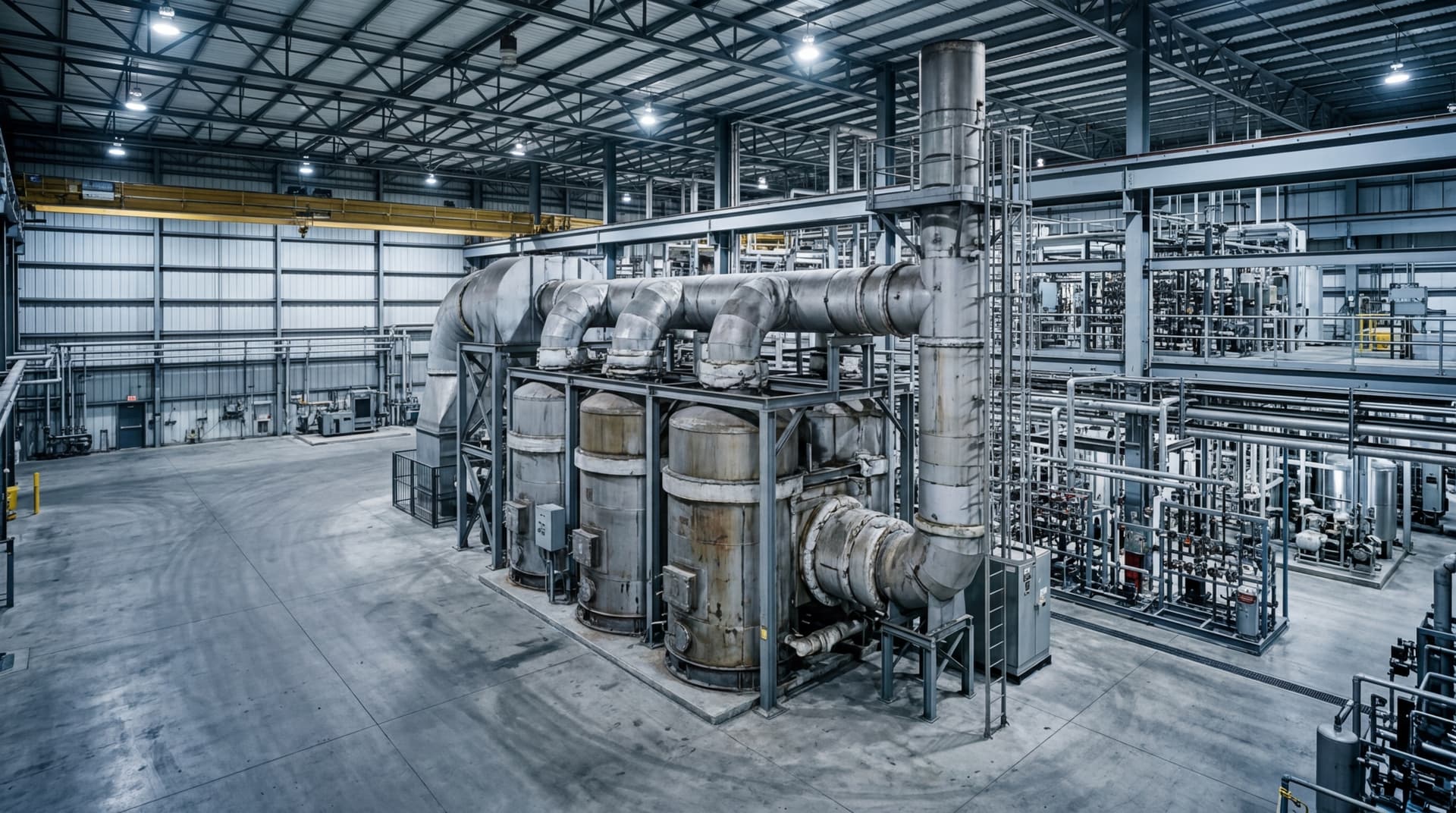


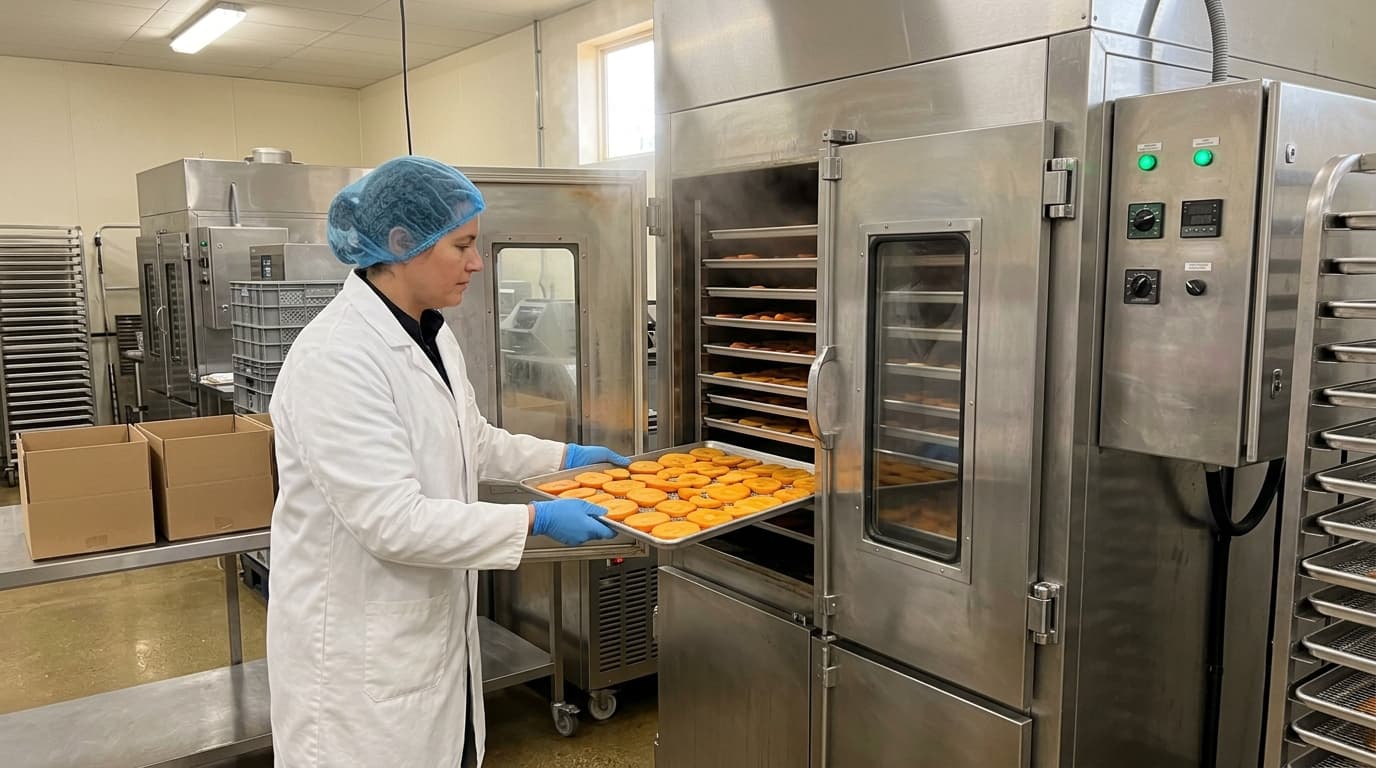
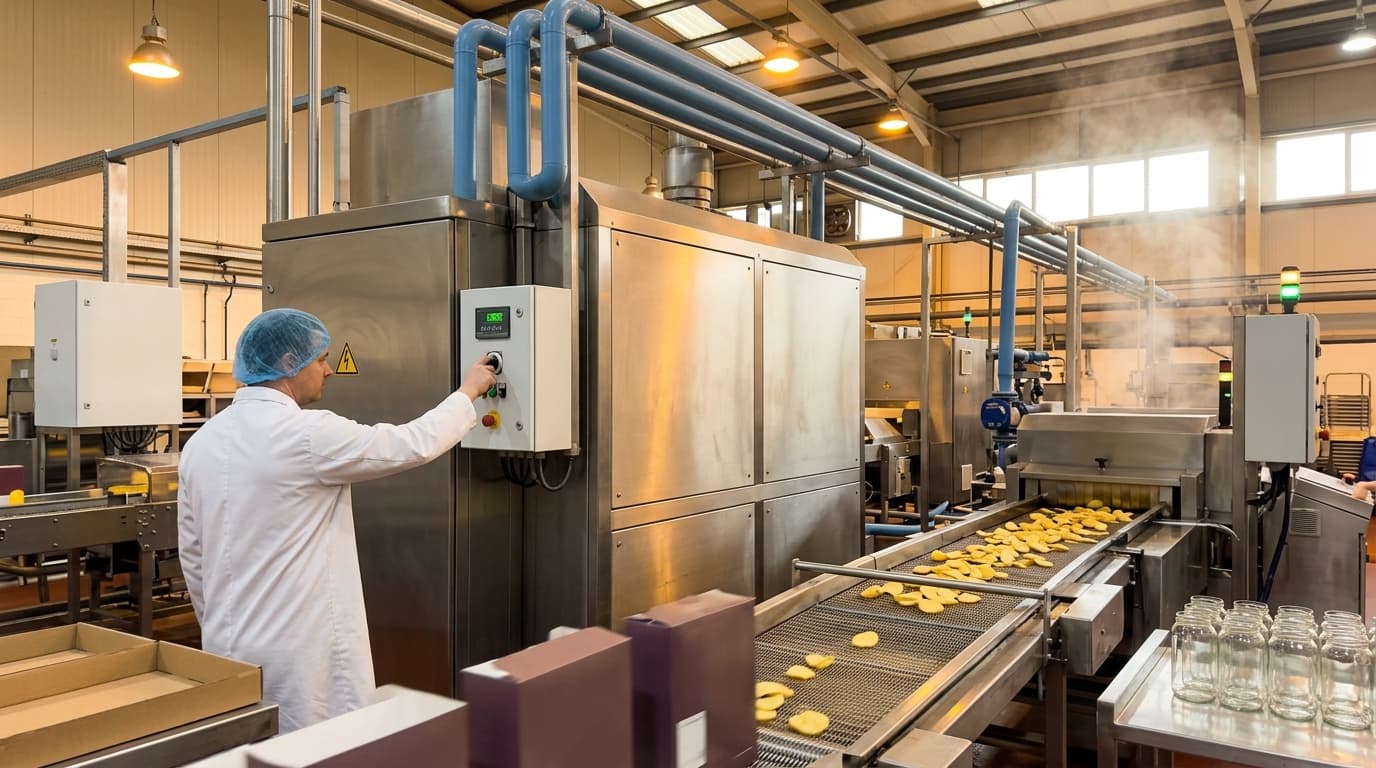
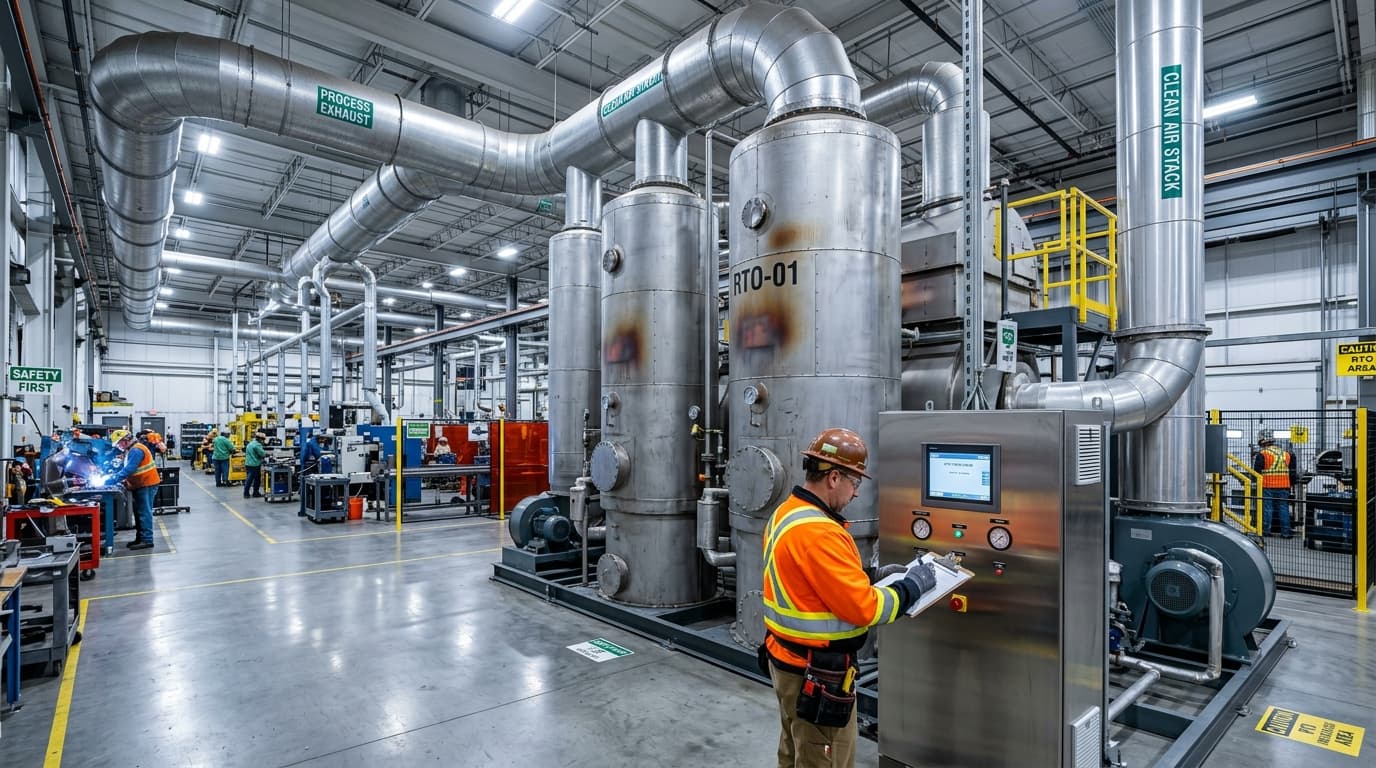
Food Processing
FAQs
Common questions about using regenerative thermal oxidisers for food processing odour and emission control.
Yes. OxiTherm systems for food processing include multi-stage pre-filtration — typically a combination of grease baffles, mesh filters, and high-efficiency pocket filters — upstream of the ceramic heat exchange media. This removes sticky aerosols and particulate before they can foul the regenerative beds. Additionally, automated bake-out modes periodically elevate temperatures to burn off any residual organic buildup.
Yes. Thermal oxidation at 850–1,100°C with 2.0-second residence time is the only technology that guarantees complete destruction of all odorous compounds — including volatile fatty acids, amines, mercaptans, and hydrogen sulphide. Unlike scrubbers or biofilters, which only partially address these complex mixtures, the OxiTherm achieves 99%+ destruction regardless of the specific compound composition.
The modulating burner system responds in under 5 seconds to changes in exhaust composition and loading. Whether a batch of product enters a fryer (high grease load), a rendering cooker opens (intense VOC spike), or the line goes idle (near-zero load), the combustion chamber temperature and air-fuel ratio adjust automatically to maintain destruction efficiency without manual intervention.
Absolutely. This is the most common and highest-value heat recovery application in food processing. A secondary heat exchanger generates 60–90°C hot water from the oxidiser exhaust — supplying CIP systems, washdown stations, blanching lines, and pasteurisation processes. This typically offsets 40–60% of the factory's hot water heating costs.
Yes. Fish processing and fishmeal production generates some of the most intense industrial odours, dominated by trimethylamine (TMA) and volatile fatty acids. OxiTherm systems destroy these compounds at 99.9%+ efficiency — the high operating temperature completely breaks down even the most pungent amine compounds to harmless CO₂, water vapour, and nitrogen.
Regular maintenance includes pre-filter inspection and replacement (monthly), ceramic media inspection (annual), burner system servicing (annual), and CEMS calibration (quarterly). The pre-filtration system bears the brunt of the grease loading, protecting the more expensive ceramic media. Ceramic media life is typically 7–10 years in food applications with proper pre-filtration.
Food Processing Consultation
Our engineers specialise in food industry odour and emission compliance. Tell us about your cooking processes, exhaust volumes, and community complaint history.
- Cooking & frying odour elimination
- Rendering & by-product abatement
- Drying & smoking VOC control
- Hot water & steam heat recovery