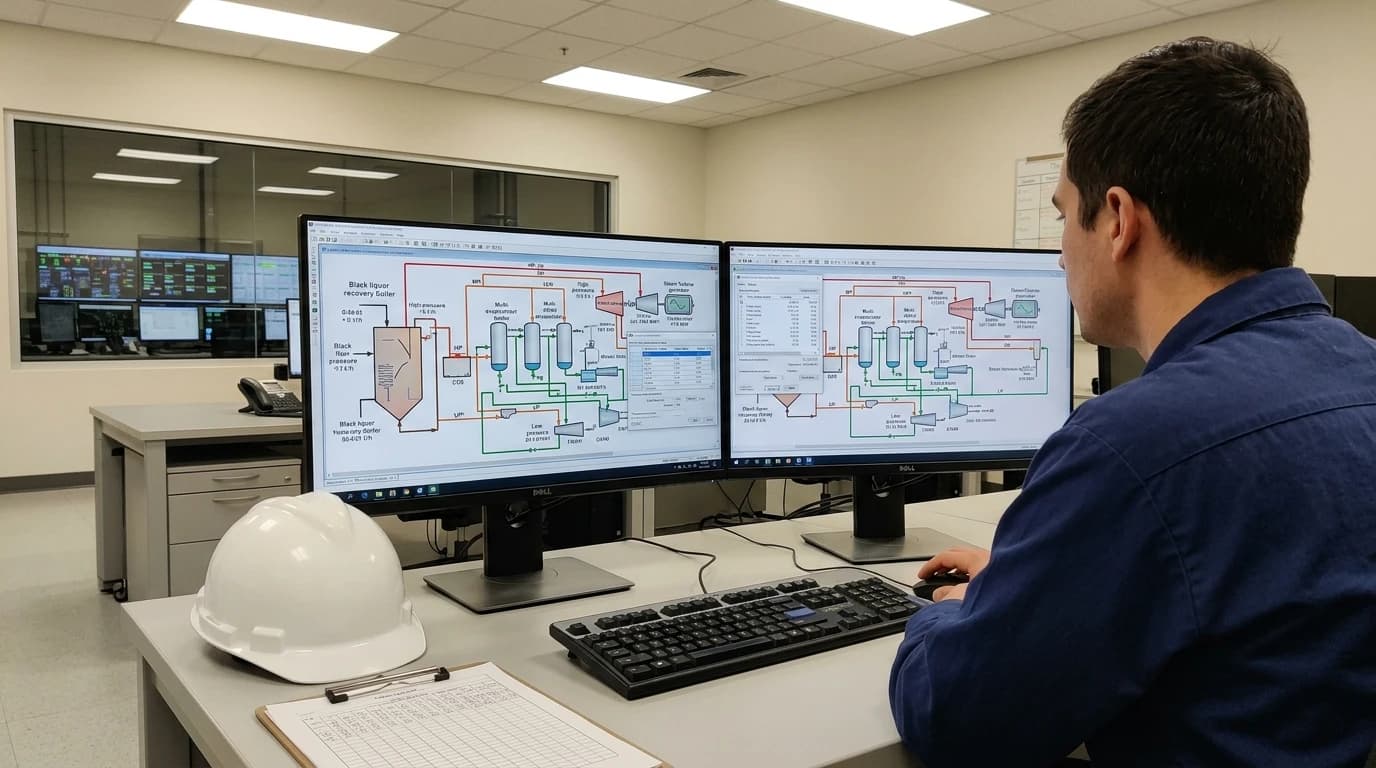
This blog category covers the technical application of heat and mass balance (HMB) engineering specifically tailored for the pulp and paper industry. Content should focus on EnerTherm Engineering’s 11-step methodology for mill-wide process optimization, which consistently achieves an average energy reduction of 14%, a 1.8-year payback period, and an annual CO₂ reduction of 2,800 tonnes. Articles should explore core technical domains including dryer section efficiency (cylinder-by-cylinder analysis, steam condensation, hood exhaust, and condensate evacuation), black liquor recovery cycles (evaporator plants, recovery boilers, and recausticising circuits), steam header reconciliation (multi-pressure systems and turbine extraction), and water circuit closure (white water and filtrate loops). Technical content must reference the use of process simulation platforms like Aspen Plus, HYSYS, and DWSIM, and emphasize the development of single-source-of-truth PFDs with embedded stream tables. Contributors should address the complexities of species-level mass balances, thermodynamic energy balances, pinch-point evaluations, and the validation of models against seasonal or upset plant conditions. The category serves as a resource for engineers and plant managers seeking to understand how data-driven simulation leads to actionable implementation roadmaps for energy and water reduction in kraft and integrated pulp mills.