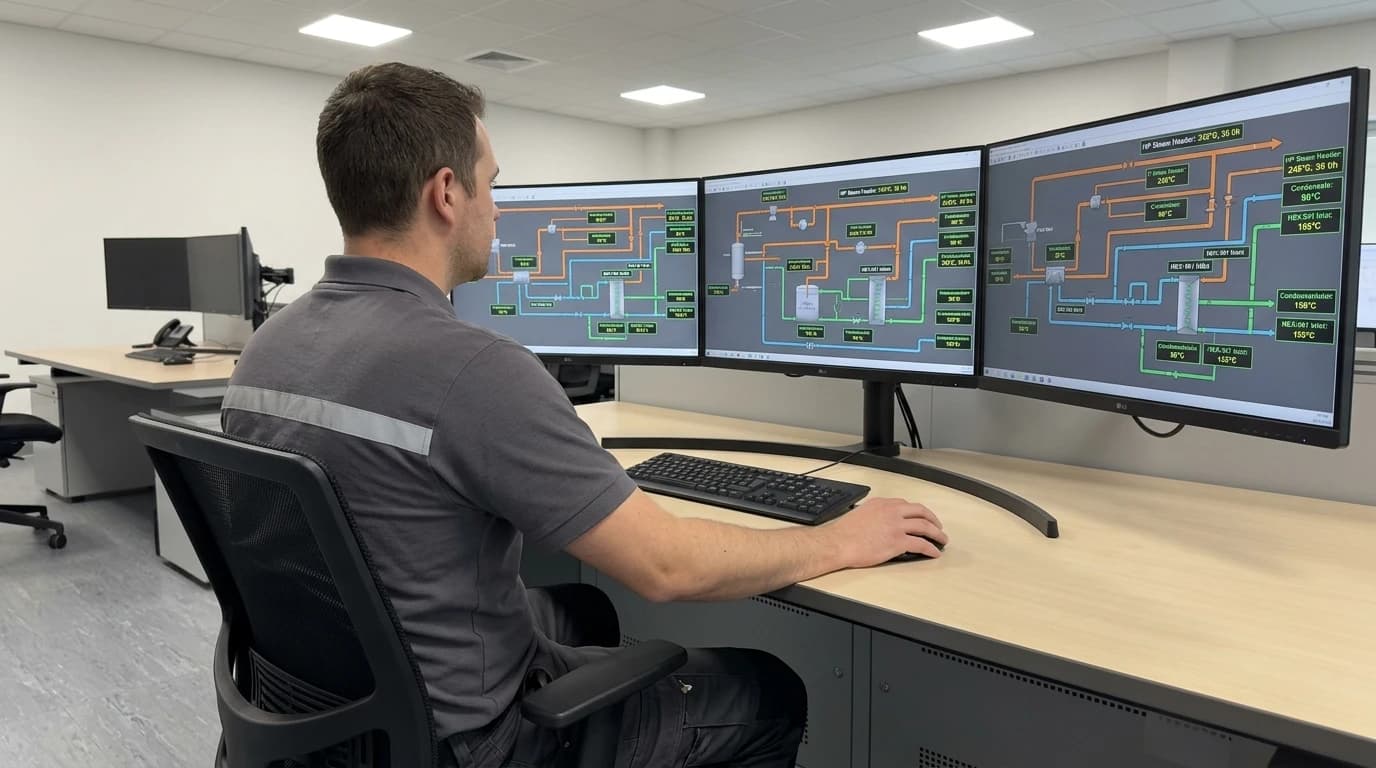
Pinch Analysis Cuts Kraft Mill Heat Demand by 12-39%
Balancing thermodynamic modelling costs against a typical 12-16 month payback.
A mill-wide energy reduction strategy is a thermodynamically reconciled, system-integrated engineering framework designed to coordinate thermal and mass balances across all process areas of an industrial facility to minimise primary utility demand. For integrated Kraft pulp and paper mills, this strategy represents a systematic method to align utility generation with process consumption. These facilities operate with high energy demands, where steam generation and distribution dictate both operational margins and carbon footprint. Tightening regulatory frameworks, such as the UK Industrial Decarbonisation Strategy (2021) and the EU Emissions Trading System (ETS), impose strict carbon compliance targets. Rising fossil fuel costs further squeeze operational margins. To address these environmental and economic pressures, facility directors must implement structured strategies that coordinate heat recovery across all manufacturing stages.
Historically, mills managed thermal energy within isolated process areas. The pulp mill, the recovery block, the chemical preparation plant, and the paper machine operated as independent utility consumers. This fragmented approach limits energy efficiency. When process departments operate in silos, the mill venting low-grade steam in one section while firing fossil gas to generate high-grade steam in another is a common occurrence. A coordinated strategy bridges these gaps by treating the entire site as an interconnected thermodynamic network.
Mapping the Primary Thermal Sinks in Kraft Operations
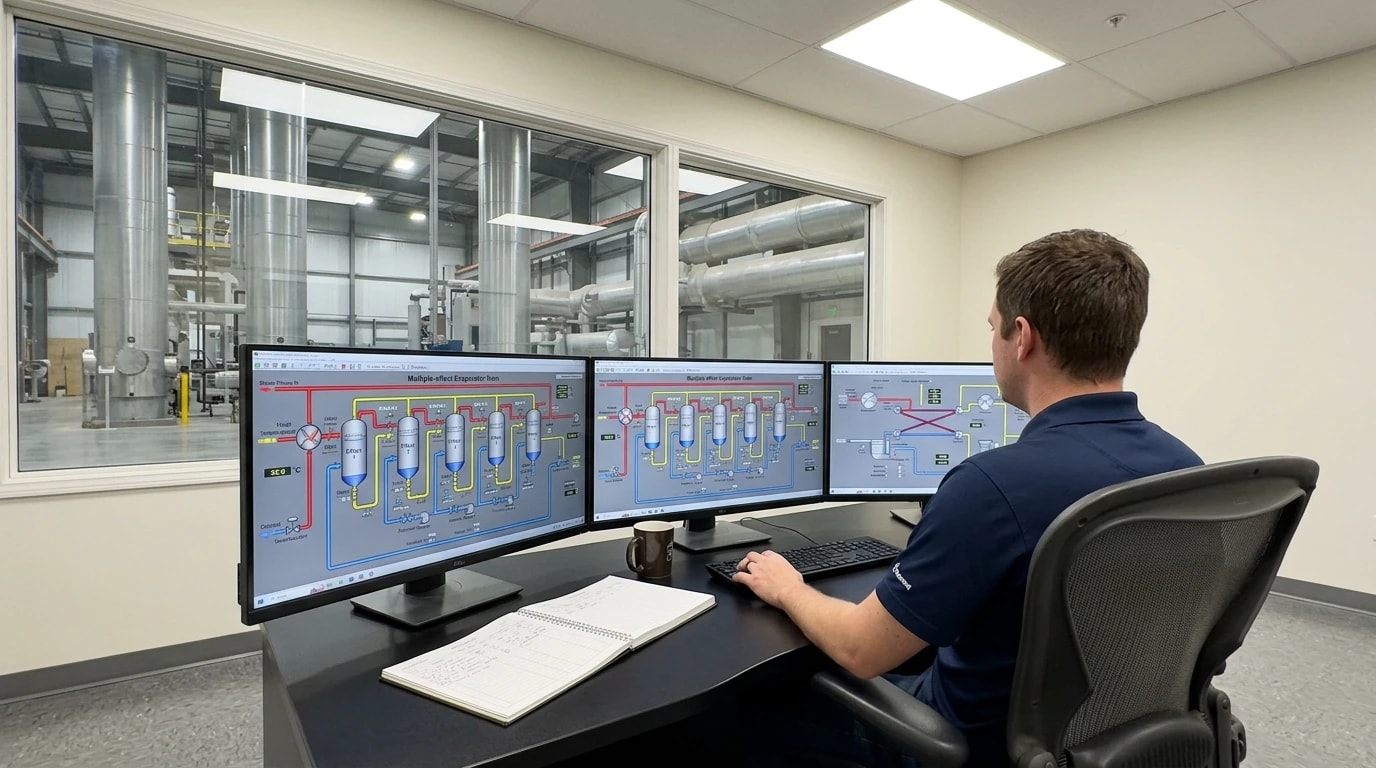
Integrated Kraft pulp and paper mills concentrate the vast majority of their thermal demand within three primary process areas:
- Paper drying,
- Black liquor evaporation, and
- Chemical cooking.
Industrial energy audits demonstrate that paper drying typically consumes 38% of total process heat, black liquor evaporation requires 24%, and chemical cooking accounts for 18%. Together, these three thermal sinks represent 80% of the overall thermal demand of the mill.
Chemical Cooking and Digester Dynamics
Chemical pulping relies on the Kraft process to dissolve lignin and separate cellulose fibres. Wood chips enter the digester, which operates as either a continuous vertical vessel or a series of batch reactors. During this stage, chemical cooking requires significant heat to raise the incoming chips and cooking liquor to the operating temperature, which typically ranges from 150 °C to 170 °C depending on the raw materials and targeted Kappa number.
- TLC (Technical Learning Community) Integration: To assist in process standardisation, teams focus on the creation of high-fidelity, shared HMB models. These models accurately simulate the transient steam demands of both batch and continuous digesters, enabling tighter integration with the general mill utility network.
Evaporation Plant and Black Liquor Concentration
After pulping, the spent cooking chemicals and dissolved organic matter exit the digester as weak black liquor, which contains approximately 15% dry solids. Before this liquor can be burned in the recovery boiler to reclaim the inorganic chemicals and generate steam, it must be concentrated to at least 65% to 80% dry solids. Concentrating this liquor represents 24% of the mill's thermal energy demand and occurs in a multi-effect evaporator plant, typically consisting of five to seven effects operating in series.
Each effect operates at a lower pressure than the preceding one, allowing the evaporated water vapour from one stage to act as the heating medium for the next. This sequence optimises steam economy. However, fouling on the tube surfaces, caused by sodium carbonate and calcium sulphate scaling, increases thermal resistance and reduces evaporation efficiency. Maintaining optimal thermal performance in the evaporator plant is critical, as any reduction in black liquor solids content entering the recovery boiler directly decreases steam generation capacity and increases auxiliary fuel consumption.
The Drying Section and Latent Heat Recovery
The final step in paper manufacturing is the drying section, the mill's largest thermal sink at 38%. The wet paper web enters the dryer section after mechanical pressing, typically containing 40% to 45% dryness. The remaining moisture must be evaporated as the paper web travels over dozens of cast-iron steam-heated rotating cylinders. These cylinders operate at pressures ranging from 1 to 8 bar, depending on the paper grade and machine speed.
As steam condenses on the inner cylinder walls, it transfers its latent heat of condensation through the cast-iron shell into the paper web. Condensate must be evacuated continuously to prevent the formation of a water layer that acts as a thermal insulator. The hot, moisture-laden air exhausted from the dryer hood contains a vast amount of latent heat, which represents the single largest source of low-grade waste energy in the entire mill.

Map every energy and material flow in your process with detailed heat and mass balance calculations — the foundation for any optimisation or design project.
Thermodynamic Foundations of Pinch Analysis in Kraft Mills
Process integration relies on Pinch Analysis to establish thermodynamic targets for energy saving. This methodology treats the entire manufacturing plant as a single thermal network. Engineers construct composite curves by combining the heat-temperature profiles of all process streams that require cooling (hot streams) and all streams that require heating (cold streams).
Defining Composite Curves and the Pinch Point
Plotting the Hot Composite Curve against the Cold Composite Curve on a temperature-enthalpy (T-H) diagram reveals the thermal bottleneck, known as the pinch point. The pinch point represents the point of closest approach between the hot and cold composite curves, defined by a minimum temperature difference (ΔTmin). This parameter determines both the maximum possible heat recovery and the required size of the heat exchanger network.
Pinch Analysis operates under three fundamental thermodynamic rules:
- Do not transfer heat across the pinch point.
- Do not use external cooling (cold utilities) above the pinch point.
- Do not use external heating (hot utilities) below the pinch point.
Transferring heat across the pinch point or using utilities in the wrong thermal zone introduces a double penalty. It increases both the heating utility demand and the cooling utility demand by the same amount. To calculate the thermal load (Q) of a process stream undergoing a temperature change, thermal design teams utilise the following thermodynamic relationship:
Q=F⋅Cp⋅(Tout−Tin)Where:
- Q is the stream thermal duty in kW,
- F is the mass flow rate of the process stream in kg/s,
- Cp is the specific heat capacity of the fluid in kJ/(kg·K),
- Tout is the target outlet temperature of the stream in °C,
- Tin is the initial inlet temperature of the stream in °C.
Constructing the Grand Composite Curve for Utility Targets
By analysing the Grand Composite Curve (GCC), utility managers can identify where low-pressure steam can substitute for medium-pressure steam, or where waste heat can satisfy process demands. This analysis is particularly important for integrated mills because it reveals the exact quantity of heat available at different temperature intervals.
Process design specialists typically execute these complex calculations using simulation software such as Aspen Plus, HYSYS, or DWSIM. These platforms allow for precise thermal and species-level mass balance calculations, ensuring that seasonal variations and upset plant conditions do not destabilise the heat exchanger network.
Cost-Benefit Analysis of Simulation-Based HMB Modelling
Justifying the capital expenditure (CAPEX) of a mill-wide thermal audit requires a clear cost-benefit analysis. Mill directors must balance the upfront engineering cost of simulation-based Heat and Mass Balance (HMB) modelling against the guaranteed operational expenditure (OpEx) reductions.
Balancing Engineering CAPEX Against Operational Returns
Industrial case studies demonstrate that Pinch Analysis consistently identifies thermal integration opportunities that reduce total mill heat demand by 12% to 39%. While the initial investment in high-fidelity simulation modelling can be significant, the long-term savings outweigh these upfront costs.
The financial feasibility of these projects is supported by the Levelised Cost of Saved Energy (LCOE). Recent academic and industrial studies, including assessments of large-scale European paper mills, indicate that the LCOE of recovered heat can be as low as 1.14 cents/kWh (approximately 0.9 pence/kWh). When compared to volatile natural gas prices, which often exceed 6 to 10 pence/kWh in European markets, the economics of waste heat recovery are compelling.
Levelised Cost of Saved Energy (LCOE) and Payback Realities
This low levelised cost translates directly into rapid payback periods. Most Pinch-based thermal integration projects achieve full payback within 12 to 16 months. The table below outlines a typical financial comparison for a mid-sized integrated Kraft mill processing 300,000 tonnes of pulp annually, demonstrating a carbon reduction of 72,000 tonnes of CO₂e per year.
| Financial Metric | Baseline Operations (Fossil Gas) | Optimised Operations (Pinch Integration) |
|---|---|---|
| Annual Fuel Consumption | 1,200 GWh | 840 GWh (30% reduction) |
| Fuel Cost (at 10 pence/kWh) | £120,000,000 | £84,000,000 |
| Decarbonisation CAPEX | £0 | £42,000,000 |
| Annual Operational Savings | £0 | £36,000,000 |
| Simple Payback Period | - | 1.16 years (14 months) |
| Carbon Reduction | - | 72,000 tonnes CO₂e/yr |
Deep Dive into the CAPEX Discrepancy
While simple heat exchanger additions can be executed for around £3,500,000, a comprehensive mill-wide deep electrification and heat pump integration project typically requires a CAPEX of £42,000,000. This larger investment accounts for the procurement of industrial-scale High-Temperature Heat Pumps (HTHPs), extensive piping modifications, and electrical infrastructure upgrades needed to support deep decarbonisation.
High-Temperature Heat Pumps for Low-Grade Waste Heat Recovery
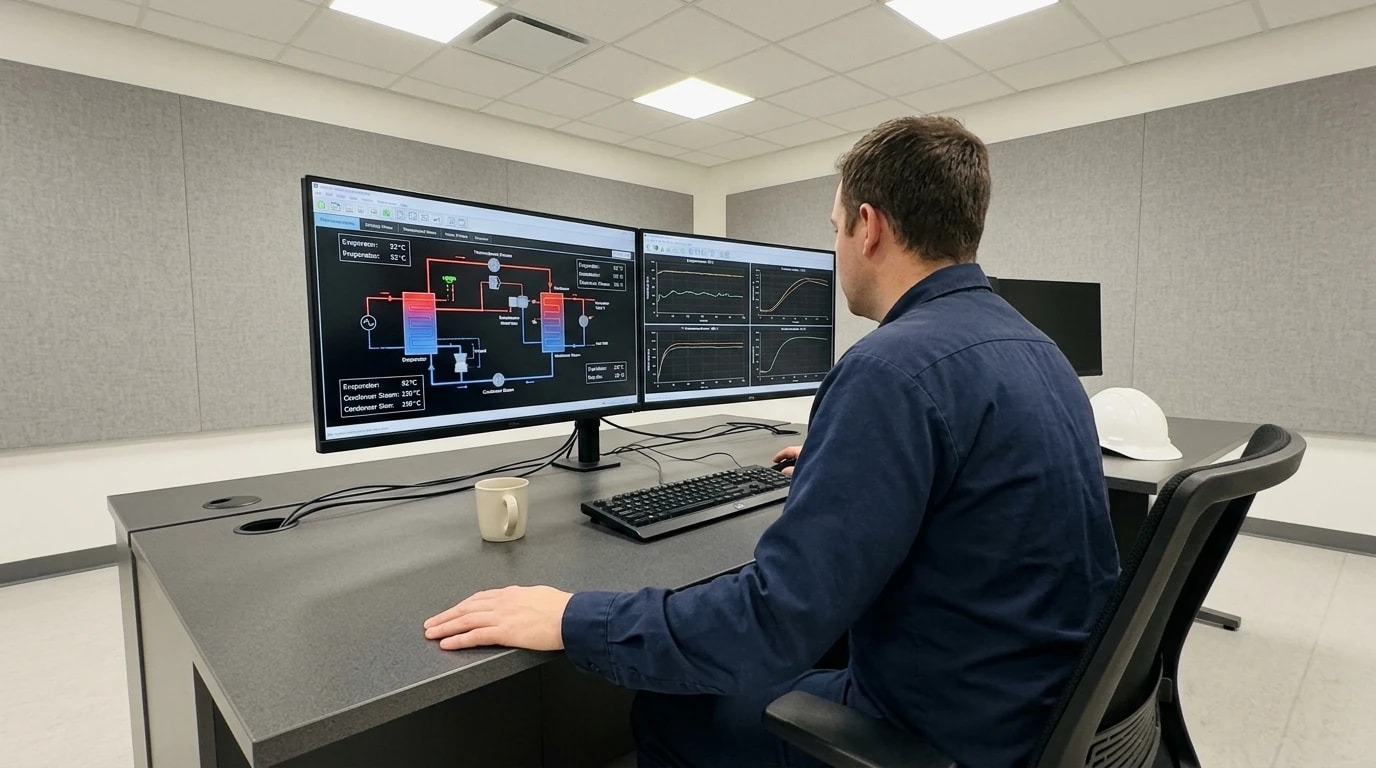
For low-grade waste heat recovery, High-Temperature Heat Pumps (HTHPs) provide a highly efficient upgrade pathway. In a typical mill, massive volumes of warm water from vacuum pump sealing systems or bleach plant washers are rejected to the effluent treatment plant at 40 °C to 60 °C. Meanwhile, processes like pocket ventilation systems or low-pressure steam headers require heat at 110 °C to 140 °C.
An HTHP utilising specialised high-temperature refrigerants successfully bridges this temperature gap. The heat pump's evaporator extracts thermal energy from the waste stream, vaporising the refrigerant, which the compressor then elevates to the target pressure and temperature. In the condenser, the hot refrigerant releases its heat to the process sink, generating hot process water or low-pressure steam. For a typical temperature lift of 60 °C, a modern industrial HTHP operates with an operating Coefficient of Performance (COP) of 3.5 to 5.0, delivering up to 5.0 kWh of useful thermal energy for every 1 kWh of electrical energy supplied to the compressor, thereby significantly reducing the mill's dependency on fossil-fuel boilers.
Integrating these electrified systems requires careful coordination within the mill-wide energy reduction strategy:
- Coefficient of Performance (COP) Optimisation: Minimising the temperature lift between the source and sink is key to maintaining a high COP.
- Spark Spread Dynamics: The financial viability of HTHPs and MVR depends heavily on the ratio between grid electricity tariffs and fossil fuel prices.
- Boiler System Balances: Displacing steam demand alters the mill's steam balance. Process engineers must model the wider system to ensure the recovery boiler continues to process black liquor safely while generating optimal power.

Map every energy and material flow in your process with detailed heat and mass balance calculations — the foundation for any optimisation or design project.
Multi-Pressure Steam Header Reconciliation and Turbine Extraction
The steam distribution network is the thermodynamic spine of any Kraft mill. Integrated mills typically operate a multi-pressure steam system with high-pressure (HP), medium-pressure (MP), and low-pressure (LP) headers. High-pressure steam, generated by the black liquor recovery boiler and supplementary biomass or power boilers, passes through steam turbines to generate electricity before being extracted at medium and low pressures for process heating.
Eliminating Throttling and Exergy Loss in PRVs
Steam header reconciliation is a critical step in process integration. In many older facilities, the multi-pressure steam system is unbalanced, meaning that process variations—such as paper machine breaks or digester blowdown cycles—cause momentary steam surpluses or deficits. To cope with these transients, operators often resort to throttling high-pressure steam directly to lower pressure levels through pressure-reducing valves (PRVs).
Passing steam through a PRV is thermodynamically inefficient because it destroys exergy (the useful work potential of the steam) without generating power. For instance, a high-pressure steam flow at 60 bar and 450 °C that is throttled to 4 bar without passing through a turbine represents a permanent, irreversible loss of electricity generation capacity. A robust thermal reconciliation programme aims to:
- Match Extraction to Demand: Align the extraction pressures of the steam turbines with the actual thermal requirements of the evaporator plant (MP steam) and the dryer section (LP steam).
- Minimise Venting and Throttling: Restrict the use of PRVs to emergency or transient operations only, ensuring that all steam flowing between headers performs useful mechanical work.
- Optimise Deaerator Operation: Ensure that low-temperature condensate returning from the process is preheated using the lowest possible steam grade.
Aligning Steam Demands with Cogeneration Output
Process design teams use HMB simulations to perform species-level mass balances and thermodynamic energy balances across the steam network. These models account for variables such as desuperheating water injection, condensate flash steam generation, and turbine isentropic efficiencies. Reconciling the steam headers can reduce total fuel demand by 5% to 8% while maintaining or increasing the mill's self-generated electricity output.
This reconciliation ensures that the steam turbine operates at its optimum isentropic efficiency, which can range from 75% to 85% depending on load conditions, and minimises the bypass flow through the PRVs to less than 2% of total steam generation during normal operations. Additionally, boiler configurations are verified against safety standards such as BS EN 12952 for water-tube boilers to maintain steam network integrity during pressure swings.
Cylinder-by-Cylinder Dryer Section Efficiency Optimisation
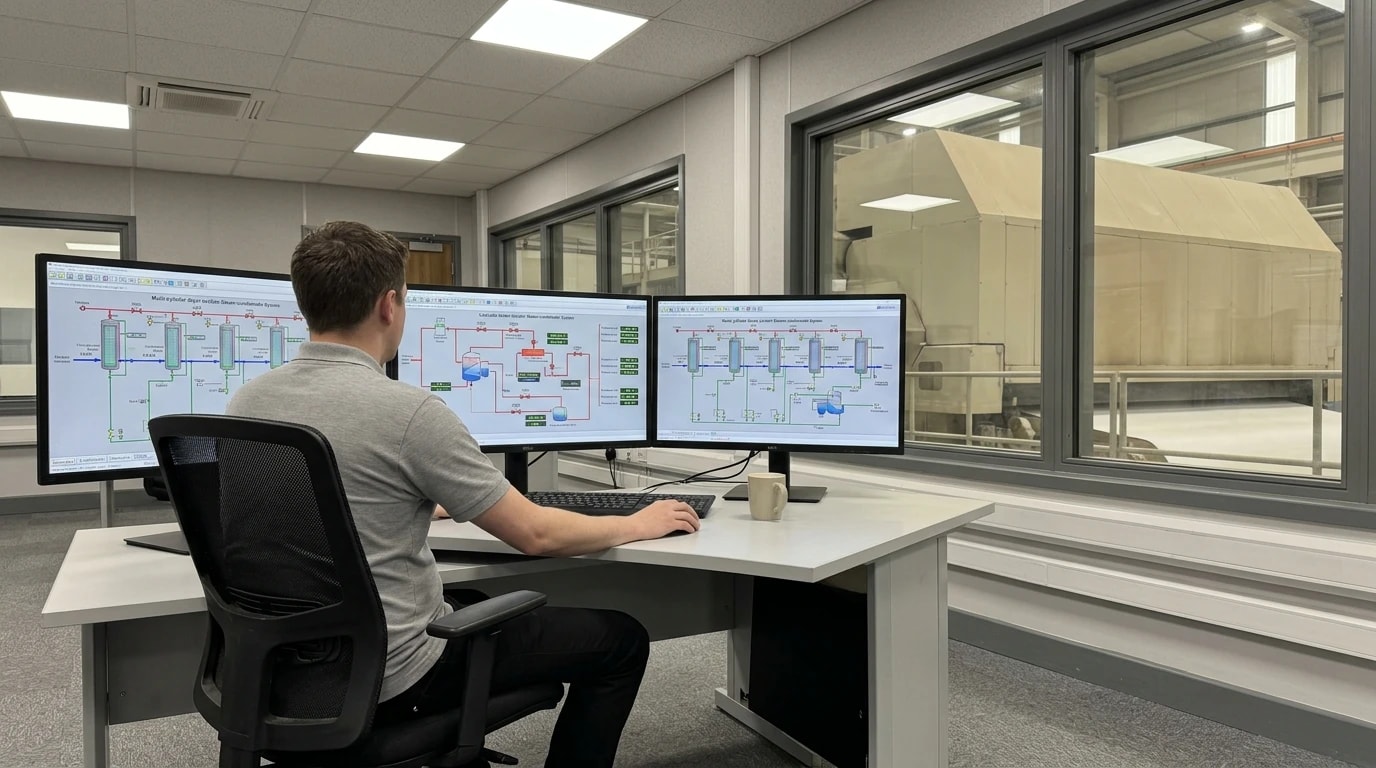
With paper drying consuming 38% of the mill's thermal energy, the paper machine dryer section is a primary target for optimisation. Modern paper machines use dozens of steam-heated rotating cylinders to evaporate water from the wet paper web. Optimising this section requires a cylinder-by-cylinder thermodynamic analysis.
Condensate Evacuation and Steam Economy
The process of drying paper involves a precise balance of heat and mass transfer. Inside each rotating cylinder, steam condenses on the inner wall to release its latent heat, which conducts through the cast-iron shell and the dryer fabric into the wet paper web. The rate of heat transfer depends heavily on the continuous and efficient evacuation of this condensate. At modern operating speeds exceeding 350 metres per minute, centrifugal force causes the accumulated condensate to transition from puddling at the bottom of the cylinder to forming a uniform, continuous ring around the entire inner circumference. This phenomenon, known as rimming, severely restricts thermal performance because the thermal conductivity of water is significantly lower than that of the cast-iron cylinder wall, acting as an unwanted thermal insulator while simultaneously increasing the motor load required to rotate the cylinder.
To maximise heat transfer and overall steam economy, engineers must optimise:
- Siphon Calibration and Film Thickness: Installing calibrated stationary siphons positioned close to the inner wall is critical. Stationary siphons rely on a precise differential pressure between the steam supply header and the condensate receiver tank to sweep the condensate out. A fraction of steam—known as blow-through steam—is evacuated alongside the liquid to generate the high-velocity vapour flow required to lift the condensate against centrifugal force. This maintains a thin, uniform condensate film across the cylinder width.
- Cascade and Differential Pressure Control: Steam and condensate systems must maintain precise differential pressures across successive cylinder groups. The evacuated steam-condensate mixture enters cascade flash tanks, where flash steam is separated and systematically reused in the preceding, lower-pressure cylinder groups. Maintaining this differential pressure, typically calibrated between 0.2 and 0.5 bar, prevents condensate accumulation while minimising the demand for fresh utility steam in the early drying stages.
- Hood Exhaust Latent Heat Recovery: The hot, moisture-laden air exhausted from the paper machine hood represents the single largest source of low-grade waste energy in the mill. Process thermal integration systems capture this latent heat via air-to-air heat exchangers to preheat pocket ventilation air, and air-to-water exchangers to heat process water.
Closing White Water Loops to Conserve Wet-End Heat
Additionally, mills must focus on water circuit closure. By closing the white water and filtrate loops, the plant retains thermal energy within the wet end of the paper machine. This reduces the temperature drop of the stock entering the press section.
Because warmer water has lower viscosity, the press section can remove more water mechanically. A 1 °C increase in stock temperature can improve press dryness by 0.1% to 0.15%, which translates to a 4% reduction in the thermal energy required in the subsequent dryer section.
Process Electrification: MVR Evaporators and High-Temperature Heat Pumps
As mills transition away from fossil fuels, process electrification pathways play an increasingly prominent role in industrial decarbonisation. Traditional Kraft mills generate steam by burning black liquor and biomass. Deep electrification pathways displace these boilers by integrating mechanical and thermodynamic upgrade technologies:
- MVR (Mechanical Vapour Recompression): MVR is integrated into the evaporator train to compress low-pressure waste vapour, upgrading its temperature and pressure so it can be reused as heating steam within the MEE first effect, thereby displacing live steam.
- HTHP Integration: HTHPs are deployed to capture low-grade sensible heat from paper machine white water or liquid effluents, upgrading this heat up to 140 °C to provide carbon-free steam for pocket ventilation or thermal drying.
Mechanical Vapour Recompression for Black Liquor Concentration
Mechanical Vapour Recompression (MVR) is highly effective when applied to black liquor evaporator plants. In a standard multi-effect evaporator train, steam evaporates water from the weak black liquor in successive stages (effects) operating at decreasing pressures. Rather than routing this secondary vapour to a condenser, an MVR system directs it to an electrically driven centrifugal compressor or high-pressure fan.
By applying mechanical work, the compressor increases the vapour pressure by 0.2 to 0.4 bar, raising its saturation temperature by 5 °C to 12 °C. This compressed vapour is then returned to the heating shell of the same evaporator stage. As it condenses, it releases its latent heat to evaporate more water from the black liquor. Because this latent heat is continuously recycled within the system, the only external energy input is the electricity required to drive the compressor motor. Under optimal conditions, the Coefficient of Performance (COP) of an MVR system can exceed 10, reducing the evaporator stage's thermal steam demand by up to 92%.
EnerTherm Engineering’s 11-Step Process Optimisation Methodology
EnerTherm Engineering’s proprietary 11-step process optimisation methodology serves as the technical foundation for resolving complex process challenges across diverse industrial sectors. Within the Heat and Mass Balance (HMB) discipline, this framework standardises the transition from initial site data to the delivery of high-fidelity, validated simulations. By building a unified, single-source-of-truth Process Flow Diagram (PFD) with embedded stream tables, this methodology eliminates the risks associated with capital investments in thermal upgrades.
Technical Steps from Data Audit to Steady-State Simulation
The 11-step process is structured as follows:
- Data Acquisition and Operational Baselining: Mining historical Distributed Control System (DCS) logs, P&IDs, and equipment datasheets.
- Sensor Verification and Reconciliation: Identifying and correcting measurement errors from faulty temperature, pressure, and flow transmitters.
- Species-Level Mass Balance Modelling: Developing a comprehensive mass balance that accounts for water, wood fibres, dissolved solids, and chemical species across all process loops.
- Steady-State Thermodynamic Simulation: Constructing a high-fidelity model on process simulation platforms to establish the baseline energy flow. Thermal design teams typically select packages such as Aspen Plus, HYSYS, or DWSIM for this step.
- Dynamic Simulation and Transient Modelling: Capturing the dynamics of batch operations, such as digester blows, and paper machine start-ups or shutdowns.
- Model Validation and Calibration: Verifying the simulation against historical operating data across different seasons and during plant upsets.
- Pinch-Point Evaluation and Target Generation: Constructing Composite Curves and Grand Composite Curves to calculate the minimum hot and cold utility targets.
- Steam Header Reconciliation: Analysing multi-pressure steam headers to eliminate throttling losses and optimise turbine extraction.
- Heat Exchanger Network (HEN) Synthesis: Designing practical piping layouts, incorporating Intermediate Water Loops where necessary, and selecting heat exchanger technologies (such as wide-gap plate or shell-and-tube).
- Techno-Economic and Risk Assessment: Conducting rigorous sensitivity analyses on energy prices, CAPEX, and operational risks like heat exchanger fouling.
- Decarbonisation Roadmapping: Developing a phased, risk-mitigated implementation plan that aligns with scheduled mill maintenance shutdowns.
Model Validation Under Seasonal and Transient Conditions
A key element of this methodology is model validation. A steady-state simulation that represents only ideal summer operations is insufficient for a mill operating in northern climates. Thermal design teams validate the simulation against winter conditions, when incoming fresh-water temperatures can drop below 5 °C, significantly increasing the steam required for water heating.
Furthermore, the model must reflect transient plant upset conditions, such as sheet breaks on the paper machine. During a sheet break, steam demand in the dryer section drops rapidly, which can cause pressure spikes in the steam headers and steam venting at the recovery boiler. Dynamic simulations help design control systems that can buffer these thermal surges without wasting energy or tripping the boilers.
This structured methodology has a proven track record. On average, industrial projects utilising this 11-step framework across diverse manufacturing facilities achieve an average energy reduction of 14%, a 1.8-year payback period, and an annual carbon reduction of 2,800 tonnes of CO₂. However, when this methodology is executed as a dedicated mill-wide energy reduction strategy in an integrated Kraft pulp and paper facility, the scale of savings increases dramatically, often reaching a carbon reduction of up to 72,000 tonnes of CO₂e per year. By bridging the gap between theoretical thermodynamic potential and practical mill operations, this approach provides mill directors with a reliable, risk-mitigated pathway to deep decarbonisation and long-term cost competitiveness.
This article reflects the independent analysis and editorial opinion of EnerTherm Engineering. Product names, trademarks, and brands mentioned belong to their respective owners. EnerTherm Engineering is not affiliated with, endorsed by, or a licensee of any third-party software or product mentioned unless explicitly stated.

Managing Director — EnerTherm Engineering
Dr. François Pierrel is Managing Director of EnerTherm Engineering with over two decades of expertise in thermal design, heat transfer, and industrial energy optimisation. He holds a PhD in Heat Transfer from Cranfield University and a Post-Doctorate from Heriot-Watt University.
