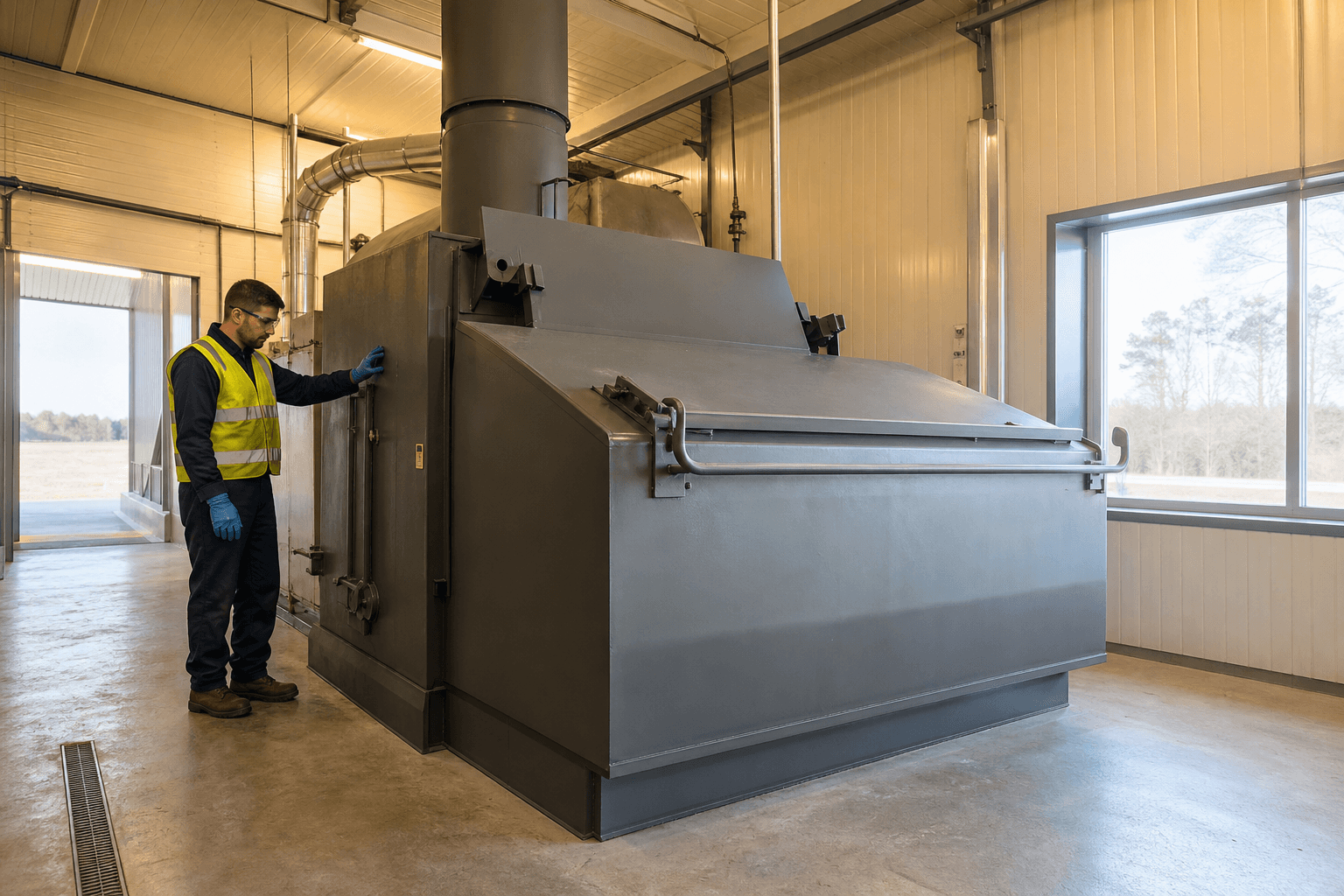
Cattle Incinerators
Calves and youngstock destroyed on the holding. Mature adult cattle exceed the 300 kg charge rating — stated up front.
Calf and youngstock losses are the fallen stock a dairy or beef unit actually deals with week to week, and they are well inside a 300 kg charge. Mature adult cattle are not — a cow at 500–750 kg exceeds every model in the AniBurn range, and that is worth knowing before a specification is written rather than after.
Three Models,
One Solution
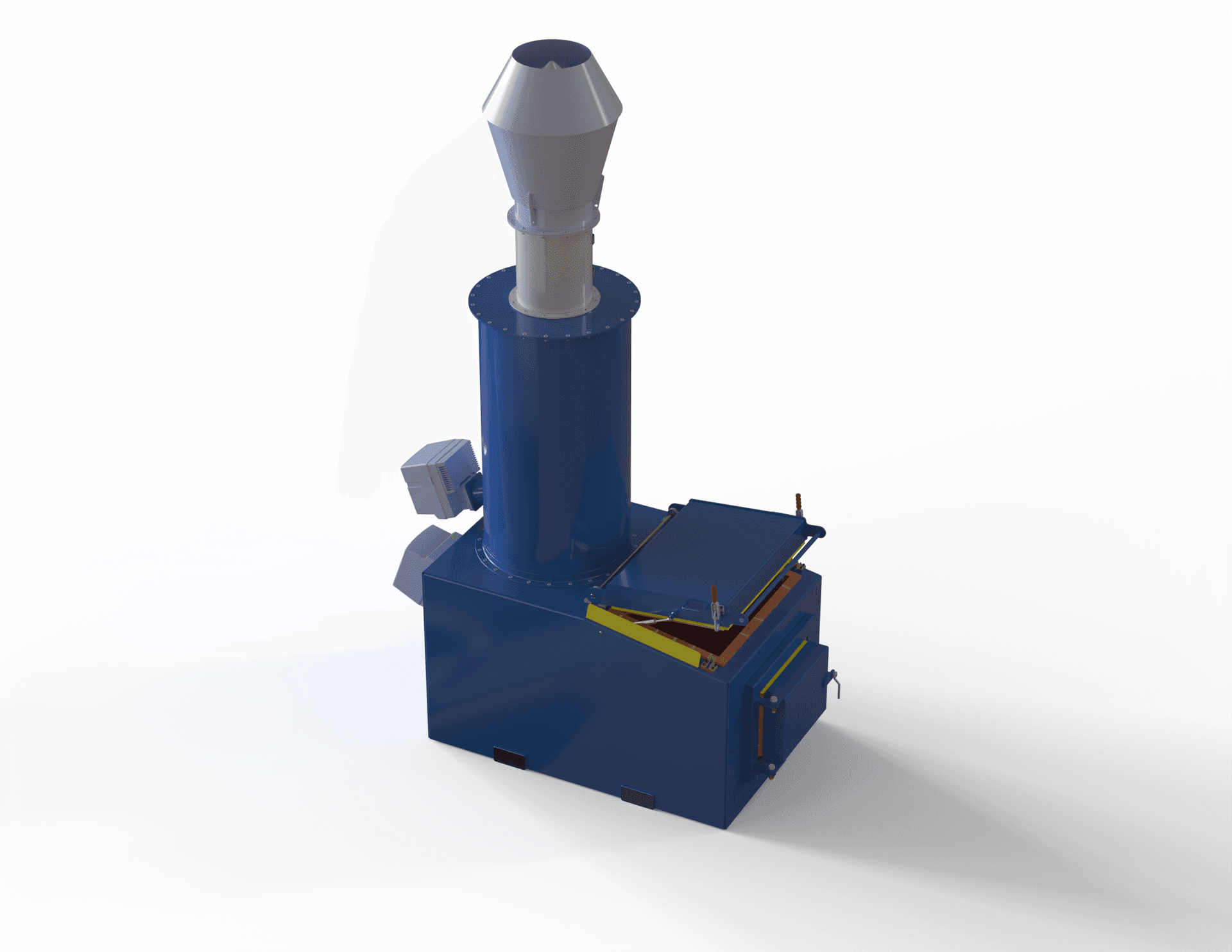
150 kg per charge for veterinary practices, small farms and pet cremation. The chamber is tall relative to its load rating because carcass waste is bulky and wet — volume, not weight, is the binding constraint.
250 kg per charge with a 2880 mm chamber. The usual specification for a working livestock farm that needs fallen stock dealt with on site under biosecurity rules rather than held for collection.
The largest AniBurn: 300 kg per charge in a 3180 mm chamber. Sized for commercial pet crematoria and larger livestock units where a single daily cycle has to clear everything held in cold storage.
Which Model
Fits Your Volume
Pick a model to see what it clears in a day of cattle.
Calves and youngstock only — a week of calving losses in one charge. Mature adult cattle exceed every rating in this range and stay on fallen-stock collection.
TSE sampling before destruction
Fallen cattle over 48 months sit in a TSE surveillance class that may require a sample. It has to be taken before the carcass is destroyed — after the cycle the animal cannot be tested, and the surveillance obligation cannot be met retrospectively.
APHA approval and environmental permit
Cattle carcasses are animal by-products. The plant needs APHA approval under the retained ABP Regulation and an environmental permit from the Environment Agency, SEPA or NIEA — separate consents, separate regulators.
TB and notifiable disease directions
Where APHA has issued a direction covering an animal, that direction sets the disposal route. Reactor animals in particular are not a farm disposal decision.
Cattle passports and identification
Destruction does not end the identification record. The animal's passport and holding register entry still have to be closed off, and identification devices recorded before the carcass is charged.
Why Burn It
On Site
4 things change on the day this stream stops leaving the site.
Calving losses dealt with the same hour
Stillbirths, afterbirth and calf losses come in a seasonal wave and cannot wait for a round. Destroying them immediately removes the store, the smell and the scavengers a collection point attracts.
No collection vehicle onto the unit
A fallen stock lorry has been at other holdings the same day. On a unit managing TB restrictions or a Johne's programme, keeping that vehicle off the yard is worth more than the collection fee.
Scour and pneumonia casualties do not accumulate
Youngstock disease events produce several losses in a short window — exactly when you want the carcasses gone rather than sitting where the healthy calves are housed.
Weekend and bank holiday cover
Collection rounds keep office hours; livestock does not. On-site capacity means a Friday-evening loss is not a Monday-morning problem.
Dual-chamber unit
Primary chamber running 850–1,200°C with a secondary chamber holding flue gas above 850°C for two seconds. For animal by-products this is not a preference: it is the combustion condition an APHA-approved incineration plant has to meet.
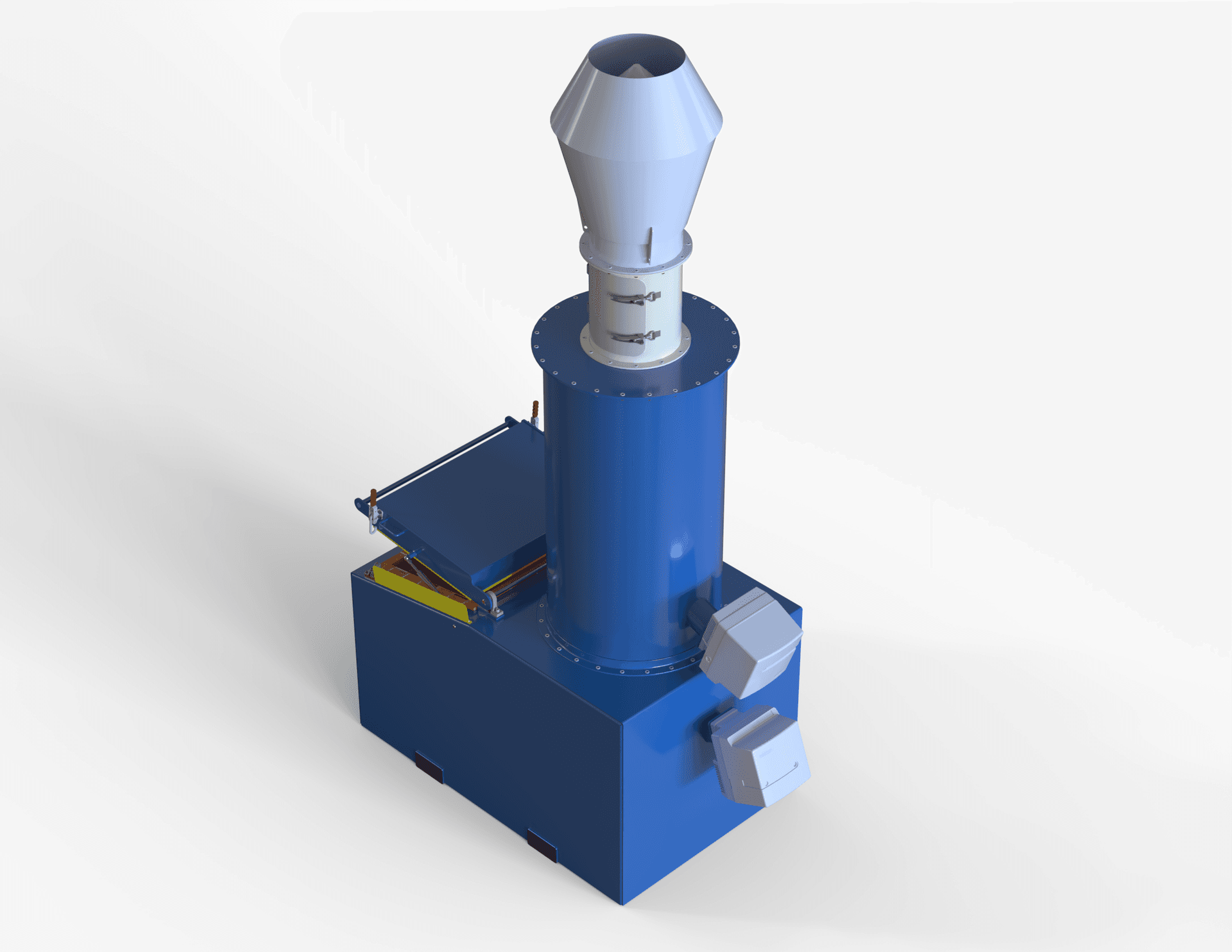
Two-burner set and fuel train
All three AniBurn models carry two burners, configured for natural gas, LPG, diesel, biofuel or hydrogen. Carcass waste is wet, so burner duty on this stream is doing more evaporation than on any other — fuel choice is a site decision, the combustion condition is not.
What Ships
With The Unit
Identical whichever stream it is specified for. The operating procedure changes; the machine does not.
Dual-chamber unit
Primary chamber running 850–1,200°C with a secondary chamber holding flue gas above 850°C for two seconds. For animal by-products this is not a preference: it is the combustion condition an APHA-approved incineration plant has to meet.
Two-burner set and fuel train
All three AniBurn models carry two burners, configured for natural gas, LPG, diesel, biofuel or hydrogen. Carcass waste is wet, so burner duty on this stream is doing more evaporation than on any other — fuel choice is a site decision, the combustion condition is not.
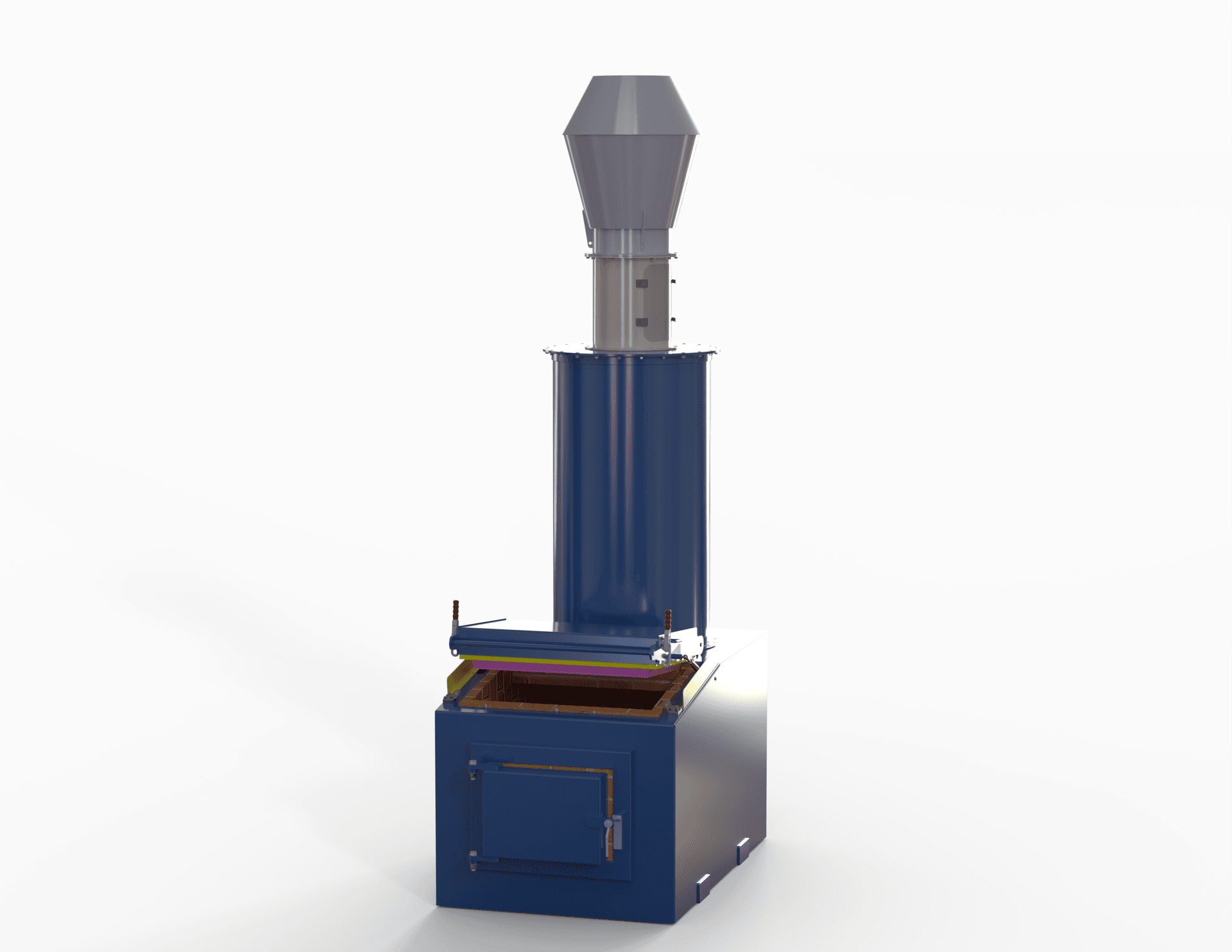
Top-loading charge door
Carcasses are dead weight and awkward to handle. Top loading means a carcass goes in from above with a hoist, loader or teleporter rather than being dragged through a door at chest height, which is the difference between a two-person job and a one-person one.
IP6X control panel
PLC control with cycle logging and chamber thermocouples. The cycle log is the record that a fallen-stock disposal, an APHA-directed cull or an individual pet cremation actually happened, and when.
Coretex refractory lining
Monolithic castable lining rated for the full temperature range, replaceable in service. Wet, fatty loads are the hardest duty a refractory sees, which makes lining quality the thing that decides service life on this stream rather than on any other.
Stack, dispersion data and commissioning
Stack supplied to the height your site-specific dispersion assessment calls for, with the emissions data the permit application references, plus on-site commissioning and operator training. On a livestock unit the neighbours are the reason the assessment matters.
How One Burn Runs,
Start To Finish
One charge is one countable event. That is what makes a batch unit auditable and a continuous one not.
One Cycle,
Start To Finish
Adds the TSE question before the charge — fallen cattle over 48 months may need sampling first — and a check that the carcass is inside the charge rating at all.
Fallen cattle over 48 months may require TSE sampling, and the sample has to be taken before destruction. If the animal is in a surveillance class and has not been sampled, the charge door stays shut.
150, 250 or 300 kg per charge. Calves and youngstock are inside it; a mature cow is not. Where the carcass exceeds the rating the route is a collector, not a longer burn.
Dead weight is handled with a hoist, loader or teleporter from above rather than dragged. Top loading is the reason a single operator can charge a calf carcass safely.
Primary combustion at 850–1,200°C with two seconds above 850°C in the secondary chamber. A carcass is largely water and fat, so the early cycle is evaporation and the fat carries the burn afterwards.
3–5% sterile ash and bone fragment. Close the cycle log against the holding's fallen stock record — during a TB or Johne's investigation, mortality and disposal records are read together.
What You Can Burn —
And What You Can't
One charge takes the whole stream without pre-sorting. What must never enter it is a short, hard list.
Yes: accepted in a charge
No pre-sorting between these
- Calves and youngstockThe stream this is actually sized for: calves, stillborn calves and youngstock casualties inside the charge rating, including calves that died in transit and came back to the holding.
- Calving wasteAfterbirth, placenta and pen waste, plus aborted and premature calves once any required sampling has been done.
- Smaller adult casualtiesAdults inside the 300 kg charge rating. Anything above it stays a collector's job — that is a sizing limit, not a permit one.
- Bedding recovered with a carcassStraw and bedding lifted with the animal rather than separated from it at the pen.
- Veterinary and husbandry wastePost-mortem remains from an on-farm examination, with hoof trimmings, tails and surgical waste from routine husbandry.
- Residue-condemned milk, small volumesColostrum and milk failing on antibiotic residue, where the quantity suits a charge rather than a tanker.
No: never charged
Not a permit question — these stay out
- Mature adult cattleA hard capacity limit. A cow at 500–750 kg exceeds every model in the range. That carcass goes to an approved collector or a high-capacity plant, and no configuration of an AniBurn changes it.
- Fallen cattle over 48 months that have not been sampledTSE surveillance requires a sample from that age class, and it cannot be taken after destruction. The order is sample first, then dispose — never the reverse.
- Animals under a TB or notifiable disease directionWhere APHA has issued a direction, the direction specifies disposal. A reactor animal in particular has a defined route, and it is not the farm's choice.
- Bulk slurry, manure and yard scrapingsLiquid and semi-solid loads cannot be charged into a batch chamber, and they have their own storage and spreading routes under a manure management plan.
- Veterinary sharps, bottles and medicine packagingClinical waste from a farm has a separate container and route. Sharps in a mortality charge are a handling injury waiting to happen.
- Ear tags, boluses and identification devices left inElectronic boluses and plastic tags leave residue in the ash and, in the case of the identification record, should be recorded and removed as part of closing the animal's passport.
Can you legally burn cattle on site?
Technically, yes: the chamber destroys almost everything on the accepted list at 850–1,200°C, and capability is rarely the constraint. Legally is a separate question. What your site is allowed to burn is set by your environmental permit from the Environment Agency, SEPA or NIEA and the waste codes written into it, plus APHA approval, because animal by-products are regulated under their own rules. The never-charged list is different again: those materials are out of scope for the unit or governed by a direction, and no permit wording brings them back in. Send us the codes you hold, or the ones you expect to apply for, and we will tell you which of this list they cover before anything is specified.
Send us your waste codesWhat size incinerator for a week of calving losses?
Arithmetic on published model figures, not a customer reference. Your numbers go through the same steps.
How This
Was Worked Out
4 calves at ≈45 kg = 180 kg, plus ≈30 kg of calving waste = ≈210 kg — one ABI-250 charge, leaving 6–11 kg of ash at 3–5%. Calf weights here are typical rather than measured. Note what this example is not: a mature cow. Size on the fallen stock you actually produce week to week, and keep a collector arrangement for anything over the charge rating.
ABI-250
1
6–11 kg
Send your daily or weekly arisings and we will confirm the model, the charge count and the permit route.
Related Products
& Services
Complementary equipment and engineering services for your process.
Sizing and background
- [TOOL]Work out the burn rate for your own arisings
- [TOOL]Size the combustion air and flue gas duty
- [BLOG]Optimising animal carcass incinerators for UK bio-security
- [BLOG]The long-term operational costs of animal carcass incinerators
- [BLOG]Training programmes for animal incinerator operators
- [BLOG]Minimising the environmental impact of animal incinerators
- [BLOG]Agricultural incinerators and aquaculture waste
Cattle Questions
Answered against the published figures for the models specified for this stream, not a generic range sheet.
Calves, youngstock and the smaller adult casualties, plus the afterbirth, stillbirths and calving losses that a dairy unit produces continuously. All of that sits comfortably inside a 150, 250 or 300 kg charge, and it is the majority of fallen stock events on a cattle holding by count if not by weight. What does not fit is a mature animal. A dairy cow runs 500–750 kg and a finished beef animal similar; both exceed the largest model in the range by a wide margin. There is no configuration, no procedure and no operator technique that changes this, and anyone who tells you otherwise is selling something. A mature adult carcass goes to an approved collector or a high-capacity plant. The second thing to establish before the charge door opens is TSE surveillance. Fallen cattle over 48 months of age fall into a surveillance class that may require a sample to be taken, and once the animal is in the chamber that sample does not exist. This catches people out precisely because incineration feels like the responsible, immediate action — and doing it in the wrong order destroys the test. Where an on-site unit earns its place on a cattle holding is in the routine: calving losses, scour and pneumonia casualties in youngstock, and the ability to deal with them the hour they happen instead of holding a carcass at a collection point through a summer weekend. The collection route still exists for the animals that are too big, and most units end up using both.
4 calves at ≈45 kg = 180 kg, plus ≈30 kg of calving waste = ≈210 kg — one ABI-250 charge, leaving 6–11 kg of ash at 3–5%. Calf weights here are typical rather than measured. Note what this example is not: a mature cow. Size on the fallen stock you actually produce week to week, and keep a collector arrangement for anything over the charge rating.
No. The range is rated 150, 250 and 300 kg per charge and a mature cow runs 500–750 kg. That carcass needs an approved collector or a high-capacity plant. The units cover calves, youngstock and smaller adult casualties, which is most fallen stock events by count.
Cattle over 48 months fall into a surveillance class that may require sampling, and the sample must be taken before the carcass is destroyed. Check the age and the current surveillance requirement at the charge door, because after the cycle there is nothing left to test.
Yes, and it is one of the streams an on-site unit handles best — it arrives continuously through calving, it is unpleasant to store, and it attracts scavengers if it sits. It goes into a routine charge with calf losses.
No. Burial of fallen stock has been prohibited since 2003 outside designated remote areas, regardless of the animal's size. The lawful routes are an approved collector or an APHA-approved incinerator.
Reactor animals are handled under APHA direction, and the direction sets the route. An on-site incinerator does not change that, though keeping a collection vehicle off a restricted holding for ordinary fallen stock is one reason units under restriction specify one.
Record the identification before charging and close the passport and holding register entry. Electronic boluses and plastic tags leave residue in the ash, so removing what you reasonably can keeps the residue clean.
Most of a working day for a full charge at under 50 kg/h. A carcass is largely water: the first part of the cycle is evaporation, then the fat content carries the burn, which is why this stream runs longer per kilogram than dry farm waste.
Most cattle units do, and it is the honest recommendation. The unit handles calves, youngstock and calving waste immediately; the collector handles the mature animals that exceed the charge rating. The two routes cover different problems.
Ready to
Incinerate?
Send the stream, the volume and the site constraints. We will confirm the model, the permit route, and what the specification has to say to satisfy the regulator.
- Calving losses dealt with the same hour
- No collection vehicle onto the unit
- Scour and pneumonia casualties do not accumulate
- Weekend and bank holiday cover