Minimizing the Environmental Impact of Animal Incinerators
Animal incinerators play a critical role in managing animal waste, particularly carcasses, from agricultural operations, veterinary clinics and research facilities. They support biosecurity, disease control and odour management by providing a controlled disposal route for potentially contaminated materials. However, incineration is an energy-intensive thermal treatment process: animal by-products, auxiliary fuel, combustion conditions and emission controls all affect environmental performance. Thermal processing can reduce waste volume, destroy pathogens and provide secure disposal, but it can affect surrounding ecosystems if poorly managed. Addressing these concerns requires advanced emission controls, optimised operational practices, strategic site selection and carefully assessed waste-to-energy opportunities.
Understanding the Environmental Challenges of Animal Incineration
Animal incineration uses controlled high-temperature combustion to convert organic material into flue gas and ash. Its environmental outcome depends on the consistency of the waste feed, combustion temperature, oxygen supply, residence time, burner condition and residue handling. The main concerns are air emissions, potential soil and water contamination, and local nuisances such as odour and noise.
Air Pollution and Greenhouse Gas Emissions
Incinerators release pollutants including particulate matter (PM), heavy metals, volatile organic compounds (VOCs), acid gases such as sulphur oxides and hydrogen chloride, and carbon dioxide. The fuel used to start and sustain combustion also contributes to the facility’s carbon footprint. Incomplete combustion, poor mixing of gases and oxygen, or insufficient temperature and retention time can increase carbon monoxide, unburnt organic compounds and odours, and contribute to dioxin and furan formation.
Emissions should be considered across the full operating cycle, including carcass collection and transport, refrigerated storage where used, fuel consumption during start-up, combustion, ash handling and disposal. During disease-control incidents, operators should minimise fuel use and unnecessary idling while maintaining the required treatment conditions.
Potential for Soil and Water Contamination
Ash can leach harmful substances into soil and groundwater if it is poorly managed. Bottom-ash and fly-ash composition varies with animal material, bedding, packaging, fuel and contaminants in the feed. Improper storage or disposal of animal waste awaiting incineration can also contaminate groundwater and create surface-water run-off.
Run-off from loading areas, wash-down activities and ash storage should not reach drains, ditches or watercourses. Covered, impermeable storage areas and separated clean and dirty traffic routes reduce contamination risks and support biosecurity.
Odour and Noise Nuisance
Incineration and waste storage can produce objectionable odours. Odour is often most acute during delivery, unloading, storage and start-up, rather than during stable, controlled combustion. Fans, blowers, loading equipment and vehicle movements can also disturb nearby residents.
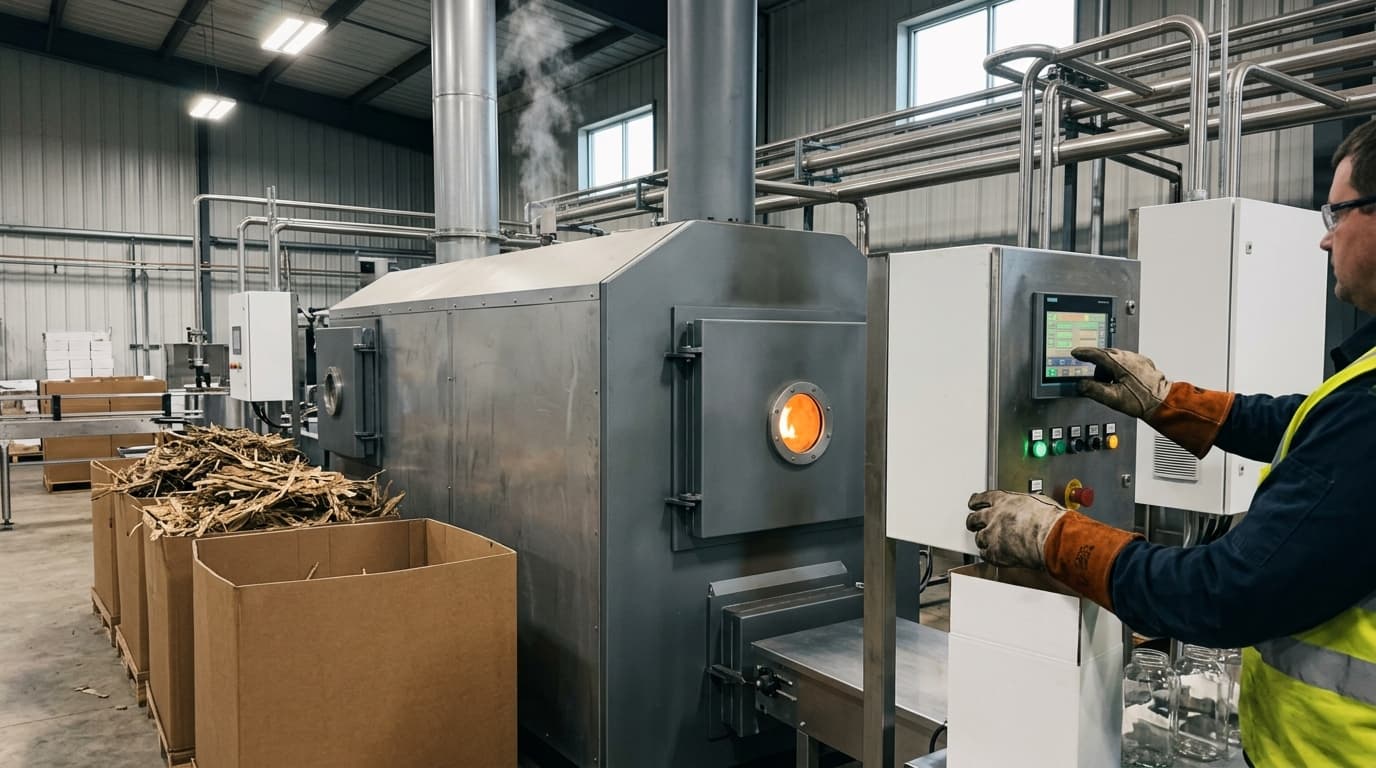
Complete incineration systems for general, agricultural, pharmaceutical, healthcare, and military waste — from under 50kg/h batch to 500kg/h continuous.
Advanced Strategies for Emission Control
Minimising air pollution reduces the ecological footprint of animal incinerators. Modern incinerators can control emissions effectively, but only when specified for the waste stream, operated within their design limits and maintained.
Multi-Stage Combustion and High Temperatures
Efficient incineration typically uses primary and secondary chambers. The primary chamber ignites and burns organic material at high temperatures, potentially up to 1,800°F or 982°C. Gases then move to the secondary chamber, where additional burners oxidise remaining organic compounds.
For animal by-product incineration in England, Scotland and Wales, exhaust gas must be held at 850°C for at least two seconds, or at 1,100°C for at least 0.2 seconds. These are treatment conditions for this waste category and jurisdiction, not universal rules for all incinerators. Operators must meet the requirements of their permit, approval and manufacturer’s declaration. Effective combustion reduces pathogens and unburnt pollutants, but does not eliminate all toxic substances.
Good combustion depends on temperature, time, turbulence and oxygen. A chamber may reach its temperature set point while producing poor results if the load is excessive, air distribution is uneven or gases bypass the hottest zone. Operators should follow the manufacturer’s approved loading rate, burner sequence and chamber-temperature requirements rather than relying on temperature alone.
Flue Gas Treatment Systems
| Control system | Pollutants it can address | Residue or operational constraint |
|---|---|---|
| Fabric filters (baghouses) | PM and particle-bound metals; can capture sorbent carrying acid-gas, dioxin or mercury contaminants when used with dry injection | Produces collected dust that may require separate classification and disposal; performance depends on intact bags and controlled pressure drop. |
| Wet scrubbers | Acid gases such as HCl and SOx; PM; some water-soluble VOCs and odorous compounds | Produces contaminated scrubber liquor or sludge requiring treatment or disposal; corrosion, liquid pH and water use require control. |
| Electrostatic precipitators (ESPs) | PM and particle-bound metals | Produces dry collected dust; effectiveness can fall with changes in particle resistivity, gas temperature or electrical conditions. |
| Selective catalytic reduction (SCR) | NOₓ | Requires ammonia or urea reagent and catalyst maintenance; ammonia slip and catalyst fouling must be managed. |
| Activated carbon adsorption or injection | Mercury, dioxins and furans, and some VOCs | Spent carbon or carbon-containing filter dust requires controlled handling; adsorption capacity is finite and affected by gas temperature and humidity. |
| Biofilters | Odorous compounds and biodegradable VOCs in cooled, humid, low-temperature air streams | Not suitable for hot untreated combustion gas; requires stable airflow, moisture control and periodic replacement of filter media. |
| Dry gas scrubbing | Acid gases such as HCl and SOx; with activated carbon, dioxins, furans and mercury | Generates dry sorbent residues and filter dust; reagent feed rate and downstream particulate capture must be controlled. |
FGT selection should follow the expected emission profile and permit conditions. Residues from filters, sorbents and scrubbers should be handled separately from bottom ash where their contaminant characteristics require it.
Continuous Emission Monitoring Systems (CEMS)
Facilities may use Continuous Emission Monitoring Systems (CEMS) where required by their environmental permit to monitor specified stack-gas parameters, such as carbon monoxide, nitrogen oxides, hydrogen chloride and particulate matter.
CEMS data should be linked to operating records, including load type and mass, start-up and shut-down times, chamber temperatures, fuel use, alarms and maintenance. Rising carbon monoxide, a temperature drop or abnormal filter pressure can identify incomplete combustion or control-system faults. Monitoring instruments require calibration, quality checks and prompt investigation of abnormal readings.
Optimised Operational Practices and Waste Management
Sound operational practices are crucial for minimising environmental impact. A well-designed incinerator can still generate avoidable emissions if the waste feed is poorly prepared, batches are overloaded or the plant is started and shut down unnecessarily.
Proper Waste Loading and Management
-
Even Distribution and Size Reduction: Waste should be loaded evenly to prevent uneven combustion. Carcasses should be incinerated whole unless cutting is carried out at an approved site.
-
Avoid Overloading: Overloading can reduce efficiency and lead to incomplete combustion, increasing emissions.
-
Waste Mixing: Loads should be prepared only in accordance with the equipment approval, manufacturer’s instructions and permit. Differences in moisture and fat content can affect burn rate and oxygen demand.
-
Timely Incineration: On-site incineration should be completed without undue delay to minimise odour and biosecurity risks from stored waste. Refrigeration can provide temporary storage where appropriate.
Operators should identify materials that must not enter the incinerator unless the equipment and permit explicitly allow them. Plastics, chlorinated materials, chemical containers, batteries, sharps, veterinary medicines and excessive bedding can alter combustion performance, increase pollutants or create hazardous ash. Segregation at collection is more reliable than removing unsuitable items at the loading door.
Temperature and Retention Time Control
Other waste categories and jurisdictions may have different permit conditions. Automated control systems with sensors and digital readouts help operators maintain required combustion conditions and identify departures from them.
Start-up and shut-down procedures require the same discipline as steady-state operation. Waste should not be introduced before the required conditions are established, and the secondary chamber should remain in operation long enough to oxidise residual gases after the final load. This reduces smoke, odour and carbon monoxide when incineration is most vulnerable to incomplete combustion.
Ash Management and Disposal
Ash must be routinely removed to maintain the manufacturer’s specified combustion performance. In England and Wales, ash from the incineration of category 2 or category 3 pig and poultry animal by-products may be used on farmland where relevant conditions are met. Ash from category 1 specified risk material is subject to waste controls and may require special disposal.
Ash should cool in a controlled area, remain dry where practical and be stored in closed, labelled containers on an impermeable surface. Suitable handling methods and personal protective equipment should minimise dust during removal and transfer. Before beneficial use or disposal, operators should confirm waste classification, testing requirements and record-keeping obligations with the competent authority.
Regular Maintenance and Training
Routine inspection and maintenance of burners, chambers and control systems support long-term performance and efficiency. Operators should be trained in loading procedures, operational protocols and emergency plans.
A preventive maintenance programme should cover refractory linings, door seals, burner nozzles, fans, ductwork, temperature sensors, fuel lines, ash-removal equipment and emission-control systems. Damaged refractories and leaking seals can introduce excess air, reduce chamber temperatures and increase fuel demand. Training should cover abnormal flame appearance, smoke, odour, alarms and changes in ash quality, alongside the actions required to stop loading and investigate safely.
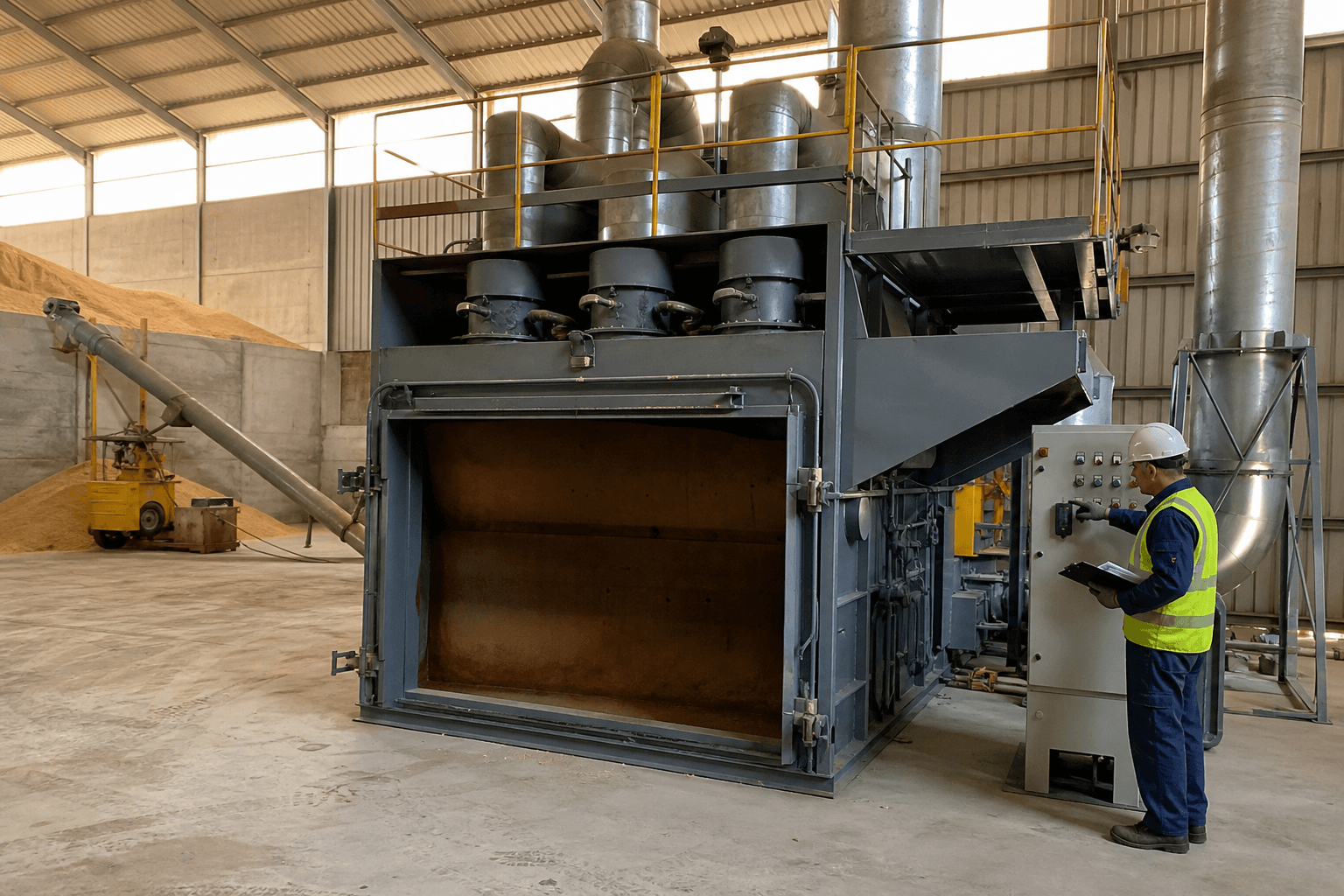
The LitBurn, AgriBurn, AmoBurn, and AniBurn ranges cover every waste disposal need with dual-chamber combustion and scrubbing options.
Strategic Site Selection and Localised Impact Mitigation
The location and design of an incinerator facility influence its effects on surrounding ecosystems and communities. Good siting reduces the risk that an emission, odour or noise source becomes a recurring local nuisance.
Appropriate Siting
Incinerators should be sufficiently distant from residential areas, water sources and sensitive ecosystems to prevent pollution and minimise nuisance. They should stand on a reinforced concrete slab to ensure stability and prevent leaks. If an incinerator burns by-products from other sites, it must be on premises separate from livestock, with a defined boundary and entrance.
Site assessment should consider prevailing wind direction, ground slope, flood risk, drainage, collection-vehicle access and neighbouring homes, schools, farms and habitats. Loading and ash-handling areas should contain contaminated run-off while maintaining emergency access and fire safety. Planning, environmental permitting and animal by-product rules may impose additional requirements.
Odour and Noise Control Measures
-
Facility Design: Enclosed loading areas and covered waste storage limit exposure of carcasses and contaminated surfaces to weather and airflow.
-
Vegetation Barriers: Trees and hedges provide visual screening and may alter local wind flow, but should not be relied on for odour control.
-
Low-Noise Equipment: Secondary-combustion blowers, silencers and acoustic enclosures can reduce sound at nearby receptors when correctly specified and maintained.
-
Prompt Disposal: Timely incineration reduces the accumulation of material that can generate odours.
Where neighbouring receptors are close, acoustic screening and scheduled deliveries can reduce disturbance. A complaints and incident log helps operators identify recurring conditions, including wind directions, load types and equipment faults, and demonstrate that concerns have been investigated.
Exploring Waste-to-Energy and Alternative Solutions
Incineration should be assessed alongside alternatives according to disease risk, animal by-product classification, transport distance, available infrastructure, energy demand and local regulatory requirements.
Waste-to-Energy (WtE)
Heat generated during incineration can be recovered for nearby demand, such as space heating, hot water or an approved industrial process. Its economic and environmental value depends on annual recoverable heat, the proportion used on site, displaced fuel, auxiliary energy demand, and capital and maintenance costs.
Heat recovery is most effective where there is reliable nearby demand. A feasibility assessment should account for variable carcass throughput, the energy needed to maintain compliant combustion temperatures, heat losses, cleaning, maintenance and the need to avoid compromising emission control. Recovered energy can improve resource efficiency where it displaces other delivered energy, but does not remove the need for rigorous combustion and flue-gas management.
