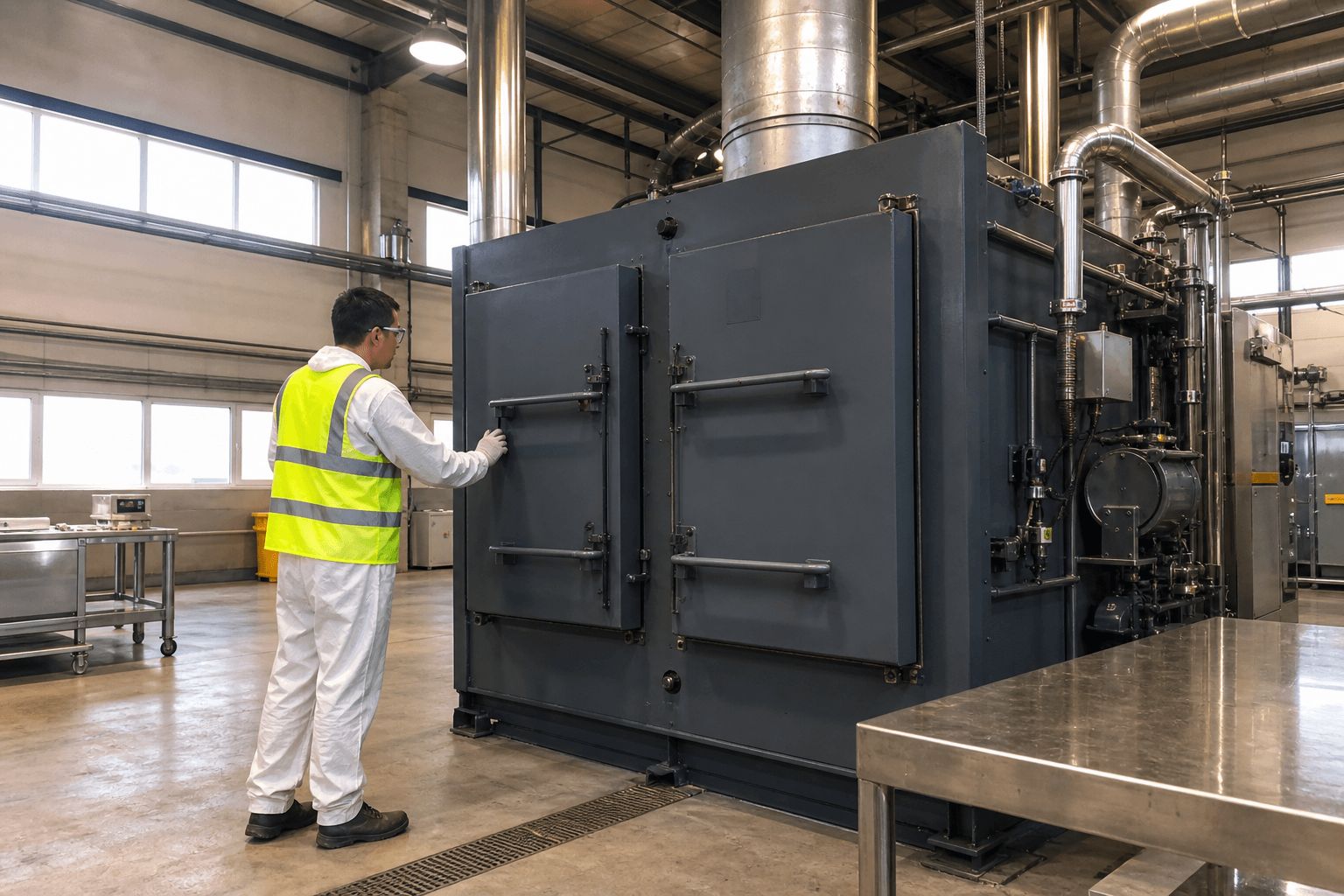
Anatomical Waste Incinerators
Tissue, organs, placentae, blood bags and post-mortem material — incineration is the only lawful route.
Anatomical waste is the stream with nowhere else to go. Alternative treatment plants cannot take it, landfill cannot take it, and a hospital holding it is holding something that has to be incinerated by somebody. Doing it on site removes the wait, the road movement and the reliance on a market that has run short of exactly this capacity before.
Four Models,
One Solution
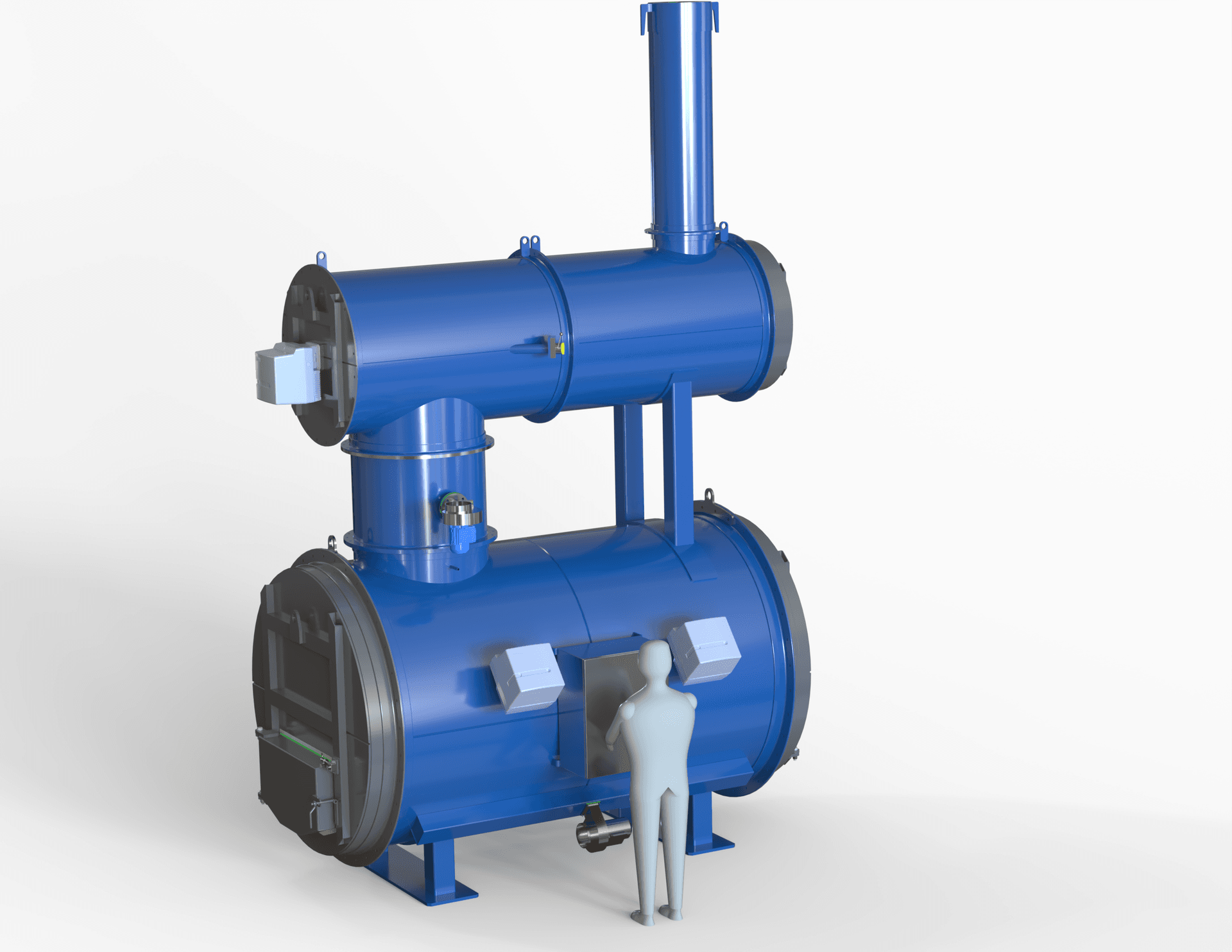
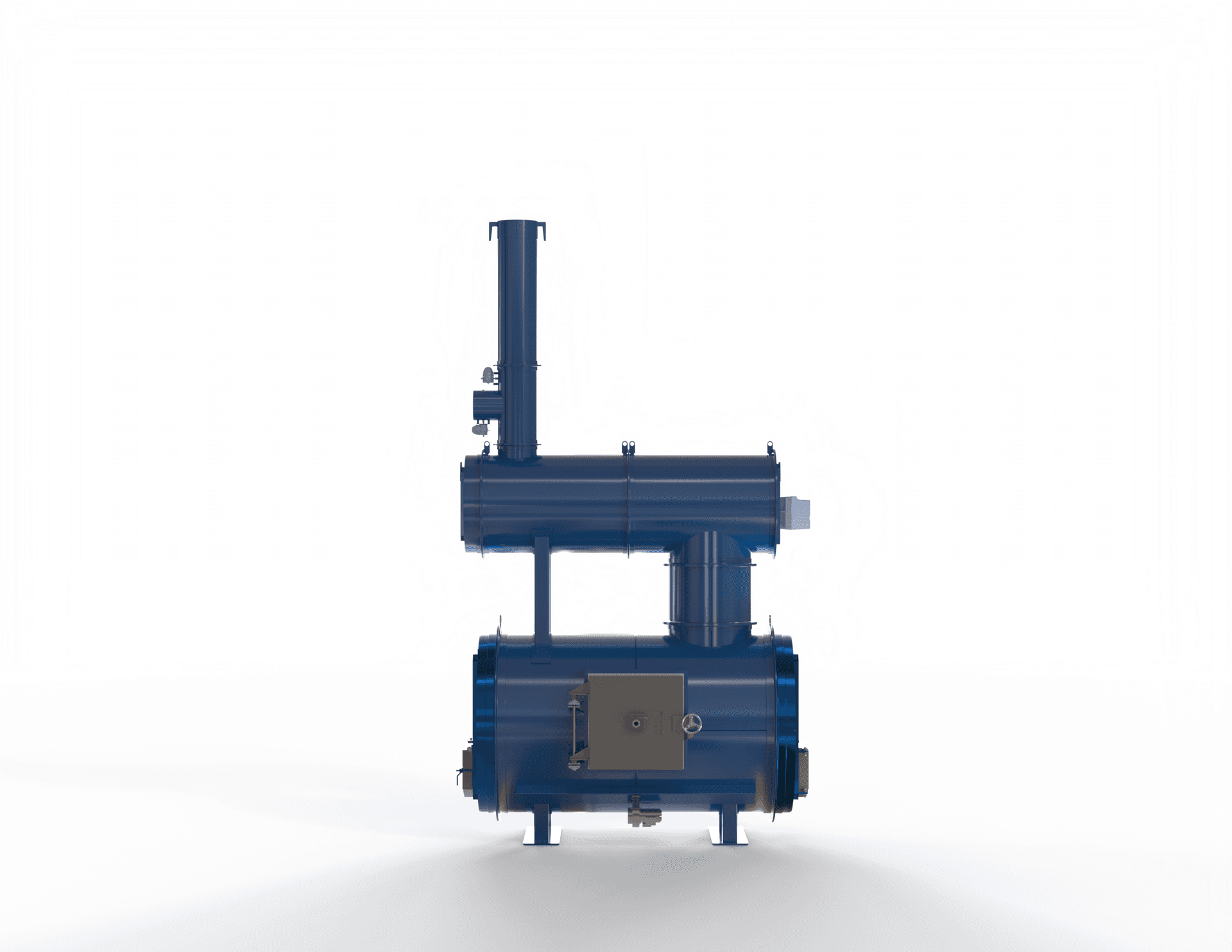
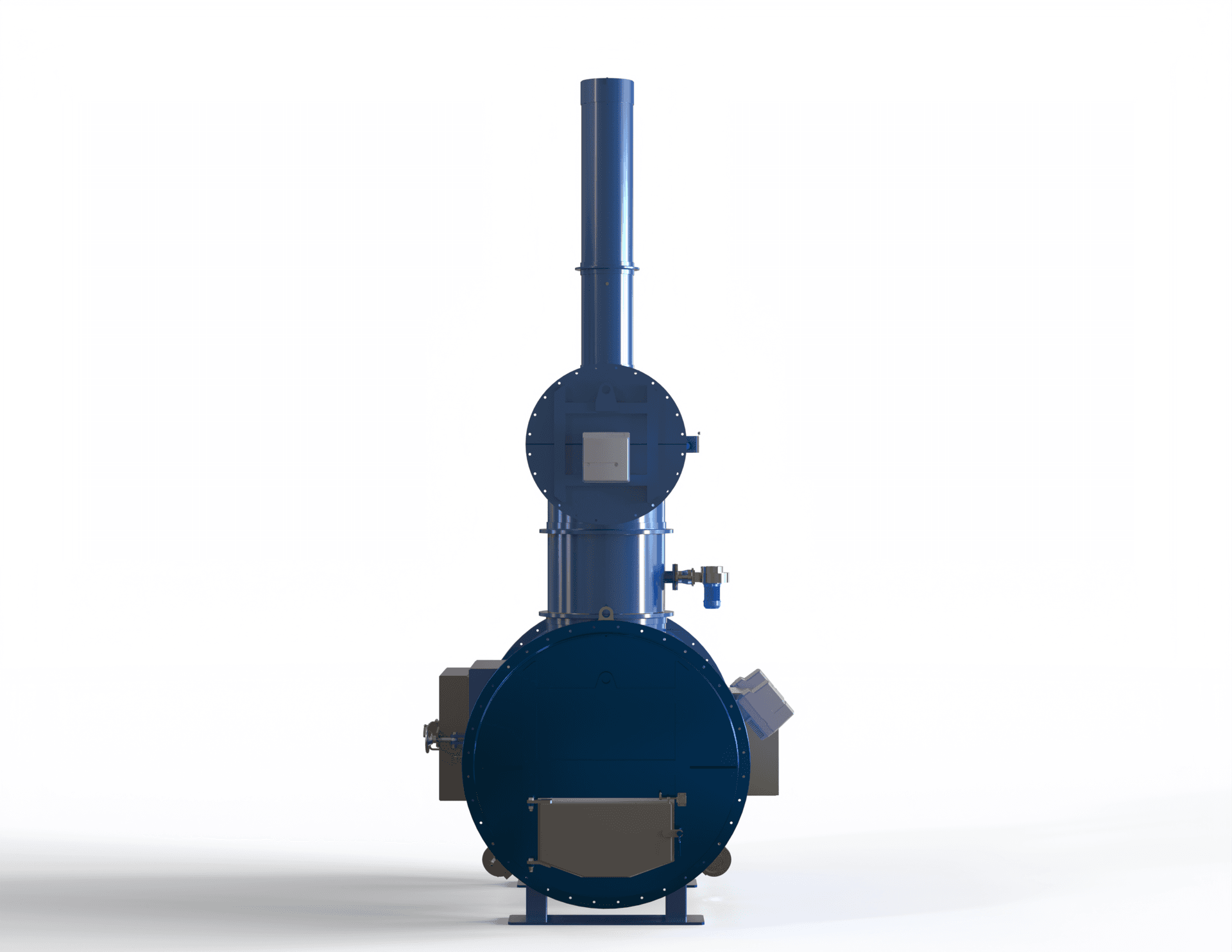
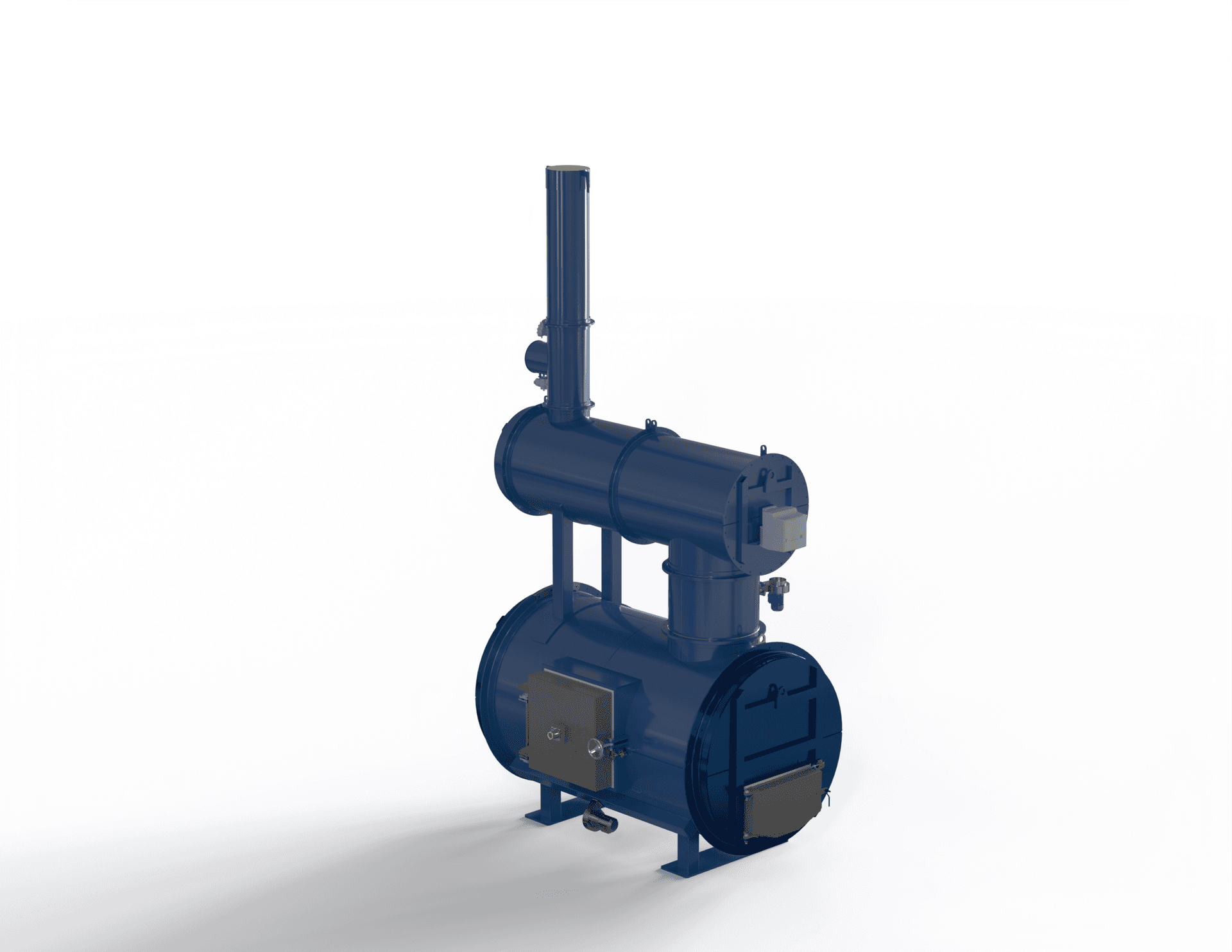
The entry point to the LitBurn range. A 3.3 m³ primary chamber and three burners give continuous 125 kg/h destruction in a footprint that fits a standard yard bay, which makes it the usual choice for a single-site operator replacing skip hire rather than a multi-site waste contract.
The most specified unit in the range. Chamber volume rises to 5.5 m³ for 250 kg/h continuous throughput while the external width grows by only 230 mm over the LBI-125, so sites that outgrow the smallest unit rarely have to rework the slab or the building line.
A 9.6 m³ chamber — nearly double the LBI-250 — for medium-scale industrial waste destruction. At this size most operators pair the unit with heat recovery, because the thermal output during a full shift is large enough to displace a dedicated water heater.
The largest LitBurn: a 16.2 m³ chamber running 500 kg/h continuously. Specified where waste arrives faster than a batch unit can clear it — large manufacturing sites, industrial estates, and operators consolidating several smaller waste contracts onto one machine.
Which Model
Fits Your Volume
Pick a model to see what it clears in a day of anatomical & pathological waste.
Anatomical waste alongside a community hospital's infectious stream — the anatomical fraction rarely justifies its own machine at any scale.
18 01 02, and 18 01 03* where infectious
Anatomical waste codes as 18 01 02 — body parts and organs including blood bags and blood preserves — or 18 01 03* where it is also infectious. Both need naming at permit application, and the anatomical line is the one a regulator will look for first on a hospital application.
Alternative treatment is not available for this stream
Autoclaving and other alternative treatment routes are not permitted for anatomical waste. Incineration is the required endpoint, which is exactly why on-site capacity changes the risk position for a site that produces it every day.
The Human Tissue Act governs what may be destroyed
Consent, retention and licensing under the Human Tissue Act 2004 decide when tissue stops being material held for a purpose and becomes waste. The waste route starts after that decision has been made by the people entitled to make it.
Dignity is a documented procedure, not a sentiment
Containers charged closed, no transfer between containers, labels retained to the run record, and a stated position on maternity and pregnancy remains that respects the request made. Write it down; an inspection will ask what the procedure is, not whether you meant well.
Why Burn It
On Site
4 things change on the day this stream stops leaving the site.
There is no alternative treatment to fall back on
When incineration capacity tightens, orange-bag waste can be diverted to autoclave and offensive waste to energy from waste. Anatomical waste cannot be diverted anywhere. A permitted unit on site is the only version of this stream that does not depend on someone else's furnace.
Nothing sits in a mortuary fridge waiting for a vehicle
Storage for this stream is refrigerated, space-limited and shared with work that cannot be delayed. Destroying containers on the day they are filled keeps the fridge for the living service rather than for a backlog.
The chain of custody is one corridor long
Tissue that leaves the site passes through a vehicle, a transfer station and a third party's yard, all under your duty of care and none of it observed. On-site destruction ends the chain where the material arose.
The record answers by container
A run log tied to labelled containers lets a department state when its material was destroyed and at what temperature. A collection note states when a vehicle took a bin away, which is a weaker answer to the same question.
Dual-chamber unit, 1,100°C capable
Primary chamber running 850–1,200°C with a secondary chamber holding flue gas above 850°C for two seconds. Clinical charges are PVC-rich — IV bags, giving sets, suction tubing, sterile packaging — so where the stream carries more than 1% halogenated organic content the secondary minimum rises to 1,100°C, and the unit holds it as built rather than as an upgrade.
Front dual-door loading
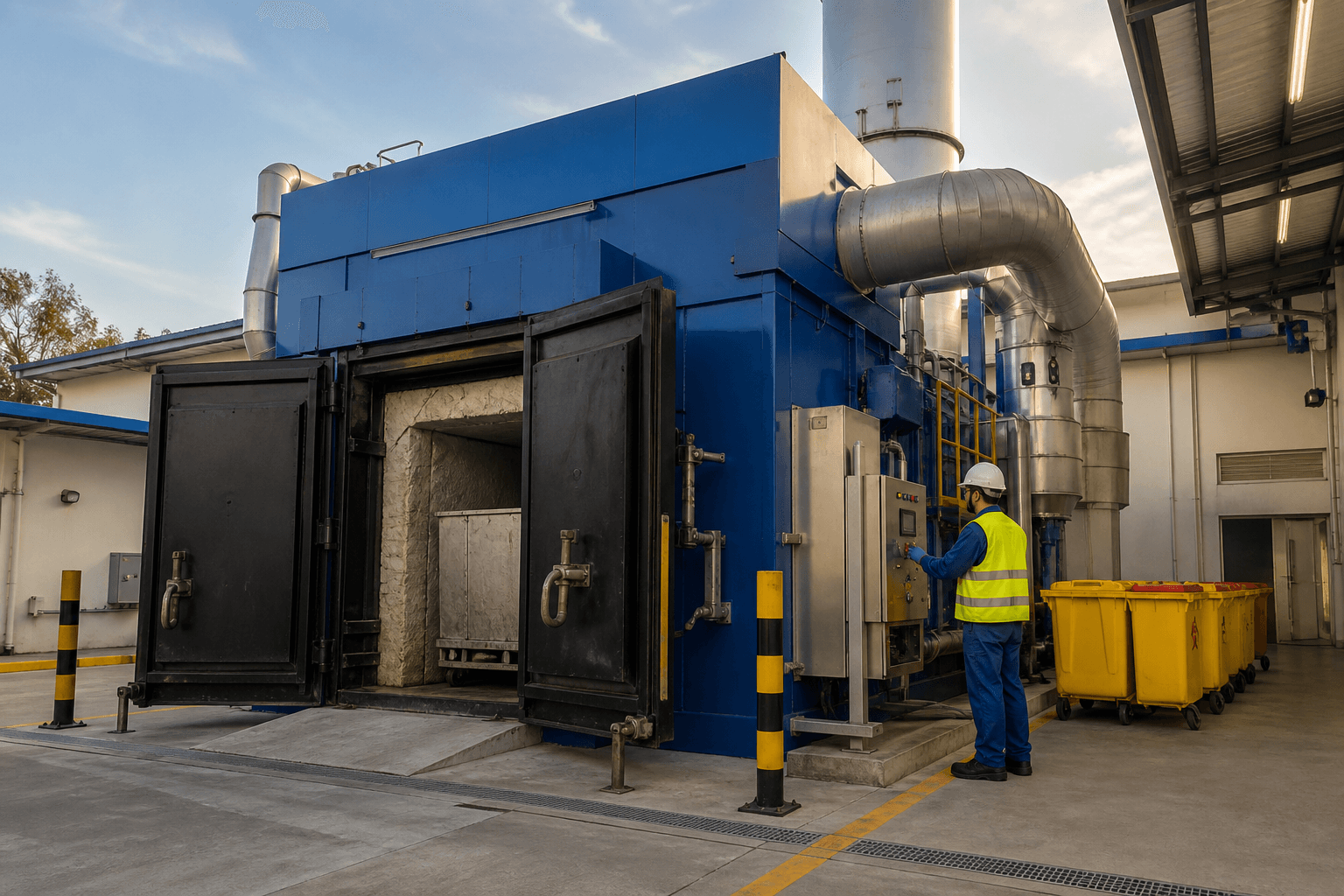
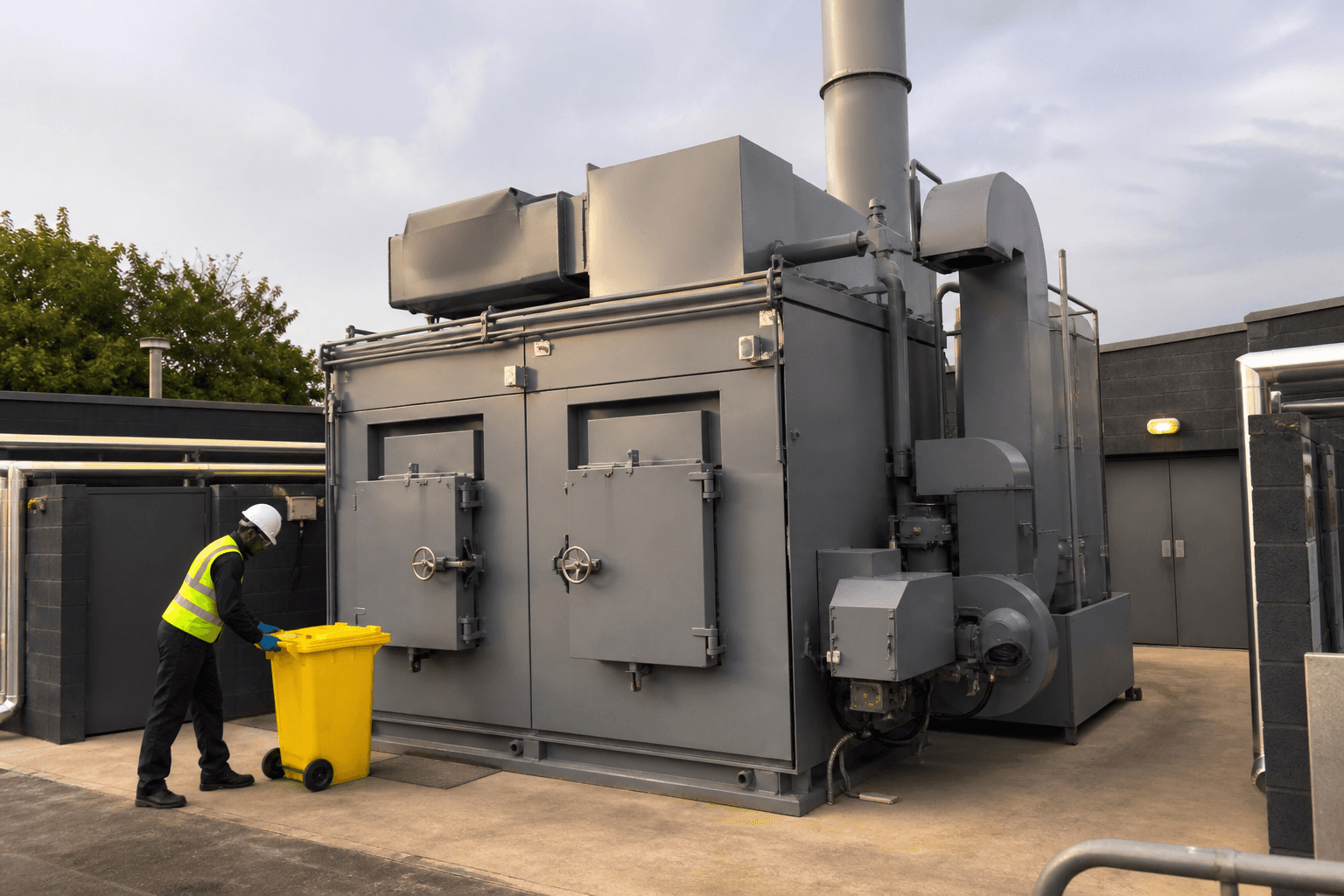
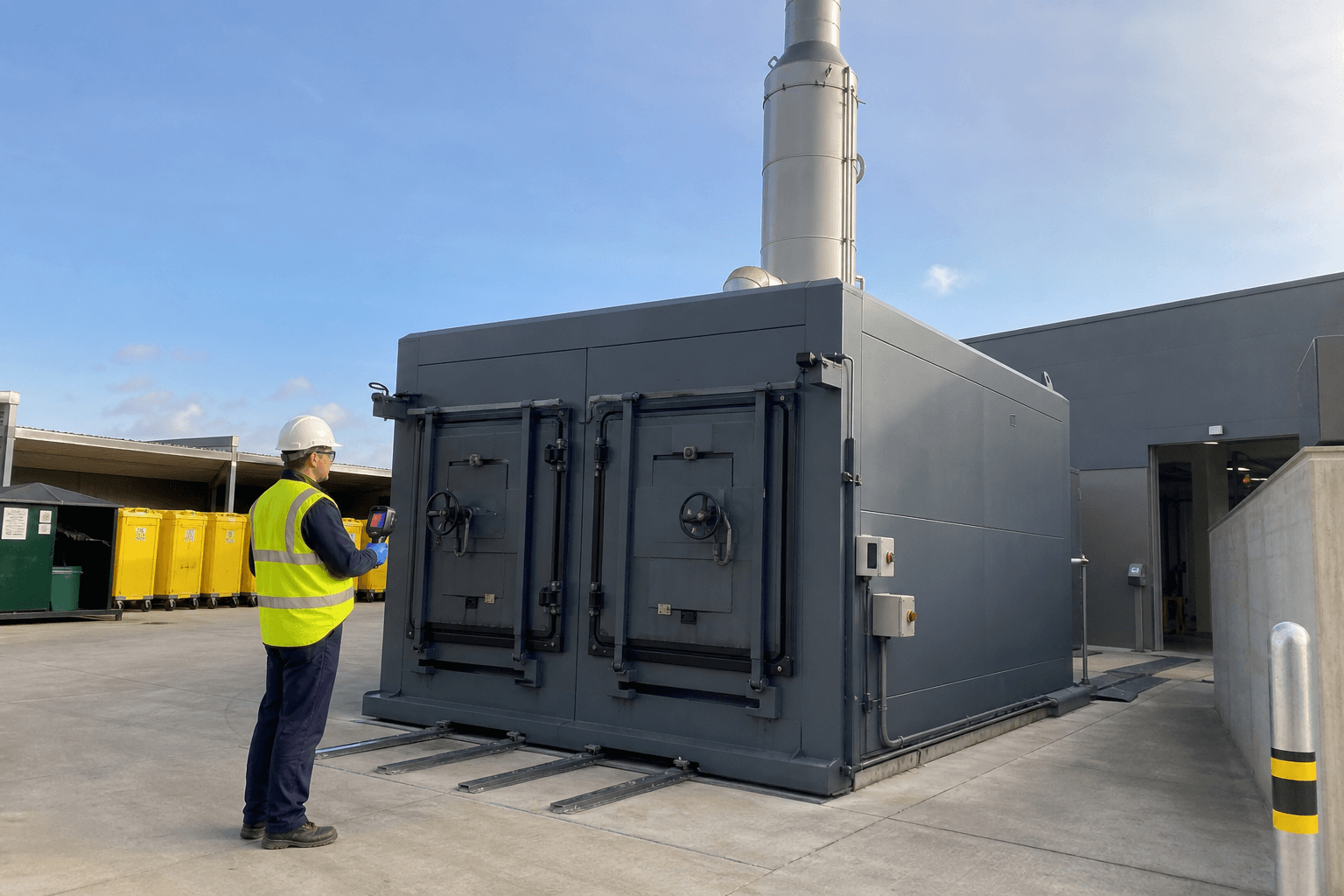
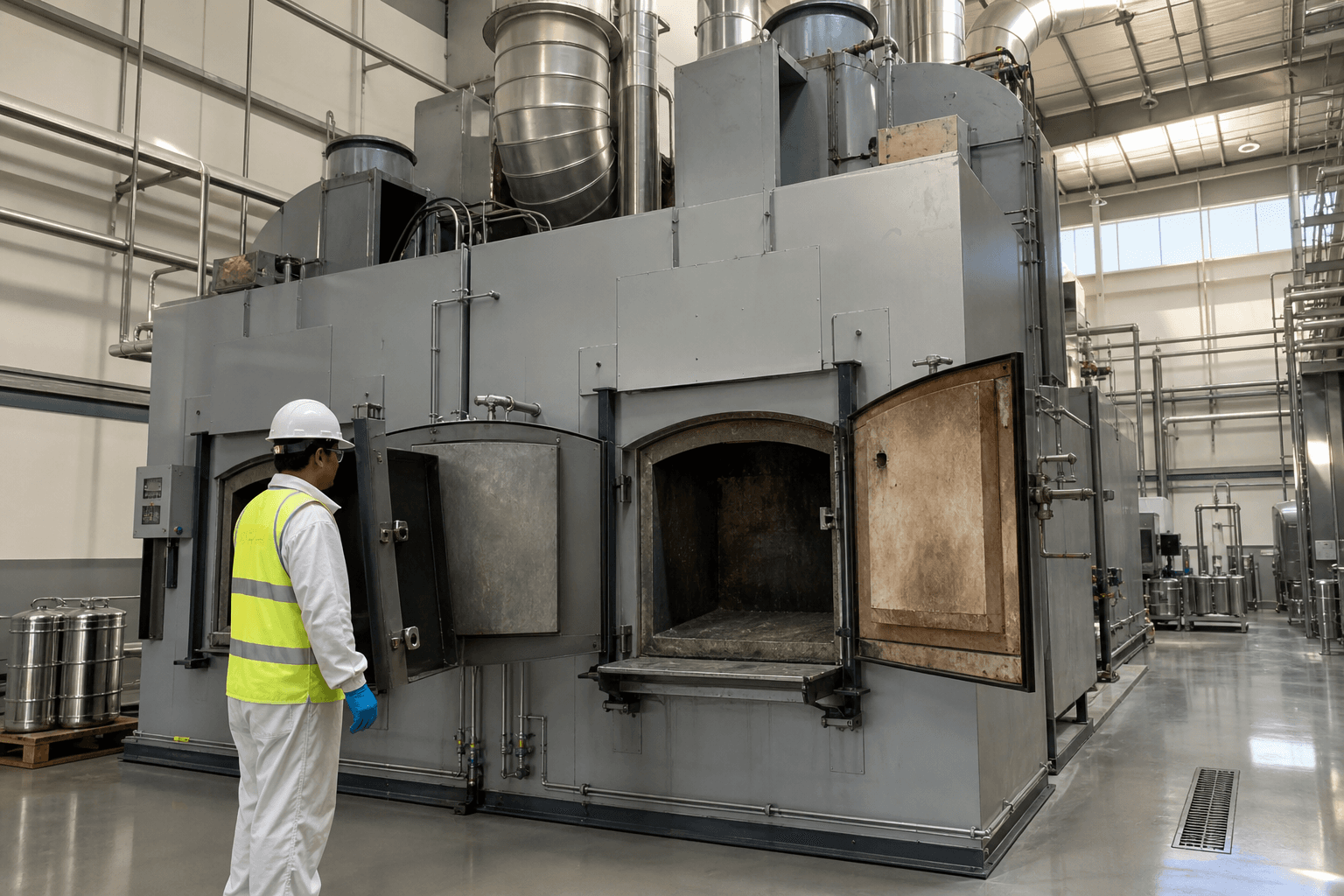
The LBI range is charged through a front dual door at floor level. Wheeled 770-litre clinical carts, rigid-bodied sharps bins and red-lidded anatomical containers go in at the height they arrive at, which is what keeps the last handling step in a clinical waste route a push rather than a lift over a rim.
What Ships
With The Unit
Identical whichever stream it is specified for. The operating procedure changes; the machine does not.
Dual-chamber unit, 1,100°C capable
Primary chamber running 850–1,200°C with a secondary chamber holding flue gas above 850°C for two seconds. Clinical charges are PVC-rich — IV bags, giving sets, suction tubing, sterile packaging — so where the stream carries more than 1% halogenated organic content the secondary minimum rises to 1,100°C, and the unit holds it as built rather than as an upgrade.
Front dual-door loading
The LBI range is charged through a front dual door at floor level. Wheeled 770-litre clinical carts, rigid-bodied sharps bins and red-lidded anatomical containers go in at the height they arrive at, which is what keeps the last handling step in a clinical waste route a push rather than a lift over a rim.
IP6X control panel with cycle logging
PLC control with chamber thermocouples, interlocked charge door and a time-stamped temperature record per run. For clinical waste that record is what turns a claim of destruction into evidence of it — the condition an infection control audit or a permit compliance check asks to see.
Burner set and fuel train
Configured for natural gas, LPG, diesel, biofuel or hydrogen, with three burners across the LBI range. Fuel choice is a site decision; the combustion condition is identical whichever is specified. Wet loads — anatomical waste, suction liners, fluid-heavy dressings — draw more burner time, not a different machine.
Coretex refractory lining
Monolithic castable lining rated for the full temperature range and for sustained running at the top of it. Replaceable in service rather than requiring the shell to be scrapped with it, which matters on a unit running shifts against a daily arisings curve rather than single burns.
Stack, dispersion data and commissioning
Stack supplied to the height your site-specific dispersion assessment calls for — hospital sites usually carry the tightest one on this list, with wards, intakes and neighbours all inside the assessment — plus the emissions data pack the permit application references, on-site commissioning, a witnessed first run and operator training.
How One Burn Runs,
Start To Finish
One run is one countable event, reconciled against a manifest and evidenced by a time-stamped temperature log.
One Cycle,
Start To Finish
Adds 18 01 02 to the permit and a handling discipline written around dignity rather than throughput: red-lidded rigid containers only, charged closed, with the run record kept against the department that produced the container.
Theatre, mortuary, maternity and pathology fill red-lidded rigid containers, labelled with the department and date. Nothing anatomical is bagged, and nothing is transferred between containers.
Containers are held in the designated refrigerated store for as short a time as the schedule allows. On-site destruction means the hold is measured in hours rather than in collection intervals.
Containers go through the front dual door sealed, at floor level. The unit is at temperature and running, so the container is not queued behind a cycle that has to finish first.
Primary combustion at 850–1,200°C with two-second secondary retention. Tissue is largely water and draws more burner time per kilogram than a bagged load, so a tissue-heavy run takes longer than the plate rating suggests.
Residue is mineral ash with no recognisable form remaining. The run log, the container labels and the ash weight close the record for the departments whose material was in that run.
What You Can Burn —
And What You Can't
One run takes the whole stream without pre-sorting. What must never enter it is a short, hard list.
Yes: accepted in a run
No pre-sorting between these
- Tissue and organs from theatreExcised tissue, resected organs and surgical specimens no longer required, in red-lidded rigid containers from the theatre or specimen reception.
- Placentae and maternity anatomical wastePlacental tissue and associated maternity waste where the woman has not requested an alternative arrangement — the request always outranks the standing procedure.
- Blood bags and blood preservesTime-expired or unusable blood products and transfusion bags, coded 18 01 02, charged in their container rather than emptied.
- Post-mortem and mortuary anatomical wasteTissue and material arising from post-mortem work, held and moved under the mortuary's own procedure and charged in the container it was placed in.
- Pathology specimens without fixativeGross specimens returned from reporting where no formalin or hazardous fixative is present. Fixed specimens are a chemical waste question and belong to the laboratory stream.
- Veterinary anatomical waste from practice workSurgical tissue from veterinary practices, coded in the 18 02 group. Whole carcasses are animal by-products and belong to the animal disposal route with its APHA approval.
No: never charged
Not a permit question — these stay out
- Recognisable human remains for burial or cremationA body is not waste. It goes to a crematorium or burial under the Cremation Regulations and the funeral arrangements, never to a waste incinerator, whatever its condition.
- Pregnancy remains and foetal tissueThese follow the sensitive disposal arrangements agreed with the woman under HTA guidance — usually cremation or burial — and are handled under that route rather than as clinical waste.
- Formalin-fixed and chemically preserved specimensFixative makes the container a hazardous chemical waste question under 18 01 06*. The specimen route and the chemical route are decided separately, and the fixative decides.
- Material retained under an HTA licenceTissue held for research, teaching or investigation is retained under the Human Tissue Act consent and licence that covers it. Destruction happens when that regime says so, not when the store is full.
Can you legally burn anatomical & pathological waste on site?
Technically, yes: the chamber destroys almost everything on the accepted list at 850–1,200°C, and capability is rarely the constraint. Legally is a separate question. What your site is allowed to burn is set by your environmental permit from the Environment Agency, SEPA or NIEA and the waste codes written into it. The never-charged list is different again: those materials are out of scope for the unit or governed by a direction, and no permit wording brings them back in. Send us the codes you hold, or the ones you expect to apply for, and we will tell you which of this list they cover before anything is specified.
Send us your waste codesWhat size incinerator for 400 kg of anatomical waste a week?
Arithmetic on published model figures, not a customer reference. Your numbers go through the same steps.
How This
Was Worked Out
400 kg a week against the LBI-125's 125 kg/h is a little over 3 hours on paper; allow 4–5 in practice, because tissue is mostly water and a wet load burns below the plate rating. Almost nobody runs a unit for anatomical waste alone — 400 kg a week is half a shift. Size the machine on the infectious stream it will share, then confirm the anatomical arisings fit inside the same permitted scope.
12–20 kg a week
None — incineration only
3.3 m³
2.5 t
Send your daily or weekly arisings and we will confirm the model, the run time and the permit route.
Related Products
& Services
Complementary equipment and engineering services for your process.
Sizing and background
- [TOOL]Work out the burn rate for your own arisings
- [TOOL]Size the combustion air and flue gas duty
- [BLOG]Integrating vibration analysis for incinerator predictive maintenance
- [BLOG]Advanced gas cleaning for ultra-low emission incinerators
- [BLOG]Evaluating flue gas cleaning systems in industrial incinerators
Anatomical & pathological waste Questions
Answered against the published figures for the models specified for this stream, not a generic range sheet.
Anatomical waste is recognisable body parts, organs, tissue, placentae, blood bags and blood preserves — the material coded 18 01 02 where it is not infectious, and 18 01 03* where it is. It arises in theatres, mortuaries, maternity, pathology and post-mortem work, and under HTM 07-01 it is collected in red-lidded rigid containers rather than in any bag. It is the one healthcare stream with no substitute route. Alternative treatment — autoclaving, microwaving, chemical disinfection — is not permitted for anatomical waste, because the process renders material safe without destroying its form, and form is the point. Incineration is therefore not the convenient answer here; it is the only one, which is why a site holding this waste is uniquely exposed when incineration capacity tightens. The combustion condition is 850–1,200°C in the primary with two-second retention above 850°C in the secondary. Anatomical loads are wet: tissue is largely water, and the burner works harder for the same kilogram than it does on dressings. That shows up as run time rather than as a different specification — the rating on the plate assumes a mixed clinical load, and a tissue-heavy run will sit below it. Handling is written around dignity as much as around risk. Containers are charged closed, one department's material is not tipped into another's, and the run is logged against the container so the record can answer where a specific item went. Recognisable human remains for burial or cremation are not waste at all and never enter this route.
400 kg a week against the LBI-125's 125 kg/h is a little over 3 hours on paper; allow 4–5 in practice, because tissue is mostly water and a wet load burns below the plate rating. Almost nobody runs a unit for anatomical waste alone — 400 kg a week is half a shift. Size the machine on the infectious stream it will share, then confirm the anatomical arisings fit inside the same permitted scope.
No. Alternative treatment routes are not permitted for anatomical waste — they render material safe without destroying its form, and the destruction of form is the requirement. That is why this stream has no fallback when incineration capacity is short, and why on-site capacity is worth more here than anywhere else in the hospital.
In red-lidded rigid containers, labelled with the department and date, held refrigerated and never bagged or transferred between containers. The container is charged closed. Everything about the handling is written to answer a question about a specific item rather than about a tonnage.
Where no alternative arrangement has been requested, yes — placental tissue is anatomical waste and goes in a red-lidded container. Where the woman has asked for a different arrangement, that request governs, and the standing waste procedure does not apply to it.
Because tissue is mostly water. The burners spend energy evaporating it before combustion proper, so a wet load moves through at less than the plate rating. Allow around a third more time than the arithmetic gives you on a tissue-heavy run, and treat the rating as the mixed-clinical-load figure that it is.
It stays held. Consent and licensing decide when tissue retained for research, teaching or investigation ceases to be held for that purpose, and only then does a waste route apply. A full store is not a reason to shorten that process.
Rarely. Anatomical arisings are small next to the infectious stream — a few hundred kilograms a week against several tonnes — so the practical answer is one permitted unit covering both, with 18 01 02 named in the application and the anatomical procedure written separately.
Ready to
Incinerate?
Send the stream, the volume and the site constraints. We will confirm the model, the permit route, and what the specification has to say to satisfy the regulator.
- There is no alternative treatment to fall back on
- Nothing sits in a mortuary fridge waiting for a vehicle
- The chain of custody is one corridor long
- The record answers by container