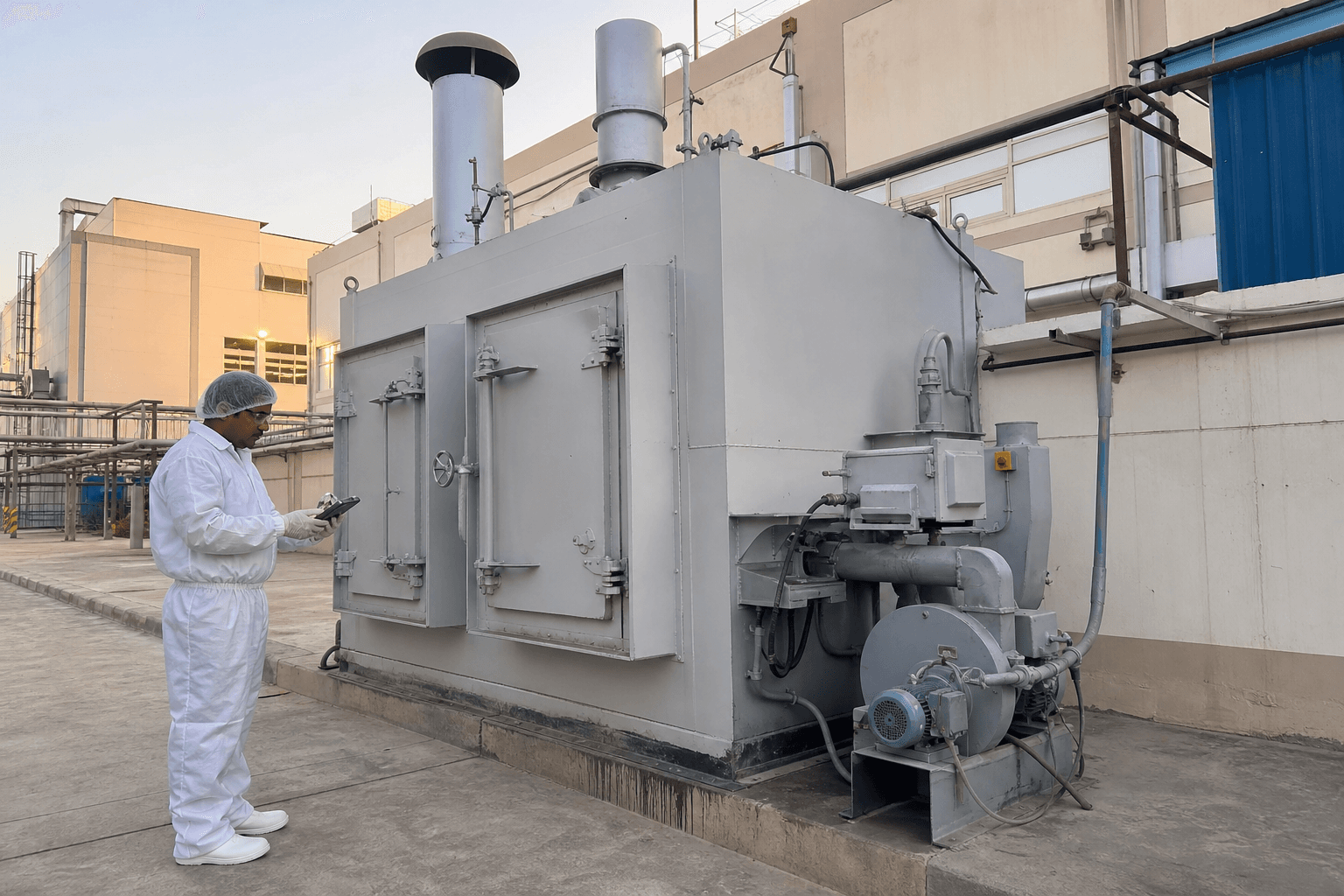
Controlled Drug Destruction Incinerators
Denatured Schedule 2 stock incinerated on site after witnessed destruction, with a cycle log behind the register entry.
Controlled drugs are the one pharmaceutical stream where the paperwork is the process. Schedule 2 stock has to be denatured so it cannot be retrieved, and the destruction has to be witnessed by someone the regulations authorise. Incineration is what happens after those two steps — and having the unit on site means the denatured material never leaves the premises between the witness signing and the substance ceasing to exist.
Four Models,
One Solution
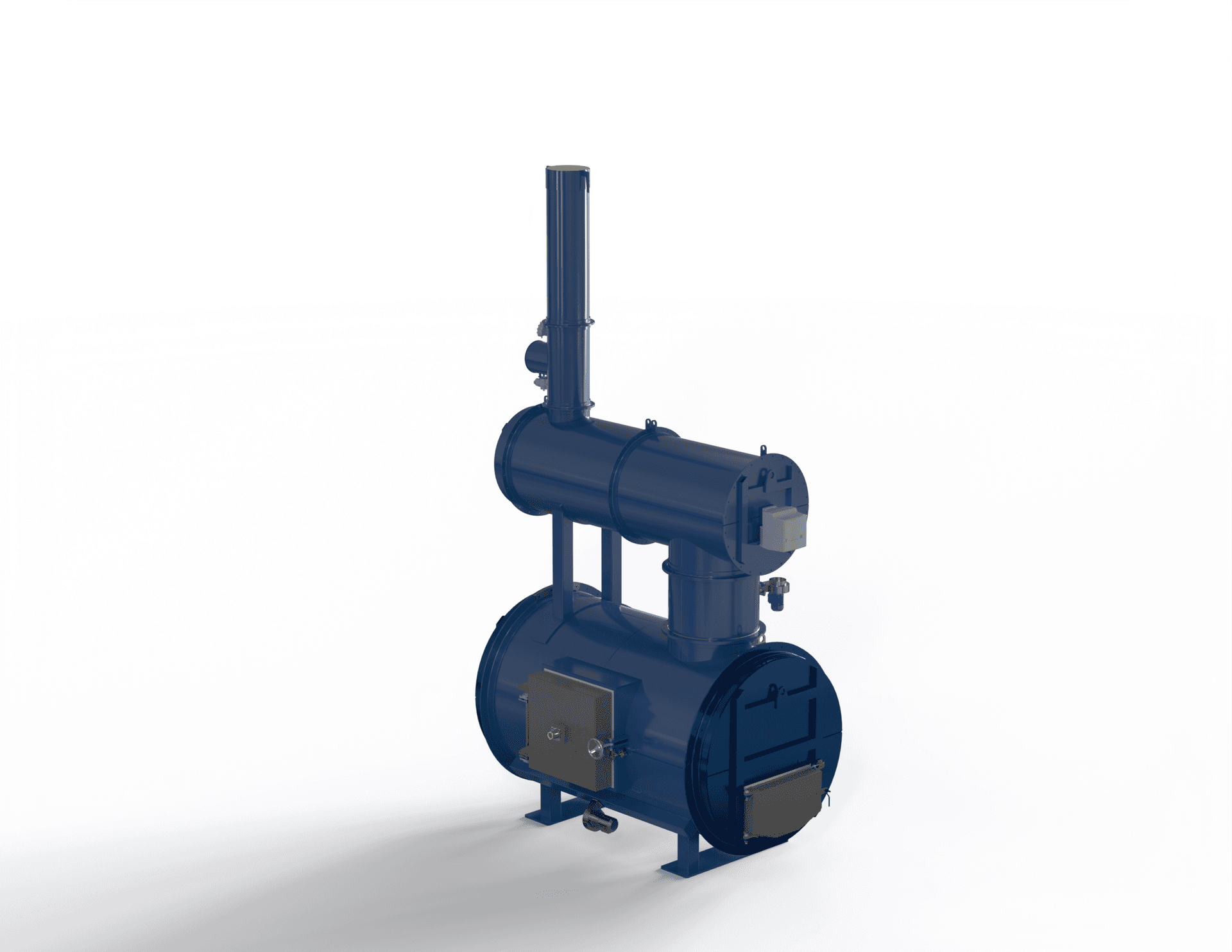
The entry point to the LitBurn range. A 3.3 m³ primary chamber and three burners give continuous 125 kg/h destruction in a footprint that fits a standard yard bay, which makes it the usual choice for a single-site operator replacing skip hire rather than a multi-site waste contract.
The most specified unit in the range. Chamber volume rises to 5.5 m³ for 250 kg/h continuous throughput while the external width grows by only 230 mm over the LBI-125, so sites that outgrow the smallest unit rarely have to rework the slab or the building line.
A 9.6 m³ chamber — nearly double the LBI-250 — for medium-scale industrial waste destruction. At this size most operators pair the unit with heat recovery, because the thermal output during a full shift is large enough to displace a dedicated water heater.
The largest LitBurn: a 16.2 m³ chamber running 500 kg/h continuously. Specified where waste arrives faster than a batch unit can clear it — large manufacturing sites, industrial estates, and operators consolidating several smaller waste contracts onto one machine.
Which Model
Fits Your Volume
Pick a model to see what it clears in a day of controlled drugs destruction.
A pharmacy or a returns hub: two hours of running a month clears 250 kg of denatured stock, so the witnessed session and the destruction fit in one afternoon.
Denaturing before disposal, always
Schedule 2 controlled drugs must be rendered irretrievable before disposal under the Misuse of Drugs Regulations 2001. Incineration is the disposal route that follows denaturing, never a substitute for it, and no permit wording changes that sequence.
An authorised witness is required
The destruction of Schedule 2 stock must be witnessed by a person authorised under the regulations — the class of authorised witness depends on the setting and on who holds the stock. Establish who yours is before specifying anything.
The register is the legal record
The CD register entry is written against the witnessed denaturing, with quantity, date and witness recorded. The incinerator's time-stamped temperature log is supporting evidence filed alongside it, not a replacement for it.
Waste codes still apply after denaturing
Denatured controlled drugs are still medicinal waste for environmental permitting purposes and still need the relevant codes named at application. Where the preparation is also cytotoxic, 18 01 08* applies and brings its own permitted scope with it.
Why Burn It
On Site
4 things change on the day this stream stops leaving the site.
No interval between witness and destruction
Denatured material normally waits in a cupboard for a licensed collection. On site, the witnessed denaturing and the incineration happen in the same session — the stock does not sit denatured-but-present for a week.
The register entry gains evidence
A CD register entry records that destruction happened. A time-stamped chamber temperature log records the conditions it happened under. The second is what turns the first from an assertion into a record.
The chain of custody never leaves the premises
No licensed carrier, no consignment note, no van at the back door. The material goes from the CD cupboard to the denaturing kit to the charge door without a transfer of custody in between.
Patient returns stop accumulating
Returned CDs arrive unpredictably and cannot be refused. A destination on site means the returns cupboard is emptied on a schedule you set rather than one a collection round sets for you.
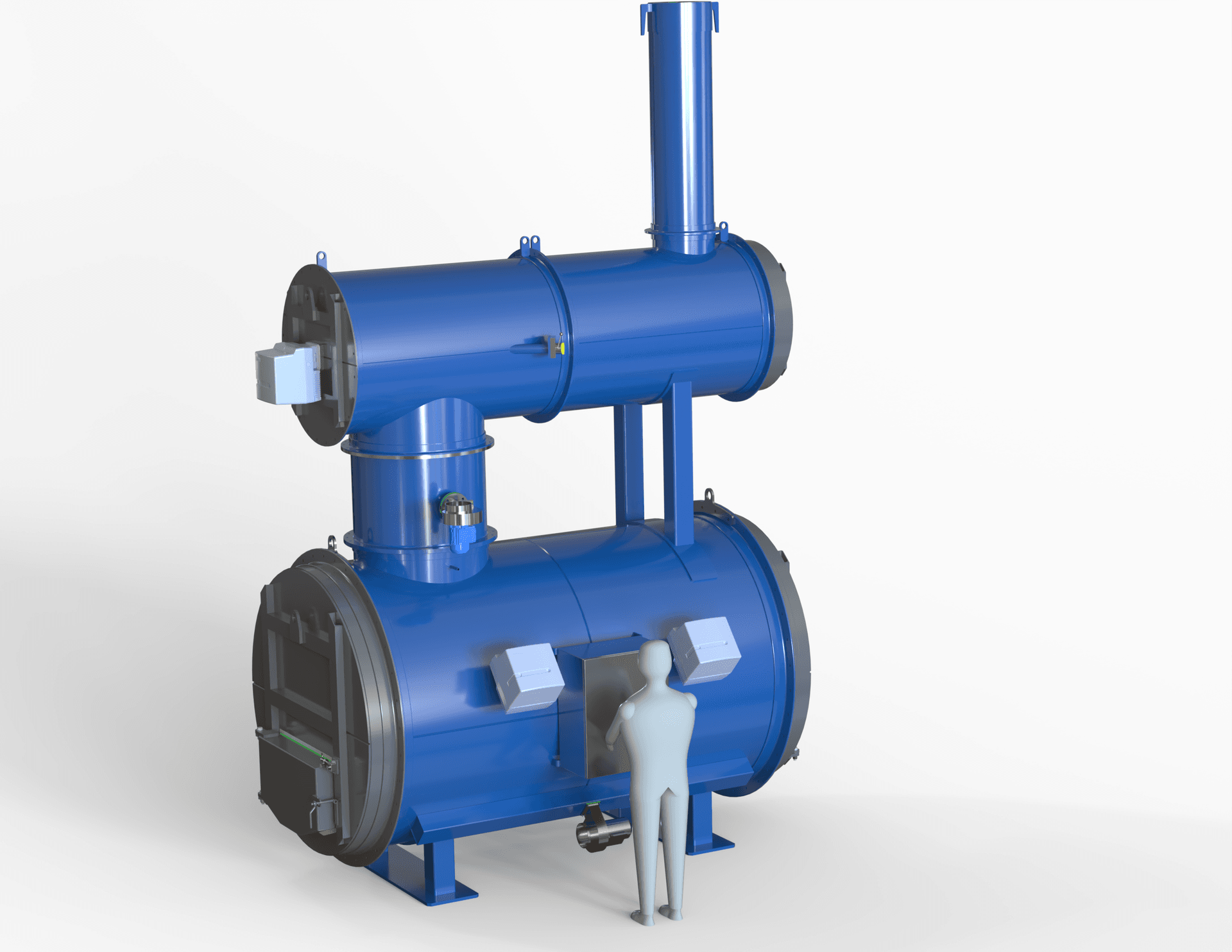
Dual-chamber unit, 1,100°C capable
Primary chamber running 850–1,200°C with a secondary chamber holding flue gas above 850°C for two seconds. Where the charge carries more than 1% halogenated organic content — PVC and PVdC blisters, chlorinated actives, fluorinated excipients — the secondary minimum rises to 1,100°C and the unit holds it as built rather than as an upgrade.
Front dual-door loading
The LBI range is charged through a front dual door at floor level, not lifted over a top rim. Quarantine cages, wheeled bins and pallet-decanted totes go in at the height they arrive at, which is what makes a returns hall workable without a hoist.
What Ships
With The Unit
Identical whichever stream it is specified for. The operating procedure changes; the machine does not.
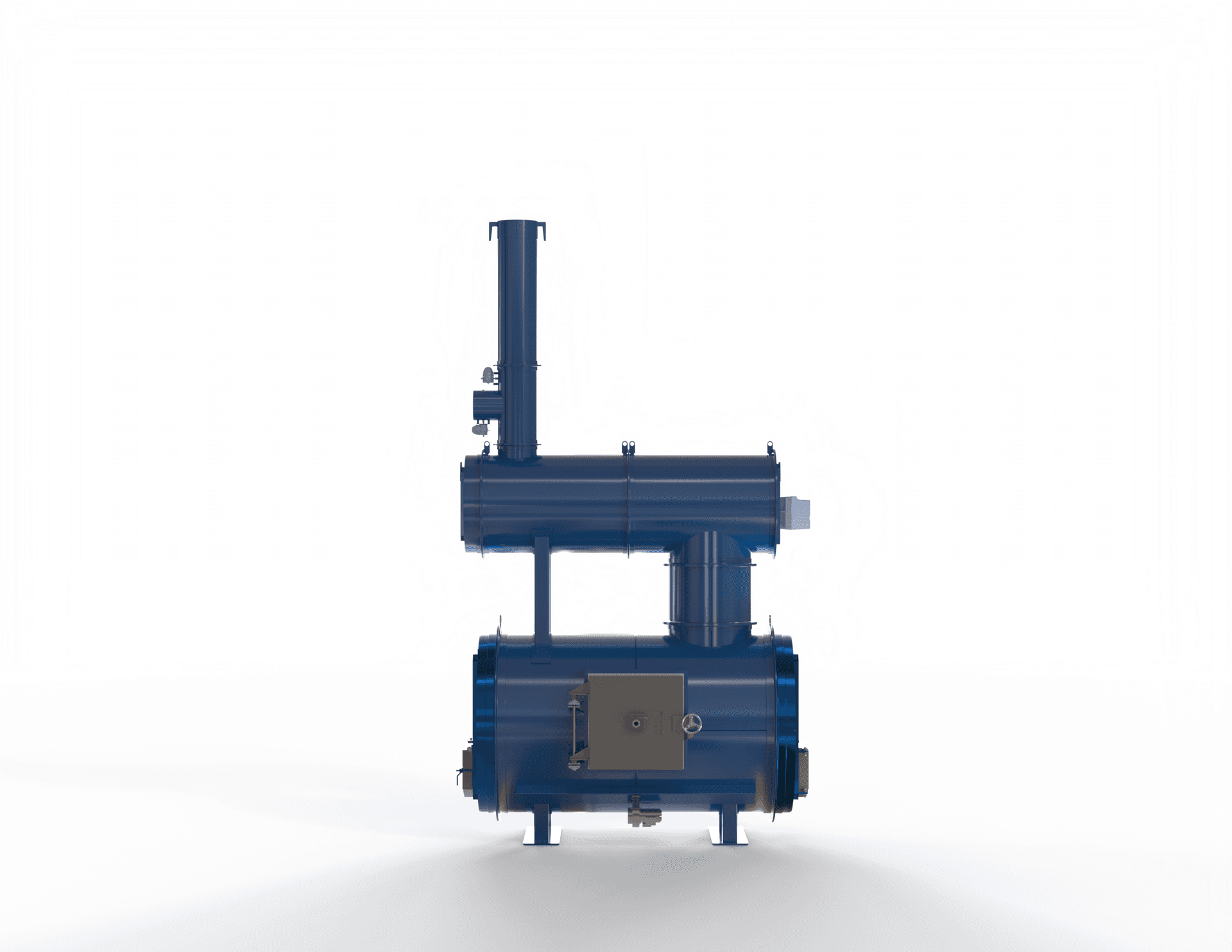
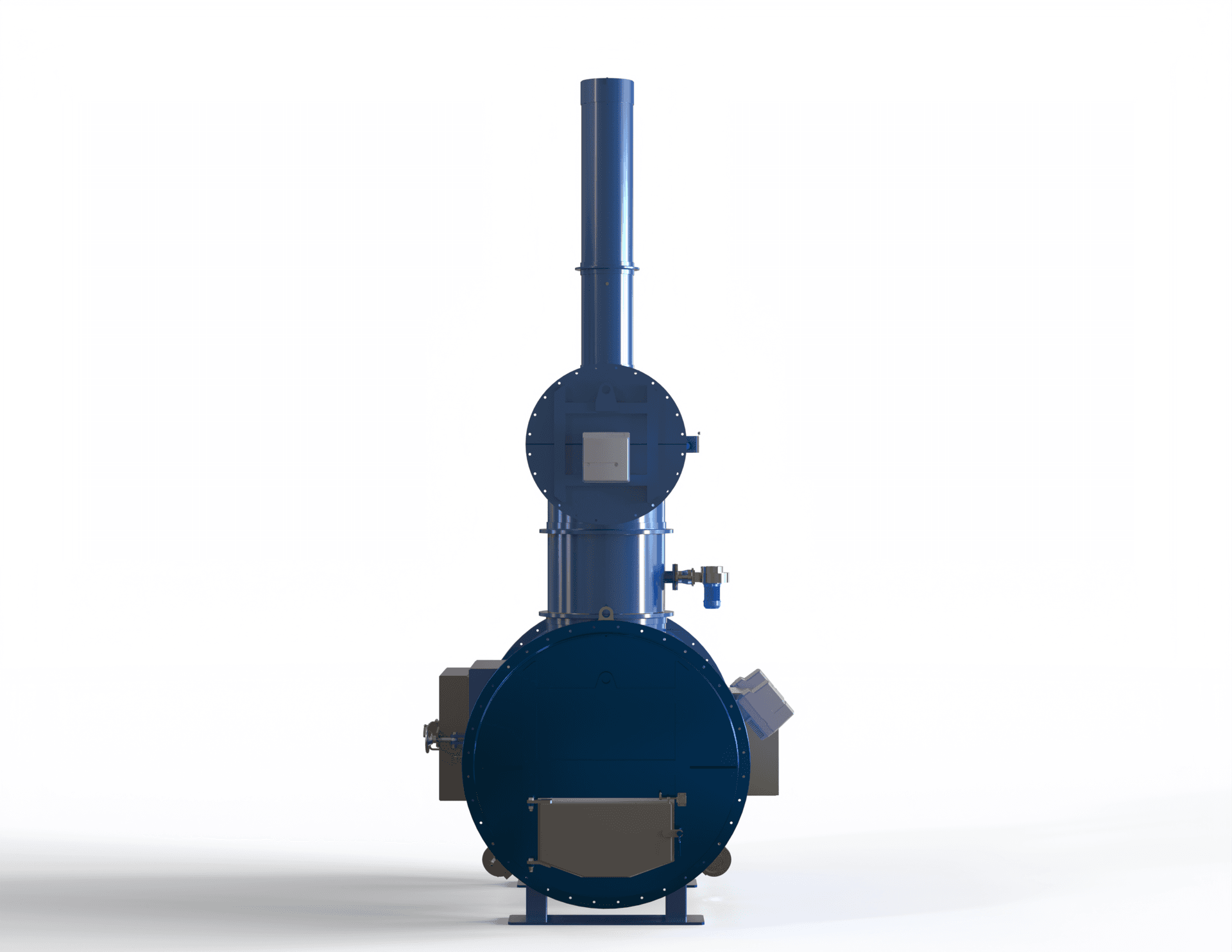
Dual-chamber unit, 1,100°C capable
Primary chamber running 850–1,200°C with a secondary chamber holding flue gas above 850°C for two seconds. Where the charge carries more than 1% halogenated organic content — PVC and PVdC blisters, chlorinated actives, fluorinated excipients — the secondary minimum rises to 1,100°C and the unit holds it as built rather than as an upgrade.
Front dual-door loading
The LBI range is charged through a front dual door at floor level, not lifted over a top rim. Quarantine cages, wheeled bins and pallet-decanted totes go in at the height they arrive at, which is what makes a returns hall workable without a hoist.
IP6X control panel with cycle logging
PLC control with chamber thermocouples, interlocked charge door and a time-stamped temperature record per run. That record is the evidence behind a certificate of destruction — without it a certificate asserts a temperature nobody measured.
Burner set and fuel train
Configured for natural gas, LPG, diesel, biofuel or hydrogen, with three burners across the LBI range. Fuel choice is a site decision; the combustion condition is identical whichever is specified.
Coretex refractory lining
Monolithic castable lining rated for the full temperature range and for sustained running at the top of it. Replaceable in service rather than requiring the shell to be scrapped with it — relevant on a unit that may run shifts rather than single burns.
Stack, dispersion data and commissioning
Stack supplied to the height your site-specific dispersion assessment calls for, with the emissions data pack the permit application references, on-site commissioning, a witnessed first run and operator training for the staff who will hold the charge-door key.
How One Burn Runs,
Start To Finish
One run is one countable event, reconciled against a manifest and evidenced by a time-stamped temperature log.
One Cycle,
Start To Finish
Adds denaturing before any charge and an authorised witness under the Misuse of Drugs Regulations 2001. The CD register entry is written against the witnessed denaturing; the run log evidences the incineration that follows it.
Schedule 2 stock is denatured so it cannot be retrieved, in the presence of a person authorised under the Misuse of Drugs Regulations 2001. This is the legal act of destruction and it happens before the incinerator is involved at all.
The CD register entry is written against the witnessed denaturing, with the quantity, the date and the witness's details. Nothing that has not passed this step goes anywhere near a charge.
The denaturing kit and its contents are charged through the front dual door, sealed, with the witness present where the site's procedure requires it. Nothing is decanted from the kit.
Primary combustion destroys the denatured preparation, the kit and any packaging with it; the secondary chamber holds gas above 850°C for two seconds, or 1,100°C where the charge exceeds 1% halogenated organic content.
Residue is 3–5% mineral ash with nothing retrievable. The run's time-stamped temperature log is filed against the register entry, so the record of destruction carries measured evidence rather than an assertion.
What You Can Burn —
And What You Can't
One run takes the whole stream without pre-sorting. What must never enter it is a short, hard list.
Yes: accepted in a run
No pre-sorting between these
- Denatured Schedule 2 preparationsExpired, part-used and patient-returned Schedule 2 stock that has been denatured and witnessed. Denatured is the entry condition for this stream, without exception.
- Denaturing kits with their contentsThe kit is charged sealed with the denatured preparation inside it. Nothing is decanted, so nobody handles the material after the witness signed.
- Schedule 3, 4 and 5 preparationsLower-schedule stock handled under the site's own procedure, charged with the Schedule 2 material where the permit names the medicinal codes.
- Patient-returned controlled drugsReturns from patients and carers, denatured on receipt under the pharmacy's procedure rather than accumulating in the returns cupboard.
- CD-contaminated consumablesGloves, wipes and preparation consumables from the denaturing process, charged with the kit as a single sealed unit.
- Associated records marked for destructionSuperseded requisitions and printed records authorised for destruction, charged with the material they relate to where the retention period has expired.
No: never charged
Not a permit question — these stay out
- Undenatured controlled drugsThe single hard rule for this stream. Denaturing under an authorised witness is the legal act of destruction; incineration is the disposal that follows. No operational pressure reverses that order.
- Stock required for an investigationMaterial held as evidence for a police, Home Office or regulatory investigation must not be destroyed. Confirm release before anything reaches a register entry.
- Cytotoxic preparations under CD scheduleWhere a controlled drug is also cytotoxic it carries 18 01 08* with it and needs the cytotoxic permitted scope as well as the denaturing and witness steps.
- Pressurised devices and gas cylindersSealed vessels under heat, whatever they contained. Back through the device or gas chain regardless of schedule.
Can you legally burn controlled drugs destruction on site?
Technically, yes: the chamber destroys almost everything on the accepted list at 850–1,200°C, and capability is rarely the constraint. Legally is a separate question. What your site is allowed to burn is set by your environmental permit from the Environment Agency, SEPA or NIEA and the waste codes written into it. The never-charged list is different again: those materials are out of scope for the unit or governed by a direction, and no permit wording brings them back in. Send us the codes you hold, or the ones you expect to apply for, and we will tell you which of this list they cover before anything is specified.
Send us your waste codesWhat size incinerator for a returns hub denaturing 250 kg a month?
Arithmetic on published model figures, not a customer reference. Your numbers go through the same steps.
How This
Was Worked Out
250 kg of denatured CD waste a month against the LBI-125's 125 kg/h = about two hours of running, so the denaturing session and the destruction fit inside one afternoon with the witness present throughout. This stream is small by mass and heavy on procedure. Size the unit on the other pharmaceutical streams it will share — CD waste alone never justifies the capacity.
8–13 kg a month
0
Same session
All
Send your daily or weekly arisings and we will confirm the model, the run time and the permit route.
Related Products
& Services
Complementary equipment and engineering services for your process.


Sizing and background
- [TOOL]Work out the burn rate for your own arisings
- [TOOL]Size the combustion air and flue gas duty
- [BLOG]Integrating vibration analysis for incinerator predictive maintenance
- [BLOG]Advanced gas cleaning for ultra-low emission incinerators
- [BLOG]Evaluating flue gas cleaning systems in industrial incinerators
Controlled drugs destruction Questions
Answered against the published figures for the models specified for this stream, not a generic range sheet.
A controlled drug incinerator is a dual-chamber unit used to destroy denatured controlled drugs on the premises that held them. The important word is denatured. Under the Misuse of Drugs Regulations 2001, Schedule 2 controlled drugs must be rendered irretrievable before disposal, and that destruction must be witnessed by an authorised person. Incineration is the disposal step that follows; it is not a substitute for either requirement. What a unit on site changes is the gap between those steps. In the usual arrangement, denatured material is witnessed, entered in the register, stored, and then collected by a licensed carrier — so there is a period during which denatured but physically present drugs sit in a cupboard waiting for a van. On-site incineration collapses that interval: the witnessed denaturing and the destruction can happen in the same session, in the same building, by the same people. The combustion condition is the standard one — 850–1,200°C with two-second secondary retention above 850°C, rising to 1,100°C where the charge carries more than 1% halogenated organic content. What the unit adds for this stream is not a special temperature but a time-stamped record: the cycle log gives the register entry something measured to point at rather than an assertion. The scope is denatured stock: expired and part-used Schedule 2 and Schedule 3 preparations, patient-returned CDs, unused prescriptions and the denaturing kit itself once it has done its job. Undenatured material never enters a charge, whatever the pressure of the day, because the register entry that authorises destruction is written against the denaturing, not against the burn.
250 kg of denatured CD waste a month against the LBI-125's 125 kg/h = about two hours of running, so the denaturing session and the destruction fit inside one afternoon with the witness present throughout. This stream is small by mass and heavy on procedure. Size the unit on the other pharmaceutical streams it will share — CD waste alone never justifies the capacity.
You can incinerate denatured controlled drugs on site. The legal act of destruction is denaturing them so they cannot be retrieved, witnessed by a person authorised under the Misuse of Drugs Regulations 2001. Incineration is the disposal step that follows, and having the unit on site means it can happen in the same session rather than after a wait for a licensed collection.
No. The witness requirement attaches to the denaturing, not to the disposal, and it is unaffected by where the material is subsequently burnt. What changes is the interval: the witnessed denaturing and the destruction can happen in one session in one building instead of being separated by storage and a collection round.
Evidence. A CD register entry records that destruction happened and who witnessed it; a time-stamped chamber temperature log records the conditions it happened under. Filing the second against the first turns the record from an assertion into something measured, which is what an inspector is looking for.
No. This is the one hard rule for the stream, and it does not bend for volume, staffing or urgency. Undenatured Schedule 2 material has not been destroyed in law, and putting it into a chamber does not create the register entry — the witnessed denaturing does.
Returned controlled drugs are handled under the receiving pharmacy's own procedure, which for Schedule 2 returns means denaturing under the same conditions. The practical gain from a unit on site is that the returns cupboard empties on a schedule you set rather than one a collection round sets for you.
Almost never, and it would be dishonest to suggest otherwise. This stream is small by mass and heavy on procedure — 250 kg a month is two hours of running on the smallest model in the range. Specify the unit on your expired stock, returns and packaging volumes, and treat controlled drugs as the stream that gains most from it rather than the one that pays for it.
Ready to
Incinerate?
Send the stream, the volume and the site constraints. We will confirm the model, the permit route, and what the specification has to say to satisfy the regulator.
- No interval between witness and destruction
- The register entry gains evidence
- The chain of custody never leaves the premises
- Patient returns stop accumulating