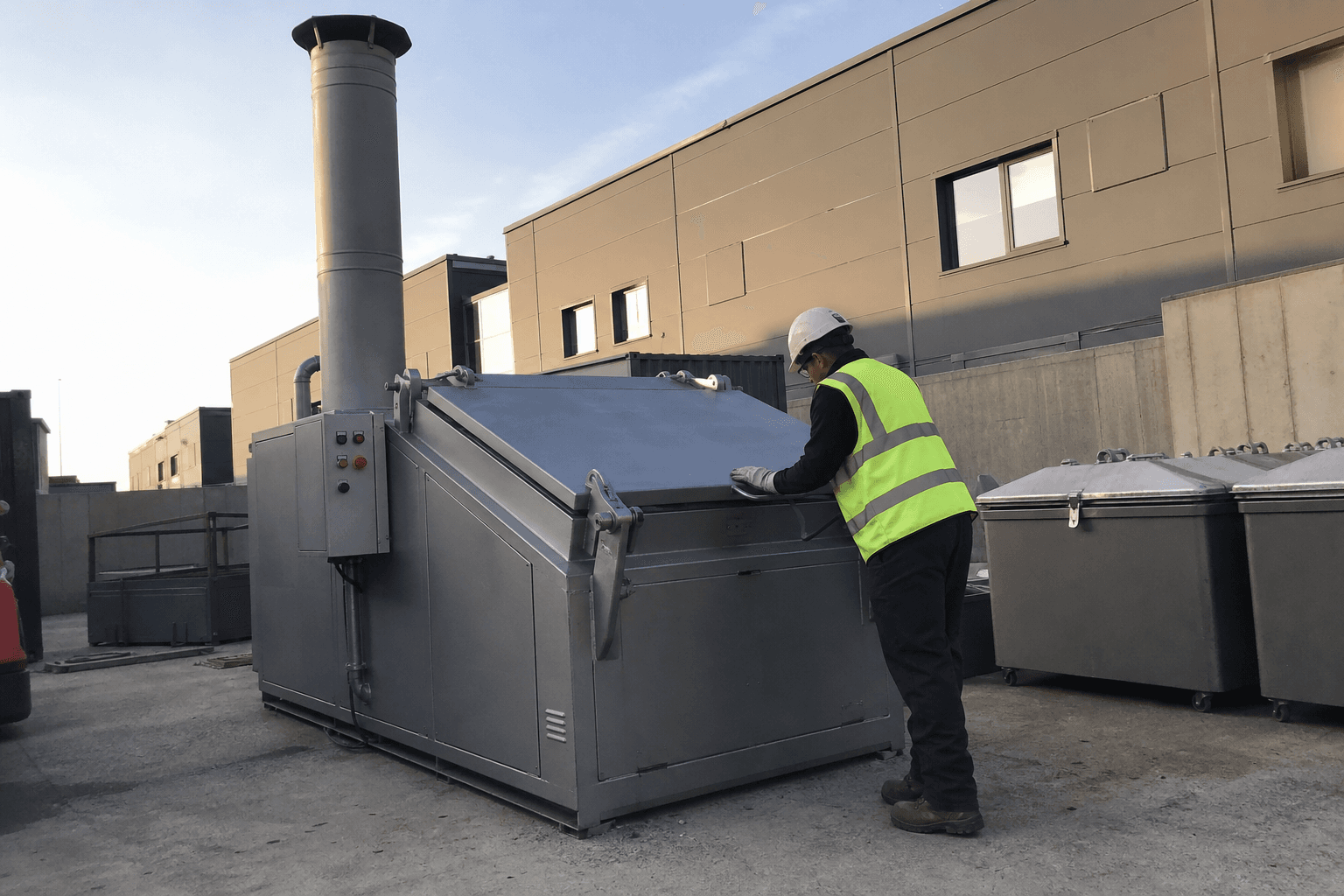
Classified Document Destruction Incinerators
Protectively marked paper, microfiche and mixed media destroyed on site under supervision, with a burn that can be witnessed.
Shredding reduces a document. Incineration ends it. Where material is protectively marked, holds personal data at scale, or covers mixed media that a shredder cannot take, thermal destruction on site removes both the reconstruction risk and the chain-of-custody problem in one step.
Three Models,
One Solution
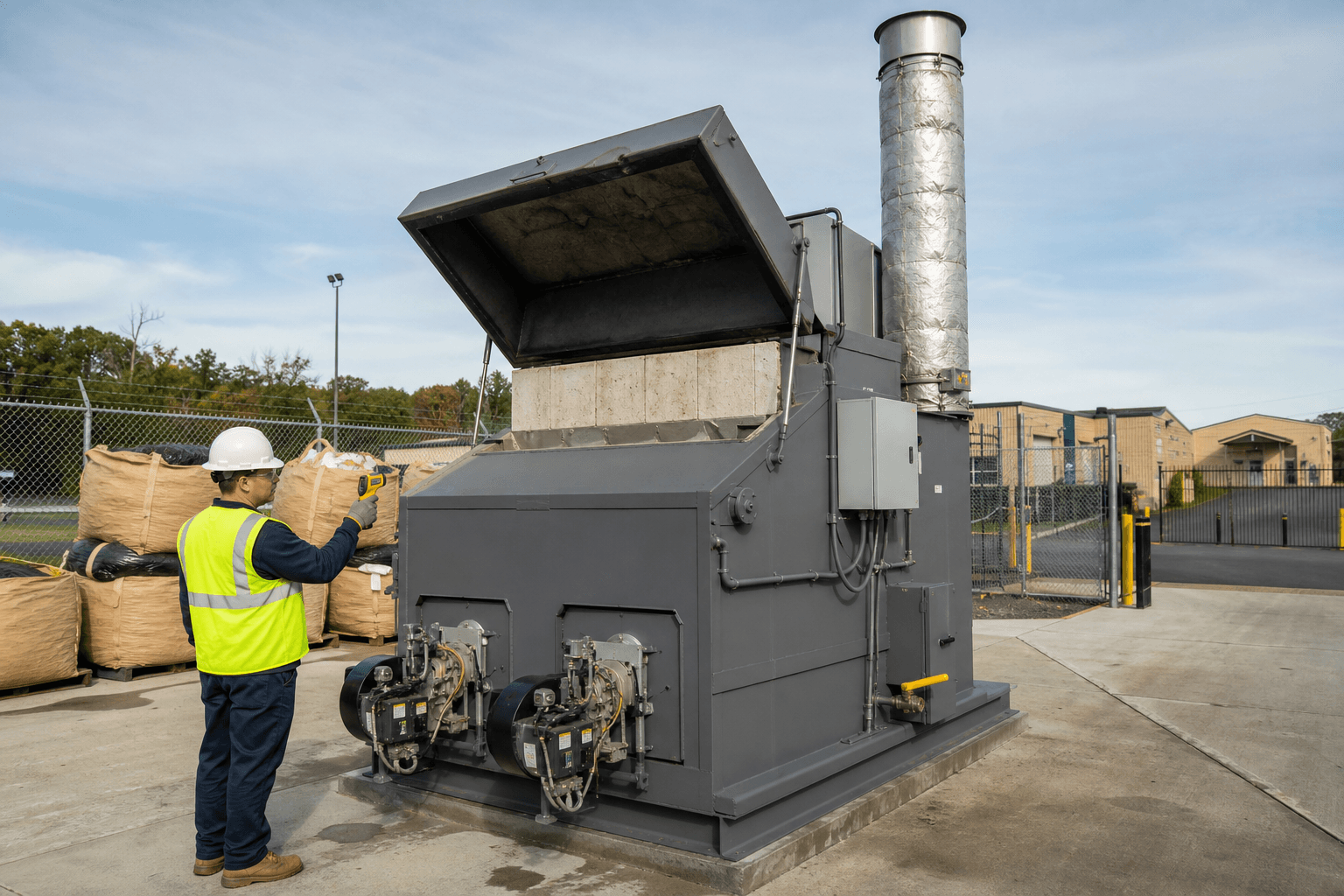
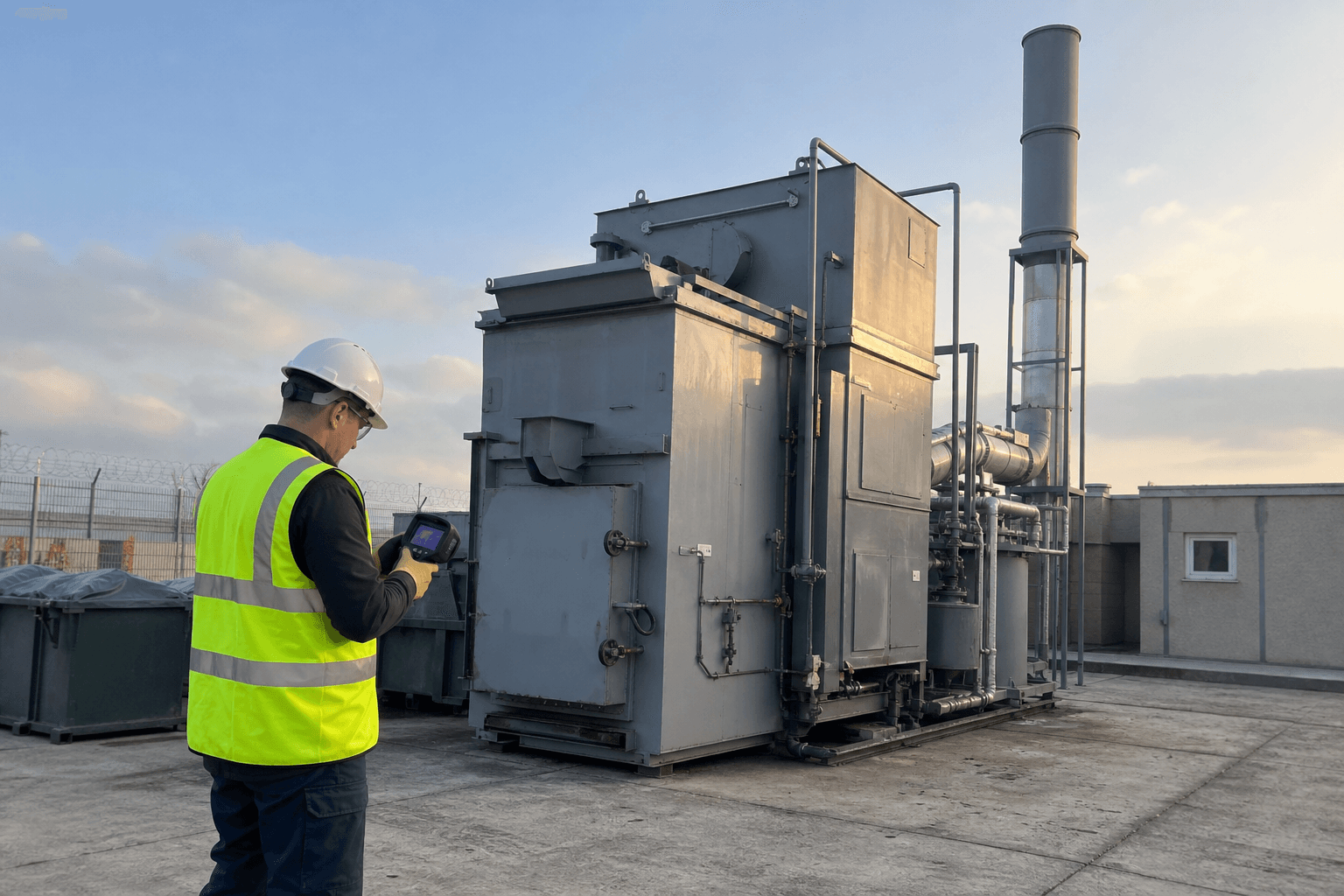
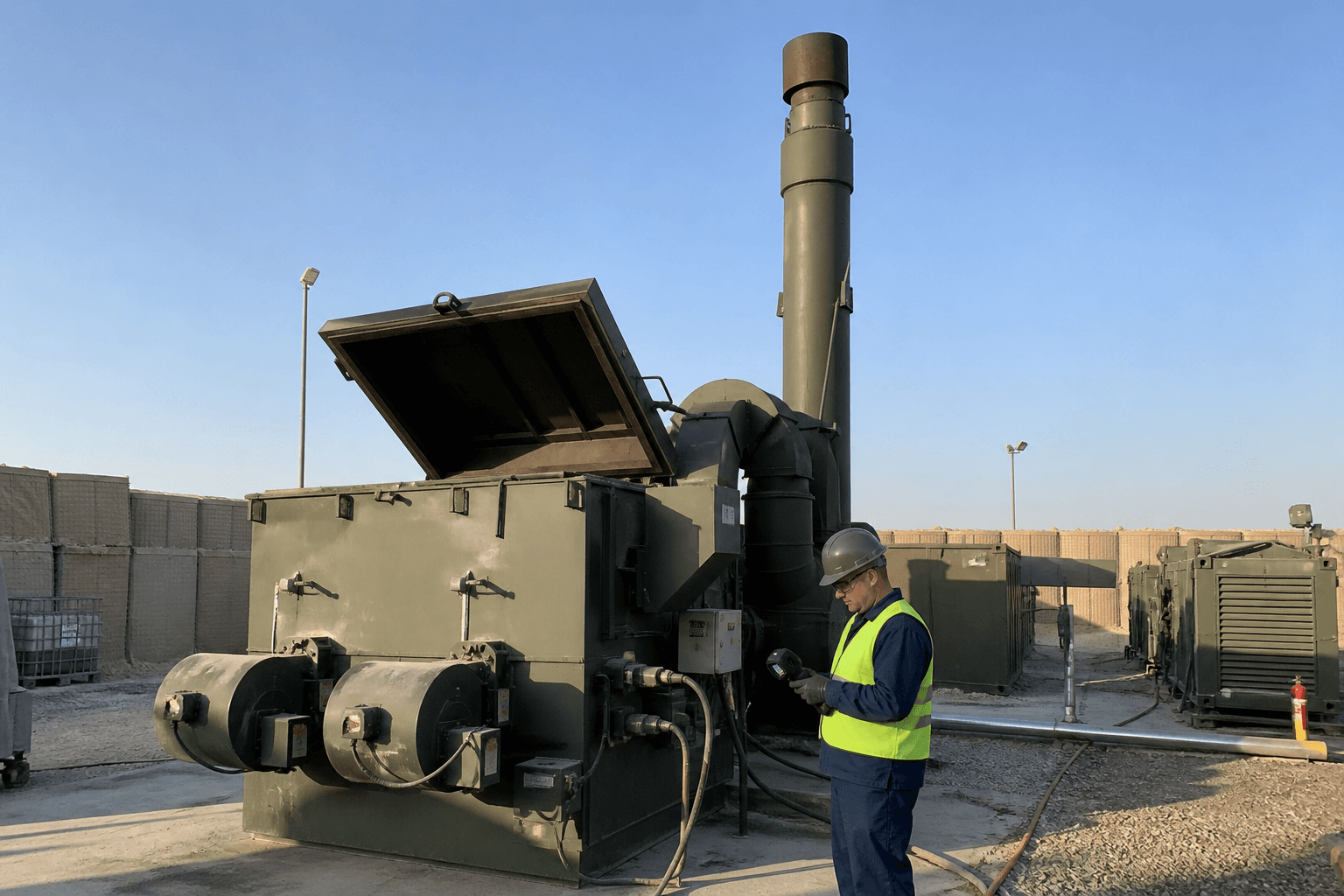
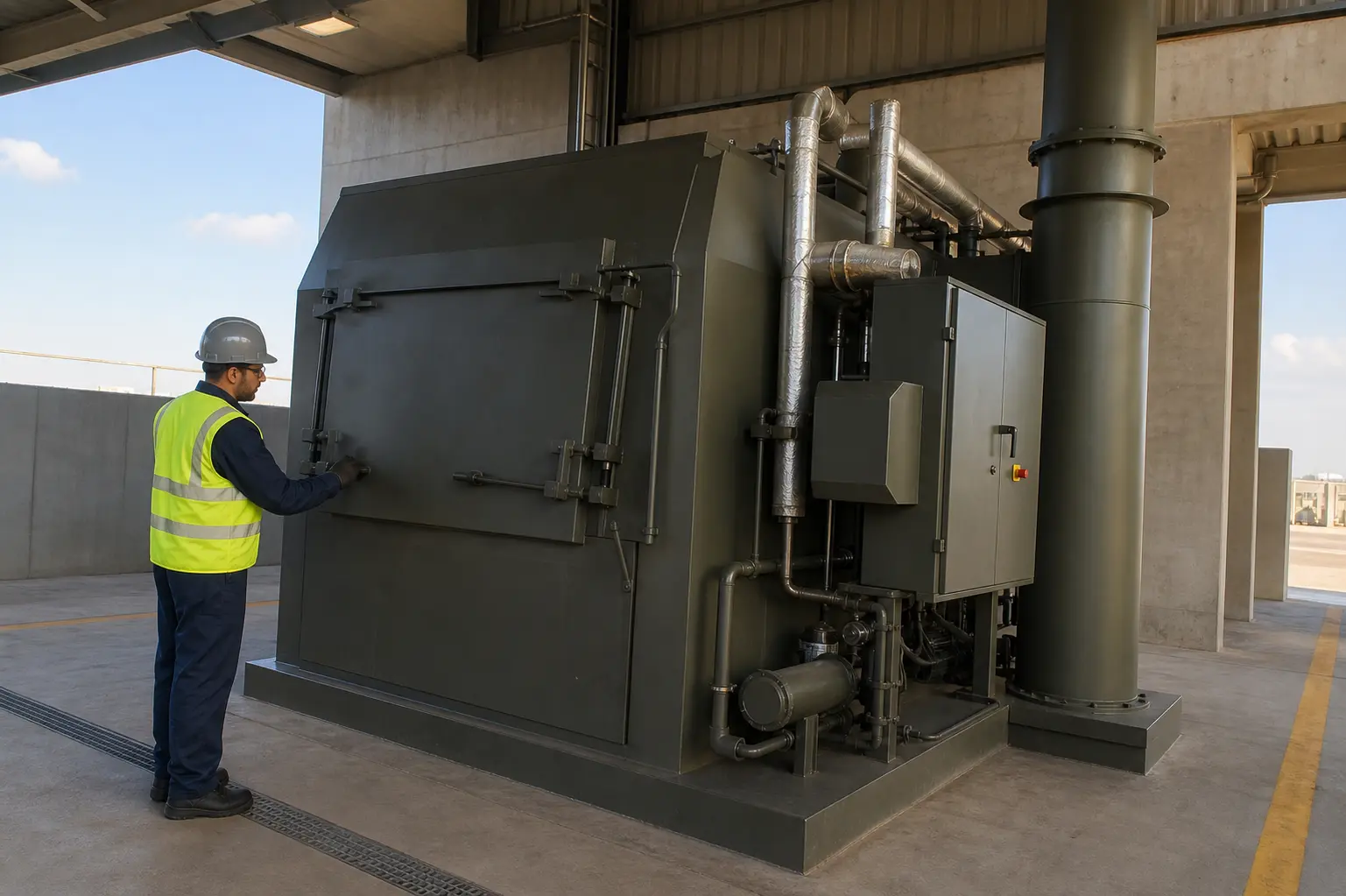
The compact AmoBurn: 150 kg per charge at 1.8 t, light enough to be relocated between sites. Used where destruction has to be witnessed and certified on site rather than handed to a third-party contractor.
250 kg per charge for established base infrastructure. The two-burner arrangement and 1250 mm chamber handle classified document destruction and ammunition-adjacent waste in the same unit.
The largest AmoBurn at 300 kg per charge. Specified where the secure-destruction requirement is continuous enough that a smaller unit would need several cycles a day to keep up.
Which Model
Fits Your Volume
Pick a model to see what it clears in a day of classified document destruction.
Paper is light and bulky: 150 kg is a great many bags, and the chamber fills on volume long before the rating. Sized for a unit registry clearing a routine review.
Environmental permit
Required regardless of Crown status. Environment Agency in England and Wales, SEPA in Scotland, NIEA in Northern Ireland. The application needs stack-height justification from a site-specific dispersion assessment, not a standard figure.
Destruction records
Batch cycles map cleanly onto a destruction register: one charge, one entry, one witness signature. Retain alongside the disposal authority for the material destroyed.
Handling before the charge
The incinerator does not change how protectively marked material must be stored and moved up to the charge door. Existing handling procedure applies right up to the point of loading; what changes is that the procedure now ends on your own site.
Media declared in the permit
Where the stream includes plastics, laminates or magnetic media rather than paper alone, say so in the application. The halogenated-content threshold that raises the secondary chamber to 1,100°C is a permit question before it is an operating one.
Why Burn It
On Site
4 things change on the day this stream stops leaving the site.
The custody transfer disappears
Off-site destruction means the material crosses your boundary in a vehicle, sits in a facility you do not control, and is destroyed by people you have not cleared. You get a certificate. On-site incineration means the material never leaves — it goes from the secure store to the charge door, and the people handling it already hold the clearance for it.
The burn can be witnessed
Batch operation makes destruction a discrete, observable event. A nominated witness can be present for the charge and the door seal, and the cycle recorded against the destruction register. Continuous-feed machinery cannot offer that: material disappears into a running process rather than a countable cycle.
Mixed media in a single charge
Record sets are rarely just paper. Ring binders, plastic wallets, index cards, microfiche, tape and the occasional drive all arrive together. A single charge takes the lot with no separation stage — which removes the handling step where loose classified material is most exposed.
Volume without a queue
A 300 kg charge clears a standing archive backlog that would occupy an office shredder for weeks and would still leave you with sacks of residue to move off site. The AMBI range clears it in one supervised cycle and leaves roughly 9–12 kg of ash.
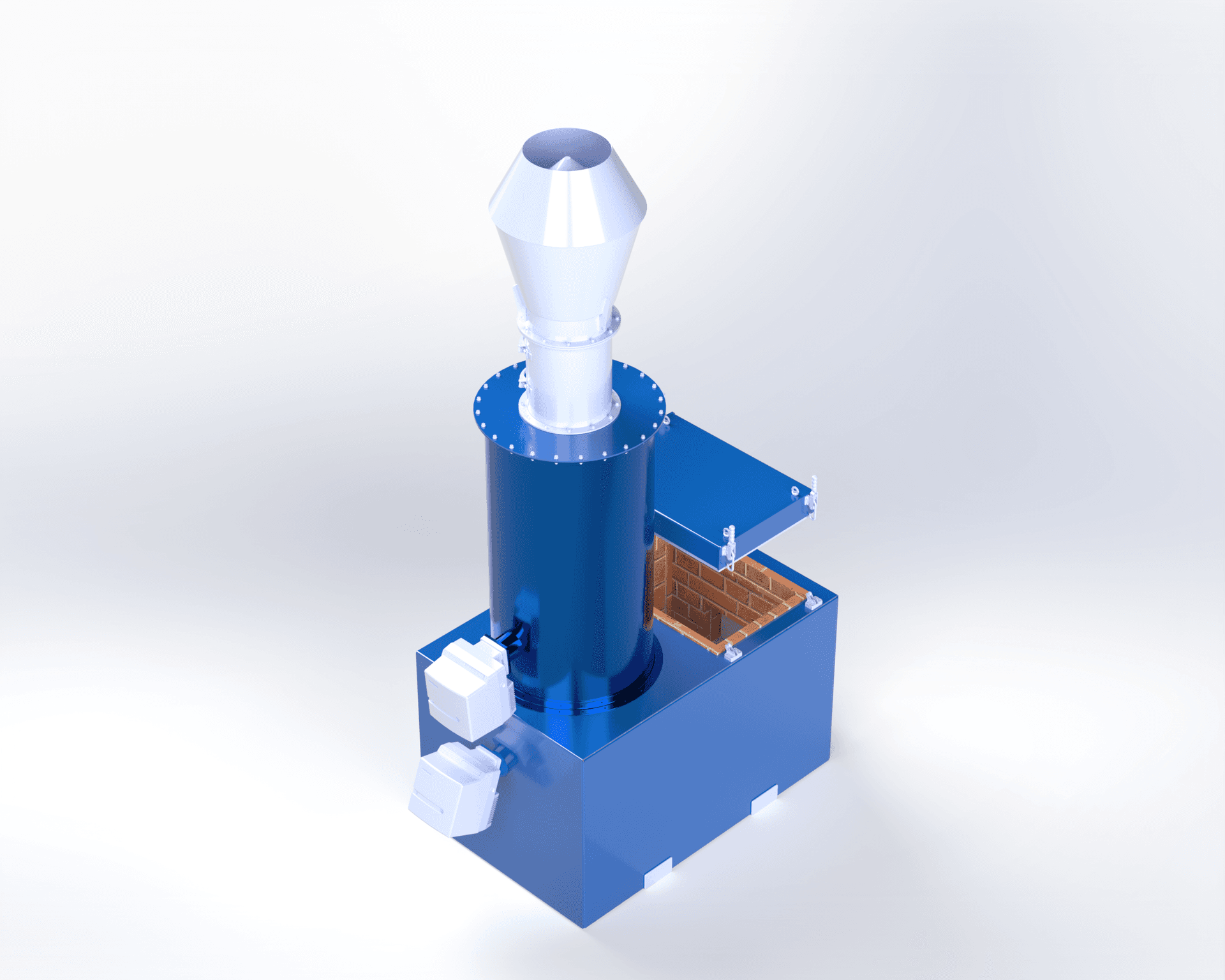
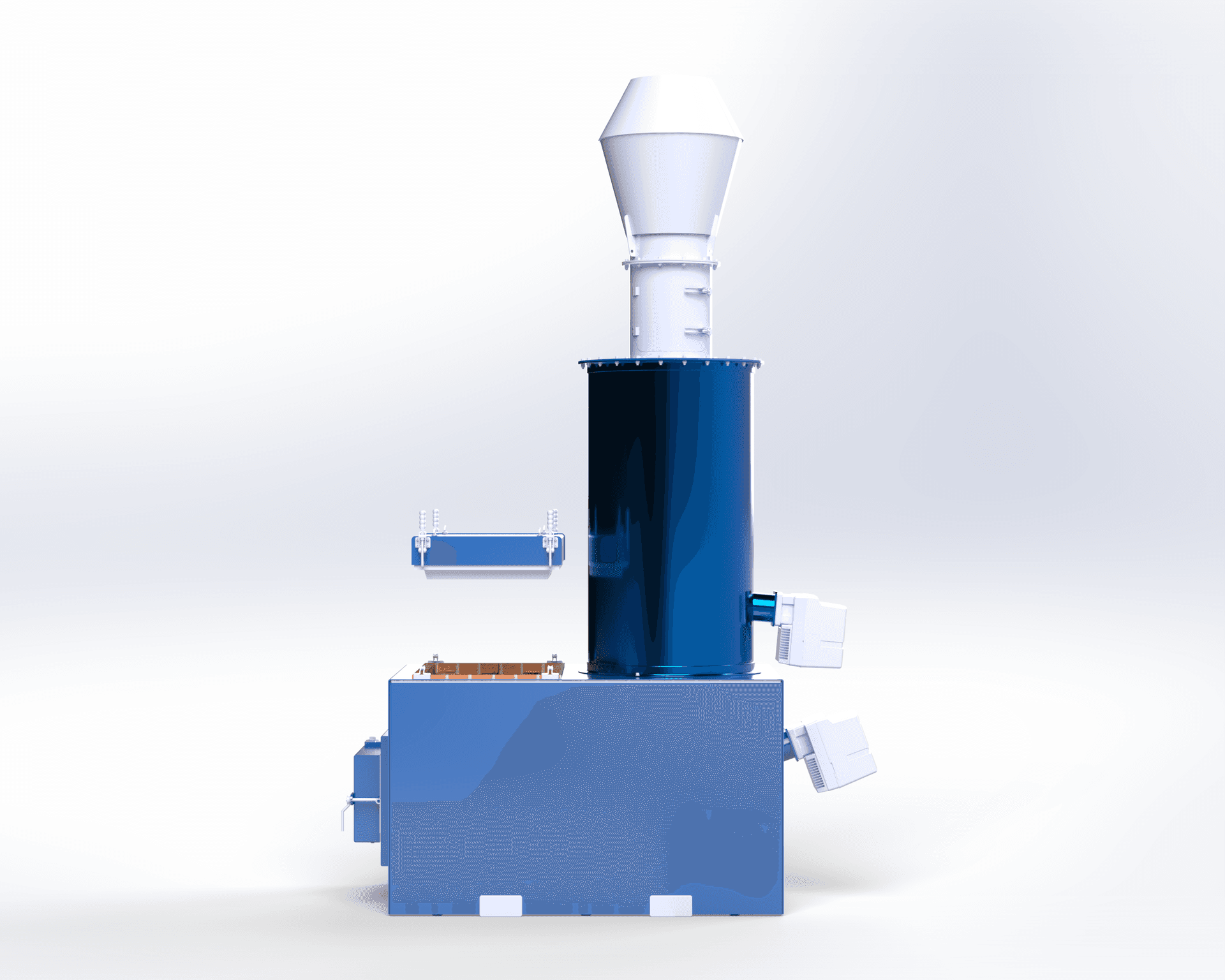
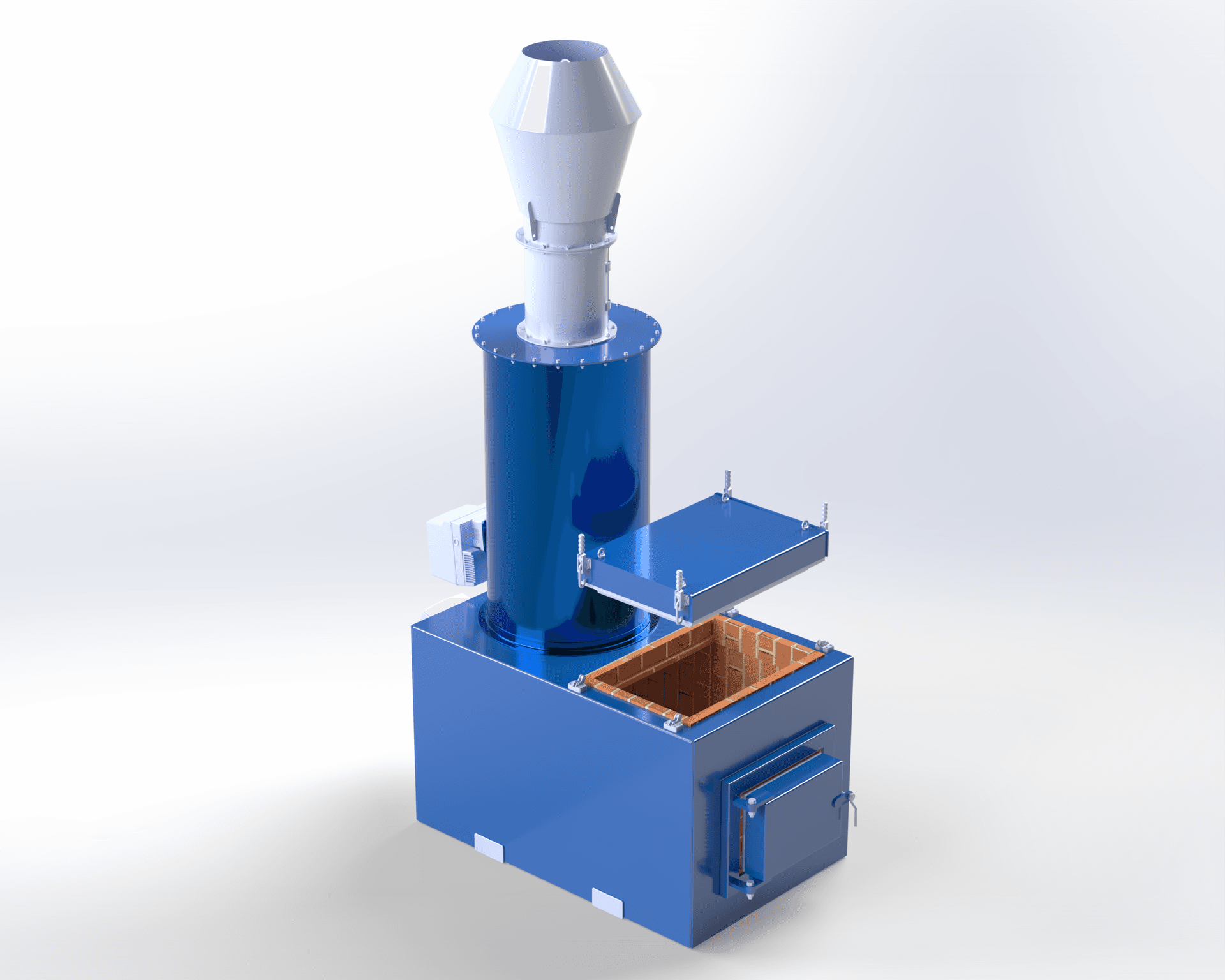
Dual-chamber unit
Primary chamber running 850–1,200°C with a secondary chamber holding flue gas above 850°C for two seconds — the Industrial Emissions Directive condition, met as built rather than as an option.
Burner set and fuel train
Configured for natural gas, LPG, diesel, biofuel or hydrogen. Fuel choice is a site decision; the combustion condition is identical whichever is specified.
What Ships
With The Unit
Identical whichever stream it is specified for. The operating procedure changes; the machine does not.
Dual-chamber unit
Primary chamber running 850–1,200°C with a secondary chamber holding flue gas above 850°C for two seconds — the Industrial Emissions Directive condition, met as built rather than as an option.
Burner set and fuel train
Configured for natural gas, LPG, diesel, biofuel or hydrogen. Fuel choice is a site decision; the combustion condition is identical whichever is specified.
IP6X control panel
PLC control with cycle logging, chamber thermocouples and interlocked charge door. The cycle record is what a destruction register entry is written against.
Coretex refractory lining
Monolithic castable lining rated for the full temperature range, replaceable in service rather than requiring the shell to be scrapped with it.
Stack and dispersion data pack
Stack supplied to the height your site-specific dispersion assessment calls for, with the emissions data the permit application has to reference.
Commissioning and operator training
On-site commissioning, a witnessed first burn, and training for the establishment personnel who will hold the charge-door key.
How One Burn Runs,
Start To Finish
One charge is one countable event. That is what makes a batch unit auditable and a continuous one not.
One Cycle,
Start To Finish
Adds a nominated witness at the charge door and a destruction register entry per cycle. Existing handling procedure for protectively marked material runs unchanged up to the point of loading.
Existing handling procedure applies right up to the charge door: the material moves under the same escort and control it was stored under. What changes is that the route now ends on your own site rather than at a vehicle.
The charge is loaded top-down with the nominated witness present, the load recorded against the destruction register, and the door interlocked. One charge, one entry, one signature.
Cellulose, polymer and magnetic media are destroyed structurally rather than reduced in size. Flue gas is held above 850°C for two seconds in the secondary chamber, which deals with the organic fraction rather than emitting it.
The unit cools with the door interlocked. A full 300 kg charge occupies most of a working day once heat-up, burn and cool-down are counted, so schedule destruction days rather than destruction hours.
Residue is 3–5% mineral ash with nothing recoverable — it leaves the site as ordinary waste, not as protectively marked material. The cycle log and witness signature close the register entry.
What You Can Burn —
And What You Can't
One charge takes the whole stream without pre-sorting. What must never enter it is a short, hard list.
Yes: accepted in a charge
No pre-sorting between these
- Paper records, loose or boundFiles, ledgers, carbon and coated stock, and whole archive boxes charged without unpacking. Ring binders, plastic wallets, dividers and index cards go in with them rather than being stripped out first.
- MicroformMicrofiche and microfilm — the format no office shredder handles, and one that stays readable under magnification if it is only cut.
- Magnetic and optical mediaTape, cassettes, legacy formats and optical discs. Destroyed as material, so there is no wiping, degaussing or verification step to evidence.
- Hard-drive platters in their caddiesAccepted, and declared in the permit application because the caddy assembly is not paper. The platter is destroyed rather than overwritten, which is a different assurance argument.
- Laminated passes and ID cardsAccess passes, identity cards and visitor badges withdrawn from use, laminate included.
- Imaging consumables and record packagingPrinter ribbons and single-use consumables that carry a readable image, plus the fibre and cardboard packaging around a record set.
No: never charged
Not a permit question — these stay out
- Lithium cells inside drives or devicesThermal runaway in a sealed chamber. Remove the cell, or route the whole device to WEEE.
- Pressurised containers and aerosolsSealed vessels rupture under heat, whatever is inside them.
- Bulk solvent or flammable liquidA batch chamber is not a liquid injection plant. Absorbed onto rag is a different question and is acceptable.
- Anything with an energetic componentSame rule as every other stream on this site: certify the charge, or it does not go in.
Can you legally burn classified document destruction on site?
Technically, yes: the chamber destroys almost everything on the accepted list at 850–1,200°C, and capability is rarely the constraint. Legally is a separate question. What your site is allowed to burn is set by your environmental permit from the Environment Agency, SEPA or NIEA and the waste codes written into it. The never-charged list is different again: those materials are out of scope for the unit or governed by a direction, and no permit wording brings them back in. Send us the codes you hold, or the ones you expect to apply for, and we will tell you which of this list they cover before anything is specified.
Send us your waste codesHow many charges to destroy 1,200 kg of archive?
Arithmetic on published model figures, not a customer reference. Your numbers go through the same steps.
How This
Was Worked Out
1,200 kg of archive ÷ 300 kg per charge = 4 charges on the AMBI-300 — four witnessed working days, four register entries, and 36–60 kg of ash at 3–5%. The same 1,200 kg through an office shredder is weeks of work and still produces residue that has to be transferred off site under control.
4 working days, witnessed
4 — one per charge
36–60 kg total
Ash only
Send your daily or weekly arisings and we will confirm the model, the charge count and the permit route.
Related Products
& Services
Complementary equipment and engineering services for your process.
Sizing and background
- [TOOL]Work out the burn rate for your own arisings
- [TOOL]Size the combustion air and flue gas duty
- [BLOG]Fuel-to-air ratio in ammunition incinerators
- [BLOG]NOx reduction in ammunition incinerators
- [BLOG]Advanced process control for ammunition incinerators
- [BLOG]Integrating vibration analysis for incinerator predictive maintenance
- [BLOG]Advanced gas cleaning for ultra-low emission incinerators
Classified document destruction Questions
Answered against the published figures for the models specified for this stream, not a generic range sheet.
A document destruction incinerator is a batch thermal unit used to reduce paper records and mixed media to mineral ash on the site that generated them. It is specified where the security classification of the material, or the volume of personal data it holds, makes transferring it to an off-site destruction facility the weaker option. The distinction that matters against shredding is reconstruction. A cross-cut shredder produces particles; particles can, with enough effort and enough of the original, be reassembled, and the residue remains legible under forensic examination. Combustion at 850–1,200°C with a two-second secondary-chamber retention destroys the cellulose structure itself. What leaves the unit is 3–5% mineral ash carrying no information at all. The second distinction is media coverage. Office shredders handle paper and, at a stretch, optical discs. A destruction incinerator takes the whole record set as it actually exists: bound files, carbon paper, laminated passes, microfiche, magnetic tape, hard-drive platters in their caddies and the fibre packaging around them, in one charge, without pre-sorting. The third is scale. A standing archive backlog measured in hundreds of kilograms is weeks of work for an office shredder and leaves sacks of residue that still have to be moved off site. A 300 kg charge clears it in one supervised cycle and leaves roughly 9–12 kg of ash.
1,200 kg of archive ÷ 300 kg per charge = 4 charges on the AMBI-300 — four witnessed working days, four register entries, and 36–60 kg of ash at 3–5%. The same 1,200 kg through an office shredder is weeks of work and still produces residue that has to be transferred off site under control.
For protectively marked material, yes — because shredding leaves a residue and incineration does not. Shredded particles retain legible fragments and can in principle be reconstructed; the residue still has to be stored and moved. Combustion at 850–1,200°C destroys the cellulose structure, leaving 3–5% mineral ash with nothing recoverable. Incineration also takes media a shredder cannot: microfiche, magnetic tape, laminated passes and bound files.
Paper in every form — loose, bound, carbon, coated — plus microfiche, magnetic tape, optical discs, laminated cards, plastic wallets, ring binders and the fibre packaging around them. Charges do not need pre-sorting, which removes the handling stage where loose classified material is most exposed.
Yes, and this is the main operational reason to run a batch unit rather than a continuous one. A charge is loaded, the door is secured and the cycle runs as a discrete event, so a nominated witness can observe the charge and sign it into a destruction register. One charge produces one register entry.
The AMBI-150 takes 150 kg per charge, the AMBI-250 takes 250 kg and the AMBI-300 takes 300 kg. As a rough guide, 300 kg is a standing archive backlog rather than a day's office output. All three burn at under 50 kg/h, so a full charge occupies most of a working day once heat-up, burn, cool-down and ash removal are allowed for.
Between 3% and 5% of input mass. A full 300 kg charge leaves roughly 9–12 kg of mineral ash with no recoverable structure. That ash is the only fraction still requiring disposal, and it leaves the site as ordinary residue rather than as protectively marked material.
Yes. Burning waste requires an environmental permit from the Environment Agency, SEPA or NIEA, and Crown status does not exempt a defence establishment from it. Stack height comes out of a site-specific dispersion assessment rather than a standard figure. We supply the technical data pack the application relies on.
Platters in their caddies can, provided the stream is declared in the permit application and any lithium cell in the surrounding device has been removed first. Whole devices with batteries in them should go to WEEE. The practical route on most sites is degauss then incinerate the platters with the paper record they belong to.
Ready to
Incinerate?
Send the stream, the volume and the site constraints. We will confirm the model, the permit route, and what the specification has to say to satisfy the regulator.
- The custody transfer disappears
- The burn can be witnessed
- Mixed media in a single charge
- Volume without a queue