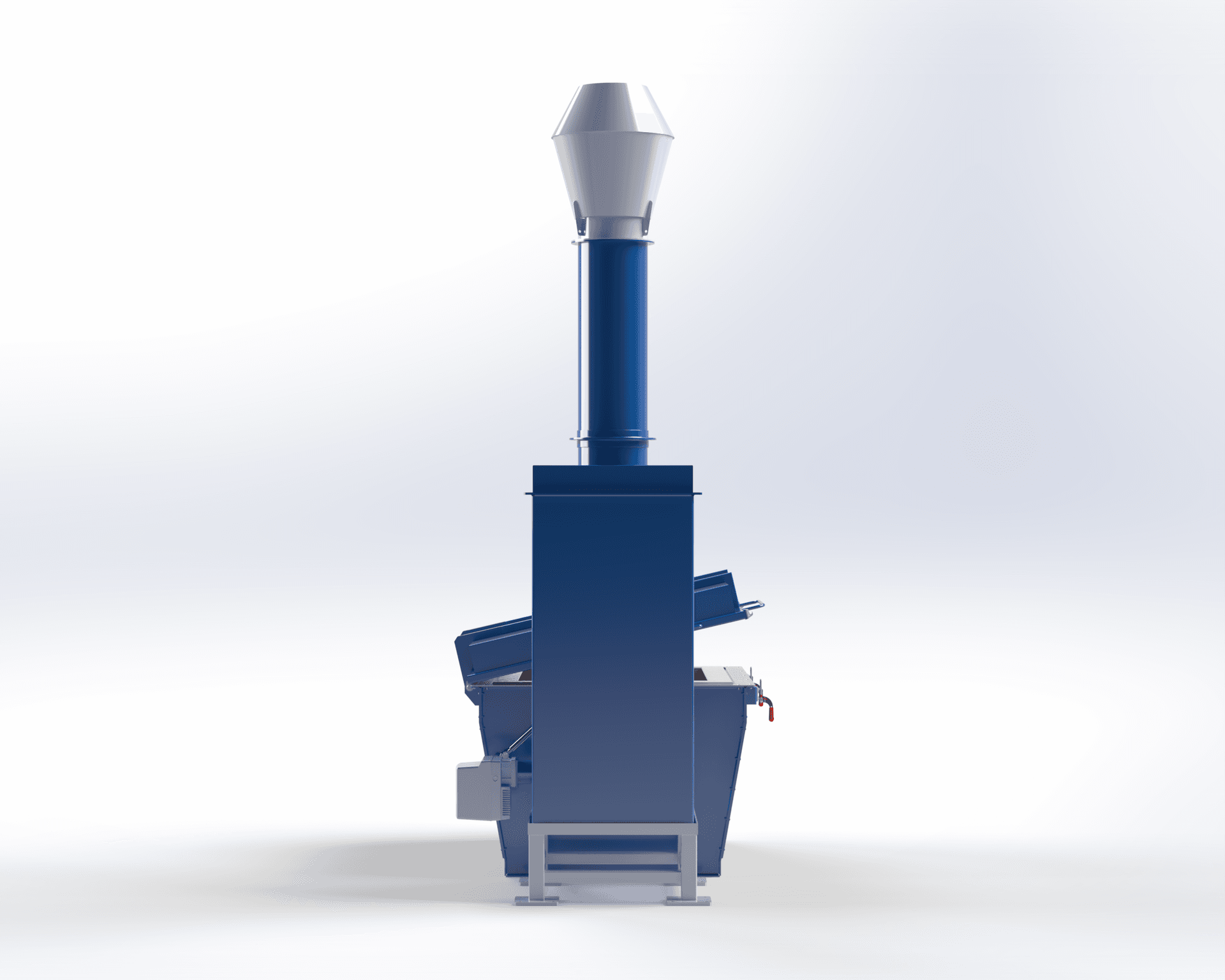
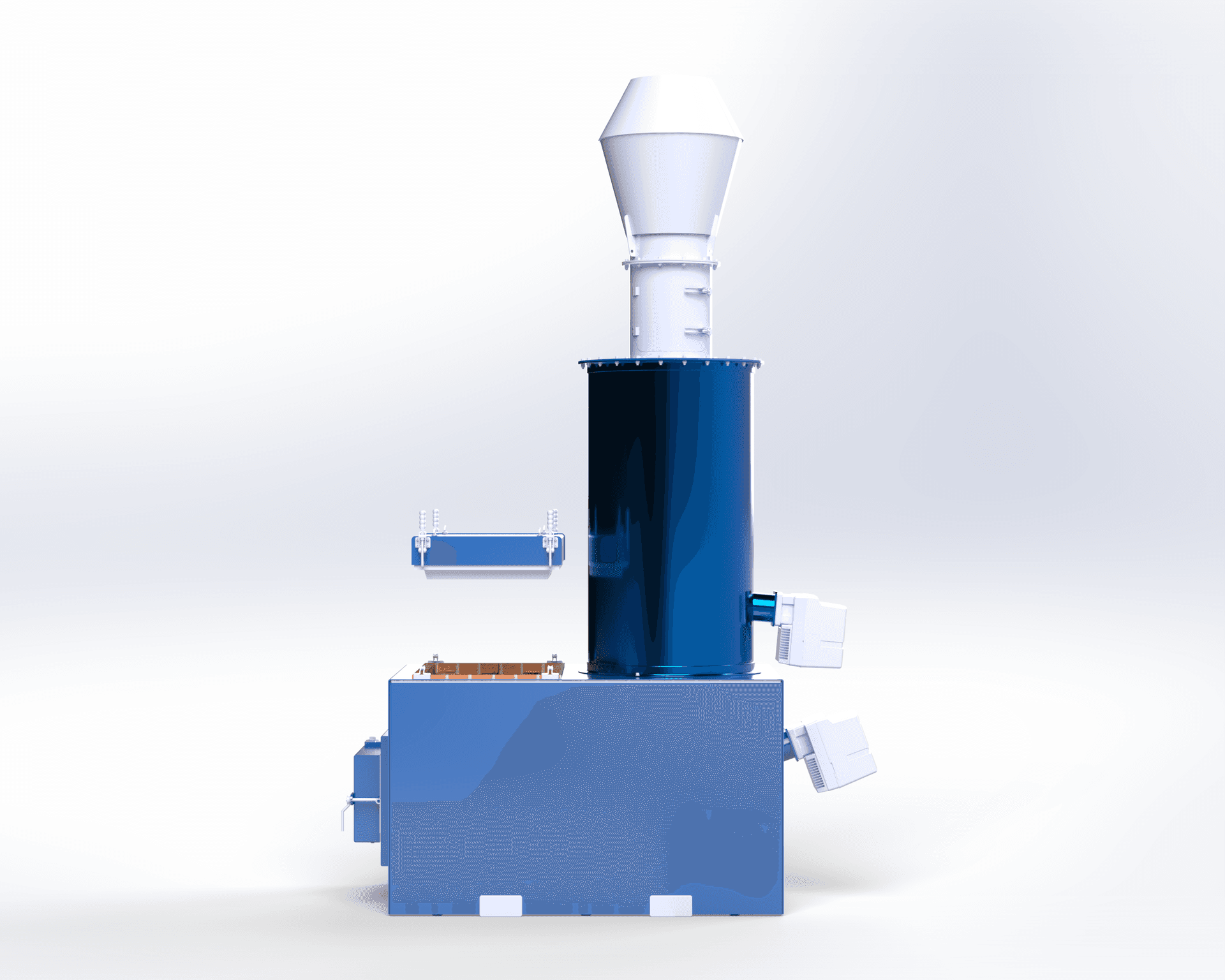
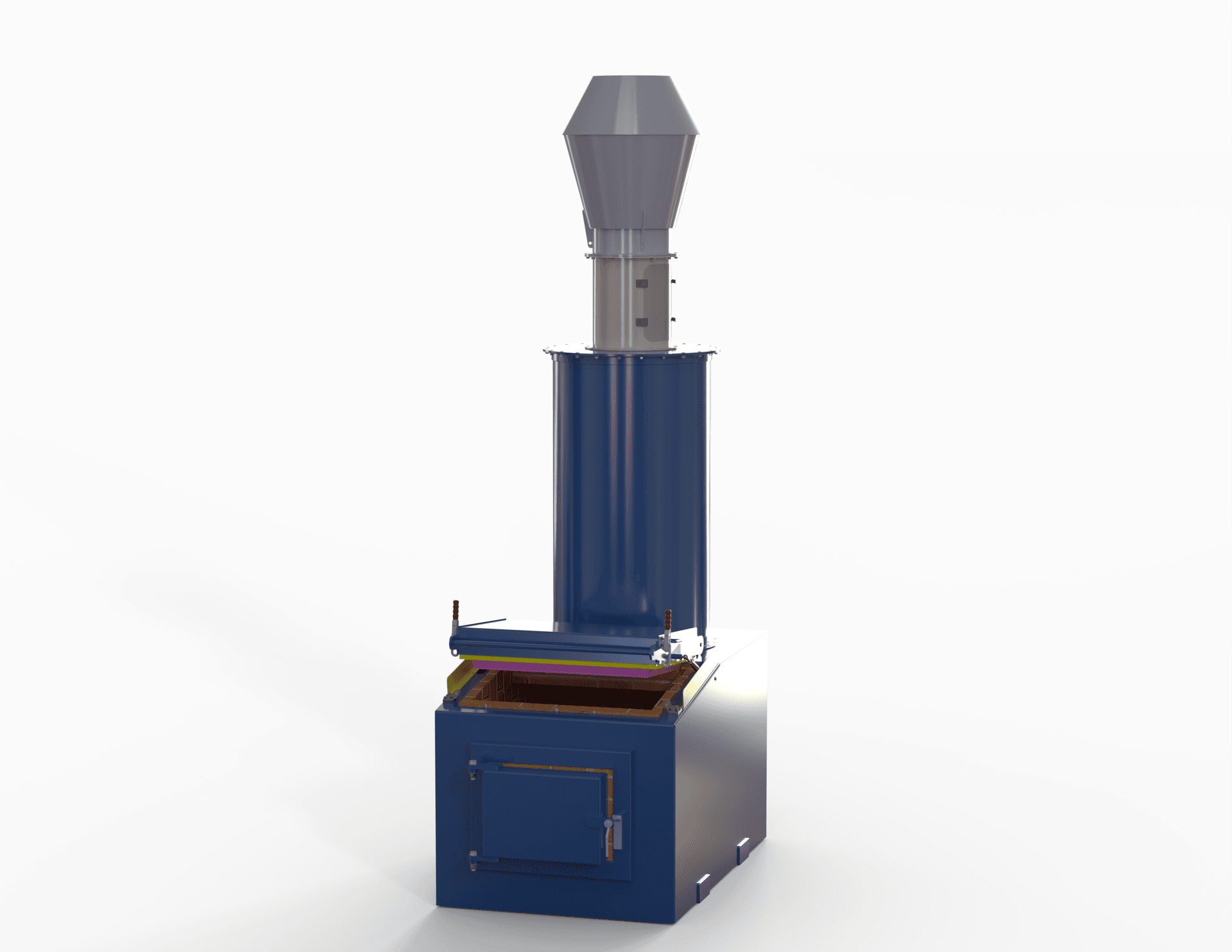
LBI-500 500 kg hazardous waste incinerator
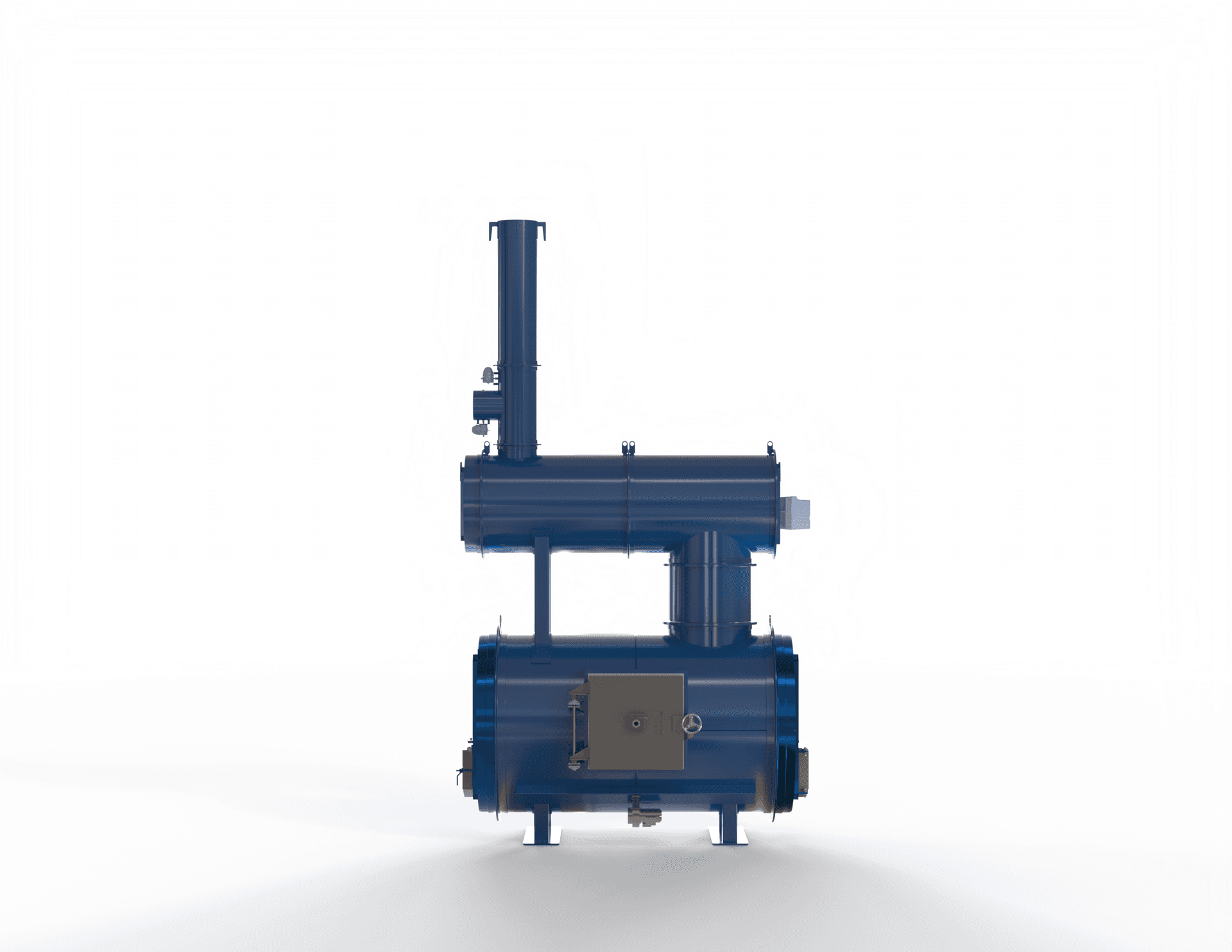
The size specified for surge: flood clearance, a major incident, or a contractor taking arisings from several sites. The 16.2 m³ chamber is what lets a week's worth of bagged clearance waste through in days rather than weeks.
- Chamber
- 16.2 m³
- External dimensions
- 4680 × 2530 × 2760 mm
- Burners
- 3
- Loading
- Front (dual door)
- [LOAD]
- 500kg
- [BURN_RATE]
- 500kg/h
- [DUTY]
- Continuous
- [WEIGHT]
- 3.8t
LBI-500 In Full
- Chamber
- 16.2 m³
- External dimensions
- 4680 × 2530 × 2760 mm
- Burners
- 3
- Loading
- Front (dual door)
- Operating temperature
- 850–1,200°C
- Gas retention
- 2.0 s
- Ash residue
- 3–5%
- Heat-up time
- 30 min
- Fuel
- Natural gas / H₂ / diesel / LPG / bio
- Control panel
- IP6X rated PLC
- Refractory
- Coretex lining
- Origin
- United Kingdom
Rated Continuously
Throughput is a function of operating hours, not cycles.
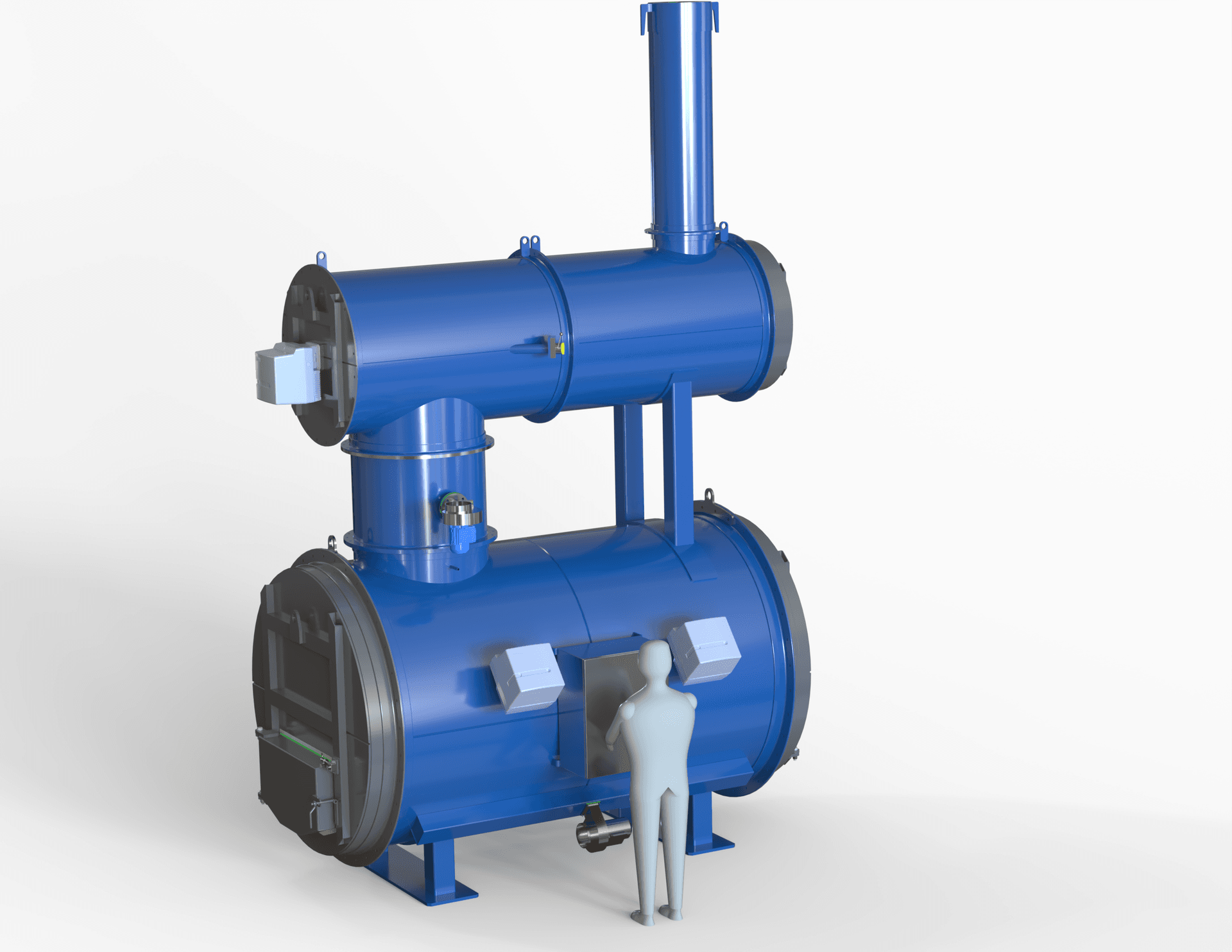
The LBI-500 is specified for surge rather than for a steady duty: flood clearance, a major incident, or a contractor taking arisings from several sites at once. The figure that justifies it is not annual tonnage but how long a backlog takes to clear — at 500 kg/h a tonne is gone in two hours, so a week of bagged clearance waste goes through in days. The 16.2 m³ chamber is what makes that possible with bulky, wet material. Allow for the water: saturated carpet, furnishings and vegetation burn well below the plate rating, so a surge plan built on the rated figure alone will run short. At 4,680 × 2,530 × 2,760 mm the unit needs a bay with vehicle access.
Every unit reaches operating temperature within 30 minutes and holds flue gas above 850°C for two seconds in the secondary chamber — the Industrial Emissions Directive condition. Ash residue is 3–5% of input mass.
Specified for
- Contaminated land arisingsLiners, geotextiles, sorbents, PPE and debris from remediation works. Bulk soil goes elsewhere.
- Spill response & incident wasteSorbents, booms, granules, PPE and debris from an incident — cleared the same week, not the same quarter.
- Flytipping & land clearanceCleared dumped waste from private and public land, assessed and screened before anything is charged.
- Flood & storm clearanceSilt-contaminated contents, sandbags, flooring and soft furnishings after a flood or storm event.
- Marine, harbour & beach debrisBeach clean debris, derelict fishing gear, harbour litter and vessel-generated waste.
- Water treatment residuesInlet screenings, rag and spent filter media from water and wastewater treatment. Sludge goes elsewhere.
Before you specify
Permit
Burning hazardous waste needs a bespoke environmental permit from the Environment Agency, SEPA or NIEA with the hazardous codes named and a site-specific dispersion assessment — not a standard rules permit. Expect the consent route rather than the equipment to set the date of the first burn.
Stack height
Comes out of a site-specific dispersion assessment, not a standard figure.
Full compliance requirementsHow long does the LBI-500 take to clear a surge backlog?
Every figure below is derived from published model data, so it can be checked rather than trusted.
- Backlog
- ≈20,000 kg
- Cleared per hour
- 500 kg
- Rated run time
- ≈40 h
- Wet-load allowance
- ≈55–60 h
- Chamber volume
- 16.2 m³
- Ash at 3–5%
- 600–1,000 kg
The arithmetic
20,000 kg of bagged clearance waste against 500 kg/h is 40 hours on paper, or about 55–60 with a saturated load — a week of double-shift running rather than the month a consignment schedule would take.
What to watch
Surge capacity is bought for the week it is needed, not the fifty it is not, so the honest comparison is against what the same backlog costs in consignments and storage while it waits — including the licence conditions that apply to holding it.
Rest Of The Environmental Range
Same size, other waste types
Related Products
& Services
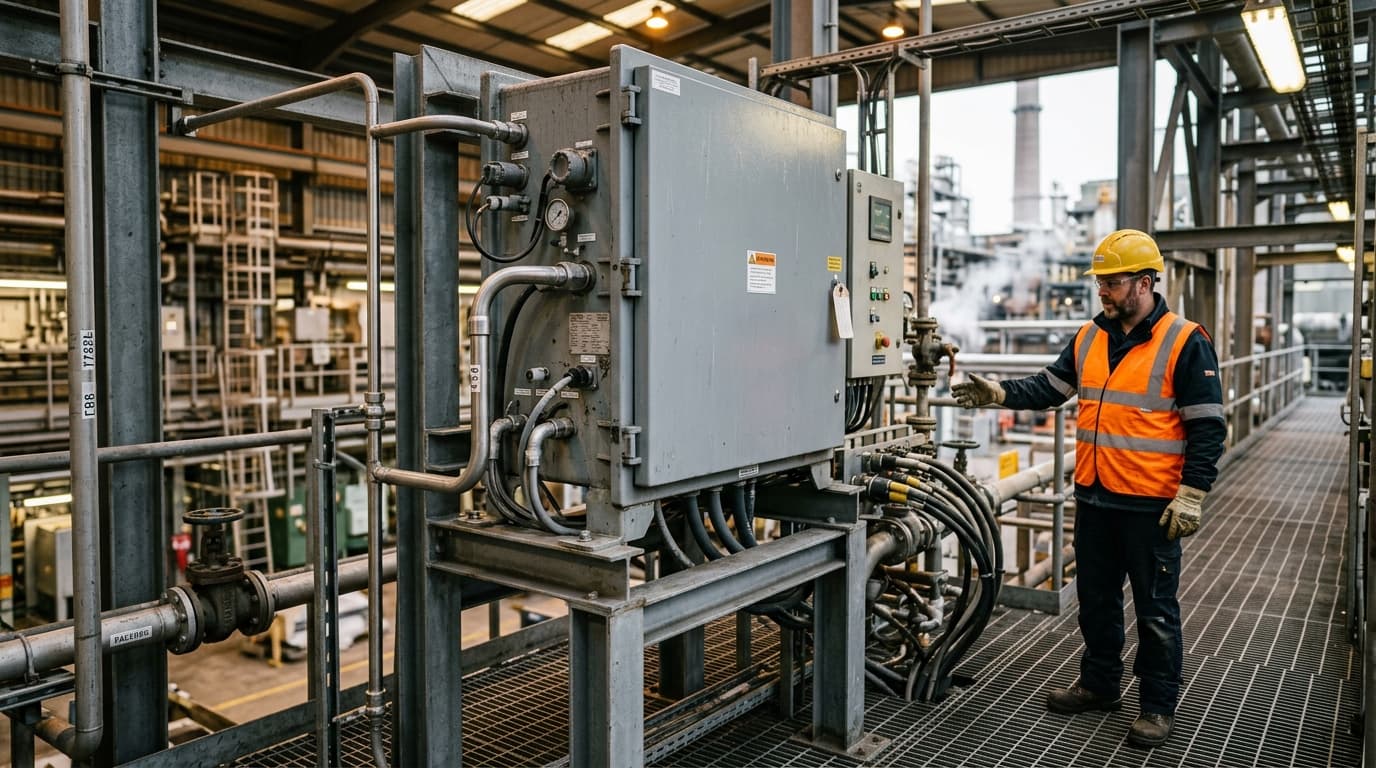
Complementary equipment and engineering services for your process.


Sizing and background
- [TOOL]Work out the burn rate for your own arisings
- [TOOL]Size the combustion air and flue gas duty
- [BLOG]Ash management from industrial waste incinerators
- [BLOG]Integrating vibration analysis for incinerator predictive maintenance
- [BLOG]Advanced gas cleaning for ultra-low emission incinerators
- [BLOG]Evaluating flue gas cleaning systems in industrial incinerators
LBI-500 Questions
Every answer below is derived from this model's published figures, not from a generic range sheet.
The LBI-500 is rated at 500 kg/h continuously, so throughput is a function of how many hours you run it rather than how many cycles you complete. Running it for an eight-hour shift clears roughly 4,000 kg. The 500 kg figure in the model name is the chamber charge, not a daily ceiling.
Continuous. The LBI-500 holds its rated 500 kg/h for as long as it is fed, so you can keep loading through a shift without waiting for a cycle to finish. Fewer, longer burns use less fuel than repeatedly bringing the refractory up from cold.
The LBI-500 is specified for contaminated land arisings, spill response & incident waste, flytipping & land clearance, flood & storm clearance, marine, harbour & beach debris and water treatment residues. It reaches 850–1,200°C and holds flue gas above 850°C for two seconds in the secondary chamber, which is the Industrial Emissions Directive condition for these streams. Waste containing more than 1% halogenated organic content raises that secondary-chamber minimum to 1,100°C.
The LBI-500 measures 4680 × 2530 × 2760 mm (L × W × H) externally and weighs 3.8 t installed. You need clear working space around it for the front doors to swing and for ash removal, plus a stack whose height comes out of a site-specific dispersion assessment rather than a standard figure.
Yes. Running this unit needs an environmental permit from the Environment Agency in England and Wales, SEPA in Scotland or NIEA in Northern Ireland. The waste codes for environmental waste have to be named in the application, and a permit written for general waste does not silently cover them. We supply the technical data pack the permit application relies on.
The LBI-500 runs on natural gas, hydrogen, diesel, LPG or biofuel through 3 burners. Being hydrogen-ready matters if you expect to decarbonise the site later: the unit does not need replacing when the fuel supply changes.
Thirty minutes from cold to operating temperature. From there it runs between 850°C and 1,200°C, with a 2.0-second gas retention time in the secondary chamber and a Coretex refractory lining. Control is through an IP6X-rated PLC panel.
Ash residue is 3–5% of input mass, so roughly 95% of what you load stops being a disposal cost. On a 500 kg charge that leaves about 20 kg of ash to remove — the only fraction still attracting gate fees and Landfill Tax.
20,000 kg of bagged clearance waste against 500 kg/h is 40 hours on paper, or about 55–60 with a saturated load — a week of double-shift running rather than the month a consignment schedule would take. Surge capacity is bought for the week it is needed, not the fifty it is not, so the honest comparison is against what the same backlog costs in consignments and storage while it waits — including the licence conditions that apply to holding it.
Not usefully, and we would rather say so than sell you a machine for it. Soil is mineral: it does not burn, it comes out at close to the weight that went in, and it occupies the chamber the whole time. Bulk contaminated soil belongs in thermal desorption, soil washing or licensed treatment. What this unit takes from a remediation site is the contaminated materials — sorbents, geotextiles, liners, PPE, debris, screenings.
Because the scope is hazardous. Standard rules permits do not cover hazardous waste incineration, so the application is bespoke and carries a site-specific dispersion assessment. That assessment is normally the longest item in the programme, which is why it should start before the unit is ordered rather than after it arrives.
Asbestos, gas cylinders and aerosols, drums or containers with free liquid, batteries, electrical items and anything radioactive. On this stream those things are found rather than declared, which is why the assessment step exists — a flytipped load or a flood clearance will contain at least one of them often enough that screening is the operating discipline, not a precaution.
Is the LBI-500 the right size?
Send your waste streams and weekly arisings. We will confirm the model, the permit route for your site, and what the disposal-cost case looks like with fuel and capital included.