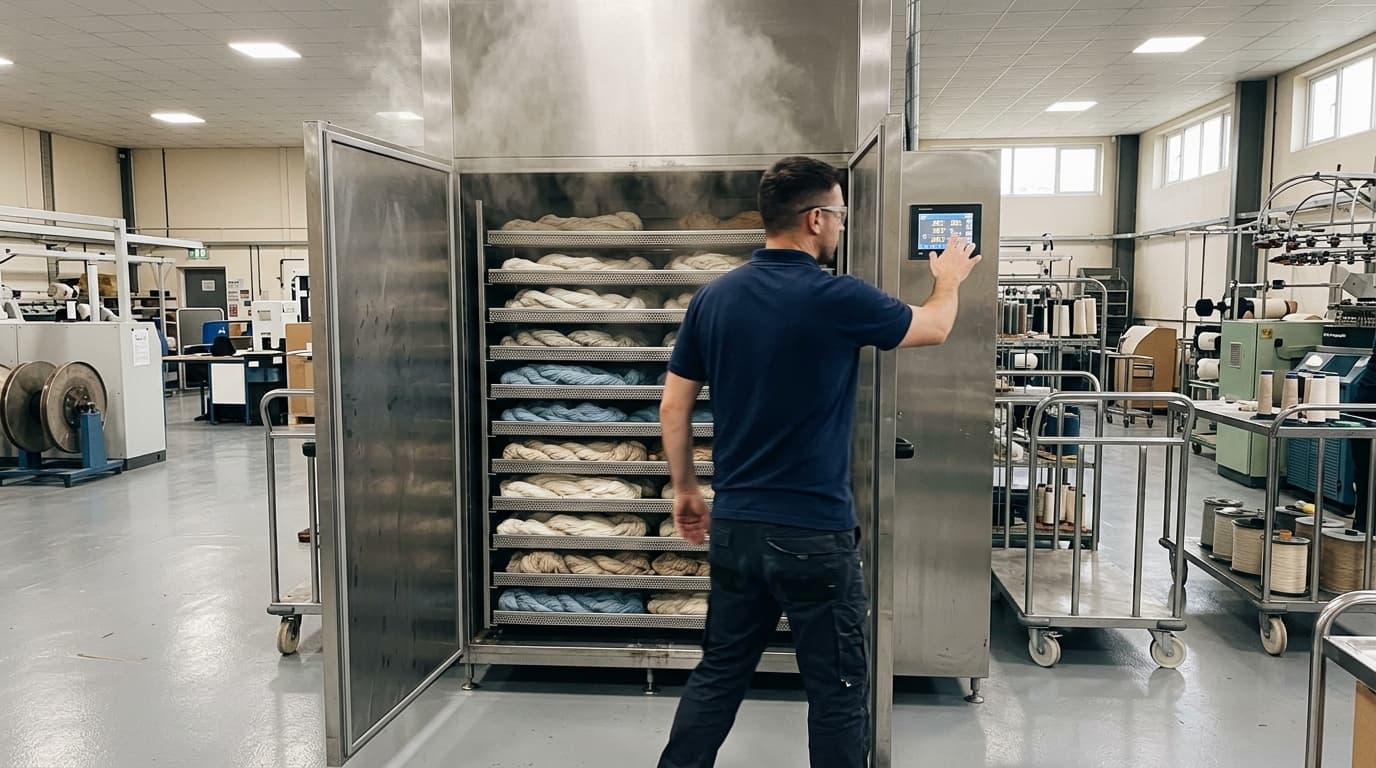
Textile Industry Dehydration Solutions
Precision drying for fabrics, yarns & textile products.
ThermDry industrial dehydrators deliver precise, repeatable dehydration for textile industry operations. AI-powered multi-zone control, CFD-optimised airflow, and optional air frying capability — engineered for consistent product quality at industrial scale.
Two Models,
One Solution
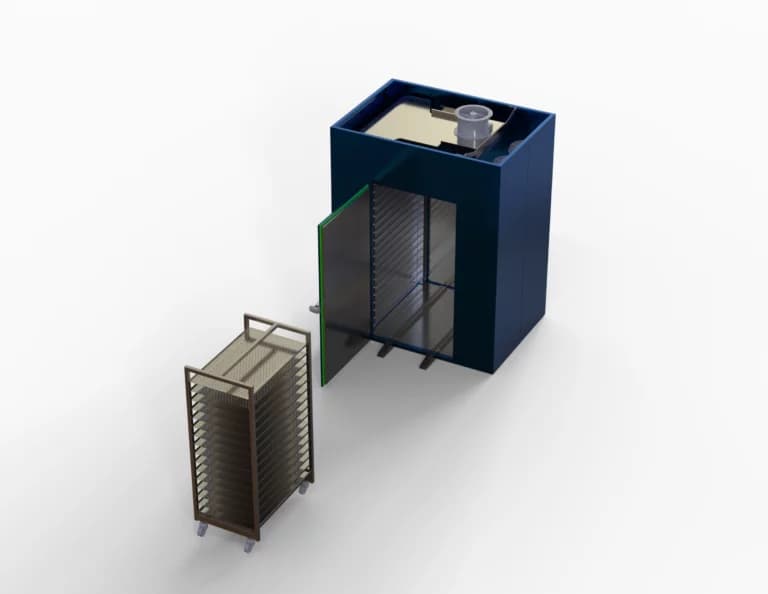
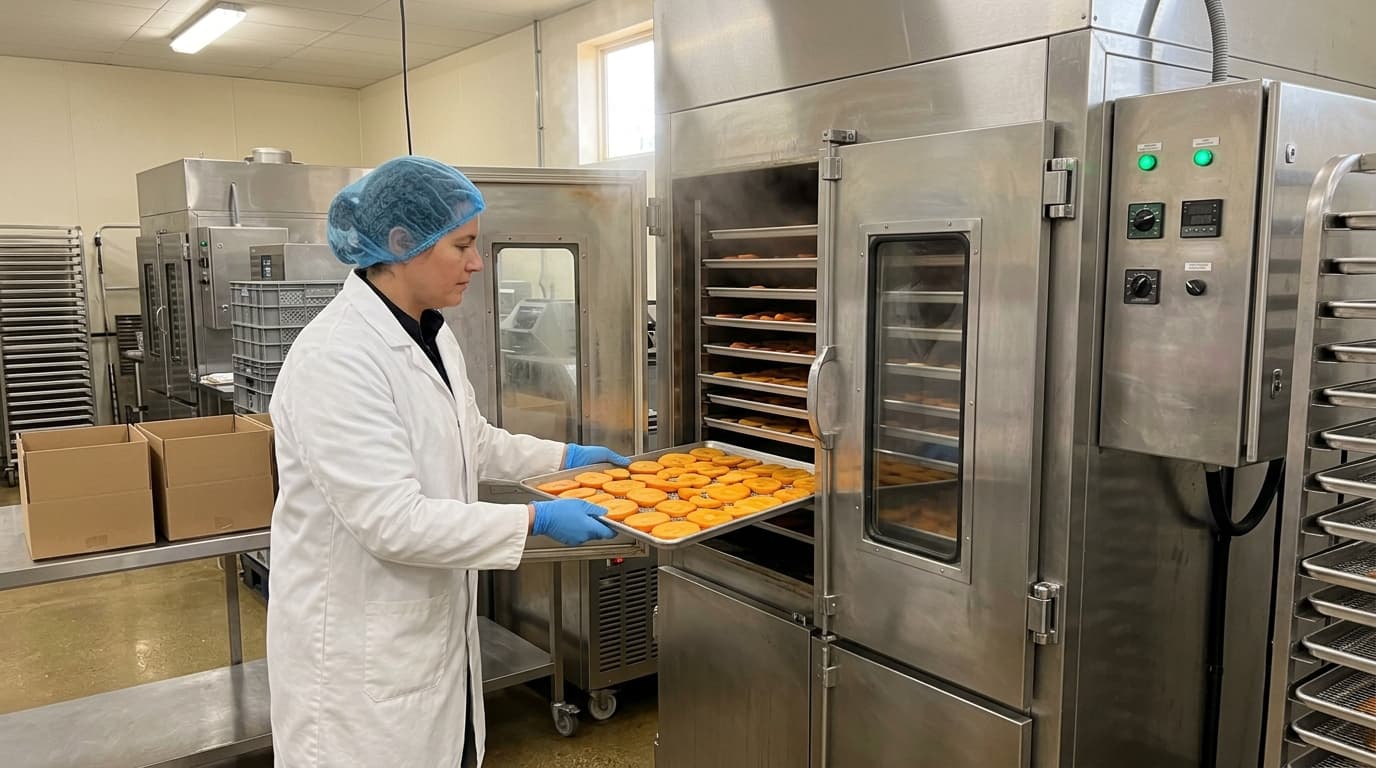
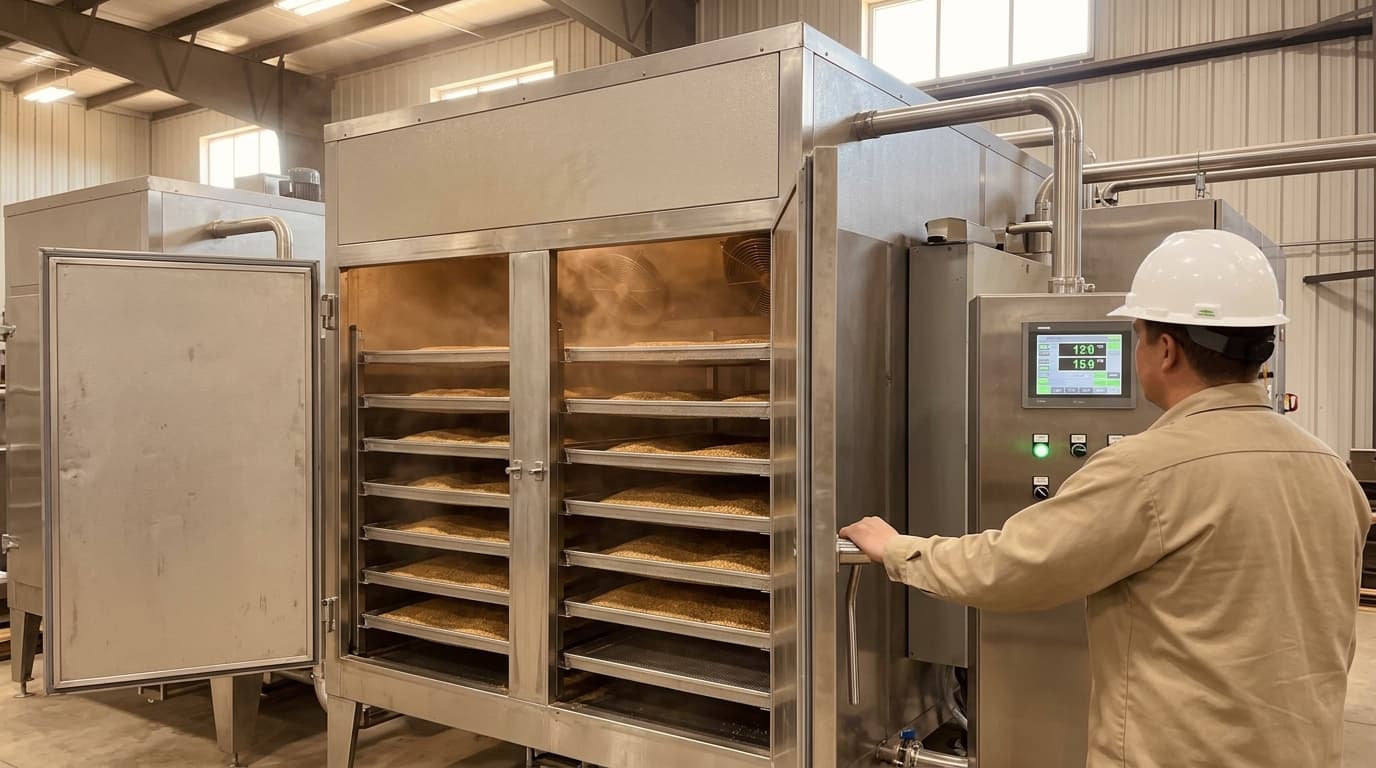
Single-trolley food dehydrator — compact design for small to medium-scale drying with single-door access.
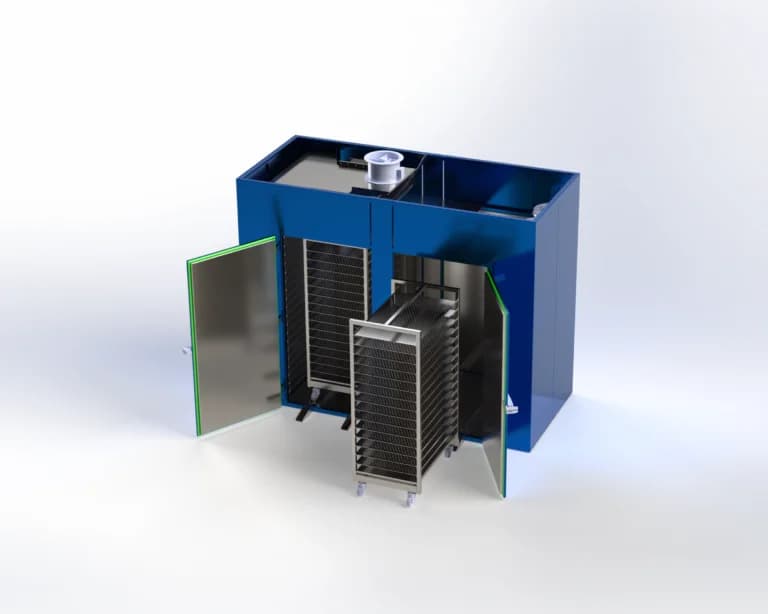
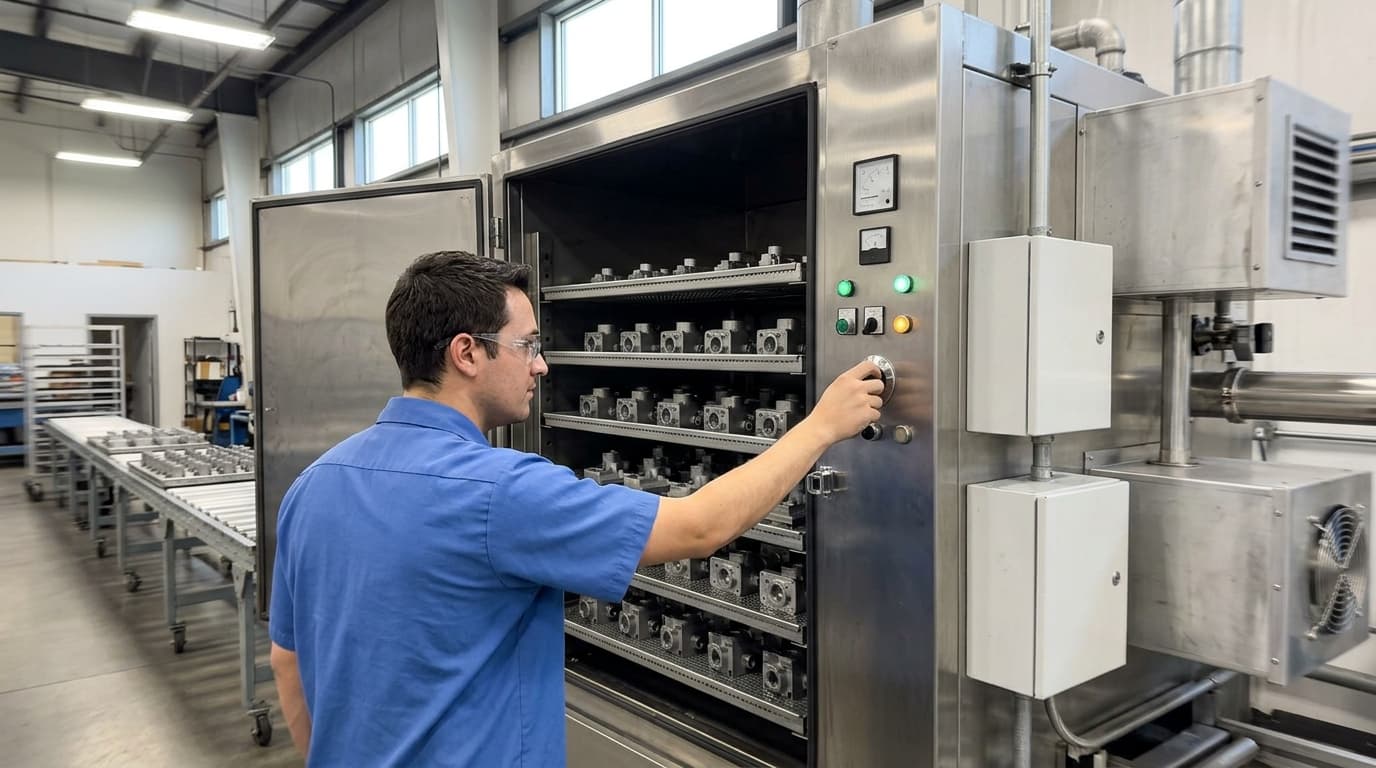
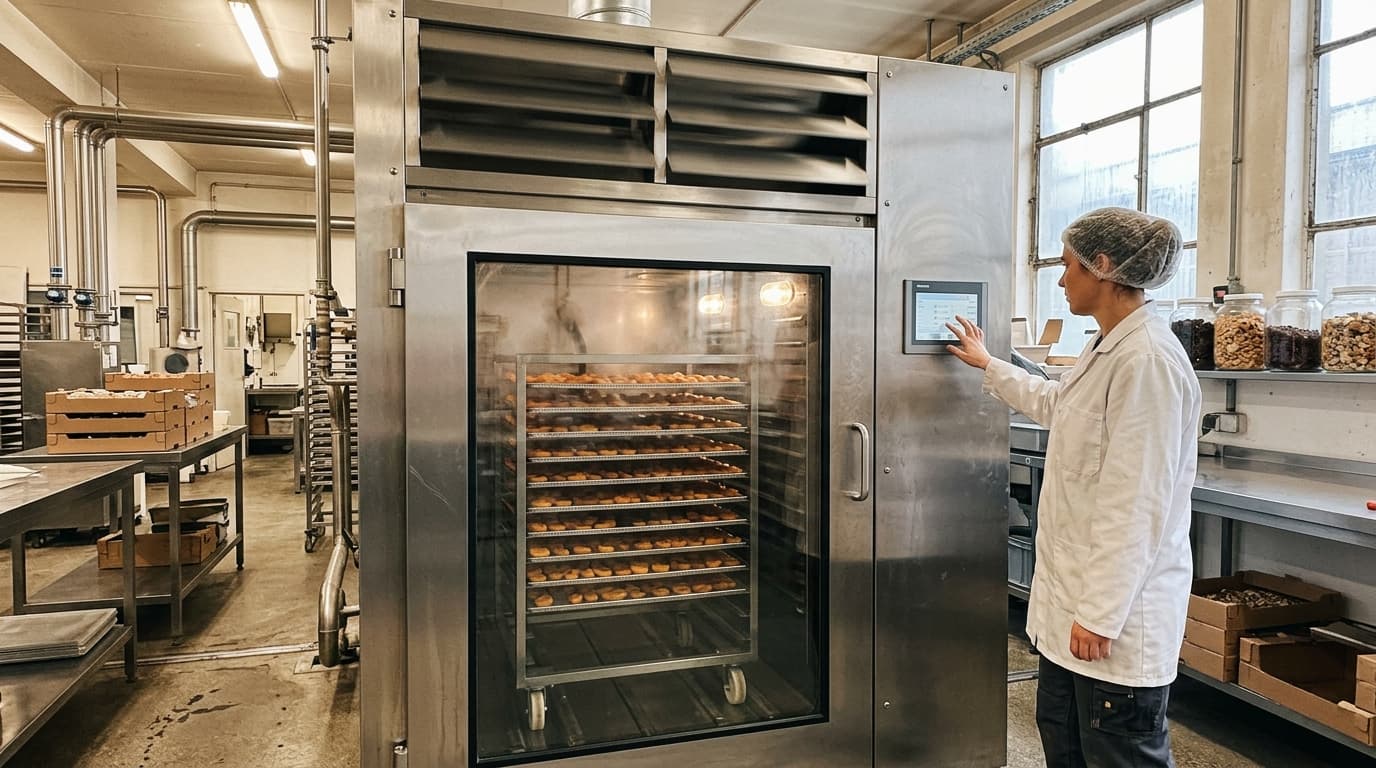
Double-trolley food dehydrator — high-capacity design with double-door access for commercial-scale operations.
Textile Industry Applications
Select an application to see how our dehydrators address your specific textile industry drying needs.
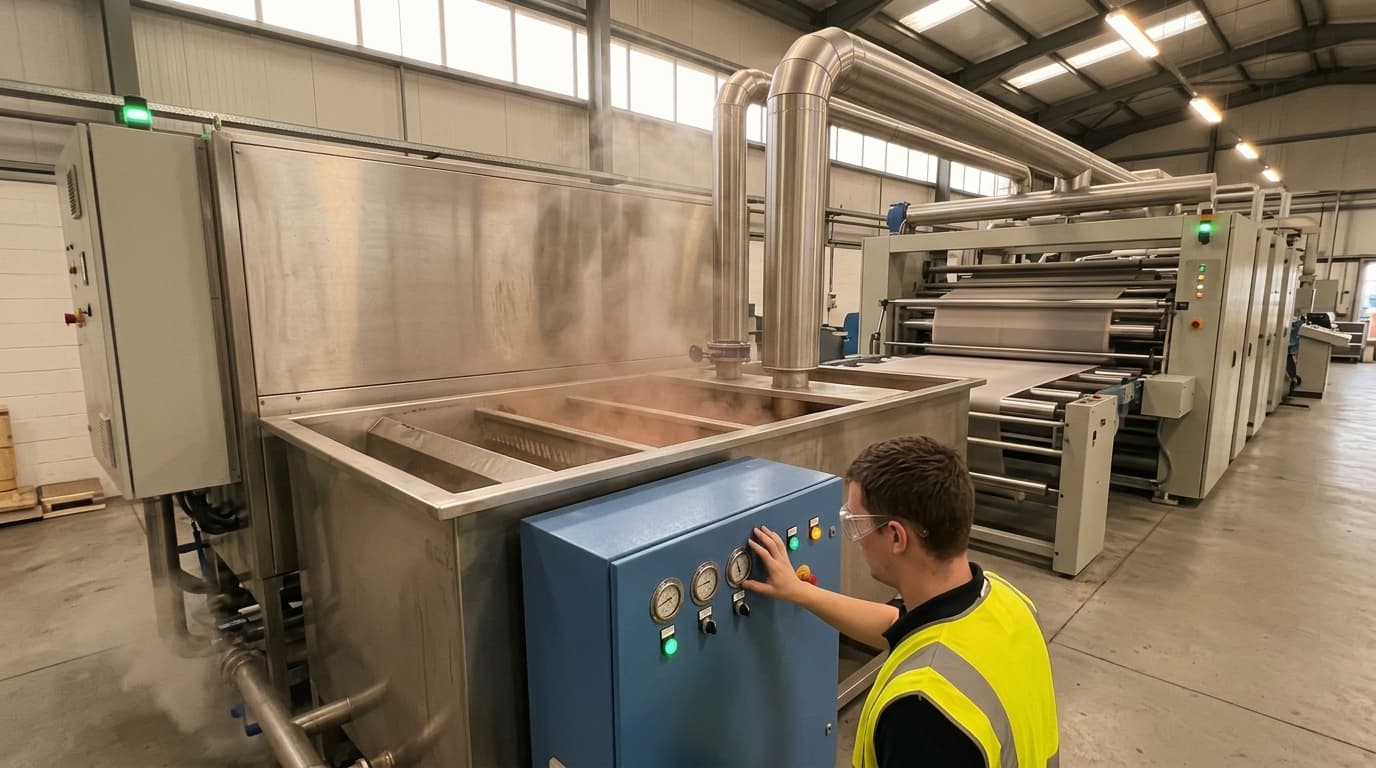
Textile fabrics require gentle, uniform drying to prevent shrinkage, colour migration, and fibre damage. ThermDry CFD-optimised airflow delivers even temperature distribution across all positions, ensuring consistent moisture removal without the hot spots that cause fabric defects and rework.
Built for Food Processing
Key advantages of ThermDry dehydrators for textile industry applications.
Fabric-Safe Drying
AI-powered recipe profiles maintain optimal temperatures for each fabric type — preventing shrinkage, colour migration, and fibre damage that leads to costly rework.
Uniform Heat Distribution
CFD-designed airflow ensures consistent temperature across every position — eliminating the hot spots and uneven drying that cause fabric defects.
Yarn Conditioning Control
Independent humidity and temperature control for different yarn types — maintaining fibre integrity, tensile strength, and dye uptake properties throughout the drying cycle.
Durable Construction
Full stainless steel construction resists the heat and humidity of textile processing environments — built for years of continuous production operation.
Energy Optimised
Double-walled insulation and AI-optimised drying cycles reduce energy costs per batch — improving margins in energy-intensive textile manufacturing.
Production-Scale Capacity
Single-trolley TDS-3500 for sample runs and small batches or double-door TDD-6500 for full production volumes — both with identical control systems.
Built to Fit Your Operation
Drop-in dehydration solution for your textile industry line — from raw product intake to shelf-stable output.
Fabric Defects Start at the Dryer.
Shrinkage, colour migration, and fibre damage trace back to uneven drying temperatures. Every defective metre of fabric is lost material, lost labour, and a late delivery. ThermDry eliminates the temperature variation that causes textile defects — so your production line runs without the rework that kills efficiency.
Controlled temperature ramping specific to each fabric type prevents the rapid moisture removal that triggers shrinkage. Your fabrics exit the dryer at specification dimensions — no rework, no material write-offs, no unhappy customers.
Uniform airflow and precise temperature control prevent the localised hot spots that cause dye migration. Protect the colour consistency your customers demand — especially on high-value printed and dyed goods.
High-capacity batch processing with rapid turnaround eliminates the drying stage as your production bottleneck. Your weaving and finishing lines run at full capacity — ThermDry throughput keeps up with your fastest output.
High-capacity batch processing with rapid turnaround eliminates the drying stage as your production bottleneck. Your weaving and finishing lines run at full capacity — ThermDry throughput keeps up with your fastest output.
Related Products
& Services
Complementary equipment and engineering services for your process.


Textile Industry FAQs
Common questions about using ThermDry dehydrators for textile industry, meat drying, and air frying applications.
Most textiles are optimally dried between 40°C and 90°C depending on the fibre type. Delicate fabrics like silk require lower temperatures (40-55°C) to prevent damage, while robust materials like cotton and polyester can tolerate 70-90°C for faster throughput. Our recipe system stores optimal profiles for each material.
Controlled temperature staging and uniform airflow prevent the rapid moisture removal that causes fabric shrinkage. The multi-zone recipe system allows gradual temperature ramping specific to each fabric type, and CFD-optimised air distribution eliminates the hot spots that trigger localised shrinkage.
The multi-zone control system allows different temperature and airflow settings within the same batch cycle. However, for optimal results, we recommend drying similar fabric types together and using the stored recipe profiles for each material to ensure consistent quality.
The TDS-3500 handles sample production and small batch runs. The TDD-6500 handles full production volumes with dual trolley capacity. Actual throughput depends on fabric weight, initial moisture content, and target dryness level.
Multi-zone control independently manages temperature and airflow across the chamber, allowing energy reduction in zones that reach target dryness while maintaining active drying elsewhere. This prevents over-drying that damages fibres while ensuring all positions reach specification — reducing energy consumption by 15-25%.
The smooth stainless steel interior with no hidden crevices allows thorough cleaning between product runs. Front-plate access panels enable component inspection without specialist tools. For textile industry environments, we recommend daily surface cleaning, weekly filter inspection, and quarterly full maintenance — all achievable within normal production schedules.
Ready to
Optimise?
Our engineering team specialises in textile industry dehydration. Tell us about your product, throughput, and quality requirements.
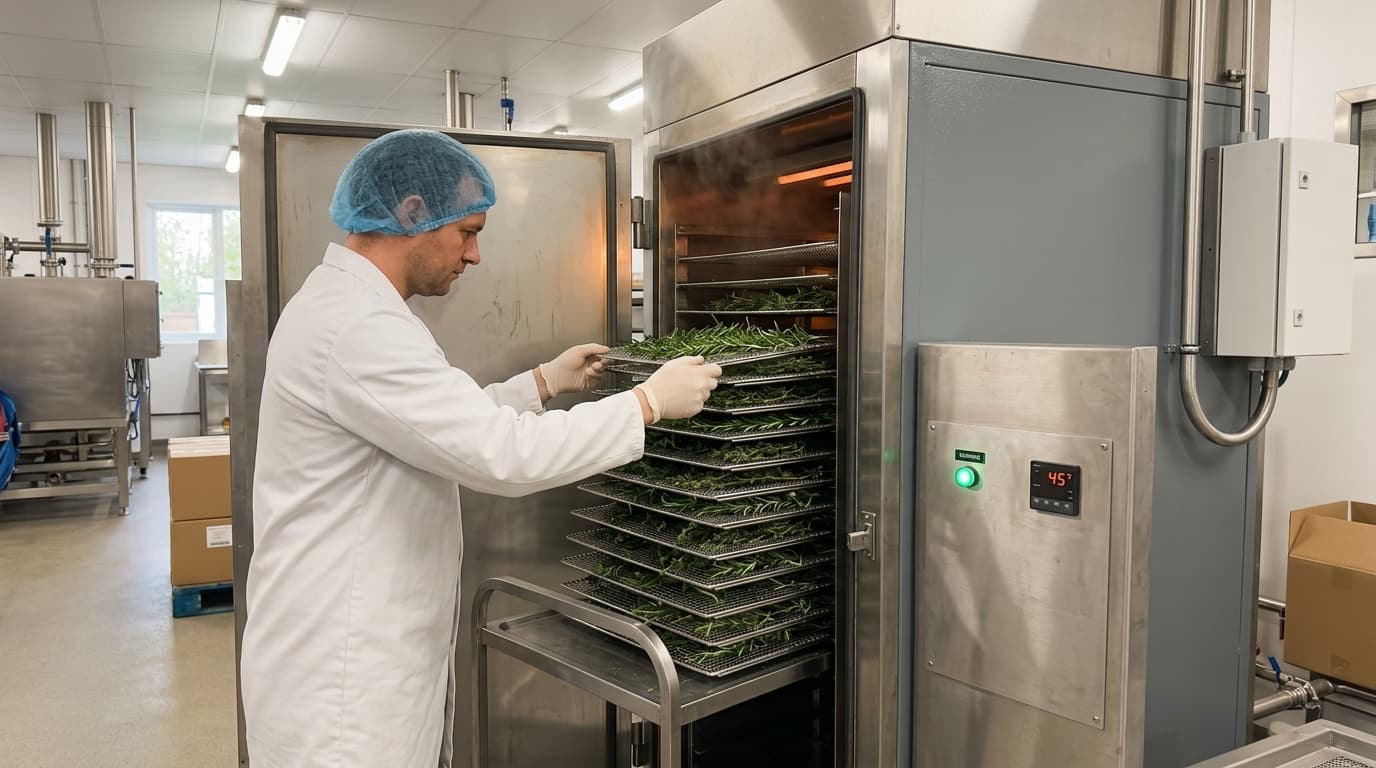
- Fruit & vegetable dehydration systems
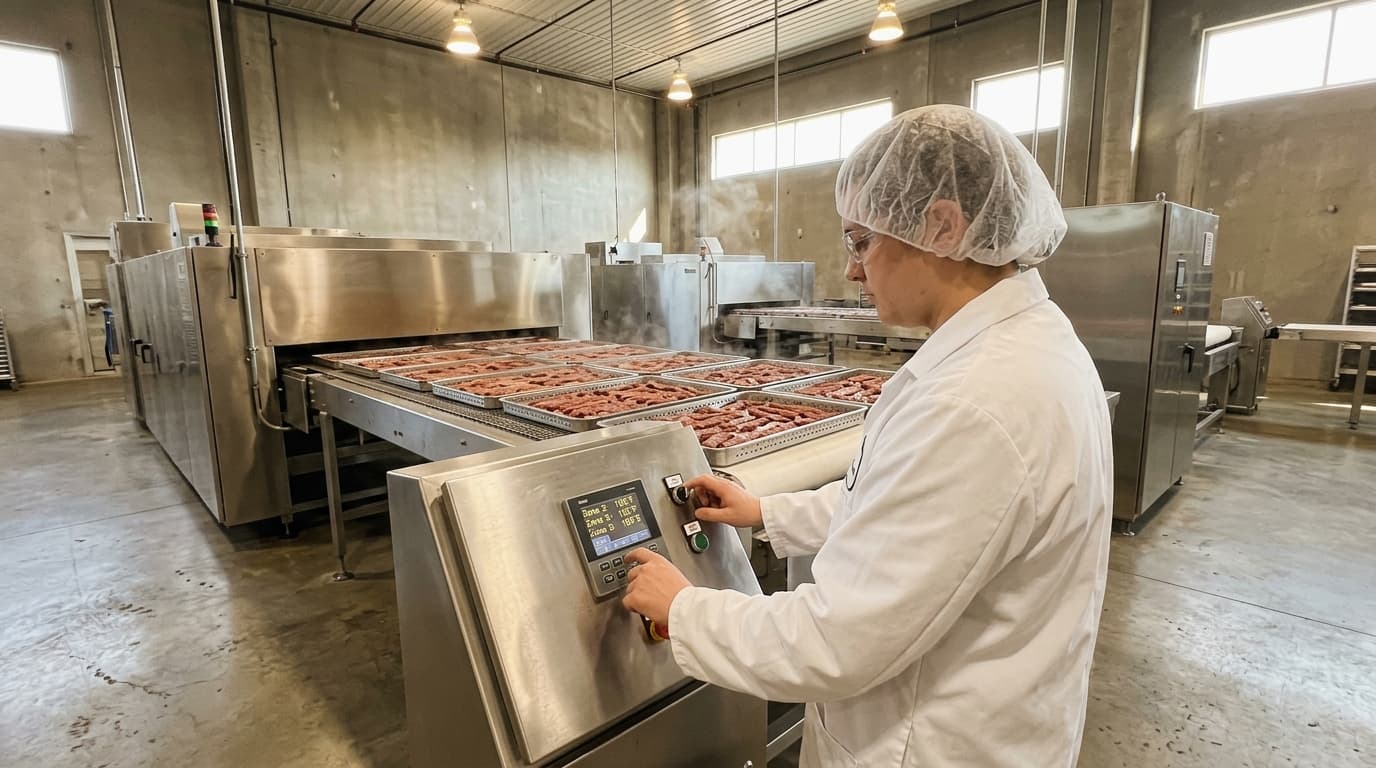
- Meat & jerky drying solutions
- Snack production & air frying
- Recipe development & optimisation