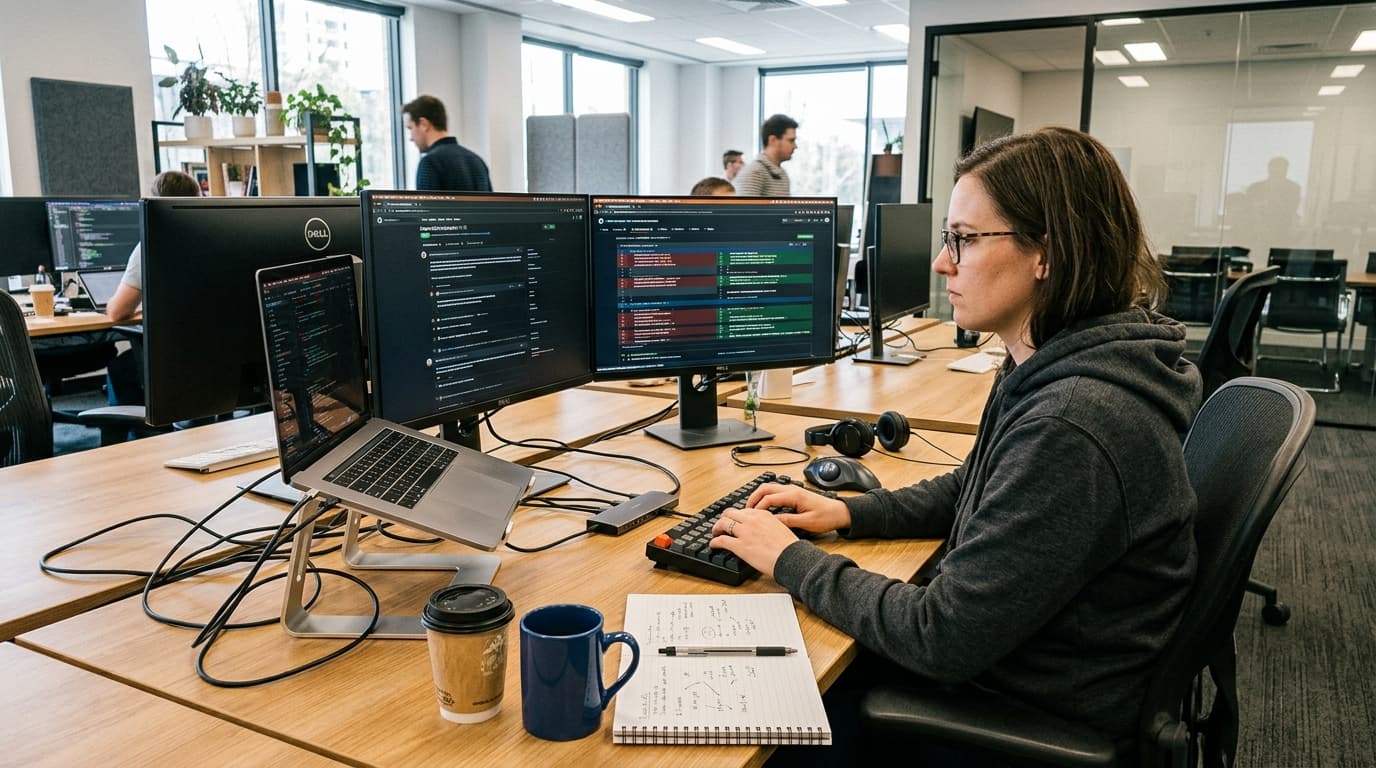
Manufacturing
Software Development
Industry 4.0 demands connected, intelligent manufacturing systems. Our bespoke MES platforms, quality management systems, and predictive maintenance software integrate directly with your PLCs, sensors, and ERP — transforming raw production data into actionable intelligence that drives OEE improvement, reduces scrap, and enables true smart factory operations.
Software Challenges in
Manufacturing
Legacy systems, data silos, and real-time requirements create unique software demands on the factory floor.
Legacy PLC Integration
Connecting modern software platforms to legacy PLCs from multiple vendors requires deep protocol knowledge — Profibus, OPC-UA, Modbus, and proprietary interfaces must work seamlessly together.
Real-Time Data Processing
Production monitoring demands sub-second data capture and processing. Software must handle high-frequency sensor data without latency while maintaining data integrity across shifts.
OEE & Quality Tracking
Accurate Overall Equipment Effectiveness requires automated capture of availability, performance, and quality metrics — eliminating manual data entry errors that distort production intelligence.
Predictive Maintenance
Moving from reactive to predictive maintenance requires machine learning models trained on vibration, temperature, and power consumption data to forecast failures before they cause downtime.
Our 10-Step
Methodology
A structured approach from requirement gathering through deployment, ongoing maintenance, and code audits.
Requirement Gathering & Analysis
Close collaboration with plant operators, process engineers, and project stakeholders to capture precise functional and non-functional requirements.
Structured workshops, site walkthroughs, and interviews map existing workflows, define user roles, and identify critical pain points. The output is a prioritised requirements specification tracing every feature back to a measurable business objective.
Feasibility Study & Planning
Evaluate the technical, operational, and financial viability of the project through detailed planning covering cost estimates, resource allocation, and realistic timelines.
Engineers assess hardware constraints, integration complexity, regulatory requirements, and scalability needs to produce a clear go/no-go recommendation. The deliverable is a project charter with a phased roadmap, budget breakdown, and contingency plan.
System Design
Software architecture is engineered to align with validated requirements, selecting appropriate frameworks, communication protocols, and data models for the target environment.
High-level architecture diagrams, database schemas, API contracts, and UI wireframes collectively define every module and interface. Each design artefact undergoes peer review for scalability, fault tolerance, and compliance with relevant industry standards.
Development & Coding
Transform approved designs into production-grade code using languages and toolchains best suited to the application, from embedded C to modern web frameworks.
Development follows agile sprints with continuous integration, automated linting, and mandatory peer code reviews at every merge. Engineers adhere to industry coding standards where applicable, ensuring the codebase is secure, maintainable, and ready for long-term evolution.
Testing
Comprehensive, multi-layered testing strategy designed to surface defects early and validate performance under real-world industrial conditions.
The programme spans unit tests, integration tests across subsystems, full system tests simulating production loads, and formal user acceptance testing with plant personnel. Automated regression suites run on every build to catch regressions before they reach production.
Deployment
The validated software is deployed to the production environment through a controlled release process, minimising downtime and operational disruption.
Deployment includes installation on client servers or edge devices, environment-specific configuration, and end-to-end integration with existing SCADA, MES, or ERP systems. A structured rollback plan is prepared alongside go-live checklists for rapid issue resolution.
Maintenance & Support
Ongoing, proactive maintenance and dedicated support services to ensure the software continues to perform optimally as operational demands evolve.
The support framework includes scheduled patch releases, security updates, performance tuning, and feature enhancements driven by user feedback. Multi-year maintenance agreements provide guaranteed response times and remote diagnostics for long-term reliability.
Risk Planning & Mitigation
Potential technical, schedule, and compliance risks are systematically identified at every phase, with targeted mitigation strategies embedded in the project plan.
Risk registers are maintained and reviewed at each sprint boundary, covering third-party dependencies, cybersecurity threats, and regulatory shifts. This proactive discipline ensures emerging issues are addressed before they escalate, keeping the project on schedule and within budget.
Verification & Validation
Rigorous verification and validation activities with full requirements traceability, ensuring every specification is demonstrably met before release.
Verification confirms each module is built correctly through static analysis, inspections, and test coverage metrics. Validation proves the complete system fulfils its intended purpose in realistic scenarios, providing documented evidence for industrial certification.
Code Set & Documentation Audits
Regular, structured audits of the codebase and accompanying documentation to evaluate quality, scalability, maintainability, and standards adherence.
Independent reviewers examine code complexity metrics, dependency health, test coverage gaps, and documentation accuracy against the living design specification. Audit findings are tracked to resolution, ensuring the software is robust and straightforward to extend or hand over.
What You
Receive
Production-ready software systems — not just prototypes.
MES Platform
Custom Manufacturing Execution System tracking production orders, work-in-progress, machine states, and operator actions in real-time across all production lines.
Quality Management System
Automated inspection recording, SPC charting, non-conformance tracking, and CAPA workflow management integrated with your production process.
OEE Dashboard
Real-time Overall Equipment Effectiveness monitoring with availability, performance, and quality metrics displayed on shop-floor screens and management dashboards.
Predictive Maintenance Module
Machine learning-driven condition monitoring that analyses sensor data patterns to predict failures and schedule maintenance proactively.
PLC Integration Layer
Universal protocol adapter connecting your software stack to PLCs from Siemens, Allen-Bradley, Mitsubishi, and other vendors via OPC-UA, Profibus, or Modbus.
Reporting & Analytics Suite
Automated shift reports, production summaries, KPI tracking, and trend analysis with export to Excel, PDF, and ERP integration.
Proven Results in
Manufacturing
Based on MES, quality, and maintenance software deployments across discrete and process manufacturing.
Related Products
& Services
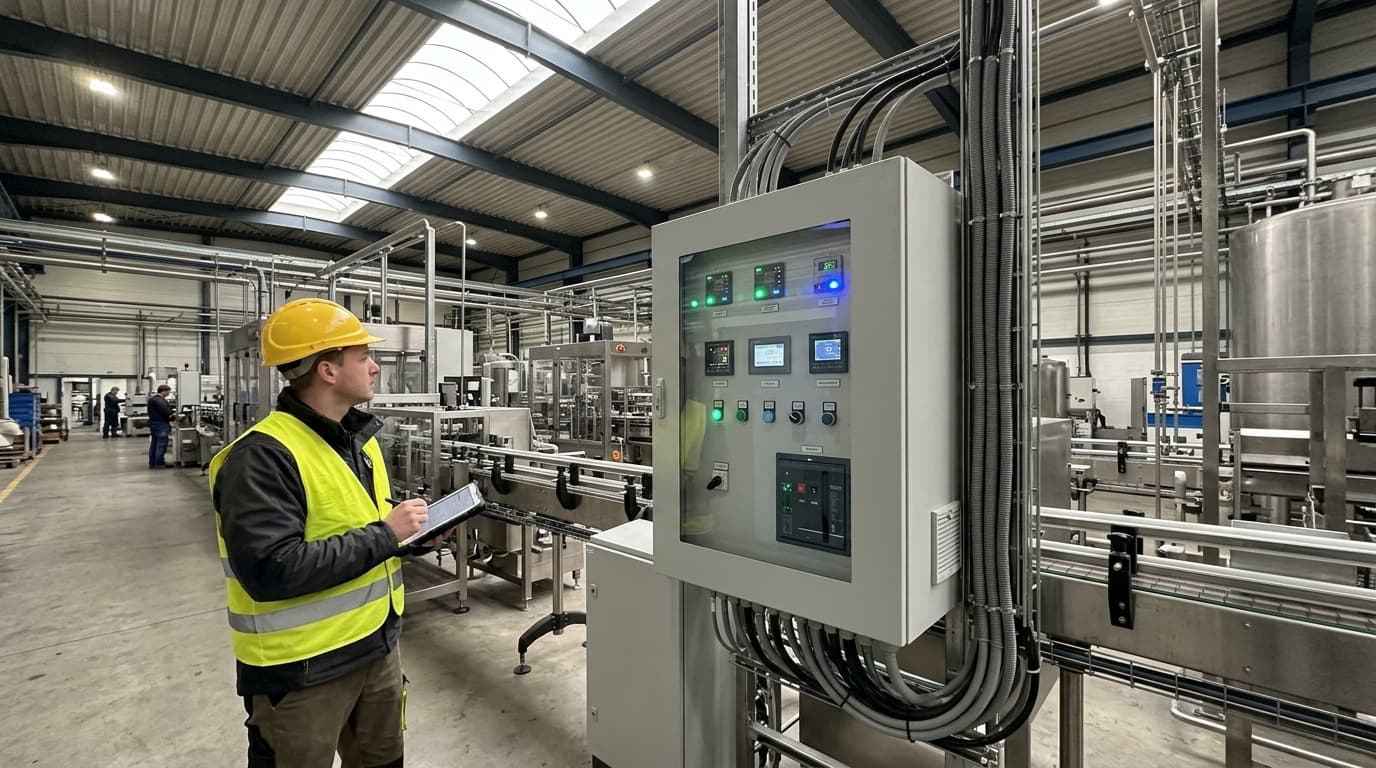
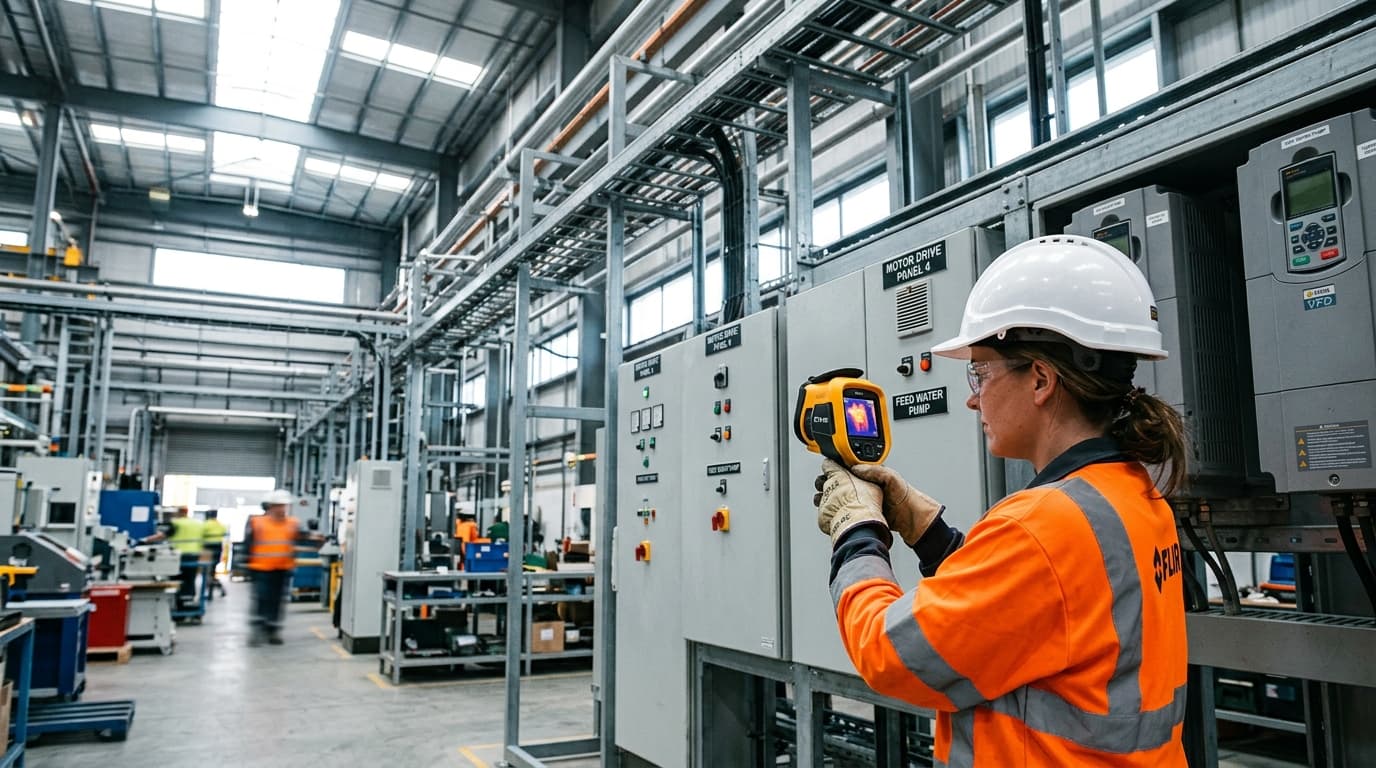
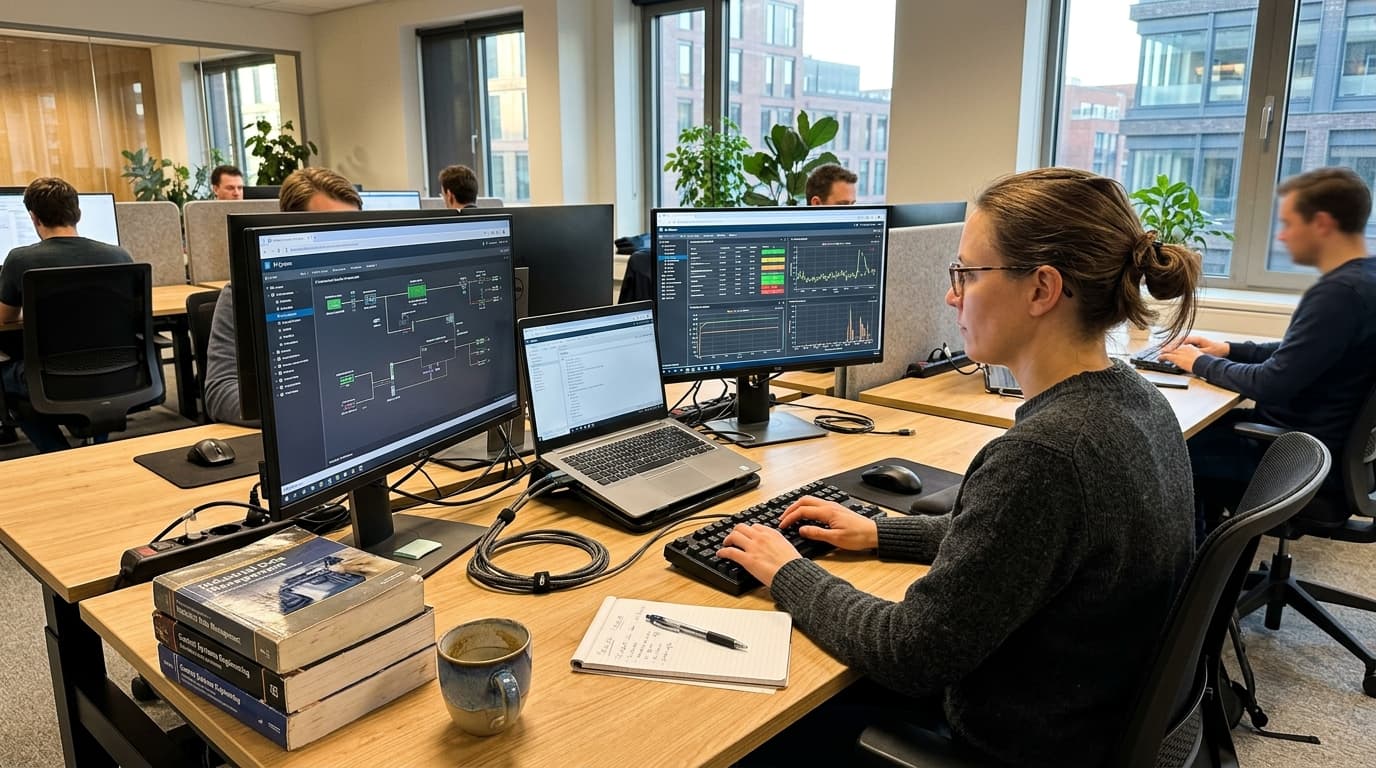
Complementary equipment and engineering services for your process.





Manufacturing
Software FAQ
Common questions about bespoke software development for manufacturing operations.
Yes. We support OPC-UA, Profibus, Modbus, TCP/IP, and proprietary protocols from Siemens, Allen-Bradley, Mitsubishi, Schneider, and other PLC vendors. Our integration layer works with equipment of any age or manufacturer.
Our software architectures use event-driven messaging, time-series databases, and edge computing patterns designed for sub-second data capture and processing — essential for production monitoring.
Yes. We build bi-directional integration with SAP, Oracle, Microsoft Dynamics, and other ERP systems for production order synchronisation, material tracking, and financial reporting.
Our manufacturing software platforms are designed for Industry 4.0 — supporting IoT sensor integration, edge computing, digital twin concepts, and cloud-based analytics alongside on-premise production systems.
Smarter
Factory
Our manufacturing software specialists are ready to design and build the systems your smart factory needs.
- Bespoke software for manufacturing
- Manufacturing-specific compliance standards
- Long-term maintenance & support included