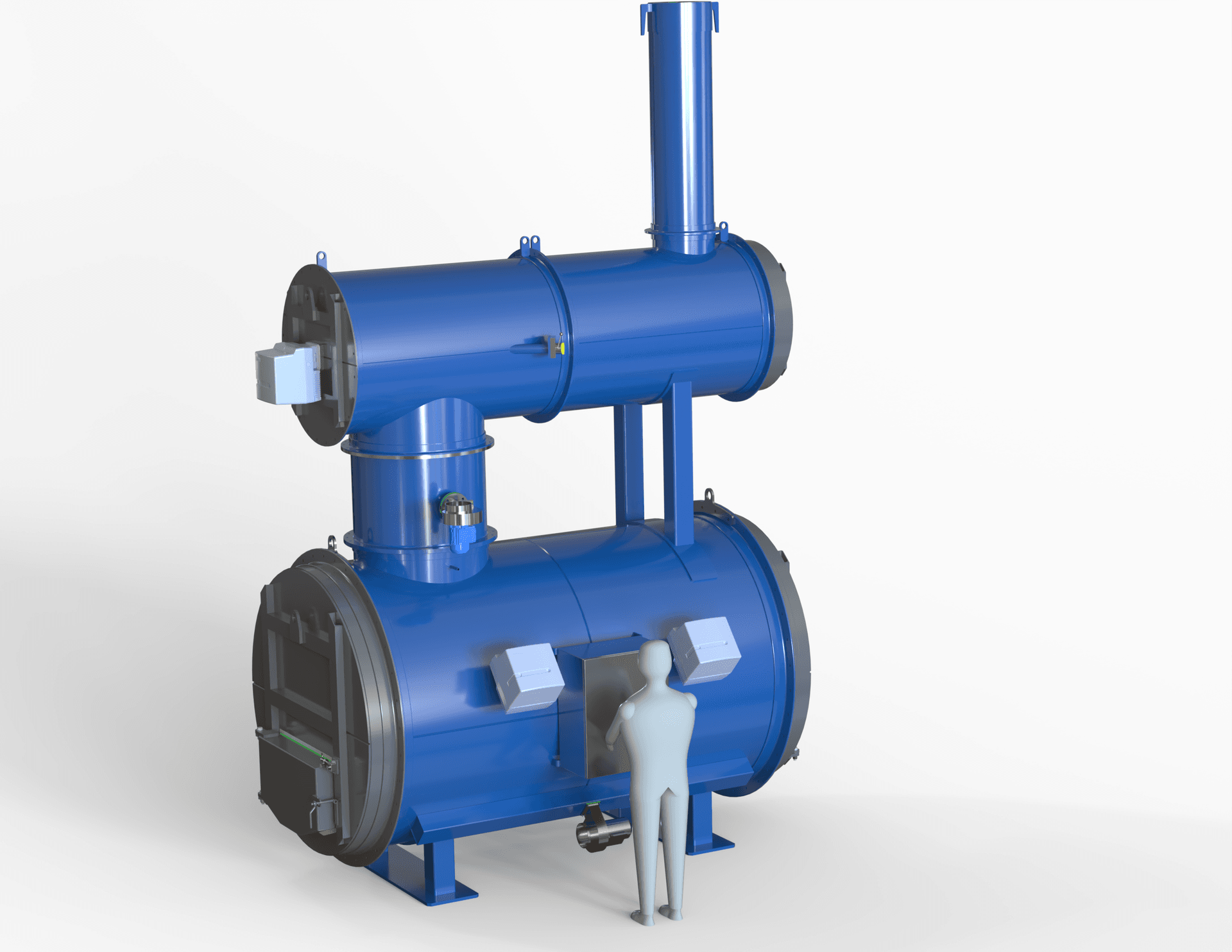
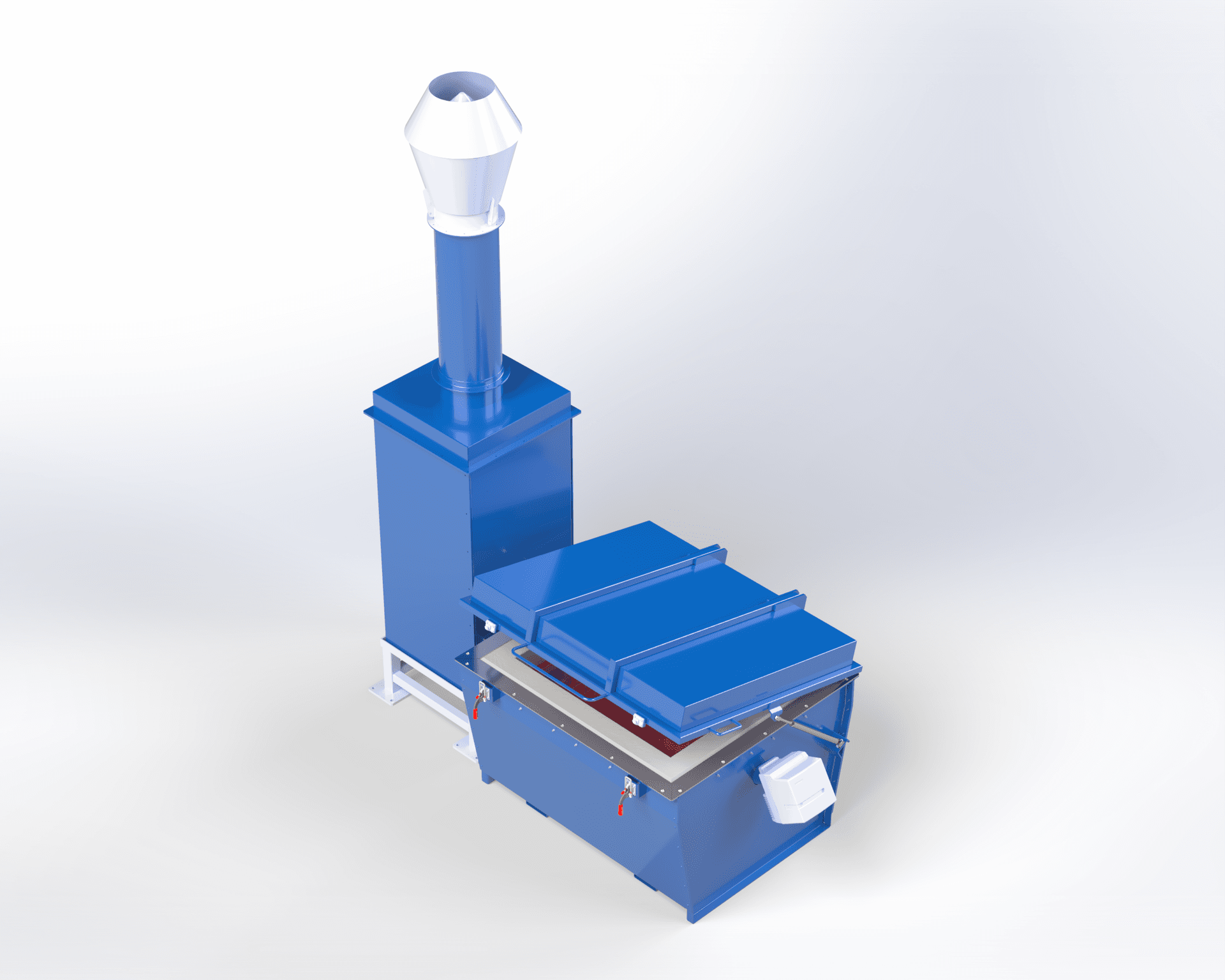
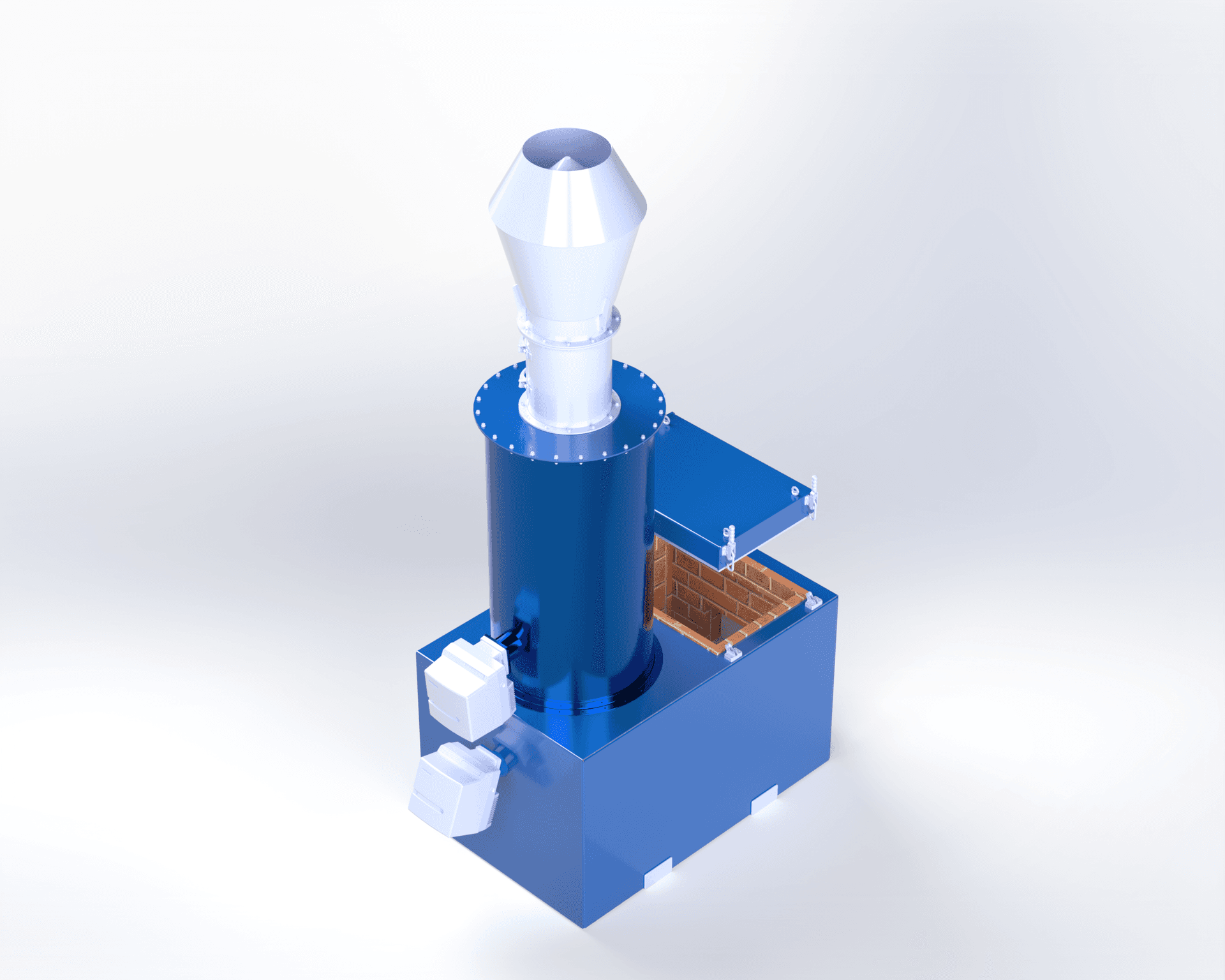
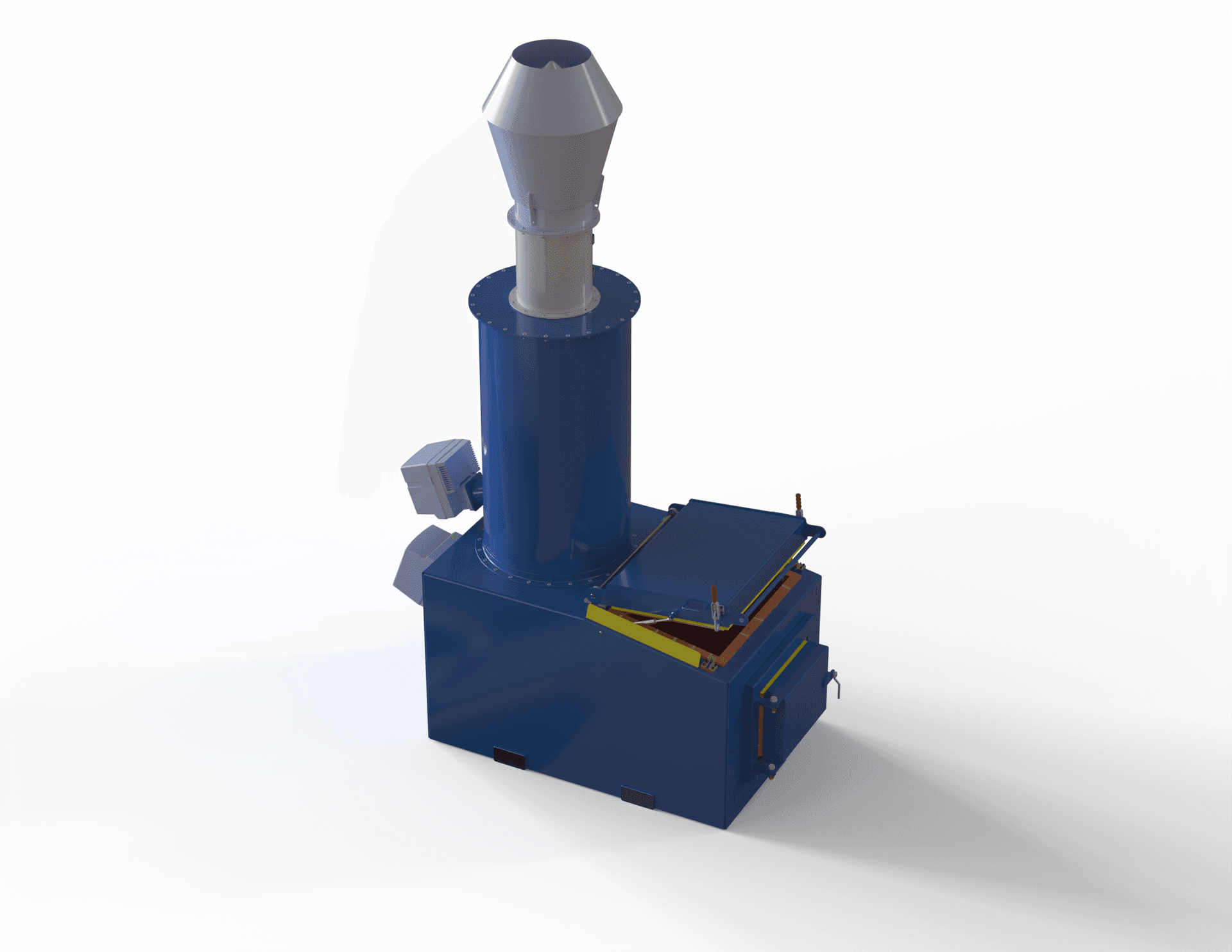
LBI-125 125 kg clinical waste incinerator
The usual answer for a community hospital, a hospice group, a private clinic or a dental corporate consolidating onto one destruction point. At 125 kg/h a shift clears roughly a tonne, which covers a week of infectious waste for a mid-sized site. Check the 3.3 m³ chamber against your cart volume rather than your tonnage — clinical waste is light and bulky, and bags fill the box long before they reach the rating.
- Chamber
- 3.3 m³
- External dimensions
- 2880 × 1640 × 2040 mm
- Burners
- 3
- Loading
- Front (dual door)
- [LOAD]
- 125kg
- [BURN_RATE]
- 125kg/h
- [DUTY]
- Continuous
- [WEIGHT]
- 2.5t
LBI-125 In Full
- Chamber
- 3.3 m³
- External dimensions
- 2880 × 1640 × 2040 mm
- Burners
- 3
- Loading
- Front (dual door)
- Operating temperature
- 850–1,200°C
- Gas retention
- 2.0 s
- Ash residue
- 3–5%
- Heat-up time
- 30 min
- Fuel
- Natural gas / H₂ / diesel / LPG / bio
- Control panel
- IP6X rated PLC
- Refractory
- Coretex lining
- Origin
- United Kingdom
Rated Continuously
Throughput is a function of operating hours, not cycles.
Clinical arisings do not wait for a convenient week. Wards produce them every day, storage is capped by the permit and the fire strategy rather than by the floor area, and the risk being bought out is a collection that does not arrive. Size on the store, not on the annual tonnage: the question is how many days of arisings the site can hold before it is in breach, and whether one shift a week clears more than accumulates. Check the 3.3 m³ chamber against cart volume rather than kilograms — orange and yellow bagged waste is light and bulky, and a round of carts fills the box well before it reaches 125 kg. Wet loads run slower than the plate rating, so allow for anatomical waste in the run time rather than in the throughput.
Every unit reaches operating temperature within 30 minutes and holds flue gas above 850°C for two seconds in the secondary chamber — the Industrial Emissions Directive condition. Ash residue is 3–5% of input mass.
Specified for
- Clinical & infectious wasteOrange and yellow bagged waste — dressings, PPE, giving sets, suction liners — destroyed where it arises.
- Sharps & needle wasteSealed UN3291 containers charged whole — needles, blades, cannulae and lancets, never decanted.
- Anatomical & pathological wasteTissue, organs, placentae, blood bags and post-mortem material — incineration is the only lawful route.
- Laboratory & pathology wasteCultures, plates, specimen containers and blood tubes from pathology and microbiology, destroyed in-house.
- Dental practice wastePractice clinical waste from a dental group, consolidated for destruction — amalgam strictly excluded.
- Care home & community wasteCare home, hospice, GP and district nursing waste — offensive volume and infectious fraction, split honestly.
Before you specify
Permit
Burning healthcare waste on site requires an environmental permit from the Environment Agency, SEPA or NIEA with the waste codes named at application: 18 01 03* for infectious waste and infectious sharps, 18 01 01 for non-infectious sharps, 18 01 02 for anatomical waste, 18 01 04 for offensive waste, 18 01 06* for hazardous laboratory chemicals. A permit written for general waste covers none of them.
Stack height
Comes out of a site-specific dispersion assessment, not a standard figure.
Full compliance requirementsHow much clinical waste does the LBI-125 clear in a week?
Every figure below is derived from published model data, so it can be checked rather than trusted.
- Run pattern
- 1 × 8 h shift a week
- Cleared per shift
- ≈1,000 kg
- Chamber volume
- 3.3 m³
- Ash at 3–5%
- 30–50 kg a week
- Days of storage freed
- 7
- Collections depended on
- 0
The arithmetic
125 kg/h × 8 hours = about 1,000 kg a shift, so one shift a week clears a mid-sized site's infectious stream and leaves 30–50 kg of mineral ash.
What to watch
Tonnage is rarely the binding number on this stream: a week of carts can fill 3.3 m³ several times over before it reaches a tonne, so measure the store in cart volume and run more short cycles rather than fewer long ones.
Rest Of The Healthcare Range
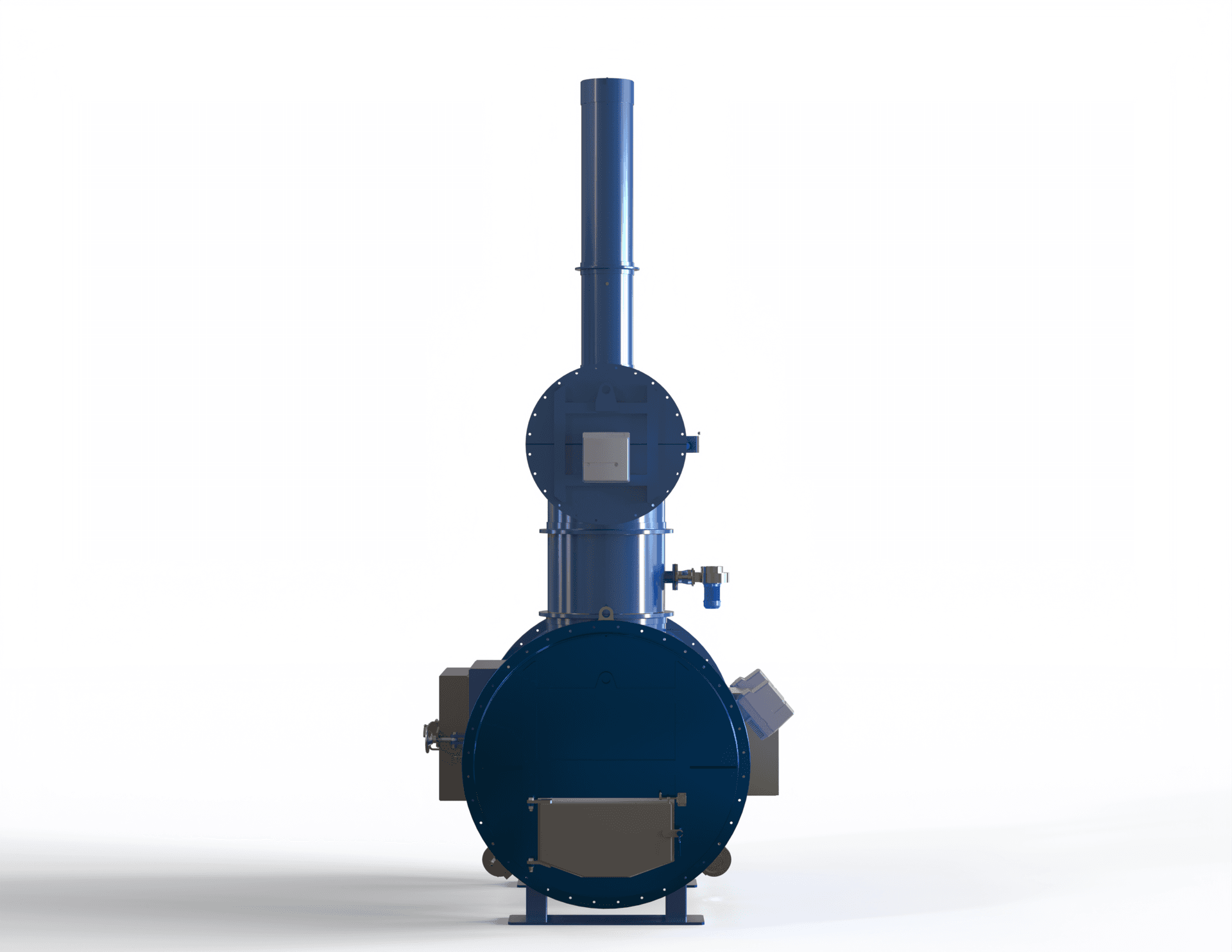
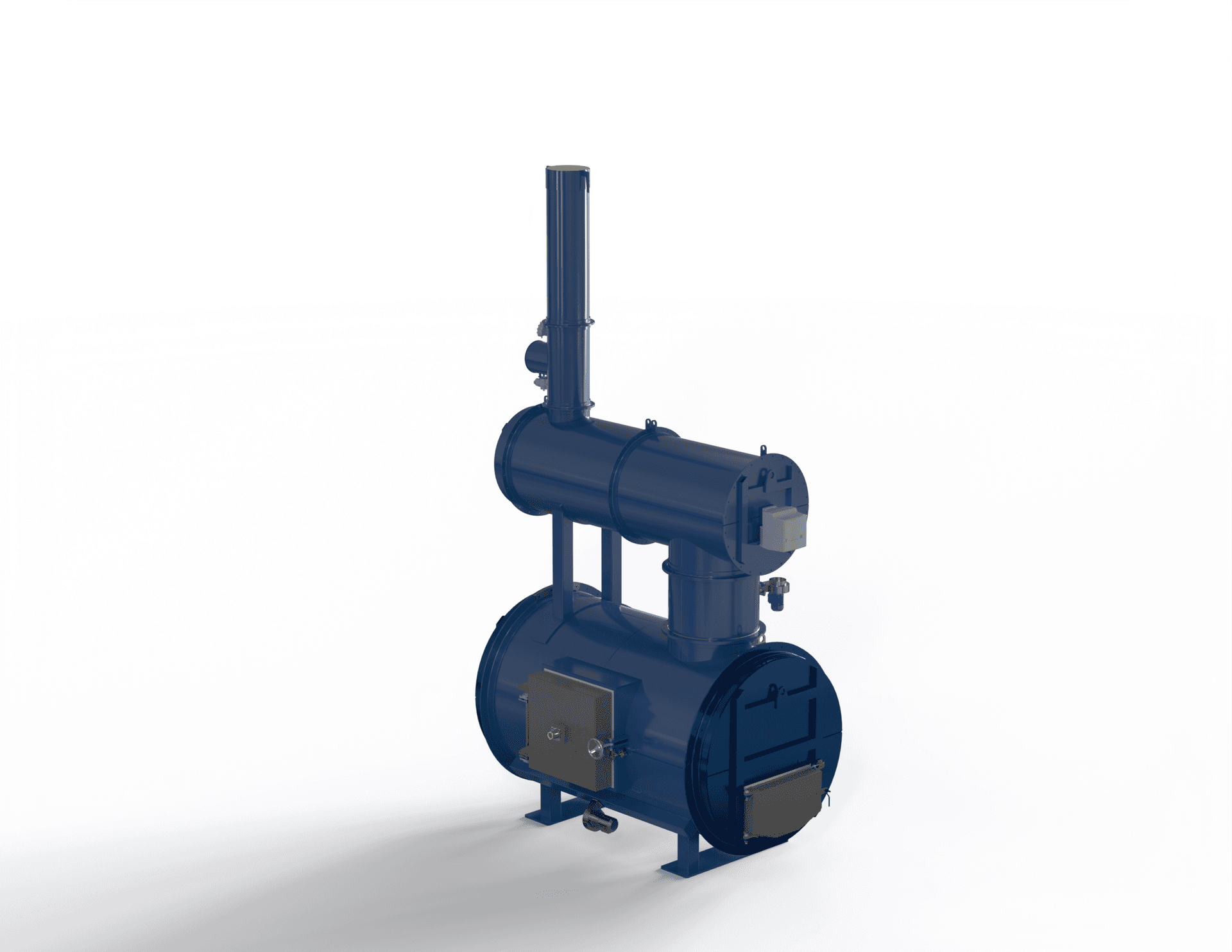
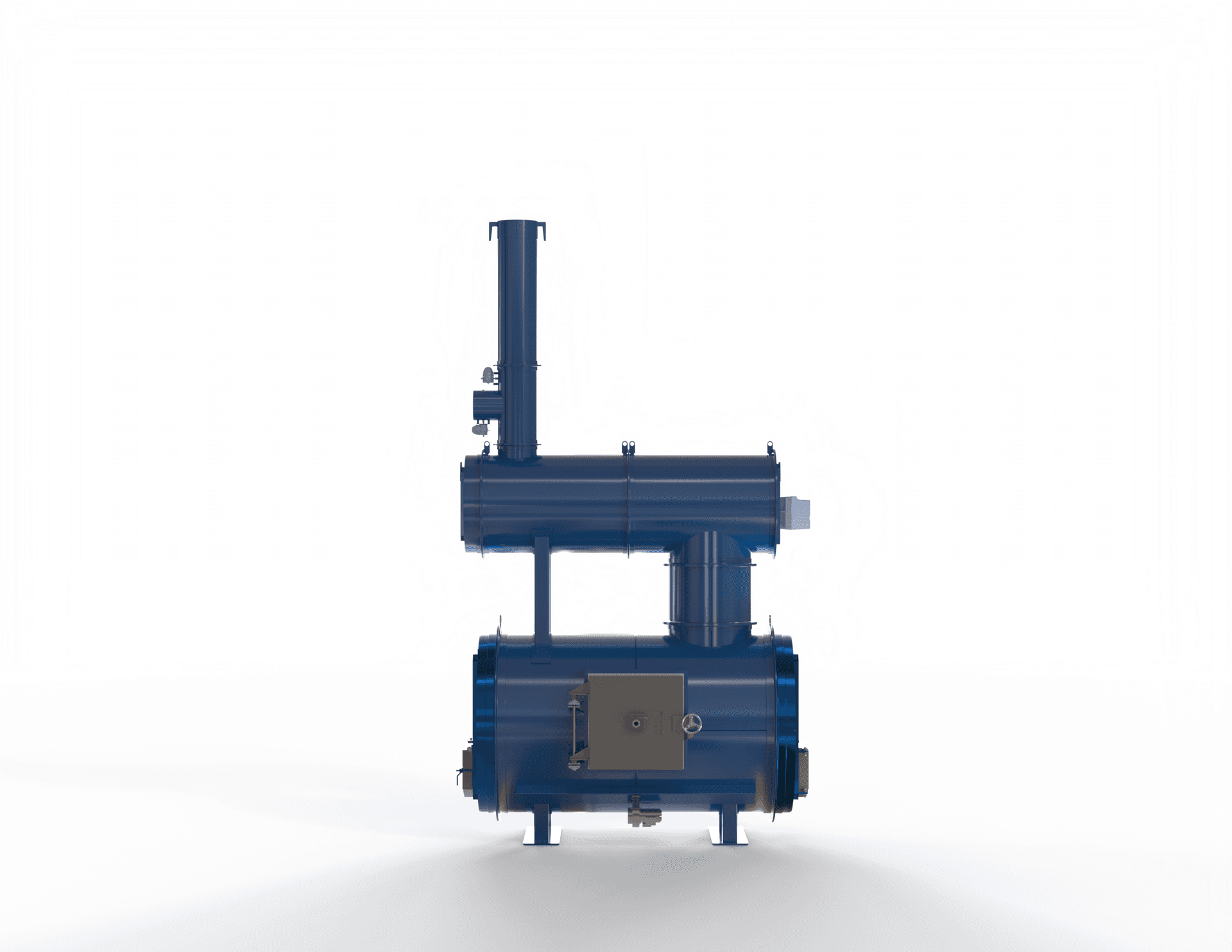
Same size, other waste types
Related Products
& Services
Complementary equipment and engineering services for your process.
Sizing and background
- [TOOL]Work out the burn rate for your own arisings
- [TOOL]Size the combustion air and flue gas duty
- [BLOG]Integrating vibration analysis for incinerator predictive maintenance
- [BLOG]Advanced gas cleaning for ultra-low emission incinerators
- [BLOG]Evaluating flue gas cleaning systems in industrial incinerators
LBI-125 Questions
Every answer below is derived from this model's published figures, not from a generic range sheet.
The LBI-125 is rated at 125 kg/h continuously, so throughput is a function of how many hours you run it rather than how many cycles you complete. Running it for an eight-hour shift clears roughly 1,000 kg. The 125 kg figure in the model name is the chamber charge, not a daily ceiling.
Continuous. The LBI-125 holds its rated 125 kg/h for as long as it is fed, so you can keep loading through a shift without waiting for a cycle to finish. Fewer, longer burns use less fuel than repeatedly bringing the refractory up from cold.
The LBI-125 is specified for clinical & infectious waste, sharps & needle waste, anatomical & pathological waste, laboratory & pathology waste, dental practice waste and care home & community waste. It reaches 850–1,200°C and holds flue gas above 850°C for two seconds in the secondary chamber, which is the Industrial Emissions Directive condition for these streams. Waste containing more than 1% halogenated organic content raises that secondary-chamber minimum to 1,100°C.
The LBI-125 measures 2880 × 1640 × 2040 mm (L × W × H) externally and weighs 2.5 t installed. You need clear working space around it for the front doors to swing and for ash removal, plus a stack whose height comes out of a site-specific dispersion assessment rather than a standard figure.
Yes. Running this unit needs an environmental permit from the Environment Agency in England and Wales, SEPA in Scotland or NIEA in Northern Ireland. The waste codes for healthcare waste have to be named in the application, and a permit written for general waste does not silently cover them. We supply the technical data pack the permit application relies on.
The LBI-125 runs on natural gas, hydrogen, diesel, LPG or biofuel through 3 burners. Being hydrogen-ready matters if you expect to decarbonise the site later: the unit does not need replacing when the fuel supply changes.
Thirty minutes from cold to operating temperature. From there it runs between 850°C and 1,200°C, with a 2.0-second gas retention time in the secondary chamber and a Coretex refractory lining. Control is through an IP6X-rated PLC panel.
Ash residue is 3–5% of input mass, so roughly 95% of what you load stops being a disposal cost. On a 125 kg charge that leaves about 5 kg of ash to remove — the only fraction still attracting gate fees and Landfill Tax.
125 kg/h × 8 hours = about 1,000 kg a shift, so one shift a week clears a mid-sized site's infectious stream and leaves 30–50 kg of mineral ash. Tonnage is rarely the binding number on this stream: a week of carts can fill 3.3 m³ several times over before it reaches a tonne, so measure the store in cart volume and run more short cycles rather than fewer long ones.
Because the collection is the part that fails. Clinical waste keeps arriving whether or not a contractor turns up, and the storage limits, the fire loading and the infection control position all worsen the longer it sits. A permitted unit on site turns an external dependency into an internal one you control, and removes the road movement, the transfer station and the gate fee along with it.
Anatomical waste, yellow-bagged waste contaminated with medicines, medicinally contaminated sharps and cytotoxic or cytostatic waste. Orange-bagged infectious waste may lawfully go to an alternative treatment plant instead, and tiger-striped offensive waste may go to landfill or energy from waste. So part of the stream is a legal requirement and part is a cost decision — worth separating before sizing anything.
No, and treating it that way is the fastest route to a permit breach. Colour coding at the point of use is what decides which streams may share a charge, what condition the run has to hold, and which waste codes the permit needs. Destroying the waste yourself shortens the chain; it does not merge the streams.
Is the LBI-125 the right size?
Send your waste streams and weekly arisings. We will confirm the model, the permit route for your site, and what the disposal-cost case looks like with fuel and capital included.