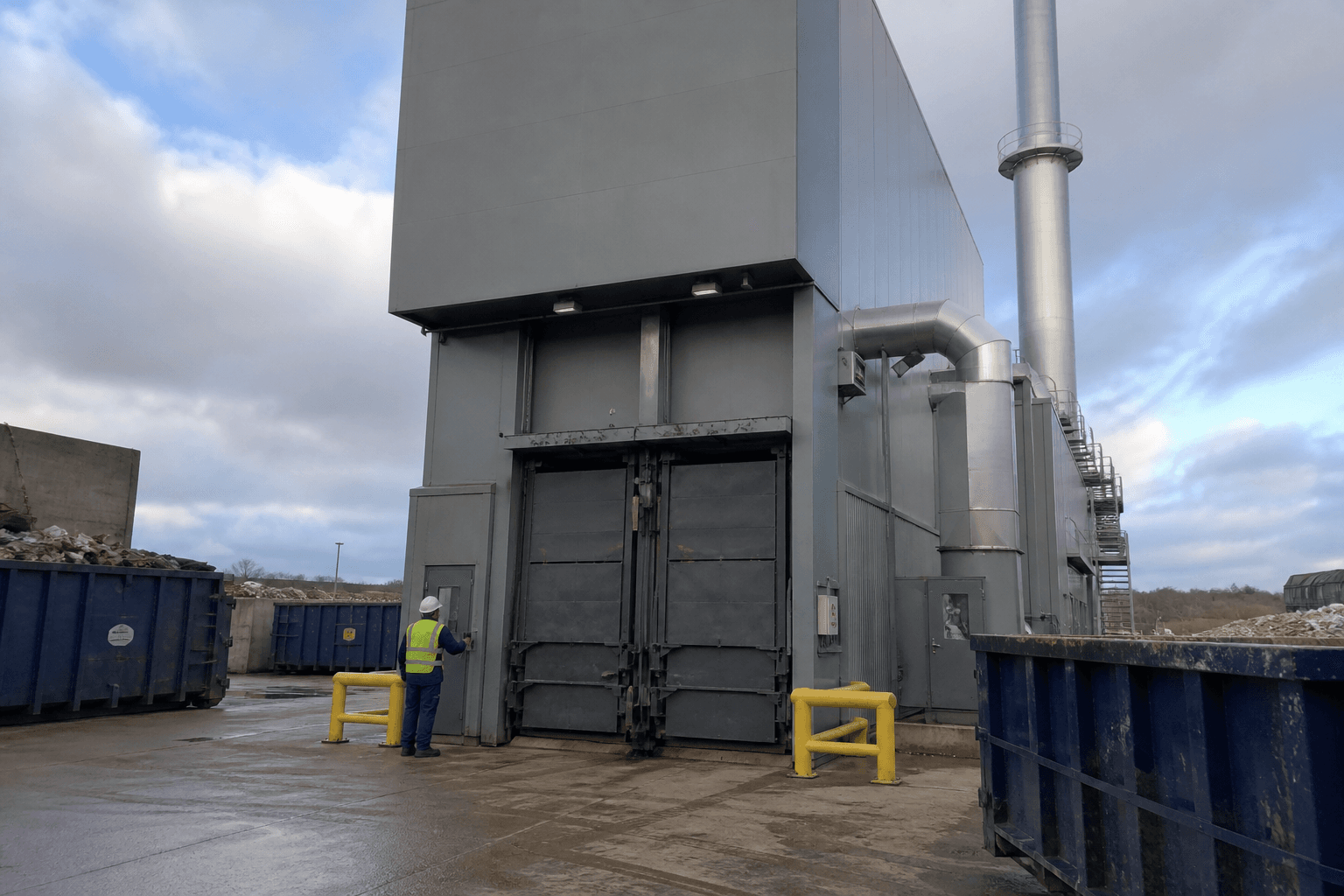
Construction Waste Incinerators
The mixed residual left after site segregation — packaging, hoarding, welfare and general site waste.
Most construction waste should never see a chamber: inert, timber, metal and plasterboard all have routes, and the good sites already segregate them. What is left is a mixed residual fraction that fills skips fast on a plot with nowhere to put them — and on a constrained or remote site, that is the fraction worth destroying.
Four Models,
One Solution
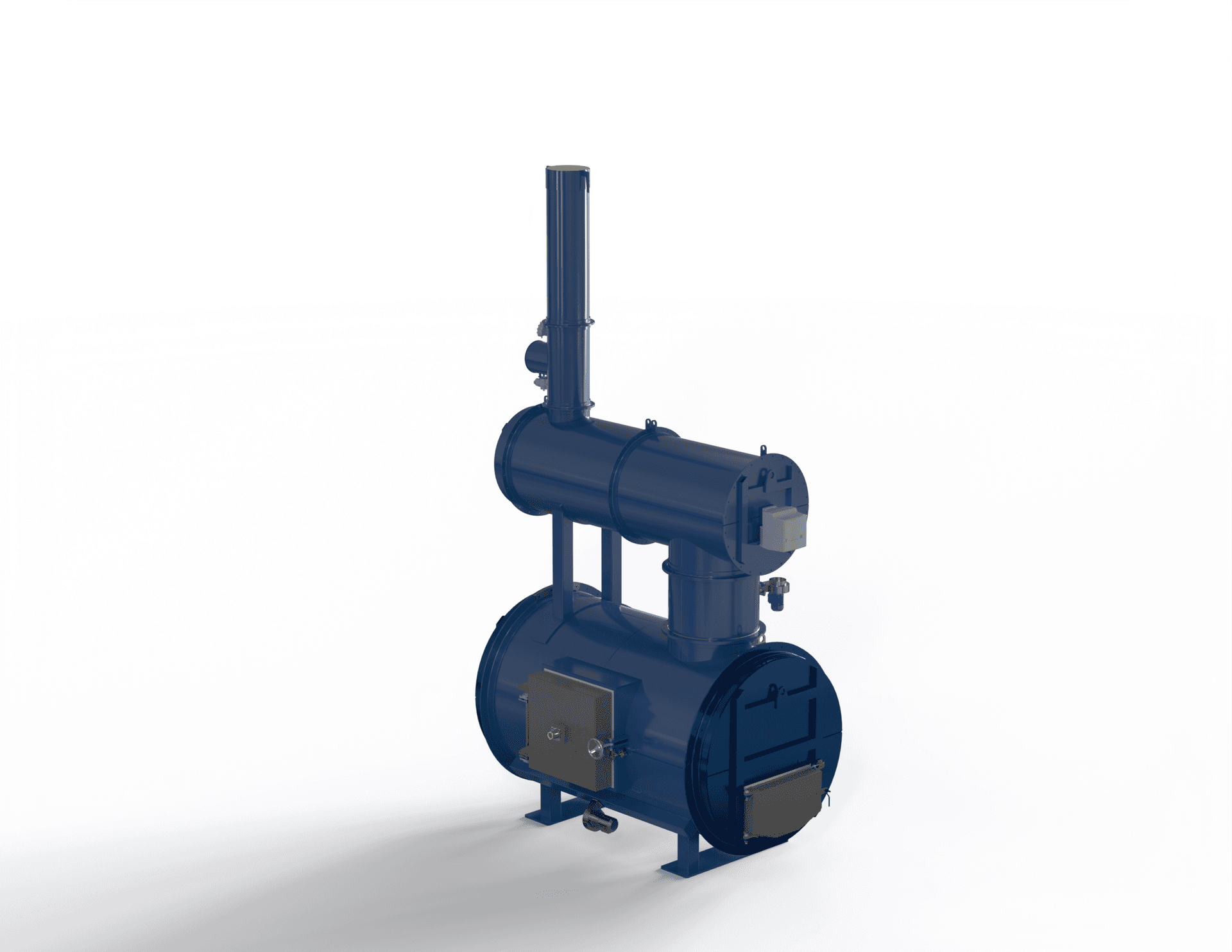
The entry point to the LitBurn range. A 3.3 m³ primary chamber and three burners give continuous 125 kg/h destruction in a footprint that fits a standard yard bay, which makes it the usual choice for a single-site operator replacing skip hire rather than a multi-site waste contract.
The most specified unit in the range. Chamber volume rises to 5.5 m³ for 250 kg/h continuous throughput while the external width grows by only 230 mm over the LBI-125, so sites that outgrow the smallest unit rarely have to rework the slab or the building line.
A 9.6 m³ chamber — nearly double the LBI-250 — for medium-scale industrial waste destruction. At this size most operators pair the unit with heat recovery, because the thermal output during a full shift is large enough to displace a dedicated water heater.
The largest LitBurn: a 16.2 m³ chamber running 500 kg/h continuously. Specified where waste arrives faster than a batch unit can clear it — large manufacturing sites, industrial estates, and operators consolidating several smaller waste contracts onto one machine.
Which Model
Fits Your Volume
Pick a model to see what it clears in a day of construction & site waste.
A single constrained site or a compound where welfare residual is the steady stream and the plot has no room for skips.
Segregation comes first, and it is documented
Construction waste reporting and site waste planning already record what is segregated and where it goes. A unit that takes material those routes should have had will show up in exactly that reporting.
17 and 20 03 codes on the permit
Construction and demolition wastes sit in chapter 17, with welfare and canteen residual under 20 03 01. Hazardous site fractions carry their own starred codes and are excluded from the charge rather than added to the permit casually.
Plasterboard and treated timber are excluded by law, not by preference
Gypsum has its own segregation and recovery requirements, and treated timber is hazardous waste. Neither becomes acceptable because a chamber would physically accept it.
Temporary sites still need permitting
A permit relates to the site and the activity. A unit moving between project compounds needs that settled for each location — it is not a machine you park and switch on.
Why Burn It
On Site
4 things change on the day this stream stops leaving the site.
Skip space is the real constraint on a tight plot
On a constrained city site the limit is where a skip can stand and when a vehicle can reach it, not what disposal costs. Removing most of the residual mass locally buys back both.
Vehicle movements come under scrutiny
Construction logistics plans count movements, and waste vehicles are movements nobody wants. Fewer exchanges is a planning and neighbour argument as much as a cost one.
Welfare waste arrives every single day
Canteen and welfare residual is continuous, unglamorous and the reason a skip fills between exchanges. It is the steady stream that makes a unit worth having on a long project.
Linear and remote projects have long internal hauls
On infrastructure projects and remote sites the waste has to be driven a long way before it reaches a road network. Destroying it at the compound removes the internal haul as well as the external one.
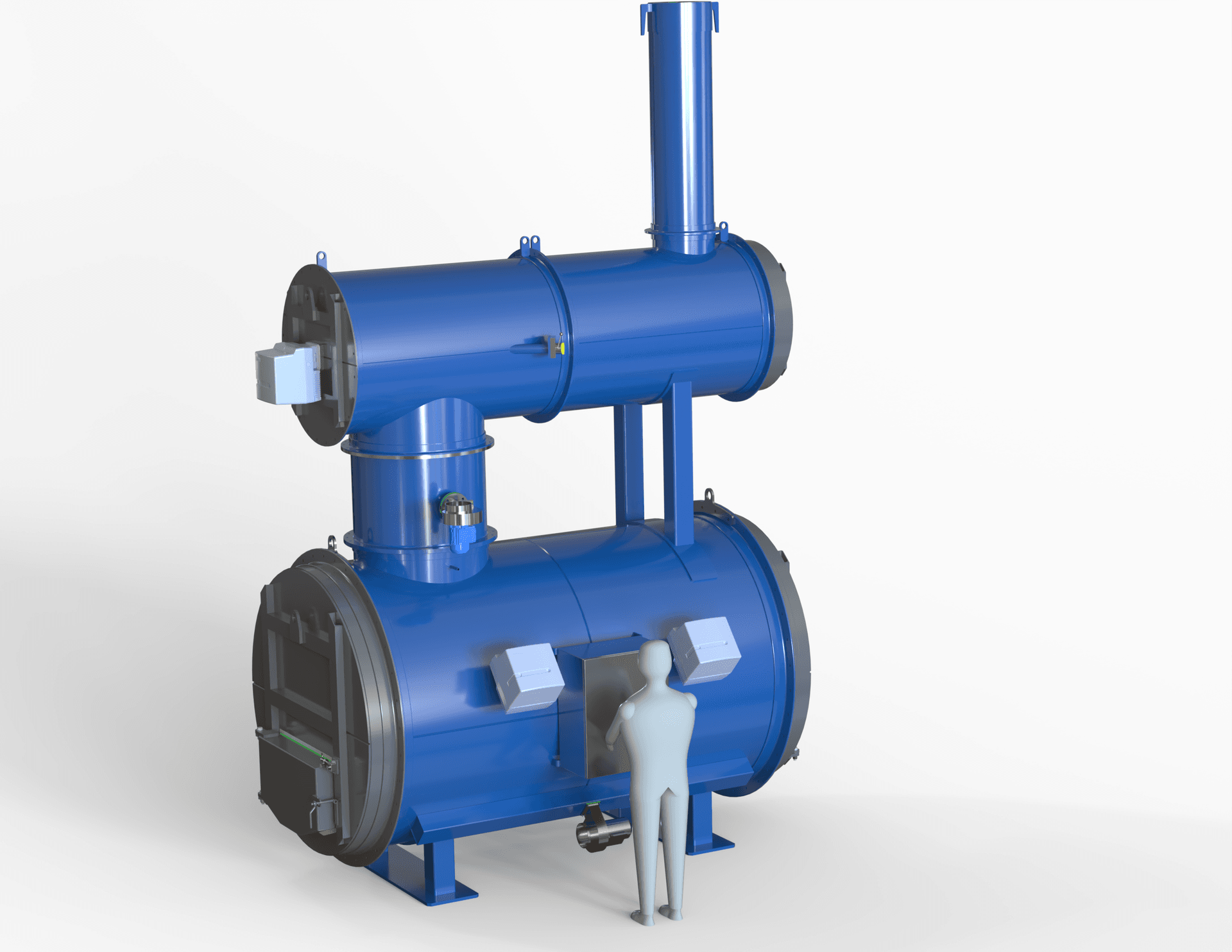
Dual-chamber unit, continuous duty
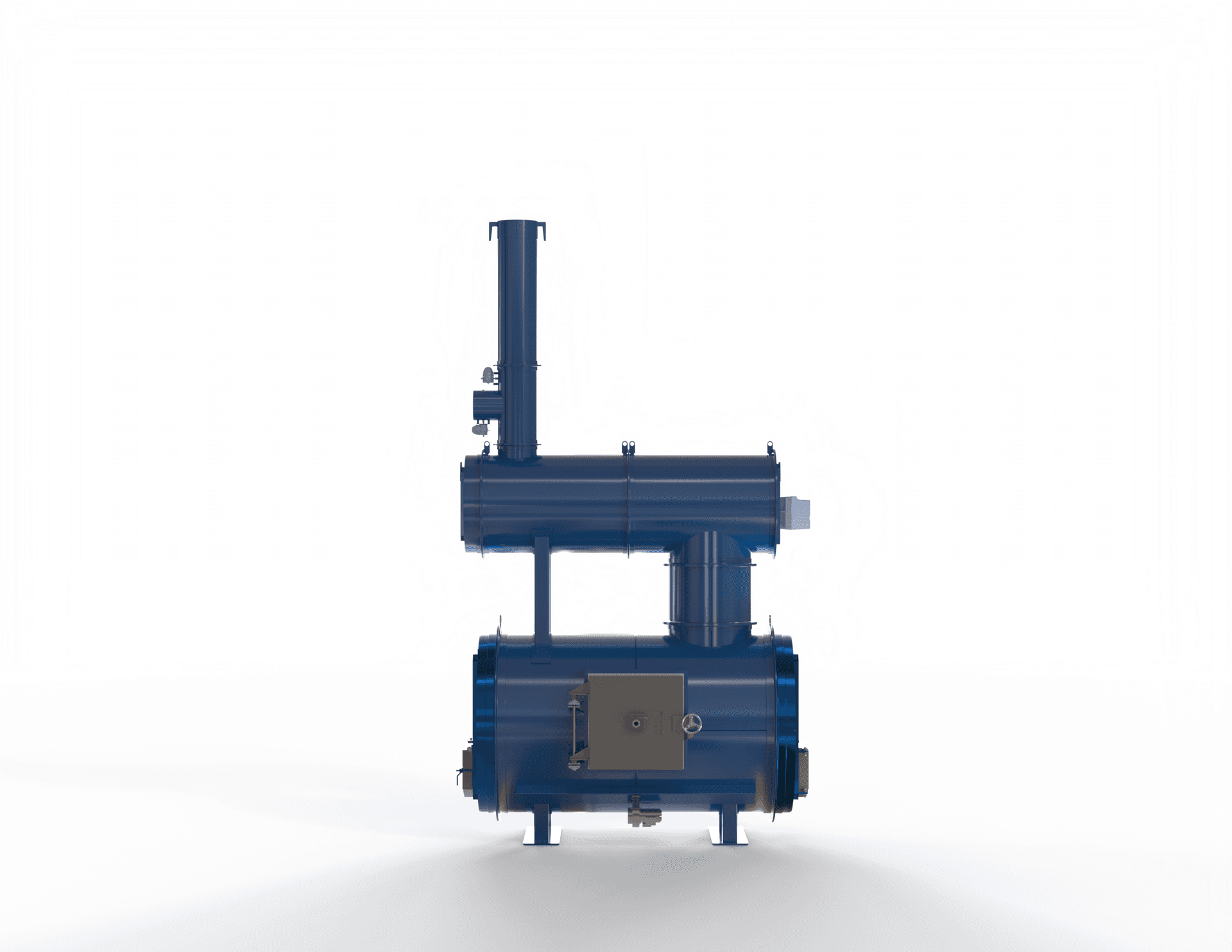
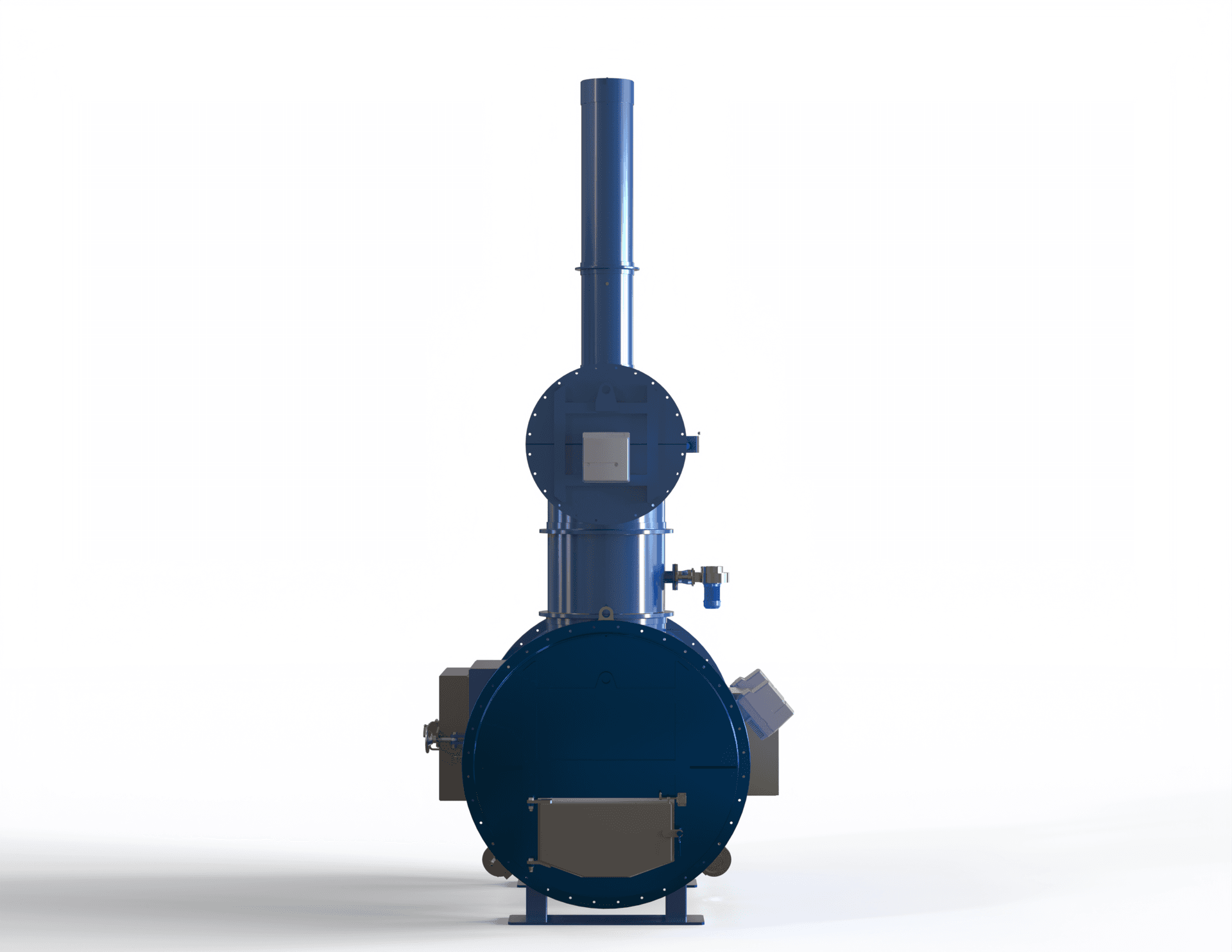
Primary chamber running 850–1,200°C with a secondary holding flue gas above 850°C for two seconds. Rated to run for a shift, because mixed waste arrives at the rate a site produces it rather than in charges somebody can schedule.
Front dual-door loading
Charged through a front dual door at floor level, so 1,100-litre bins, cages and wheeled containers are fed at the height they are already moved at. No tipping platform, no hoist, no lifting sacks over a rim.
What Ships
With The Unit
Identical whichever stream it is specified for. The operating procedure changes; the machine does not.
Dual-chamber unit, continuous duty
Primary chamber running 850–1,200°C with a secondary holding flue gas above 850°C for two seconds. Rated to run for a shift, because mixed waste arrives at the rate a site produces it rather than in charges somebody can schedule.
Front dual-door loading
Charged through a front dual door at floor level, so 1,100-litre bins, cages and wheeled containers are fed at the height they are already moved at. No tipping platform, no hoist, no lifting sacks over a rim.
IP6X control panel with cycle logging
PLC control with chamber thermocouples, interlocked charge door and a time-stamped temperature record per run. On a residual stream the log is what a permit compliance visit reads, and what a duty-of-care question is answered from.
Three-burner set and fuel train
Configured for natural gas, LPG, diesel, biofuel or hydrogen. Mixed municipal and commercial waste is wetter and more variable than an industrial stream, so burner support matters more here than on a polymer charge.
Coretex refractory lining
Monolithic castable lining rated for the full temperature range, replaceable in service. Mixed waste swings in calorific value between one bin and the next, and the lining is specified for that cycling rather than for a steady feed.
Stack, dispersion data and commissioning
Stack to the height your site-specific dispersion assessment calls for, the emissions data pack the permit application references, on-site commissioning, a witnessed first run and operator training for depot or site staff.
How One Burn Runs,
Start To Finish
One run is one countable event, reconciled against a manifest and evidenced by a time-stamped temperature log.
One Cycle,
Start To Finish
Adds 17 and 20 03 lines to the permit, and carries the longest exclusion list in the sector: inert, plasterboard, treated timber, asbestos and hazardous site chemistry all leave by their own routes.
Inert, metal, clean timber, plasterboard and packaging for recycling all go to their own containers. The residual charge is defined by what those containers have already taken.
Treated timber, asbestos-suspect material, site chemistry, batteries and gas cylinders leave by their own routes. Inert material is kept out because it does not burn — it just becomes ash to handle.
Bins and cages from the compound and welfare area are fed through the front dual door at floor level while the unit runs. Bulky protection and hoarding are cut down enough to charge.
Primary combustion with two-second secondary retention above 850°C, or 1,100°C where site plastics and membranes push the charge past 1% halogenated organic content.
Residue is 3–5% of input for a clean residual charge and higher wherever dust and grit have found their way in. The run log feeds the project's waste reporting directly.
What You Can Burn —
And What You Can't
One run takes the whole stream without pre-sorting. What must never enter it is a short, hard list.
Yes: accepted in a run
No pre-sorting between these
- Mixed non-recyclable site residualThe genuinely mixed fraction left after inert, metal, timber and plasterboard have been segregated out.
- Packaging, protection and transit wasteShrink wrap, strapping, corner protection, void fill and contaminated packaging that arrived with materials and cannot be recycled once dirty.
- Temporary protection and membranesFloor and surface protection, dust sheeting and temporary membranes at end of use, contaminated and non-recoverable.
- Hoarding, signage and temporary worksPrinted hoarding, correx signage and temporary works materials at the end of a phase, cut down enough to charge.
- Welfare and canteen residualThe continuous residual from welfare facilities once food waste and recyclables are separately collected — the steady stream on any long project.
- Contaminated PPE and site consumablesDamaged PPE, gloves, sheeting and consumables contaminated in use, with hazardous contamination declared under its own code.
No: never charged
Not a permit question — these stay out
- Inert material — concrete, brick, soilIt does not burn. All it does is occupy chamber volume and become ash to handle, and it has well-established recovery routes of its own.
- Plasterboard and gypsum productsA sulphate problem with its own segregation and recovery requirements. It is not a fuel and it should never be treated as one.
- Treated, preservative-bearing and painted timberTreated timber is hazardous waste and needs its permitted route and codes rather than a residual charge. Clean untreated timber has recovery routes above disposal.
- Asbestos, cylinders, batteries and site chemistryAsbestos does not burn and is a specialist route; cylinders and cells are sealed hazards; adhesives, sealants and fuels are hazardous chemistry with their own destinations.
Can you legally burn construction & site waste on site?
Technically, yes: the chamber destroys almost everything on the accepted list at 850–1,200°C, and capability is rarely the constraint. Legally is a separate question. What your site is allowed to burn is set by your environmental permit from the Environment Agency, SEPA or NIEA and the waste codes written into it. The never-charged list is different again: those materials are out of scope for the unit or governed by a direction, and no permit wording brings them back in. Send us the codes you hold, or the ones you expect to apply for, and we will tell you which of this list they cover before anything is specified.
Send us your waste codesWhat size incinerator for a site's 4 tonnes of residual a week?
Arithmetic on published model figures, not a customer reference. Your numbers go through the same steps.
How This
Was Worked Out
4,000 kg a week against the LBI-250's 250 kg/h = 16 hours, or two shifts, leaving 120–200 kg of ash and a compound that is not organised around skip exchanges. This figure is the residual only. If your four tonnes still contains inert, timber or plasterboard, the answer is better segregation before it is a bigger machine.
120–200 kg a week
≈95% of mass removed
Unaffected — they still leave
2.9 t
Send your daily or weekly arisings and we will confirm the model, the run time and the permit route.
Related Products
& Services
Complementary equipment and engineering services for your process.
Sizing and background
- [TOOL]Work out the burn rate for your own arisings
- [TOOL]Size the combustion air and flue gas duty
- [BLOG]Validating feasibility for an 8,200 kg/h waste-to-energy incinerator
- [BLOG]Designing modular incinerator systems for waste-to-energy
- [BLOG]Integrating vibration analysis for incinerator predictive maintenance
- [BLOG]Advanced gas cleaning for ultra-low emission incinerators
- [BLOG]Evaluating flue gas cleaning systems in industrial incinerators
Construction & site waste Questions
Answered against the published figures for the models specified for this stream, not a generic range sheet.
Construction residual waste is what remains after a site has segregated properly: not the inert, not the metal, not the clean timber and not the plasterboard, all of which have established routes and better ones. What is left is mixed packaging and protection, damaged consumables, hoarding and signage, welfare and canteen residual, and the general site waste that no skip company will take at a recycling rate. This page is deliberately narrower than the phrase 'construction waste' suggests, because construction is the sector with the strongest recycling routes and the most scrutinised waste reporting. A unit on a site that is not segregating is a compliance problem with a chimney; a unit on a site that is segregating well is dealing with the genuinely awkward remainder. The exclusions do more work here than anywhere else in this sector. Plasterboard is a sulphate problem and does not belong in a chamber. Treated and preservative-bearing timber is hazardous waste. Asbestos is asbestos. Inert material — concrete, brick, soil — will not burn and simply becomes ash volume and handling. Where the case is strongest is where the site is constrained or remote: a city-centre plot with no room for skips and restricted vehicle access, a linear infrastructure project with long internal hauls, or a project camp already running a unit for welfare waste. There, removing 95% of the residual mass buys space and movements rather than just money.
4,000 kg a week against the LBI-250's 250 kg/h = 16 hours, or two shifts, leaving 120–200 kg of ash and a compound that is not organised around skip exchanges. This figure is the residual only. If your four tonnes still contains inert, timber or plasterboard, the answer is better segregation before it is a bigger machine.
The residual fraction, with a permit naming the codes — not the whole skip. Inert, metal, timber and plasterboard have established routes and construction reporting records whether you used them. A unit is for what is genuinely mixed and non-recyclable after that.
Gypsum is a sulphate problem with its own segregation and recovery requirements, and it is not a fuel — it contributes nothing but residue and complications. It leaves by the route it already has.
Clean untreated timber has recovery routes above disposal and should take them. Treated, preservative-bearing and painted timber is hazardous waste with its own permitted destination. Neither belongs in a general residual charge.
Physically yes — these are 2.5 to 3.8 tonne units with no permanent civil works. Legally, the permit relates to the site and the activity, so each location has to be settled before the unit runs there. Plan that into the programme rather than into the mobilisation week.
On constrained city plots where skip standing and vehicle access are the limit, on linear and remote projects with long internal hauls, and on long programmes where welfare residual arrives every day. On an open site with easy access and cheap skips, it usually does not, and we will say so.
The run log gives you weights and dates for the residual fraction directly, which is usually better data than a skip ticket. It does not improve a recycling rate — that is decided by segregation — and presenting it as though it did is the mistake to avoid.
Ready to
Incinerate?
Send the stream, the volume and the site constraints. We will confirm the model, the permit route, and what the specification has to say to satisfy the regulator.
- Skip space is the real constraint on a tight plot
- Vehicle movements come under scrutiny
- Welfare waste arrives every single day
- Linear and remote projects have long internal hauls