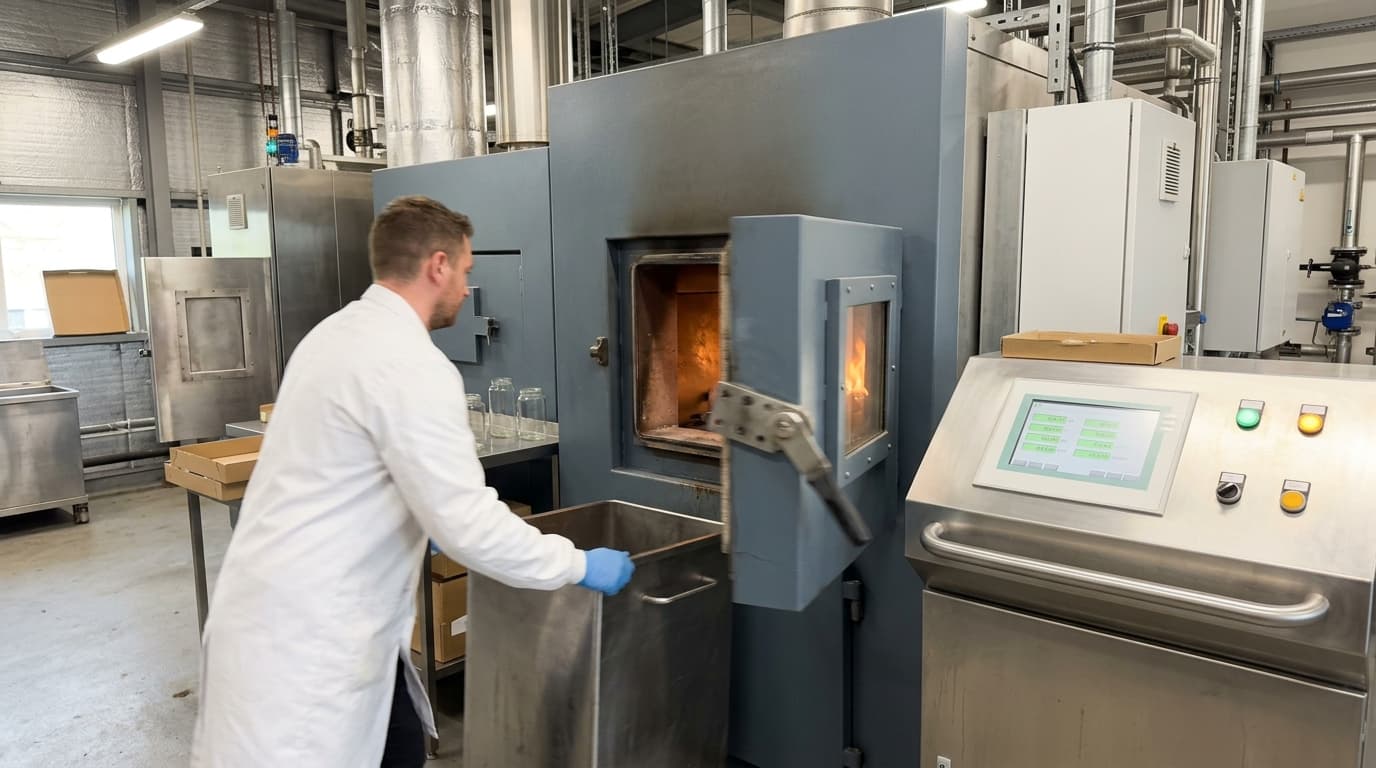
Healthcare Waste Incinerators
6 healthcare waste streams on one permitted LitBurn.
Clinical waste is the one stream where the collection is the weak point. It cannot be stored indefinitely, it cannot go in the general compactor, and when a contractor loses capacity it does not stop arriving — it stacks up in the yard of a hospital that is still running theatres. LitBurn units destroy infectious waste, sharps, anatomical waste and laboratory material on the site that produced it, at the condition HTM 07-01 and the permit both call for.
Four Models,
One Solution
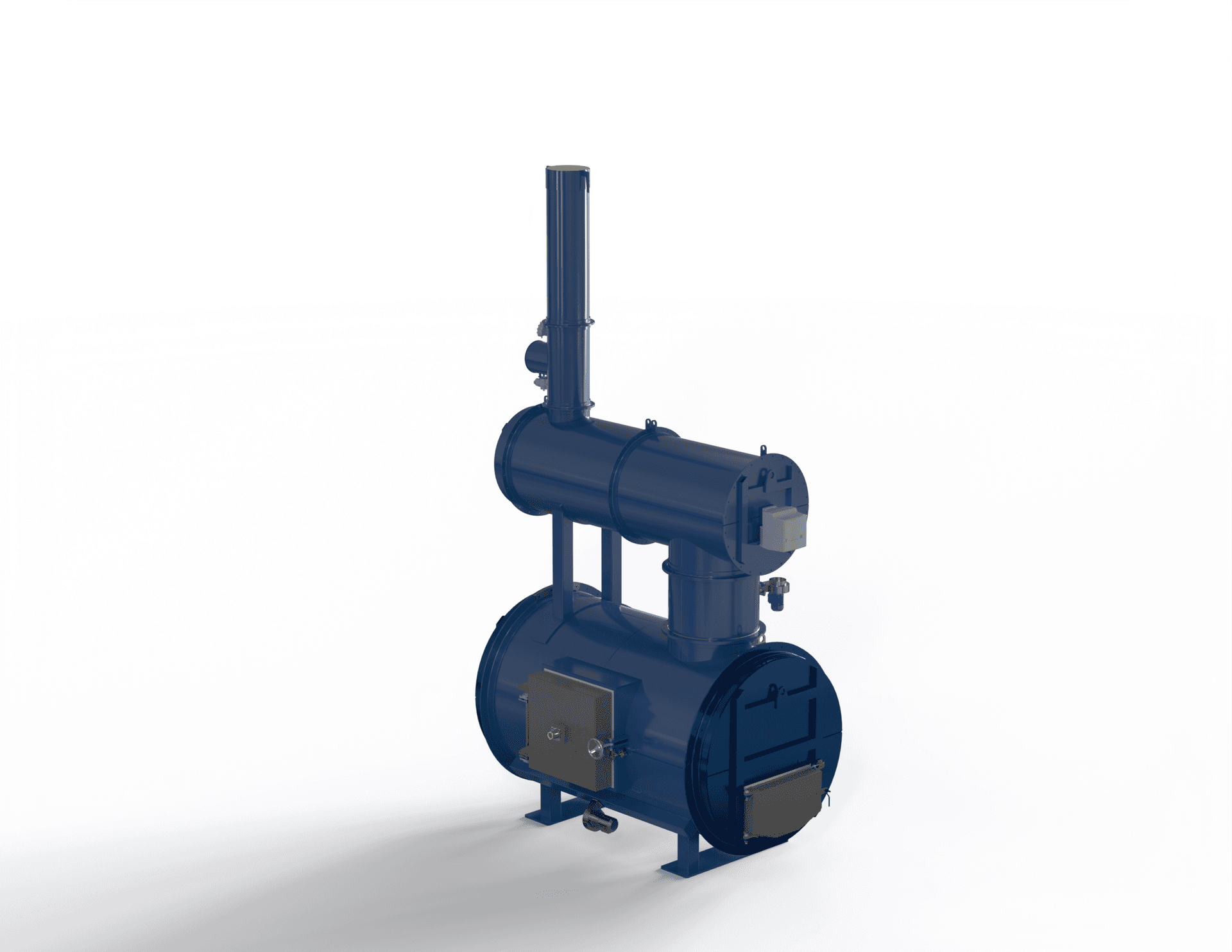
The entry point to the LitBurn range. A 3.3 m³ primary chamber and three burners give continuous 125 kg/h destruction in a footprint that fits a standard yard bay, which makes it the usual choice for a single-site operator replacing skip hire rather than a multi-site waste contract.
The most specified unit in the range. Chamber volume rises to 5.5 m³ for 250 kg/h continuous throughput while the external width grows by only 230 mm over the LBI-125, so sites that outgrow the smallest unit rarely have to rework the slab or the building line.
A 9.6 m³ chamber — nearly double the LBI-250 — for medium-scale industrial waste destruction. At this size most operators pair the unit with heat recovery, because the thermal output during a full shift is large enough to displace a dedicated water heater.
The largest LitBurn: a 16.2 m³ chamber running 500 kg/h continuously. Specified where waste arrives faster than a batch unit can clear it — large manufacturing sites, industrial estates, and operators consolidating several smaller waste contracts onto one machine.
6 Streams,
One Machine
All 6 destroy at the same condition, so one permitted LitBurn covers the lot. What changes is the procedure and the waste codes.
Infectious waste is the bulk of what a hospital throws away that it cannot throw away. Dressings, swabs, gloves, gowns, giving sets and suction liners fill carts faster than any other healthcare stream, and every one of them is waiting on a collection that has to arrive. A LitBurn destroys them on the site that produced them, at the permitted condition, with the run logged.
Clinical & infectious waste in fullAdds 18 01 03* to the permit and a declared halogenated condition, because this is the PVC-heavy stream. Bags are charged sealed from the cart, so nothing is opened, sorted or re-bagged between the ward and the chamber.
The permit names the clinical codes
Burning healthcare waste on site requires an environmental permit from the Environment Agency, SEPA or NIEA with the waste codes named at application: 18 01 03* for infectious waste and infectious sharps, 18 01 01 for non-infectious sharps, 18 01 02 for anatomical waste, 18 01 04 for offensive waste, 18 01 06* for hazardous laboratory chemicals. A permit written for general waste covers none of them.
HTM 07-01 decides what may enter a charge
Segregation and colour coding under HTM 07-01 remain a clinical duty at the point of use. On-site destruction removes the collection dependency, not the discipline: yellow, orange, purple, red-lidded and tiger-striped streams still have to be separated before anything reaches the charge door, because that is what decides which of them may be in the same run.
1,100°C where halogenated content exceeds 1%
The secondary-chamber minimum rises from 850°C to 1,100°C where the waste carries more than 1% halogenated organic substances expressed as chlorine. PVC-heavy clinical loads — giving sets, IV bags, suction tubing — push a charge over that line, so declare the stream honestly and specify the higher condition rather than discovering it at a compliance visit.
Some streams have no substitute route
Anatomical waste, medicinally contaminated sharps and cytotoxic waste cannot be sent for alternative treatment. Where a site incinerates its own, those streams stop depending on the one market that has repeatedly run short of capacity — but cytotoxic and cytostatic waste is hazardous under 18 01 08* and needs its own permitted scope rather than being assumed into a clinical charge.
What Ships
With The Unit
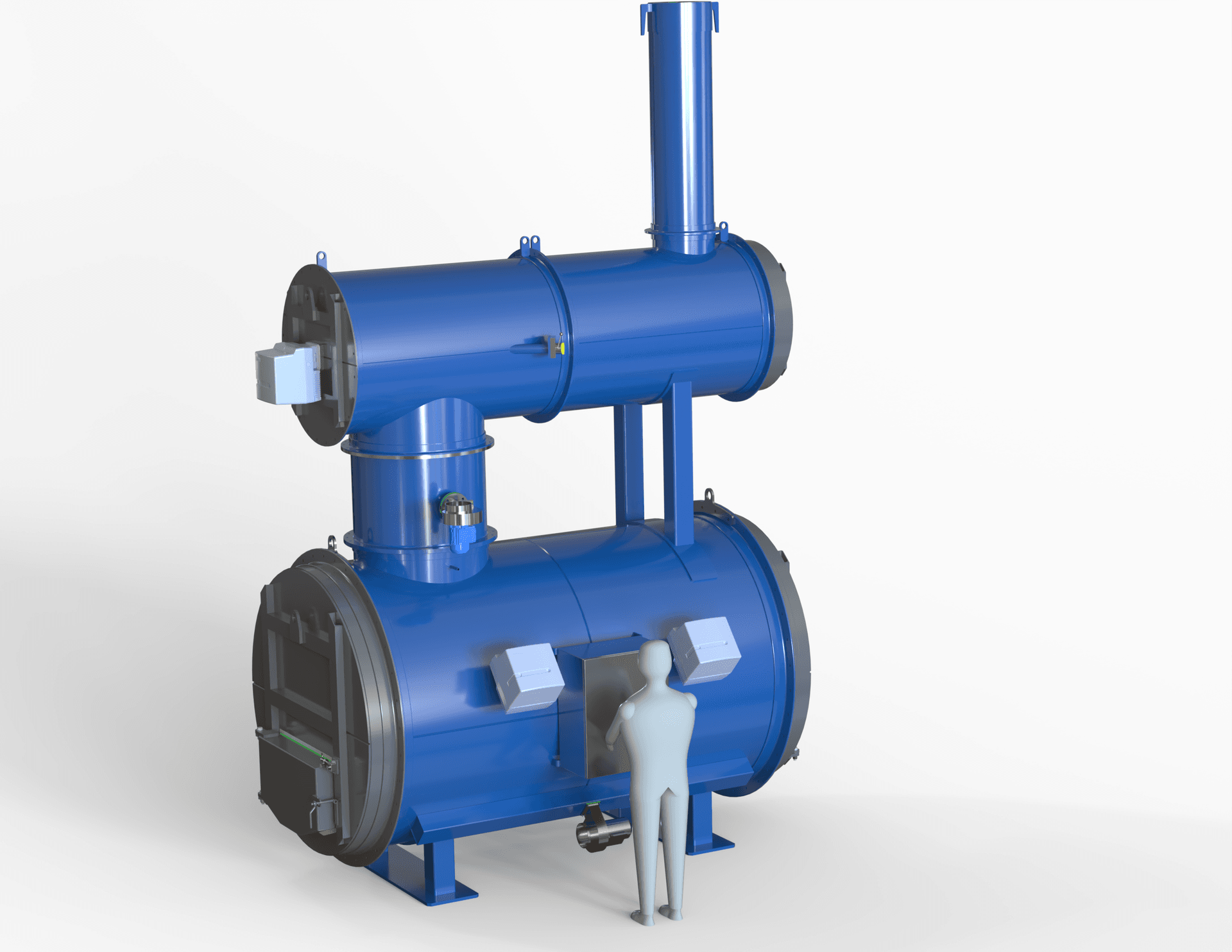
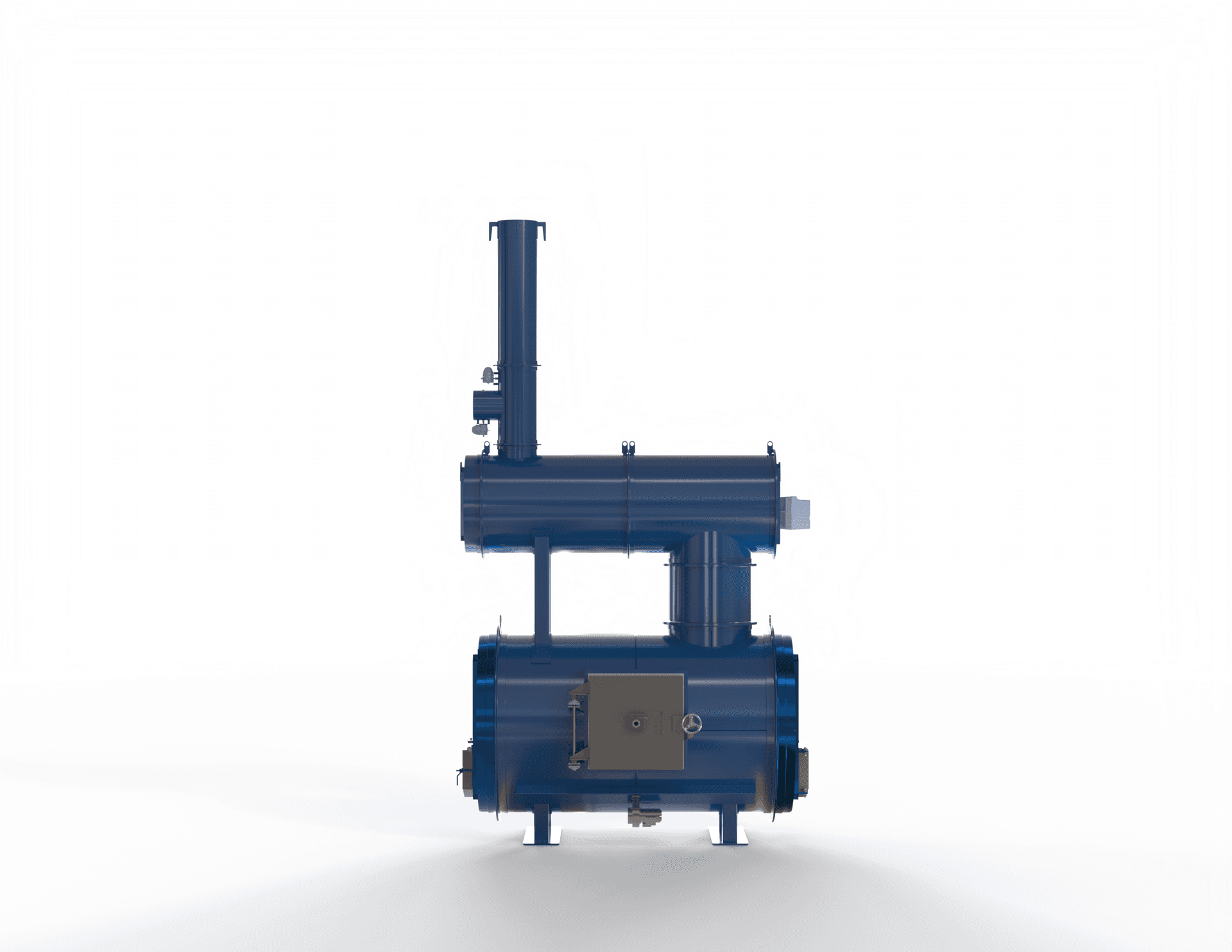
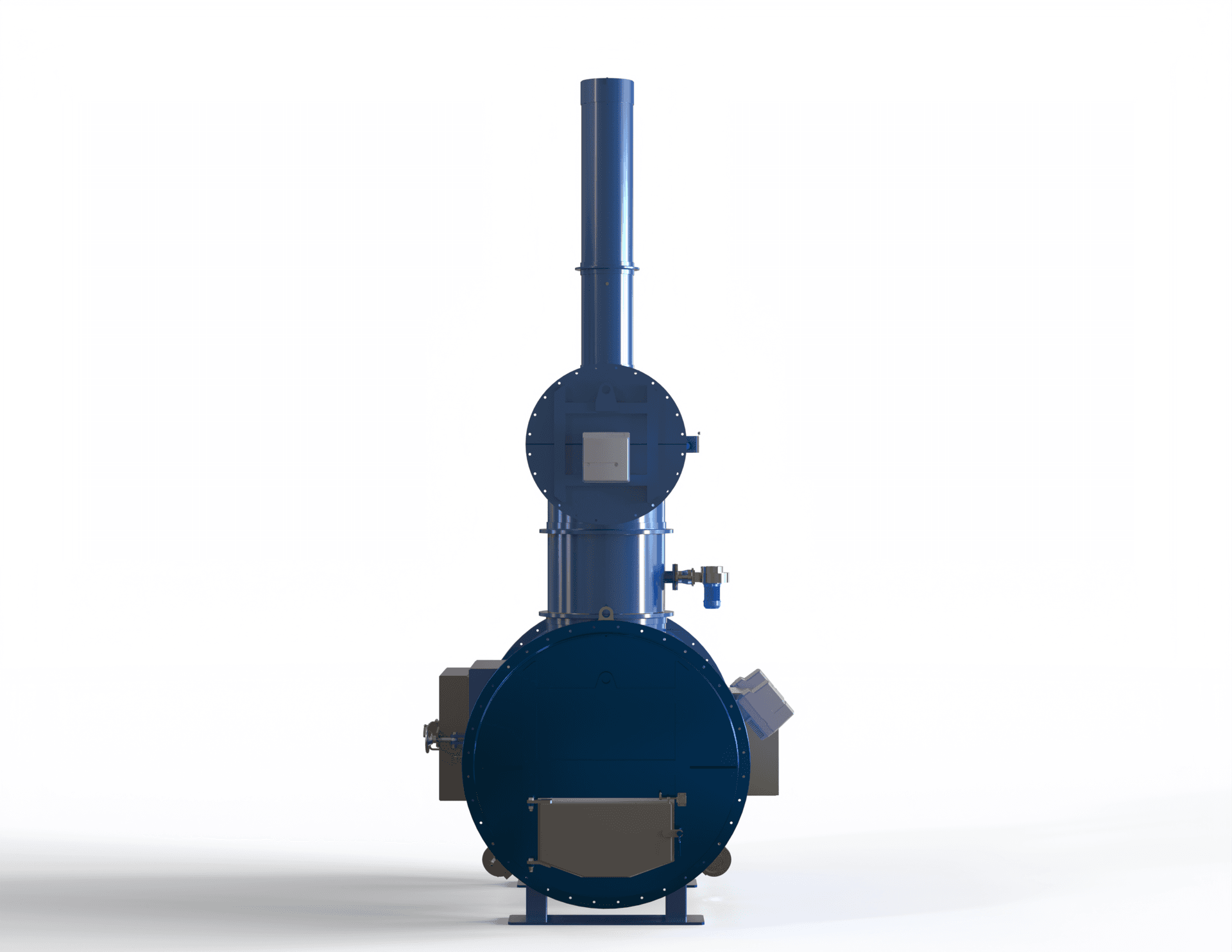
Identical whichever stream it is specified for. The operating procedure changes; the machine does not.
Dual-chamber unit, 1,100°C capable
Primary chamber running 850–1,200°C with a secondary chamber holding flue gas above 850°C for two seconds. Clinical charges are PVC-rich — IV bags, giving sets, suction tubing, sterile packaging — so where the stream carries more than 1% halogenated organic content the secondary minimum rises to 1,100°C, and the unit holds it as built rather than as an upgrade.
Front dual-door loading
The LBI range is charged through a front dual door at floor level. Wheeled 770-litre clinical carts, rigid-bodied sharps bins and red-lidded anatomical containers go in at the height they arrive at, which is what keeps the last handling step in a clinical waste route a push rather than a lift over a rim.
IP6X control panel with cycle logging
PLC control with chamber thermocouples, interlocked charge door and a time-stamped temperature record per run. For clinical waste that record is what turns a claim of destruction into evidence of it — the condition an infection control audit or a permit compliance check asks to see.
Burner set and fuel train
Configured for natural gas, LPG, diesel, biofuel or hydrogen, with three burners across the LBI range. Fuel choice is a site decision; the combustion condition is identical whichever is specified. Wet loads — anatomical waste, suction liners, fluid-heavy dressings — draw more burner time, not a different machine.
Coretex refractory lining
Monolithic castable lining rated for the full temperature range and for sustained running at the top of it. Replaceable in service rather than requiring the shell to be scrapped with it, which matters on a unit running shifts against a daily arisings curve rather than single burns.
Stack, dispersion data and commissioning
Stack supplied to the height your site-specific dispersion assessment calls for — hospital sites usually carry the tightest one on this list, with wards, intakes and neighbours all inside the assessment — plus the emissions data pack the permit application references, on-site commissioning, a witnessed first run and operator training.
How One Burn Runs,
Start To Finish
One run is one countable event, reconciled against a manifest and evidenced by a time-stamped temperature log.
The Same Cycle,
Whichever Stream
Every healthcare stream runs the cycle below. What differs between them is the procedure at the charge door and what the permit has to name — not the machine and not the combustion condition.
Waste is bagged or binned into its HTM 07-01 colour at the bedside, chairside or bench — yellow for incineration-only, orange for infectious, red-lidded rigid for anatomical, purple for cytotoxic. Everything downstream depends on this step, and no incinerator on the yard changes that.
Filled containers go to the internal store and from there to the unit without being opened, decanted or re-bagged. The waste never leaves the site, so it never becomes a consignment on a road — but the internal handling discipline and the storage conditions stay exactly what they were.
The LBI is brought to temperature — 30 minutes from cold — and fed through the front dual door while running. Carts and rigid containers are charged closed, at floor level, so the last human contact with a clinical waste container is the same push it always was.
The primary chamber runs 850–1,200°C and the gases are held above 850°C for two seconds in the secondary — 1,100°C where the charge passes 1% halogenated organic content. That is the condition that destroys the infectious agent and the organic fraction rather than moving either one up the stack.
Residue comes out at 3–5% of input mass: mineral ash with no recognisable clinical item left, plus the inert metal fraction from needles, blades and instrument tips. The run log, the container count and the ash weight are the record the destruction is evidenced against.
What You Can Burn —
And What You Can't
Every stream has its own accepted list and its own exclusions. They sit on the 6 stream pages, not here.
Can you legally burn healthcare waste on site?
Technically, yes: the chamber destroys almost everything these streams produce at 850–1,200°C, and capability is rarely the constraint. What your site is allowed to burn is set by your environmental permit from the Environment Agency, SEPA or NIEA and the waste codes written into it. Open the stream you are dealing with for its accepted list and the materials that never go in whatever the permit says — or send us the codes you hold and we will tell you what they cover.
Send us your waste codesOne Machine,
All 6 Streams
What changes between streams is the operating procedure and the waste codes on the permit. The machine does not change.
Same Condition,
Every Stream
All 6 streams destroy at the same condition: 850–1,200°C in the primary chamber with flue gas held above 850°C for two seconds in the secondary. That is why one permitted LitBurn covers the lot rather than needing a machine each. What differs is the procedure at the charge door and what the permit has to name.
These are continuous-duty units, so throughput is a function of operating hours rather than cycles. Where a site runs several of these streams through one unit, size on the combined arisings rather than on whichever stream prompted the enquiry.
Hours = arisings ÷ burn rate. Ash = 3–5% of what went in. Check the chamber volume as well as the rate: bulky loads fill the box first, dense ones reach the rating first.
Send your combined arisings across the streams you run and we will confirm the model, the run time and the permit route.
Related Products
& Services
Complementary equipment and engineering services for your process.
Sizing and background
- [TOOL]Work out the burn rate for your own arisings
- [TOOL]Size the combustion air and flue gas duty
- [BLOG]Integrating vibration analysis for incinerator predictive maintenance
- [BLOG]Advanced gas cleaning for ultra-low emission incinerators
- [BLOG]Evaluating flue gas cleaning systems in industrial incinerators
Healthcare Questions
Answered against the published figures for the LitBurn range, not a generic sheet.
A clinical waste incinerator is a dual-chamber thermal destruction unit specified for healthcare waste — infectious material, sharps, anatomical waste, laboratory cultures and the disposables contaminated by any of them. What distinguishes it from a general-purpose unit is not the steel but the operating condition it is permitted and evidenced at, and the fact that several healthcare streams have no lawful alternative treatment route at all. The combustion condition is the Industrial Emissions Directive one: flue gas held above 850°C for two seconds in a secondary chamber, primary between 850°C and 1,200°C, rising to 1,100°C where the charge carries more than 1% halogenated organic content. Clinical charges reach that threshold more often than a general waste stream does — PVC giving sets, IV bags, suction tubing and sterile film all count towards it — so the higher condition belongs in the permit application rather than in a footnote. Not every healthcare stream is required to be incinerated. Orange-bagged infectious waste may lawfully go to an alternative treatment plant; tiger-striped offensive waste may go to landfill or energy from waste. Yellow-bagged waste, anatomical waste and medicinally contaminated sharps may not — for those, incineration is the route, which is why a hospital with its own unit is insulated from a market that has repeatedly run short of it. The LitBurn LBI range covers 125, 250, 375 and 500 kg/h as continuous-duty units, front-loaded through a dual door at floor level so clinical carts are charged at the height they arrive at. Six healthcare streams are specified separately below because each is segregated differently, coded differently and excluded differently. The machine is the same one. The colour of the bag, the permit line and the record are not.
Because the collection is the part that fails. Clinical waste keeps arriving whether or not a contractor turns up, and the storage limits, the fire loading and the infection control position all worsen the longer it sits. A permitted unit on site turns an external dependency into an internal one you control, and removes the road movement, the transfer station and the gate fee along with it.
Anatomical waste, yellow-bagged waste contaminated with medicines, medicinally contaminated sharps and cytotoxic or cytostatic waste. Orange-bagged infectious waste may lawfully go to an alternative treatment plant instead, and tiger-striped offensive waste may go to landfill or energy from waste. So part of the stream is a legal requirement and part is a cost decision — worth separating before sizing anything.
No, and treating it that way is the fastest route to a permit breach. Colour coding at the point of use is what decides which streams may share a charge, what condition the run has to hold, and which waste codes the permit needs. Destroying the waste yourself shortens the chain; it does not merge the streams.
Yes, and they should. UN3291-approved rigid containers are charged sealed — nothing is decanted, nothing is tipped, and the last handling step is the same push it was in the ward. The plastic body burns out and the needles, blades and instrument tips report to the ash as inert metal.
Size on hours, not on charges — these are continuous-duty units. Divide weekly arisings by the burn rate and match that against the shifts you are prepared to run. A community hospital or clinic group usually lands on the LBI-125; a district general on the LBI-250; an acute or multi-site trust on the LBI-375 or LBI-500. Then check the chamber volume against cart count, because this stream is bulky.
Residue is 3–5% of input mass — mineral ash with no recognisable clinical item left in it, plus the inert metal fraction from sharps. Where the charge was infectious waste alone the residue leaves as ordinary waste under a transfer note; where hazardous material such as cytotoxics was in scope, the residue classification follows the permit and should be agreed with the regulator at application stage.
Yes, provided the medicinal codes are named in the permit alongside the clinical ones. Expired medicines, recalled product and denatured controlled drugs destroy at the same condition — that stream is specified in full on the pharmaceutical sector pages, including the cytotoxic and controlled-drugs cases that need their own scope and their own witness.
The dressings, sharps and cultures from a veterinary practice behave identically and code under the 18 02 group rather than 18 01. Animal carcasses are a different matter entirely: they are animal by-products, they need APHA approval of the plant, and they belong on the animal disposal sector rather than here.
Ready to
Incinerate?
Send the stream, the volume and the site constraints. We will confirm the model, the permit route, and what the specification has to say to satisfy the regulator.
- The permit names the clinical codes
- HTM 07-01 decides what may enter a charge
- 1,100°C where halogenated content exceeds 1%
- Some streams have no substitute route