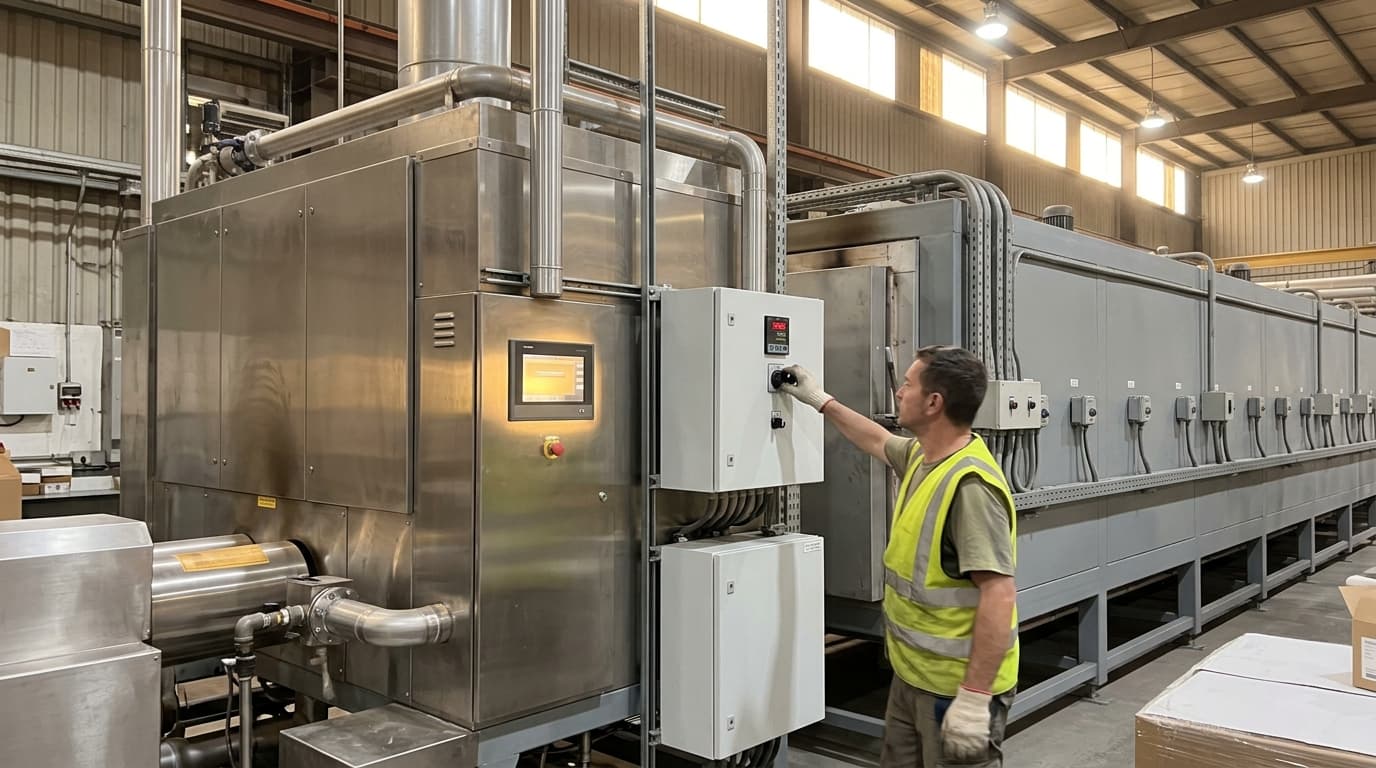
Stone & Soil
Process
Heating
Indirect process heating for ceramics, glass, and aggregate drying operations.
Purpose-built indirect process heaters for the stone and soil industry. From ceramic tunnel kilns and glass annealing lehrs to rotary drying drums for sand and mineral aggregates — clean, precise, contamination-free thermal energy.
Two Models,
One Solution
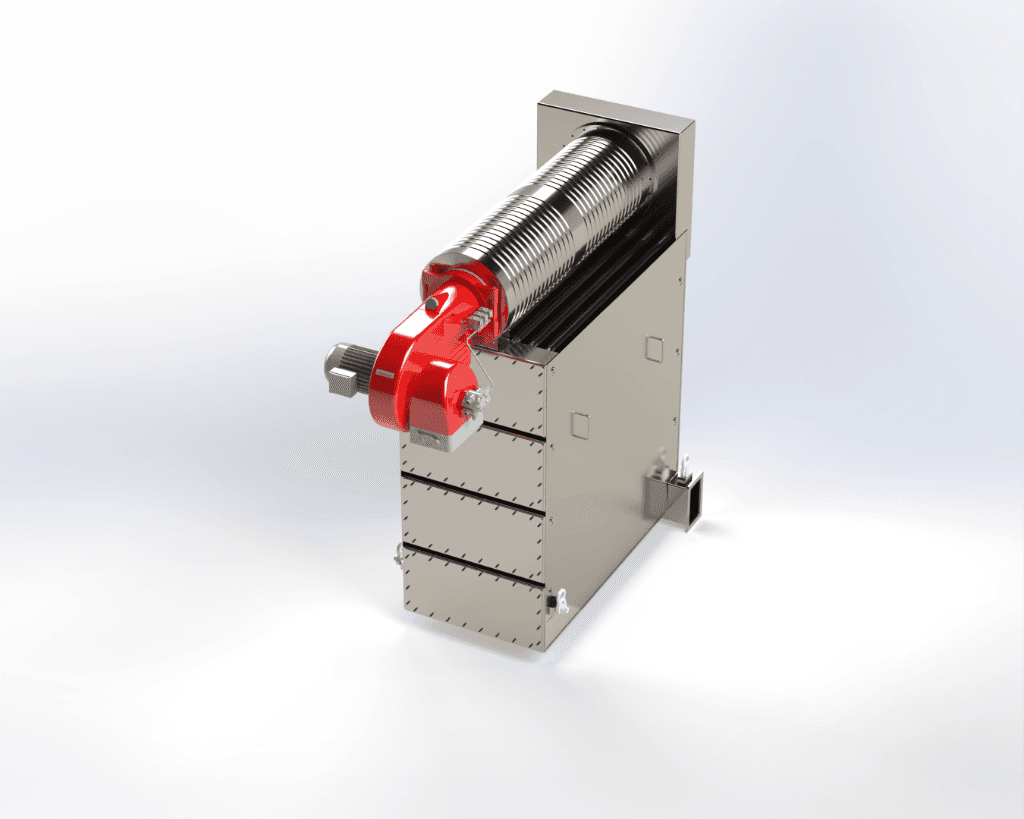
Single-burner indirect process heater for compact installations — 750 to 1,250 kW thermal output.
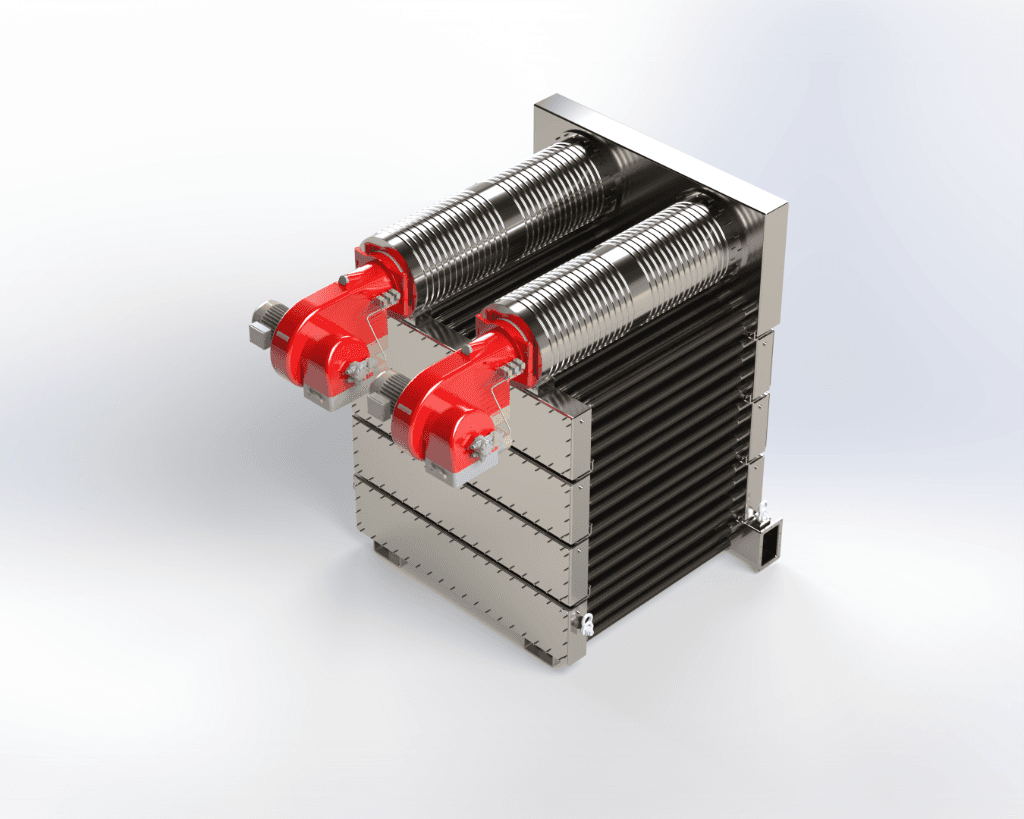
Double-burner indirect process heater for high-capacity applications — 1,500 to 2,500 kW thermal output.
Stone & Soil
Applications
Select an application to see how our process heaters address your specific stone and soil industry heating needs.
Ceramic firing and glass annealing demand stable, contamination-free heat across every zone of the kiln or lehr. Temperature variation as small as ±5°C between shelf positions produces uneven shrinkage, glaze crawling, and stress fractures that destroy entire kiln loads. Our indirect process heaters deliver 750–2,500 kW of modulating thermal output to tunnel kilns, shuttle kilns, and glass annealing lehrs — holding zone temperatures within ±2°C without introducing combustion gases into the product chamber.
Indirect Heating
No combustion gas in kiln chamber
Zone Precision
±2°C across kiln and lehr zones
Smart Controls
Modulating burners with PLC automation
20+ Year Life
Free-floating tube bundle design
Built for
Stone & Soil Industry
Key advantages of indirect process heaters for ceramics, glass, and mineral drying operations.
No Combustion Gas in Product
Indirect heat exchange keeps combustion gases completely separated from kiln chambers and drying drums — no carbon deposits on ceramics, no discolouration of filler sand.
Precise Zone Temperature
Modulating burners maintain kiln and lehr zone temperatures within ±2°C — eliminating uneven shrinkage, glaze defects, and thermal stress in ceramic and glass products.
750 kW to 2500 kW Output
Single and double-burner EcoHeat configurations scale from small batch shuttle kilns to continuous tunnel kilns and high-throughput rotary drying drums.
Multi-Fuel Flexibility
Natural gas, LPG, or biogas — switch fuel source to match site infrastructure and energy contracts without any burner modification.
20+ Year Service Life
Free-floating tube bundle absorbs continuous thermal cycling in high-temperature kiln environments without stress cracking — built for round-the-clock industrial operation.
Rapid Startup & Recovery
Cold to full output in ~30 minutes. Rapid recovery after kiln door cycles and drum load changes — keeping production throughput on schedule.
Built to Fit
Your Operation
Drop-in heat source for your existing kiln, annealing lehr, or rotary drying drum — standard connections, minimal downtime.
Clean Heat In.
Perfect Product Out.
Combustion gas in a kiln chamber deposits carbon on glazed surfaces and shifts clay body colour. In a drying drum, direct flame discolours filler sand and damages mineral coatings. EcoHeat indirect heaters seal all combustion products inside the heat exchanger — only clean, temperature-controlled air reaches your product. No contamination, no colour shift, no rejected loads.
Indirect heating eliminates combustion gas contact with kiln atmosphere — removing the sulphur compounds that cause glaze crawling, bloating, and colour deviation.
Clean hot air delivery prevents carbon staining and surface discolouration of filler sand and mineral aggregates — keeping output within specification and grading compliance.
Modulating burners maintain lehr zone temperatures within ±2°C for controlled stress relief — preventing spontaneous fracture from uneven cooling profiles.
Modulating burners maintain lehr zone temperatures within ±2°C for controlled stress relief — preventing spontaneous fracture from uneven cooling profiles.
Related Products
& Services
Complementary equipment and engineering services for your process.
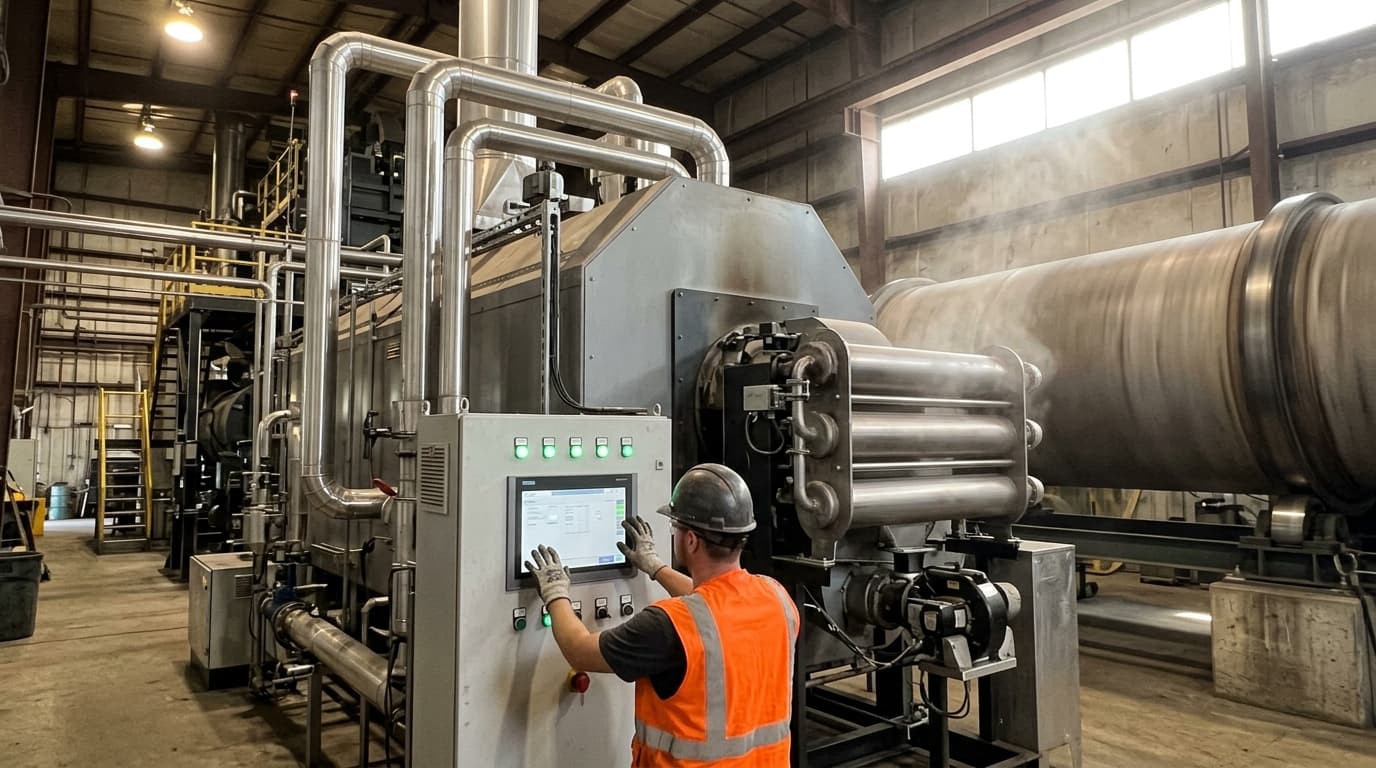
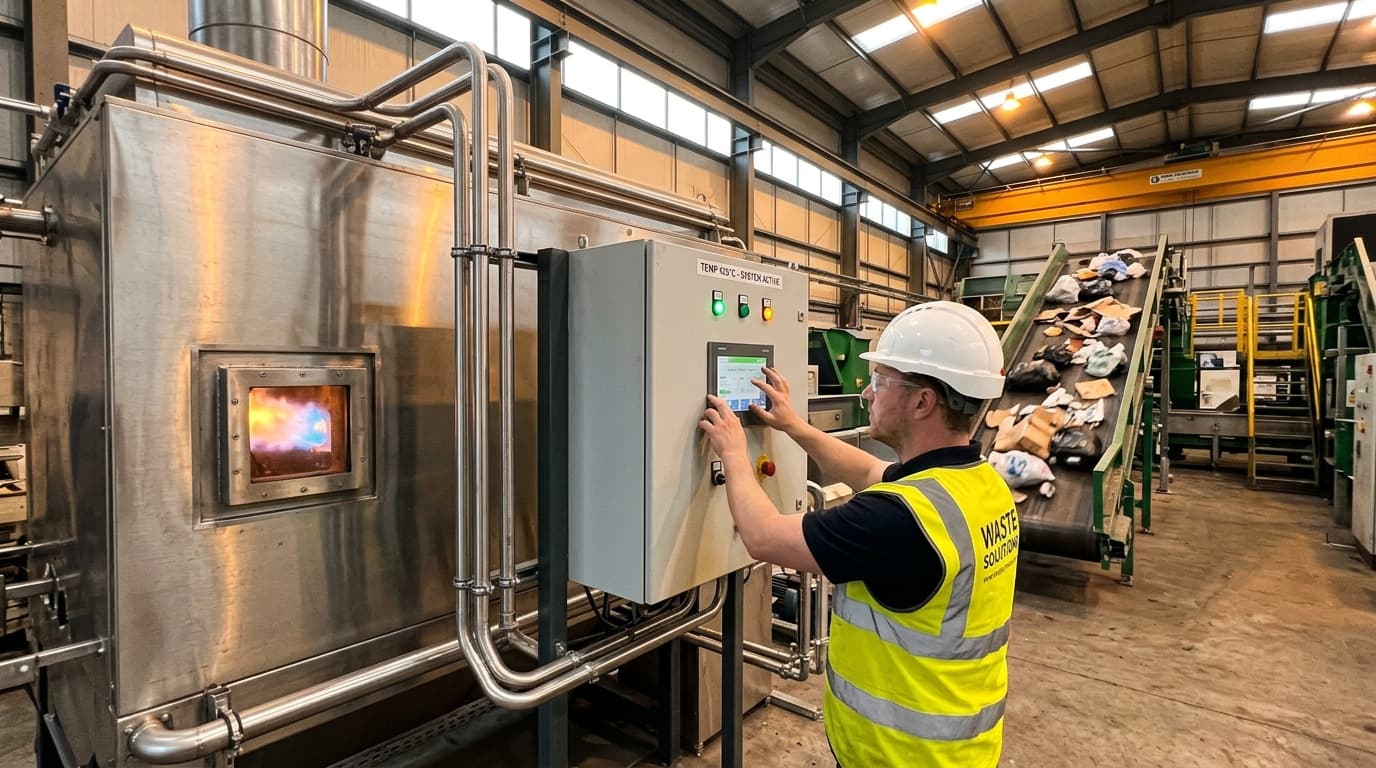
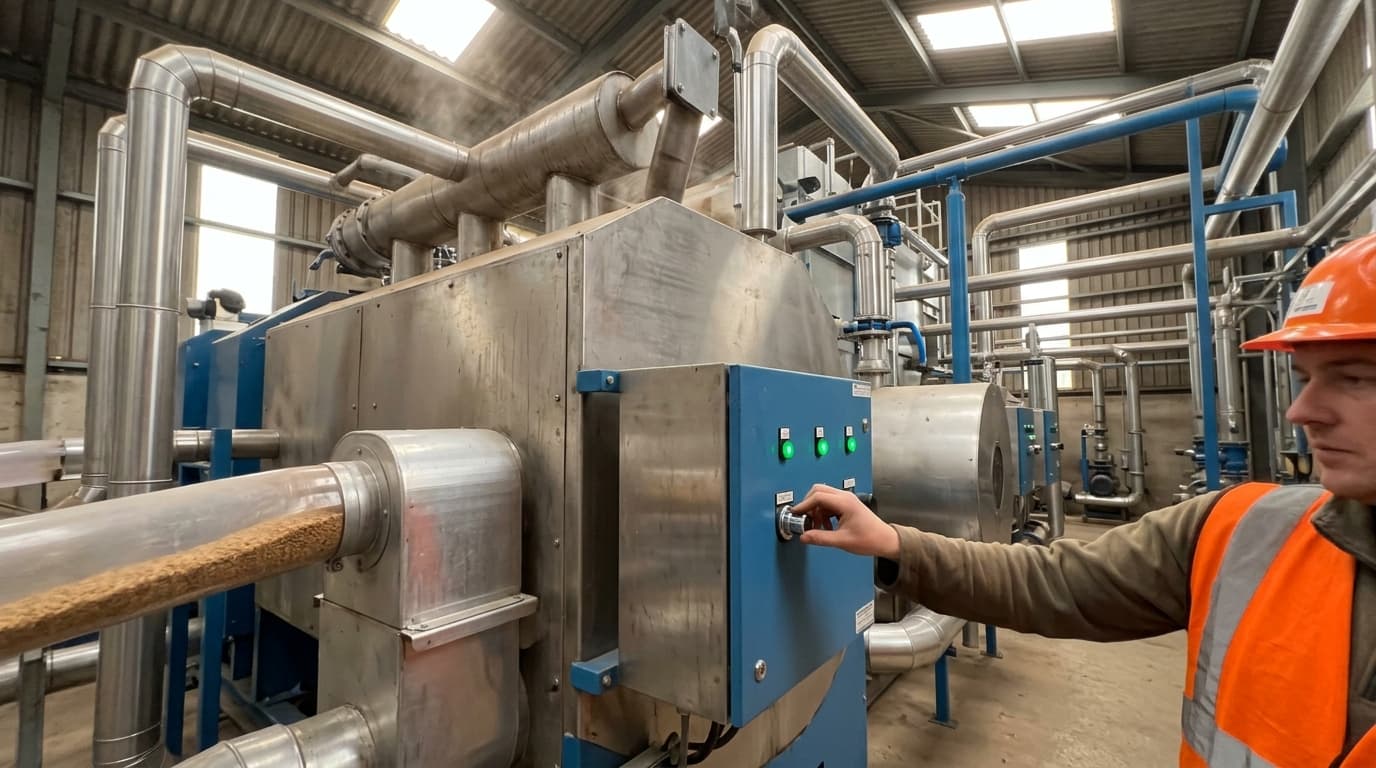
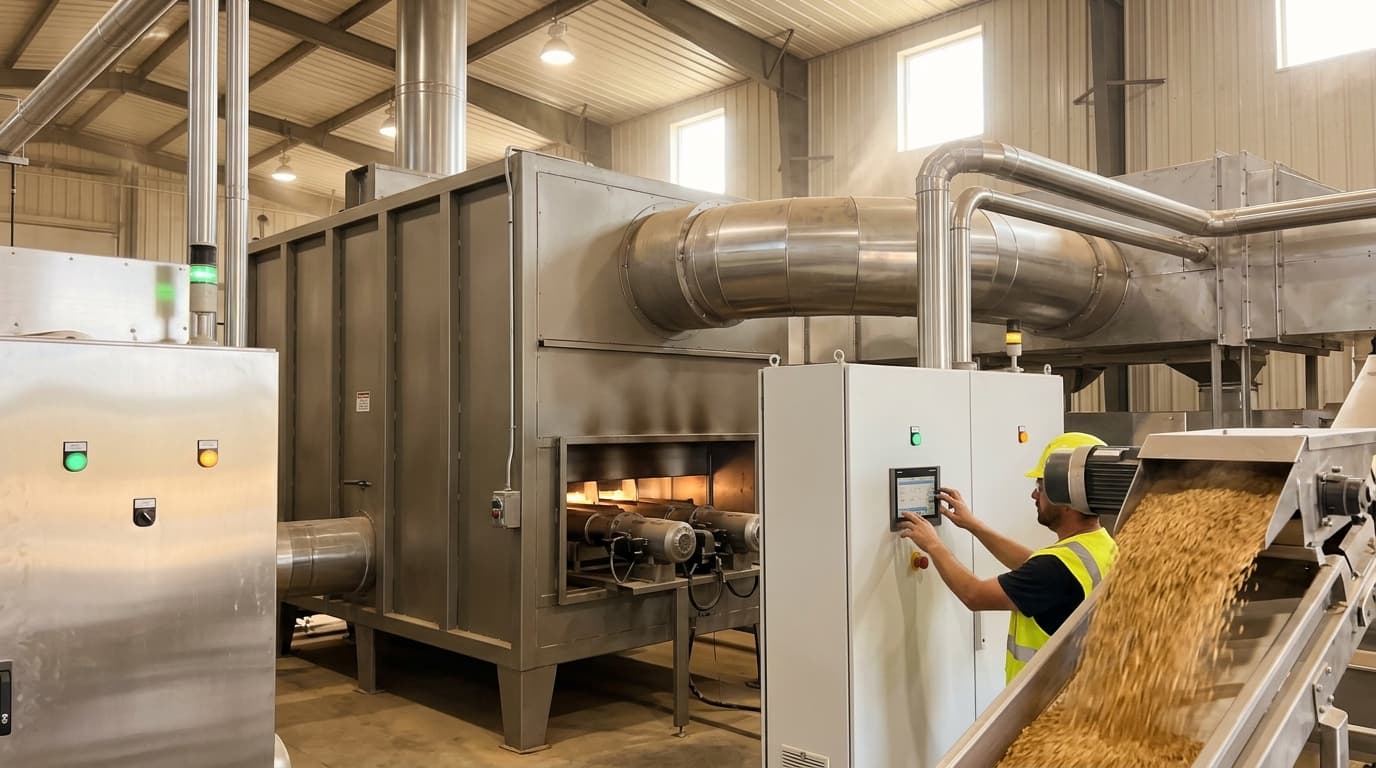
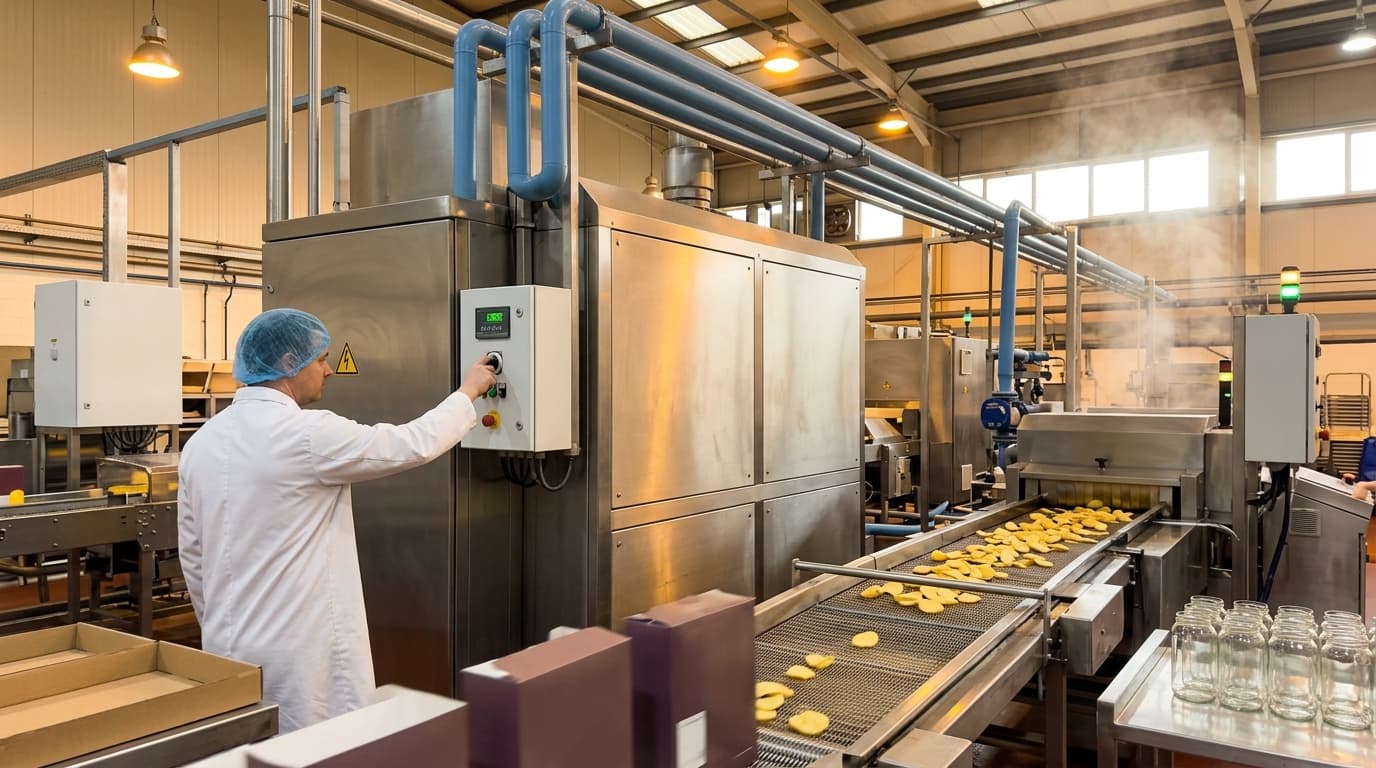
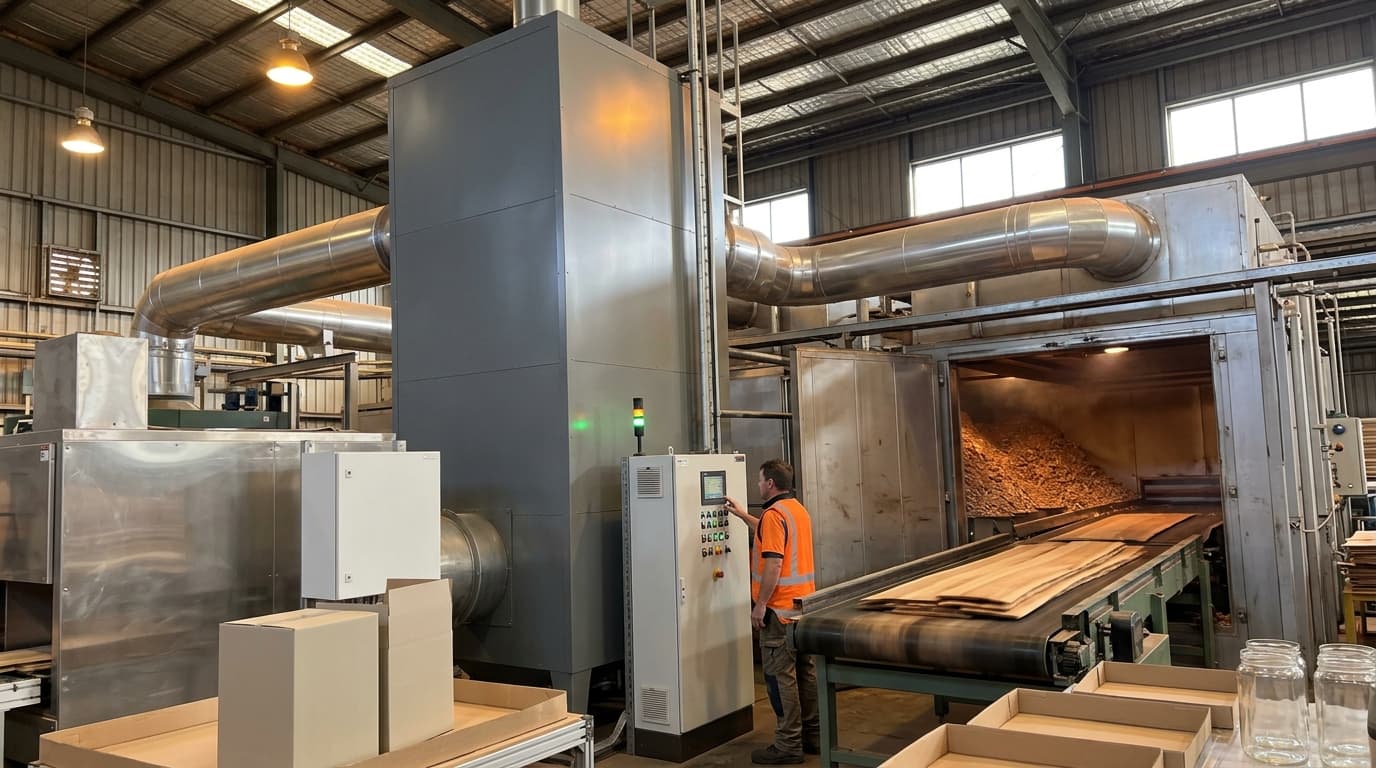
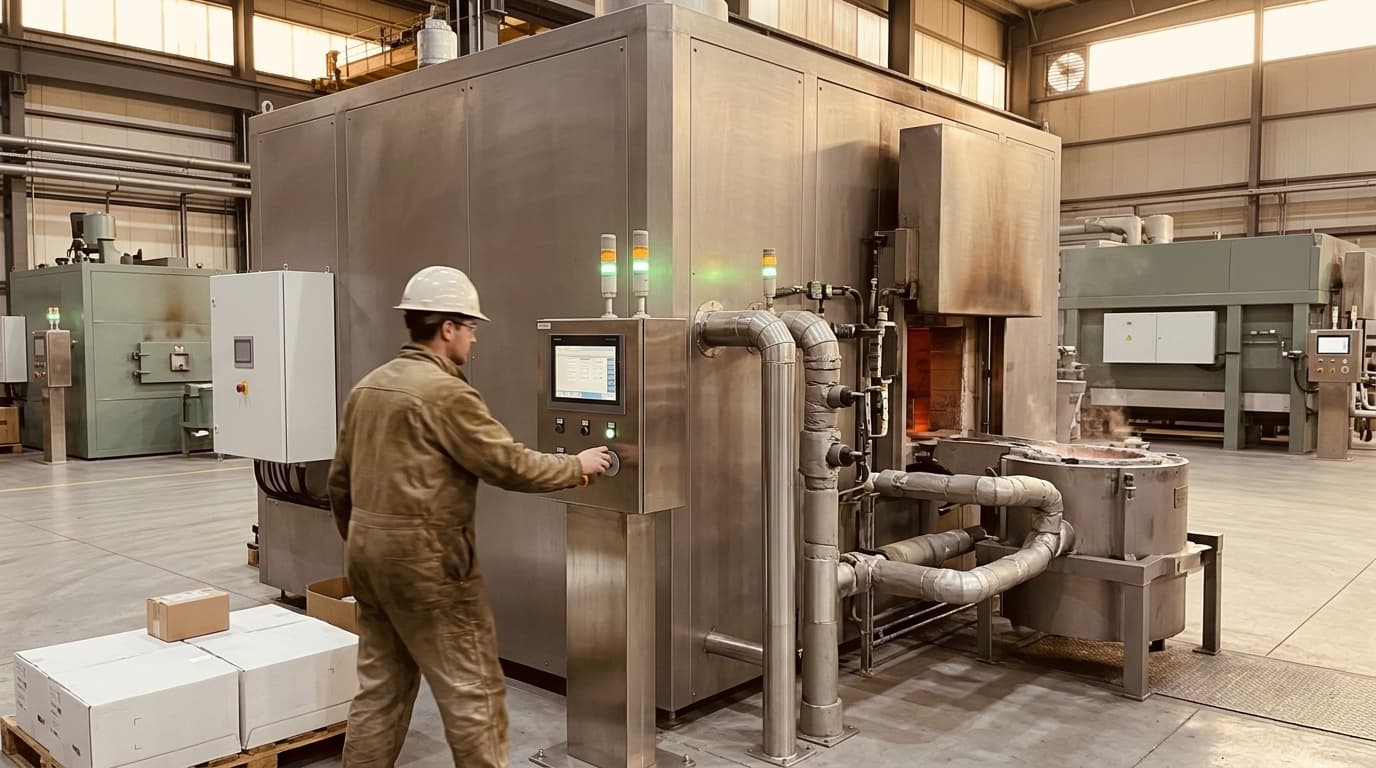
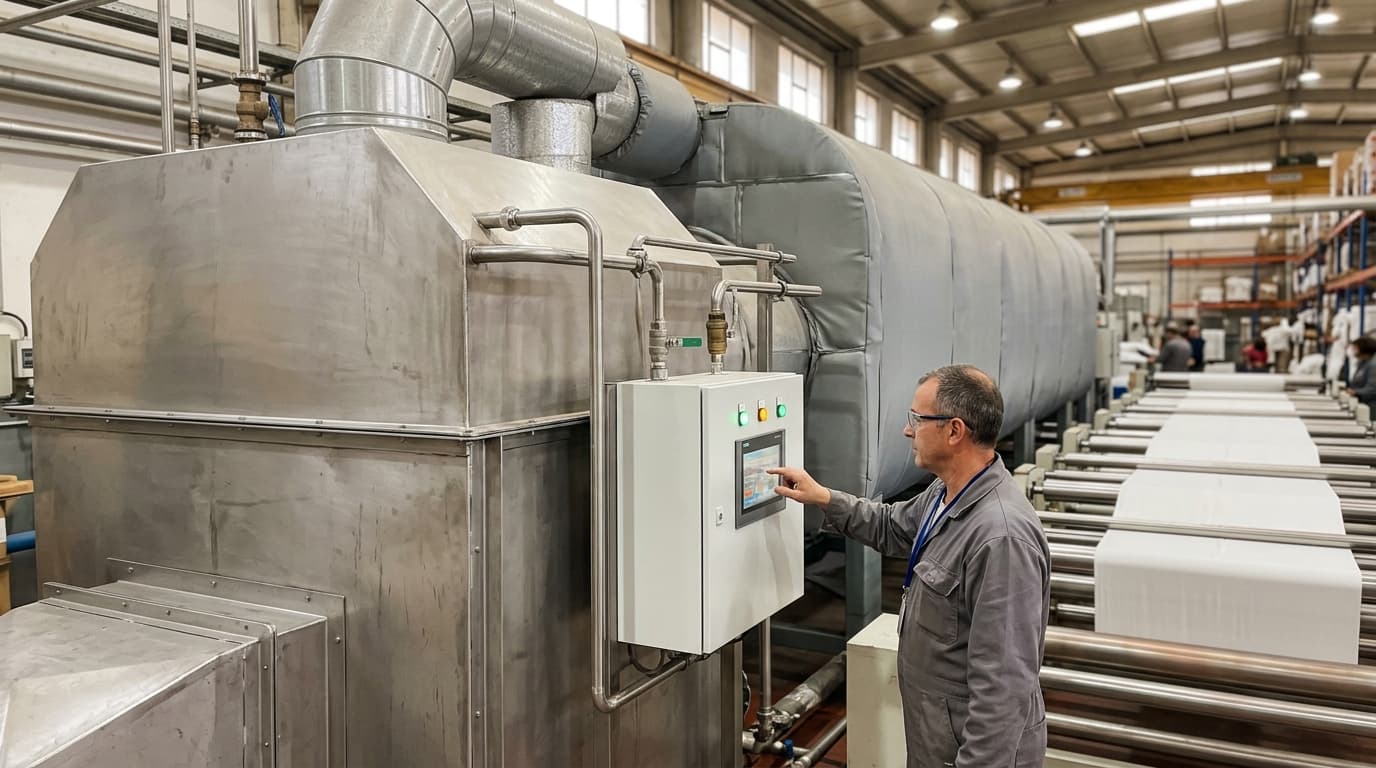
Stone & Soil
FAQs
Common questions about using indirect process heaters for ceramics, glass, and aggregate drying applications.
Direct-fired kilns introduce combustion gases — including sulphur compounds, carbon monoxide, and water vapour — directly into the kiln chamber. These gases react with glazes and clay bodies, causing crawling, pinholing, bloating, and colour shifts. Indirect heating keeps all combustion products sealed within the heat exchanger, delivering only clean heated air to the kiln chamber. This gives full control over kiln atmosphere composition.
Yes. Glass annealing requires a precisely controlled cooling profile — too fast and residual stress causes spontaneous fracture; too slow and production throughput drops. Our modulating indirect heaters maintain lehr zone temperatures within ±2°C, providing the stable thermal environment needed for controlled stress relief without introducing combustion gases that can deposit on glass surfaces.
Direct-fired drum dryers expose aggregate directly to combustion gases. For construction sand and mineral fillers, this causes carbon staining, surface discolouration, and coating damage that affects material grading and specification compliance. Indirect heating delivers clean hot air to the drum — drying the material without any product contact with combustion byproducts.
EcoHeat indirect heaters operate on natural gas, LPG, or biogas without burner modification. This is particularly useful for quarry and mineral processing sites where mains gas may not be available, allowing operation on delivered LPG or locally generated biogas.
The modulating burner adjusts heat output continuously in response to changes in feed moisture, material gradation, and drum throughput rate. This prevents the over-drying and under-drying that causes material rejection — keeping output within specification across variable feed conditions throughout the production shift.
The free-floating tube bundle design accommodates the severe thermal cycling typical in kiln environments without stress cracking or seal failure. Standard preventive maintenance involves sub-2-hour service intervals aligned with planned kiln shutdowns — no special tooling required, no extended downtime.
Stone & Soil
Consultation
Our engineering team specialises in stone and soil thermal solutions. Tell us about your kiln, lehr, or drying drum heating requirements.
- Ceramic kiln heating
- Glass annealing lehr heating
- Rotary drying drum heating
- Retrofit & integration planning