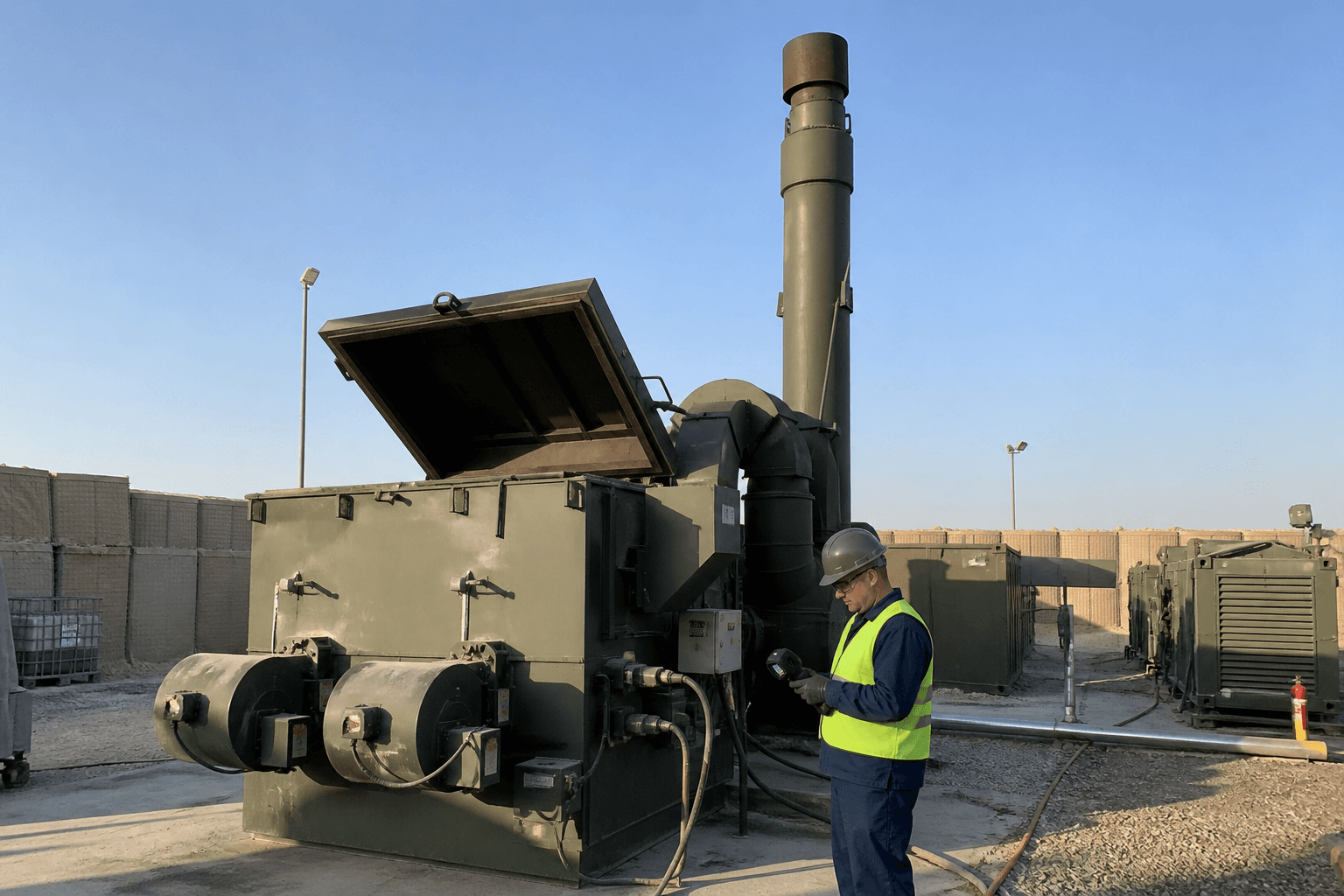
Military Base & Field Camp Waste Incinerators
Mixed camp refuse, field medical waste and sensitive material cleared on site where no collection route exists.
A forward base or remote training camp has no bin collection. Waste either accumulates inside the wire, or it moves by road convoy at cost and at risk. On-site destruction removes both — mixed camp waste, field medical waste and sensitive refuse cleared in a supervised daily cycle.
Three Models,
One Solution
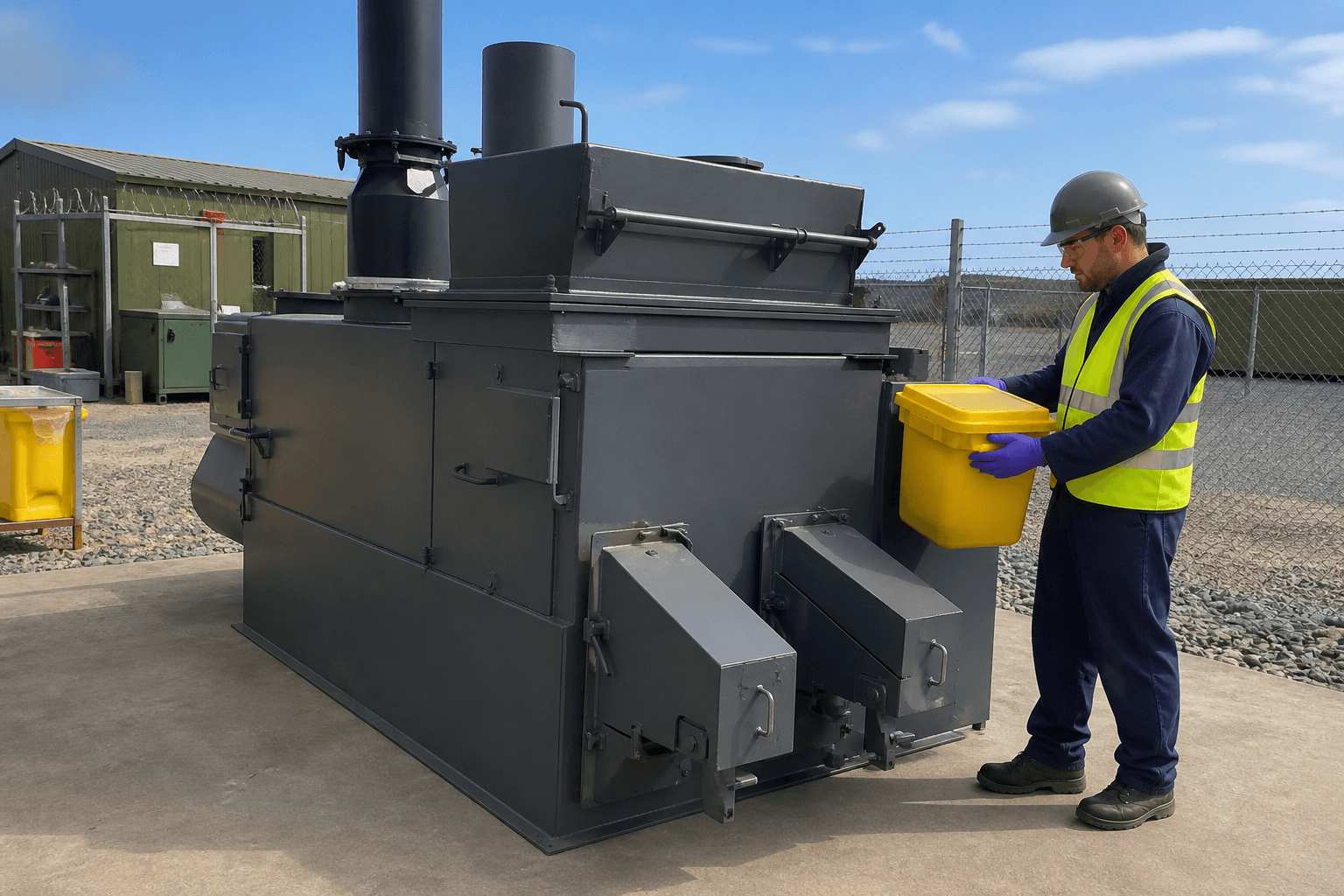
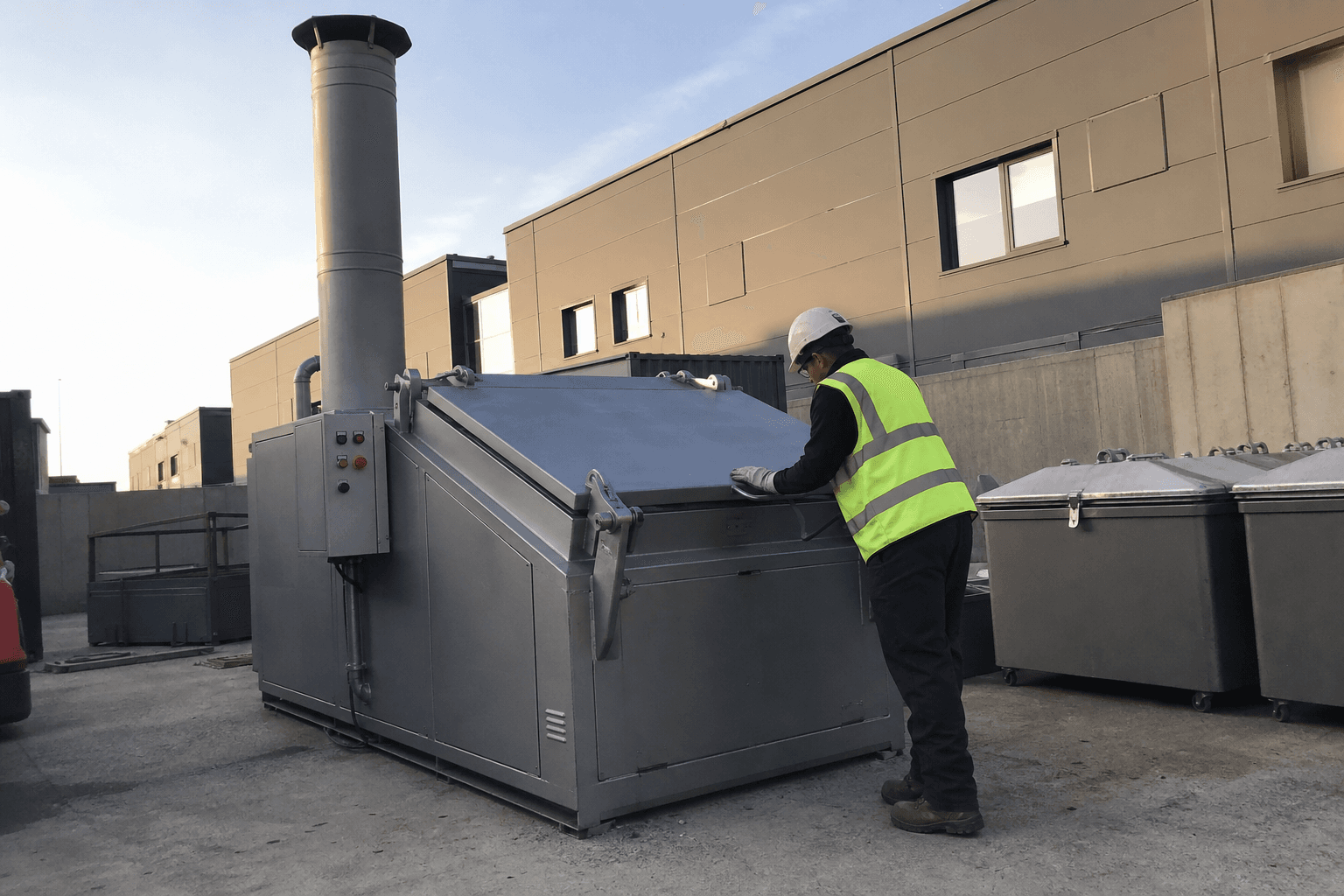
The compact AmoBurn: 150 kg per charge at 1.8 t, light enough to be relocated between sites. Used where destruction has to be witnessed and certified on site rather than handed to a third-party contractor.
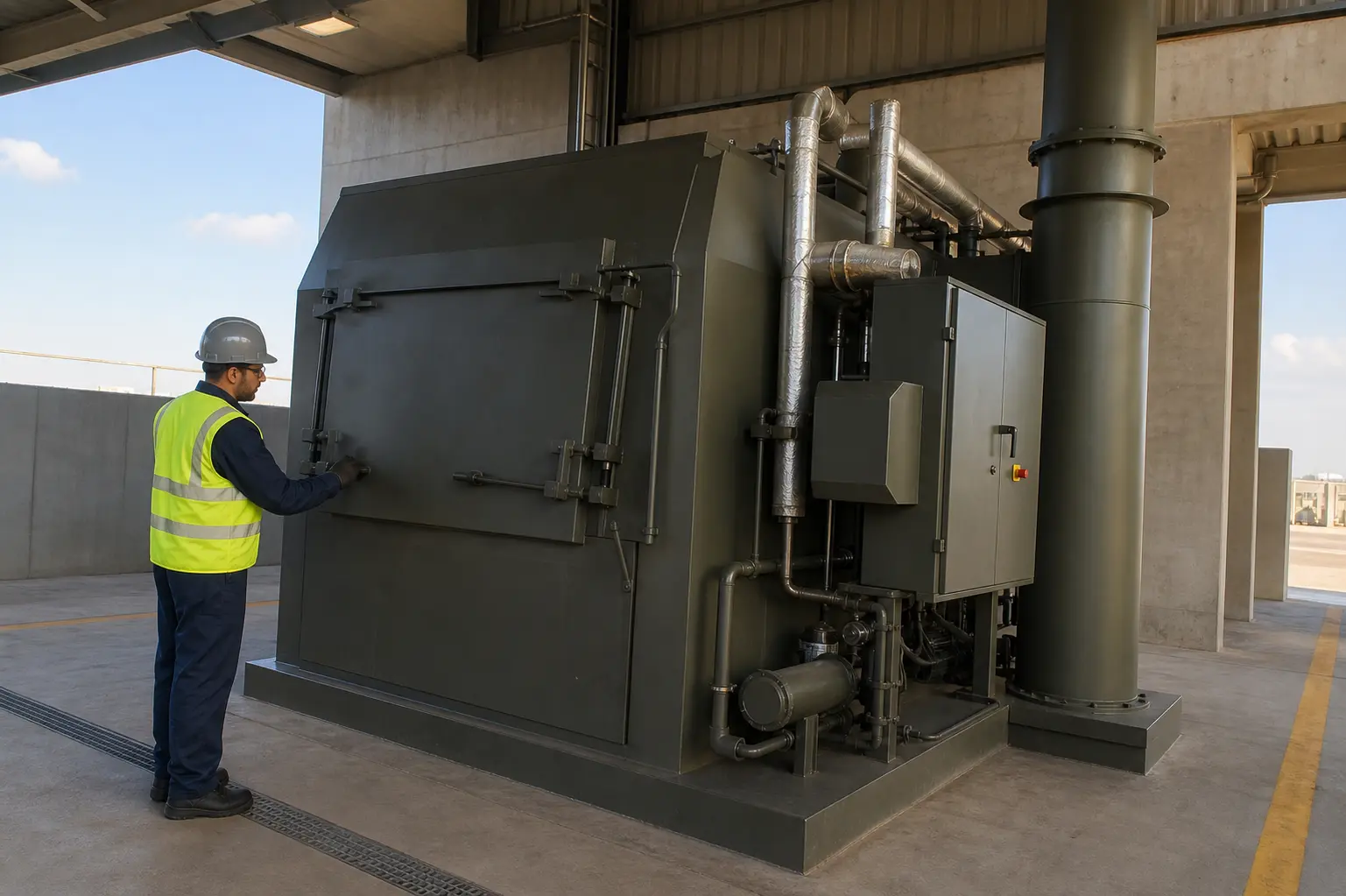
250 kg per charge for established base infrastructure. The two-burner arrangement and 1250 mm chamber handle classified document destruction and ammunition-adjacent waste in the same unit.
The largest AmoBurn at 300 kg per charge. Specified where the secure-destruction requirement is continuous enough that a smaller unit would need several cycles a day to keep up.
Which Model
Fits Your Volume
Pick a model to see what it clears in a day of base & field camp waste.
A detachment or outstation: one charge a day covers mixed refuse from around a hundred people, on the widest set of waste codes the permit carries.
Environmental permit on UK sites
Any UK establishment burning waste needs a permit from the Environment Agency, SEPA or NIEA, including temporary and training sites. Deployed operations outside the UK fall under the relevant theatre environmental policy instead.
Field medical waste
Where the stream includes clinical waste from an aid post, the same 850°C two-second condition applies and is met as standard. Sharps and pathological waste are within scope; the charge should be declared in the permit application.
Siting and dispersion
Stack height comes from a site-specific dispersion assessment, which on a camp means accounting for accommodation lines and prevailing wind rather than applying a default figure.
Pre-charge separation
Mixed camp waste is the stream where excluded items arrive by accident. A bin regime that pulls out batteries, aerosols and anything energetic before the holding area is a permit expectation as much as a safety one.
Why Burn It
On Site
4 things change on the day this stream stops leaving the site.
No collection route needed
Remote and forward sites have no municipal service to buy into. The alternatives are accumulation inside the wire or convoying waste out — one is a hygiene and security problem, the other is cost and exposure on the road. On-site destruction removes the dependency altogether.
One unit, mixed stream
Catering waste, packaging, field medical waste and sensitive refuse all meet the same combustion condition. A camp does not have to run three disposal arrangements or train personnel in three separation regimes to stay compliant.
95% mass reduction on site
Ash residue is 3–5% of input. A camp generating 300 kg a day is moving 9–15 kg of inert ash instead of 300 kg of mixed refuse — the difference between an occasional load and a standing logistics task.
It moves when the camp moves
At 1.8–2.4 tonnes these units are transportable with standard plant. Where a camp has a defined life, the waste endpoint does not have to be written off with the site at the end of it.
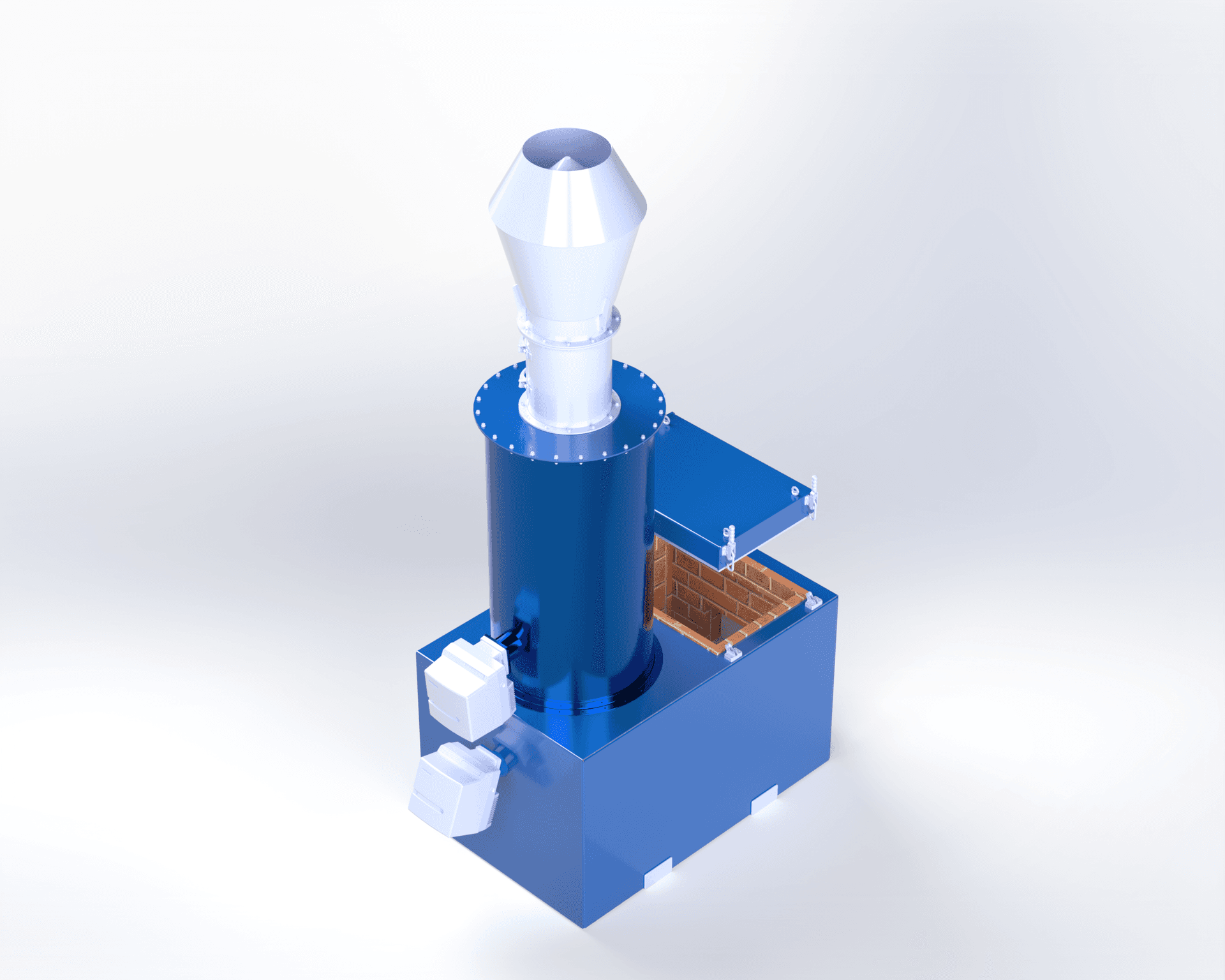
Dual-chamber unit
Primary chamber running 850–1,200°C with a secondary chamber holding flue gas above 850°C for two seconds — the Industrial Emissions Directive condition, met as built rather than as an option.
Burner set and fuel train
Configured for natural gas, LPG, diesel, biofuel or hydrogen. Fuel choice is a site decision; the combustion condition is identical whichever is specified.
What Ships
With The Unit
Identical whichever stream it is specified for. The operating procedure changes; the machine does not.
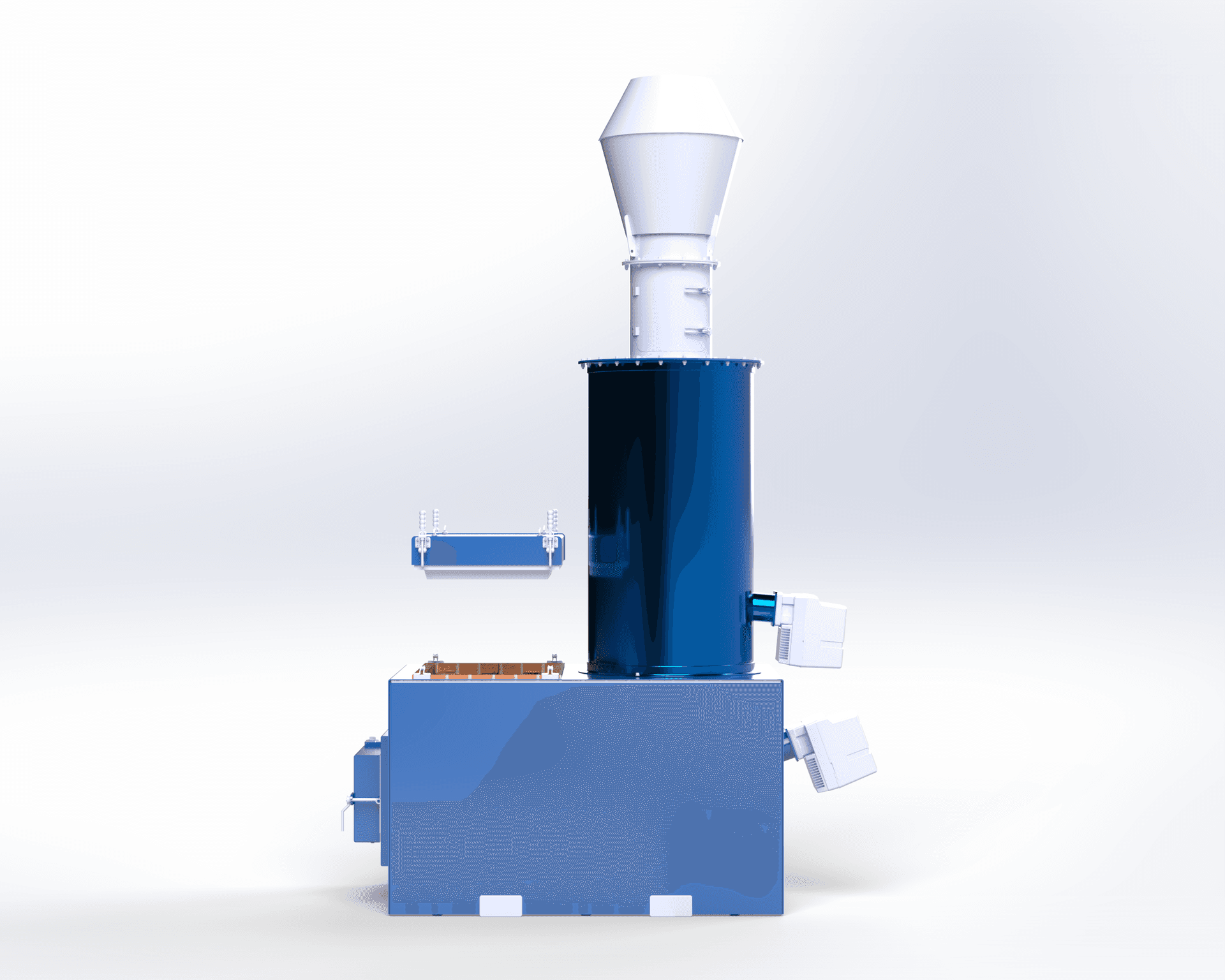
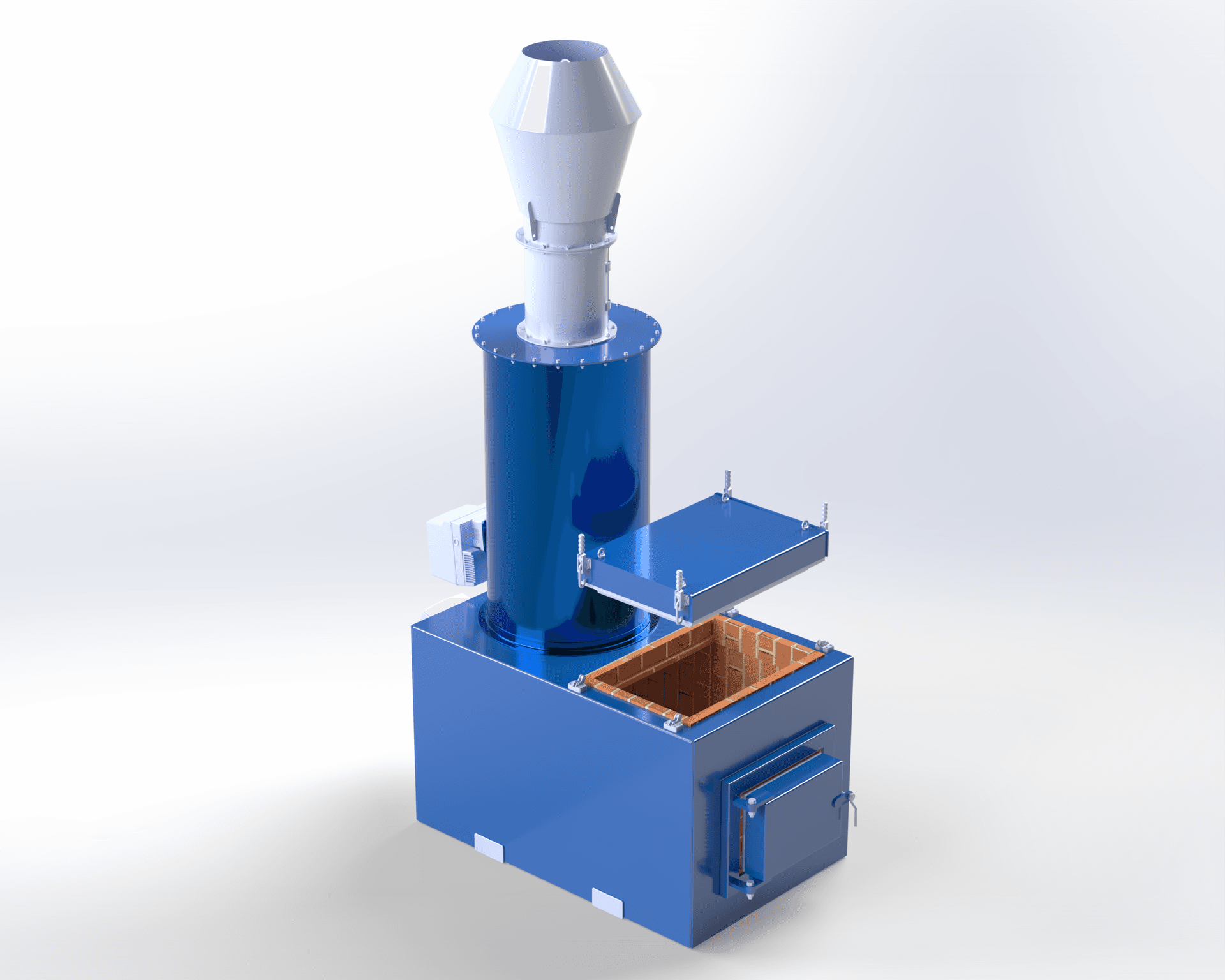
Dual-chamber unit
Primary chamber running 850–1,200°C with a secondary chamber holding flue gas above 850°C for two seconds — the Industrial Emissions Directive condition, met as built rather than as an option.
Burner set and fuel train
Configured for natural gas, LPG, diesel, biofuel or hydrogen. Fuel choice is a site decision; the combustion condition is identical whichever is specified.
IP6X control panel
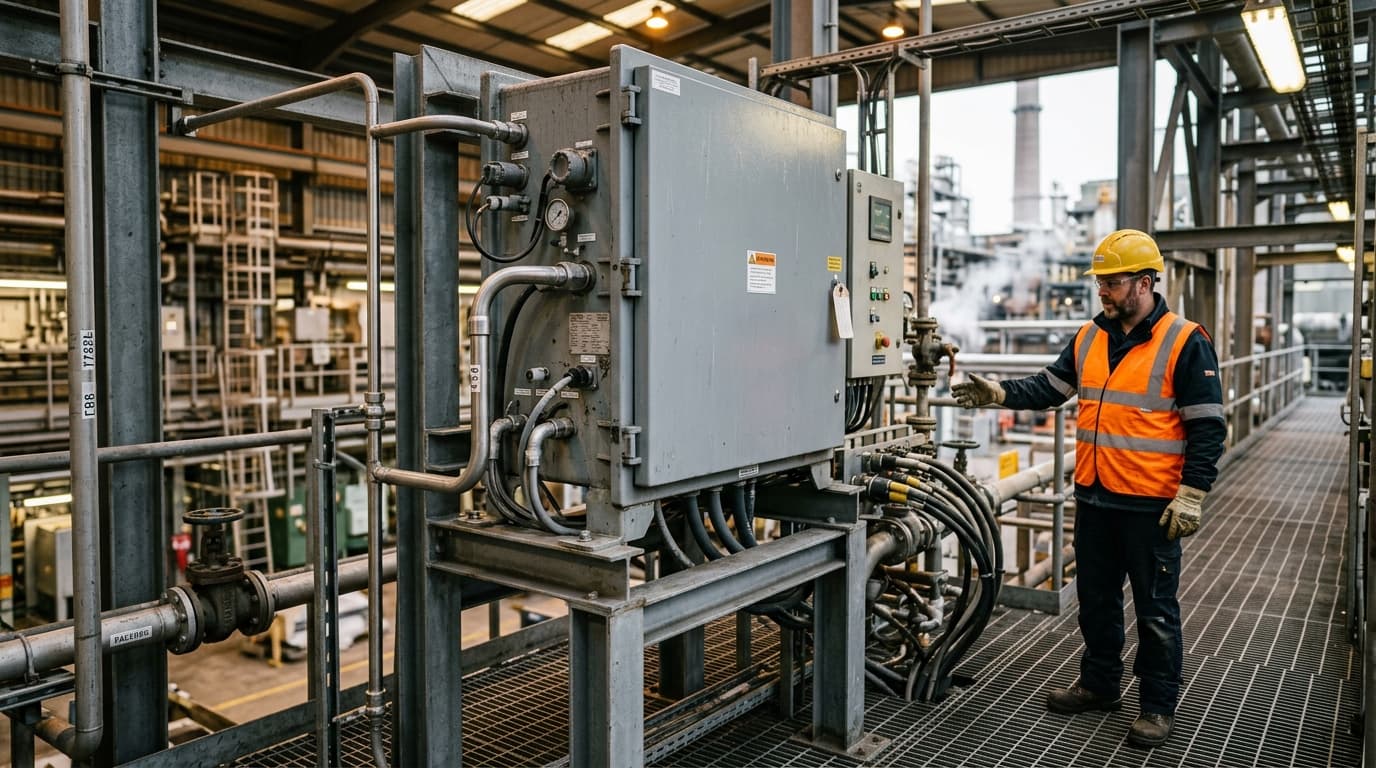
PLC control with cycle logging, chamber thermocouples and interlocked charge door. The cycle record is what a destruction register entry is written against.
Coretex refractory lining
Monolithic castable lining rated for the full temperature range, replaceable in service rather than requiring the shell to be scrapped with it.
Stack and dispersion data pack
Stack supplied to the height your site-specific dispersion assessment calls for, with the emissions data the permit application has to reference.
Commissioning and operator training
On-site commissioning, a witnessed first burn, and training for the establishment personnel who will hold the charge-door key.
How One Burn Runs,
Start To Finish
One charge is one countable event. That is what makes a batch unit auditable and a continuous one not.
One Cycle,
Start To Finish
Adds a bin regime at source — batteries, aerosols and anything energetic pulled before the holding area — and the widest set of waste codes on the permit, because the camp stream touches most of the other five.
The unit is top-loaded from the secure store or holding area, the load recorded, and the charge door closed and interlocked. Nothing can be added once the cycle starts, which is what makes one charge equal one register entry.
The primary chamber reaches operating temperature within 30 minutes and runs between 850°C and 1,200°C. The charge is reduced under starved-air conditions rather than open burning, so the substrate is destroyed instead of scattered.
Combustion gases pass into the secondary chamber and are held above 850°C for two seconds — 1,100°C where the stream carries more than 1% halogenated organic content. This is the condition that destroys the organic fraction rather than moving it up the stack.
The unit is left to cool with the door interlocked. On a batch unit burning at under 50 kg/h, heat-up, burn and cool-down together occupy most of a working day for a full charge.
Residue is raked out at 3–5% of input mass — mineral ash with no recoverable structure, plus any inert metal. The cycle log, the witness signature and the ash weight close the register entry.
What You Can Burn —
And What You Can't
One charge takes the whole stream without pre-sorting. What must never enter it is a short, hard list.
Yes: accepted in a charge
No pre-sorting between these
- Catering and mess wasteFood residues, ration packaging and single-use containers off the mess line. The bulk of a camp's daily charge, and the reason the cycle runs daily rather than weekly.
- Packaging and stores wasteCardboard, fibre, film, mixed plastics and broken timber packaging from stores. Bulky rather than heavy: the chamber fills before the weight rating does.
- General camp and accommodation-line refuseThe mixed daily refuse that has nowhere to go on a site with no collection route, and that accumulates inside the wire if it is not destroyed.
- Field medical waste from the aid postSharps, dressings and pathological waste, at the same 850°C two-second condition as everything else in the charge. Declare the stream in the permit application.
- Contaminated PPE and absorbentsDisposable clothing, and spill-kit residues from the vehicle lines absorbed onto granular absorbent rather than charged as loose liquid.
- Sensitive paper generated in the fieldPrinted material that should not leave the perimeter regardless of volume, destroyed on site under supervision instead of convoyed out.
No: never charged
Not a permit question — these stay out
- Anything energeticLive rounds, pyrotechnics and initiators route to EOD. Camp waste streams are exactly where they turn up by accident, so the pre-charge check matters most here.
- Pressurised containers, aerosols and gas cartridgesCommon in ration and cooking waste and the single most likely thing to rupture a charge. Separate at the bin, not at the door.
- Batteries of any chemistryThermal runaway plus a residue that contaminates the ash. Field kit generates a lot of them; give them their own bin.
- Vehicle fluids in bulkAbsorbed onto granular absorbent is fine and is a stream in its own right. Loose liquid is not.
Can you legally burn base & field camp waste on site?
Technically, yes: the chamber destroys almost everything on the accepted list at 850–1,200°C, and capability is rarely the constraint. Legally is a separate question. What your site is allowed to burn is set by your environmental permit from the Environment Agency, SEPA or NIEA and the waste codes written into it. The never-charged list is different again: those materials are out of scope for the unit or governed by a direction, and no permit wording brings them back in. Send us the codes you hold, or the ones you expect to apply for, and we will tell you which of this list they cover before anything is specified.
Send us your waste codesWhat size incinerator for a 300-person camp?
Arithmetic on published model figures, not a customer reference. Your numbers go through the same steps.
How This
Was Worked Out
300 people at roughly a kilogram of mixed refuse each = ≈300 kg a day, which is one AMBI-300 charge per working day. At 3–5% that leaves 9–15 kg of ash to lift periodically instead of 300 kg of refuse to convoy out daily. Substitute your own headcount and arisings rate; the ratio that matters is ash at 3–5% of whatever goes in.
9–15 kg per day
Down ~95%
Periodic ash lift, not a standing task
2.4 t — moves with the camp
Send your daily or weekly arisings and we will confirm the model, the charge count and the permit route.
Related Products
& Services
Complementary equipment and engineering services for your process.
Sizing and background
- [TOOL]Work out the burn rate for your own arisings
- [TOOL]Size the combustion air and flue gas duty
- [BLOG]Fuel-to-air ratio in ammunition incinerators
- [BLOG]NOx reduction in ammunition incinerators
- [BLOG]Advanced process control for ammunition incinerators
- [BLOG]Integrating vibration analysis for incinerator predictive maintenance
- [BLOG]Advanced gas cleaning for ultra-low emission incinerators
Base & field camp waste Questions
Answered against the published figures for the models specified for this stream, not a generic range sheet.
A field camp incinerator is a transportable batch unit that gives a base or temporary camp its own waste endpoint. It is specified where there is no municipal collection to rely on, where convoying refuse out is a security or cost burden, or where the waste stream is mixed enough that separating it for different disposal routes is impractical in the field. The stream on a working camp is genuinely mixed: catering and packaging waste, field medical waste from the aid post, contaminated PPE, and a proportion of sensitive material that should not leave the perimeter regardless of volume. A single dual-chamber unit takes all of it at the same 850–1,200°C condition, which is why one machine can replace what would otherwise be three separate disposal arrangements. Transportability is the defining constraint. The AMBI-150 weighs 1.8 tonnes and the AMBI-300 2.4 tonnes, which puts all three inside the range of standard plant handling rather than requiring permanent civil works. A camp that moves can take its waste endpoint with it. The operational value is measured in what stops moving. Ash residue is 3–5% of input, so a camp generating 300 kg a day is handling 9–15 kg of inert ash instead of 300 kg of mixed refuse — the difference between a periodic collection and a standing logistics task with a vehicle and an escort attached to it.
300 people at roughly a kilogram of mixed refuse each = ≈300 kg a day, which is one AMBI-300 charge per working day. At 3–5% that leaves 9–15 kg of ash to lift periodically instead of 300 kg of refuse to convoy out daily. Substitute your own headcount and arisings rate; the ratio that matters is ash at 3–5% of whatever goes in.
Yes. Catering and packaging waste, field medical waste, contaminated PPE and sensitive refuse all meet the same combustion condition — 850–1,200°C with two-second secondary-chamber retention. A single dual-chamber unit takes the mixed stream, which is why one machine can replace what would otherwise be several separate disposal arrangements.
Yes. The AMBI-150 weighs 1.8 tonnes and the AMBI-300 2.4 tonnes, which keeps all three within the range of standard plant handling rather than requiring permanent civil works. Where a camp has a defined life, the waste endpoint moves with it instead of being written off at the end.
One charge per working day is the realistic planning unit. These are batch units burning at under 50 kg/h, so a 300 kg charge occupies most of a day once heat-up, burn, cool-down and ash removal are allowed for. Size the model on what the camp generates per day rather than per hour.
Yes. Clinical waste from an aid post — including sharps and pathological waste — meets the same 850°C two-second condition and is within scope as standard. It should be declared in the permit application so the permit covers the stream actually being burnt.
On UK soil, yes. Any establishment burning waste needs an environmental permit from the Environment Agency, SEPA or NIEA, and temporary and training sites are not exempt. Deployed operations outside the UK fall under the relevant theatre environmental policy instead.
Between 3% and 5% of input mass. A camp generating 300 kg of waste a day is left with roughly 9–15 kg of inert ash — a periodic collection rather than a standing logistics task, and it leaves as ordinary residue rather than as mixed or sensitive waste.
Aerosols, gas cartridges, batteries and anything energetic. Camp waste is the stream where these arrive by accident, so the control is a bin regime at source rather than a check at the charge door. Vehicle fluids are acceptable only absorbed onto granular absorbent, never as loose liquid.
Ready to
Incinerate?
Send the stream, the volume and the site constraints. We will confirm the model, the permit route, and what the specification has to say to satisfy the regulator.
- No collection route needed
- One unit, mixed stream
- 95% mass reduction on site
- It moves when the camp moves