Rendering & Meat Processing Waste Incinerators
Condemned, recalled and out-of-spec product destroyed on site, with a record that it never re-entered the chain.
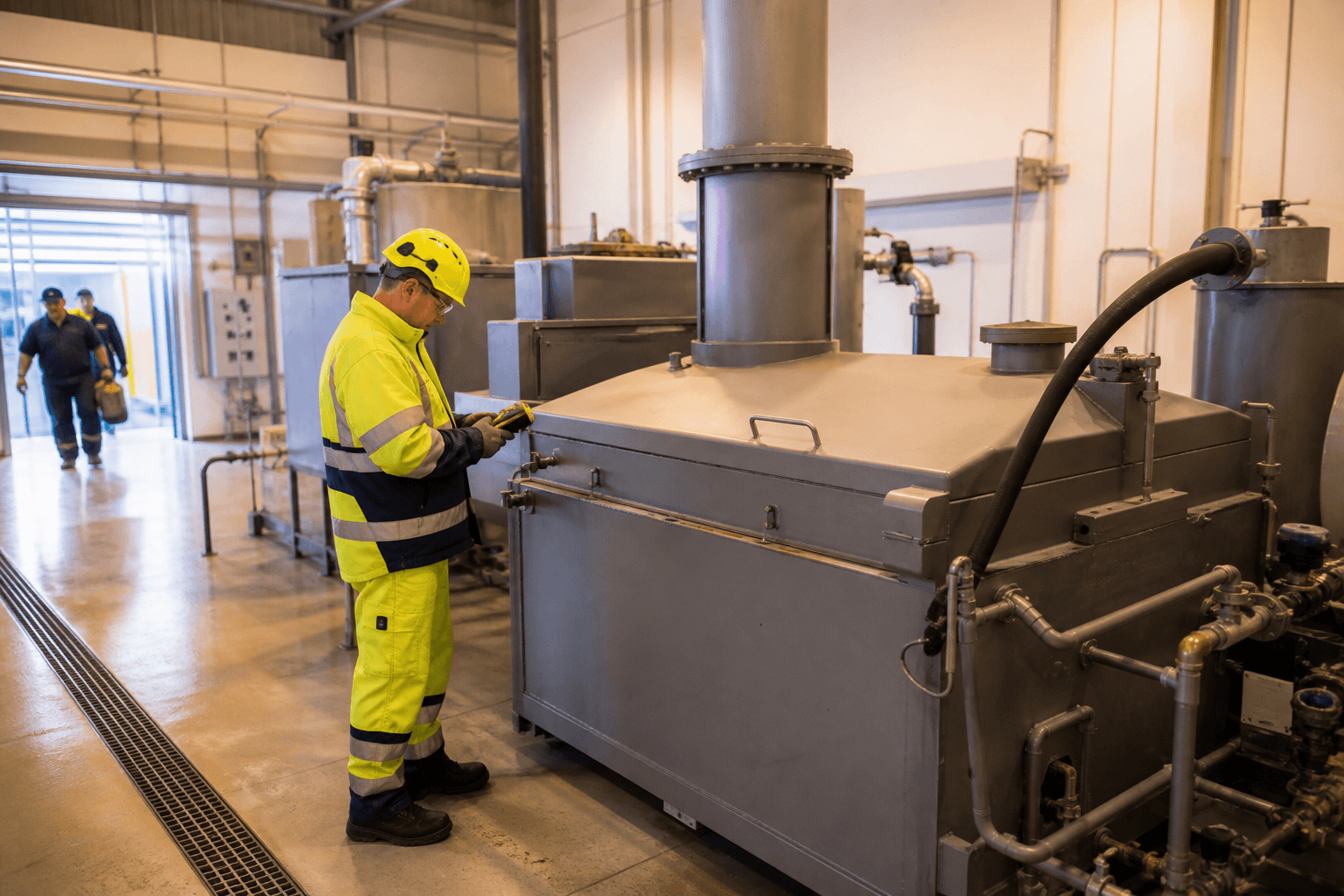
A cutting plant, butchery or food manufacturer producing meat has one disposal problem that cannot be negotiated: product that must be proven destroyed. Recalls, condemnations and out-of-specification batches all need an end point on paper. AniBurn units provide it on site, with a dated cycle log against the quantity withdrawn.
Three Models,
One Solution
150 kg per charge for veterinary practices, small farms and pet cremation. The chamber is tall relative to its load rating because carcass waste is bulky and wet — volume, not weight, is the binding constraint.
250 kg per charge with a 2880 mm chamber. The usual specification for a working livestock farm that needs fallen stock dealt with on site under biosecurity rules rather than held for collection.
The largest AniBurn: 300 kg per charge in a 3180 mm chamber. Sized for commercial pet crematoria and larger livestock units where a single daily cycle has to clear everything held in cold storage.
Which Model
Fits Your Volume
Pick a model to see what it clears in a day of rendering & meat processing.
A withdrawn batch destroyed and recorded on site. Volumes are small; the record that it never re-entered the chain is the point.
Category-specific approval
Material is category 1, 2 or 3 under the retained ABP Regulation, and the plant's APHA approval has to cover the category being charged. It is a documentation check, made before the material moves rather than at the charge door.
Environmental permit
Required from the Environment Agency, SEPA or NIEA. On a food premises it sits alongside the site's other consents; holding a food approval implies nothing about the incinerator.
The withdrawal record is the point
Food law requires unsafe product to be withdrawn and kept out of the market. What an audit asks for is the end point — a dated cycle log matched to the quantity withdrawn is what converts an intention into evidence.
Duty of care on the ash
Ash needs a transfer note if it leaves the site. From a product charge it is sterile mineral residue carrying no product identity, which is the outcome a brand-protection destruction is looking for.
Why Burn It
On Site
4 things change on the day this stream stops leaving the site.
A recall gets a provable end point
Withdrawal is only half the obligation; showing where the product went is the other half. A dated cycle log against a quantity is a stronger record than a collection note from a third party.
Brand product cannot re-enter circulation
Mislabelled, counterfeit or reject product handed to a contractor is product you no longer control. Destroying it in your own approved plant removes the possibility entirely.
No condemned stock held in a food building
Material waiting for collection occupies chilled space in a licensed premises and sits alongside product. Same-day destruction removes both the storage cost and the hygiene interface.
Residue failures are dealt with quietly
A batch condemned on antibiotic or contaminant residue is commercially sensitive. On-site destruction keeps the handling inside the business rather than on a haulier's manifest.
Dual-chamber unit
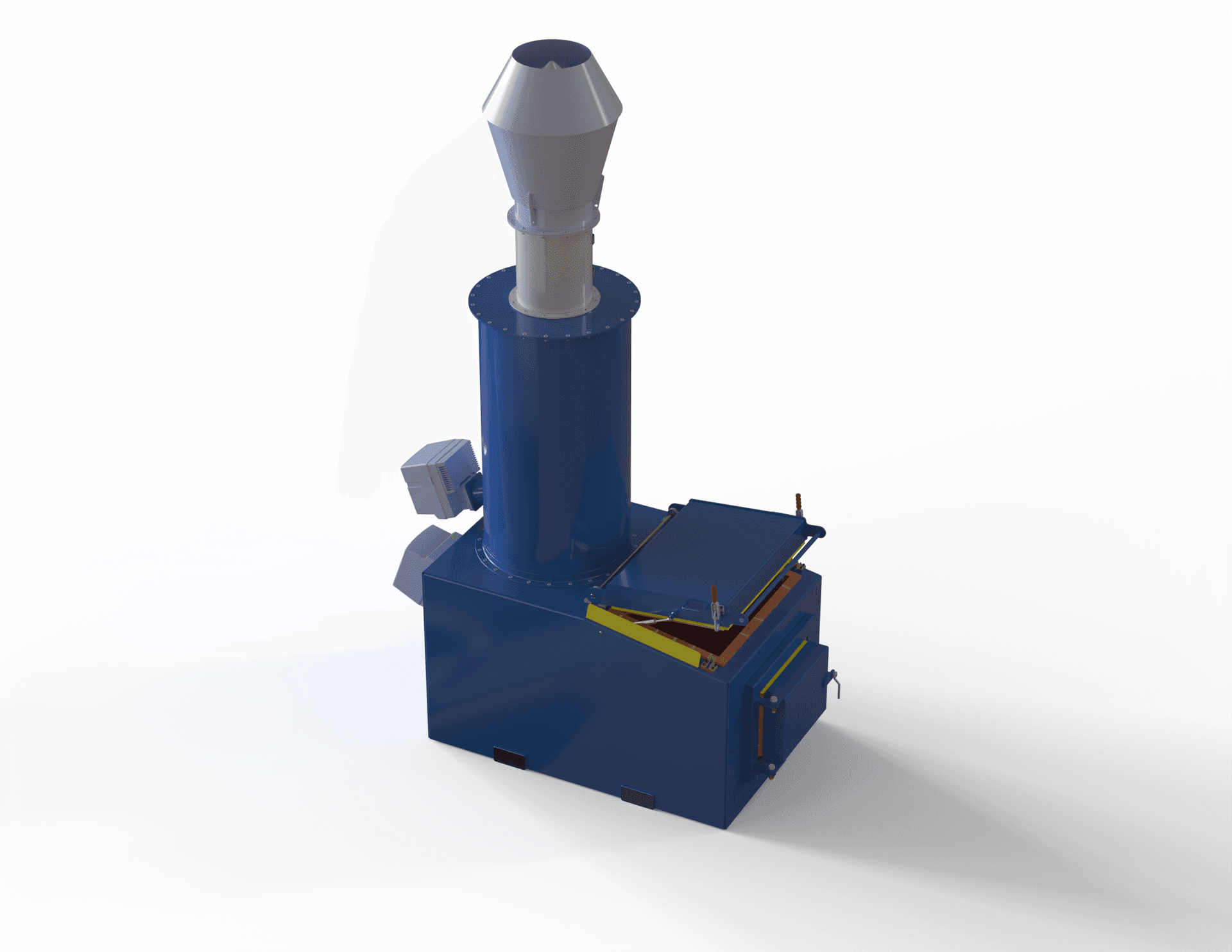
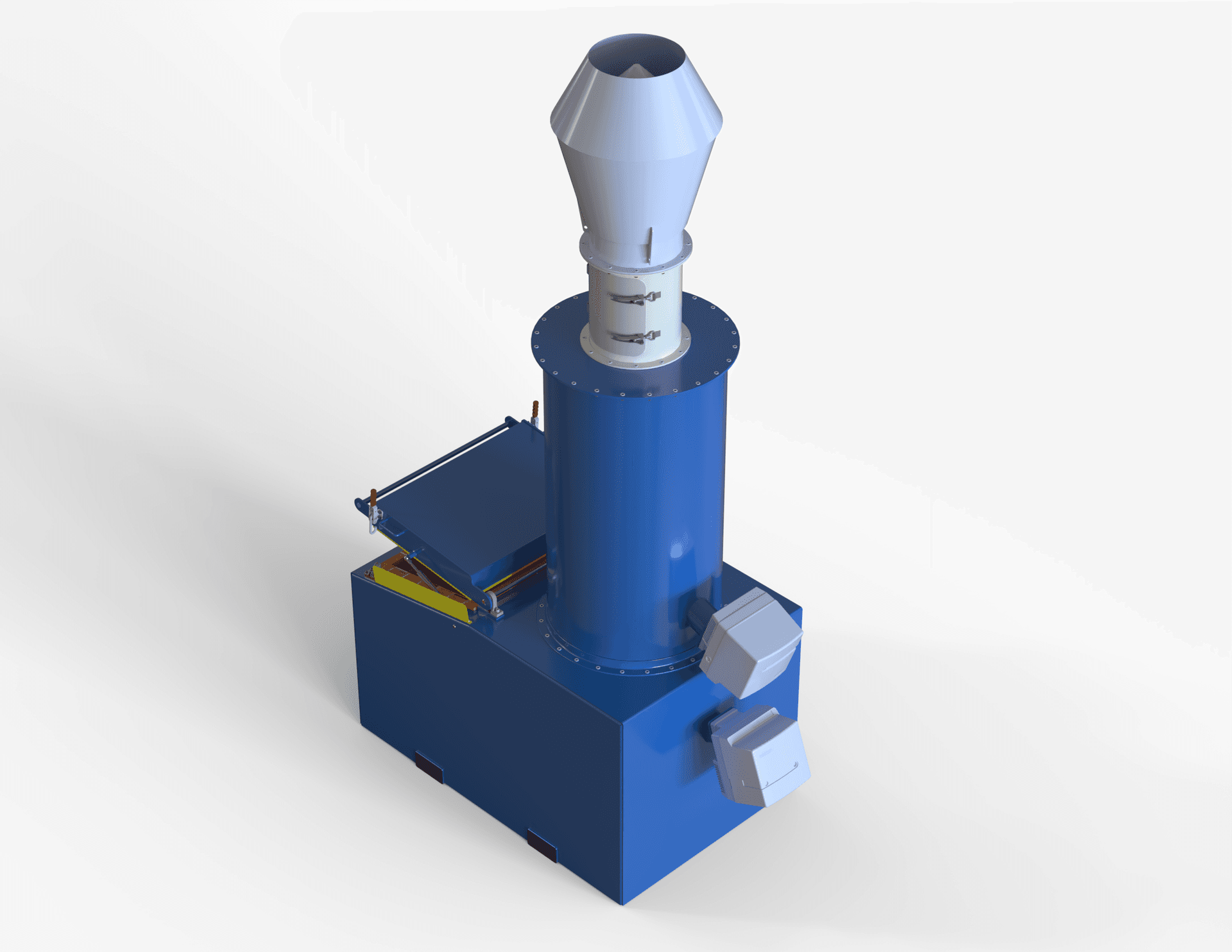
Primary chamber running 850–1,200°C with a secondary chamber holding flue gas above 850°C for two seconds. For animal by-products this is not a preference: it is the combustion condition an APHA-approved incineration plant has to meet.
Two-burner set and fuel train
All three AniBurn models carry two burners, configured for natural gas, LPG, diesel, biofuel or hydrogen. Carcass waste is wet, so burner duty on this stream is doing more evaporation than on any other — fuel choice is a site decision, the combustion condition is not.
What Ships
With The Unit
Identical whichever stream it is specified for. The operating procedure changes; the machine does not.
Dual-chamber unit
Primary chamber running 850–1,200°C with a secondary chamber holding flue gas above 850°C for two seconds. For animal by-products this is not a preference: it is the combustion condition an APHA-approved incineration plant has to meet.
Two-burner set and fuel train
All three AniBurn models carry two burners, configured for natural gas, LPG, diesel, biofuel or hydrogen. Carcass waste is wet, so burner duty on this stream is doing more evaporation than on any other — fuel choice is a site decision, the combustion condition is not.
Top-loading charge door
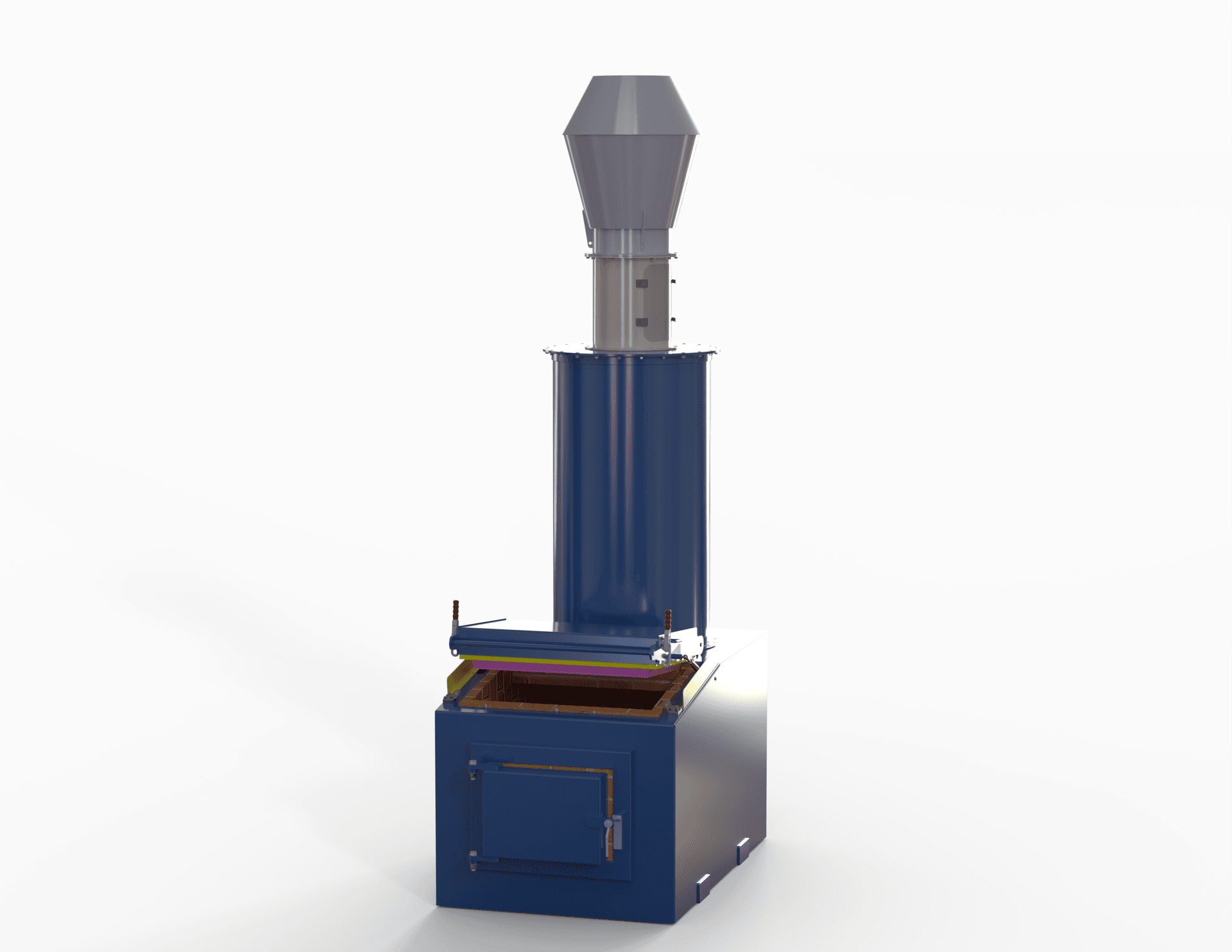
Carcasses are dead weight and awkward to handle. Top loading means a carcass goes in from above with a hoist, loader or teleporter rather than being dragged through a door at chest height, which is the difference between a two-person job and a one-person one.
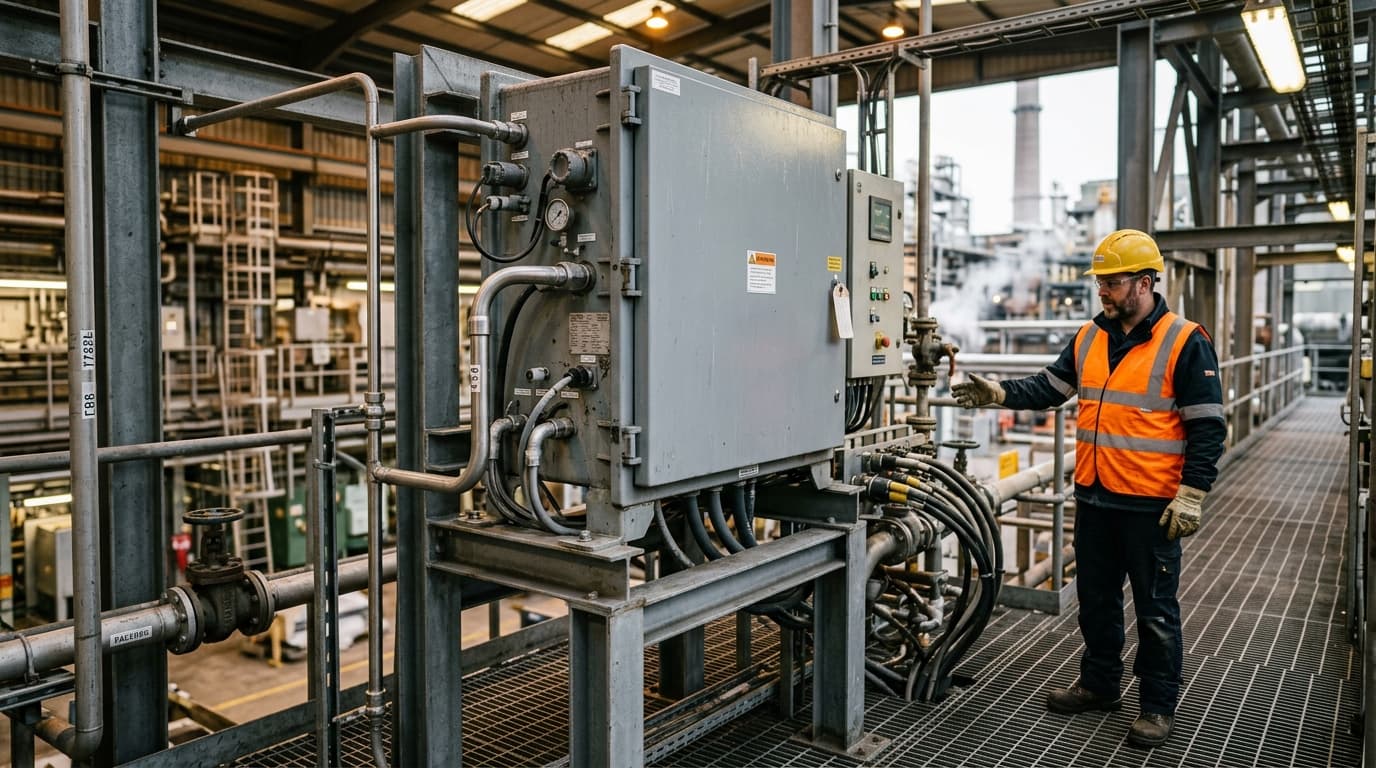
IP6X control panel
PLC control with cycle logging and chamber thermocouples. The cycle log is the record that a fallen-stock disposal, an APHA-directed cull or an individual pet cremation actually happened, and when.
Coretex refractory lining
Monolithic castable lining rated for the full temperature range, replaceable in service. Wet, fatty loads are the hardest duty a refractory sees, which makes lining quality the thing that decides service life on this stream rather than on any other.
Stack, dispersion data and commissioning
Stack supplied to the height your site-specific dispersion assessment calls for, with the emissions data the permit application references, plus on-site commissioning and operator training. On a livestock unit the neighbours are the reason the assessment matters.
How One Burn Runs,
Start To Finish
One charge is one countable event. That is what makes a batch unit auditable and a continuous one not.
One Cycle,
Start To Finish
Adds the withdrawal record as the controlling document — what was condemned, how much, and the cycle log that closes it — and a check on the by-product category before charging.
Write down what the material is, the quantity, the batch and the reason. The cycle log is only useful if it closes a specific withdrawal decision.
Category 1, 2 or 3 decides the lawful route, and the plant's APHA approval is category-specific. This is a paperwork check before the charge, not a judgement at the bin.
Film, trays, vacuum packs and cases come off before the product goes in. Packaging melts, fouls the chamber and can carry halogenated content that changes the permit condition.
Primary combustion at 850–1,200°C with two seconds above 850°C in the secondary chamber. Fatty product burns readily once moisture is off; a mixed charge runs more evenly than pure fat or pure lean.
3–5% sterile ash. Match the cycle log to the withdrawal record so the quantity condemned and the quantity destroyed are the same figure in the same file.
What You Can Burn —
And What You Can't
One charge takes the whole stream without pre-sorting. What must never enter it is a short, hard list.
Yes: accepted in a charge
No pre-sorting between these
- Recalled and withdrawn productCharged unpackaged. The quantity destroyed has to match the quantity on the withdrawal record, which is what the cycle log is for.
- Product condemned on contamination or residueBatches failing on contamination or residue grounds, with no legitimate outlet remaining.
- Out-of-specification and out-of-date stockOff-spec batches and meat past its use-by with no processing route left open to it.
- Mislabelled and counterfeit productWhere destruction is the required endpoint and resale in any form — including as a by-product — is not.
- Cutting room and processing residuesCondemned offal and trimmings, and residues rejected from the category 3 route.
- Cold chain failures and goods-in rejectionsProduct damaged by a chill or freezer failure, carcasses and parts rejected at goods-in, and sweepings from the condemned batch.
No: never charged
Not a permit question — these stay out
- Packaging, film, trays and casesPolymer packaging melts rather than burns, fouls the chamber and can carry halogenated content that raises the secondary-chamber requirement to 1,100°C. Strip it before the product is charged.
- Category 3 by-product with a commercial routeA commercial point. Trimmings, bone and fat have real value in rendering and pet food. Burning them converts revenue into a fuel bill; the unit is for the fraction that must be destroyed.
- A rendering plant's throughputA scale limit. Rendering handles tens of tonnes an hour and is itself a destination for by-product. A 150–300 kg batch unit is not a rendering alternative and should not be sold as one.
- Material outside the plant's approval categoryThe APHA approval is category-specific. Category 1 material in a plant approved for category 2 or 3 is a serious breach, and the difference is in the documentation rather than the bin.
- Liquid product, brine and effluentLiquid cannot be charged into a batch chamber and belongs in the plant's effluent system.
- Cleaning chemicals and sanitiser containersRegulated waste with a dedicated route, and concentrated chemical has no place in a combustion chamber alongside product.
Can you legally burn rendering & meat processing on site?
Technically, yes: the chamber destroys almost everything on the accepted list at 850–1,200°C, and capability is rarely the constraint. Legally is a separate question. What your site is allowed to burn is set by your environmental permit from the Environment Agency, SEPA or NIEA and the waste codes written into it, plus APHA approval, because animal by-products are regulated under their own rules. The never-charged list is different again: those materials are out of scope for the unit or governed by a direction, and no permit wording brings them back in. Send us the codes you hold, or the ones you expect to apply for, and we will tell you which of this list they cover before anything is specified.
Send us your waste codesWhat size incinerator for a 400 kg product withdrawal?
Arithmetic on published model figures, not a customer reference. Your numbers go through the same steps.
How This
Was Worked Out
400 kg withdrawn ÷ 250 kg per charge = 2 ABI-250 charges over two working days, and 12–20 kg of ash at 3–5% — with no third-party handler in the chain at any point. The number that matters on this stream is not the tonnage but the match: the quantity on the withdrawal record and the quantity in the cycle log have to be the same figure.
≈ 2
12–20 kg
None
Send your daily or weekly arisings and we will confirm the model, the charge count and the permit route.
Related Products
& Services
Complementary equipment and engineering services for your process.
Sizing and background
- [TOOL]Work out the burn rate for your own arisings
- [TOOL]Size the combustion air and flue gas duty
- [BLOG]Optimising animal carcass incinerators for UK bio-security
- [BLOG]The long-term operational costs of animal carcass incinerators
- [BLOG]Training programmes for animal incinerator operators
- [BLOG]Minimising the environmental impact of animal incinerators
- [BLOG]Agricultural incinerators and aquaculture waste
Rendering & meat processing Questions
Answered against the published figures for the models specified for this stream, not a generic range sheet.
The fraction that has to be proven gone. Meat processing generates a lot of by-product with genuine commercial value — trimmings, bone and fat all have routes into rendering, pet food and processing — and none of that belongs in an incinerator. What does is the material where the requirement is destruction rather than disposal: recalled product, batches condemned on contamination or residue, product past its date with no legitimate outlet, and anything a brand cannot allow back into circulation. A recall is the sharpest version of this. When product is withdrawn on a food safety ground, the operator has to be able to show where it went, and 'it was collected' is a weaker answer than 'it was destroyed on this date, in this quantity, in our own approved plant'. The same logic applies to counterfeit or mislabelled product a processor is required to take out of circulation. Under the retained ABP Regulation the material still has a category, and the category still sets the lawful route. Product condemned as unfit is category 2; by-product from animals fit for consumption but not intended for it is category 3; specified risk material is category 1. The plant's APHA approval has to cover whatever is being charged, which is a paperwork check rather than a visual one. Scale is the honest limit again. A rendering plant processes tens of tonnes an hour and is itself the destination for by-product, not a customer for a batch incinerator. These units suit cutting plants, butchers, small processors and food manufacturers dealing with the condemned and recalled fraction — a few hundred kilograms at a time, not a production line's output.
400 kg withdrawn ÷ 250 kg per charge = 2 ABI-250 charges over two working days, and 12–20 kg of ash at 3–5% — with no third-party handler in the chain at any point. The number that matters on this stream is not the tonnage but the match: the quantity on the withdrawal record and the quantity in the cycle log have to be the same figure.
No. Rendering handles tens of tonnes an hour and has commercial value flowing the other way. These units handle the condemned, recalled and out-of-specification fraction — a few hundred kilograms at a time. Most processors run both, for different material.
That the product was withdrawn and where it ended up. A dated cycle log against a specific quantity and batch, produced by your own approved plant, is a stronger answer than a collection note from a third party you no longer control the material with.
Yes. Film, trays, vacuum packs and cases melt rather than burn, foul the chamber, and can carry halogenated content that raises the secondary-chamber requirement to 1,100°C. Strip the product out before charging.
Almost never. Category 3 by-product has real commercial value in rendering and pet food, so destroying it turns revenue into a fuel bill. Reserve the unit for material that has to be destroyed rather than disposed of.
APHA approval under the retained ABP Regulation covering the categories you intend to charge, plus an environmental permit from the Environment Agency, SEPA or NIEA. The category-specific part of the approval is the one that catches processors out.
Yes, and it is one of the clearest cases for owning the plant. Material handed to a contractor is material you no longer control; destroying it in-house with a dated log removes any possibility of it reappearing.
One charge occupies most of a working day at under 50 kg/h, so 400 kg on an ABI-250 is two days. Plan a withdrawal in charges and days rather than assuming a single overnight run.
No — 3–5% sterile mineral residue carries no product identity, no label and no recoverable structure. For a brand-protection destruction that is precisely the outcome required.
Ready to
Incinerate?
Send the stream, the volume and the site constraints. We will confirm the model, the permit route, and what the specification has to say to satisfy the regulator.
- A recall gets a provable end point
- Brand product cannot re-enter circulation
- No condemned stock held in a food building
- Residue failures are dealt with quietly