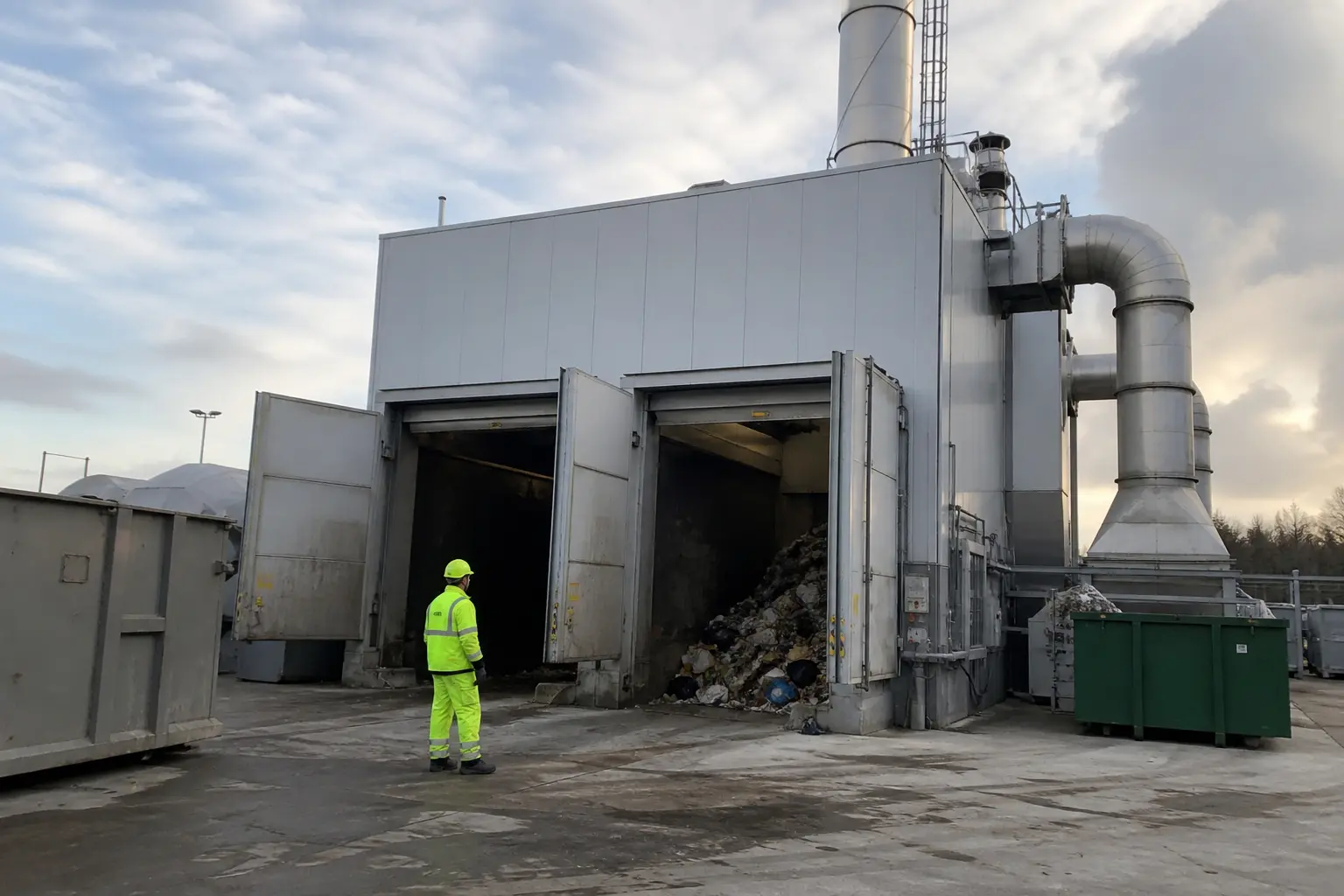
Remote Site Waste Incinerators
Islands, camps, mines and off-grid sites where the collection round is absurdly long or does not exist.
Some sites have no waste round at all. An island, a highland estate, a quarry, a construction camp or a research station either ships every kilogram out at a cost that dwarfs the waste's value, or somebody starts a fire behind a shed. A permitted unit is the third option, and it is the only lawful one.
Four Models,
One Solution
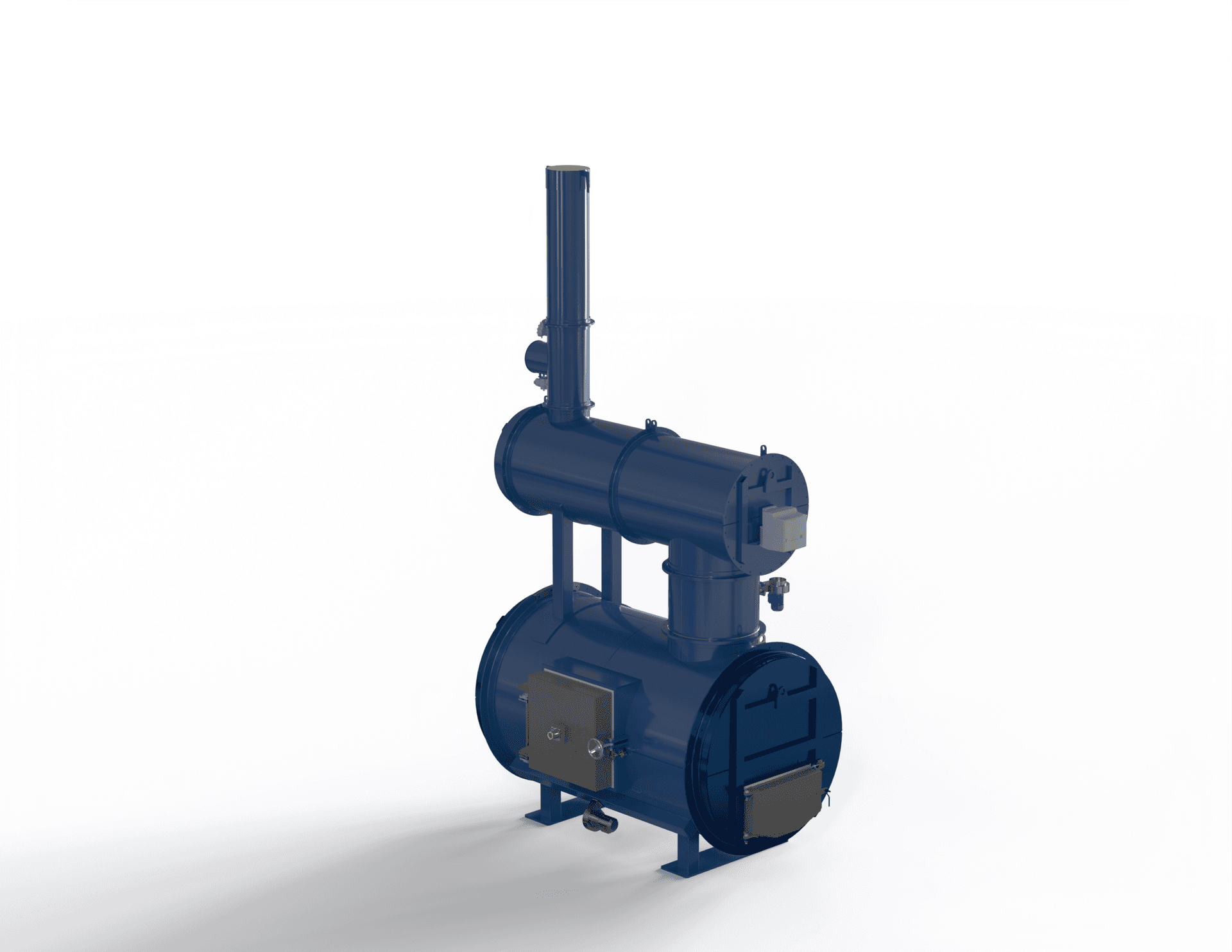
The entry point to the LitBurn range. A 3.3 m³ primary chamber and three burners give continuous 125 kg/h destruction in a footprint that fits a standard yard bay, which makes it the usual choice for a single-site operator replacing skip hire rather than a multi-site waste contract.
The most specified unit in the range. Chamber volume rises to 5.5 m³ for 250 kg/h continuous throughput while the external width grows by only 230 mm over the LBI-125, so sites that outgrow the smallest unit rarely have to rework the slab or the building line.
A 9.6 m³ chamber — nearly double the LBI-250 — for medium-scale industrial waste destruction. At this size most operators pair the unit with heat recovery, because the thermal output during a full shift is large enough to displace a dedicated water heater.
The largest LitBurn: a 16.2 m³ chamber running 500 kg/h continuously. Specified where waste arrives faster than a batch unit can clear it — large manufacturing sites, industrial estates, and operators consolidating several smaller waste contracts onto one machine.
Which Model
Fits Your Volume
Pick a model to see what it clears in a day of remote sites, islands & camps.
The usual remote answer: 2.5 t, no permanent civil works, and a day and a half of running clears an island site's week.
An environmental permit is still required
Remoteness does not create an exemption. Burning waste on site needs a permit from the Environment Agency, SEPA or NIEA with the codes named, and a site-specific dispersion assessment — which is usually more straightforward here than in a town.
Open burning is not the lawful fallback
Burning waste in the open is unlawful for a business and remains so however far from a road the business is. That comparison is the honest one to make when a unit is being justified.
The hierarchy applies at the end of a ferry route
Where a backload can carry metals or clean recyclables off the site, the hierarchy expects it to. Keep the evidence of what leaves as recovery alongside the run records for what is destroyed.
Ash still leaves under a transfer note
Residue is ordinary waste for a residual charge and leaves on a scheduled movement with its documentation. It is a small load, but it is not an unrecorded one.
Why Burn It
On Site
4 things change on the day this stream stops leaving the site.
There is no round to rely on
A collection that depends on a sailing, a tide or a single road is a collection that fails. Where there is no viable round at all, on-site destruction is not an optimisation — it is the waste strategy.
Every tonne moved costs what a tonne of freight costs
Shipping residual waste off an island or out of a camp is priced as freight, not as waste. Reducing 95% of the mass changes a freight bill rather than a gate fee, which is a much larger number per tonne.
It replaces open burning with something lawful
The default on remote sites is a burn pile, which is unlawful for a business and destroys nothing reliably. A permitted dual-chamber unit answers the same practical problem inside the rules.
Storage in a remote yard attracts everything
Waste held for weeks waiting on transport draws vermin, gulls and weather, and on a camp or estate it is the housekeeping problem that generates the most complaints. Daily destruction ends it.
Dual-chamber unit, continuous duty
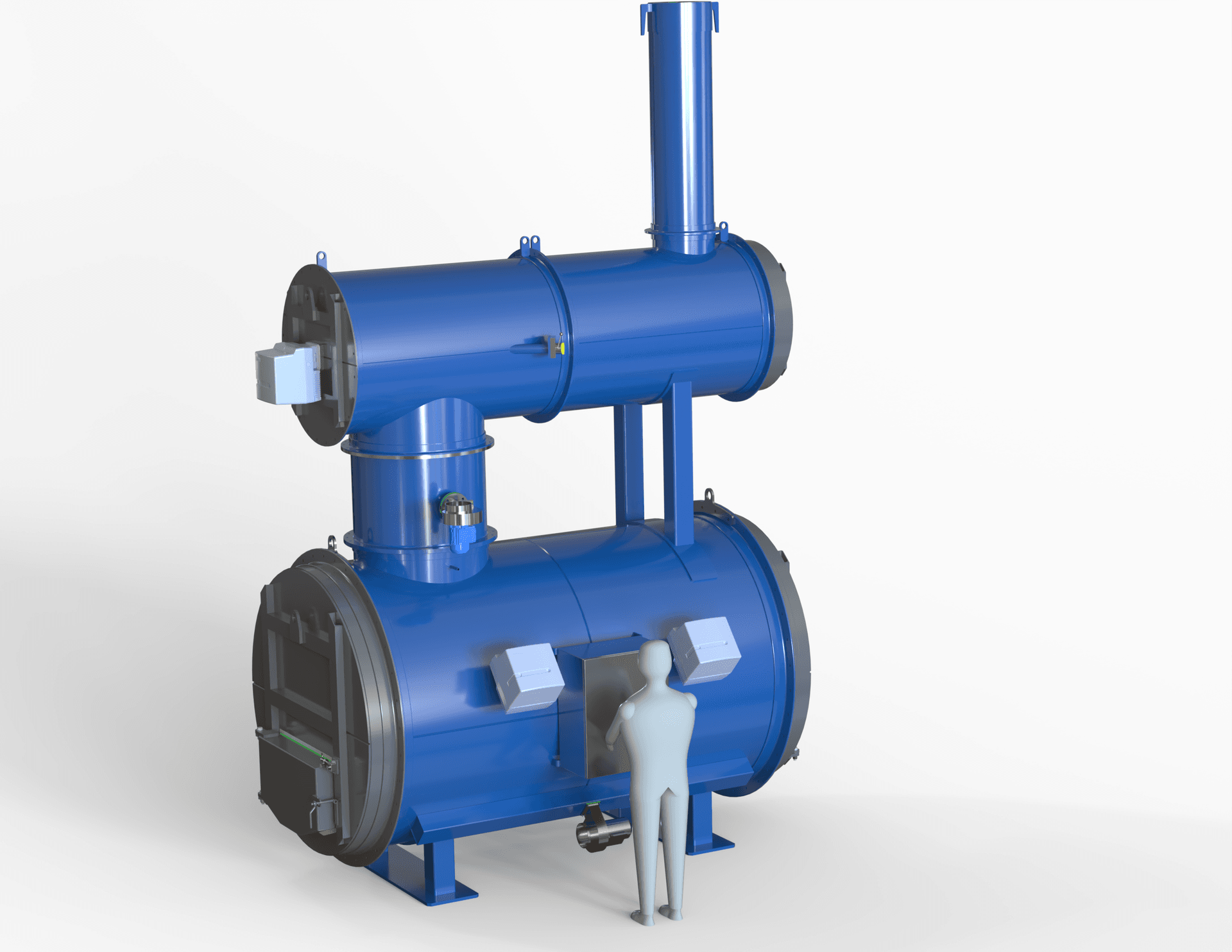
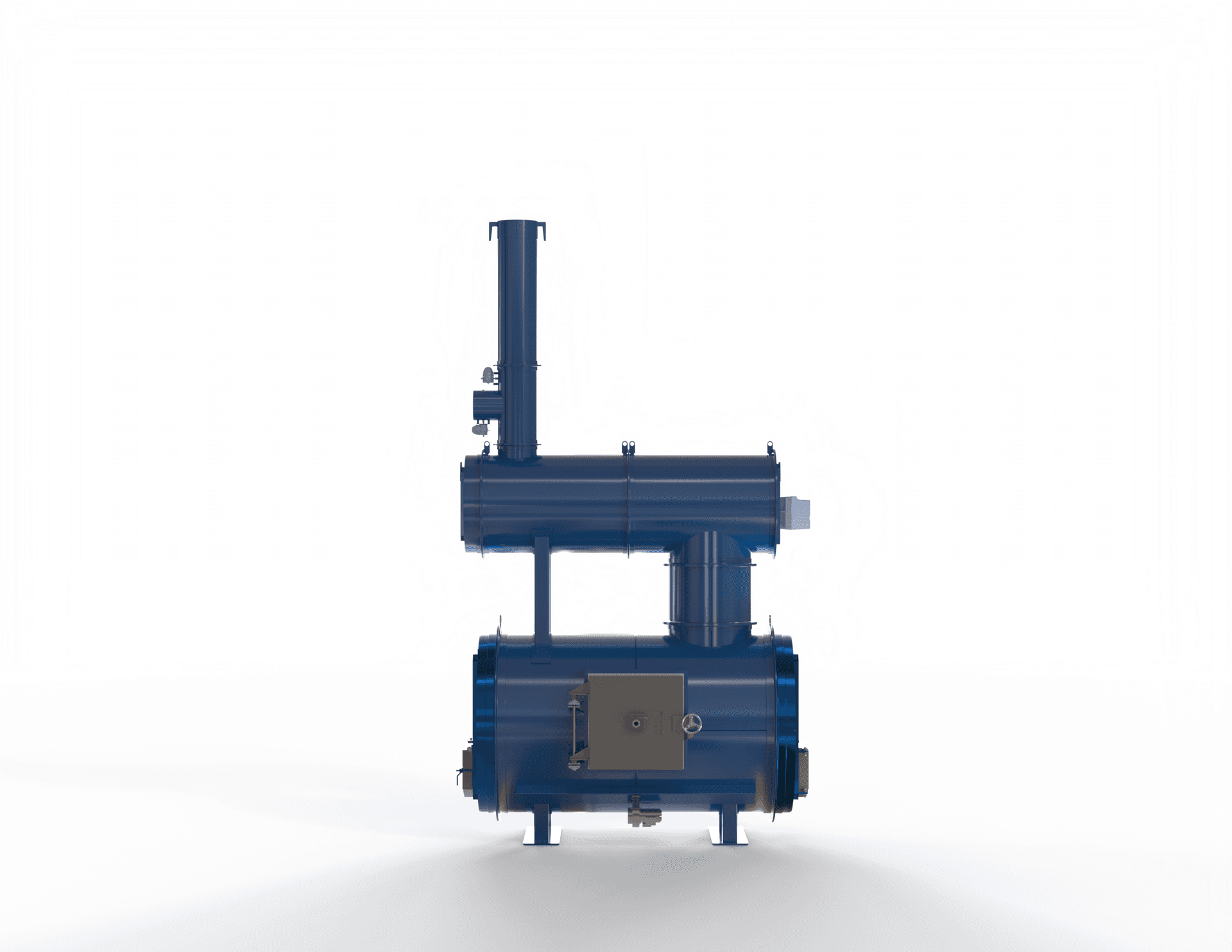
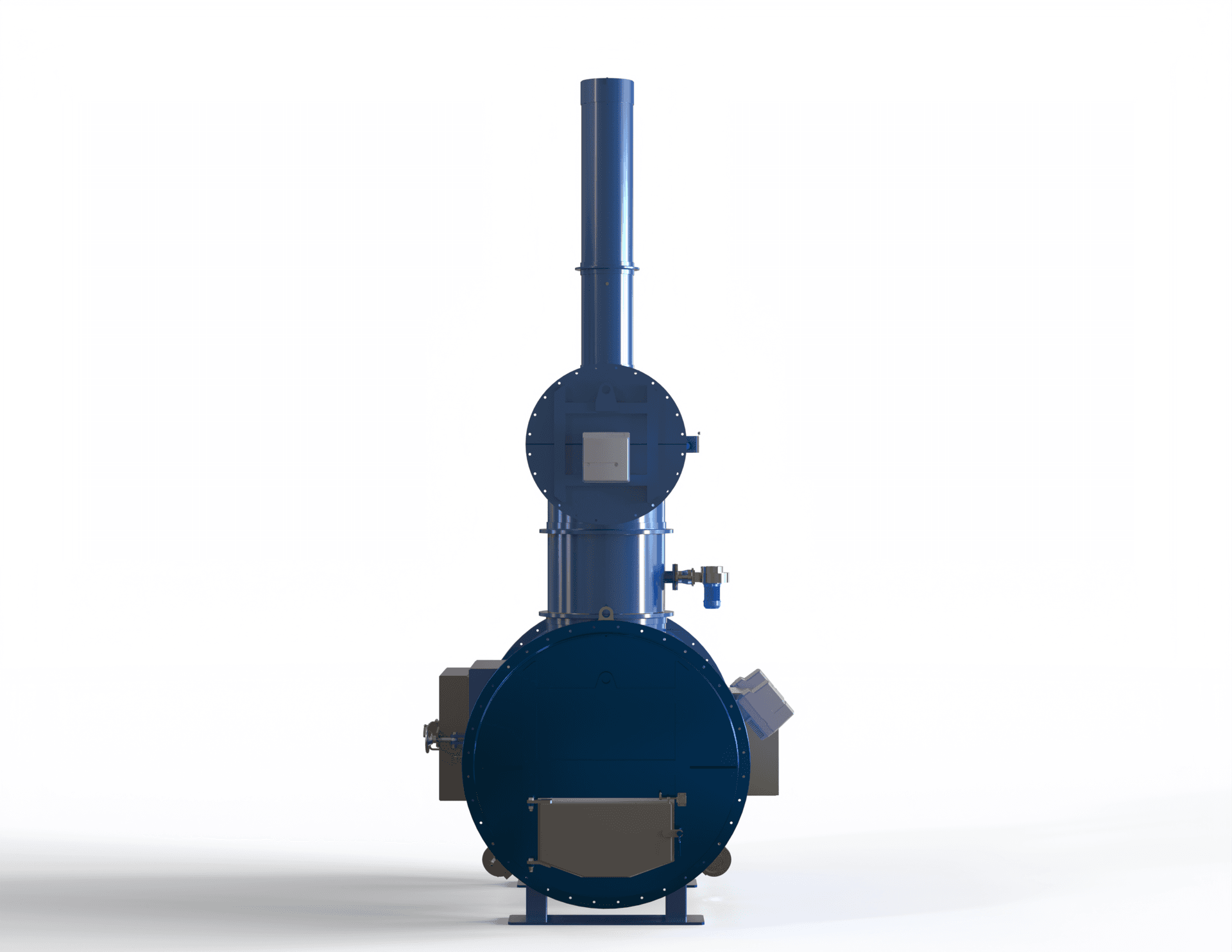
Primary chamber running 850–1,200°C with a secondary holding flue gas above 850°C for two seconds. Rated to run for a shift, because mixed waste arrives at the rate a site produces it rather than in charges somebody can schedule.
Front dual-door loading
Charged through a front dual door at floor level, so 1,100-litre bins, cages and wheeled containers are fed at the height they are already moved at. No tipping platform, no hoist, no lifting sacks over a rim.
What Ships
With The Unit
Identical whichever stream it is specified for. The operating procedure changes; the machine does not.
Dual-chamber unit, continuous duty
Primary chamber running 850–1,200°C with a secondary holding flue gas above 850°C for two seconds. Rated to run for a shift, because mixed waste arrives at the rate a site produces it rather than in charges somebody can schedule.
Front dual-door loading
Charged through a front dual door at floor level, so 1,100-litre bins, cages and wheeled containers are fed at the height they are already moved at. No tipping platform, no hoist, no lifting sacks over a rim.
IP6X control panel with cycle logging
PLC control with chamber thermocouples, interlocked charge door and a time-stamped temperature record per run. On a residual stream the log is what a permit compliance visit reads, and what a duty-of-care question is answered from.
Three-burner set and fuel train
Configured for natural gas, LPG, diesel, biofuel or hydrogen. Mixed municipal and commercial waste is wetter and more variable than an industrial stream, so burner support matters more here than on a polymer charge.
Coretex refractory lining
Monolithic castable lining rated for the full temperature range, replaceable in service. Mixed waste swings in calorific value between one bin and the next, and the lining is specified for that cycling rather than for a steady feed.
Stack, dispersion data and commissioning
Stack to the height your site-specific dispersion assessment calls for, the emissions data pack the permit application references, on-site commissioning, a witnessed first run and operator training for depot or site staff.
How One Burn Runs,
Start To Finish
One run is one countable event, reconciled against a manifest and evidenced by a time-stamped temperature log.
One Cycle,
Start To Finish
Adds 20 03 01 to the permit and reframes the whole argument: this is not a saving against a gate fee, it is a replacement for a haul that is barely viable — and for open burning, which is not lawful.
Metals, and any dry recyclable stream with enough volume to fill a backload, still leave the site — the hierarchy applies at the end of a ferry route exactly as it does anywhere. What has no viable route is the residual.
Batteries, gas cylinders, aerosols and electrical items are separated for backload. On a remote site these are the items most likely to be shortcut into a fire, which is why the step is written down.
Bins, sacks and cages go through the front dual door at floor level. Camps and estates rarely have compaction, so charging is by volume and the chamber size governs.
Primary combustion with two-second secondary retention above 850°C. This is the controlled condition an open burn cannot produce, and it is the whole reason the unit exists rather than a pile.
Residue is 3–5% of input mass and leaves on the next scheduled movement under a transfer note — one small load instead of a continuous freight problem.
What You Can Burn —
And What You Can't
One run takes the whole stream without pre-sorting. What must never enter it is a short, hard list.
Yes: accepted in a run
No pre-sorting between these
- Mixed residual site and camp wasteGeneral refuse from accommodation, messing, offices and operations where no separate collection route is realistic for the fraction.
- Non-recyclable packaging and transit wasteFilms, laminates, strapping and contaminated packaging that arrived with supplies and has no backload value.
- Contaminated absorbents and workshop wasteOily rags, absorbents and filter media from plant maintenance on site, subject to the free-liquid rule and its own hazardous codes.
- Bedding, textiles and soft furnishingsAccommodation waste from camps and lodges — bedding, mattresses and textiles at end of life, bulky and expensive to freight.
- Vegetation and site clearance residuesCleared vegetation and mixed site arisings where composting on site is impractical and removal is disproportionate.
- Estate and visitor wasteLitter, visitor centre and public-realm residual from estates, parks and remote attractions with no round serving them.
No: never charged
Not a permit question — these stay out
- Anything with a viable backload routeMetals and clean recyclables that can fill a return movement should take it. Remoteness is not a hierarchy exemption, and a regulator will ask about the backload.
- Gas cylinders, aerosols and batteriesSealed vessels and cells. On remote sites they are exactly the items most likely to be shortcut into a charge, which is why they leave on the backload instead.
- Food and catering waste in quantityAnimal by-product material with its own rules and, on a camp, usually its own on-site treatment question. It is not an ordinary residual charge.
- Asbestos, tyres and plasterboardNone of them burn usefully and all three are common on old remote sites. They go out on a movement, however inconvenient that is.
Can you legally burn remote sites, islands & camps on site?
Technically, yes: the chamber destroys almost everything on the accepted list at 850–1,200°C, and capability is rarely the constraint. Legally is a separate question. What your site is allowed to burn is set by your environmental permit from the Environment Agency, SEPA or NIEA and the waste codes written into it. The never-charged list is different again: those materials are out of scope for the unit or governed by a direction, and no permit wording brings them back in. Send us the codes you hold, or the ones you expect to apply for, and we will tell you which of this list they cover before anything is specified.
Send us your waste codesWhat does an island site producing 1.5 tonnes a week need?
Arithmetic on published model figures, not a customer reference. Your numbers go through the same steps.
How This
Was Worked Out
1,500 kg a week against the LBI-125's 125 kg/h = about 12 hours, or a day and a half of running, leaving 45–75 kg of ash to backload instead of a tonne and a half of freight. The tonnage that justifies a unit here is far lower than anywhere else in this sector, because the comparison is freight rather than a gate fee. Price the sailing, not the skip.
45–75 kg a week
≈95% of mass removed
2.5 t
None permanent
Send your daily or weekly arisings and we will confirm the model, the run time and the permit route.
Related Products
& Services
Complementary equipment and engineering services for your process.
Sizing and background
- [TOOL]Work out the burn rate for your own arisings
- [TOOL]Size the combustion air and flue gas duty
- [BLOG]Validating feasibility for an 8,200 kg/h waste-to-energy incinerator
- [BLOG]Designing modular incinerator systems for waste-to-energy
- [BLOG]Integrating vibration analysis for incinerator predictive maintenance
- [BLOG]Advanced gas cleaning for ultra-low emission incinerators
- [BLOG]Evaluating flue gas cleaning systems in industrial incinerators
Remote sites, islands & camps Questions
Answered against the published figures for the models specified for this stream, not a generic range sheet.
A remote site incinerator is a permitted unit specified where the collection round is the problem rather than the price. Islands and offshore-adjacent sites, highland and moorland estates, quarries and mines, construction and forestry camps, research and monitoring stations, and any operation whose waste has to travel by boat, plane or a long single-track road before it reaches a road network. The economics are different from every other page in this sector. Elsewhere the comparison is a gate fee against fuel and operator time. Here the comparison is a ferry sailing, a helicopter lift or a 200-mile round trip against a machine sitting at the site. The tonnage that justifies a unit is far lower when each tonne has to be moved that way. The other alternative is what actually happens on a lot of remote sites, and it is worth being blunt about: waste gets burned in the open. That is unlawful for a business, it destroys nothing reliably, and it produces exactly the emissions a two-stage chamber exists to prevent. A permitted unit is the difference between a controlled 850°C secondary condition and a fire. Everything else about the specification follows the constraints of the site. The units are 2.5 to 3.8 tonnes and need no permanent civil works, which matters when the delivery is by low-loader and ferry; they run on the fuel the site already stocks; and the smaller sizes are the usual answer, because remote sites produce less waste than they produce difficulty.
1,500 kg a week against the LBI-125's 125 kg/h = about 12 hours, or a day and a half of running, leaving 45–75 kg of ash to backload instead of a tonne and a half of freight. The tonnage that justifies a unit here is far lower than anywhere else in this sector, because the comparison is freight rather than a gate fee. Price the sailing, not the skip.
Yes. Distance from a road is not an exemption: an environmental permit with the waste codes named and a site-specific dispersion assessment is required exactly as it would be anywhere. The assessment is usually simpler, because there are fewer receptors, but it is not optional.
Almost always, because the comparison is freight rather than a gate fee. Every tonne moved by boat, plane or a long single-track road costs what freight costs, so the tonnage that justifies a unit here is much lower than at a mainland depot.
It is unlawful for a business and it destroys nothing reliably: the organic fraction disperses rather than being destroyed, and the emissions are the ones a secondary chamber exists to prevent. A permitted unit answers the same practical problem inside the rules.
The units run 2.5 to 3.8 tonnes and need no permanent civil works, so the constraint is usually the delivery route rather than the site. They run on gas, LPG, diesel, biofuel or hydrogen — normally whatever the site already stocks for its plant.
No, and a regulator will ask. Metals and clean recyclables that can fill a backload should take it, and gas cylinders, batteries and asbestos have to leave whatever the inconvenience. What the unit removes is the residual fraction, which is most of the mass and nearly all of the difficulty.
That is what the continuous rating is for. A camp at full occupancy or an estate in season produces several times its winter arisings, and a continuous unit absorbs that as running hours rather than as a storage problem waiting for a sailing.
Ready to
Incinerate?
Send the stream, the volume and the site constraints. We will confirm the model, the permit route, and what the specification has to say to satisfy the regulator.
- There is no round to rely on
- Every tonne moved costs what a tonne of freight costs
- It replaces open burning with something lawful
- Storage in a remote yard attracts everything