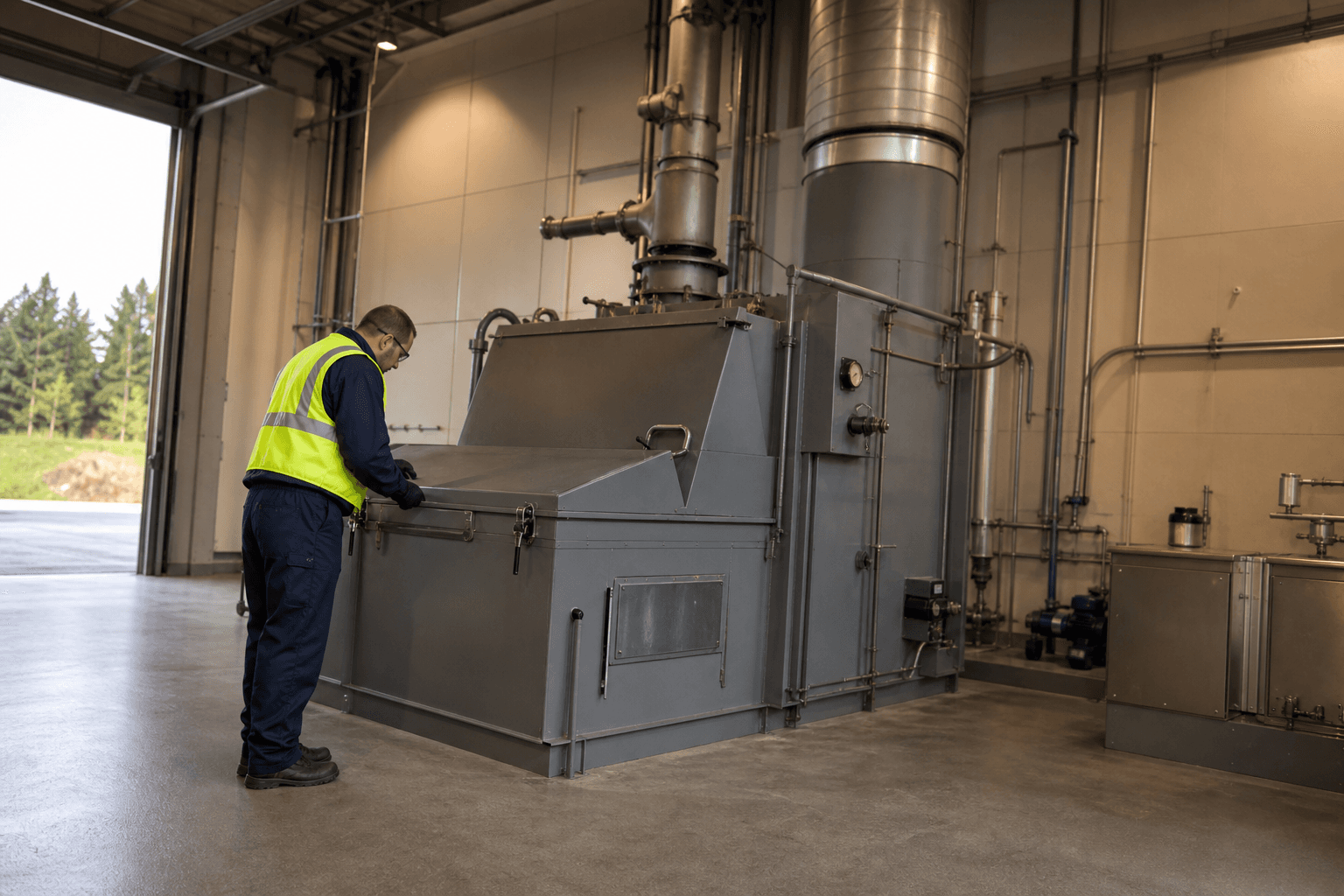
Pet Cremation Incinerators
Individual and communal pet cremation, plus veterinary euthanasia cases that must not enter any other route.
Pet cremation is the one stream on this page where the ash is the product, not the residue. That changes how the unit is operated — the chamber is cleared between individual cremations so the ashes returned to an owner are that animal's — and it makes cycle discipline the whole service.
Three Models,
One Solution
150 kg per charge for veterinary practices, small farms and pet cremation. The chamber is tall relative to its load rating because carcass waste is bulky and wet — volume, not weight, is the binding constraint.
250 kg per charge with a 2880 mm chamber. The usual specification for a working livestock farm that needs fallen stock dealt with on site under biosecurity rules rather than held for collection.
The largest AniBurn: 300 kg per charge in a 3180 mm chamber. Sized for commercial pet crematoria and larger livestock units where a single daily cycle has to clear everything held in cold storage.
Which Model
Fits Your Volume
Pick a model to see what it clears in a day of pet cremation.
Individual cremations, one animal at a time, with the chamber cleared between each. The ash is the deliverable, so the day's bookings set capacity, not the rating.
APHA approval and environmental permit
Pet carcasses are animal by-products. A crematorium needs the plant approved by APHA under the retained ABP Regulation and an environmental permit from the Environment Agency, SEPA or NIEA — the domestic, sentimental context changes nothing about either.
Barbiturate residue rules out other routes
An animal euthanised with pentobarbital carries residue in its tissues, which is why such carcasses must not go to rendering, pet food or any route leading to another animal's feed. Incineration is the route that ends it.
Individual means individual
One animal in the chamber, cleared before and after, ashes recovered and returned. Selling individual cremation while running combined cycles is a consumer protection matter as much as a procedural one, and the cycle log is the evidence either way.
The ash is not waste here
In every other stream ash leaves under a transfer note. In individual cremation it is returned to the owner, which makes the recovery step part of the service rather than the end of a disposal.
Why Burn It
On Site
4 things change on the day this stream stops leaving the site.
The ashes are the deliverable
In every other stream the residue is waste. Here it is what the customer paid for and grieved over, so the chamber is cleared between individual cremations and the cycle log is a chain of custody.
Euthanised animals have only one route
Pentobarbital residue means a euthanised carcass must not enter rendering, pet food or any route ending in another animal's feed. Incineration is the route that ends the risk rather than passing it on.
Practices need certainty, not a collection window
A veterinary practice has limited cold storage and a waiting room. Predictable, in-house destruction is worth more than a cheaper collection that arrives when it arrives.
Two services from one unit
Individual and communal cremation run on the same machine with different procedures. The equipment does not distinguish them; the operating discipline does, and that is what a customer is buying.
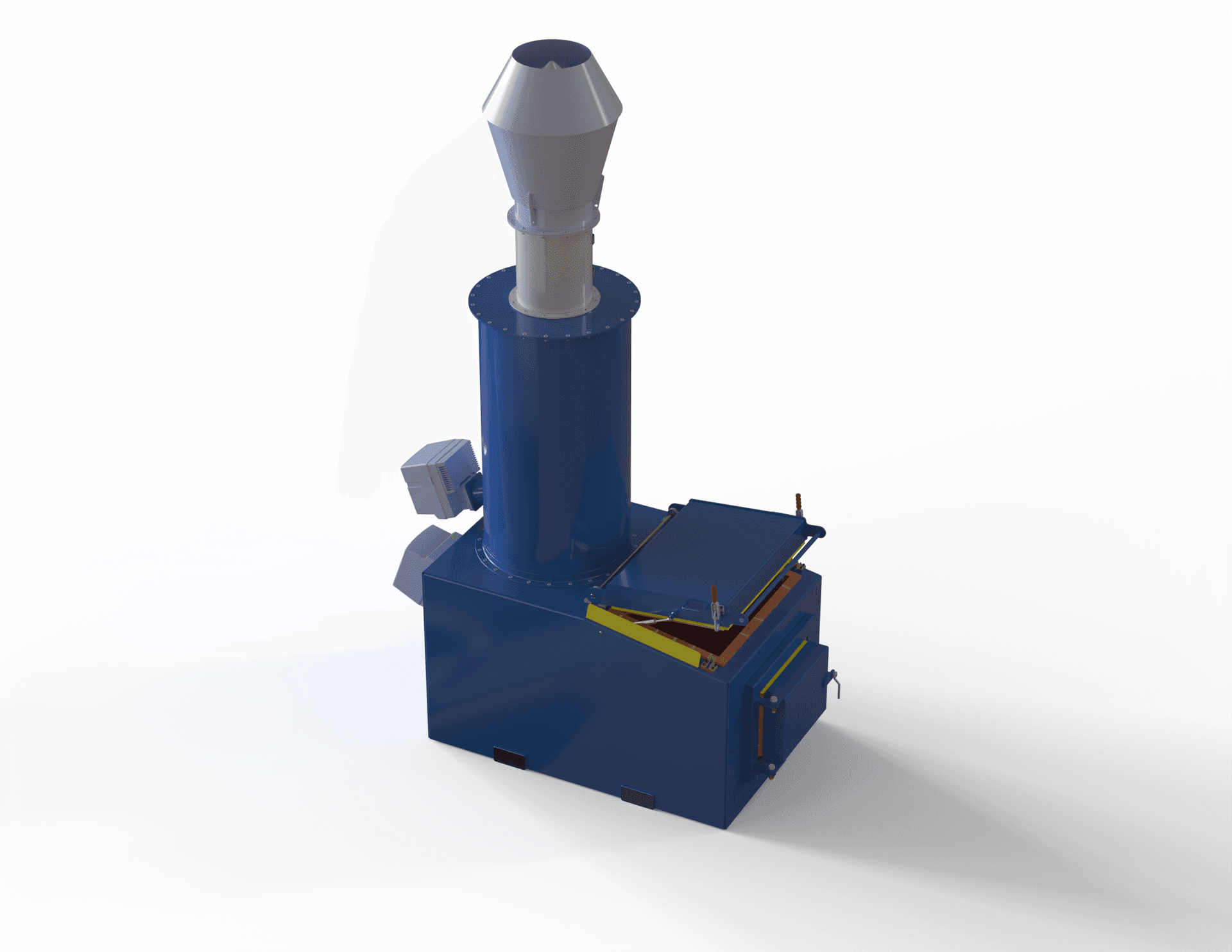
Dual-chamber unit
Primary chamber running 850–1,200°C with a secondary chamber holding flue gas above 850°C for two seconds. For animal by-products this is not a preference: it is the combustion condition an APHA-approved incineration plant has to meet.
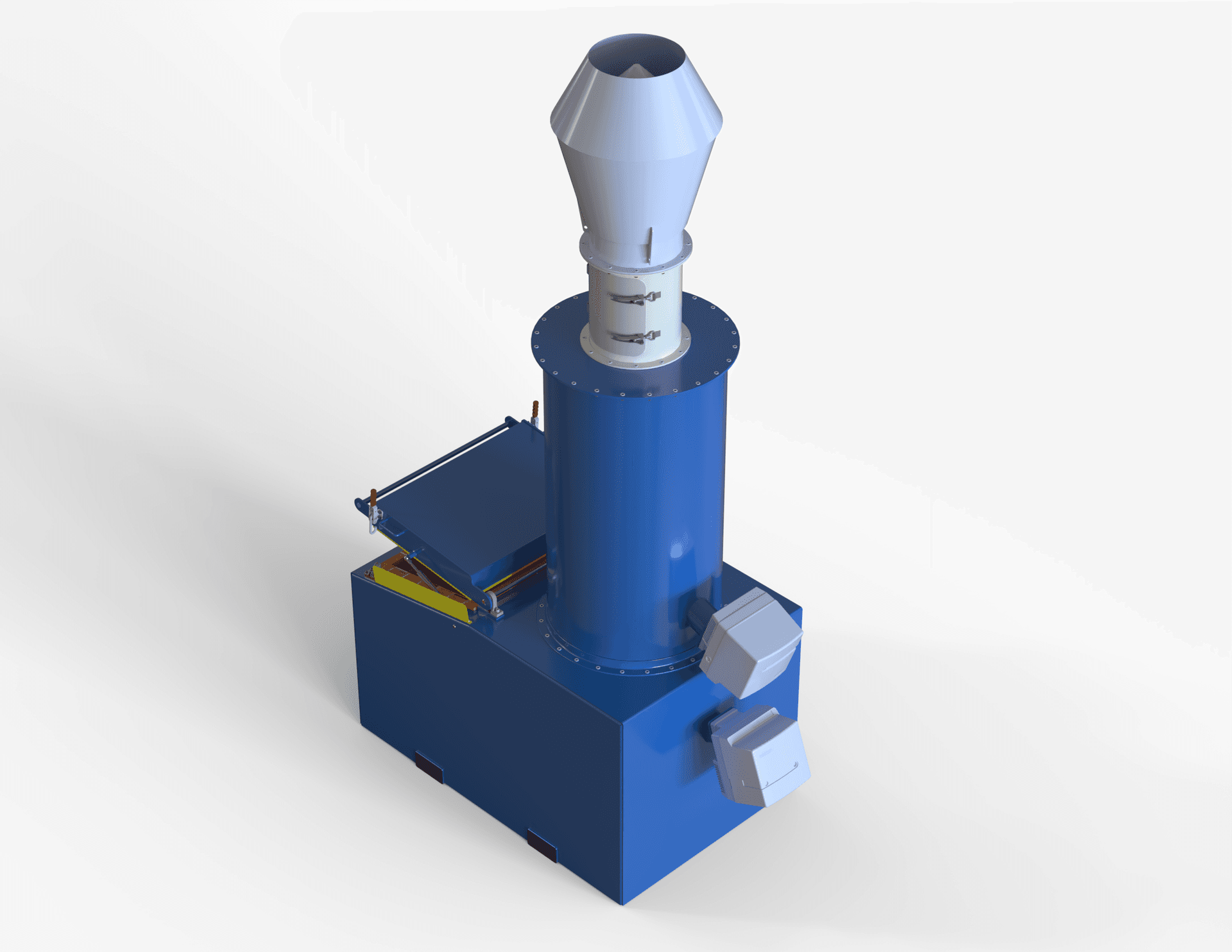
Two-burner set and fuel train
All three AniBurn models carry two burners, configured for natural gas, LPG, diesel, biofuel or hydrogen. Carcass waste is wet, so burner duty on this stream is doing more evaporation than on any other — fuel choice is a site decision, the combustion condition is not.
What Ships
With The Unit
Identical whichever stream it is specified for. The operating procedure changes; the machine does not.
Dual-chamber unit
Primary chamber running 850–1,200°C with a secondary chamber holding flue gas above 850°C for two seconds. For animal by-products this is not a preference: it is the combustion condition an APHA-approved incineration plant has to meet.
Two-burner set and fuel train
All three AniBurn models carry two burners, configured for natural gas, LPG, diesel, biofuel or hydrogen. Carcass waste is wet, so burner duty on this stream is doing more evaporation than on any other — fuel choice is a site decision, the combustion condition is not.
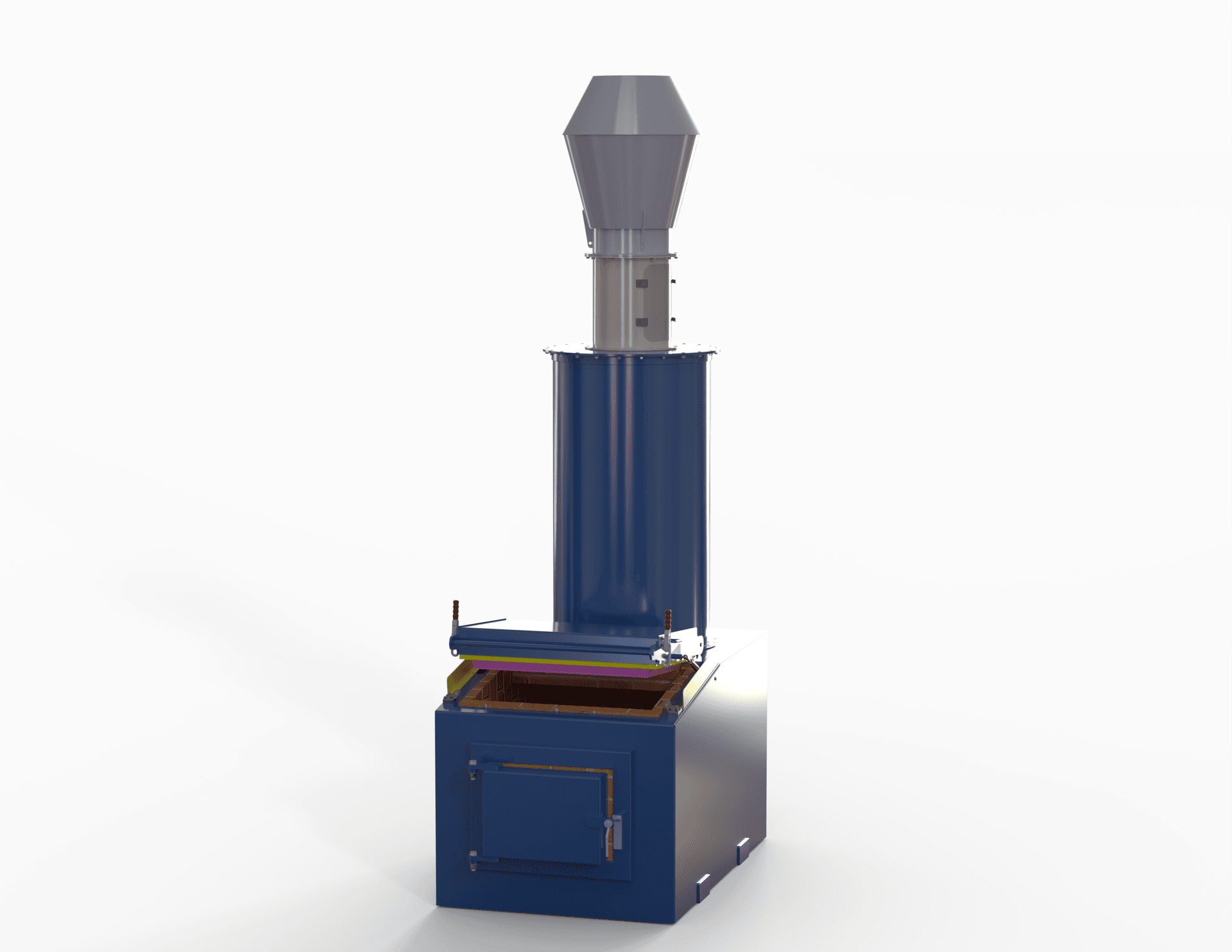
Top-loading charge door
Carcasses are dead weight and awkward to handle. Top loading means a carcass goes in from above with a hoist, loader or teleporter rather than being dragged through a door at chest height, which is the difference between a two-person job and a one-person one.
IP6X control panel
PLC control with cycle logging and chamber thermocouples. The cycle log is the record that a fallen-stock disposal, an APHA-directed cull or an individual pet cremation actually happened, and when.
Coretex refractory lining
Monolithic castable lining rated for the full temperature range, replaceable in service. Wet, fatty loads are the hardest duty a refractory sees, which makes lining quality the thing that decides service life on this stream rather than on any other.
Stack, dispersion data and commissioning
Stack supplied to the height your site-specific dispersion assessment calls for, with the emissions data the permit application references, plus on-site commissioning and operator training. On a livestock unit the neighbours are the reason the assessment matters.
How One Burn Runs,
Start To Finish
One charge is one countable event. That is what makes a batch unit auditable and a continuous one not.
One Cycle,
Start To Finish
Inverts the usual rule: the ash is the deliverable, so the chamber is cleared between individual cremations and the cycle log is the chain of custody for someone's animal.
Name, owner, weight and service type recorded before anything is loaded. For an individual cremation this record is the chain of custody, and it has to survive the whole cycle.
Before an individual cremation the chamber is raked out completely, so the ash recovered afterwards is only this animal's. This step is the difference between the service sold and the service delivered.
The animal is placed in the primary chamber, which runs at 850–1,200°C with two seconds above 850°C in the secondary. Cycle time scales with the animal — a cat is a fraction of a large dog.
The unit cools with the door closed before ashes are recovered. Recovery from a hot chamber risks both the operator and the completeness of what is returned.
Remaining bone fragment is processed to ash, transferred to the casket or urn, and the record closed against the booking. Communal cycles skip the recovery step and record only the cycle.
What You Can Burn —
And What You Can't
One charge takes the whole stream without pre-sorting. What must never enter it is a short, hard list.
Yes: accepted in a charge
No pre-sorting between these
- Individual cremationDogs, cats and small animals cremated one at a time, with the chamber cleared between each so the ashes returned are that animal's and no one else's.
- Communal cremationWhere no ashes are returned and animals are charged together — a different service, and a different cycle count.
- Veterinary practice lossesAnimals euthanised in practice, practice mortality, and post-operative losses.
- Small mammals, birds and reptilesFrom practice or from home, where the owner wants the same treatment a larger animal would get.
- Post-mortem returns and neonatal lossesAnimals returned from a post-mortem examination, and stillborn or neonatal losses from breeding operations.
- Comforters placed with the animalBedding, blanket and comforter charged with the animal, in small quantities.
- Rescue and working animalsAnimals from a rescue or rehoming centre, and deceased assistance and working dogs.
No: never charged
Not a permit question — these stay out
- Horses and other equinesA capacity limit. At 400–600 kg a horse exceeds every model in the range. An equine cremation service needs a high-capacity plant built for it, and no procedure makes a 300 kg charge rating take a horse.
- Collars, tags, leads and metal keepsakesMetal does not combust: it survives into the ash and contaminates what is returned to the owner. Remove and return them separately — many owners want them.
- Sealed caskets, urns and lined coffinsSealed containers behave unpredictably under heat and lined or varnished wood adds residue to the ash. The container is what the ashes go into afterwards, not what they arrive in.
- Plastic bedding, synthetic toys and vinyl itemsSynthetic material melts, can carry halogenated content that changes the permit condition, and leaves residue in ashes that are being handed to someone.
- Clinical sharps and drug vialsPractice clinical waste has its own container and route. Sharps in a cremation charge risk the operator and the ash.
- Mixing individual cremations in one cycleNot a material exclusion but the one that matters most: an individual cremation means one animal in the chamber. Running two and returning divided ash is the failure the whole sector is judged on.
Can you legally burn pet cremation on site?
Technically, yes: the chamber destroys almost everything on the accepted list at 850–1,200°C, and capability is rarely the constraint. Legally is a separate question. What your site is allowed to burn is set by your environmental permit from the Environment Agency, SEPA or NIEA and the waste codes written into it, plus APHA approval, because animal by-products are regulated under their own rules. The never-charged list is different again: those materials are out of scope for the unit or governed by a direction, and no permit wording brings them back in. Send us the codes you hold, or the ones you expect to apply for, and we will tell you which of this list they cover before anything is specified.
Send us your waste codesWhat size incinerator for four individual cremations a day?
Arithmetic on published model figures, not a customer reference. Your numbers go through the same steps.
How This
Was Worked Out
4 animals between 5 and 35 kg sit well inside the ABI-150's rating, but each is charged, cooled and recovered separately — so the day is set by four cycle times, not by 150 kg of capacity. Ash runs 3–5% of body mass per animal. On this stream capacity is almost never the constraint — clearing, cooling and recovering between individual cremations is what sets how many can be done in a day.
4 separate recoveries
3–5% of body mass
Cycle time, not capacity
Send your daily or weekly arisings and we will confirm the model, the charge count and the permit route.
Related Products
& Services
Complementary equipment and engineering services for your process.
Sizing and background
- [TOOL]Work out the burn rate for your own arisings
- [TOOL]Size the combustion air and flue gas duty
- [BLOG]Optimising animal carcass incinerators for UK bio-security
- [BLOG]The long-term operational costs of animal carcass incinerators
- [BLOG]Training programmes for animal incinerator operators
- [BLOG]Minimising the environmental impact of animal incinerators
- [BLOG]Agricultural incinerators and aquaculture waste
Pet cremation Questions
Answered against the published figures for the models specified for this stream, not a generic range sheet.
A pet cremation incinerator is an APHA-approved dual-chamber unit operated for a service rather than for disposal. It runs the same combustion condition as any animal by-product plant — 850–1,200°C with two seconds above 850°C — but the operating procedure is built around a different requirement: that the ashes handed back to an owner are, verifiably, their animal's. The trade splits into two services and the distinction is the whole commercial proposition. Individual cremation means one animal in the chamber, the chamber cleared before and after, and the ashes recovered and returned. Communal cremation means several animals in one cycle with no ashes returned. Both are legitimate; charging for one while operating the other is the failure mode the sector is judged on, and it is a cycle-discipline question rather than an equipment one. Veterinary practices are the other half of this stream, and they have a requirement most people never think about. An animal euthanised with pentobarbital carries a barbiturate residue in its tissues, which is precisely why such carcasses must not go into rendering, pet food or any route that could lead to another animal eating them. Incineration is the route that ends that risk, and a practice needs it to be reliable rather than occasional. The capacity note matters here as much as anywhere. At 150, 250 and 300 kg per charge the range covers dogs, cats and small animals with ease, including the largest breeds. Equine cremation does not fit: a horse at 400–600 kg exceeds every model, and an equine service needs a high-capacity plant built for it.
4 animals between 5 and 35 kg sit well inside the ABI-150's rating, but each is charged, cooled and recovered separately — so the day is set by four cycle times, not by 150 kg of capacity. Ash runs 3–5% of body mass per animal. On this stream capacity is almost never the constraint — clearing, cooling and recovering between individual cremations is what sets how many can be done in a day.
No. A horse at 400–600 kg exceeds every model in the range, which tops out at 300 kg per charge. Equine cremation needs a high-capacity plant designed for it — this is a hard limit, not a matter of cycle time.
By procedure, not by equipment. The chamber is raked out completely before an individual cremation, one animal is charged, and the ash is recovered after cool-down against a record that identifies the animal and owner. The cycle log is the chain of custody.
Individual means one animal in the chamber with the ashes recovered and returned. Communal means several animals in one cycle with no ashes returned. Both are legitimate services; the equipment is the same and the operating discipline is what separates them.
Because pentobarbital used for euthanasia leaves residue in the tissues, and any route ending in another animal's feed would carry that residue forward. Incineration destroys it along with the carcass, which is why practices need a reliable route rather than an occasional one.
Yes. Metal does not combust and would contaminate the ashes returned to the owner. Remove them beforehand and offer them back — for many owners the collar matters as much as the ashes.
Not in a sealed or lined one. Sealed containers behave unpredictably under heat and varnished or lined wood adds residue to the ash. The casket is what the ashes go into afterwards.
Cycle time decides it, not capacity. Clearing the chamber, running the cremation, cooling and recovering has to happen for each animal, so a working day usually means a handful rather than a chamber-full — which is the opposite of every other stream on this page.
Many do not — they use a crematorium service. The case for a practice owning one is volume, cold storage constraints and the certainty of not depending on a collection window for something a client is waiting on.
Ready to
Incinerate?
Send the stream, the volume and the site constraints. We will confirm the model, the permit route, and what the specification has to say to satisfy the regulator.
- The ashes are the deliverable
- Euthanised animals have only one route
- Practices need certainty, not a collection window
- Two services from one unit