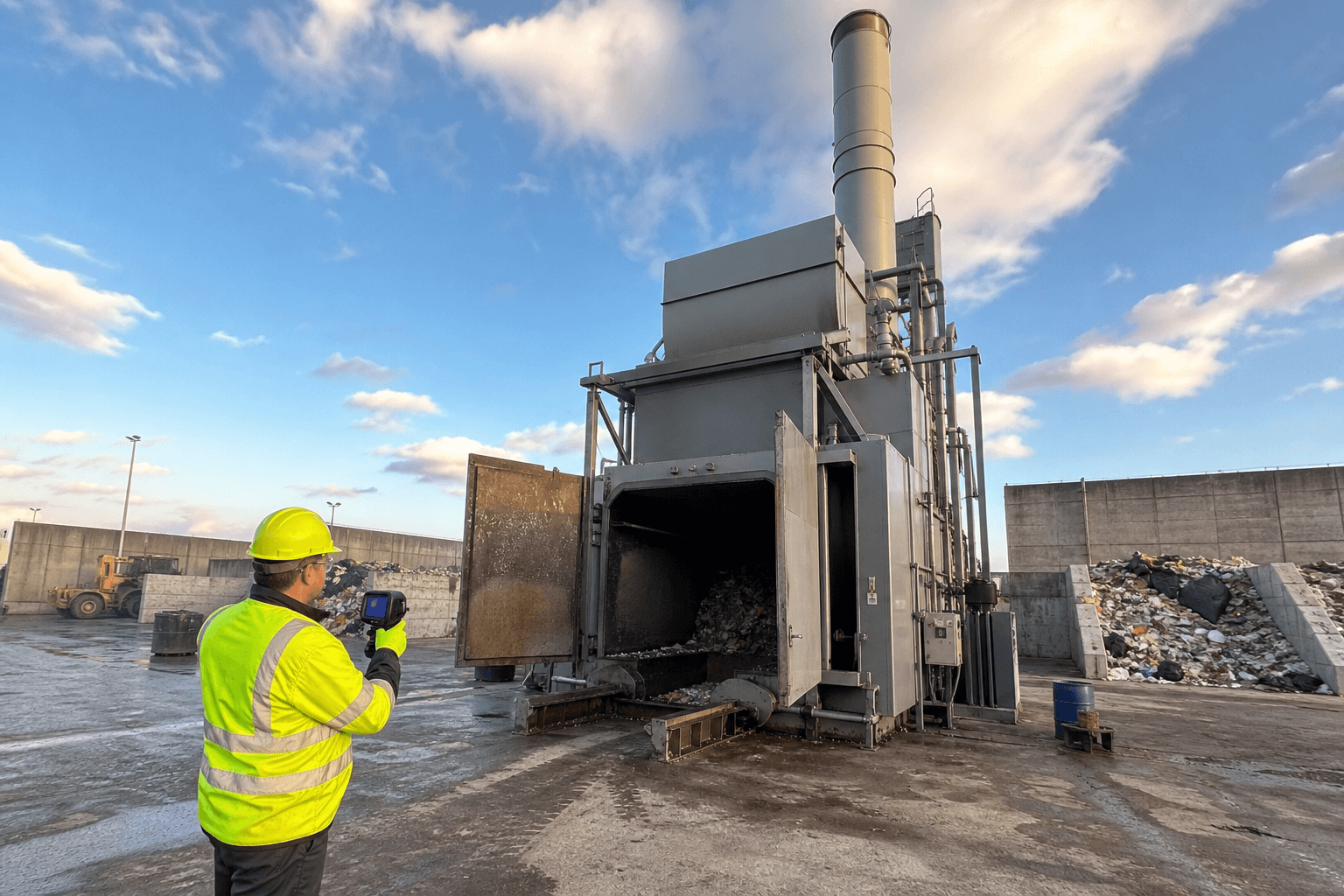
Flytipping Clearance Incinerators
Cleared dumped waste from private and public land, assessed and screened before anything is charged.
Flytipped waste is the purest version of this sector's problem: it is on your land, you did not put it there, and clearing it makes you responsible for it. It arrives mixed, wet and occasionally hazardous, and the only certain thing about a load is that nobody labelled it.
Four Models,
One Solution
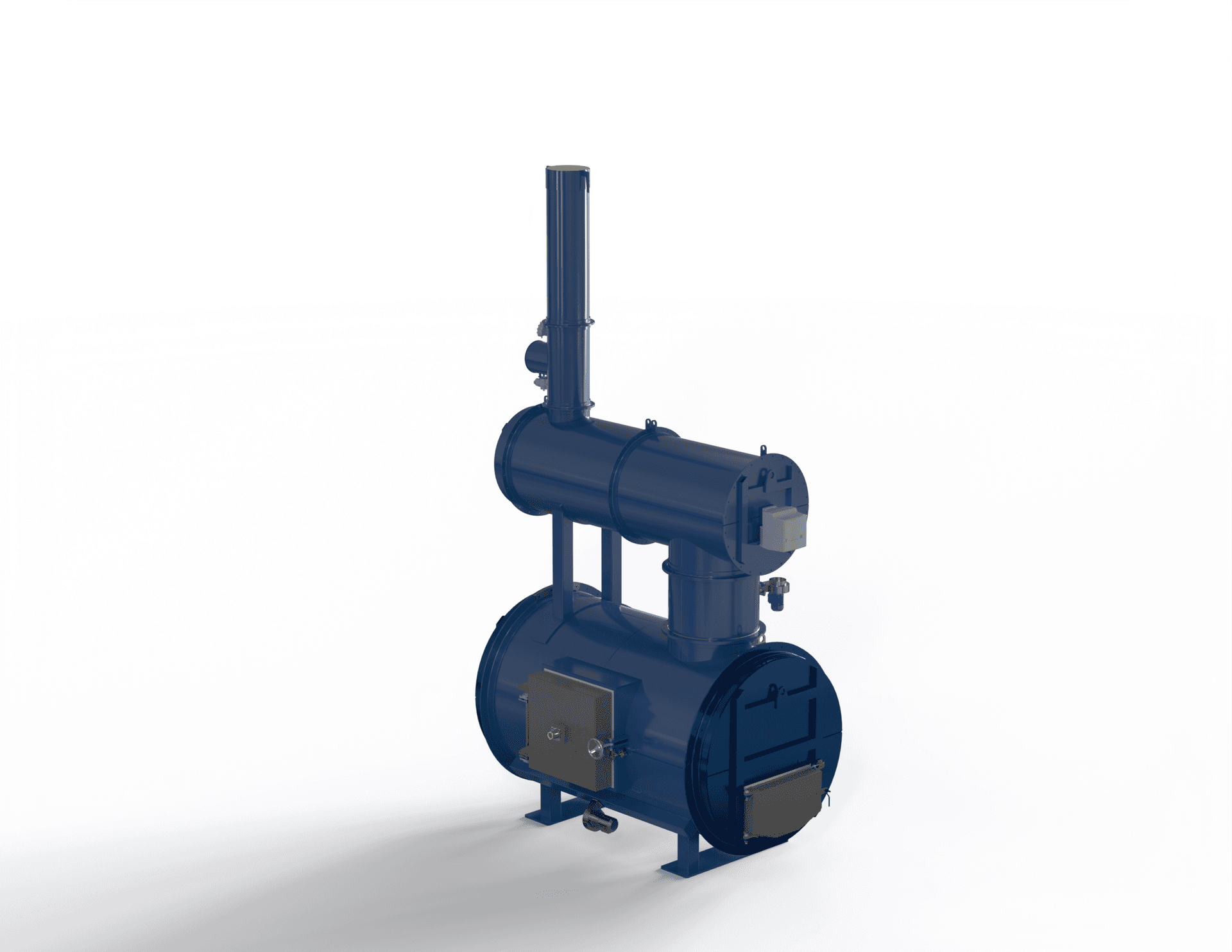
The entry point to the LitBurn range. A 3.3 m³ primary chamber and three burners give continuous 125 kg/h destruction in a footprint that fits a standard yard bay, which makes it the usual choice for a single-site operator replacing skip hire rather than a multi-site waste contract.
The most specified unit in the range. Chamber volume rises to 5.5 m³ for 250 kg/h continuous throughput while the external width grows by only 230 mm over the LBI-125, so sites that outgrow the smallest unit rarely have to rework the slab or the building line.
A 9.6 m³ chamber — nearly double the LBI-250 — for medium-scale industrial waste destruction. At this size most operators pair the unit with heat recovery, because the thermal output during a full shift is large enough to displace a dedicated water heater.
The largest LitBurn: a 16.2 m³ chamber running 500 kg/h continuously. Specified where waste arrives faster than a batch unit can clear it — large manufacturing sites, industrial estates, and operators consolidating several smaller waste contracts onto one machine.
Which Model
Fits Your Volume
Pick a model to see what it clears in a day of flytipping & land clearance.
A rural estate, farm or single landowner clearing tipped waste as it appears rather than accumulating it.
Clearing it makes you the waste holder
Once flytipped waste is cleared it sits under the clearer's duty of care, with the classification and disposal obligations that follow. That is the reason to characterise before clearing rather than after.
Report before you clear where it matters
Flytipping on public land, and significant or hazardous incidents on private land, are reported to the local authority or the environmental regulator. Clearing first can destroy the evidence of an offence somebody was going to prosecute.
POPs-bearing waste must be destroyed
Upholstered domestic seating containing persistent organic pollutants cannot be landfilled and requires incineration. Where dumped furniture is a regular part of the stream, that fraction is identified and named at permit application.
Asbestos stops the job
Suspected asbestos ends the clearance until a licensed contractor has dealt with it. No screening procedure, and no permit, makes it chargeable.
Why Burn It
On Site
4 things change on the day this stream stops leaving the site.
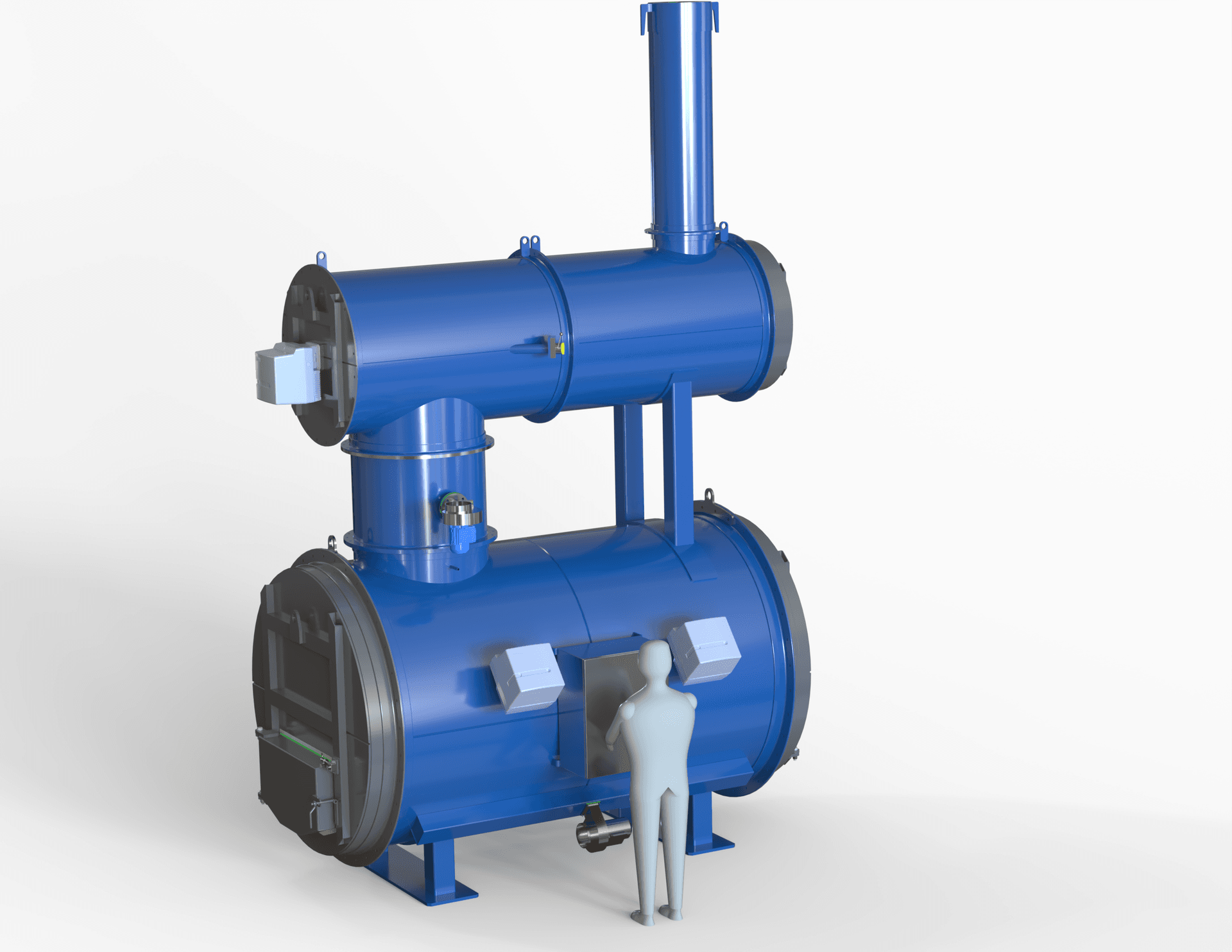
The clearance stops waiting on a skip
Rural and remote sites are the ones flytipped most and served worst by collection. Clearing the same week rather than the same month is what stops one tipped load attracting the next.
Repeat dumping feeds on delay
A pile that stays visible is an advertisement. Sites that clear fast get tipped less, and the cost of the second load is always higher than the first.
The landowner controls the disposal record
Once you clear it, it is yours. Destroying it on site with a run record is a stronger duty-of-care position than a skip you filled and a transfer note you signed on trust.
POPs-bearing furniture has only one route
Upholstered seating containing persistent organic pollutants must be destroyed rather than landfilled. Where dumped furniture is routine, that fraction has a legal destination and it is this one.
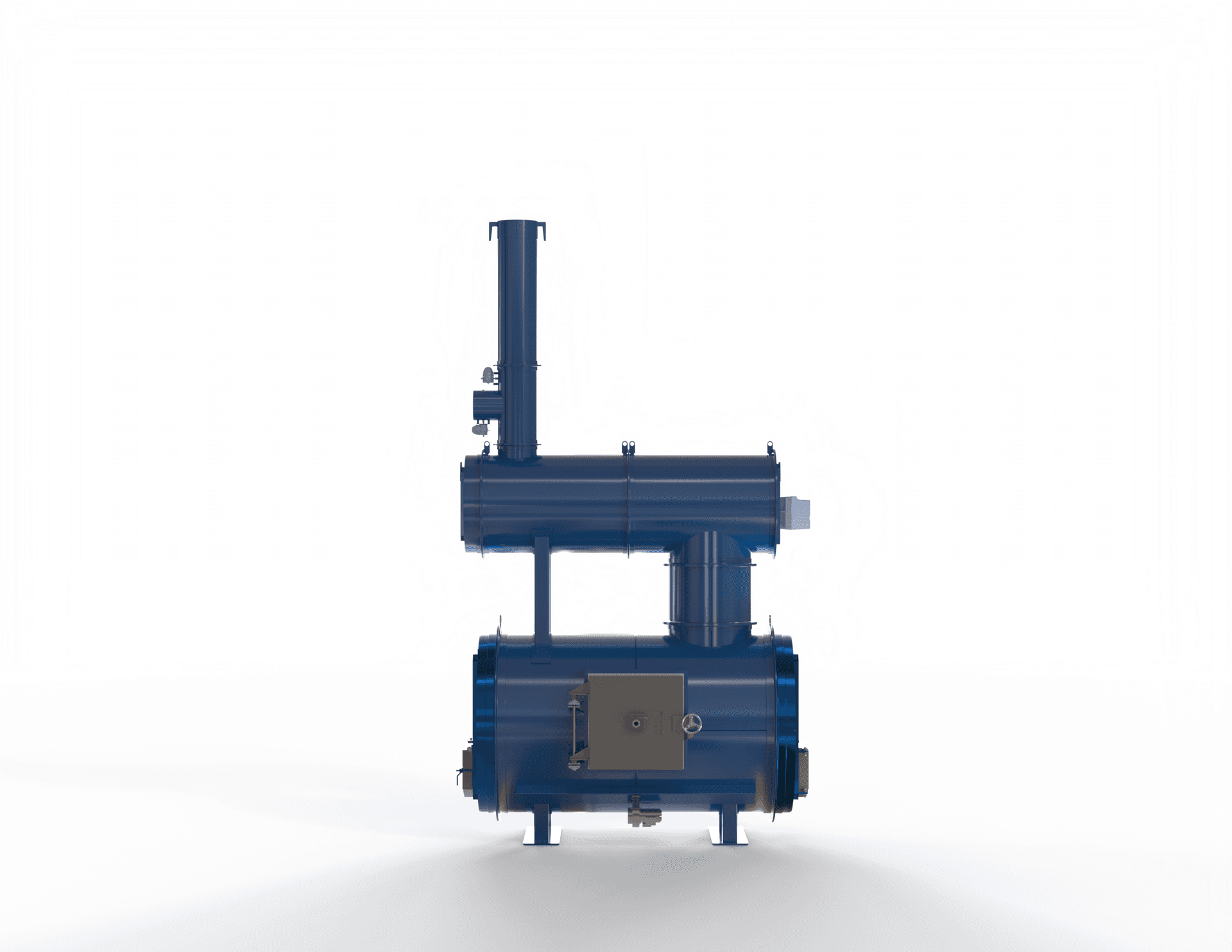
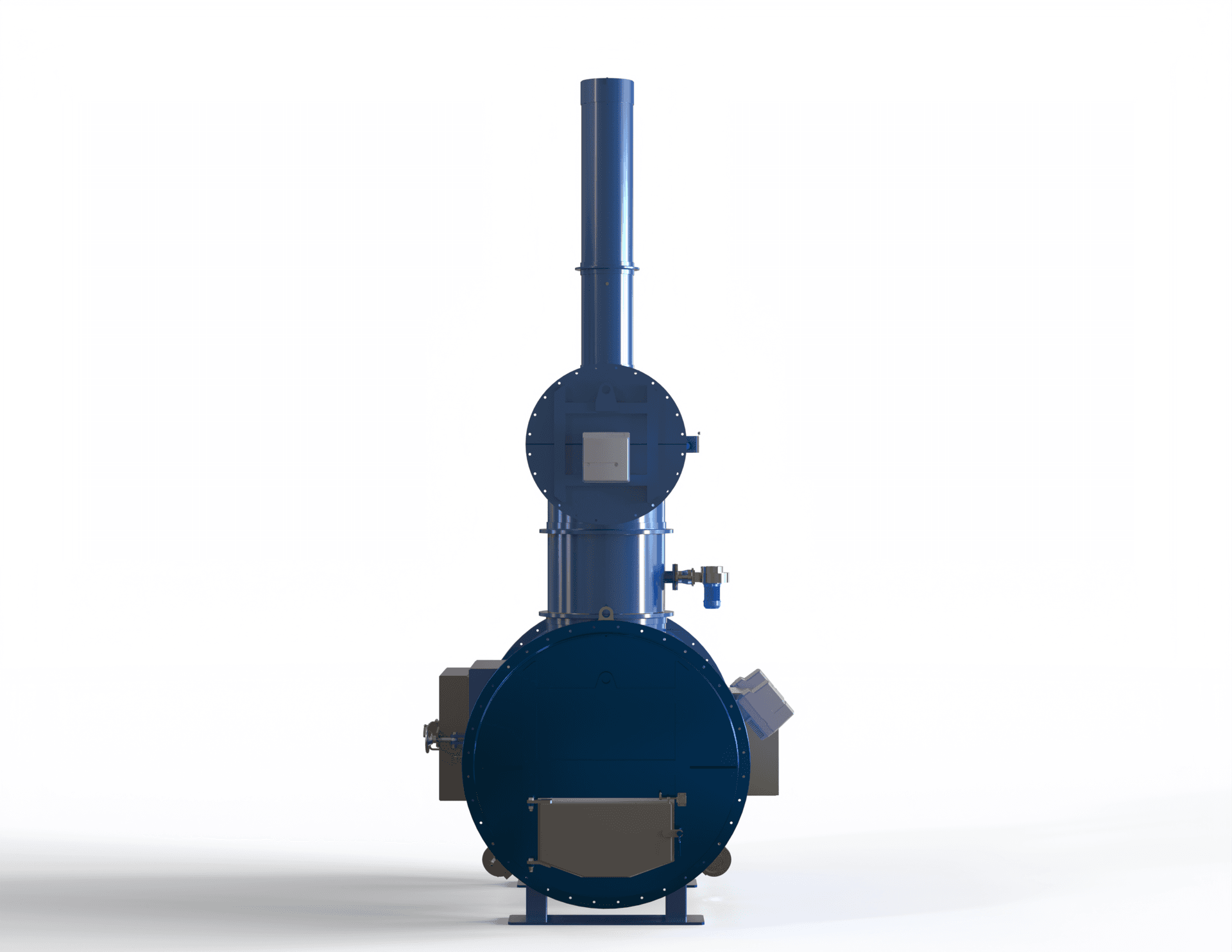
Dual-chamber unit, 1,100°C capable
Primary chamber running 850–1,200°C with a secondary holding flue gas above 850°C for two seconds. Environmental waste is the stream most likely to carry halogenated content — chlorinated solvents in contaminated arisings, salt-laden marine debris, POPs-bearing material — so the 1,100°C condition is stated here rather than treated as an exception.
Front dual-door loading
Charged through a front dual door at floor level, so bulk bags, tote bins and wheeled skips go in at the height a site telehandler already works at. Clearance waste arrives in whatever it was collected in, and it is not decanted.
What Ships
With The Unit
Identical whichever stream it is specified for. The operating procedure changes; the machine does not.
Dual-chamber unit, 1,100°C capable
Primary chamber running 850–1,200°C with a secondary holding flue gas above 850°C for two seconds. Environmental waste is the stream most likely to carry halogenated content — chlorinated solvents in contaminated arisings, salt-laden marine debris, POPs-bearing material — so the 1,100°C condition is stated here rather than treated as an exception.
Front dual-door loading
Charged through a front dual door at floor level, so bulk bags, tote bins and wheeled skips go in at the height a site telehandler already works at. Clearance waste arrives in whatever it was collected in, and it is not decanted.
IP6X control panel with cycle logging
PLC control with chamber thermocouples, interlocked charge door and a time-stamped temperature record per run. For hazardous waste produced and destroyed on one site, that log is the evidence behind a consignment record nobody drove anywhere.
Burner set and fuel train
Configured for natural gas, LPG, diesel, biofuel or hydrogen. This stream runs wet and dirty — flood silt, harbour arisings, screenings — so burner support does more work here than on a dry industrial charge.
Coretex refractory lining
Monolithic castable lining rated for the full range and replaceable in service. Environmental loads swing from saturated to solvent-bearing between one bag and the next, and the lining is specified for that cycling rather than for a steady feed.
Stack, dispersion data and commissioning
Stack to the height your site-specific dispersion assessment calls for, the emissions data pack the permit application references, on-site commissioning, a witnessed first run and operator training. Hazardous scope means a bespoke permit rather than standard rules, and the assessment is the long pole.
How One Burn Runs,
Start To Finish
One run is one countable event, reconciled against a manifest and evidenced by a time-stamped temperature log.
One Cycle,
Start To Finish
Adds 20 03 01 and the hazardous lines the assessment turns up. The procedure is inverted from every other page: characterise first, sort second, charge last — because nothing about the load was declared.
The load is surveyed for asbestos, drums, cylinders, batteries and anything unidentified. This is the step that decides whether the clearance is a normal job or a specialist one, and it happens before a grab reaches the pile.
Asbestos, pressurised vessels, drums with contents, batteries, electrical items and tyres are separated and routed to their own destinations. On this stream that separation is the job, not a preliminary to it.
Metal and clean inert material go to recovery. What reaches the chamber is the mixed, contaminated, unsortable residual — which is most of a typical tipped load.
Fed steadily through the front dual door, with two-second secondary retention above 850°C and 1,100°C where mixed plastics push the charge past 1% halogenated organic content.
Residue carries a mineral fraction from soil and rubble in the load. The run log gives the clearance a documented end point, which is what the duty of care asks for.
What You Can Burn —
And What You Can't
One run takes the whole stream without pre-sorting. What must never enter it is a short, hard list.
Yes: accepted in a run
No pre-sorting between these
- Bagged household and commercial refuseThe commonest tipped material — mixed bagged waste, cleared and charged after screening for the hazardous fractions.
- Furniture, mattresses and upholsteryBulky dumped items with no reuse route. Upholstered seating is also the POPs fraction, for which destruction is the required outcome.
- Mixed non-inert construction debrisTimber, sheeting, packaging, insulation and fit-out waste from small-scale tipping, once inert and hazardous fractions are out.
- Garden and green waste with contaminationCleared vegetation and green waste mixed with refuse to the point where composting is not available to it.
- Textiles, carpet and soft furnishingsDumped carpet, underlay and textiles — bulky, contaminated by exposure and refused by reuse routes.
- Contaminated clearance consumablesSheeting, bags, gloves and PPE used by the clearance team, contaminated in the course of the work.
No: never charged
Not a permit question — these stay out
- Asbestos sheeting and fragmentsThe most common dangerous find in a tipped load and never a charge. Suspected asbestos stops the clearance and brings in a licensed route.
- Drums, containers and unidentified substancesNothing uncharacterised is charged. Abandoned drums are handled as hazardous unknowns, sampled and routed accordingly.
- Gas cylinders, aerosols and batteriesSealed vessels and cells. All three turn up in tipped waste regularly, which is why the screening step is written into the procedure.
- Tyres, inert rubble and WEEETyres have their own regime, rubble does not burn, and electrical items carry recovery obligations. Each leaves by its own route.
Can you legally burn flytipping & land clearance on site?
Technically, yes: the chamber destroys almost everything on the accepted list at 850–1,200°C, and capability is rarely the constraint. Legally is a separate question. What your site is allowed to burn is set by your environmental permit from the Environment Agency, SEPA or NIEA and the waste codes written into it. The never-charged list is different again: those materials are out of scope for the unit or governed by a direction, and no permit wording brings them back in. Send us the codes you hold, or the ones you expect to apply for, and we will tell you which of this list they cover before anything is specified.
Send us your waste codesWhat does a district clearing 5 tonnes of flytipping a week need?
Arithmetic on published model figures, not a customer reference. Your numbers go through the same steps.
How This
Was Worked Out
5,000 kg a week against the LBI-250's 250 kg/h = 20 hours, or two and a half shifts — assuming the hazardous and inert fractions have already been taken out, which on a tipped load is a real subtraction. Tipped waste is bulky and uncompacted, so count loads against the 5.5 m³ chamber rather than working from tonnage alone. Budget the screening labour as part of the operation.
Asbestos, cylinders, WEEE, tyres
Above 3–5%
5.5 m³
2.9 t
Send your daily or weekly arisings and we will confirm the model, the run time and the permit route.
Related Products
& Services
Complementary equipment and engineering services for your process.
Sizing and background
- [TOOL]Work out the burn rate for your own arisings
- [TOOL]Size the combustion air and flue gas duty
- [BLOG]Ash management from industrial waste incinerators
- [BLOG]Integrating vibration analysis for incinerator predictive maintenance
- [BLOG]Advanced gas cleaning for ultra-low emission incinerators
- [BLOG]Evaluating flue gas cleaning systems in industrial incinerators
Flytipping & land clearance Questions
Answered against the published figures for the models specified for this stream, not a generic range sheet.
Flytipped waste cleared from land is mixed municipal and commercial refuse in unknown condition: bagged household waste, furniture and mattresses, construction and demolition debris, tyres, drums, garden waste, and whatever was tipped alongside them. Once cleared it is waste in the landowner's or authority's hands, with the duty of care that goes with it. The landowner position is the reason this page exists. Waste dumped on private land is, in practice, the occupier's problem to clear and dispose of lawfully, and doing that properly means characterising it rather than tipping it into a skip and hoping. Rural estates, farms, car parks, industrial yards and highway verges all end up funding disposal for waste they never produced. The assessment step carries more weight here than anywhere else on this site. A flytipped load reliably contains at least one thing that must never be charged — asbestos sheeting is the commonest, along with gas cylinders, drums with contents, batteries and electrical items. Those are found, not declared, which makes screening the operating discipline rather than a precaution. What remains after screening is bulky mixed residual, and it destroys at the standard condition — 850–1,200°C with two-second retention. Where POPs-bearing material is present, typically upholstered furniture and seating, it must be destroyed rather than landfilled, which makes incineration the required route for that fraction rather than the convenient one.
5,000 kg a week against the LBI-250's 250 kg/h = 20 hours, or two and a half shifts — assuming the hazardous and inert fractions have already been taken out, which on a tipped load is a real subtraction. Tipped waste is bulky and uncompacted, so count loads against the 5.5 m³ chamber rather than working from tonnage alone. Budget the screening labour as part of the operation.
In practice, yes — clearing and lawfully disposing of it generally falls to the occupier, which is why flytipping is expensive to be a victim of. Report it first where it may be investigated, then treat what you clear as your waste, with the characterisation and duty of care that implies.
The clearance stops. Suspected asbestos goes to a licensed contractor and a specialist disposal route, and nothing from that part of the load is charged. It is the commonest dangerous find in tipped waste, which is exactly why the assessment comes before the grab.
Yes, and for upholstered seating it is the required route rather than the convenient one: POPs-containing seating cannot be landfilled and must be destroyed. Identify it at assessment and name the fraction in the permit application.
You have to screen it, which is not the same as fully sorting it. Hazardous items, tyres, WEEE and inert rubble come out; recoverable metal should too. The mixed residual that remains — usually most of the load — is what the chamber is for.
Indirectly, and site managers consistently say so: piles that stay visible attract more. Being able to clear within days rather than waiting on a skip and a hazardous uplift removes the advertisement, which is worth more than the disposal saving on its own.
Most of it by volume, less by weight. Rubble, soil and metal come out first or survive as residue, so expect ash well above the 3–5% figure and budget the screening labour as part of the operation rather than as an overhead.
Ready to
Incinerate?
Send the stream, the volume and the site constraints. We will confirm the model, the permit route, and what the specification has to say to satisfy the regulator.
- The clearance stops waiting on a skip
- Repeat dumping feeds on delay
- The landowner controls the disposal record
- POPs-bearing furniture has only one route