Ash Management from Industrial Waste Incinerators: Navigating Challenges and Maximizing Value
Industrial waste incineration, particularly within waste-to-energy (WtE) systems, offers a compelling solution for reducing waste volume and generating power. This process significantly reduces the mass of waste by approximately 70% and its volume by up to 90%. However, a substantial byproduct of this thermal treatment is ash, presenting complex management challenges and opportunities for resource recovery. Effective ash management is not just an operational necessity but a critical environmental engineering and policy concern, dictating the sustainability and economic viability of incineration facilities.
Understanding Industrial Incineration and Ash Generation
Industrial incineration involves burning waste materials at high temperatures to convert them into heat, which can then be used to produce steam for electricity generation or other energy needs. While reducing landfill dependency and harnessing energy, this process inevitably yields solid residues, broadly categorised into two main types: incinerator bottom ash (IBA) and air pollution control (APC) residues, also known as fly ash.
Incinerator Bottom Ash (IBA)
IBA is the non-combustible material that remains on the grate at the bottom of the incinerator. It typically constitutes the largest fraction of the ash produced, accounting for roughly 70–85% of the total ash by weight. IBA is a heterogeneous mixture containing inert materials like sand, stones, glass, ceramics, and unburnt organic matter, along with significant quantities of metals (ferrous and non-ferrous).
Air Pollution Control (APC) Residues / Fly Ash
Fly ash, or APC residues, is the fine particulate matter carried by the flue gases and captured by air pollution control systems, such as electrostatic precipitators and bag filters. This type of ash typically makes up a smaller portion of the total ash, around 3–10% by weight, but is generally far more hazardous due to its chemical composition.
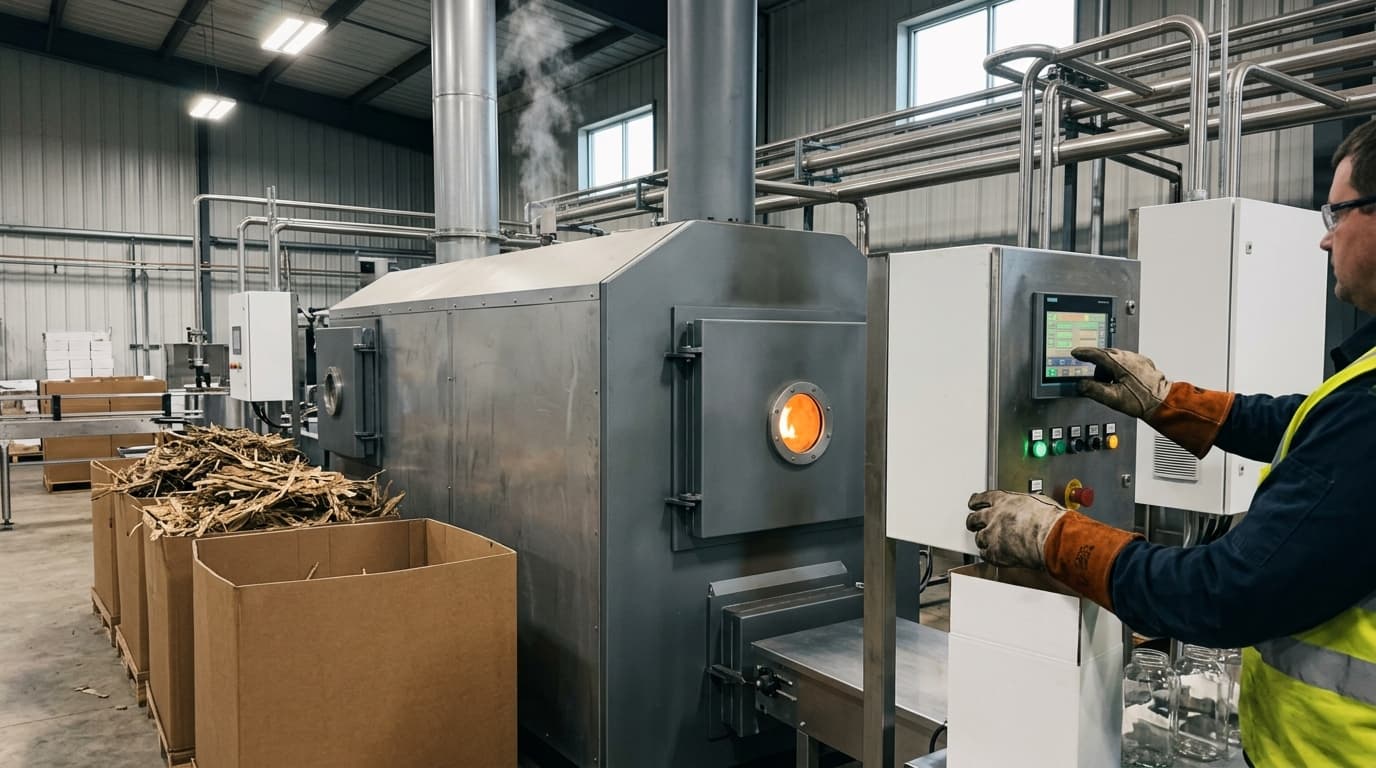
Complete incineration systems for general, agricultural, pharmaceutical, healthcare, and military waste — from under 50kg/h batch to 500kg/h continuous.
Characteristics and Hazards of Incinerator Ash
The composition of incinerator ash is highly variable, depending on the type of waste incinerated and the combustion conditions. However, both IBA and fly ash can contain hazardous substances if not properly managed.
Toxic Components and Leaching Concerns
A primary concern with incinerator ash is the presence of heavy metals, such as lead, cadmium, copper, zinc, mercury, arsenic, chromium, and nickel, and persistent organic pollutants (POPs), including dioxins and furans. Fly ash, in particular, tends to have higher concentrations of heavy metals and soluble salts.
These contaminants pose environmental risks, particularly the potential for leaching into groundwater and surface water if the ash is disposed of without adequate treatment or containment. While the alkaline nature of lime often present in modern incinerator ash can initially prevent metal leaching by neutralising acidic rainwater, this alkalinity can eventually be exhausted, leading to subsequent release of toxic metals.
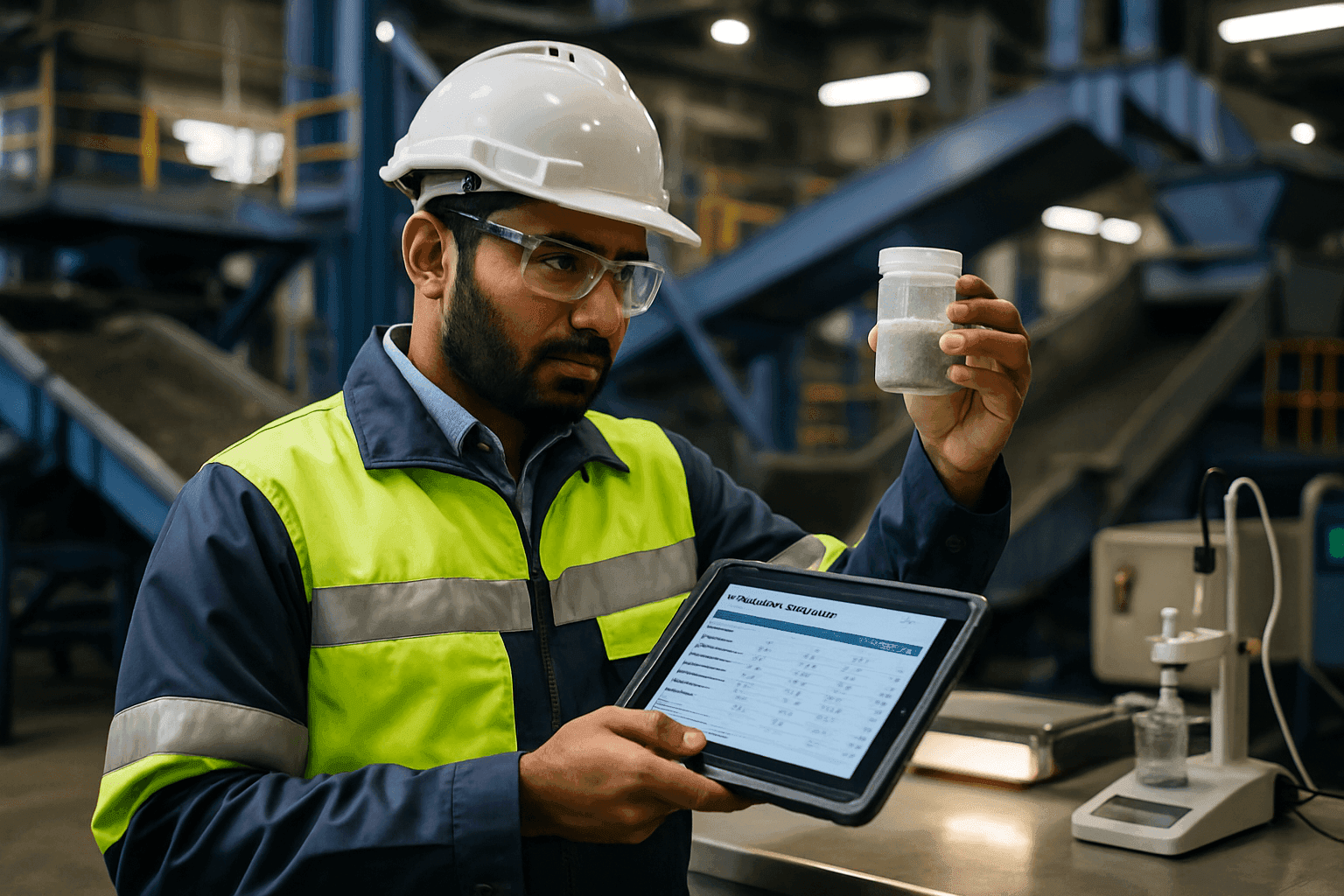
Leaching behaviour is influenced by particle size, pH, moisture exposure, ageing, carbonation, chloride and sulphate concentrations, and the chemical form in which a metal occurs. A bulk chemical analysis alone is therefore insufficient when deciding whether ash can be reused: representative sampling and leachability testing are needed for the intended end use and local regulatory limits.
Ash Management Strategies and Technologies
Given the volume and hazardous potential of incinerator ash, effective management is paramount. Strategies generally fall into two categories: disposal and beneficial reuse, often involving pre-treatment.
Ash Disposal
Historically, the primary method for ash management has been landfilling. However, this is increasingly problematic due to land scarcity, the cost of disposal, and the long-term environmental risks associated with potential leachate. In many regions, fly ash is classified as hazardous waste and requires special handling and disposal in permitted hazardous waste landfills, while bottom ash may be considered non-hazardous if it meets certain criteria after testing.
Before disposal, operators should segregate IBA and APC residues, control dust during conveying and loading, and maintain traceability from the incinerator through to the receiving facility. Covered storage, sealed transfer systems, runoff collection, and documented waste-characterisation records reduce the risk of cross-contamination and support compliance audits.
Beneficial Reuse and Resource Recovery
A more sustainable approach is the beneficial reuse of incinerator ash, which conserves landfill space, reduces the need for virgin materials, and can lower greenhouse gas emissions.
Metal Recovery
Both IBA and fly ash contain recoverable metals. IBA, in particular, can yield significant amounts of ferrous metals (like iron and steel) and non-ferrous metals (such as aluminium, copper, and zinc). Processing facilities use magnets and eddy current separators to extract these valuable materials for recycling. Recovering metals from ash reduces the environmental cost compared to producing virgin metals and contributes to a circular economy.
Recovery performance depends on releasing metal pieces from mineral fractions, separating ash into suitable size ranges, and removing attached ash and moisture. Fine non-ferrous fractions can contain valuable aluminium, copper, brass, stainless steel, and precious-metal-bearing particles, but they require more precise separation and quality control than coarse metals. Recovered material must meet the specifications of downstream recyclers; maximising recovery tonnage without controlling contamination can reduce its market value.
Construction Materials
Processed incinerator bottom ash (IBA aggregate) is widely used as a substitute for conventional aggregates in various construction applications. These include:
- Road Construction: Used as road aggregates, sub-base layers for roads and footpaths.
- Fill Material: Employed as bulk fill in construction, industrial parks, and land reclamation.
- Concrete and Cement Products: Incorporated into cement-bound materials, lightweight blocks, and pavement concrete.
- Soil Stabilization: Certain types of ash can be used as admixtures for soil stabilisation.
The use of ash in construction materials not only diverts waste from landfills but can also reduce construction costs by replacing more expensive virgin materials. However, careful testing and analysis of the ash's chemical and mineralogical composition are crucial to ensure its suitability and long-term environmental safety, addressing concerns about reactivity and potential leaching.
For IBA aggregate, processing commonly includes ageing or weathering, screening, ferrous and non-ferrous metal recovery, removal of oversized combustible material, and testing of gradation, bearing performance, chloride and sulphate content, and leaching. Ageing can promote carbonation and stabilise some mineral phases, but it should be managed with drainage and runoff controls. The permitted application, depth of placement, use of capping layers, and proximity to groundwater are typically determined by the applicable regulatory regime and test results.
Other Applications
Ash can also be explored for other uses, such as soil amendment (with careful assessment to prevent contamination) and even the recovery of specific metals like zinc through advanced processes.
Ash Treatment Technologies
To mitigate hazards and enable beneficial reuse, various treatment techniques are applied to incinerator ash, particularly fly ash, which is often classified as hazardous.
- Stabilisation/Solidification: This involves binding hazardous components, typically heavy metals, within a stable matrix to reduce their leachability. Common methods include cement solidification, where fly ash acts as an additive in concrete production, and chemical stabilisation using organic or inorganic reagents.
- Thermal Treatment: Techniques like sintering, melting, and vitrification involve heating the ash to high temperatures (sometimes over 1,400°C to 1,500°C) to transform it into a glassy, inert material, which significantly reduces the leachability of hazardous substances.
- Separation Techniques: These methods use chemical, biological, or electrodialysis processes to separate heavy metals from the ash. Advanced processes, like the FLUWA and FLUREC systems in Switzerland, are designed to recover high-purity metals such as zinc from fly ash.
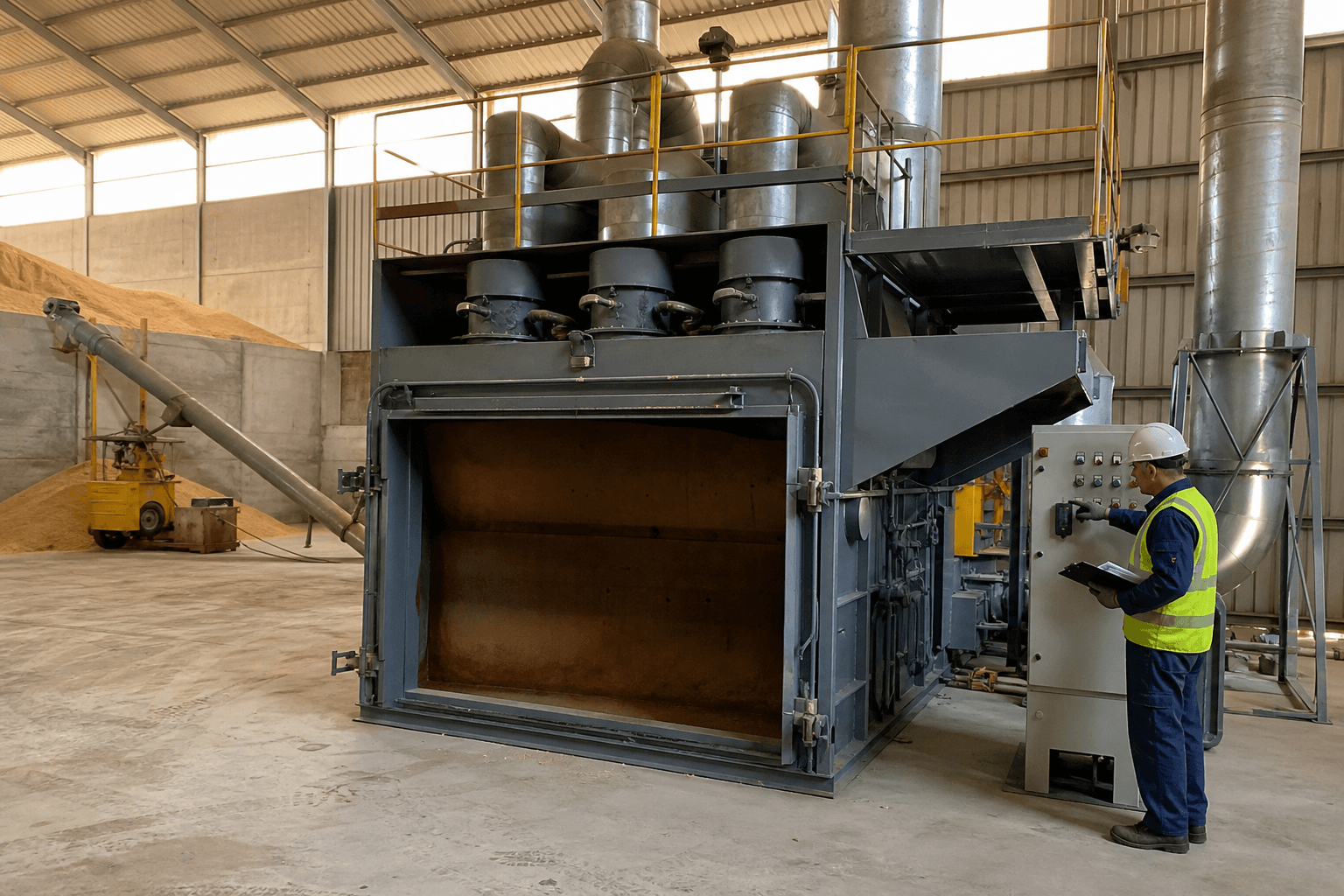
The LitBurn, AgriBurn, AmoBurn, and AniBurn ranges cover every waste disposal need with dual-chamber combustion and scrubbing options.
Advanced Ash Processing Solutions
Advanced ash processing solutions combine physical separation, controlled conditioning, treatment, and verification to move ash up the value chain while managing environmental risk. Rather than treating all ash as one material, these systems process IBA and APC residues separately and select technologies according to particle size, moisture, metal content, salt content, leaching behaviour, and the required output specification.
Integrated Bottom Ash Processing
Modern IBA plants often use a staged process. Ash is cooled and conditioned, then screened into size fractions so that separation equipment can work more effectively. Magnets recover ferrous metals, while eddy current separators recover non-ferrous metals. Density, sensor-based, and wet or dry separation stages may then improve recovery from finer fractions or reduce contaminants such as unburnt material, glass, and residual mineral matter.
Advanced systems are designed around both recovery and aggregate quality. Equipment selection should account for the feed rate, variation in incoming waste, abrasive wear, water use, dust control, and the specification required by metal recyclers or construction-material customers. Sampling at key points in the process helps operators identify whether poor performance is caused by the ash feed, inadequate liberation, incorrect separator settings, or contamination in a particular size fraction.
APC Residue Washing and Salt Management
APC residues frequently contain soluble chlorides and sulphates as well as concentrated metals. Washing can reduce soluble salt content and, in some cases, improve the suitability of a residue for further treatment. The resulting wash water requires treatment and management; a washing step transfers contaminants into another stream unless salts, metals, and water are appropriately separated, recovered, or disposed of.
Where economically and technically justified, hydrometallurgical treatment can selectively dissolve and recover metals, especially zinc, from fly ash. This requires careful reagent management, filtration, residue handling, and controls for the quality of recovered products. It is most effective when integrated with a defined outlet for both recovered metals and remaining treated residue.
Thermal and Mineralisation Routes
Vitrification, melting, and sintering can produce dense, glassy or mineralised products with lower leachability than untreated ash. These solutions can be appropriate for difficult residues or where a durable product has an established market, but their high energy demand, capital cost, off-gas treatment requirements, and maintenance needs must be assessed alongside the environmental benefit.
Carbonation and other controlled mineralisation approaches are also used to alter ash chemistry and stabilise certain constituents. For bottom ash, managed ageing can support these reactions before aggregate use. The resulting material still requires testing: a treatment route should be judged by verified performance over the intended service life, not by the process name alone.
Choosing the Right Processing Route
The most effective advanced ash processing solution is site-specific. A facility should begin with a robust characterisation programme covering ash quantity, particle-size distribution, moisture, metals, unburnt carbon, soluble salts, mineralogy, and leachability. It should then define the intended outlets before investing in equipment. This avoids installing recovery technology without a viable buyer for recovered metal, or producing aggregate that does not meet local engineering and environmental requirements.
- Prioritise prevention and separation: Keep IBA and APC residues separate and minimise the entry of unsuitable materials into the waste stream where possible.
- Match treatment to the contaminant: Use physical separation for recoverable metals, washing for soluble salts where wastewater can be managed, and stabilisation or thermal routes for residues that cannot meet limits by separation alone.
- Design for end-market quality: Set product specifications with recyclers, contractors, and regulators before commissioning the processing line.
- Verify continuously: Use representative sampling, leachability testing, material tracking, and process data to demonstrate consistent performance.
- Assess whole-system impacts: Compare energy use, water consumption, reagent demand, transport, residue generation, recovery yield, and avoided landfill or virgin-material use.
Regulatory Landscape and Environmental Compliance
Effective ash management is heavily influenced by national and international regulations. Frameworks like the Resource Conservation and Recovery Act (RCRA) in the United States and the Waste Framework Directive and Landfill Directive in the European Union provide legal structures for handling, storage, disposal, and recycling of ash. These regulations often classify certain types of ash, especially fly ash, as hazardous waste, necessitating stringent management.
Regulators require appropriate tests to establish the physical and chemical characteristics and the polluting potential of residues before determining disposal or recycling routes. This includes assessing total soluble fractions and soluble heavy metals. Furthermore, incinerator operations must achieve a specific level of incineration, with total organic carbon content in bottom ash typically required to be less than 3% or loss on ignition less than 5% of dry weight. Continuous monitoring and adherence to emission limits for air and water are also mandated to minimise environmental impact.
Requirements differ by jurisdiction and by proposed end use. Operators should confirm waste classification, acceptance criteria, testing methods, quality-assurance frequency, transport documentation, storage conditions, and any product or end-of-waste requirements with the relevant competent authority. A reuse route that is acceptable in one region may require different evidence or be prohibited in another.
Conclusion: Towards Sustainable Ash Management
Ash management from industrial waste incinerators is a complex but crucial aspect of modern waste management and environmental sustainability. While incineration offers significant advantages in waste reduction and energy recovery, the resulting ash, especially fly ash, demands careful handling due to its hazardous components. Through advanced processing, such as metal recovery and various treatment technologies (stabilisation, thermal treatment, and separation), the environmental risks can be mitigated, and valuable resources can be reclaimed. The increasing focus on beneficial reuse in construction and other applications, supported by evolving regulatory frameworks, is transforming ash from a waste burden into a potential resource, driving the industry towards more circular and environmentally sound practices. Continuous research and technological innovation are essential to further unlock the potential of incinerator ash while ensuring public health and ecological protection.
