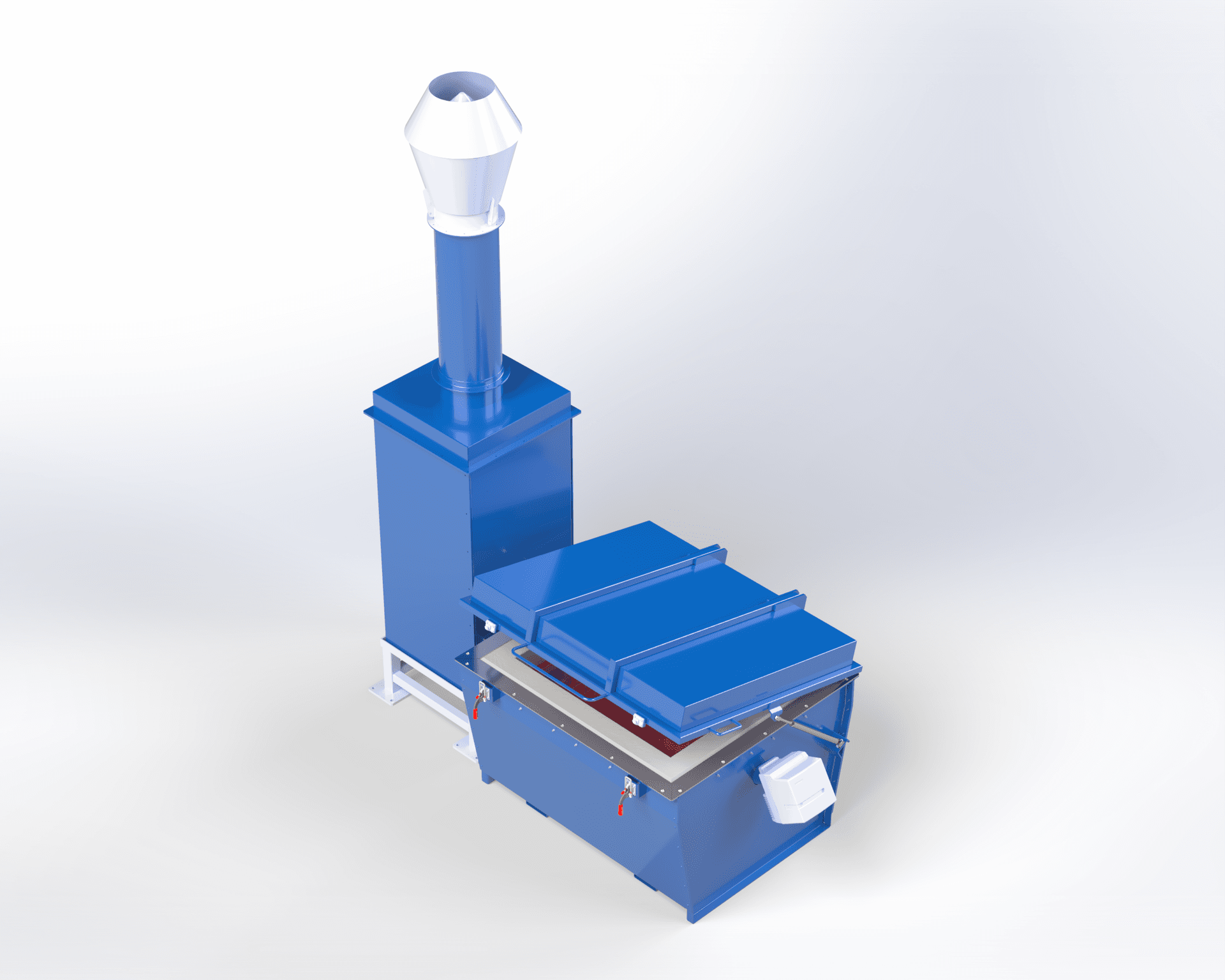
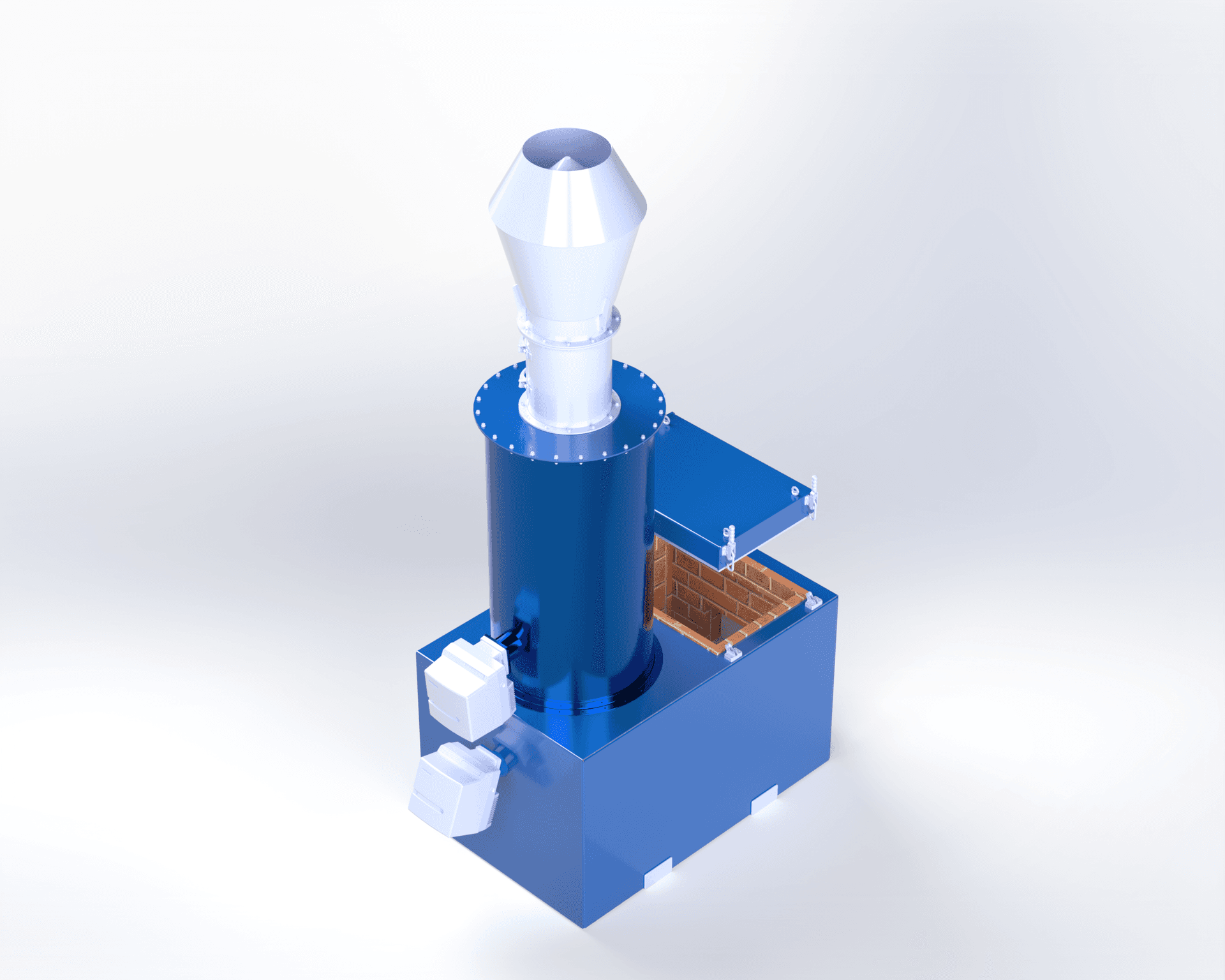
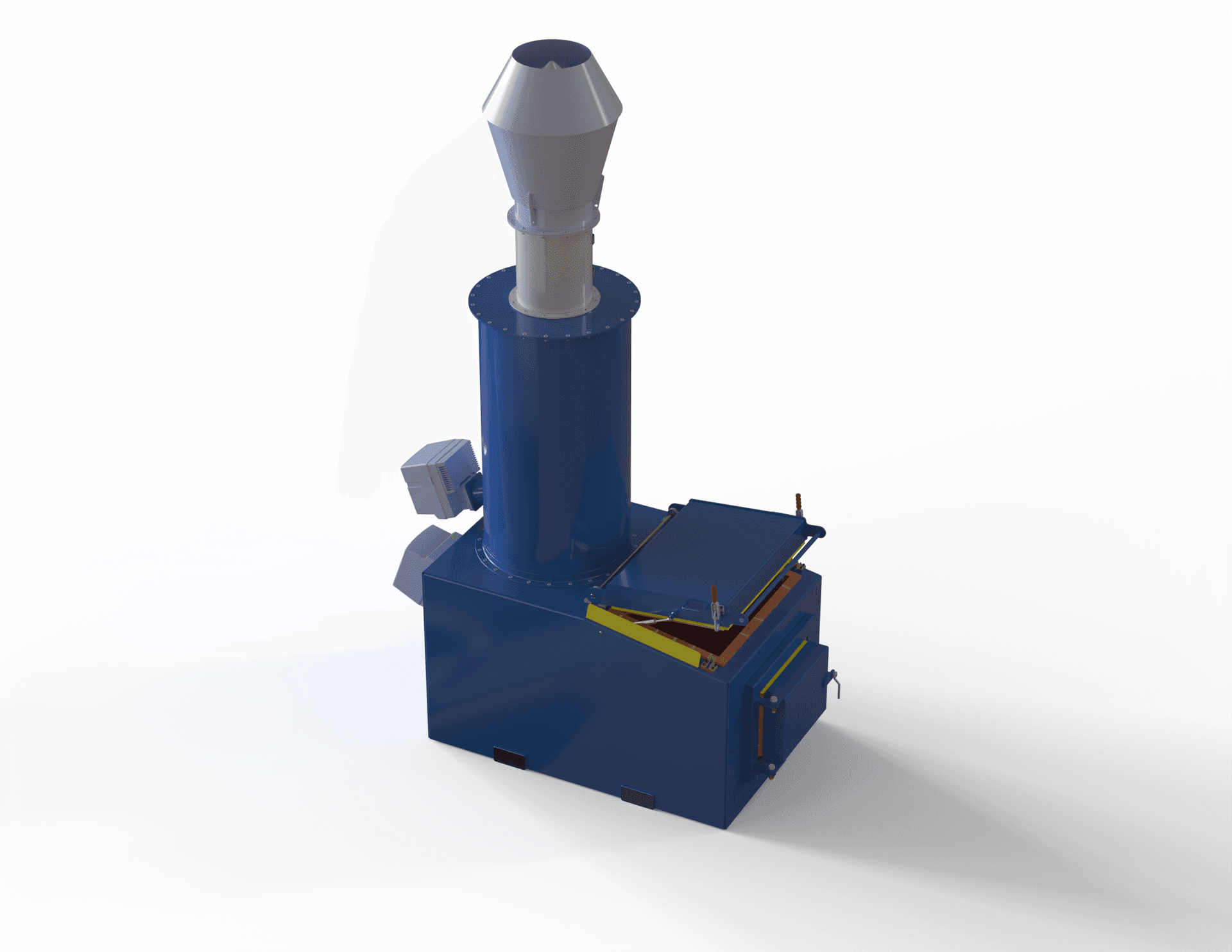
LBI-125 125 kg industrial waste incinerator
A single factory unit or a workshop-scale stream: maintenance absorbents, filter media, a few tonnes of reject product a month. At 125 kg/h a shift clears roughly a tonne, which suits a site replacing a residual skip rather than a whole waste contract.
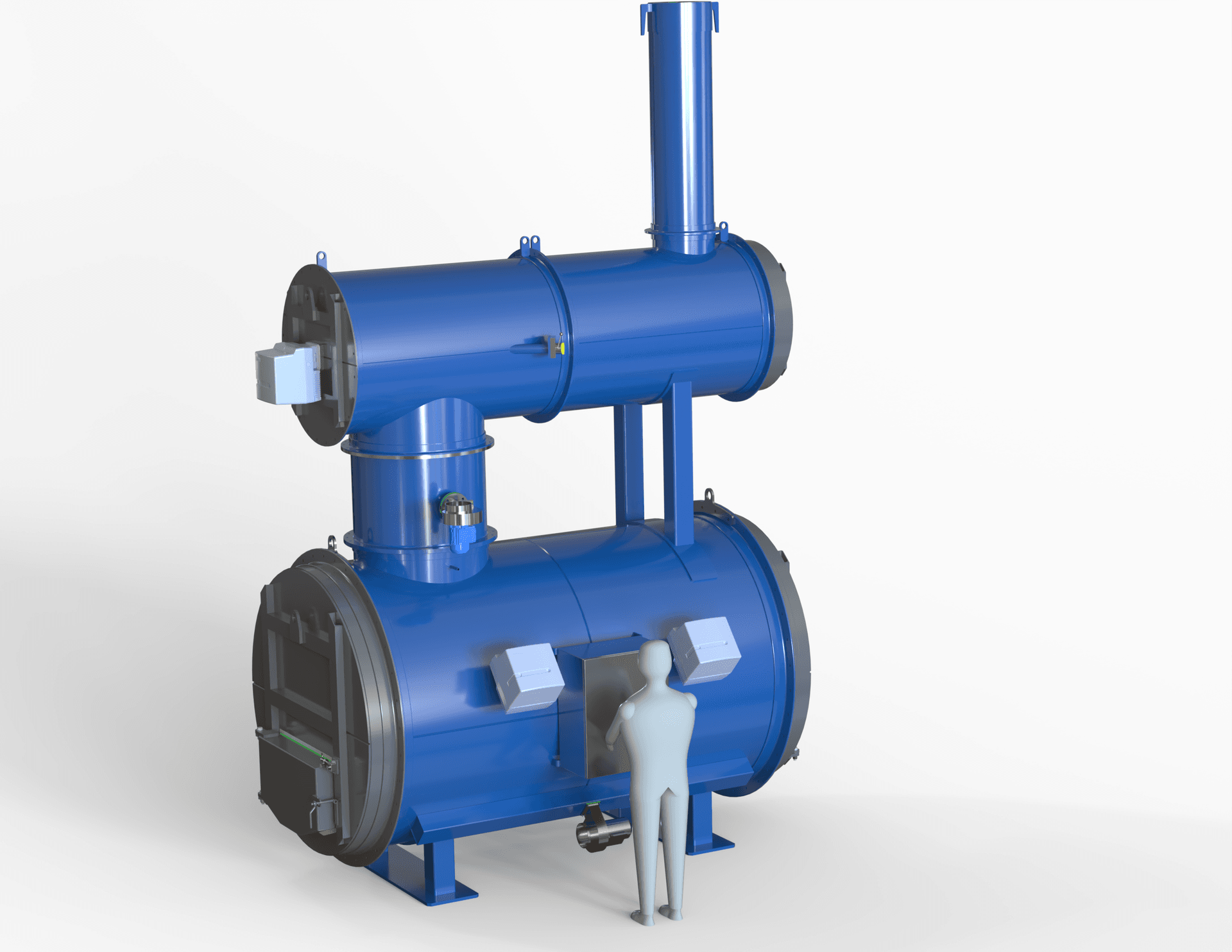
- Chamber
- 3.3 m³
- External dimensions
- 2880 × 1640 × 2040 mm
- Burners
- 3
- Loading
- Front (dual door)
- [LOAD]
- 125kg
- [BURN_RATE]
- 125kg/h
- [DUTY]
- Continuous
- [WEIGHT]
- 2.5t
LBI-125 In Full
- Chamber
- 3.3 m³
- External dimensions
- 2880 × 1640 × 2040 mm
- Burners
- 3
- Loading
- Front (dual door)
- Operating temperature
- 850–1,200°C
- Gas retention
- 2.0 s
- Ash residue
- 3–5%
- Heat-up time
- 30 min
- Fuel
- Natural gas / H₂ / diesel / LPG / bio
- Control panel
- IP6X rated PLC
- Refractory
- Coretex lining
- Origin
- United Kingdom
Rated Continuously
Throughput is a function of operating hours, not cycles.
A factory's residual waste is produced at the rate the line runs, so size against the shift pattern rather than an annual figure. One 8-hour run clears roughly a tonne, which is the point at which a site stops exchanging a residual skip and starts clearing its own waste — and the number worth comparing is not tonnage but skip exchanges: what each pull costs in gate fee, Landfill Tax and haulage, against the hours the unit would run instead. Check the 3.3 m³ chamber against uncompacted volume. Trim, packaging, filter media and maintenance absorbents fill the box long before the charge reaches 125 kg, which is exactly why they fill a skip long before it reaches a weight ticket.
Every unit reaches operating temperature within 30 minutes and holds flue gas above 850°C for two seconds in the secondary chamber — the Industrial Emissions Directive condition. Ash residue is 3–5% of input mass.
Specified for
- Production rejects & off-spec productFailed batches, QC rejects, changeover waste and unsellable finished goods, destroyed as they arise.
- Brand protection & secure destructionBranded, counterfeit, prototype and condemned stock destroyed under witness, with the log behind the certificate.
- Oily rags, absorbents & filter mediaOily rags, spent absorbent, contaminated wipes, PPE and filter media — absorbed, never free liquid.
- Polymer, rubber & composite wasteNon-recyclable polymer, cured rubber and composite off-cuts — the fraction recyclers quote at zero.
- Textile & fibre wasteMill waste, coated and blended fabric, contaminated wipers and end-of-life branded workwear.
- Paint, coating & solvent-contaminated wasteBooth filters, overspray solids, masking and contaminated wipes from paint and coating lines.
Before you specify
Permit
You must take reasonable measures to apply the hierarchy — prevention, reuse, recycling, other recovery, then disposal — and declare it on waste transfer documentation. A unit that burns recoverable clean scrap is a compliance problem wearing a permit. Specify it for the residual fraction and keep the evidence of what was diverted.
Stack height
Comes out of a site-specific dispersion assessment, not a standard figure.
Full compliance requirementsHow many skip exchanges does the LBI-125 replace?
Every figure below is derived from published model data, so it can be checked rather than trusted.
- Run pattern
- 1 × 8 h shift a week
- Cleared per shift
- ≈1,000 kg
- Typical skip pull
- ≈1,000 kg residual
- Exchanges replaced
- ≈1 a week
- Ash at 3–5%
- 30–50 kg a week
- Chamber volume
- 3.3 m³
The arithmetic
125 kg/h × 8 hours = about 1,000 kg a shift, which is roughly what one residual skip pull carries, so a single weekly run takes an exchange out of the schedule and leaves 30–50 kg of ash in its place.
What to watch
Compare exchanges rather than tonnes: a skip is pulled when it looks full, not when it is heavy, so a site producing bulky trim pays for pulls at well under a tonne apiece and the saving is larger than the weight suggests.
Rest Of The Industrial Range
Same size, other waste types
Related Products
& Services
Complementary equipment and engineering services for your process.
Sizing and background
- [TOOL]Work out the burn rate for your own arisings
- [TOOL]Size the combustion air and flue gas duty
- [BLOG]Improving manifold airflow evenness by 65%
- [BLOG]Ash management from industrial waste incinerators
- [BLOG]The feasibility of small-scale modular incinerator units
- [BLOG]Precious metal incineration and recovery
- [BLOG]Evaluating flue gas cleaning systems in industrial incinerators
LBI-125 Questions
Every answer below is derived from this model's published figures, not from a generic range sheet.
The LBI-125 is rated at 125 kg/h continuously, so throughput is a function of how many hours you run it rather than how many cycles you complete. Running it for an eight-hour shift clears roughly 1,000 kg. The 125 kg figure in the model name is the chamber charge, not a daily ceiling.
Continuous. The LBI-125 holds its rated 125 kg/h for as long as it is fed, so you can keep loading through a shift without waiting for a cycle to finish. Fewer, longer burns use less fuel than repeatedly bringing the refractory up from cold.
The LBI-125 is specified for production rejects & off-spec product, brand protection & secure destruction, oily rags, absorbents & filter media, polymer, rubber & composite waste, textile & fibre waste and paint, coating & solvent-contaminated waste. It reaches 850–1,200°C and holds flue gas above 850°C for two seconds in the secondary chamber, which is the Industrial Emissions Directive condition for these streams. Waste containing more than 1% halogenated organic content raises that secondary-chamber minimum to 1,100°C.
The LBI-125 measures 2880 × 1640 × 2040 mm (L × W × H) externally and weighs 2.5 t installed. You need clear working space around it for the front doors to swing and for ash removal, plus a stack whose height comes out of a site-specific dispersion assessment rather than a standard figure.
Yes. Running this unit needs an environmental permit from the Environment Agency in England and Wales, SEPA in Scotland or NIEA in Northern Ireland. The waste codes for industrial waste have to be named in the application, and a permit written for general waste does not silently cover them. We supply the technical data pack the permit application relies on.
The LBI-125 runs on natural gas, hydrogen, diesel, LPG or biofuel through 3 burners. Being hydrogen-ready matters if you expect to decarbonise the site later: the unit does not need replacing when the fuel supply changes.
Thirty minutes from cold to operating temperature. From there it runs between 850°C and 1,200°C, with a 2.0-second gas retention time in the secondary chamber and a Coretex refractory lining. Control is through an IP6X-rated PLC panel.
Ash residue is 3–5% of input mass, so roughly 95% of what you load stops being a disposal cost. On a 125 kg charge that leaves about 5 kg of ash to remove — the only fraction still attracting gate fees and Landfill Tax.
125 kg/h × 8 hours = about 1,000 kg a shift, which is roughly what one residual skip pull carries, so a single weekly run takes an exchange out of the schedule and leaves 30–50 kg of ash in its place. Compare exchanges rather than tonnes: a skip is pulled when it looks full, not when it is heavy, so a site producing bulky trim pays for pulls at well under a tonne apiece and the saving is larger than the weight suggests.
No, and doing it is a compliance failure rather than a commercial choice. The waste hierarchy requires reuse and recycling to be considered first, and it is declared on your transfer documentation. The honest case for a unit is the residual fraction — contaminated, mixed, laminated, branded or off-spec material that recyclers will not take — and that fraction is usually large enough on its own.
Three things: the gate fee and standard-rate Landfill Tax on roughly 95% of the mass, the vehicle movements that carry it, and the schedule dependency that decides how much yard space you give to full skips. What it costs is fuel, an operator's time and a permit, which is why the arithmetic works at tonnages rather than at kilogrammes.
Yes, and that is normally the point. Production rejects, absorbents, polymer trim, textile waste and coating residues all destroy at the same condition, so a single permitted LitBurn covers them provided every stream is named with its codes at application. The exclusions are what have to stay separate: bulk liquids, aerosols, batteries, WEEE and tyres.
Is the LBI-125 the right size?
Send your waste streams and weekly arisings. We will confirm the model, the permit route for your site, and what the disposal-cost case looks like with fuel and capital included.