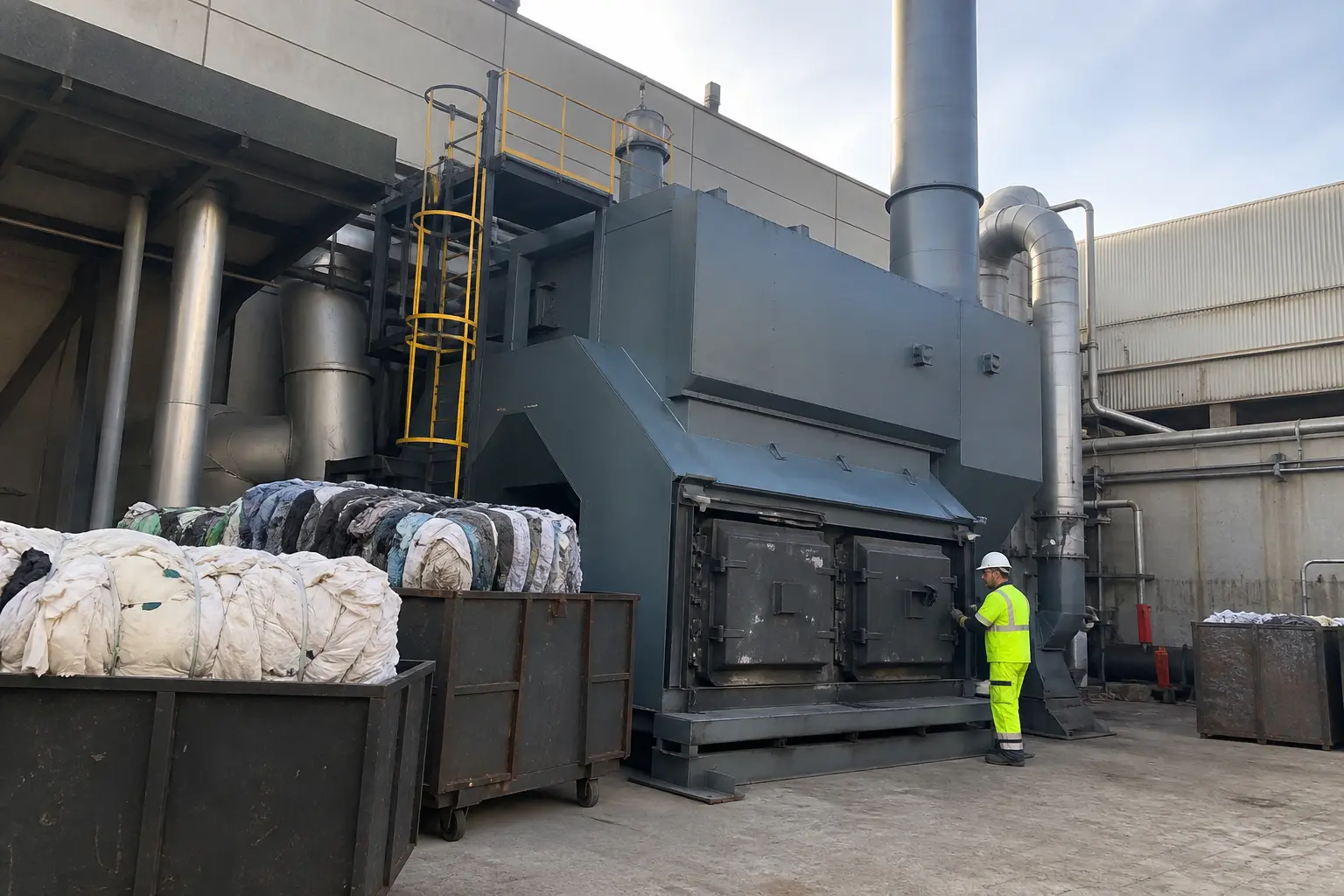
Textile Waste Incinerators
Mill waste, coated and blended fabric, contaminated wipers and end-of-life branded workwear.
Textile waste is bulky, light and increasingly unwanted by the routes that used to take it. Coated and laminated fabric, mixed-fibre blends, contaminated wipers and branded workwear all fall outside the reuse and rag markets. A LitBurn clears them by volume — which is what this stream is actually measured in.
Four Models,
One Solution
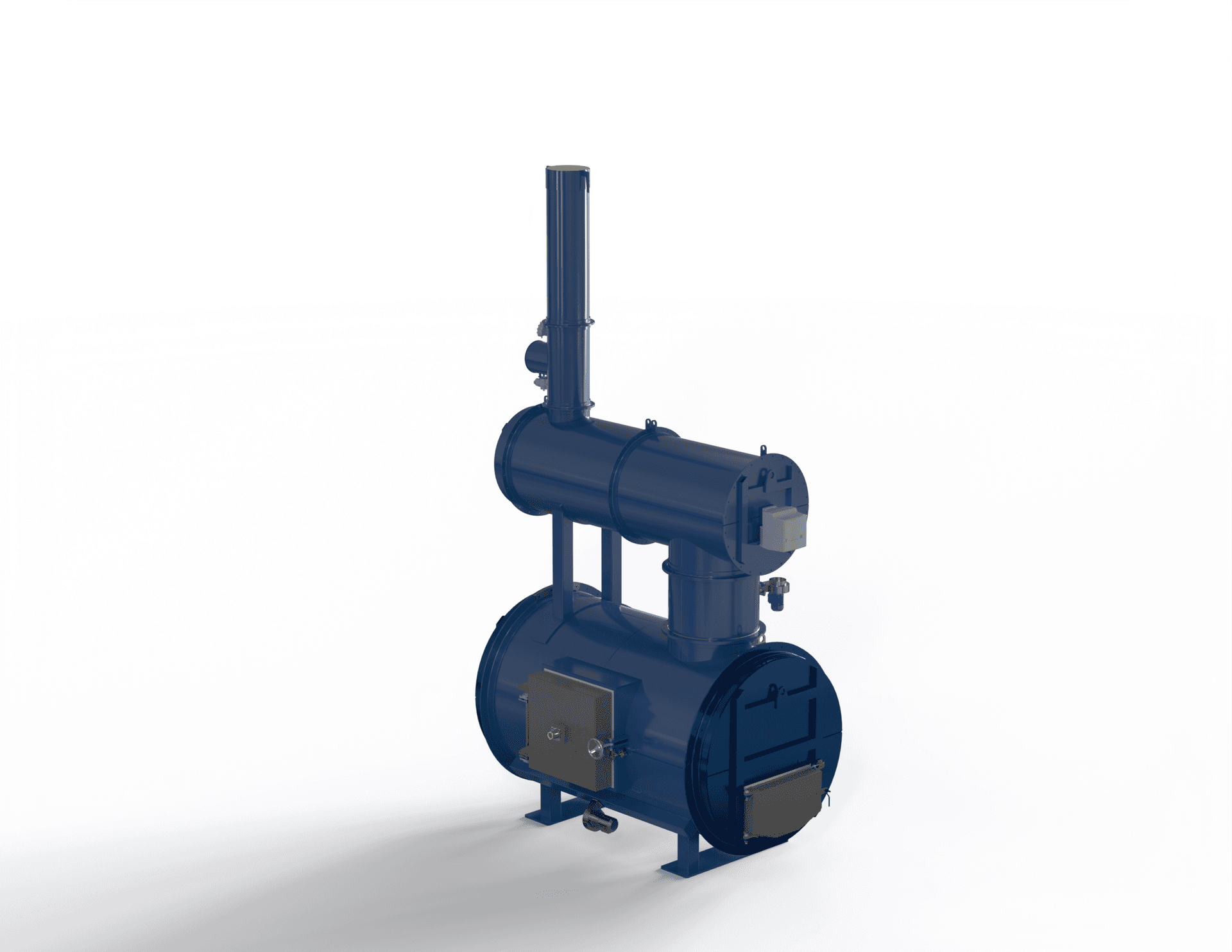
The entry point to the LitBurn range. A 3.3 m³ primary chamber and three burners give continuous 125 kg/h destruction in a footprint that fits a standard yard bay, which makes it the usual choice for a single-site operator replacing skip hire rather than a multi-site waste contract.
The most specified unit in the range. Chamber volume rises to 5.5 m³ for 250 kg/h continuous throughput while the external width grows by only 230 mm over the LBI-125, so sites that outgrow the smallest unit rarely have to rework the slab or the building line.
A 9.6 m³ chamber — nearly double the LBI-250 — for medium-scale industrial waste destruction. At this size most operators pair the unit with heat recovery, because the thermal output during a full shift is large enough to displace a dedicated water heater.
The largest LitBurn: a 16.2 m³ chamber running 500 kg/h continuously. Specified where waste arrives faster than a batch unit can clear it — large manufacturing sites, industrial estates, and operators consolidating several smaller waste contracts onto one machine.
Which Model
Fits Your Volume
Pick a model to see what it clears in a day of textile & fibre waste.
A cutting room or small mill clearing a tonne a week, or a workwear operation destroying uniform in batches.
04 02 codes, and 15 02 02* for contaminated wipers
Textile production waste codes in the 04 02 group. Wipers contaminated by hazardous substances move to 15 02 02* and carry the hazardous record with them. Both are named at application where both arise.
Reuse ranks above destruction
Wearable and sortable textile has reuse and recycling routes, and the hierarchy declaration on your transfer documentation says whether you used them. Keep the evidence of what was diverted, particularly for garment streams.
Coatings can set the 1,100°C condition
PVC coatings, some PU systems and flame-retardant treatments push a charge past 1% halogenated organic content. Technical and coated textiles are the case to check; plain woven cloth generally is not.
Destroyed uniform still needs a record
Where workwear carries identifying features or access credentials, the run log and the count are what closes the internal control. That is a security record as much as a waste one, and both are satisfied by the same log.
Why Burn It
On Site
4 things change on the day this stream stops leaving the site.
The rag and reuse routes are shrinking
Markets that once absorbed mixed textile waste now take less of it and pay less for it. The fraction they refuse still arises every week, and it goes to a residual skip by default rather than by decision.
Volume, not weight, is the cost
Textile waste fills containers for very little weight, so the disposal cost is driven by how often a skip is exchanged. Removing 95% of the mass removes far more than 95% of the container movements.
Branded workwear leaves in no recognisable form
Uniform and workwear carrying a company mark, a security feature or an access credential should not appear in a second-hand market. Destruction ends that possibility instead of relying on a de-branding step.
Contaminated wipers stop being a separate problem
Industrial wipers contaminated with oil or process chemistry are hazardous waste, and they arise in the same building as the clean textile stream. One permitted unit takes both, with each named on the permit.
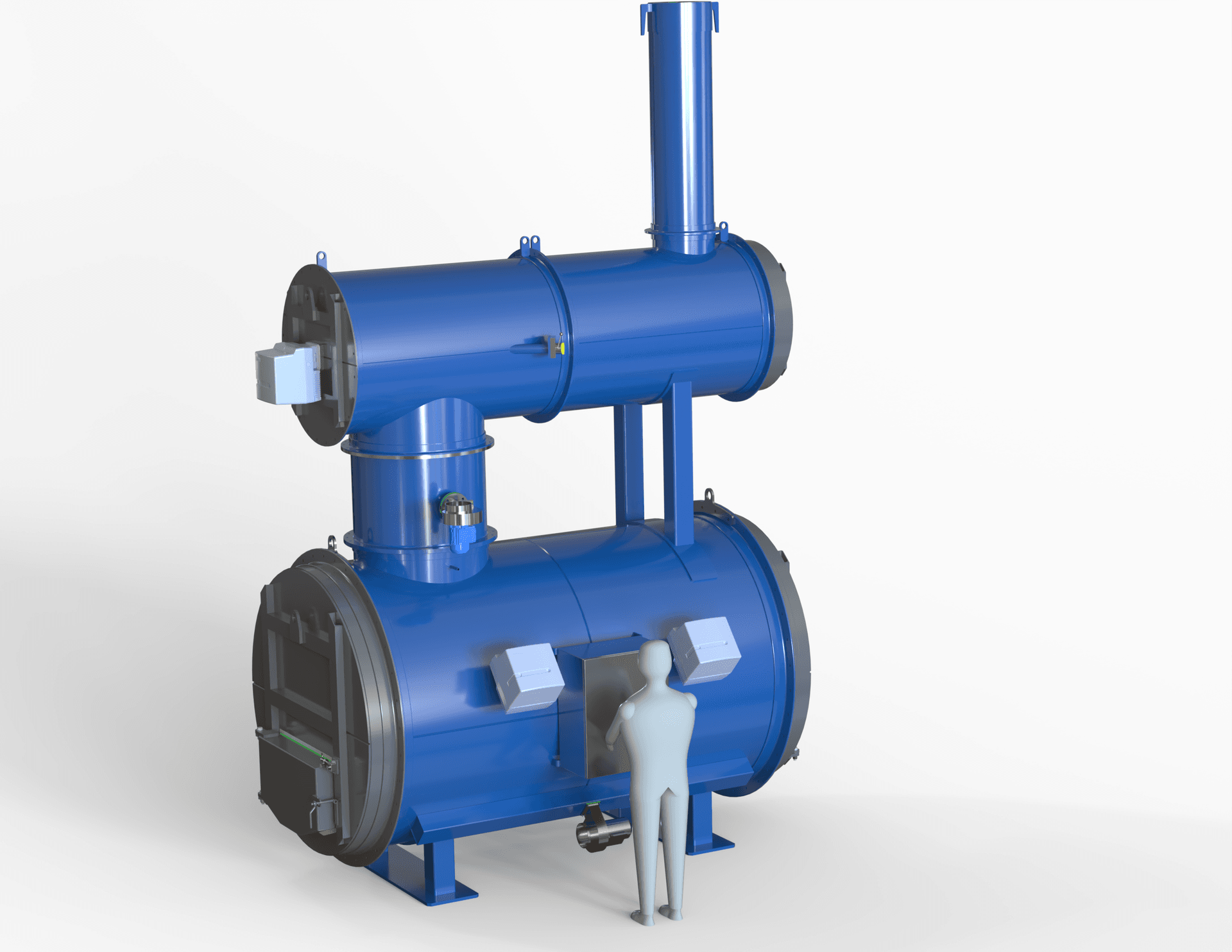
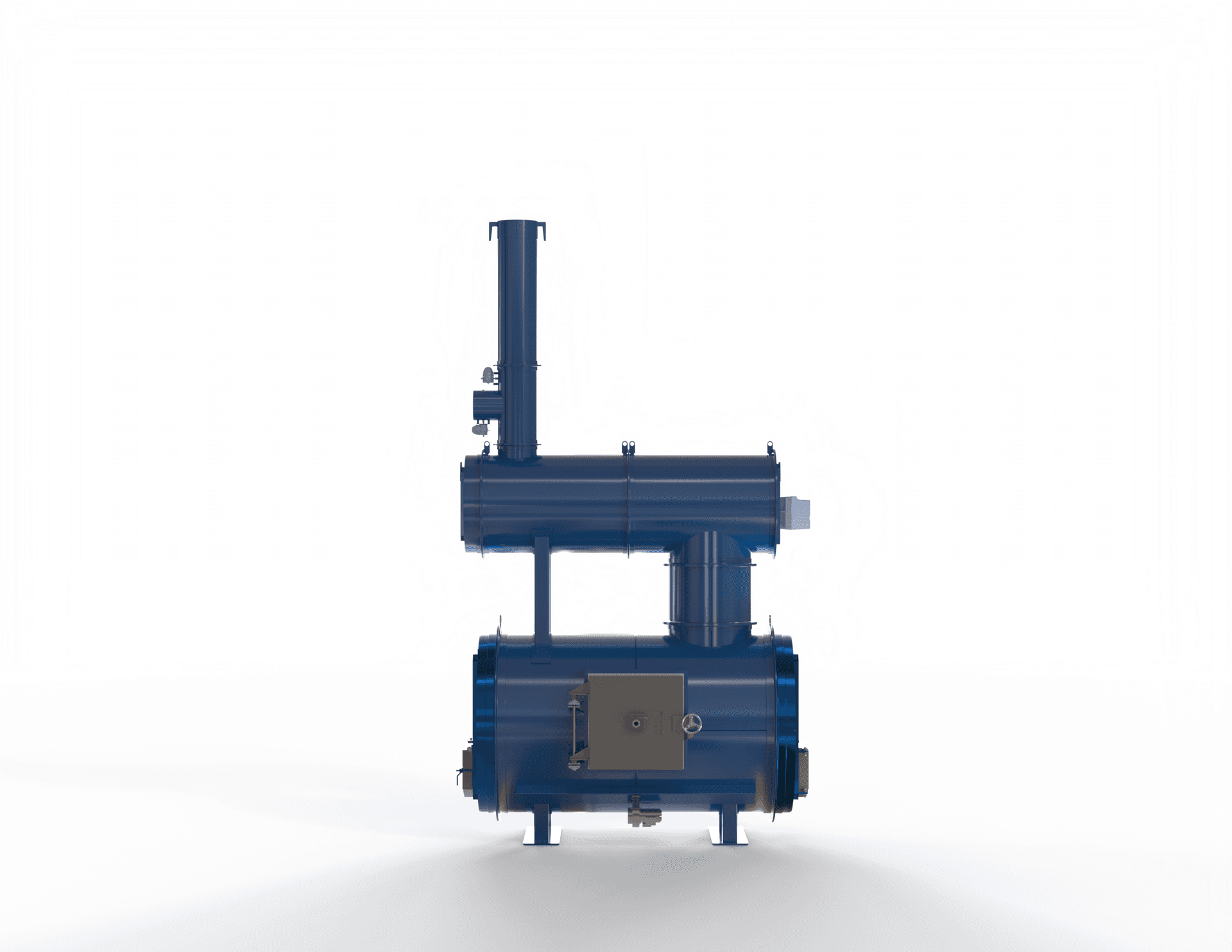
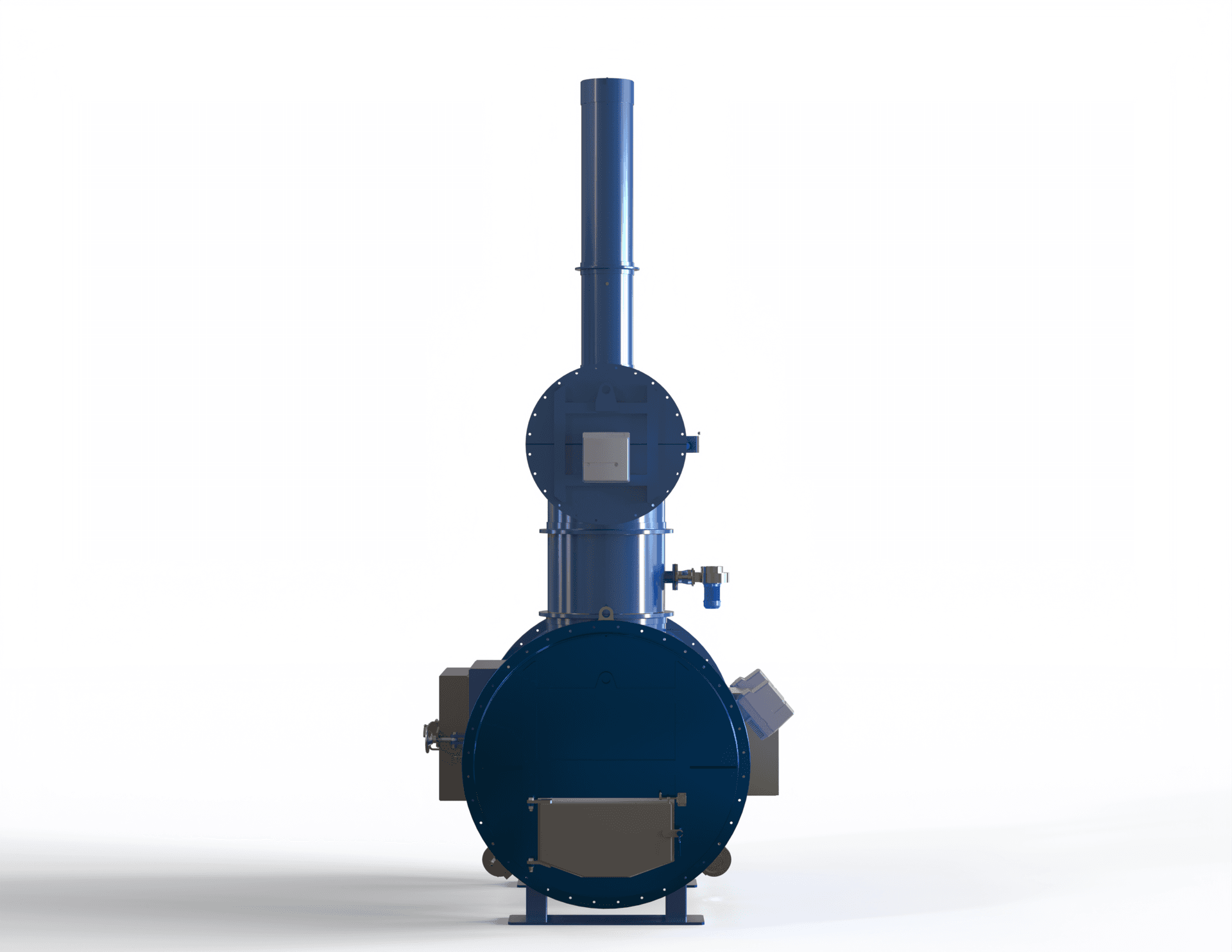
Dual-chamber unit, continuous duty
Primary chamber running 850–1,200°C with a secondary holding flue gas above 850°C for two seconds. Rated to run for a shift rather than for a charge, because an industrial stream arrives at the rate the line produces it and a batch machine simply queues it up in the yard.
Front dual-door loading
Charged through a front dual door at floor level, so tote bins, stillages and wheeled skips are fed at the height a forklift or a pump truck already works at. No hoist, no tipping platform, no lifting waste over a top rim.
What Ships
With The Unit
Identical whichever stream it is specified for. The operating procedure changes; the machine does not.
Dual-chamber unit, continuous duty
Primary chamber running 850–1,200°C with a secondary holding flue gas above 850°C for two seconds. Rated to run for a shift rather than for a charge, because an industrial stream arrives at the rate the line produces it and a batch machine simply queues it up in the yard.
Front dual-door loading
Charged through a front dual door at floor level, so tote bins, stillages and wheeled skips are fed at the height a forklift or a pump truck already works at. No hoist, no tipping platform, no lifting waste over a top rim.
IP6X control panel with cycle logging
PLC control with chamber thermocouples, interlocked charge door and a time-stamped temperature record per run. For destruction that has to be evidenced — brand protection, customer-mandated disposal, off-spec write-off — that log is the difference between a certificate and a claim.
Three-burner set and fuel train
Configured for natural gas, LPG, diesel, biofuel or hydrogen. High-calorific streams such as polymer and rubber need less burner input once they are alight, not more — the burners are there to reach and hold the condition, not to do the work the waste is already doing.
Coretex refractory lining
Monolithic castable lining rated for the full range and for sustained running at the top of it. On plastics and solvent-bearing waste the chamber spends real time near the ceiling of that range, which is exactly the duty that eats a cheaper lining.
Stack, dispersion data and commissioning
Stack to the height your site-specific dispersion assessment calls for, the emissions data pack the permit application references, on-site commissioning, a witnessed first run and operator training for the shift staff who will actually run it.
How One Burn Runs,
Start To Finish
One run is one countable event, reconciled against a manifest and evidenced by a time-stamped temperature log.
One Cycle,
Start To Finish
Adds 04 02 textile codes and, where wipers are contaminated, 15 02 02*. Sizing is done on volume rather than weight: this is the lightest stream on the site per cubic metre.
Clean, sortable, single-fibre material goes to reuse or the rag route. What reaches the chamber is the coated, blended, contaminated or branded fraction — the split that keeps the hierarchy declaration honest.
Oil and chemistry-contaminated wipers are a hazardous stream with their own code and record even though they share the unit. The free-liquid rule from the absorbents stream applies to them too.
Bales, bags and cages are fed through the front dual door while the unit runs. Loose textile is charged in containers rather than loose armfuls, which keeps the feed rate steady.
Primary combustion with two-second secondary retention above 850°C, or 1,100°C where coatings, membranes or flame-retardant treatments carry the charge past 1% halogenated organic content.
Residue is mineral ash, with any metal fittings — zips, studs, eyelets — coming out inert and unusable. The run log closes the record for the batch, including for destroyed uniform.
What You Can Burn —
And What You Can't
One run takes the whole stream without pre-sorting. What must never enter it is a short, hard list.
Yes: accepted in a run
No pre-sorting between these
- Mill and process wasteSelvedge, trim, waste yarn, fly and process waste from spinning, weaving, knitting and finishing that falls outside a recovery specification.
- Cutting-room offcutsOffcuts, laying waste and short lengths from cutting rooms, especially in blended, coated or laminated constructions with no fibre route.
- Coated, laminated and technical textilesPVC and PU-coated fabric, membrane laminates, bonded non-wovens and technical textiles that cannot be separated into their components.
- Contaminated industrial wipersWipers and cloths contaminated with oil, ink or process chemistry beyond laundering — hazardous where the contaminant is, and charged with no free liquid.
- End-of-life workwear and uniformBranded workwear, uniform and PPE at end of life, including items carrying company marks or identifying features that should not be resold.
- Rejected and off-spec fabricRolls and made-up goods failing inspection for shade, weave, print or finish, where downgrading is not commercially or contractually available.
No: never charged
Not a permit question — these stay out
- Clean, sortable textile with a reuse routeWearable clothing and clean single-fibre material have reuse and recycling routes and the hierarchy requires them to take them. This exclusion is what makes burning the rest defensible.
- Wipers releasing free liquidA saturated wiper is a liquid waste in a solid carrier. It is separated at the store on the same rule that governs the absorbents stream.
- Textiles with electronics or batteriesHeated garments, e-textiles and PPE with battery packs are WEEE and battery waste, and the cells are a fire risk in a charge whatever the rest of the garment is made of.
- Asbestos-bearing and mineral-fibre insulation textilesAsbestos-containing cloth and similar mineral hazards do not burn and must not be charged. They take a specialist disposal route and nothing else.
Can you legally burn textile & fibre waste on site?
Technically, yes: the chamber destroys almost everything on the accepted list at 850–1,200°C, and capability is rarely the constraint. Legally is a separate question. What your site is allowed to burn is set by your environmental permit from the Environment Agency, SEPA or NIEA and the waste codes written into it. The never-charged list is different again: those materials are out of scope for the unit or governed by a direction, and no permit wording brings them back in. Send us the codes you hold, or the ones you expect to apply for, and we will tell you which of this list they cover before anything is specified.
Send us your waste codesWhat size incinerator for 4 tonnes of textile waste a week?
Arithmetic on published model figures, not a customer reference. Your numbers go through the same steps.
How This
Was Worked Out
4,000 kg a week against the LBI-250's 250 kg/h = 16 hours, or two shifts — but the constraint is the 5.5 m³ chamber against a stream that occupies far more volume per kilogram than anything else on site. Baling or compacting before the charge changes what a chamber holds far more than it changes the tonnage. Where the stream is loose and unbaled, size up rather than assuming the rating.
120–200 kg a week
Volume, not weight
5.5 m³
2.9 t
Send your daily or weekly arisings and we will confirm the model, the run time and the permit route.
Related Products
& Services
Complementary equipment and engineering services for your process.
Sizing and background
- [TOOL]Work out the burn rate for your own arisings
- [TOOL]Size the combustion air and flue gas duty
- [BLOG]Improving manifold airflow evenness by 65%
- [BLOG]Ash management from industrial waste incinerators
- [BLOG]The feasibility of small-scale modular incinerator units
- [BLOG]Precious metal incineration and recovery
- [BLOG]Evaluating flue gas cleaning systems in industrial incinerators
Textile & fibre waste Questions
Answered against the published figures for the models specified for this stream, not a generic range sheet.
Textile and fibre waste from industry covers mill and process waste, cutting-room offcuts, selvedge and trim, coated and laminated fabric, non-woven and technical textiles, contaminated industrial wipers, and end-of-life workwear and uniform. Textile production waste codes in the 04 02 group; contaminated wipers move to 15 02 02* where the contaminant is hazardous. Reuse and the rag trade take clean, sortable, single-fibre material, and where they will take it that is the answer the hierarchy requires. What they refuse is the rest: coated and laminated constructions, mixed-fibre blends, technical textiles with membranes or adhesives, anything contaminated with oil or process chemistry, and branded workwear that cannot be released into a second-hand market wearing a company's name. The combustion condition is the standard one, with a familiar caveat: PVC-coated fabric, PU with chlorinated components and flame-retardant treatments can push a charge past 1% halogenated organic content, taking the secondary minimum to 1,100°C. Coated technical textiles are the usual case rather than plain woven cloth. The practical fact that governs specification is density. Textile waste occupies far more volume per kilogram than any other industrial stream, so a chamber fills long before an hourly rating is reached. Sites that size this stream on tonnage alone consistently buy a unit one size too small.
4,000 kg a week against the LBI-250's 250 kg/h = 16 hours, or two shifts — but the constraint is the 5.5 m³ chamber against a stream that occupies far more volume per kilogram than anything else on site. Baling or compacting before the charge changes what a chamber holds far more than it changes the tonnage. Where the stream is loose and unbaled, size up rather than assuming the rating.
Wherever a route exists — clean, sortable, single-fibre material and wearable garments have reuse and recycling markets, and the hierarchy makes using them a duty. The fraction those markets refuse is coated, laminated, blended, contaminated or branded material, and that is what a unit is specified for.
Because it is the lightest stream per cubic metre a factory produces. Loose fabric fills a 5.5 m³ chamber for a fraction of the hourly rating, so tonnage-based sizing consistently buys a unit one size too small. Count containers and consider baling before you decide.
Yes, at the declared condition. PVC coatings, some polyurethane systems and flame-retardant treatments can carry a charge past 1% halogenated organic content, which sets the secondary-chamber minimum at 1,100°C. Check the construction rather than the appearance.
They come out with the ash as inert metal, deformed and unusable. Nothing needs stripping before the charge — removing fittings from end-of-life workwear would add a handling step that achieves nothing the chamber does not.
Yes, and for workwear carrying access credentials or identifying features it should be. The count and the time-stamped run log close the internal control the same way they close a brand-protection destruction — same procedure, same evidence.
They need their own waste code and their own record, and they follow the free-liquid rule: absorbed contamination is a charge, a wiper that drips is not. They can share the unit and the run with clean textile waste provided both codes are on the permit.
Ready to
Incinerate?
Send the stream, the volume and the site constraints. We will confirm the model, the permit route, and what the specification has to say to satisfy the regulator.
- The rag and reuse routes are shrinking
- Volume, not weight, is the cost
- Branded workwear leaves in no recognisable form
- Contaminated wipers stop being a separate problem