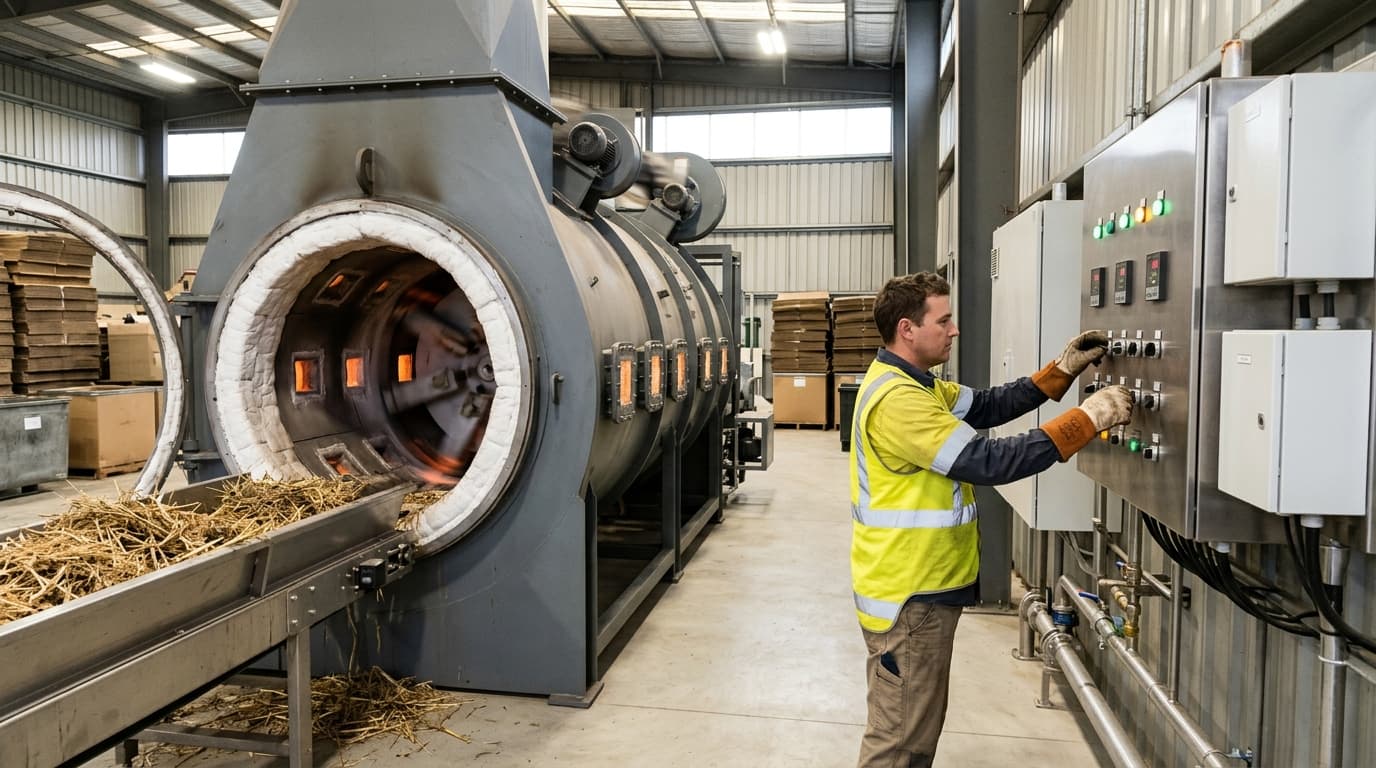
Industrial
Incinerators
On-site waste destruction from 125 kg to 500 kg. Multi-fuel, hydrogen-ready, permit-ready.
Thirteen models across four families, engineered and manufactured in Britain for general, industrial, clinical, agricultural, defence and animal waste. Every unit runs the Industrial Emissions Directive combustion condition — 850°C held for two seconds — and leaves 3–5% ash, so 95% of what you currently pay to send off site stops being a disposal cost at all.
When On-Site
Incineration
Pays
Four conditions decide it. Most sites meet more than one.
An industrial incinerator is a two-chamber thermal destruction plant. Waste is charged into a primary chamber and burnt down. The gases pass into a secondary chamber where they are held above 850°C for two seconds with excess air — that is what destroys the organic compounds which would otherwise leave the stack. What comes out is 3–5% of the input mass as sterile ash.
- InMixed charge
- Primary chamberBurnt down
- Secondary chamber850°C · 2.0 s
- Out3–5% ash
Does this describe your site?
The more of these that are true, the stronger the case for burning on site.
Disposal cost is mass-based
Gate fees and Landfill Tax are charged per tonne. Burning on site attacks the tonnage rather than negotiating the rate.
95–97% of mass never leaves the yardThe waste cannot leave site
Classified material, biosecurity culls, product recalls and counterfeit goods often have to be destroyed under supervision.
No chain of custody to manageCollection is the bottleneck
Rural, island and secure sites pay for haulage distance as much as disposal. Where collection is infrequent, storage becomes the constraint.
No collection dependencyYou have a heat demand
A unit running most of a shift produces recoverable heat, which turns the disposal cost into an offset against site energy.
70–95°C · 2–10 bar · 3–15 kW
Start With
The Waste
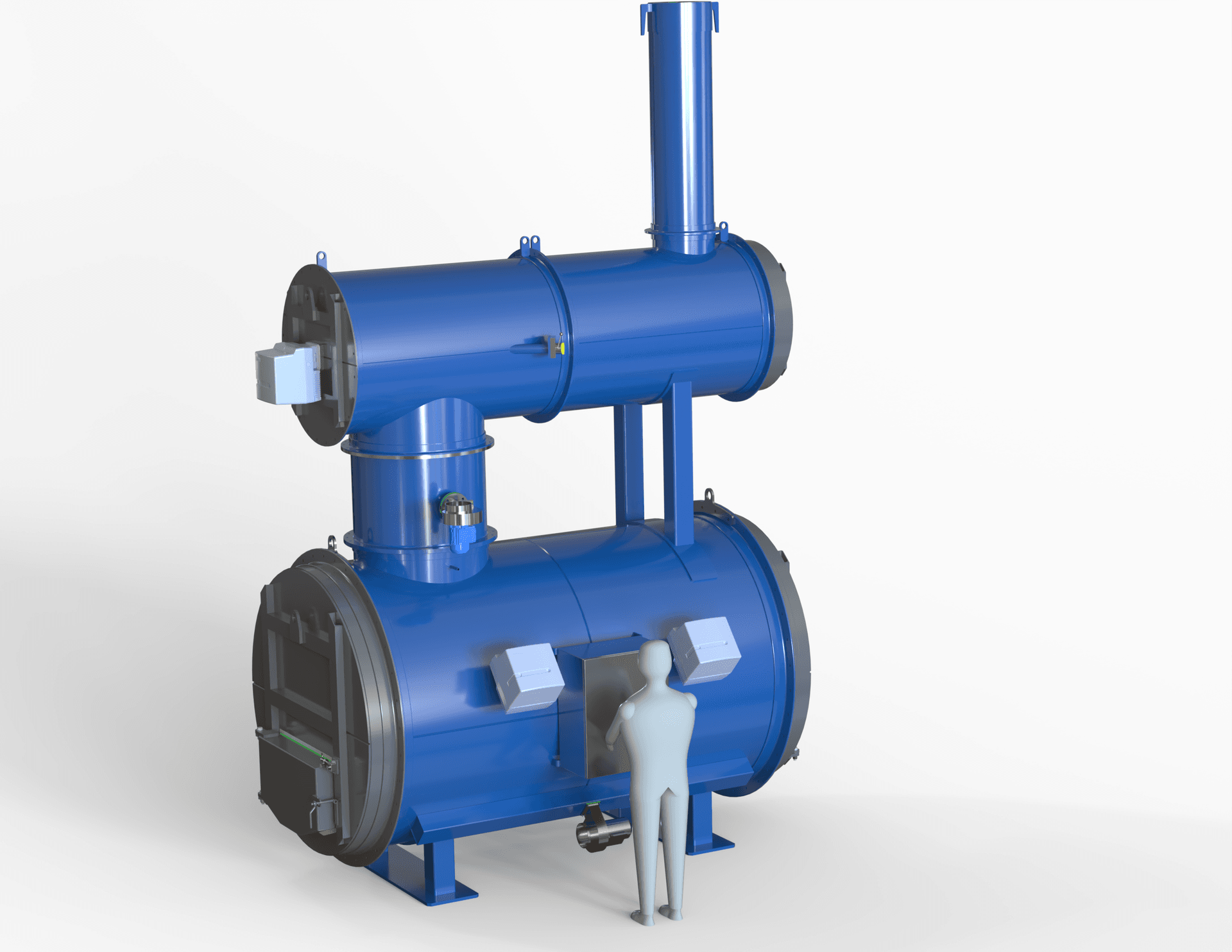
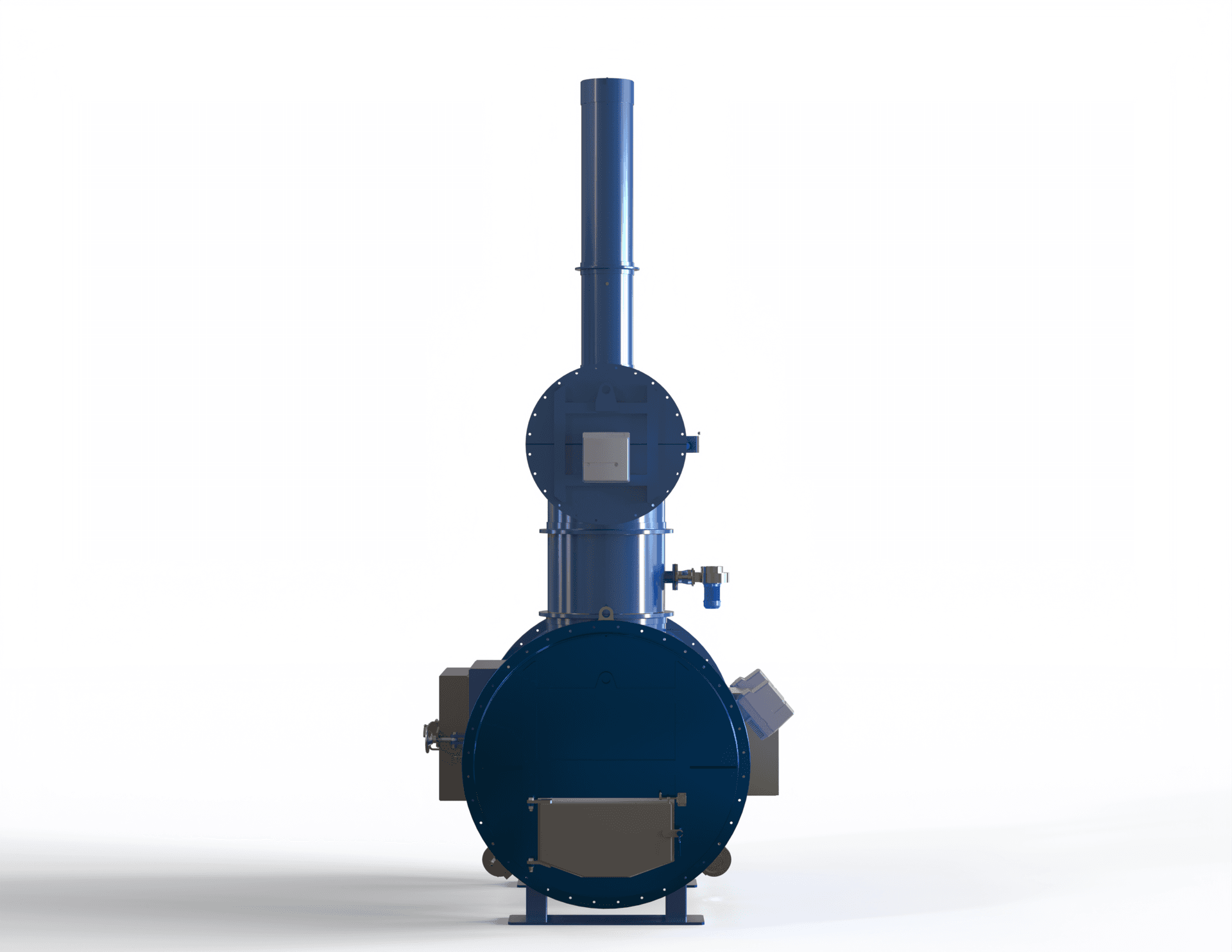
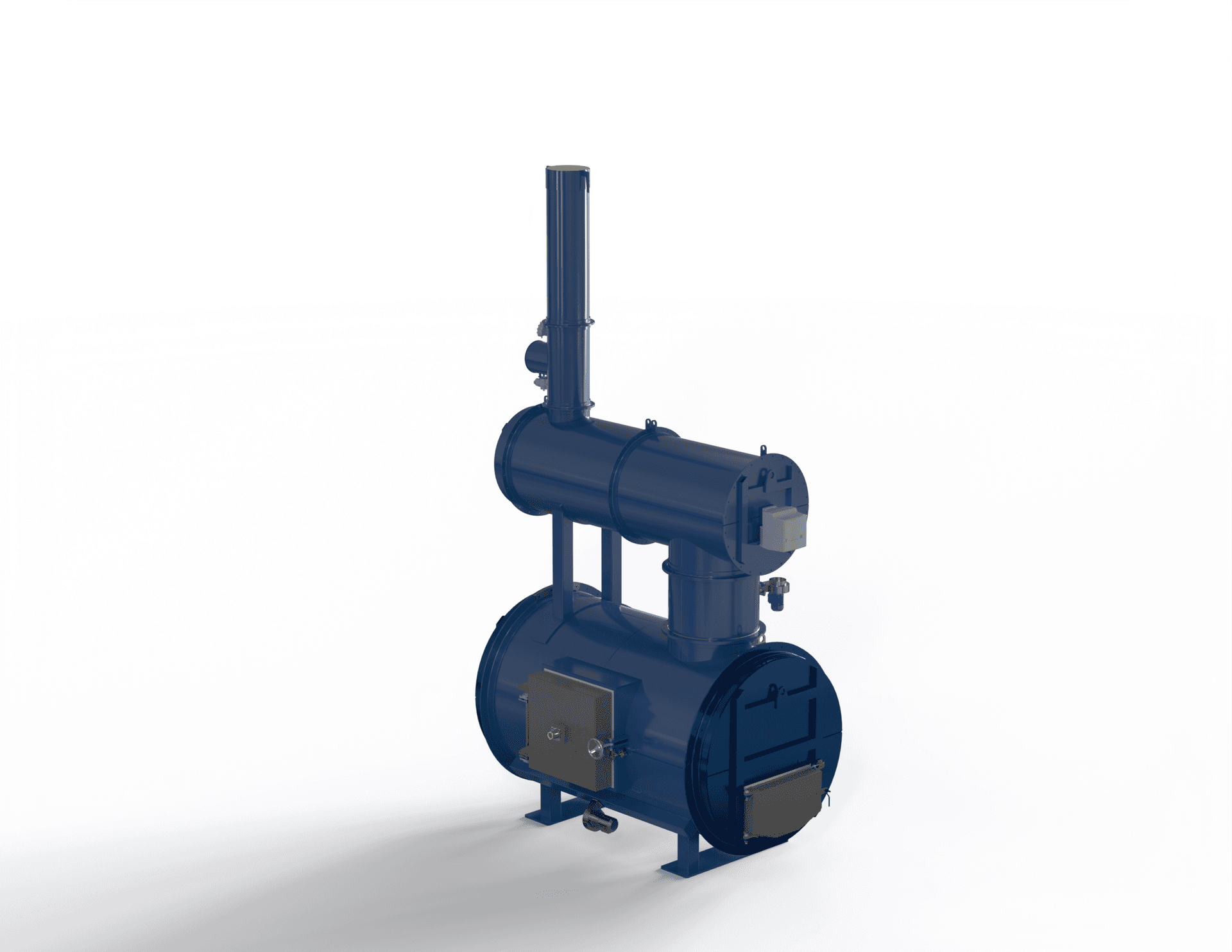
Thirteen models, four families. Filter by what you need to destroy, then compare on load, burn rate and duty.
Full range13 models
Four families — LitBurn, AgriBurn, AmoBurn and AniBurn.
 Continuous
 Continuous
 Continuous
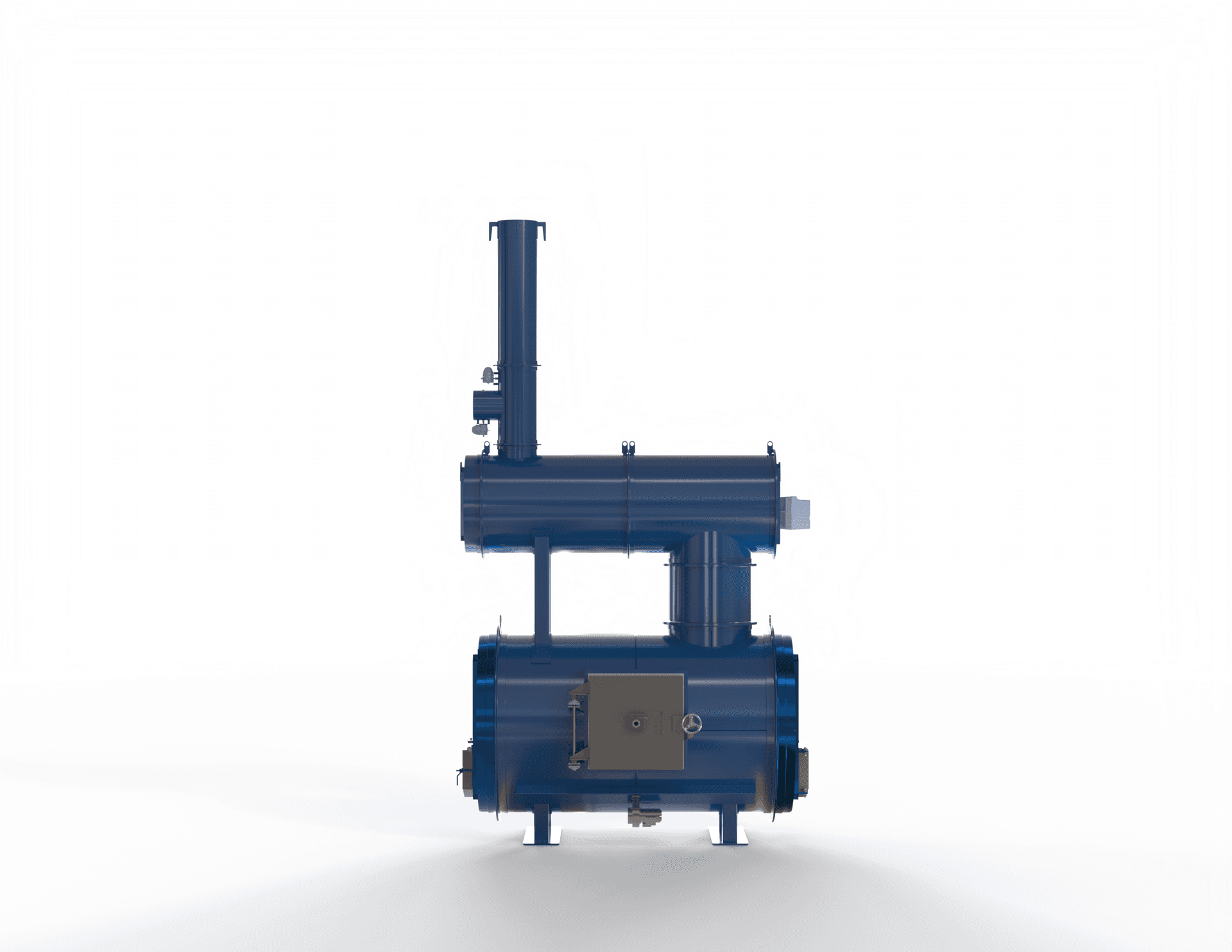 Continuous
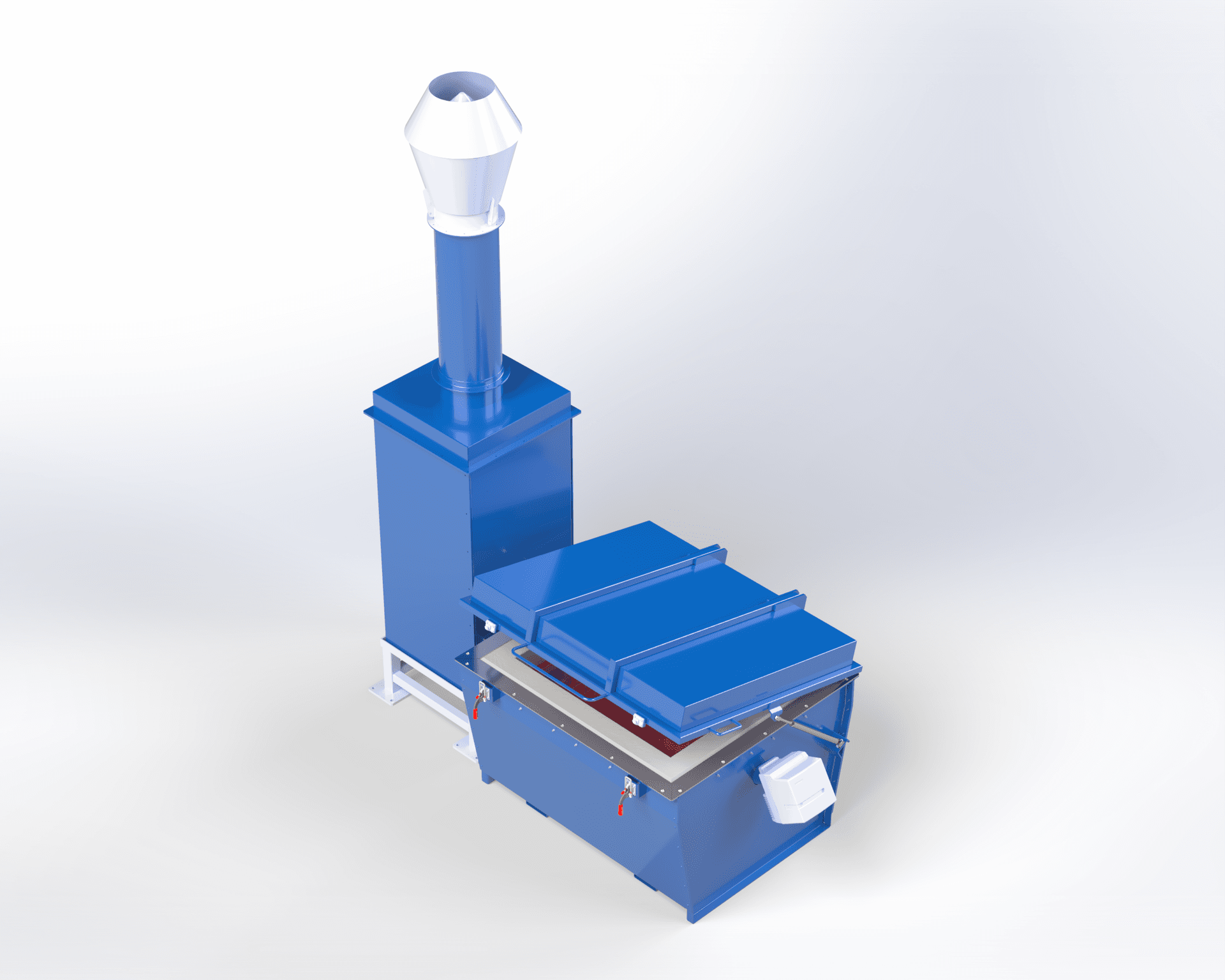 Batch
Batch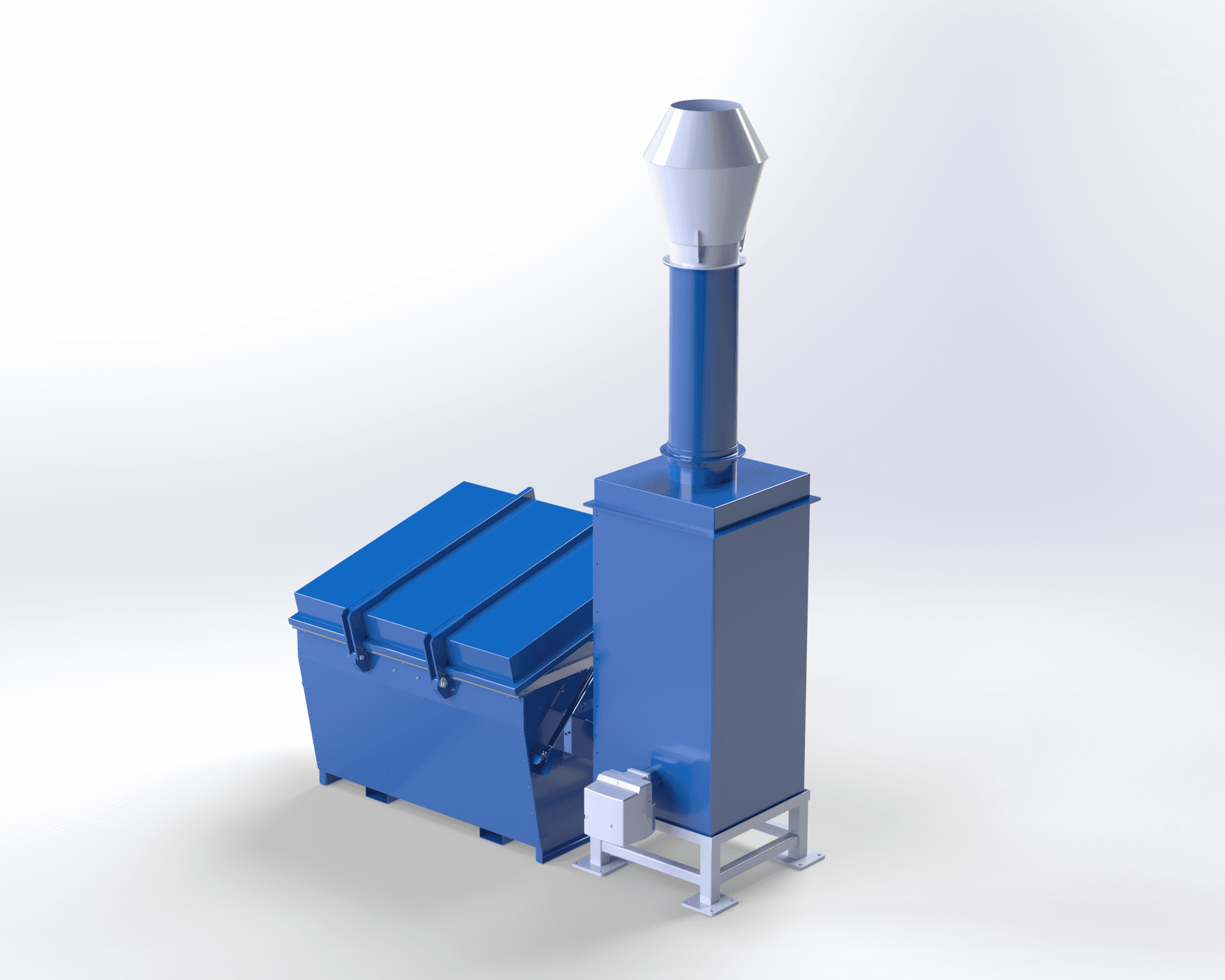 Batch
Batch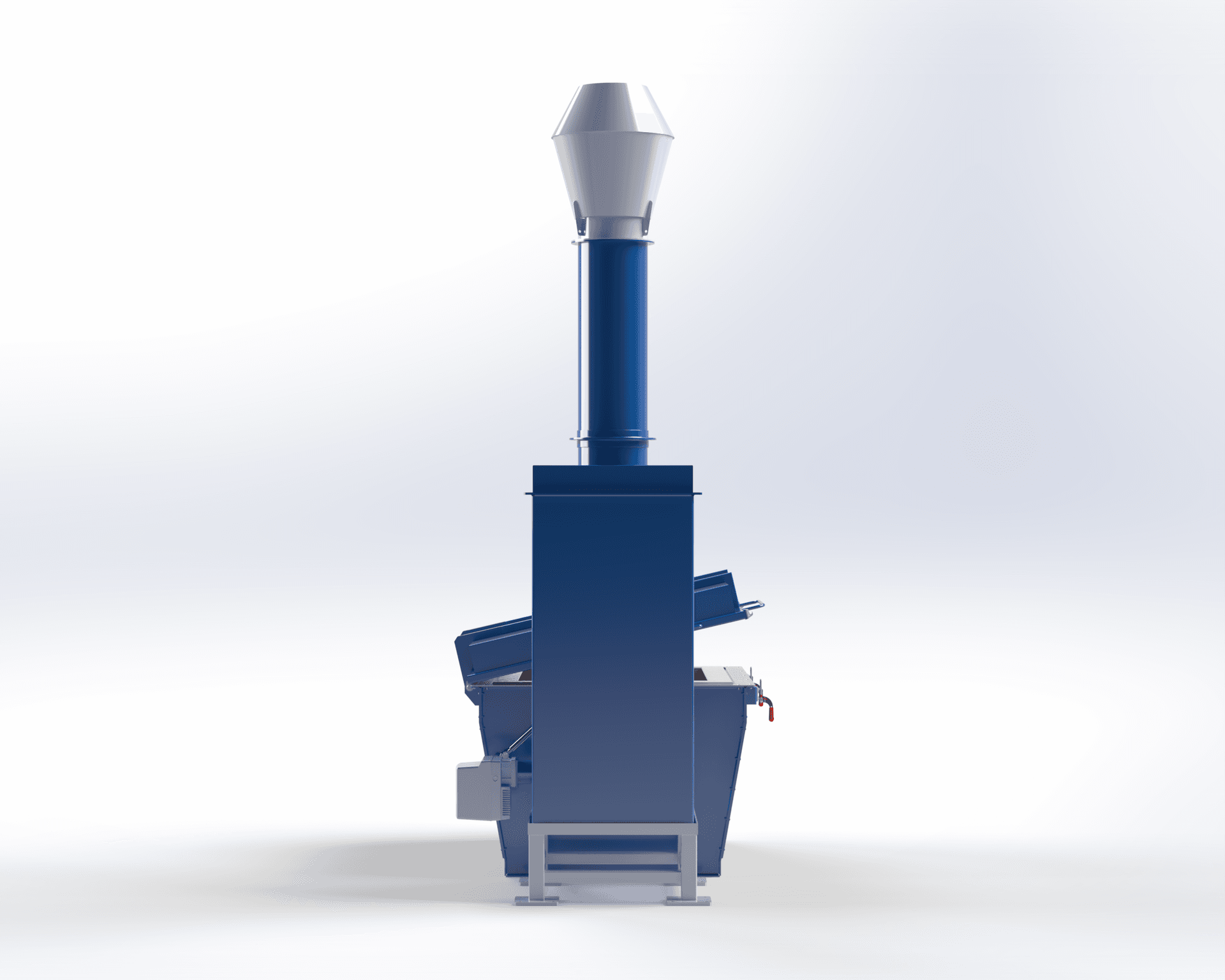 Batch
Batch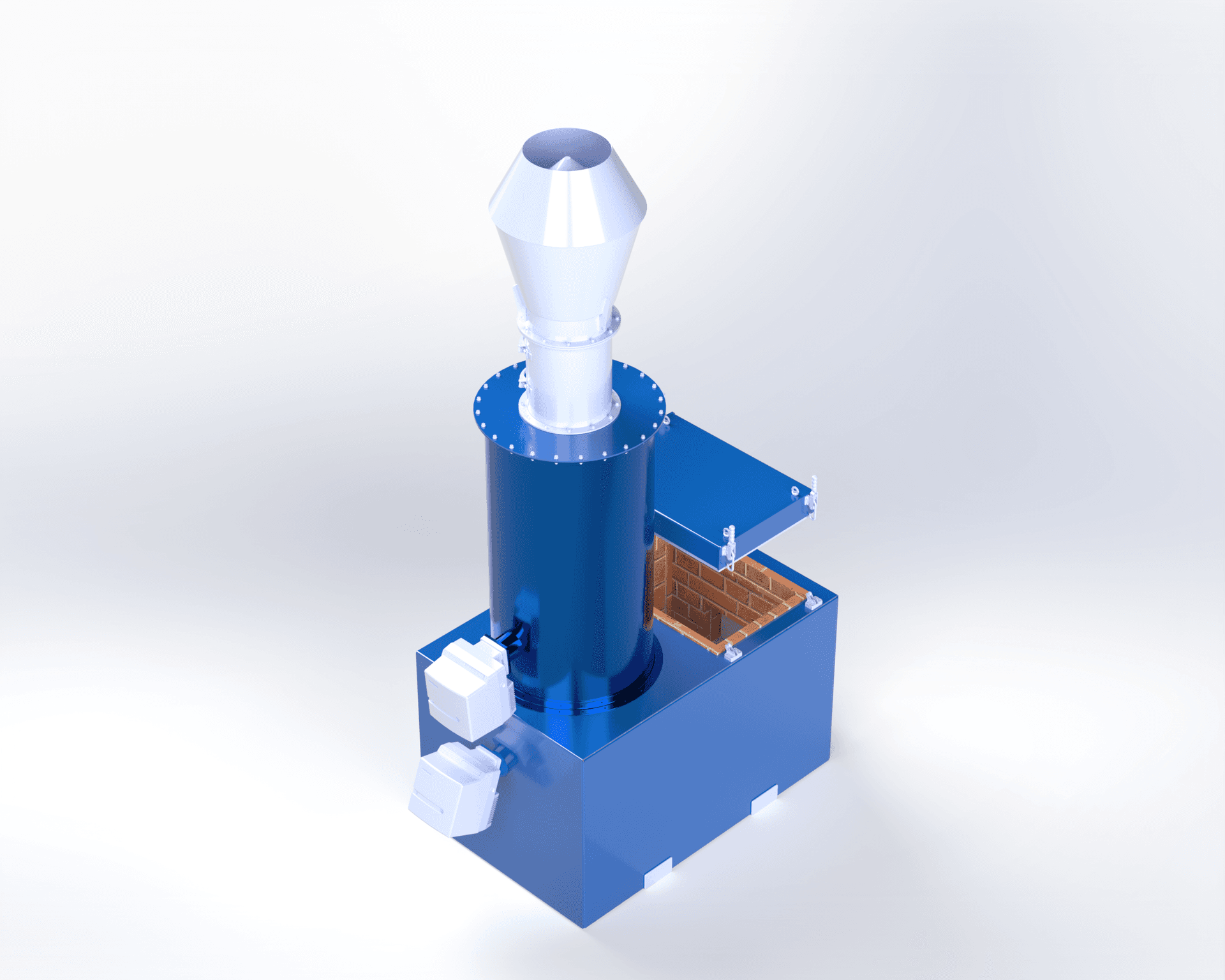 BatchAmoBurn
AMBI-150
Military & defence incinerator
- Load
- 150 kg
- Burn rate
- <50 kg/h
- Weight
- 1.8 t
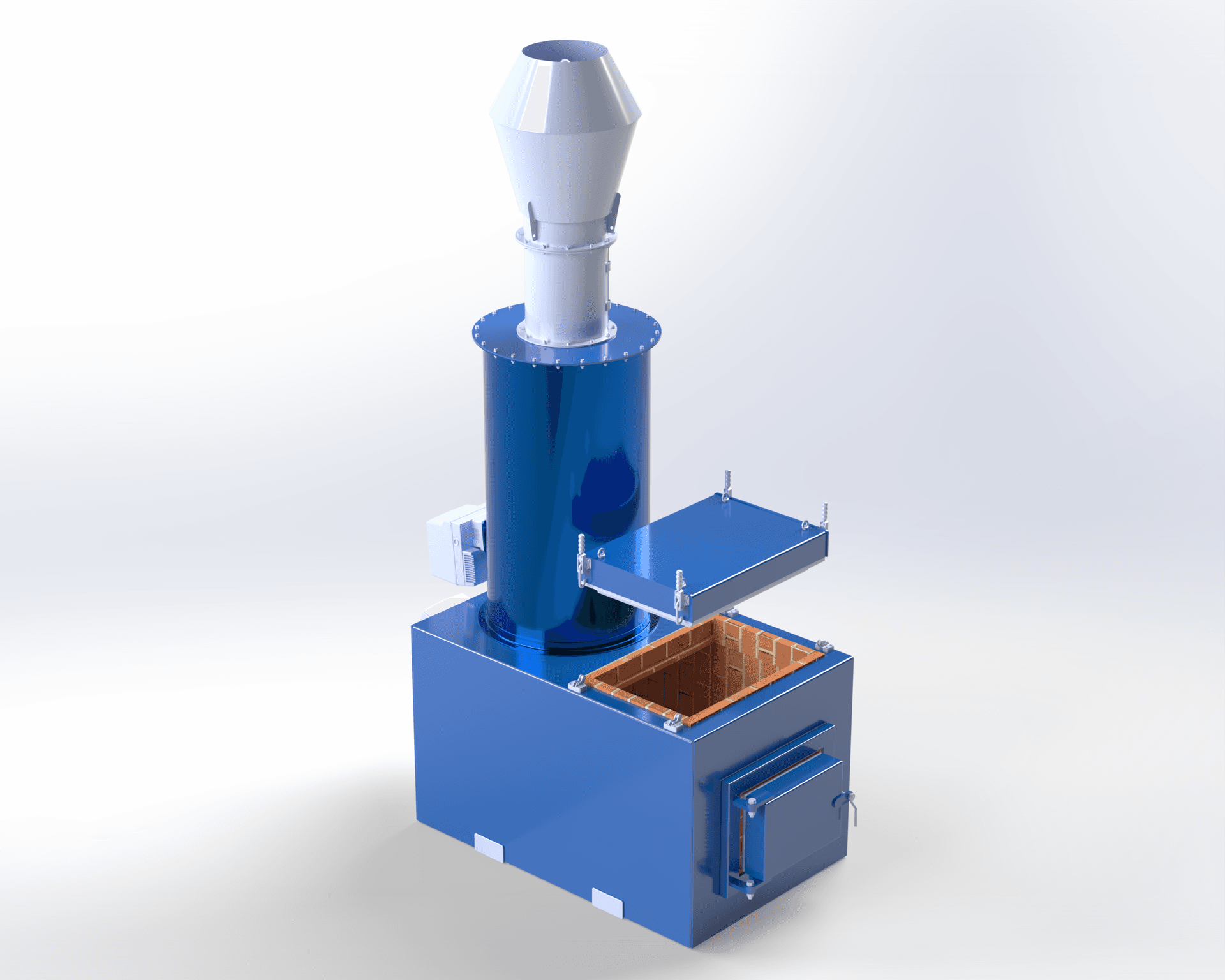 BatchAmoBurn
AMBI-250
Military & defence incinerator
- Load
- 250 kg
- Burn rate
- <50 kg/h
- Weight
- 2.3 t
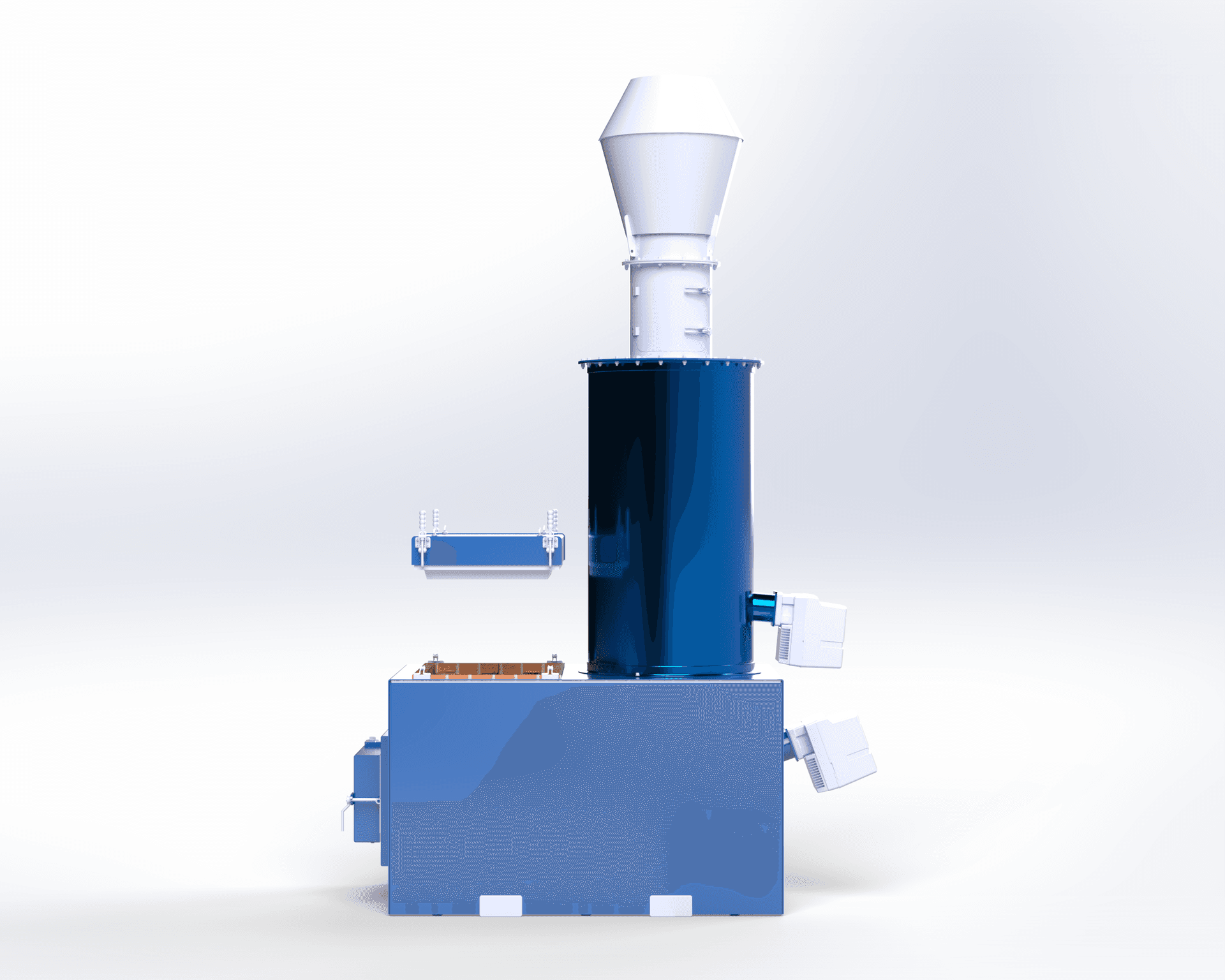 BatchAmoBurn
AMBI-300
Military & defence incinerator
- Load
- 300 kg
- Burn rate
- <50 kg/h
- Weight
- 2.7 t
 Batch
Batch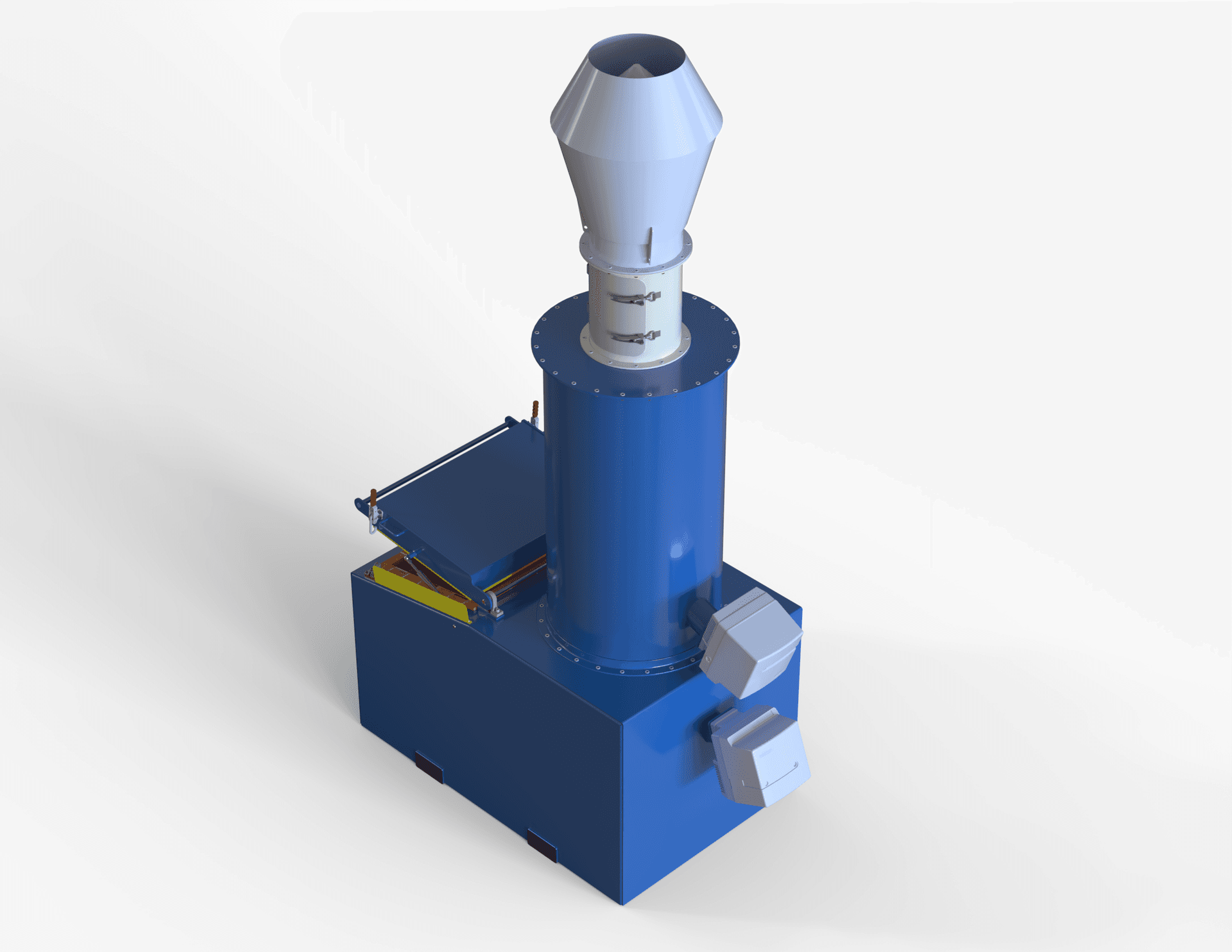 Batch
Batch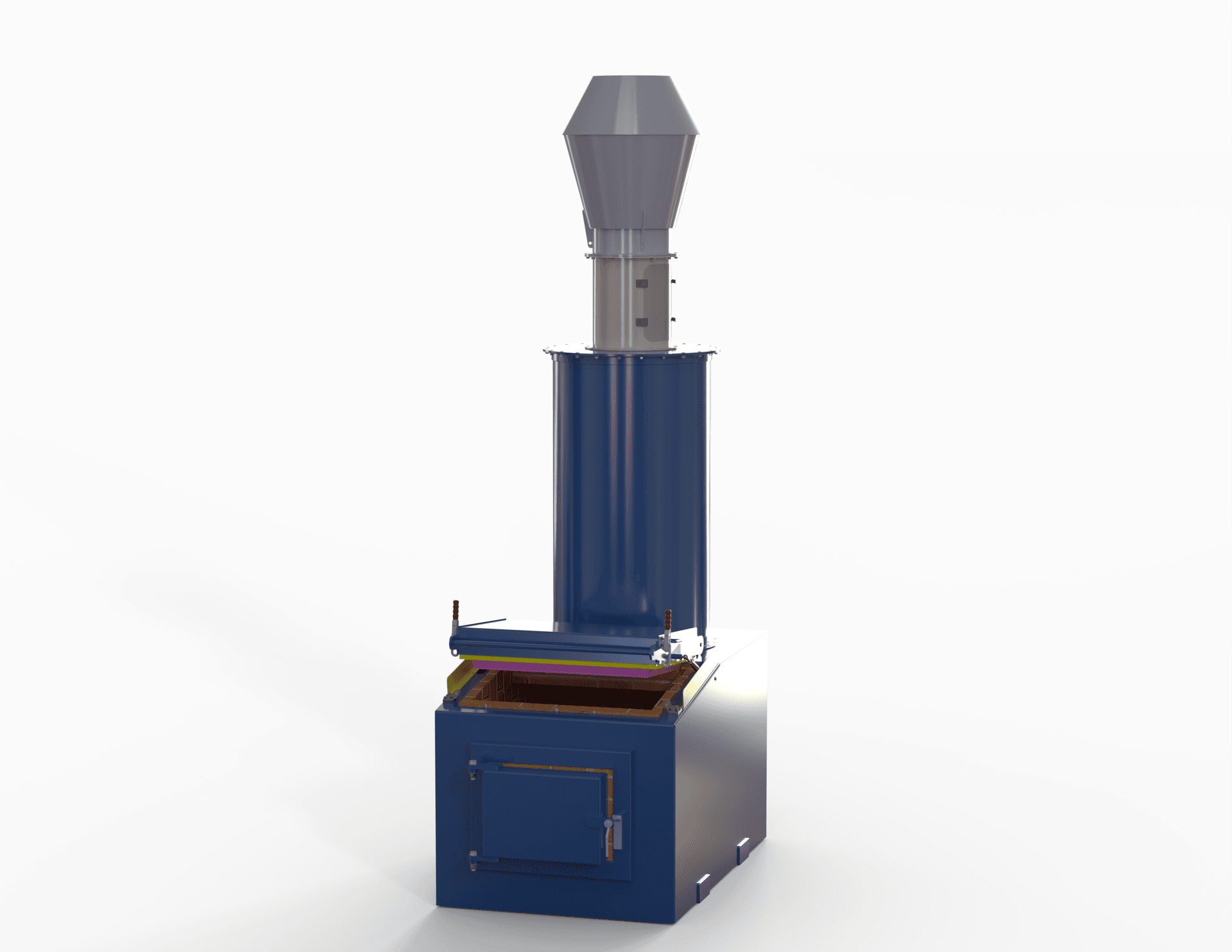 Batch
Batch
Every Model,
Side By Side
Batch load is the number in the model name. Burn rate is what it clears per hour — the two are not the same.
| Model | Class | Load | Burn rate | Duty | Chamber | Weight | Burners | Loading |
|---|---|---|---|---|---|---|---|---|
| LBI-125 | General waste incinerator | 125 kg | 125 kg/h | Continuous | 3.3 m³ | 2.5 t | 3 | Front (dual door) |
| LBI-250 | General waste incinerator | 250 kg | 250 kg/h | Continuous | 5.5 m³ | 2.9 t | 3 | Front (dual door) |
| LBI-375 | General waste incinerator | 375 kg | 375 kg/h | Continuous | 9.6 m³ | 3.4 t | 3 | Front (dual door) |
| LBI-500 | General waste incinerator | 500 kg | 500 kg/h | Continuous | 16.2 m³ | 3.8 t | 3 | Front (dual door) |
| AGBI-350 | Agricultural incinerator | 350 kg | <50 kg/h | Batch | 1250 × 610 × 630 mm | 2.3 t | 3 | Top |
| AGBI-450 | Agricultural incinerator | 450 kg | <50 kg/h | Batch | 1350 × 770 × 730 mm | 2.7 t | 3 | Top |
| AGBI-500 | Agricultural incinerator | 500 kg | <50 kg/h | Batch | 1540 × 930 × 830 mm | 3.2 t | 3 | Top |
| AMBI-150 | Military & defence incinerator | 150 kg | <50 kg/h | Batch | 1100 × 560 × 580 mm | 1.8 t | 2 | Top |
| AMBI-250 | Military & defence incinerator | 250 kg | <50 kg/h | Batch | 1250 × 610 × 630 mm | 2.3 t | 2 | Top |
| AMBI-300 | Military & defence incinerator | 300 kg | <50 kg/h | Batch | 1350 × 770 × 730 mm | 2.7 t | 2 | Top |
| ABI-150 | Animal carcass incinerator | 150 kg | <50 kg/h | Batch | 2480 × 1030 × 2330 mm | 2.6 t | 2 | Top |
| ABI-250 | Animal carcass incinerator | 250 kg | <50 kg/h | Batch | 2880 × 1250 × 2480 mm | 3 t | 2 | Top |
| ABI-300 | Animal carcass incinerator | 300 kg | <50 kg/h | Batch | 3180 × 1400 × 2630 mm | 3.4 t | 2 | Top |
Common to
every model
Who Designed
This Range
Designed in house, by a practice that has built and delivered incinerators before.

Dr François Pierrel
Managing Director
EnerTherm Engineering
- PhD
- Heat Transfer — Cranfield University
- Post-doctorate
- Heat Transfer — Heriot-Watt University
- Leading the practice since
- 2014
He developed an incinerator range before this one
Between 2011 and 2014, as Energy & Sustainability Director at a UK manufacturer, he developed that manufacturer’s incinerator range — design lifecycle, product development and outsourced manufacture.
Incinerators already delivered
Between 2016 and 2019 EnerTherm delivered solid waste incinerators for multiple UK customers, and an incinerator with an integrated heat recovery system for a well-known international watch manufacturer.
The thermal engineering is in house
Heat and mass balance, pinch analysis, process modelling and CFD are the practice’s day job, not a subcontract. The engineering calculators published on this site come out of the same work.
You Are Billed
By The Tonne
Burning on site attacks the tonnage, not the rate. Set your two numbers and watch what stops leaving the gate.
£34/t median gate fee + £130.75/t Landfill Tax. Gate fees reported £15–£115/t.
Source: WRAP Gate Fees 2025-26 · HMRC
Haulage sits on top of every figure. The floor is the £130.75/t Landfill Tax standard rate — you cannot pay less than the tax.
About 7 loaded 8-yard skips a month that stop being collected, at 3 t each.
Show the arithmetic and what it excludes
- Waste sent off site5 t/week × 52
- 260 t/yr
- Disposal spend260 t × £165/t
- £42,900
- Landfill Tax within it£130.75/t statutory
- £33,995
- Ash after combustion5% — worst end of 3–5%
- 13 t/yr
- Residual disposalash × the same £165/t
- £2,145
Not counted in this figure
- Fuel, maintenance and operator time for the incinerator.
- Capital cost, permit fees and installation.
- Any heat recovery offset, which works the other way.
A disposal-avoidance figure, not a payback figure. Send your waste analysis and we will put fuel, maintenance and capital in and give you the payback.
Build the full caseWhat The
Regulator Wants
The permit is usually the long pole in the programme. Start it early.
- EPR 2016Environment Agency · SEPA · NIEA
You need an environmental permit
13-week EA targetBurning waste in England or Wales requires an environmental permit unless a specific exemption applies.
Small, well-defined units may qualify for a standard rules permit. Anything handling hazardous or clinical waste normally needs a bespoke permit, which carries site-specific dispersion modelling. The Environment Agency’s target is to determine a new application within 13 weeks of it being duly made; bespoke applications routinely run beyond that.
- IEDIndustrial Emissions Directive
The 850°C two-second condition
Built in as standardSecondary chamber gas must be held at a minimum of 850°C for at least two seconds after the last injection of combustion air.
Where hazardous waste contains more than 1% halogenated organic substances that minimum rises to 1,100°C. Every unit in this range is built to the 850°C / 2.0-second condition.
- ELVsPermit conditions · stack monitoring
Emissions are limited and logged
Permits set limits for particulates, total organic carbon, HCl, HF, SO₂, NOx, CO, heavy metals and dioxins/furans.
Continuous monitoring is required for the core parameters on plant above the IED thresholds; periodic stack testing covers the rest. Control panels are IP6X rated and log combustion data for permit reporting.
- DEFRA approvalAdministered by APHA
What “DEFRA approved” actually means
Agreed at orderApproval attaches to a specific incinerator plant that has been through the process — not to a manufacturer or a product range.
It is the approval people mean when they say “DEFRA approved incinerator”, and since APHA took over the function it is APHA that administers it under the Animal By-Products Regulations. Treat any blanket claim across a whole range with suspicion, and ask which model was approved. Our units are built to the combustion, monitoring and construction requirements approval is assessed against; what stands between that and a stamp is the cost and duration of the approval programme, not the capability of the machine. Where your stream needs it, we agree the route with you at order and run it as part of the delivery programme.
- ABP · APHAAnimal By-Products Regulations
Animal and clinical waste sit outside the permit
Raise at enquiry stageFallen stock and animal by-products need an APHA-approved plant, not just an environmental permit.
Clinical waste carries its own classification and pre-acceptance requirements. Approval attaches to a plant that has been through the process, not to a product family, and we do not carry it speculatively across the range — the barrier is the cost of the approval programme, not the machine. Units are built to the combustion, monitoring and construction requirements approval is assessed against, so where a stream needs an APHA-approved plant we agree the approval route with you at order and run it as part of the programme.
- DispersionSite-specific assessment
Stack height is calculated, not standard
Most common cause of slipChimney height comes out of a dispersion assessment against local receptors, not from a standard figure.
Where a site is close to housing, a school or a taller neighbouring building, the assessment usually drives the stack higher than the minimum.
- WAMITABTechnically competent manager
A named competent person must run it
Permitted sites need a technically competent manager, normally WAMITAB or an equivalent recognised scheme.
Hours of attendance are proportionate to the size of the operation. Operator training on the unit itself is delivered at commissioning.
From Enquiry
To First Burn
One survey in, one commissioning out, two tracks in between. Consent sets the date.
Site survey and waste characterisation
One survey sets the chamber size and the combustion condition.
Waste types, moisture content, calorific value, arisings per week, and any halogenated or hazardous fraction. This is what decides chamber size and whether the 1,100°C condition applies — getting it wrong here is what leads to an undersized unit two years later.
Two tracks run at the same time
Start the consent track first — it is what sets the date of the first burn.
Equipment track
Predictable — follows the orderBase and access
A level reinforced slab, plus crane or HIAB access to the final position.
Sized to the unit footprint with working clearance for door swing, ash removal and burner service. Units in this range weigh 1.8–3.8 tonnes.
Fuel and power
Whatever fuel the site already has, plus a supply for the panel and fans.
Natural gas, LPG, diesel, biofuel or hydrogen, on single or three-phase. The burners are multi-fuel, so fuel choice follows the site rather than the machine.
Consent track
Critical path — start before you orderFlue and dispersion assessment
Stack height is modelled against local receptors before the permit goes in.
Structural support and any planning consent for the stack are handled alongside the permit application, not after it.
Permit application
Standard rules or bespoke, against a 13-week Environment Agency target.
Which one depends on waste type and throughput. We supply the technical data pack the application rests on — combustion conditions, monitoring provision and unit drawings.
Commissioning and operator training
The unit is tuned against your actual waste, then your people are trained on it.
Burner set-up, combustion tuning, PLC configuration, and operator training on charging, ash handling and the permit-required logs. Optional remote monitoring is configured at this point.
Keeping It
Running
A permitted unit has to keep burning and keep evidencing. Both are specified with the machine.
Included with the unit
At handoverCommissioning and operator training
Burner set-up, combustion tuning against your actual waste stream, PLC configuration, and training on charging, ash handling and the permit-required logs.
Permit log export set up
IP6X control panels log combustion data. The export the permit asks you to keep is configured while we are on site, not left for you to work out.
On a schedule
Every 3–6 monthsServicing and inspection
Burner inspection, ash system checks and control panel diagnostics. Intervals run three to six months depending on how hard the unit is worked.
Refractory repaired, not replaced
The Coretex lining is a wear item and is patched in place. A worn lining does not mean a new chamber.
On demand
While the unit is in serviceSpares held in Britain
The units are built here, so burner, fan, seal and control parts are not on a container ship when something fails mid-week.
Remote monitoring
Optional. Configured at commissioning where the site wants combustion data off the panel without walking to it.
Solutions Across
Industries
Sector pages go deeper on waste characterisation, compliance and the models specified for each.
General Waste
- Municipal & council waste
- Commercial & retail waste
- Hospitality & catering waste
- International catering waste
- Remote sites, islands & camps
- Construction & site waste
Agriculture
- Crop residue & plant waste
- Invasive species & vegetation
- Livestock bedding & litter
- Forestry & timber waste
- Contaminated feed & grain
Military & Defence
- Ammunition & ordnance waste
- Classified document destruction
- Base & field camp waste
- Field medical & aid post waste
- Uniform, insignia & ID destruction
- Fuel, oil & contaminated absorbents
Animal Disposal
- Poultry
- Cattle
- Sheep
- Goats
- Pigs
- Aquaculture waste
- Abattoir & slaughter waste
- Rendering & meat processing
- Game farms & estates
- Pet cremation
Healthcare
- Clinical & infectious waste
- Sharps & needle waste
- Anatomical & pathological waste
- Laboratory & pathology waste
- Dental practice waste
- Care home & community waste
Pharmaceutical
- Expired & date-lapsed medicines
- Recalled & defective product
- Contaminated primary packaging
- R&D laboratory waste
- Cytotoxic & cytostatic waste
- Controlled drugs destruction
Frequently Asked Questions
Sizing, permits, running costs and compliance — the questions that come up before an enquiry turns into a specification.
Work from arisings, not from chamber size. Take your weekly waste in kilogrammes, divide by the number of days you are willing to run the unit, and compare that against the burn rate. LitBurn LBI units are rated continuously — an LBI-250 clears 250 kg every hour it runs. The AgriBurn, AmoBurn and AniBurn units are batch machines: the number in the model name is the load per charge, burnt at under 50 kg/h, so a full charge is a cycle of several hours — roughly four to eleven across the range, confirmed at commissioning — measured from first load to complete burn-down. A 500 kg batch unit and a 500 kg/h continuous unit are very different machines despite the same headline number.
In almost all cases, yes. Burning waste in England or Wales requires an environmental permit from the Environment Agency, with SEPA and NIEA covering Scotland and Northern Ireland. Smaller, well-defined operations may fit a standard rules permit; hazardous, clinical and higher-throughput operations need a bespoke permit including dispersion modelling. Animal by-products need separate APHA approval on top. We supply the technical data pack the application relies on.
The Environment Agency's target is to determine a new environmental permit application within 13 weeks of it being duly made. Bespoke applications — which is what hazardous, clinical and higher-throughput operations need — routinely run longer, and the dispersion assessment and technical data pack have to be prepared before the clock starts. In practice the consent route, not the equipment, sets the date of the first burn, which is why we start it before the unit is ordered.
Not as a blanket catalogue claim, and you should be wary of any manufacturer who makes one without naming the approved model — approval attaches to a specific plant that has been through the process, not to a product family. The units are built to the conditions approval is assessed against: the Industrial Emissions Directive 850°C two-second combustion condition, monitoring provision, construction standard and full combustion logging. What stands between that and a stamp is the cost and duration of the approval programme, not the capability of the machine. Where your waste stream needs an APHA-approved plant under the Animal By-Products Regulations, we agree the approval route with you at order and run it as part of the delivery programme. Raise it at enquiry rather than after the order, because it changes both the unit and the paperwork.
The range is designed by EnerTherm Engineering in Peterborough and manufactured in Britain. Our Managing Director, Dr François Pierrel, holds a PhD in Heat Transfer from Cranfield University and a post-doctorate from Heriot-Watt, and developed a UK manufacturer's incinerator range between 2011 and 2014 before this one. EnerTherm has delivered solid waste incinerators for multiple UK customers, including an incinerator with integrated heat recovery for a well-known international watch manufacturer, and works across more than 50 industry sectors.
Commissioning, combustion tuning against your actual waste stream and operator training are included with every unit, along with set-up of the combustion-data export the permit requires you to keep. Servicing and inspection intervals run three to six months depending on utilisation and cover burner inspection, ash system checks and control panel diagnostics. The Coretex refractory lining is a wear item that is repaired in place rather than replaced wholesale. Spares are held in Britain because the units are built here, and remote monitoring can be configured at commissioning where the site wants it.
The saving comes from mass, not magic. Complete combustion at 850–1,200°C leaves 3–5% ash, so 100 tonnes of waste leaves site as 3–5 tonnes. You still pay to dispose of the ash, and you pay for fuel and maintenance, but you stop paying gate fees and Landfill Tax on the other 95–97%. With the England and Northern Ireland Landfill Tax standard rate at £130.75 per tonne from 1 April 2026, the tax alone on 100 tonnes is over £13,000 before any gate fee or haulage. The calculator above works this through with your own numbers.
Across the range: municipal and commercial general waste, manufacturing by-products, textiles, rubber and plastics, clinical and pathological waste, pharmaceutical residues, contaminated soils and oil-soaked materials, agricultural residues and bedding, animal carcasses, and secure defence waste including classified document destruction. Each family is optimised for a specific stream — LitBurn for general and industrial, AgriBurn for agricultural, AmoBurn for military and defence, AniBurn for animal carcass.
All units support multi-fuel operation: natural gas, hydrogen, diesel, LPG and biofuel. Hydrogen-ready burners are fitted as standard so the unit does not become a stranded asset as sites decarbonise. The optional Waste Pre-Dry system halves fuel consumption on wet waste by driving off moisture using recovered heat before the charge reaches the primary chamber.
All models reach operating temperature within 30 minutes. Operating range is 850–1,200°C with a 2.0-second gas retention time in the secondary chamber, which is the Industrial Emissions Directive condition for complete combustion.
Yes, and on the larger units it is usually worth doing. Options are water pre-heating at 70–95°C, waste heat to steam at 2–10 bar, and electrical generation at 3–15 kW. The economics depend on whether you have a continuous heat or hot water demand on site — a unit that runs three hours a week will not pay back a steam package.
Burner inspection, refractory condition checks, ash removal (manual or automated), and control panel diagnostics. Typical inspection intervals are three to six months depending on utilisation. The 8–12 mm steel shell and Coretex refractory lining are specified for extended service life, and refractory is a wear item that is repaired rather than replaced wholesale.
Yes. All units are manufactured in Britain with 8–12 mm steel construction, high-temperature scratch-resistant paint, cool-touch cladding for operator safety, and IP6X rated control panels. UK manufacture also means spare parts and service engineers are not on a container ship when a burner fails.
Ready to
Optimize?
Send us your waste streams and weekly arisings. We will come back with a model, an indicative disposal-cost case, and what the permit route looks like for your site.
- Waste stream assessment & consultation
- Model selection, sizing & energy recovery options
- Permit route, compliance & cost analysis