ABI-150 150 kg animal carcass incinerator
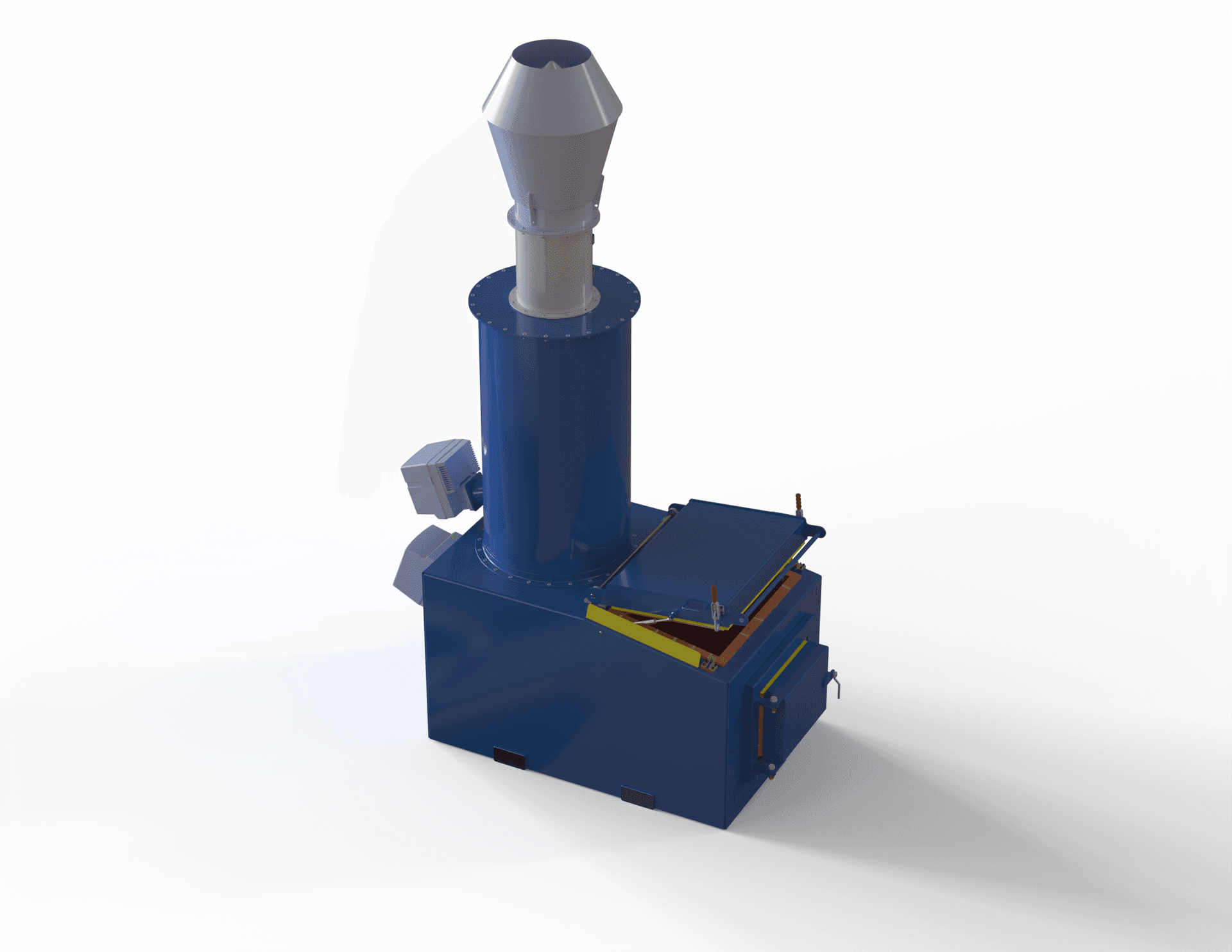
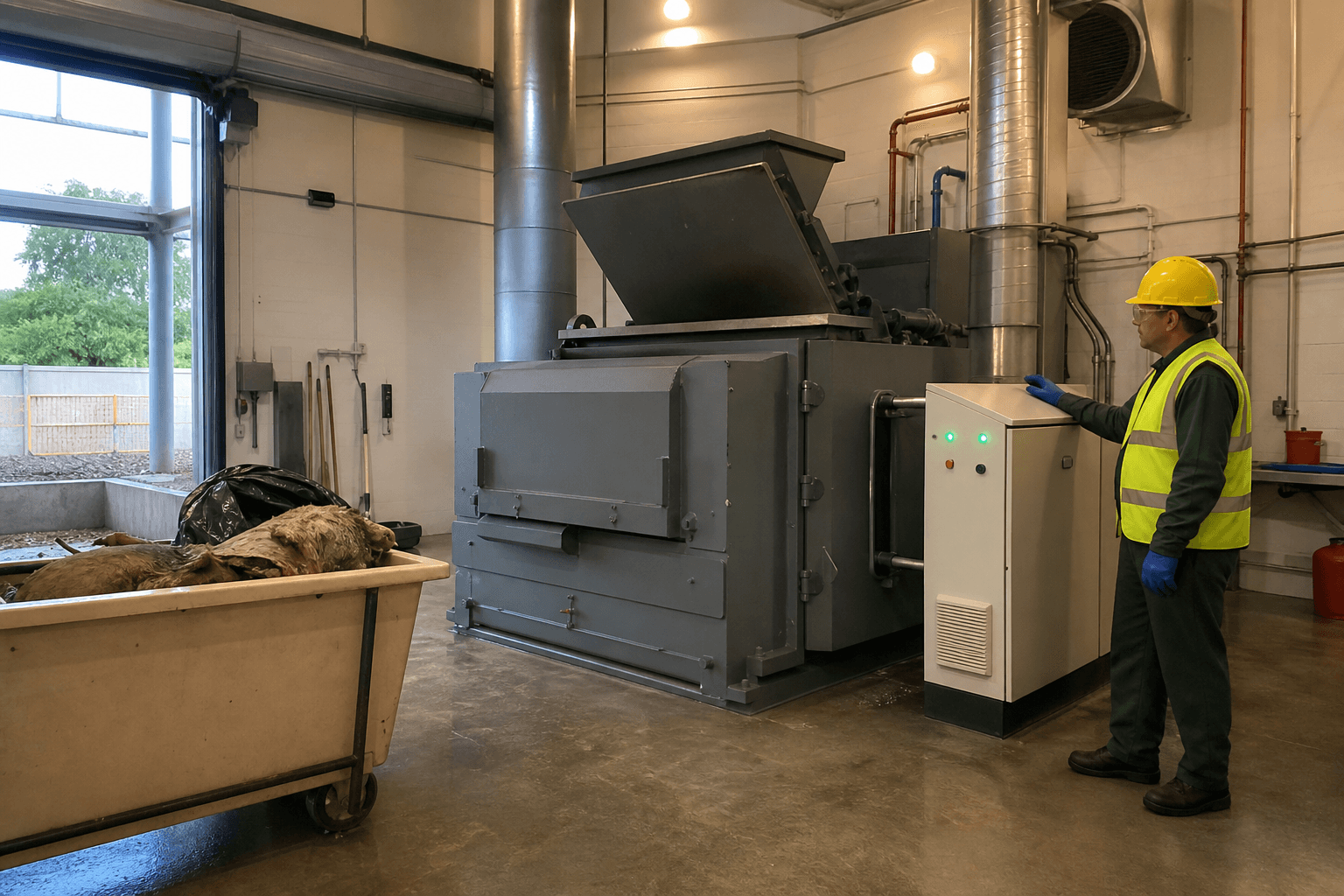
150 kg per charge for veterinary practices, small farms and pet cremation. The chamber is tall relative to its load rating because carcass waste is bulky and wet — volume, not weight, is the binding constraint.
- Chamber
- 2480 × 1030 × 2330 mm
- External dimensions
- On request
- Burners
- 2
- Loading
- Top
- [LOAD]
- 150kg
- [BURN_RATE]
- <50kg/h
- [DUTY]
- Batch
- [WEIGHT]
- 2.6t
ABI-150 In Full
- Chamber
- 2480 × 1030 × 2330 mm
- External dimensions
- On request
- Burners
- 2
- Loading
- Top
- Operating temperature
- 850–1,200°C
- Gas retention
- 2.0 s
- Ash residue
- 3–5%
- Heat-up time
- 30 min
- Fuel
- Natural gas / H₂ / diesel / LPG / bio
- Control panel
- IP6X rated PLC
- Refractory
- Coretex lining
- Origin
- United Kingdom
Rated Per Charge
The number in the model name is the load per charge, not an hourly rate.
The 150 kg in the model name is the load per charge, not an hourly rate. The unit burns at under 50 kg/h, so the practical planning unit is one charge a day rather than one hour. What counts is the complete cycle — first load to complete burn-down — because that is how declared throughput is measured, and it is confirmed against your own waste at commissioning. Size on what has to be cleared per cycle, and allow cool-down and ash removal before the next charge.
Every unit reaches operating temperature within 30 minutes and holds flue gas above 850°C for two seconds in the secondary chamber — the Industrial Emissions Directive condition. Ash residue is 3–5% of input mass.
Specified for
- PoultryDaily house mortality and hatchery waste destroyed on the unit, without a collection point or a vehicle at the gate.
- CattleCalves and youngstock destroyed on the holding. Mature adult cattle exceed the 300 kg charge rating — stated up front.
- SheepLambing losses and fallen sheep destroyed on the holding, through the peak when collection rounds help least.
- GoatsKid losses and fallen adults destroyed on the unit, where a housed dairy herd's biosecurity depends on nothing waiting at the gate.
- PigsPiglet losses and fallen pigs destroyed on the unit — no collection point, no vehicle that has been at another pig site.
- Aquaculture wasteFish farm mortalities and hatchery losses destroyed on site, without a cold store waiting on a boat or a haulier.
- Abattoir & slaughter wasteCondemned carcasses, SRM and gut content destroyed on site. Sized for small and craft abattoirs, not high-throughput plants.
- Rendering & meat processingCondemned, recalled and out-of-spec product destroyed on site, with a record that it never re-entered the chain.
- Game farms & estatesRearing losses and deer larder waste destroyed on the estate, rather than carried to a collection point miles away.
- Pet cremationIndividual and communal pet cremation, plus veterinary euthanasia cases that must not enter any other route.
Before you specify
Permit
Animal by-products may only be incinerated in a plant approved under the retained ABP Regulation. AniBurn units burn at under 50 kg/h, which places them in the low-capacity class, and the approval carries operating and record-keeping conditions that sit alongside — not instead of — the environmental permit.
Stack height
Comes out of a site-specific dispersion assessment, not a standard figure.
Full compliance requirementsRest Of The Animal disposal Range
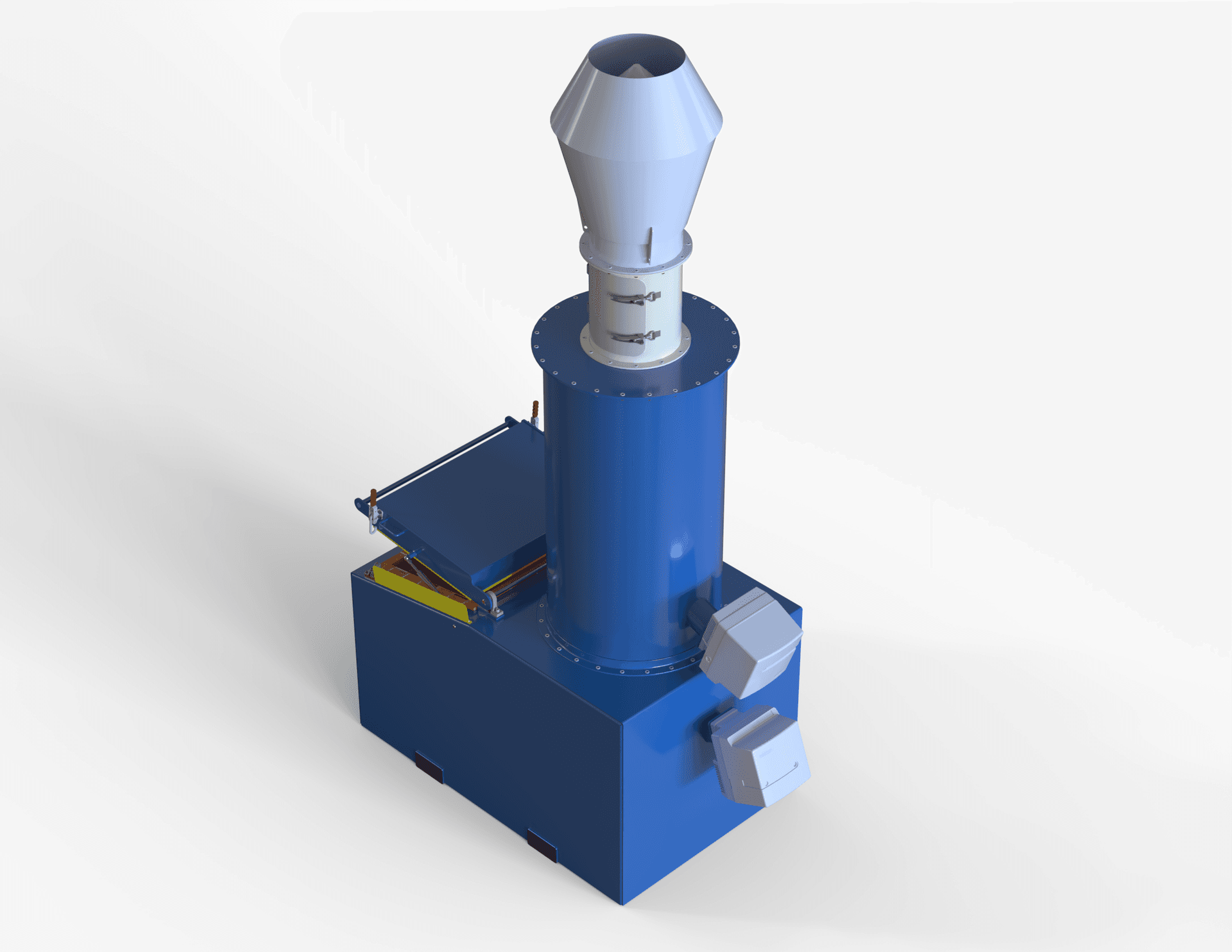
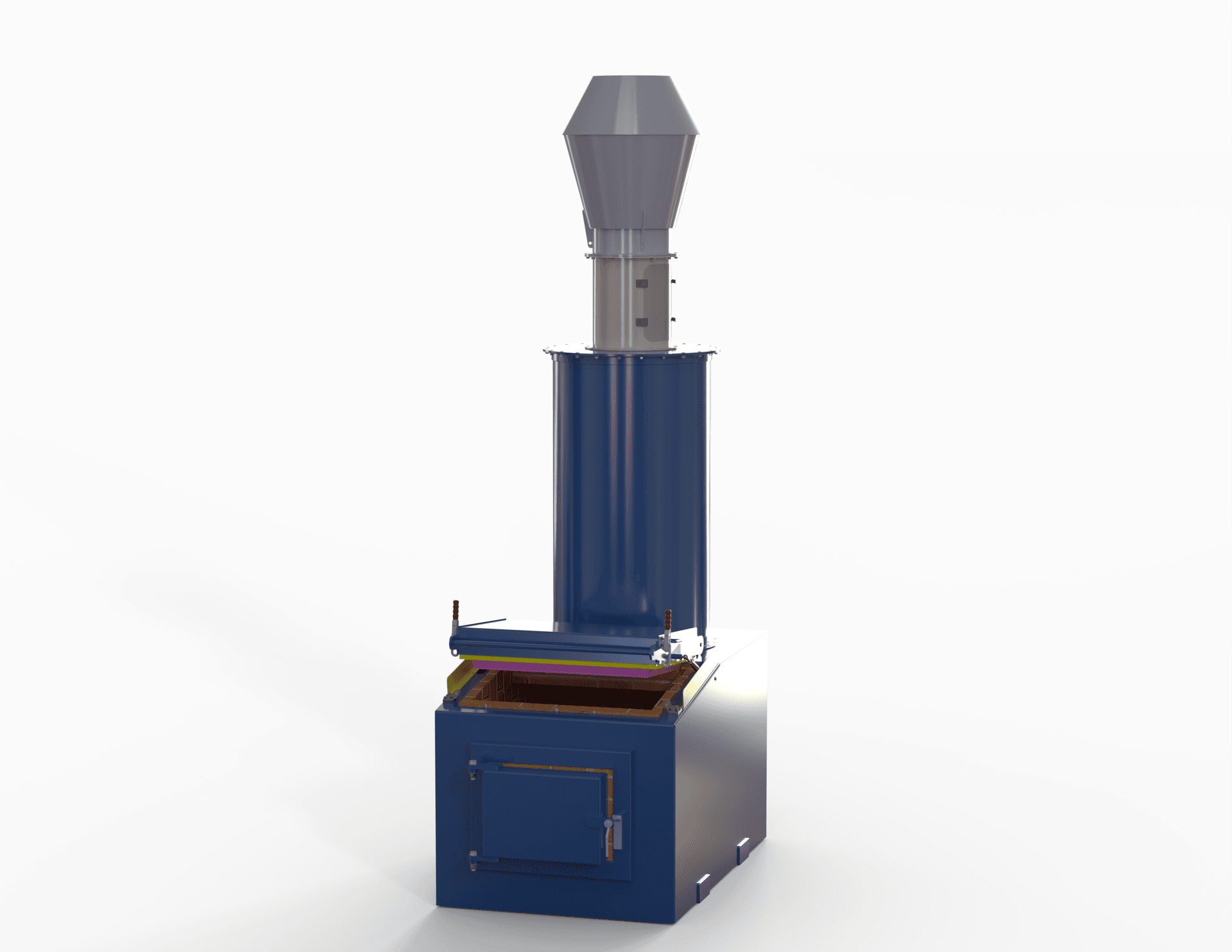
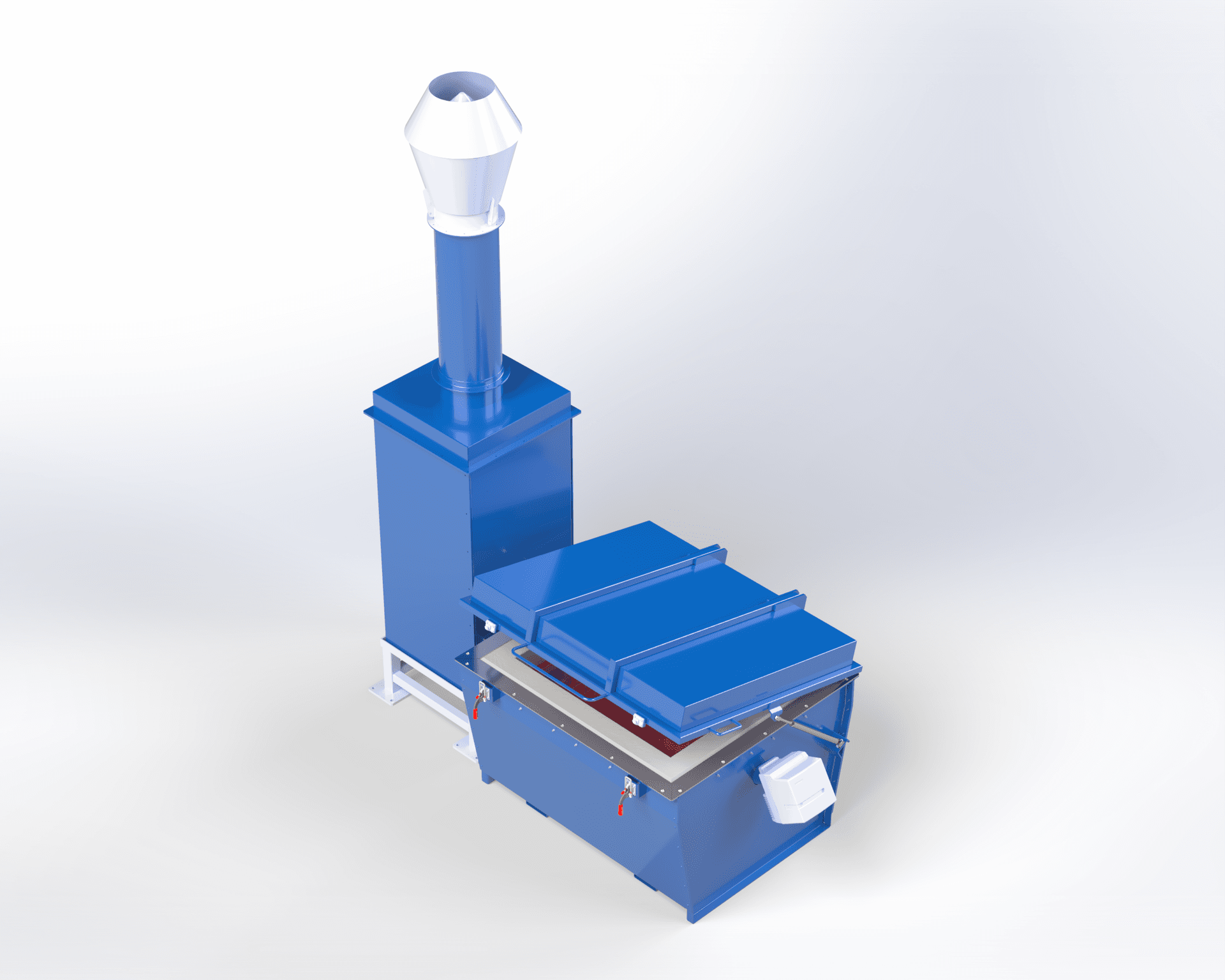
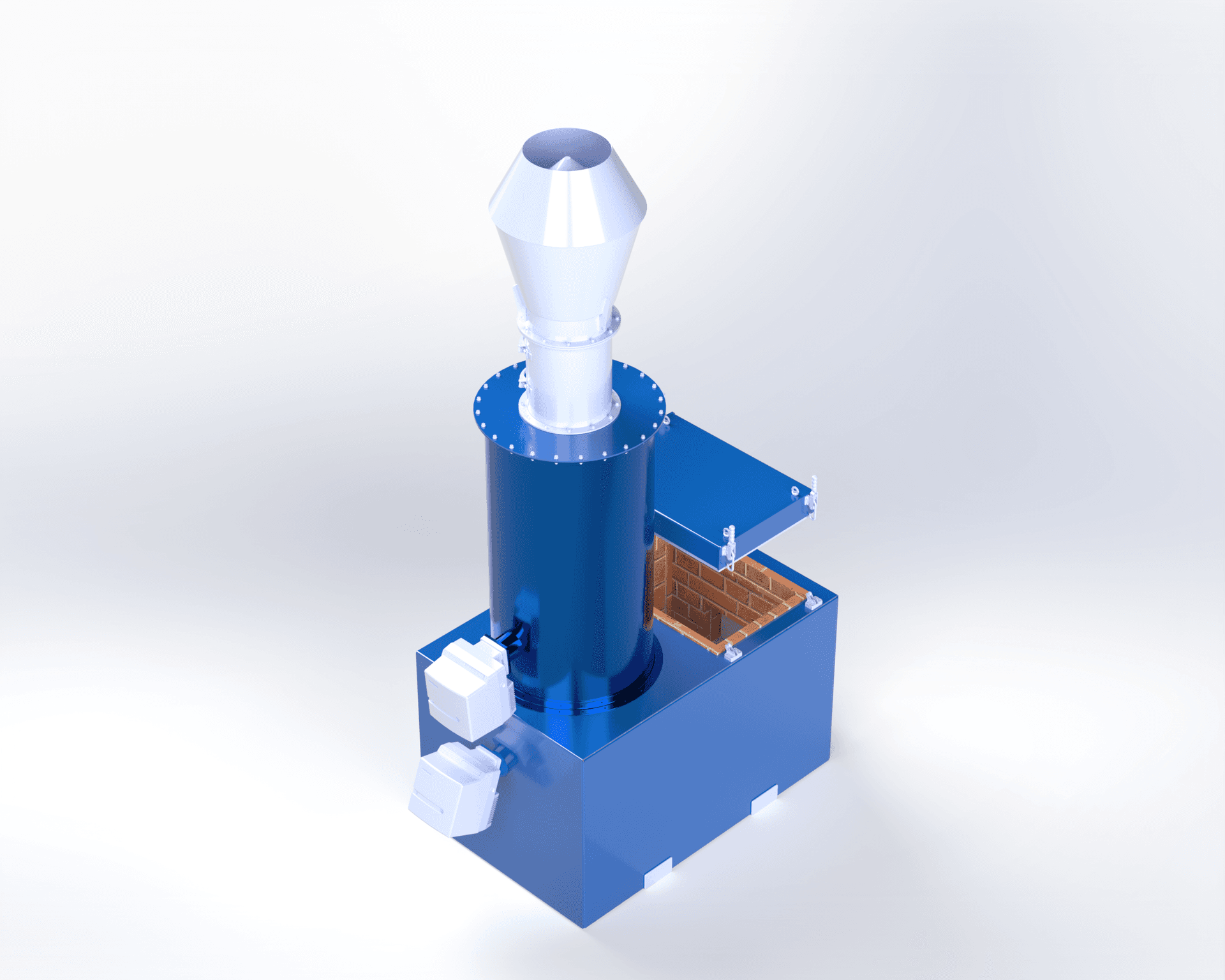
Same size, other waste types
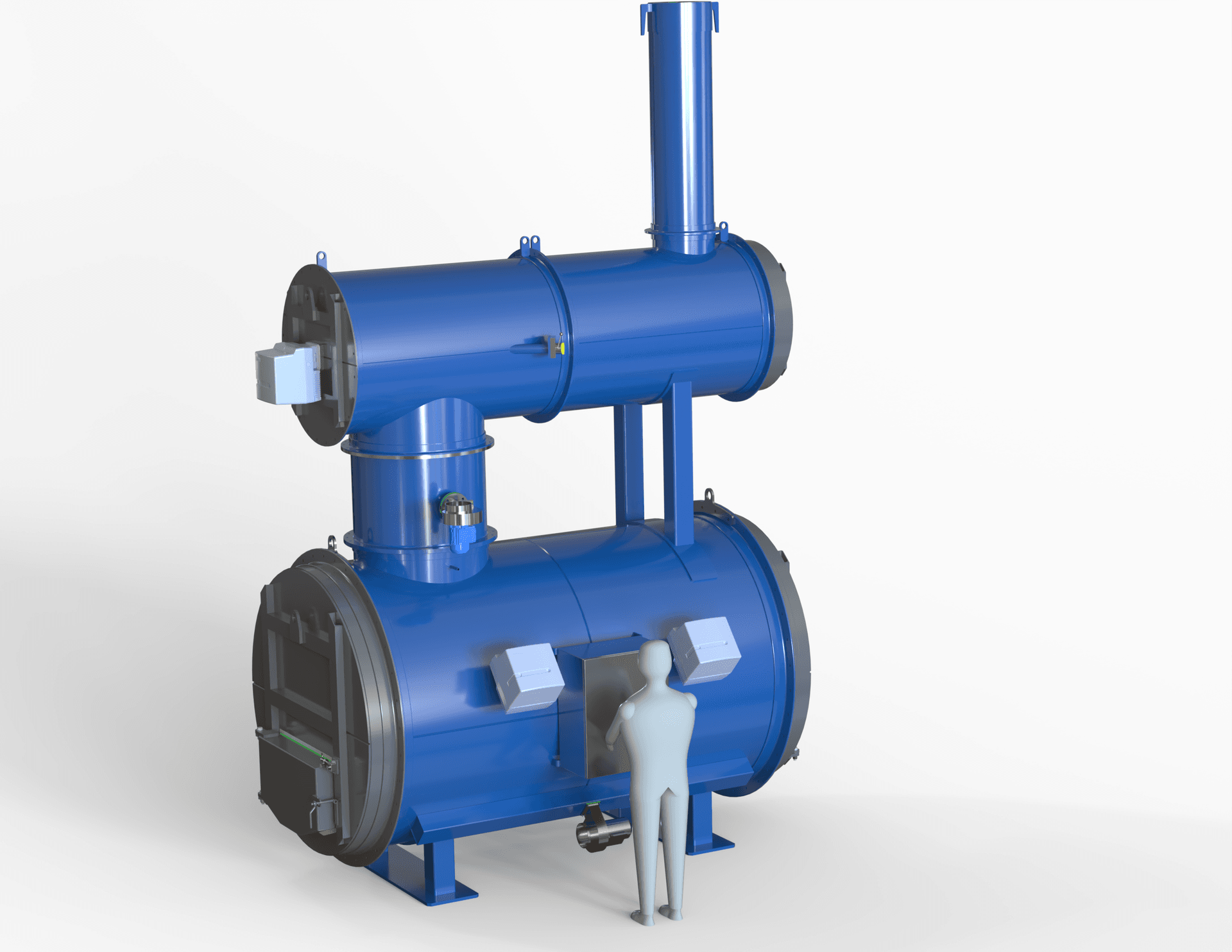
Related Products
& Services
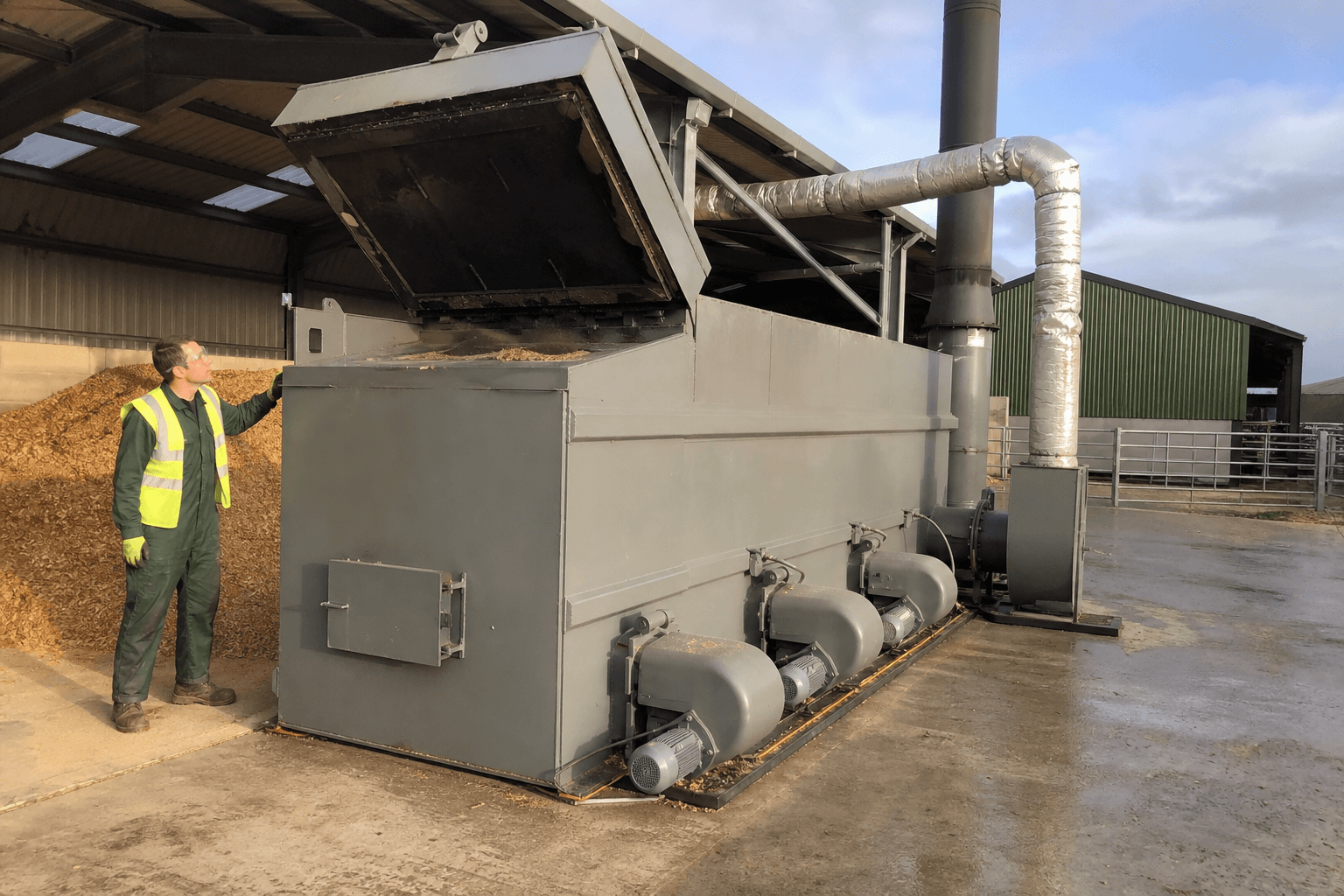
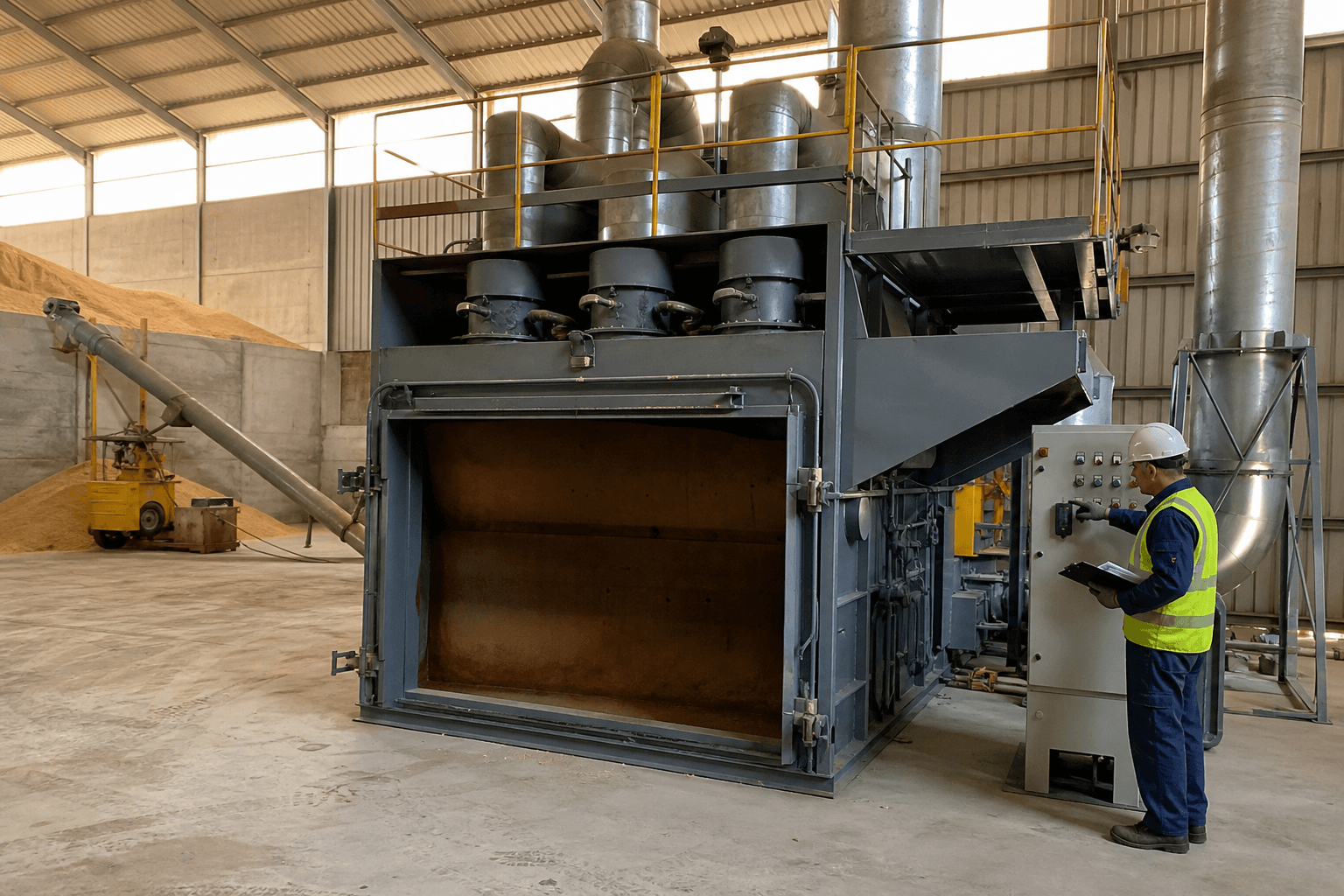
Complementary equipment and engineering services for your process.
Sizing and background
- [TOOL]Work out the burn rate for your own arisings
- [TOOL]Size the combustion air and flue gas duty
- [BLOG]Optimising animal carcass incinerators for UK bio-security
- [BLOG]The long-term operational costs of animal carcass incinerators
- [BLOG]Training programmes for animal incinerator operators
- [BLOG]Minimising the environmental impact of animal incinerators
- [BLOG]Agricultural incinerators and aquaculture waste
ABI-150 Questions
Every answer below is derived from this model's published figures, not from a generic range sheet.
The ABI-150 takes 150 kg per charge and burns at under 50 kg/h, so the planning unit is one charge a day rather than an hourly figure. The complete cycle — first load to complete burn-down, taking in heat-up, cool-down and ash removal — runs to several hours, and the exact figure is confirmed against your own waste at commissioning. Size it on what has to be cleared per cycle.
Batch. The ABI-150 is charged, run, and emptied as one cycle rather than fed continuously. The practical planning unit is one cycle per working day, with cool-down and ash removal before the next charge.
The ABI-150 is specified for poultry, cattle, sheep, goats, pigs, aquaculture waste, abattoir & slaughter waste, rendering & meat processing, game farms & estates and pet cremation. It reaches 850–1,200°C and holds flue gas above 850°C for two seconds in the secondary chamber, which is the Industrial Emissions Directive condition for these streams.
The ABI-150 weighs 2.6 t installed; external dimensions are confirmed at quotation stage. You need clear working space around it for top loading, which usually means overhead access or a loading platform, plus a stack whose height comes out of a site-specific dispersion assessment rather than a standard figure.
Yes. Running this unit needs an environmental permit from the Environment Agency in England and Wales, SEPA in Scotland or NIEA in Northern Ireland. The waste codes for animal disposal waste have to be named in the application, and a permit written for general waste does not silently cover them. We supply the technical data pack the permit application relies on.
The ABI-150 runs on natural gas, hydrogen, diesel, LPG or biofuel through 2 burners. Being hydrogen-ready matters if you expect to decarbonise the site later: the unit does not need replacing when the fuel supply changes.
Thirty minutes from cold to operating temperature. From there it runs between 850°C and 1,200°C, with a 2.0-second gas retention time in the secondary chamber and a Coretex refractory lining. Control is through an IP6X-rated PLC panel.
Ash residue is 3–5% of input mass, so roughly 95% of what you load stops being a disposal cost. On a 150 kg charge that leaves about 6 kg of ash to remove — the only fraction still attracting gate fees and Landfill Tax.
No. On-farm burial of fallen stock has been prohibited since 2003 except in designated remote areas, because burial puts pathogens and pharmaceutical residues into groundwater. The lawful routes are collection by an approved carrier or destruction in an APHA-approved incinerator on the holding.
Two. The plant must be approved by APHA under the retained ABP Regulation to incinerate animal by-products, and it needs an environmental permit from the Environment Agency, SEPA or NIEA. They are separate consents from separate regulators covering different risks.
No, and it is better to say so plainly. The range runs 150, 250 and 300 kg per charge. That covers calves, youngstock, sheep, goats, pigs, poultry, deer and pets. A mature cow at 500–750 kg or a horse at 400–600 kg exceeds every model, and those carcasses need a high-capacity plant or an approved collector.
Is the ABI-150 the right size?
Send your waste streams and weekly arisings. We will confirm the model, the permit route for your site, and what the disposal-cost case looks like with fuel and capital included.