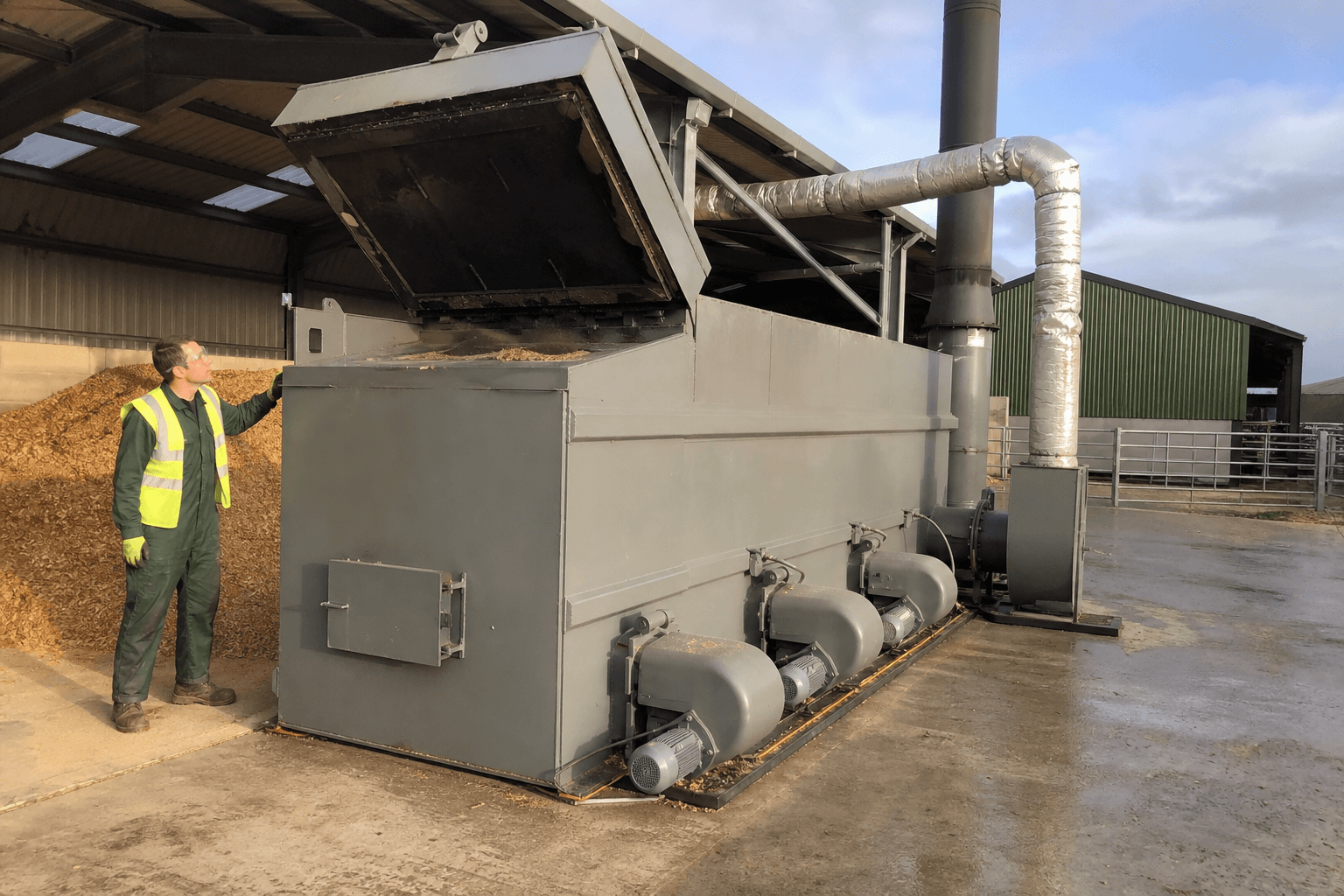
Livestock Bedding & Litter Incinerators
Bedding and litter from restricted or infected buildings, destroyed on site under ABP rules — not a route for routine muck-out.
Routine bedding is spread, stacked or burned as biomass fuel, and it should be. What reaches an incinerator is the fraction that cannot go to land: bedding out of a building under movement restriction, litter from a flock that tested positive, the deep-litter clear-out after a disease event. That material is an animal by-product, and destroying it needs an APHA-approved plant as well as a permit.
Three Models,
One Solution
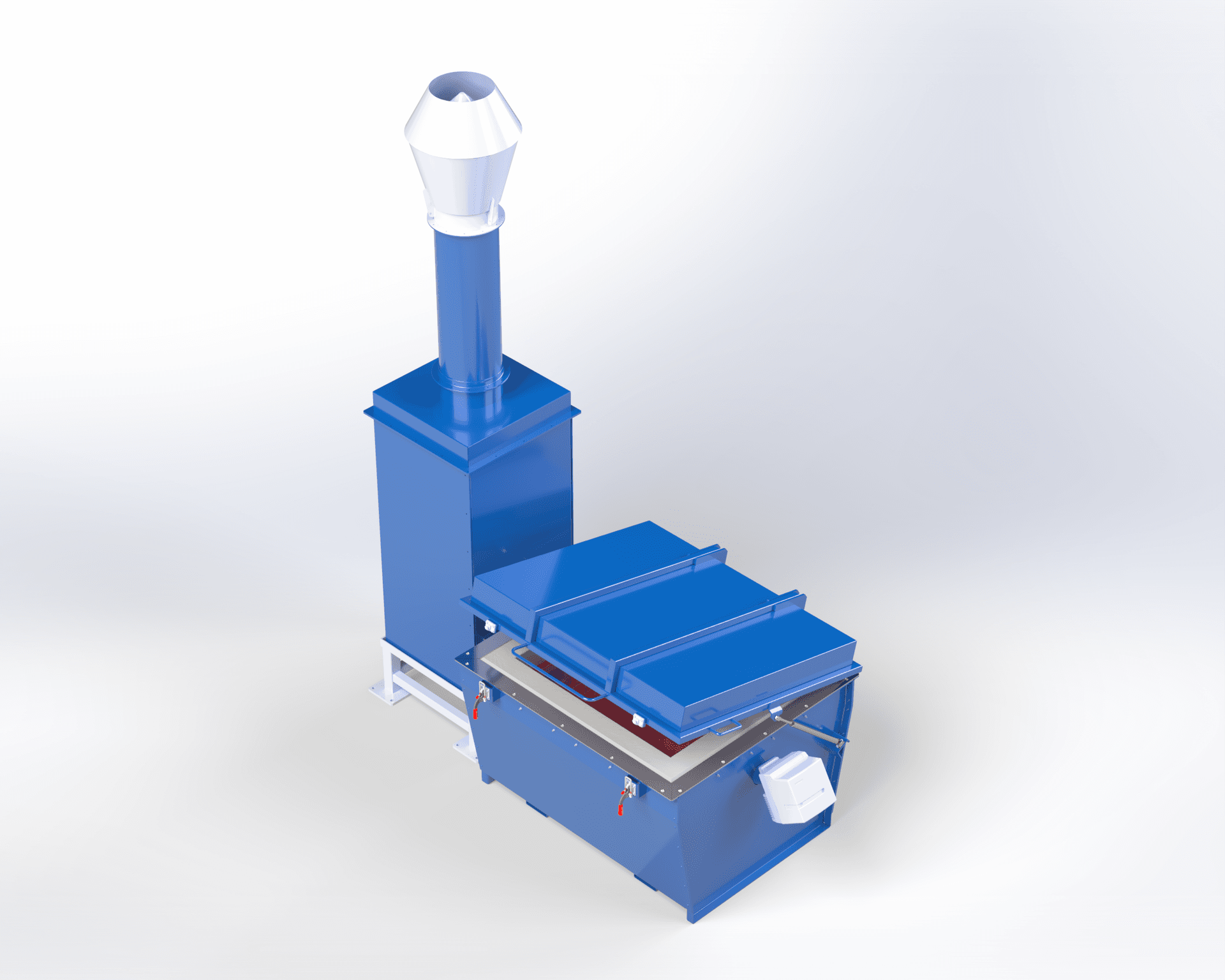
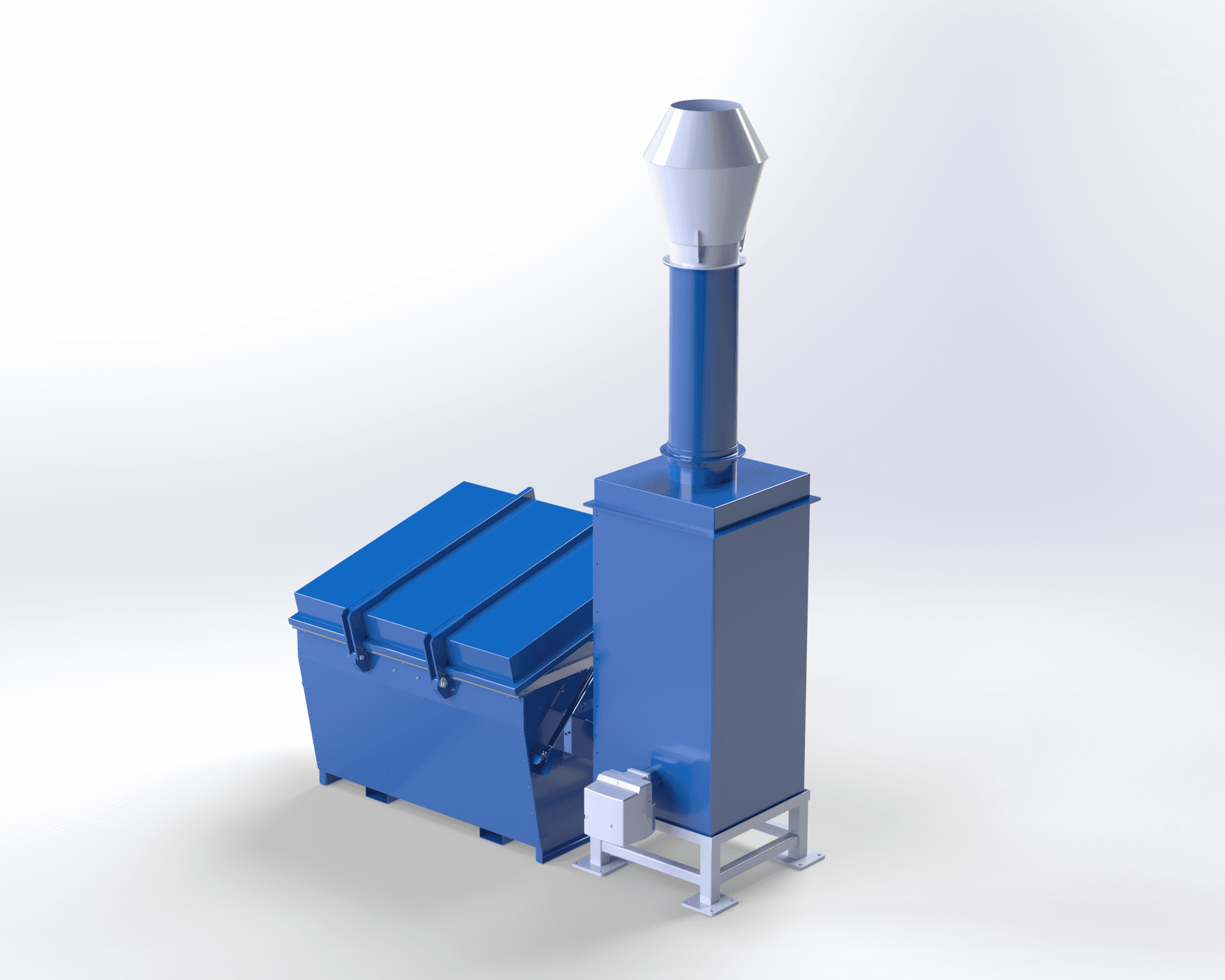
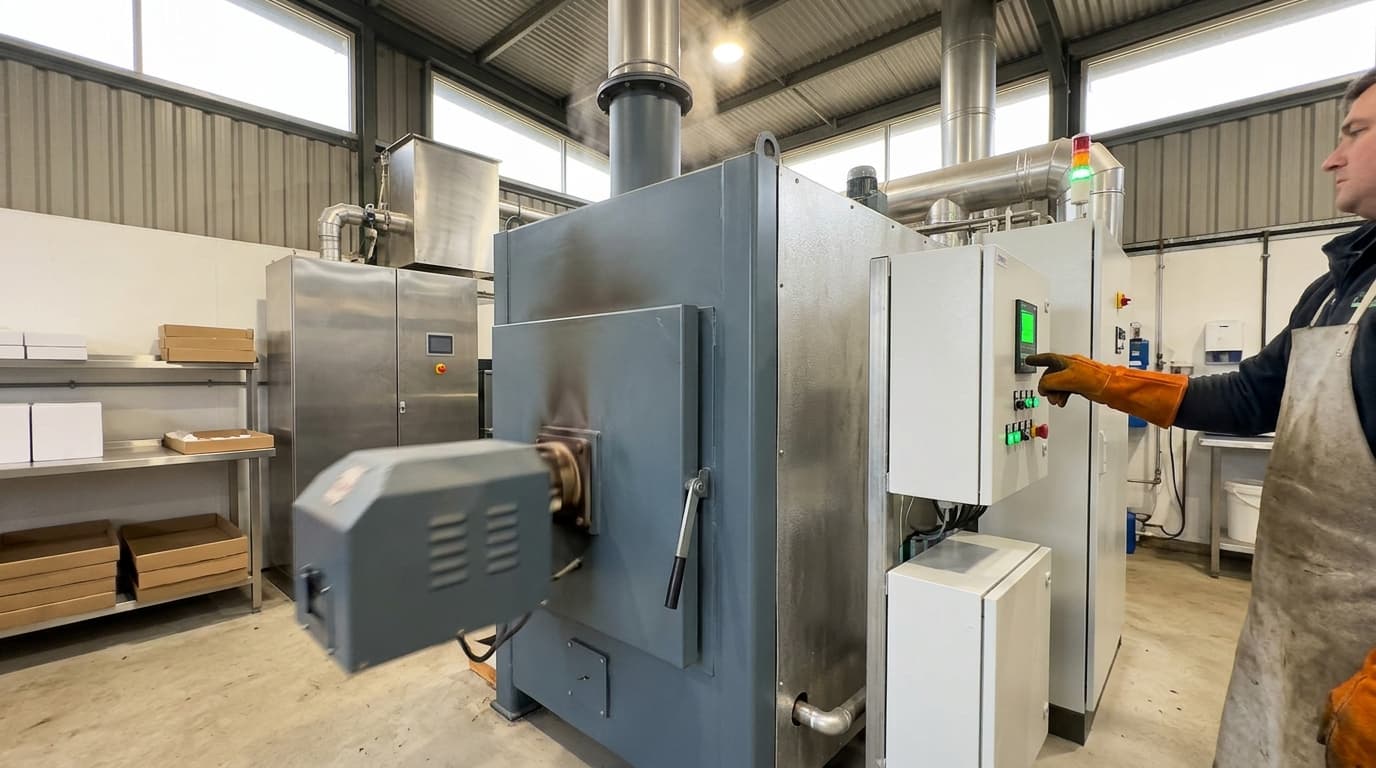
A 350 kg top-loading batch unit for farm and rural sites. Top loading suits bulky, awkward loads — bedding, crop residue, forestry waste — that a front door would fight, and the burn runs unattended once the chamber is charged.
450 kg per charge with a 1350 × 770 × 730 mm chamber. The middle AgriBurn, specified where a single daily burn has to clear a whole day of arisings rather than being run twice.
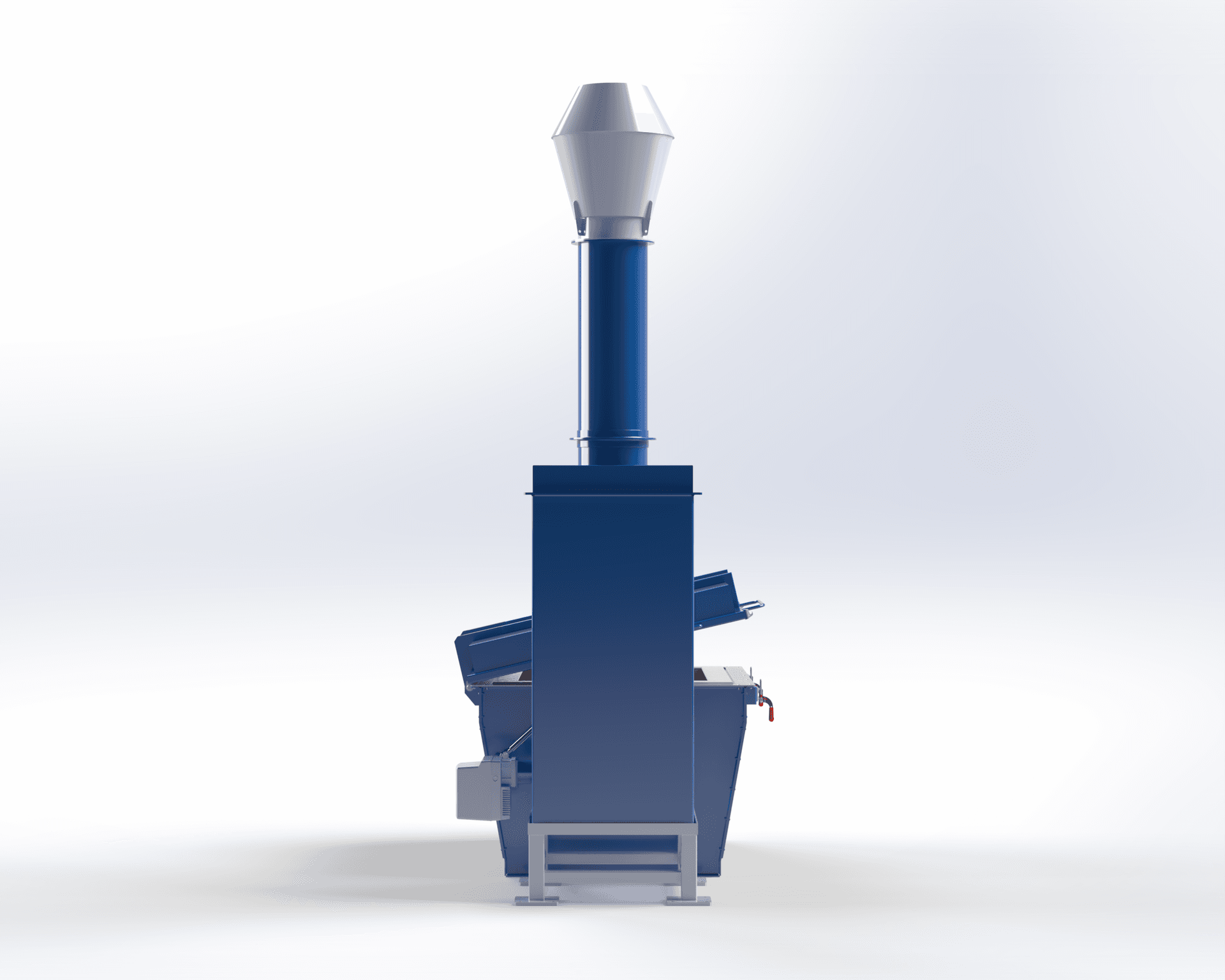
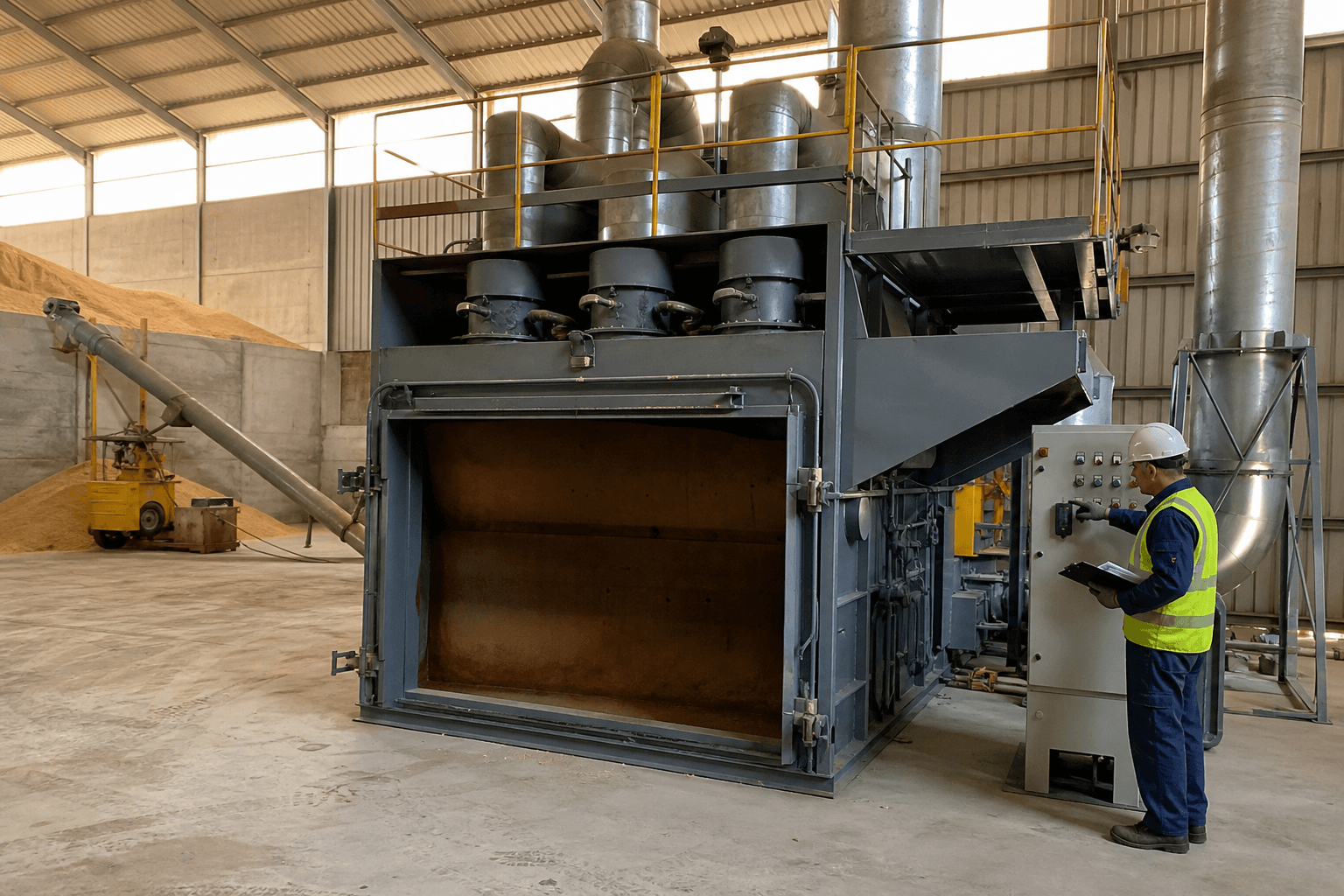
The largest AgriBurn at 500 kg per charge. Three burners across a 1540 mm chamber keep combustion even across a mixed, high-moisture agricultural load rather than burning a hot core and leaving unburnt edges.
Which Model
Fits Your Volume
Pick a model to see what it clears in a day of livestock bedding & litter.
Bedding is bulk, not weight: 350 kg is a restricted loose box or pen cleared under ABP rules, on a plant APHA-approved as well as permitted.
APHA approval is required, not optional
Manure-contaminated bedding is a category 2 animal by-product under the retained ABP Regulation. Incinerating it requires the plant to be approved by APHA in addition to the environmental permit. AgriBurn units burn at under 50 kg/h, which puts them in the low-capacity class, and the approval conditions for that class govern how the unit is operated and recorded.
Environmental permit
Required from the Environment Agency, SEPA or NIEA alongside the ABP approval. The two are separate consents from separate regulators covering different risks, and holding one does not imply the other.
APHA direction outranks the standing procedure
During a notifiable disease event, APHA directs how material is disposed of. Where they have issued an instruction, it sets the method and the sequence — the unit is a means of complying with it, not an alternative to it.
Cleansing and disinfection of the route
The charge door ends the material, not the contamination trail. Vehicles, hardstanding and handling equipment used between the building and the unit need cleansing and disinfecting to the same standard as the building itself.
Why Burn It
On Site
4 things change on the day this stream stops leaving the site.
Restricted material never leaves the holding
Moving contaminated bedding through a restricted zone is the movement disease control is designed to prevent. On-site destruction is the route that does not require a vehicle, a permit to move, or a receiving site prepared to take it.
The organism is destroyed, not diluted
Spreading contaminated litter puts salmonella, campylobacter or a viral load onto land where it persists. Two seconds above 850°C ends it. That is a different outcome from dilution across a field.
Approval in place before the event
During an outbreak, disposal capacity is the constraint everyone discovers at once. A unit already permitted and APHA-approved on the holding is capacity you are not competing for.
Isolation pens get a routine
Between events, the same unit clears the small, awkward, regular loads — isolation and sick-pen bedding, hospital-pen straw, material that comes out with fallen stock — that otherwise sit waiting for a decision.
Dual-chamber unit
Primary chamber running 850–1,200°C with a secondary chamber holding flue gas above 850°C for two seconds — the Industrial Emissions Directive condition, met as built rather than as an option. This is the line between incineration and a bonfire, and it is the line the regulator draws too.
Three-burner set and fuel train
All three AgriBurn models carry three burners, configured for natural gas, LPG, diesel, biofuel or hydrogen. On a farm that usually means LPG or diesel, because that is what is already on site — fuel choice is a site decision and the combustion condition is identical whichever is specified.
What Ships
With The Unit
Identical whichever stream it is specified for. The operating procedure changes; the machine does not.
Dual-chamber unit
Primary chamber running 850–1,200°C with a secondary chamber holding flue gas above 850°C for two seconds — the Industrial Emissions Directive condition, met as built rather than as an option. This is the line between incineration and a bonfire, and it is the line the regulator draws too.
Three-burner set and fuel train
All three AgriBurn models carry three burners, configured for natural gas, LPG, diesel, biofuel or hydrogen. On a farm that usually means LPG or diesel, because that is what is already on site — fuel choice is a site decision and the combustion condition is identical whichever is specified.
Top-loading charge door
Bulky, awkward, tangled loads — bedding, brash, root balls, baled residue — are dropped in from above with a loader or grab rather than fed through a front door. Top loading is why these units take farm waste in the shape it actually arrives in.
IP6X control panel
PLC control with cycle logging and chamber thermocouples. Where a plant health notice or a feed withdrawal has to be evidenced, the cycle log is the record that the load reached and held the destruction condition.
Coretex refractory lining
Monolithic castable lining rated for the full temperature range, replaceable in service. Refractory is a wear item on any unit; on a farm unit taking wet, dirty, variable loads it is the item that decides service life.
Stack, dispersion data and commissioning
Stack supplied to the height your site-specific dispersion assessment calls for, with the emissions data the permit application references, plus on-site commissioning and operator training. Rural sites have neighbours and prevailing winds; the assessment is what sets the stack, not a catalogue figure.
How One Burn Runs,
Start To Finish
One charge is one countable event. That is what makes a batch unit auditable and a continuous one not.
One Cycle,
Start To Finish
Adds animal by-product controls: the plant needs APHA approval as well as an environmental permit, and where APHA has directed the disposal, their instruction sets the method. Bedding is bulky, so chamber volume sets the charge.
Manure-contaminated bedding is a category 2 animal by-product, and during a disease event APHA may direct how it is disposed of. Establish which applies before the first charge: their instruction overrides any standing procedure.
Straight from the building to the charge door, in a contained load, on the same day. Every intermediate stack, trailer and hardstanding is a surface that then needs cleansing and disinfecting.
Bedding is light, tangled and springy. Top loading takes it by grab or loader as it comes out of the building. Expect the chamber to fill by volume — 1.19 m³ on the AGBI-500 — well before the 500 kg rating is reached.
Primary combustion at 850–1,200°C with flue gas held above 850°C for two seconds in the secondary chamber. Wet, fresh bedding spends the early cycle driving off moisture; that shows up as fuel and time rather than as an incomplete burn.
3–5% sterile mineral ash. Cleanse and disinfect the route the material took as well as the building it came from — the incinerator ends the material, not the contamination trail behind it.
What You Can Burn —
And What You Can't
One charge takes the whole stream without pre-sorting. What must never enter it is a short, hard list.
Yes: accepted in a charge
No pre-sorting between these
- Bedding from a building under restrictionCleared from a building under movement restriction, where the whole point is that nothing crosses the boundary — including the muck heap route.
- Litter after a notifiable disease eventPoultry litter from a flock that has tested positive, and deep litter cleared under APHA direction.
- Isolation and hospital-pen beddingBedding out of sick pens, isolation boxes and quarantine or bio-secure units, where mixing it with the general heap defeats the isolation.
- Farrowing and calving pen beddingCleared after a health incident, including bedding recovered with fallen stock rather than separated from it.
- Contaminated bedding of any materialStraw, shavings, sawdust and paper bedding carrying manure, plus feed spillage swept up with it.
- Small stable and kennel volumesBedding cleared under a veterinary instruction, in the quantities a batch unit is actually sized for.
No: never charged
Not a permit question — these stay out
- Routine muck-out and whole-house litterNot a compliance point, a scale one. Hundreds of tonnes of clean litter belong on land under a manure management plan, in a litter-fired biomass plant or in anaerobic digestion. A 500 kg batch unit is the wrong tool and an expensive one.
- Slurry and liquid manureLiquid loads cannot be charged into a batch chamber. They have their own storage, spreading and treatment routes.
- Fallen stock, unless the unit is approved for itCarcasses are a separate animal by-product category with their own approval and capacity requirements. Bedding recovered with a carcass is one thing; the carcass itself belongs to the animal disposal route.
- Sharps, medicine bottles and veterinary wasteClinical waste from a farm has its own route and its own container. It should not arrive at the charge door swept up in bedding.
- Silage wrap, feed bags and plastic swept in with the beddingPolymer film melts rather than burns and can carry halogenated content that raises the secondary-chamber requirement to 1,100°C. Farm plastics have a collection route.
- Rubber matting and mat offcutsSulphur and filler content, heavy smoke, and a residue nobody wants in the ash. Route it as rubber waste.
Can you legally burn livestock bedding & litter on site?
Technically, yes: the chamber destroys almost everything on the accepted list at 850–1,200°C, and capability is rarely the constraint. Legally is a separate question. What your site is allowed to burn is set by your environmental permit from the Environment Agency, SEPA or NIEA and the waste codes written into it, plus APHA approval, because animal by-products are regulated under their own rules. The never-charged list is different again: those materials are out of scope for the unit or governed by a direction, and no permit wording brings them back in. Send us the codes you hold, or the ones you expect to apply for, and we will tell you which of this list they cover before anything is specified.
Send us your waste codesHow many charges to clear 1,500 kg of contaminated bedding?
Arithmetic on published model figures, not a customer reference. Your numbers go through the same steps.
How This
Was Worked Out
1,500 kg of contaminated bedding ÷ 500 kg per charge = 3 charges on the AGBI-500 across three working days, and 45–75 kg of ash at 3–5% — with no movement through the restricted zone at any point. Bedding is bulky: on the AGBI-500's 1.19 m³ chamber, loose straw bedding reaches the top of the box well before 500 kg, so plan in loader buckets as well as in kilograms. Whole-house litter is not this calculation — that is a land or biomass route.
≈ 3
45–75 kg
None
Send your daily or weekly arisings and we will confirm the model, the charge count and the permit route.
Related Products
& Services
Complementary equipment and engineering services for your process.
Sizing and background
- [TOOL]Work out the burn rate for your own arisings
- [TOOL]Size the combustion air and flue gas duty
- [BLOG]Operating agricultural incinerators in compliance with local regulations
- [BLOG]Innovative designs for small-scale agricultural incinerators
- [BLOG]Disposing of agricultural packaging waste
- [BLOG]Integrating vibration analysis for incinerator predictive maintenance
- [BLOG]Advanced gas cleaning for ultra-low emission incinerators
Livestock bedding & litter Questions
Answered against the published figures for the models specified for this stream, not a generic range sheet.
Very little of it, and saying so plainly is the fastest way to size this correctly. A commercial poultry house produces litter by the hundred tonnes; a straw-bedded cattle yard produces more. Those volumes go to land under a manure management plan, to a biomass combustion plant built for litter, or to anaerobic digestion. Feeding routine muck-out into a 500 kg batch incinerator would be an expensive way to do slowly what a spreader does in an afternoon. What does reach an incinerator is the contaminated fraction: bedding from a building under movement restriction, litter from a flock that has tested positive for salmonella, material from an isolation pen, deep litter after a notifiable disease event, and the bedding that comes out with fallen stock. In each case the material cannot be spread because spreading is what would move the organism onto land, into water or into the next batch of animals. Bedding contaminated with manure is a category 2 animal by-product under the retained ABP Regulation. That is the fact that governs everything else here: incinerating it requires the plant to be approved by APHA in addition to holding an environmental permit. AgriBurn units burn at under 50 kg/h, which places them in the low-capacity class for ABP incineration, and the approval conditions attached to that class are what the operating procedure has to satisfy. Where APHA has directed the disposal — as it will during a notifiable disease event — their instruction is the specification, not this page. The value of having a permitted, approved unit already on the holding is that the answer to 'how will you destroy it' exists before the question is asked, and the material never has to be moved through a restricted zone to reach a facility.
1,500 kg of contaminated bedding ÷ 500 kg per charge = 3 charges on the AGBI-500 across three working days, and 45–75 kg of ash at 3–5% — with no movement through the restricted zone at any point. Bedding is bulky: on the AGBI-500's 1.19 m³ chamber, loose straw bedding reaches the top of the box well before 500 kg, so plan in loader buckets as well as in kilograms. Whole-house litter is not this calculation — that is a land or biomass route.
Yes, where the bedding is contaminated with manure — that makes it a category 2 animal by-product under the retained ABP Regulation, and incinerating it requires the plant to be approved by APHA in addition to holding an environmental permit. Clean, uncontaminated plant material does not carry that requirement; bedding out of a livestock building does.
No. Whole-house litter runs to hundreds of tonnes and belongs on land under a manure management plan, in a biomass plant built to burn litter, or in anaerobic digestion. A 350–500 kg batch incinerator is for the contaminated fraction — restricted buildings, positive flocks, isolation pens — not for routine muck-out.
Yes. Two seconds above 850°C in the secondary chamber, following primary combustion at 850–1,200°C, destroys bacterial and viral loads rather than diluting them across a field. The residue is sterile mineral ash at 3–5% of input mass.
APHA directs the disposal, and their instruction sets the method. The advantage of an approved unit already on the holding is that the disposal answer exists before it is asked and the material never has to be moved through a restricted zone to reach a facility — but the direction still comes from APHA, not from a standing procedure.
Watch the volume, not the rating. The AGBI-500 chamber is 1.19 m³ and loose straw bedding reaches the top of it well before 500 kg. Plan the job in loader buckets as well as in kilograms, and expect roughly one full charge per working day.
Not unless the unit is approved for carcasses. Carcasses are a separate animal by-product category with their own approval and capacity requirements, and they belong to the animal disposal route. Bedding recovered alongside a carcass is a different question from the carcass itself.
Yes, and same-day destruction is usually the right call even though wet material costs fuel and cycle time. The alternative — stacking it to dry — creates another contaminated surface and another movement, which is what the exercise is trying to avoid.
Cleanse and disinfect them to the same standard as the building. Destroying the bedding removes the material but not the trail it left between the building and the charge door, and that trail is a real transmission route.
Ready to
Incinerate?
Send the stream, the volume and the site constraints. We will confirm the model, the permit route, and what the specification has to say to satisfy the regulator.
- Restricted material never leaves the holding
- The organism is destroyed, not diluted
- Approval in place before the event
- Isolation pens get a routine