Chemical
Processing
Heat Recovery
Process heat recovery, reactor cooling, and distillation heat integration.
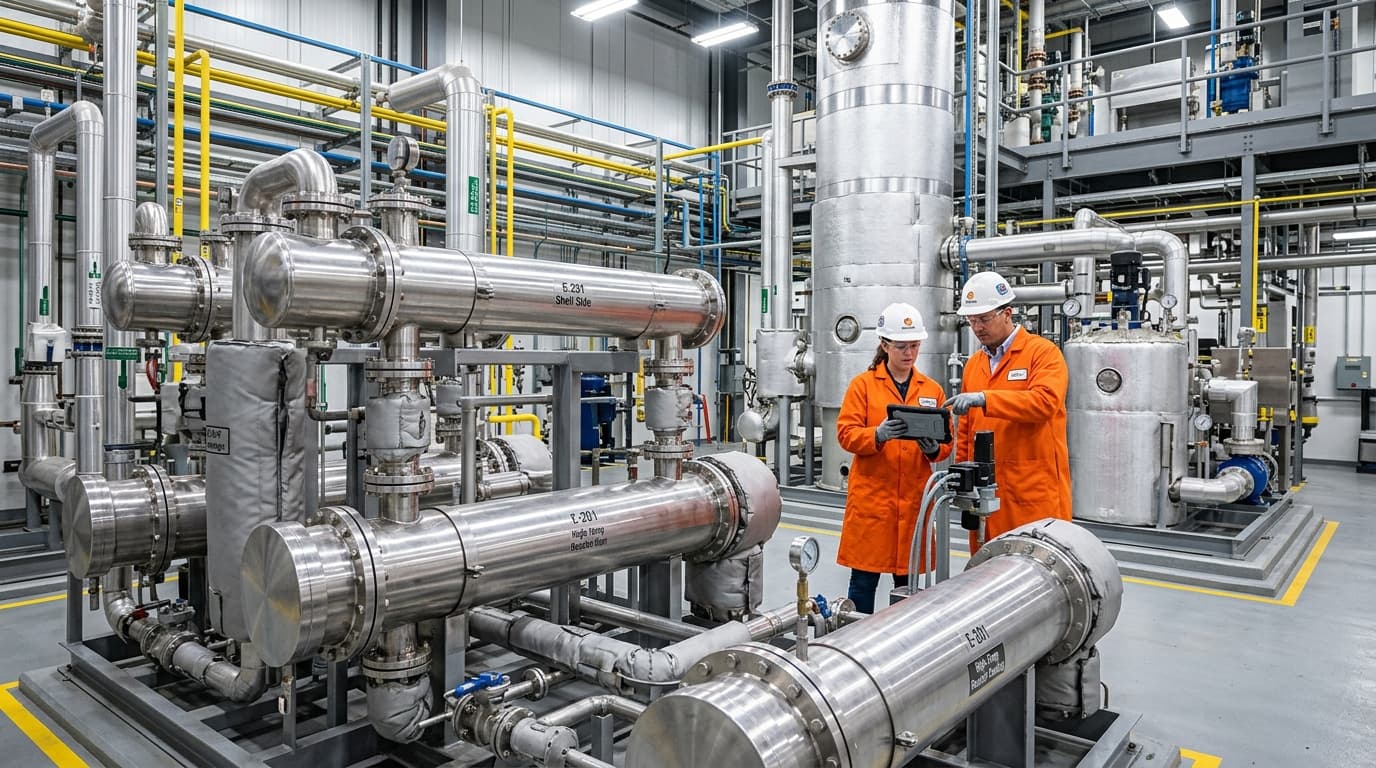
Shell and tube heat exchangers engineered for chemical processing — recovering waste heat from reactors, distillation columns, and process streams. SS 304L construction for chemical compatibility with 445–3,500 kW capacity and counterflow design.
Three Models,
One Solution
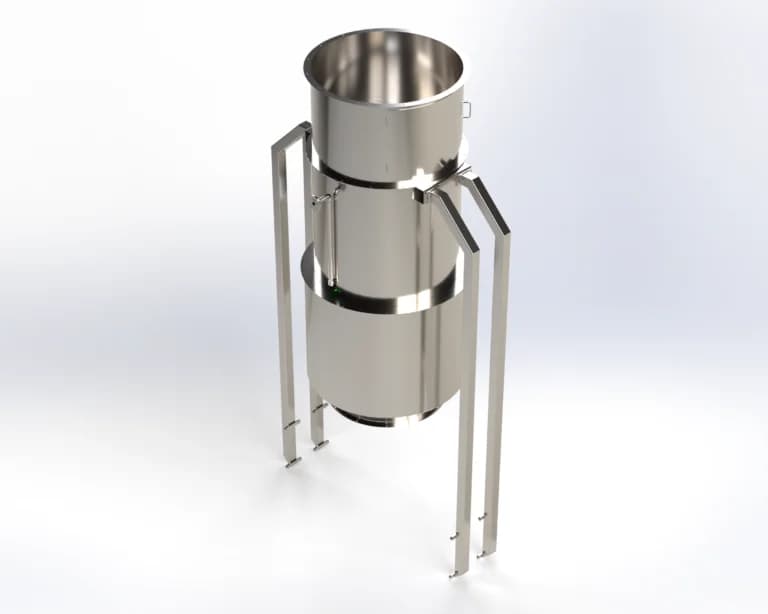
Ideal for recovering heat from exothermic reactor exhaust and preheating feedstock in chemical plants. SS 304L construction resists acids, solvents, and aggressive process chemicals.
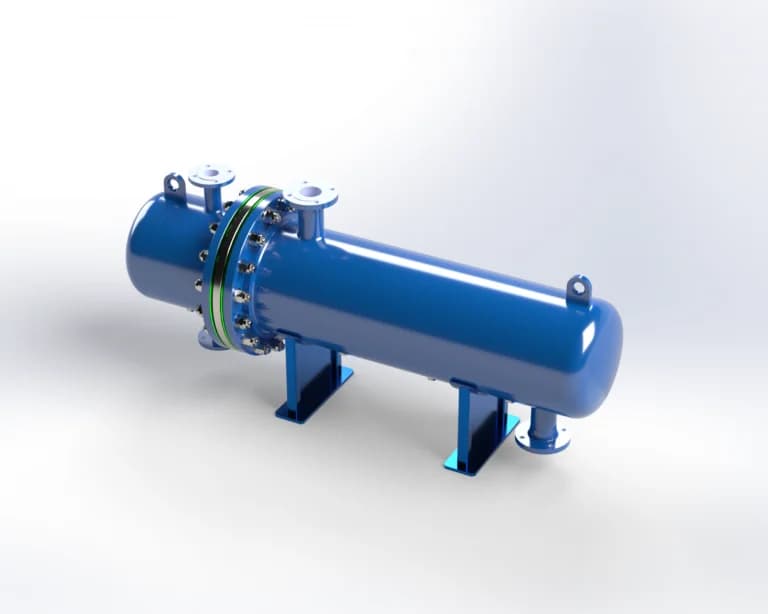
High-capacity plate heat exchanger for large-scale process-to-process heat recovery in chemical manufacturing. Recovers waste heat from distillation columns, reactor cooling loops, and process streams.
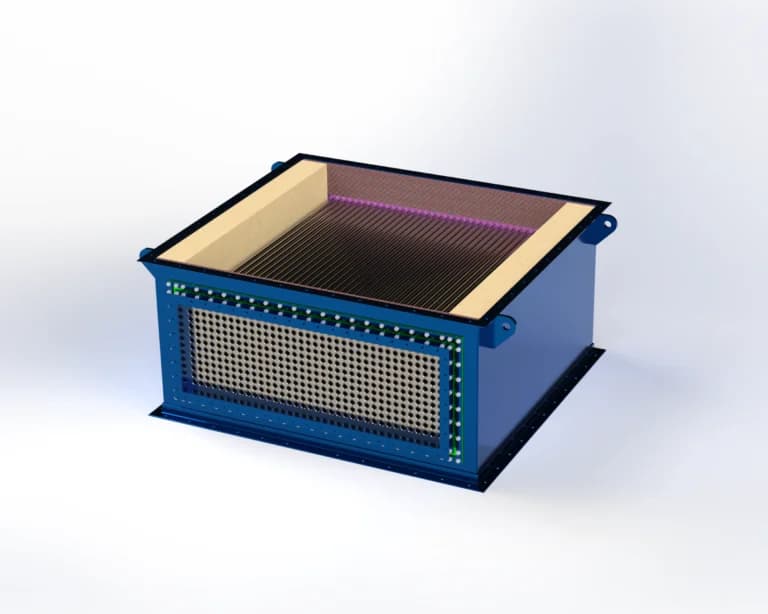
Recovers thermal energy from chemical process exhaust air streams and fume extraction systems. Preheats combustion air or facility ventilation using waste gas heat.
Chemical Process
Applications
Select an application to see how our heat exchangers address your specific chemical processing requirements.
Chemical processes generate significant waste heat from exothermic reactions, distillation columns, and process exhaust streams at 150–500°C. Our EcoStream EST shell and tube heat exchangers recover this thermal energy for feedstock preheating, solvent regeneration, or facility heating — reducing total energy consumption by 15–30%. Counterflow SS 304L construction ensures chemical compatibility and corrosion resistance across aggressive process environments.
Chemical Resistant
SS 304L handles acids, solvents, and process chemicals
High Pressure Rated
Robust construction for elevated process pressures
Easy Inspection
Removable end covers for tube bundle access
CIP Compatible
Chemical cleaning-in-place for process applications
Built for
Chemical Processing
Key advantages of our heat exchangers for chemical process applications.
Reactor Exhaust Recovery
Captures waste heat from exothermic reactor exhaust streams at 150-400°C, preheating feedstock or regenerating solvents to cut process energy costs.
Chemical Resistant
SS 304L construction withstands acids, solvents, and aggressive process chemicals common in reactor off-gas streams.
Column Bottoms Recovery
Recovers residual heat from distillation column bottoms to preheat incoming feed, reducing reboiler duty by up to 15%.
CIP Compatible
Supports chemical cleaning-in-place protocols for rapid turnaround between product batches without full disassembly.
Compact Footprint
Shell and tube design fits into congested chemical plant pipe racks with horizontal or vertical mounting options.
Easy Decontamination
Removable end covers provide full tube bundle access for inspection, cleaning, and decontamination between process changeovers.
Engineered for
Chemical Plants
Corrosion-resistant design for aggressive process fluids — integrates with existing reactor and distillation infrastructure.
Process Heat Is
Your Biggest Cost.
Chemical processing relies on precise thermal control — heating reactors, cooling products, and recovering heat from exothermic reactions. Every degree of waste heat recovered is money saved on utilities. Our shell and tube heat exchangers are built from materials that withstand your specific chemistry while maximising heat transfer efficiency.
SS 304L/316L construction with optional exotic alloys — engineered for your specific process chemistry.
Recover waste heat from reactors and distillation to preheat feeds — cutting energy costs by up to 30%.
Removable end covers and cleanable tube bundles — minimising downtime for inspection and maintenance.
Removable end covers and cleanable tube bundles — minimising downtime for inspection and maintenance.
Related Products
& Services
Complementary equipment and engineering services for your process.


Chemical
Processing
FAQs
Common questions about heat recovery solutions for chemical processing applications.
For large-scale process heat recovery (2,000–3,500 kW), the EcoStream EST shell and tube range is ideal. For smaller economiser duties and feedstock preheating (445–800 kW), the ThermStack TSE is more appropriate. Both use SS 304L stainless steel for chemical compatibility. For gas-to-air heat recovery, the EnerAir EAA range handles 250–550 kW.
Yes. All models are constructed from SS 304L stainless steel, which provides excellent resistance to a wide range of chemicals, weak acids, and organic solvents. For highly aggressive fluids, we can specify upgraded materials including SS 316L, duplex stainless steels, or titanium on request. Contact our engineering team with your process fluid composition for specific material recommendations.
Distillation columns typically consume 40–60% of total plant energy. By integrating our heat exchangers between overhead condensers and reboilers, latent heat from vapour streams is recovered and reused. Combined with feedstock preheating using ThermStack TSE economisers, total reboiler duty can be reduced by 15–30%, directly cutting fuel costs and CO₂ emissions.
Our heat exchangers are designed for industrial process environments including hazardous areas. Shell and tube construction with flanged connections meets process safety standards. We provide full material certificates, pressure test reports, and can design to ATEX requirements for installations in explosive atmospheres. Contact us with your area classification details.
We require process data including fluid compositions, flow rates, inlet/outlet temperatures, operating pressures, and fouling factors. Our thermal design engineers use industry-standard HTRI/HTFS software to model heat transfer performance and specify the optimal unit. We provide full thermal design reports, GA drawings, and P&ID integration support.
Maintenance depends on process fluids and fouling tendency. Typical intervals are 6–12 months for inspection and tube-side cleaning. Removable end covers on TSE models provide full access to tube bundles without disconnecting piping. Chemical cleaning-in-place (CIP) is possible for many process applications. We provide detailed maintenance schedules as part of our commissioning documentation.
Ready to
Recover?
Our engineering team specialises in chemical process heat recovery. Share your process data and we'll design the optimal solution.
- Process heat recovery design
- Reactor cooling systems
- Distillation heat integration
- Material compatibility analysis