
Industrial
Software
Development
Transform Your Operations with Custom Industrial Software Solutions
At EnerTherm Engineering, we specialise in Industrial Software Development to enhance your operational efficiency and safety. Our bespoke software solutions are designed to meet the unique challenges of industrial environments, ensuring seamless integration with your existing systems and processes.
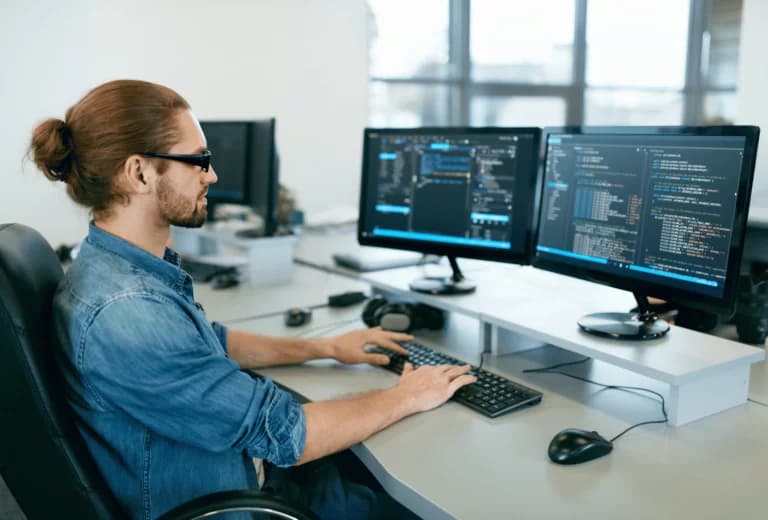
Enhancing Operational
Efficiency & Safety
Industrial software development refers to the specialised process of creating, designing, and maintaining software applications specifically tailored for industrial environments. This type of development involves a deep understanding of the unique requirements and constraints of industrial operations, such as manufacturing, automation, and process control.
Industrial software is distinct from commercial software due to its focus on the unique challenges of industrial environments, including the need for robust, reliable, and compliant solutions that can operate in demanding conditions.
Customisation for Specific Needs
Software customised to meet specific requirements of manufacturing, construction, chemical processing, and food production.
High Reliability & Safety
Rigorous testing, validation, and verification to ensure correct operation under all expected conditions.
Hardware Integration
Seamless interface with sensors, controllers, and machinery for automating processes and improving efficiency.
Scalability & Flexibility
Modular design and reusable code libraries to accommodate growth and adapt to changing requirements.
Industry Compliance
Compliant with standards such as GAMP in the pharmaceutical and food industries.
Process Optimisation
Advanced algorithms, real-time data processing, and analytics to reduce downtime and increase efficiency.
Industry-Specific
Software Solutions
Bespoke industrial software for your sector — every operation has unique automation and data challenges.
Manufacturing
- ·MES & production tracking
- ·Quality management systems
- ·Predictive maintenance platforms
Oil & Gas
- ·SCADA & pipeline monitoring
- ·Reservoir data management
- ·Safety system integration
Pharmaceutical
- ·Batch record automation
- ·LIMS integration
- ·GAMP-compliant validation
Food & Beverage
- ·Recipe management systems
- ·Traceability & recall tools
- ·OEE dashboards
Automotive
- ·Assembly line automation
- ·Supply chain visibility
- ·Quality inspection software
Energy & Utilities
- ·Grid management platforms
- ·Asset performance software
- ·Demand forecasting tools
Our 10-Step
Approach
A structured, proven development methodology ensuring high-quality, reliable, and scalable industrial software solutions.
Requirement Gathering & Analysis
Close collaboration with plant operators, process engineers, and project stakeholders to capture precise functional and non-functional requirements for the software solution.
Business analysts and domain specialists conduct structured workshops, site walkthroughs, and interviews to map existing workflows, define user roles, and identify critical pain points. The output is a prioritised requirements specification that traces every feature back to a measurable business objective, ensuring nothing is overlooked before design begins.
Feasibility Study & Planning
Evaluate the technical, operational, and financial viability of the project through detailed planning that covers cost estimates, resource allocation, technology selection, and realistic timelines.
Our engineers assess hardware constraints, integration complexity, regulatory requirements, and scalability needs to produce a clear go/no-go recommendation. The deliverable is a project charter with a phased roadmap, budget breakdown, and contingency plan that keeps all stakeholders aligned from day one.
System Design
Software architecture is engineered to align with the validated requirements, selecting appropriate frameworks, communication protocols, and data models for the target industrial environment.
The team produces high-level architecture diagrams, database schemas, API contracts, and UI wireframes that collectively define every module and interface. Each design artefact undergoes peer review to verify scalability, fault tolerance, and compliance with relevant industry standards before any code is written.
Development & Coding
Transform approved design documents into production-grade code using languages and toolchains best suited to the application, whether embedded C for PLCs, Python for data pipelines, or modern web frameworks for dashboards.
Development follows agile sprints with continuous integration, automated linting, and mandatory peer code reviews at every merge. Engineers adhere to industry coding standards such as MISRA or IEC 62443 where applicable, ensuring the codebase is secure, maintainable, and ready for long-term evolution.
Testing
Comprehensive, multi-layered testing strategy designed to surface defects early and validate that the software performs reliably under real-world industrial conditions.
The testing programme spans unit tests for individual modules, integration tests across subsystems, full system tests simulating production loads, and formal user acceptance testing with plant personnel. Automated regression suites run on every build, while edge-case and stress tests ensure the software handles fault conditions, data spikes, and concurrent users without degradation.
Deployment
The validated software is deployed to the production environment through a controlled release process, minimising downtime and operational disruption.
Deployment includes installation on client servers or edge devices, environment-specific configuration, network and firewall setup, and end-to-end integration with existing SCADA, MES, or ERP systems. A structured rollback plan is prepared alongside go-live checklists so that any unforeseen issues can be resolved within agreed service-level windows.
Maintenance & Support
Ongoing, proactive maintenance and dedicated support services to ensure the software continues to perform optimally as operational demands evolve.
Our support framework includes scheduled patch releases, security updates, performance tuning, and feature enhancements driven by user feedback and changing regulatory requirements. Multi-year maintenance agreements provide guaranteed response times, remote diagnostics, and on-site support when needed, giving clients confidence in the long-term reliability of their investment.
Risk Planning & Mitigation
Potential technical, schedule, and compliance risks are systematically identified at every phase, with targeted mitigation strategies embedded directly into the project plan.
Risk registers are maintained and reviewed at each sprint boundary, covering areas such as third-party dependency changes, cybersecurity threats, hardware compatibility, and regulatory shifts. This proactive discipline ensures that emerging issues are addressed before they escalate, keeping the project on schedule and within budget.
Verification & Validation
Rigorous verification and validation activities with full requirements traceability, ensuring every specification is demonstrably met before release.
Verification confirms that each module has been built correctly through static analysis, code inspections, and automated test coverage metrics. Validation then proves the complete system fulfils its intended purpose in realistic operating scenarios, providing the documented evidence often required for industrial certification and regulatory approval.
Code Set & Documentation Audits
Regular, structured audits of the codebase and accompanying documentation to evaluate quality, scalability, maintainability, and adherence to coding standards.
Independent reviewers examine code complexity metrics, dependency health, test coverage gaps, and documentation accuracy against the living design specification. Audit findings are tracked to resolution, ensuring the software remains robust, well-documented, and straightforward to extend or hand over to in-house teams in the future.
Why Industrial
Software?
Industrial software development offers numerous advantages to businesses in manufacturing, automation, and process-driven sectors.
Improved Quality & Consistency
- Reduce the risk of human error with automation and software solutions
- Standardised processes maintain uniformity in product quality
Increased Efficiency & Productivity
- Real-time monitoring and control of production processes for more efficient operations
- Automated systems work continuously, significantly increasing output
Cost Reduction
- Automate repetitive and labour-intensive tasks to reduce labour costs and minimise downtime
- Predictive maintenance prevents costly equipment failures
Enhanced Safety
- Reduce the need for human workers to interact directly with hazardous machinery
- Improve workplace safety and reduce accident risk through automation
Data-Driven Decision Making
- Collect and analyse vast amounts of data from various processes
- Gain valuable insights into performance, efficiency, and potential improvements
Scalability & Flexibility
- Tailored to specific business needs and scaled as the company grows
- Adapt to new challenges and changing operational requirements
Better Resource Management
- Precise tracking and management of inventory, resources, and supply chains
- Optimise the use of materials for cost savings and sustainable operations
Enhanced Collaboration
- Integrate various aspects of the production process into a unified system
- Facilitate better communication and collaboration among departments
Regulatory Compliance
- Ensure all processes are documented, tracked, and optimised according to legal requirements
- Reduce the risk of non-compliance and associated penalties
Innovative Capabilities
- Leverage advancements in AI, IoT, and machine learning
- Predictive maintenance, real-time monitoring, and automated decision-making
Frequently Asked Questions
Common questions about our industrial software development methodology, compliance standards, and development process.
Industrial software development is the specialised process of creating, designing, and maintaining software applications specifically tailored for industrial environments. It involves a deep understanding of the unique requirements and constraints of industrial operations, such as manufacturing, automation, and process control.
Industrial software development is distinct due to its focus on the unique challenges and requirements of industrial environments, including the need for robust, reliable, and compliant software solutions that can operate in demanding conditions. It must adhere to stringent reliability and safety standards, integrate with industrial hardware, and comply with industry-specific regulations like GAMP.
Custom industrial software benefits a wide range of sectors including manufacturing, construction, chemical processing, food production, pharmaceutical, oil & gas, automotive, energy generation, and waste management. Any industry requiring process automation, real-time monitoring, or compliance tracking can benefit.
We comply with specific industry standards and regulations such as the Good Automated Manufacturing Practice (GAMP) in the pharmaceutical and food industries. Our development process includes verification, validation, and regular code audits to ensure quality and safety throughout the software lifecycle.
The timeline depends on project complexity and scope. Our structured 10-step process — from requirement gathering through deployment and ongoing maintenance — is designed to deliver high-quality solutions efficiently. We provide detailed timelines during the feasibility study and planning phase.
Yes, after deployment we provide ongoing maintenance and support including regular updates, bug fixes, performance enhancements, and the incorporation of new features as needed. Maintenance is typically planned for multiple years to ensure long-term reliability.
Ready to
Transform?
Contact us today to explore how custom industrial software can enhance your operational efficiency, safety, and productivity.
- Bespoke software for industrial environments
- GAMP-compliant development process
- Long-term maintenance & support included