Uniform, Insignia & ID Card Destruction Incinerators
Condemned uniform, insignia, name tapes, ID cards and passes destroyed rather than released into a textile stream.
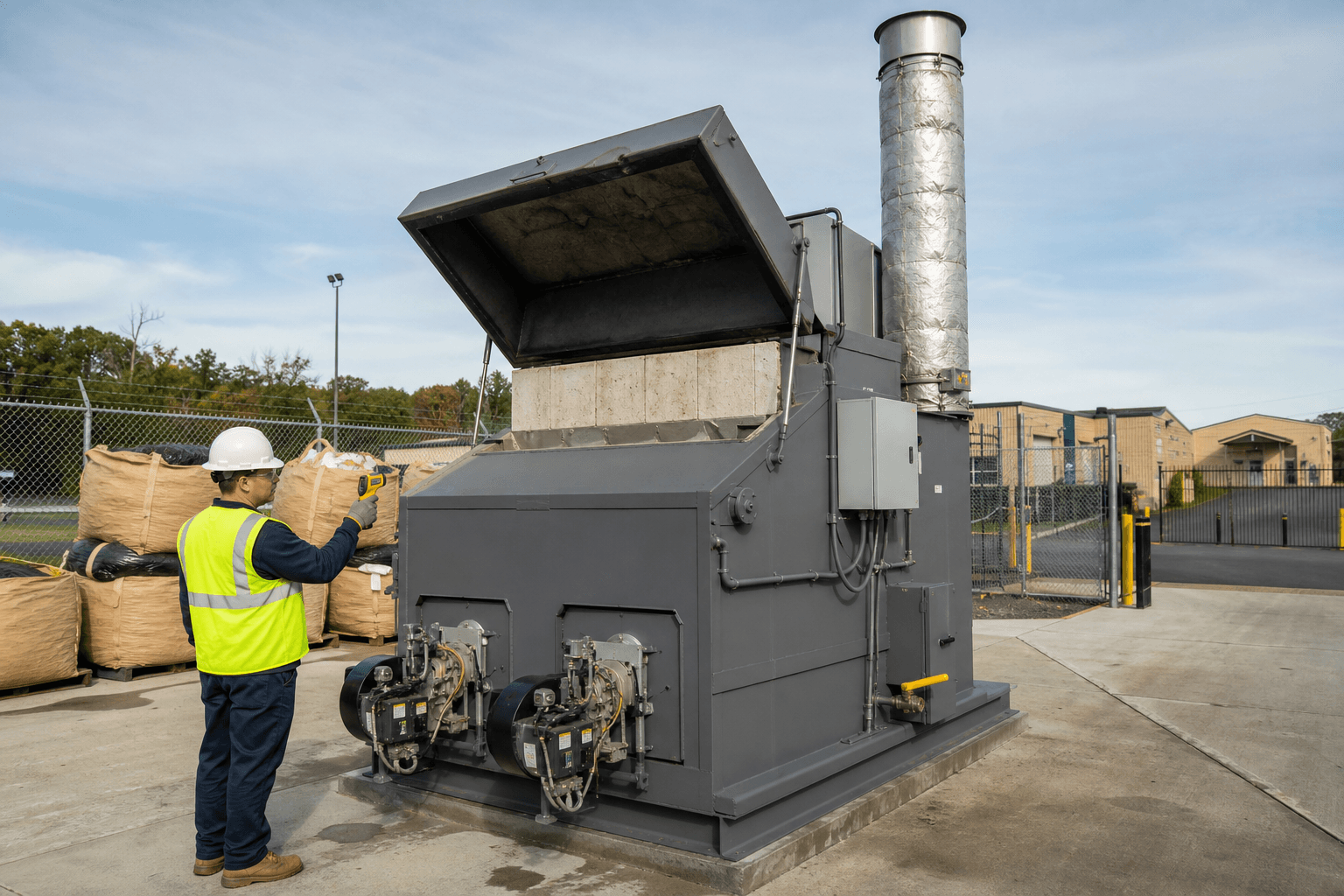
A condemned uniform is not rag. Rank slides, unit insignia, name tapes, ID cards and passes are identity material, and identity material that reaches a textile recycling stream is identity material in circulation. Thermal destruction removes it — completely, on site, in a cycle that can be witnessed.
Three Models,
One Solution
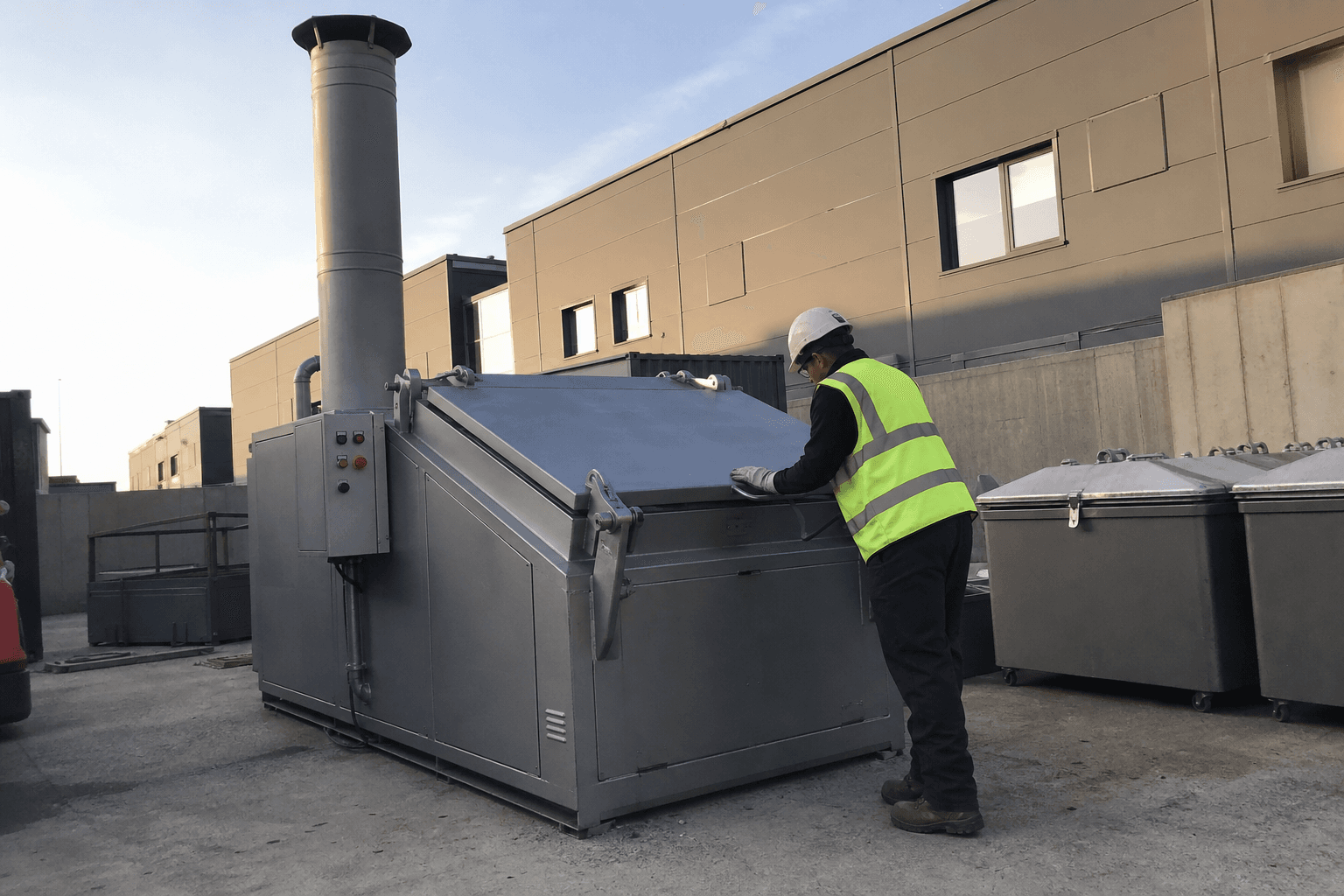
The compact AmoBurn: 150 kg per charge at 1.8 t, light enough to be relocated between sites. Used where destruction has to be witnessed and certified on site rather than handed to a third-party contractor.
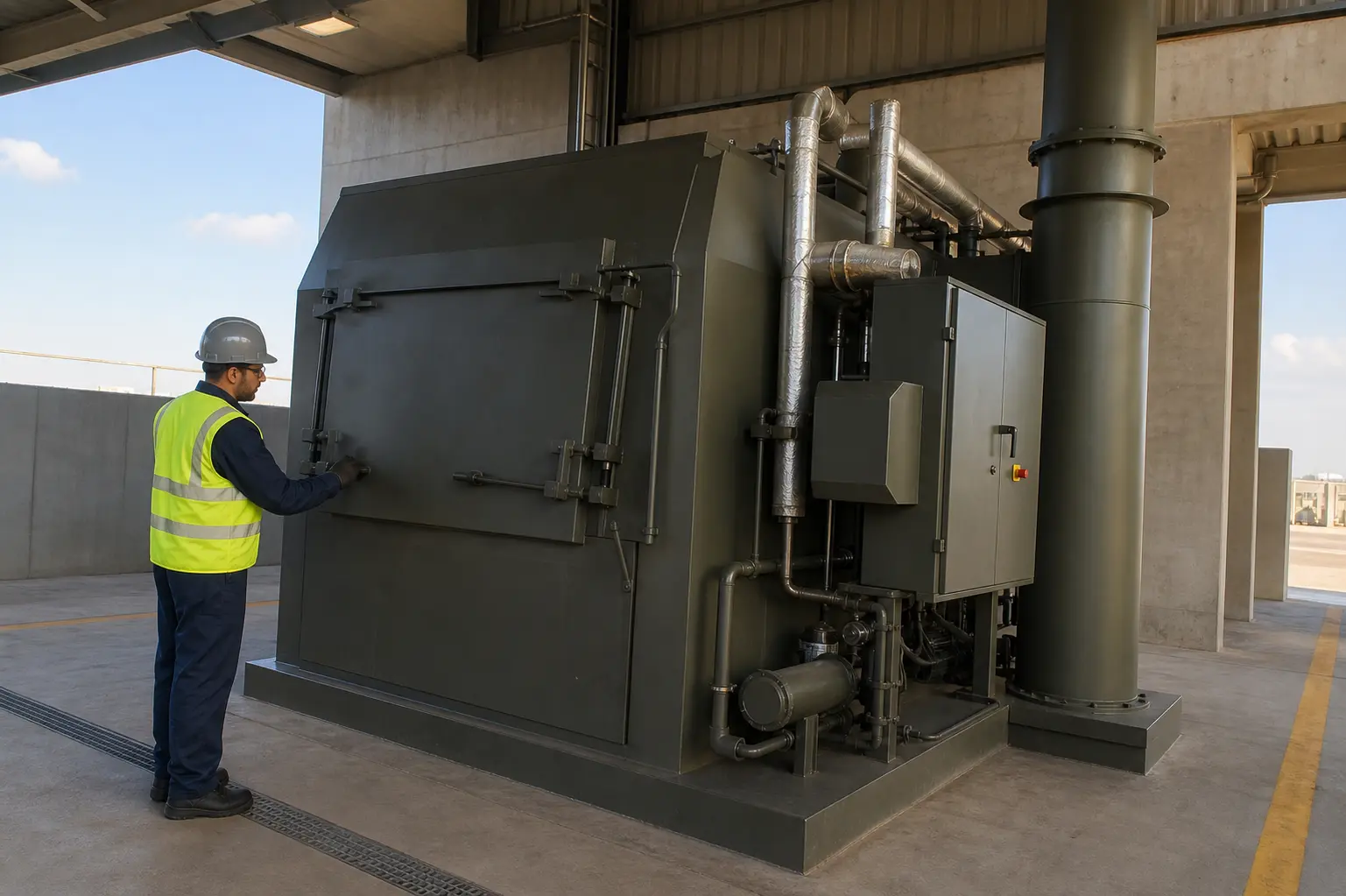
250 kg per charge for established base infrastructure. The two-burner arrangement and 1250 mm chamber handle classified document destruction and ammunition-adjacent waste in the same unit.
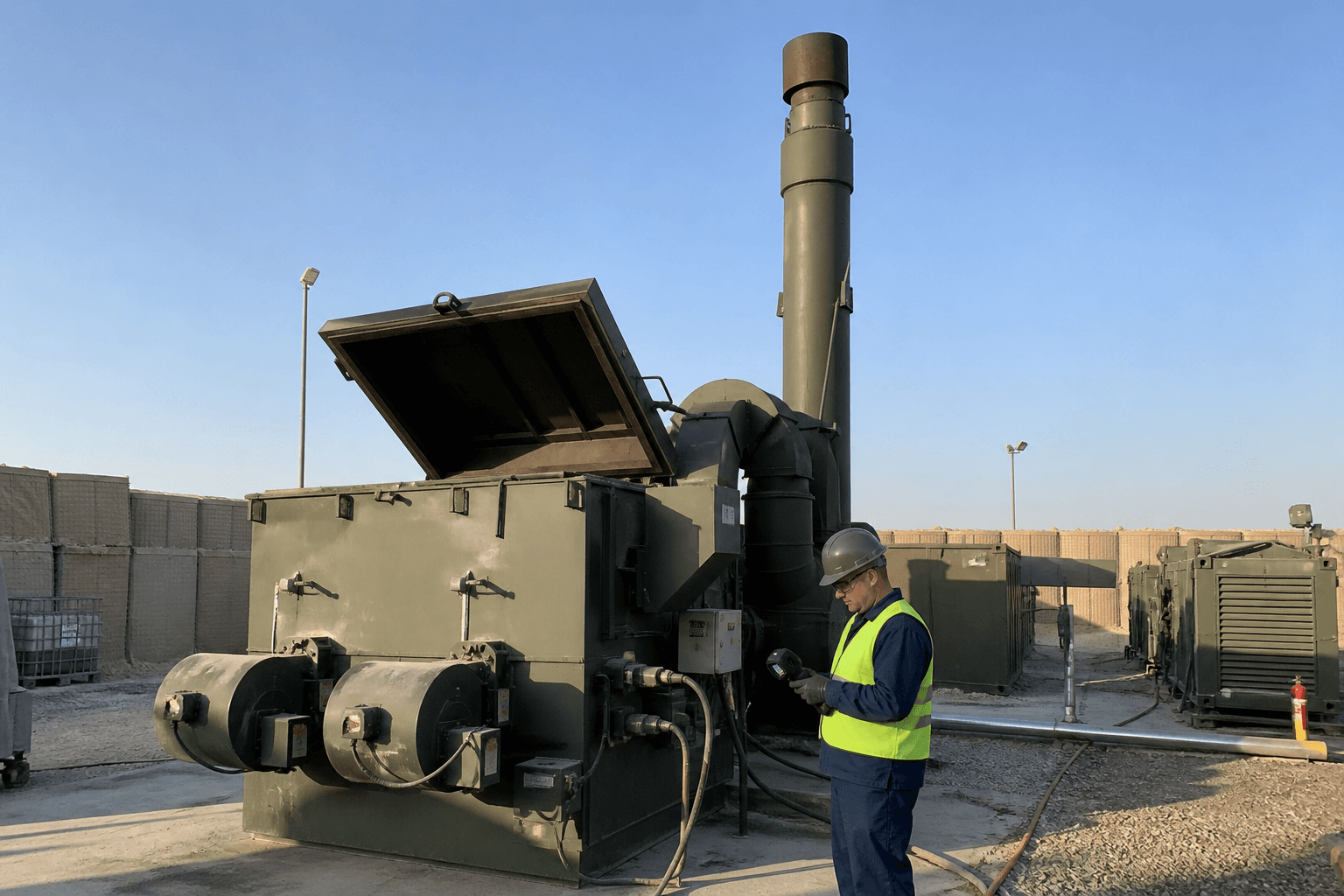
The largest AmoBurn at 300 kg per charge. Specified where the secure-destruction requirement is continuous enough that a smaller unit would need several cycles a day to keep up.
Which Model
Fits Your Volume
Pick a model to see what it clears in a day of uniform, insignia & id destruction.
Textile fills the chamber long before the rating: 150 kg is a unit stores clearing condemned issue in one supervised charge, reconciled against the condemnation paperwork.
Environmental permit
Required as for any waste burnt on site. Textile and laminate streams should be named in the application — this is not the same waste description as paper, and the permit should say so.
Halogenated content
Laminated passes, coated textile and synthetic webbing push the halogenated organic fraction up. Above 1%, the secondary chamber must hold 1,100°C rather than 850°C. The units do; the application has to declare it.
Stores accounting
Destruction records sit alongside the condemnation paperwork. One charge, one register entry, reconciled against the issue condemned — the same discipline used for document destruction.
Ash and recovered metal
Both are ordinary waste under a transfer note. Recovered fittings leave through the site's metals route; nothing in the residue carries a marking.
Why Burn It
On Site
4 things change on the day this stream stops leaving the site.
Identity material stays out of circulation
Insignia, name tapes and passes have a collector and impersonation market. Destruction removes the item from existence rather than moving it into a recycling stream where its onward path is nobody's responsibility.
No manual separation step
Cutting badges off garments at volume is a manual task that fails quietly. Charging the whole item removes the step, and with it the risk that what the operator missed leaves with the load.
Audit closes cleanly
A condemned issue can be reconciled against a destruction register: one charge, one entry, one witness. A recycling transfer note records that material left, not that it ceased to exist.
Metal fittings recovered inert
Buttons, zips, buckles and badge pins survive the burn as inert scrap and leave through the normal metals route. What carries an image or a marking does not survive it.
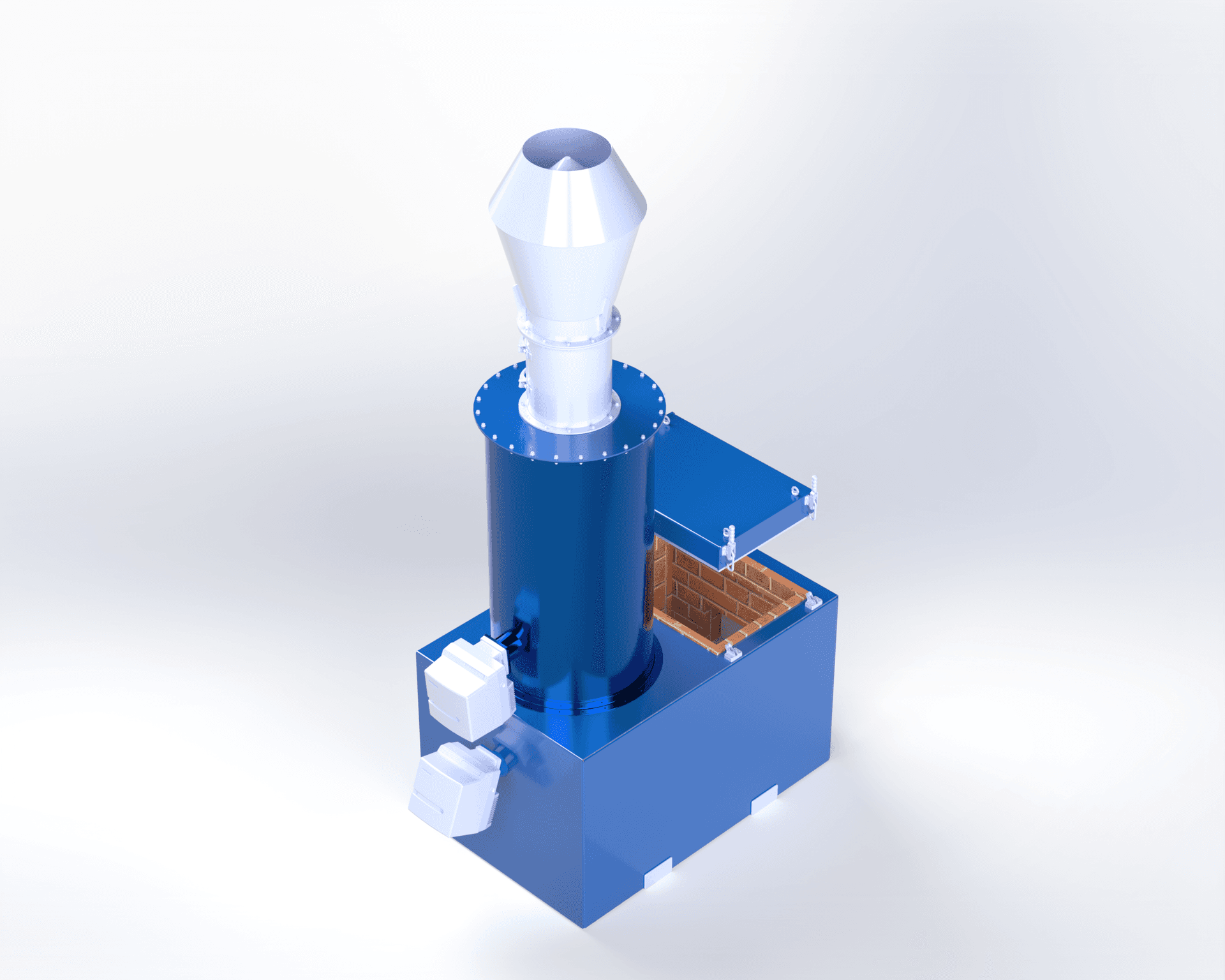
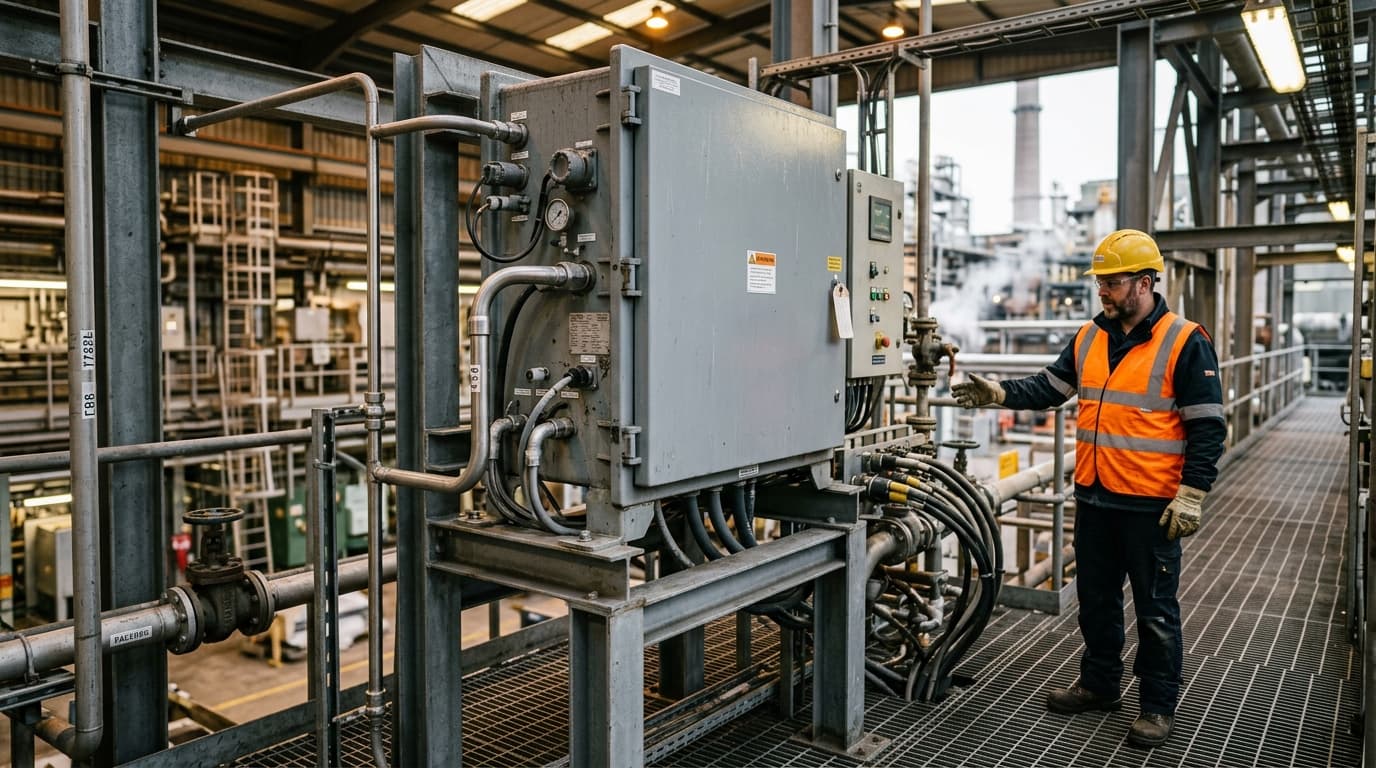
Dual-chamber unit
Primary chamber running 850–1,200°C with a secondary chamber holding flue gas above 850°C for two seconds — the Industrial Emissions Directive condition, met as built rather than as an option.
Burner set and fuel train
Configured for natural gas, LPG, diesel, biofuel or hydrogen. Fuel choice is a site decision; the combustion condition is identical whichever is specified.
What Ships
With The Unit
Identical whichever stream it is specified for. The operating procedure changes; the machine does not.
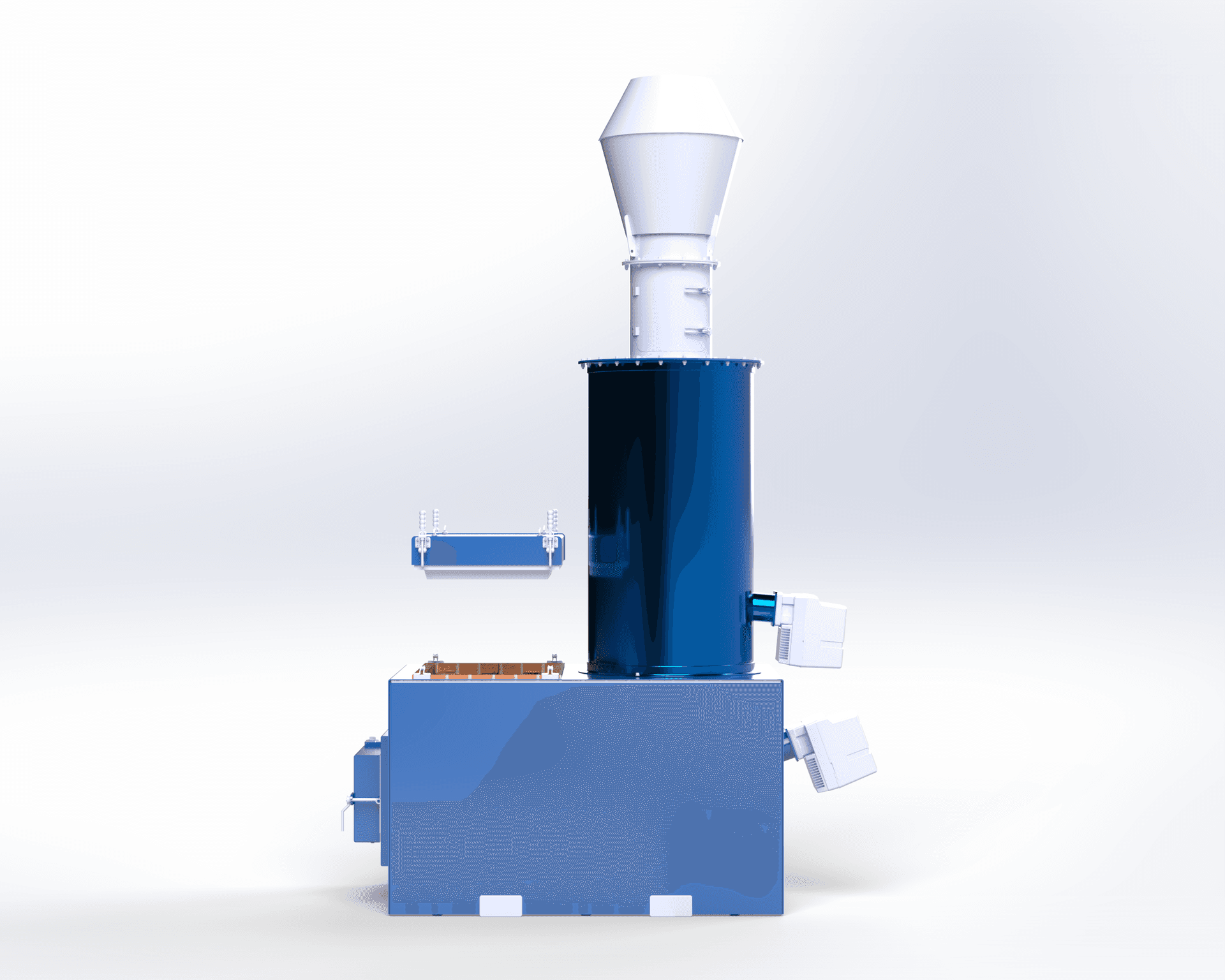
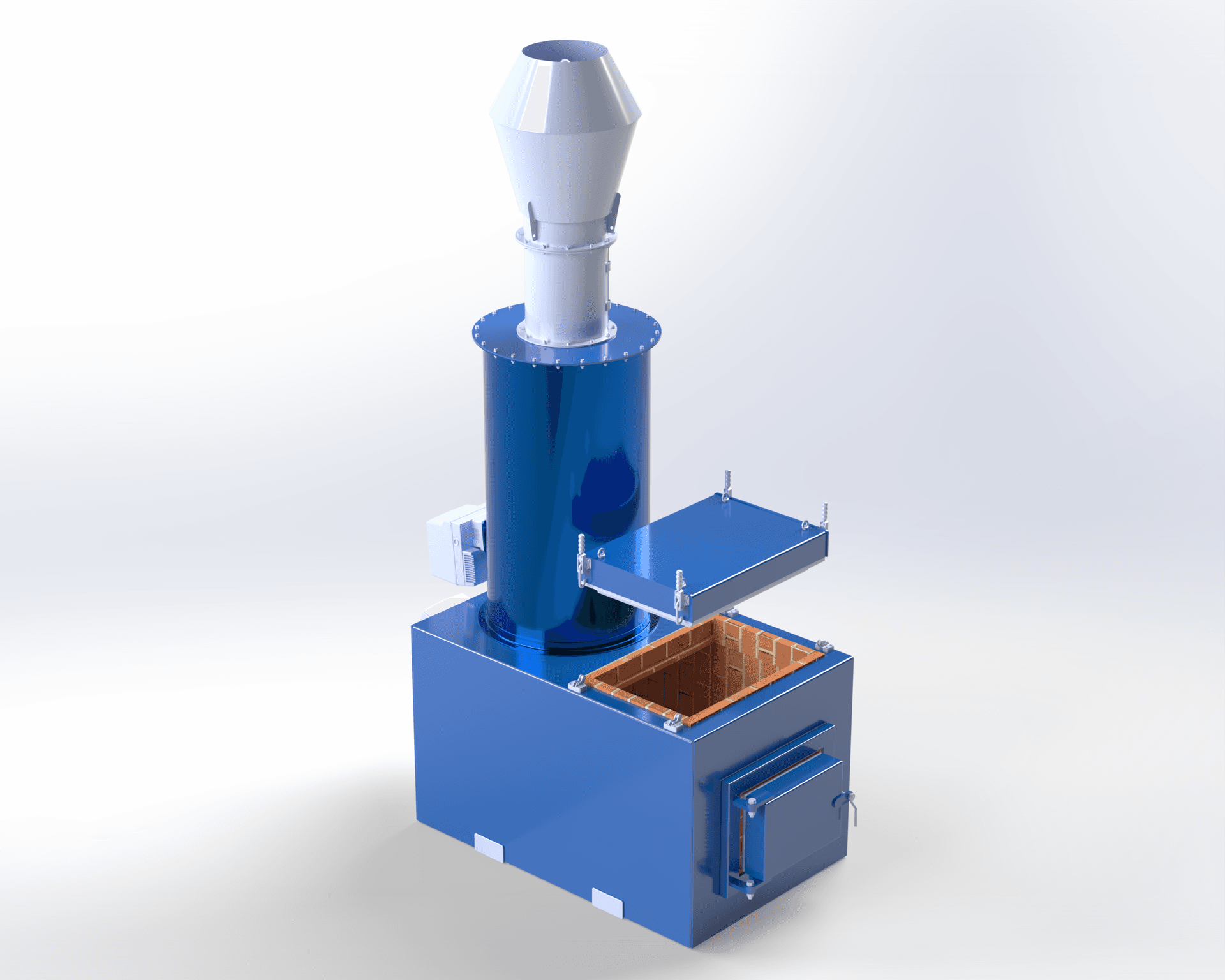
Dual-chamber unit
Primary chamber running 850–1,200°C with a secondary chamber holding flue gas above 850°C for two seconds — the Industrial Emissions Directive condition, met as built rather than as an option.
Burner set and fuel train
Configured for natural gas, LPG, diesel, biofuel or hydrogen. Fuel choice is a site decision; the combustion condition is identical whichever is specified.
IP6X control panel
PLC control with cycle logging, chamber thermocouples and interlocked charge door. The cycle record is what a destruction register entry is written against.
Coretex refractory lining
Monolithic castable lining rated for the full temperature range, replaceable in service rather than requiring the shell to be scrapped with it.
Stack and dispersion data pack
Stack supplied to the height your site-specific dispersion assessment calls for, with the emissions data the permit application has to reference.
Commissioning and operator training
On-site commissioning, a witnessed first burn, and training for the establishment personnel who will hold the charge-door key.
How One Burn Runs,
Start To Finish
One charge is one countable event. That is what makes a batch unit auditable and a continuous one not.
One Cycle,
Start To Finish
Adds reconciliation against the stores condemnation paperwork, and plans charges on volume rather than mass — textile fills the chamber long before it reaches the rated load.
Items are condemned through the normal stores procedure and held under existing control. The incinerator changes the endpoint, not the accounting that precedes it.
Garments are loaded intact — no unpicking, no badge separation. Charge sizes are usually volume-limited rather than mass-limited: textile is bulky, so a 300 kg chamber fills before 300 kg is reached.
Textile, laminate and printed card are destroyed structurally. The secondary chamber holds gas above 850°C for two seconds — and above 1,100°C where the synthetic content pushes halogenated organics past 1%, which laminated passes readily do.
Standard interlocked cool-down before ash-out. Loose textile burns quickly but the cycle time is set by the refractory, not by the charge.
Buttons, zips and pins come out of the ash as inert scrap. The cycle log and witness signature close the stores audit line against the condemned issue.
What You Can Burn —
And What You Can't
One charge takes the whole stream without pre-sorting. What must never enter it is a short, hard list.
Yes: accepted in a charge
No pre-sorting between these
- Condemned combat and service dressWhole garments charged as issued. Textile is bulky, so the chamber fills well before the weight rating — plan this stream in charges, not kilograms.
- Insignia, rank slides and badgesFormation badges, unit insignia, name tapes and identity flashes destroyed on the garment rather than picked off it by hand first.
- HeaddressBerets, headdress and headdress badges withdrawn with the issue they belong to.
- Identity and access cardsLaminated ID cards, access passes and visitor badges, laminate included — the layer that survives a shredder.
- Webbing and load-carrying equipmentPouches, webbing and personal load-carrying equipment condemned out of service, buckles and fastenings included.
- Colours and printed unit materialDamaged flags, pennants and unit colours withdrawn from use, plus printed unit material found with a condemned issue.
No: never charged
Not a permit question — these stay out
- Body armour plates and ballistic insertsComposite ceramics and aramid are not a combustion problem you want in a batch chamber. These have a specified disposal route of their own.
- Respirator canisters and NBC filtersCharged filter media has its own classification and route. Declare it separately rather than assuming a uniform charge covers it.
- Electronic devices and comms kit in pouchesBatteries and WEEE. Empty the webbing before it is charged — this is the most common accidental inclusion in this stream.
- Pyrotechnic stores in load-carrying equipmentSame rule as every stream here: certify the charge free of energetic material or it does not go in.
Can you legally burn uniform, insignia & id destruction on site?
Technically, yes: the chamber destroys almost everything on the accepted list at 850–1,200°C, and capability is rarely the constraint. Legally is a separate question. What your site is allowed to burn is set by your environmental permit from the Environment Agency, SEPA or NIEA and the waste codes written into it. The never-charged list is different again: those materials are out of scope for the unit or governed by a direction, and no permit wording brings them back in. Send us the codes you hold, or the ones you expect to apply for, and we will tell you which of this list they cover before anything is specified.
Send us your waste codesWhat size incinerator for 600 kg of condemned uniform?
Arithmetic on published model figures, not a customer reference. Your numbers go through the same steps.
How This
Was Worked Out
600 kg of condemned textile ÷ 250 kg per charge is nominally 3 charges, but textile reaches the top of the AMBI-250's chamber before it reaches the rating, so plan 3–4. Ash is 18–30 kg at 3–5%, with buttons, zips and pins left inert. Textile fills a chamber before it reaches the rated mass, so plan this stream on volume and expect more charges than the kilogram figure suggests.
3–4, textile is bulky
None
18–30 kg total
Buttons, zips, pins — inert
Send your daily or weekly arisings and we will confirm the model, the charge count and the permit route.
Related Products
& Services
Complementary equipment and engineering services for your process.
Sizing and background
- [TOOL]Work out the burn rate for your own arisings
- [TOOL]Size the combustion air and flue gas duty
- [BLOG]Fuel-to-air ratio in ammunition incinerators
- [BLOG]NOx reduction in ammunition incinerators
- [BLOG]Advanced process control for ammunition incinerators
- [BLOG]Integrating vibration analysis for incinerator predictive maintenance
- [BLOG]Advanced gas cleaning for ultra-low emission incinerators
Uniform, insignia & ID destruction Questions
Answered against the published figures for the models specified for this stream, not a generic range sheet.
Uniform withdrawn from service carries three things a textile recycler cannot be asked to manage: unit identity, individual identity, and in some cases a technical specification that is not public. Rank slides, formation badges, name tapes, ID cards and access passes all identify a person or a unit, and every one of them has a resale market that exists precisely because they are hard to obtain legitimately. Cutting the insignia off and recycling the garment sounds like the obvious answer and works until the volume is real. Once a store is condemning several hundred kilograms at a time, the separation step becomes the weak point — it is manual, it is dull, and what it misses goes out with the load. Destroying the whole item removes the step and the risk it carries. The material itself is straightforward to destroy: textile, polymer laminate, printed card and small metal fittings, all well within the range of a dual-chamber unit running 850–1,200°C with a two-second secondary retention. Buttons, zips and badges survive as inert metal and are recovered from the ash; everything carrying an image or a marking does not survive at all. The operational shape is the same as document destruction, and most establishments run it as the same task: a scheduled batch, a witness, a register entry, and 3–5% ash. Where a stores audit has to show what happened to a condemned issue, one charge equals one line.
600 kg of condemned textile ÷ 250 kg per charge is nominally 3 charges, but textile reaches the top of the AMBI-250's chamber before it reaches the rating, so plan 3–4. Ash is 18–30 kg at 3–5%, with buttons, zips and pins left inert. Textile fills a chamber before it reaches the rated mass, so plan this stream on volume and expect more charges than the kilogram figure suggests.
Because at volume the separation step is where it fails. Cutting badges and name tapes off several hundred kilograms of condemned issue is manual, repetitive work, and what it misses leaves with the load into a stream whose onward path nobody controls. Charging the item whole removes the step and the risk together.
Yes. Laminated cards, passes and printed identity material destroy completely at the operating condition. Because laminate raises the halogenated organic fraction, declare it in the permit application — above 1% the secondary chamber has to hold 1,100°C, which the units do as standard.
They do not combust. Metal fittings are recovered from the ash as inert scrap and leave through the site's normal metals route. Nothing recovered carries a legible marking.
Fewer kilograms than the rating suggests. Textile is bulky, so the chamber fills by volume well before it reaches 250 or 300 kg. Plan this stream on charges rather than on mass, and expect three to four cycles for a 600 kg condemned issue.
Where the stores audit requires it, yes, and the batch cycle supports it directly: one charge, one register entry, one signature. This is the same operating discipline used for classified document destruction and most establishments run the two as a single scheduled task.
No. Ballistic plates and aramid inserts are outside the scope of a batch waste incinerator and have their own specified disposal route. Strip them out with the electronics and batteries before webbing is charged.
Ready to
Incinerate?
Send the stream, the volume and the site constraints. We will confirm the model, the permit route, and what the specification has to say to satisfy the regulator.
- Identity material stays out of circulation
- No manual separation step
- Audit closes cleanly
- Metal fittings recovered inert