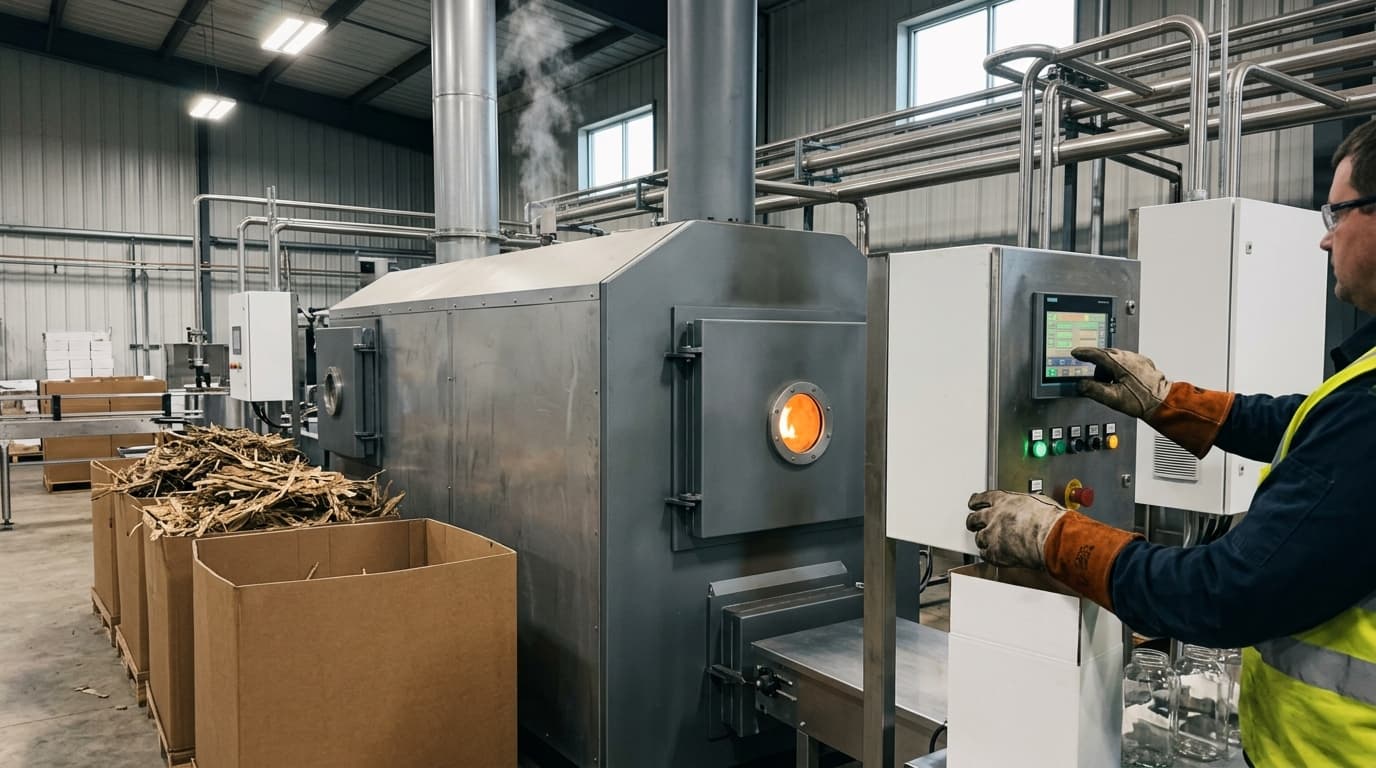
Agricultural Incinerators
5 agricultural waste streams on one permitted AgriBurn.
Most farm waste has a route: it is spread, composted, fed, recycled or collected. What arrives at an incinerator is the fraction that has lost its route — material under a plant health notice, vegetation that must not be moved off site, feed condemned out of the chain, bedding from a restricted building. AgriBurn units destroy that fraction where it arises, at a condition an open fire cannot reach.
Three Models,
One Solution
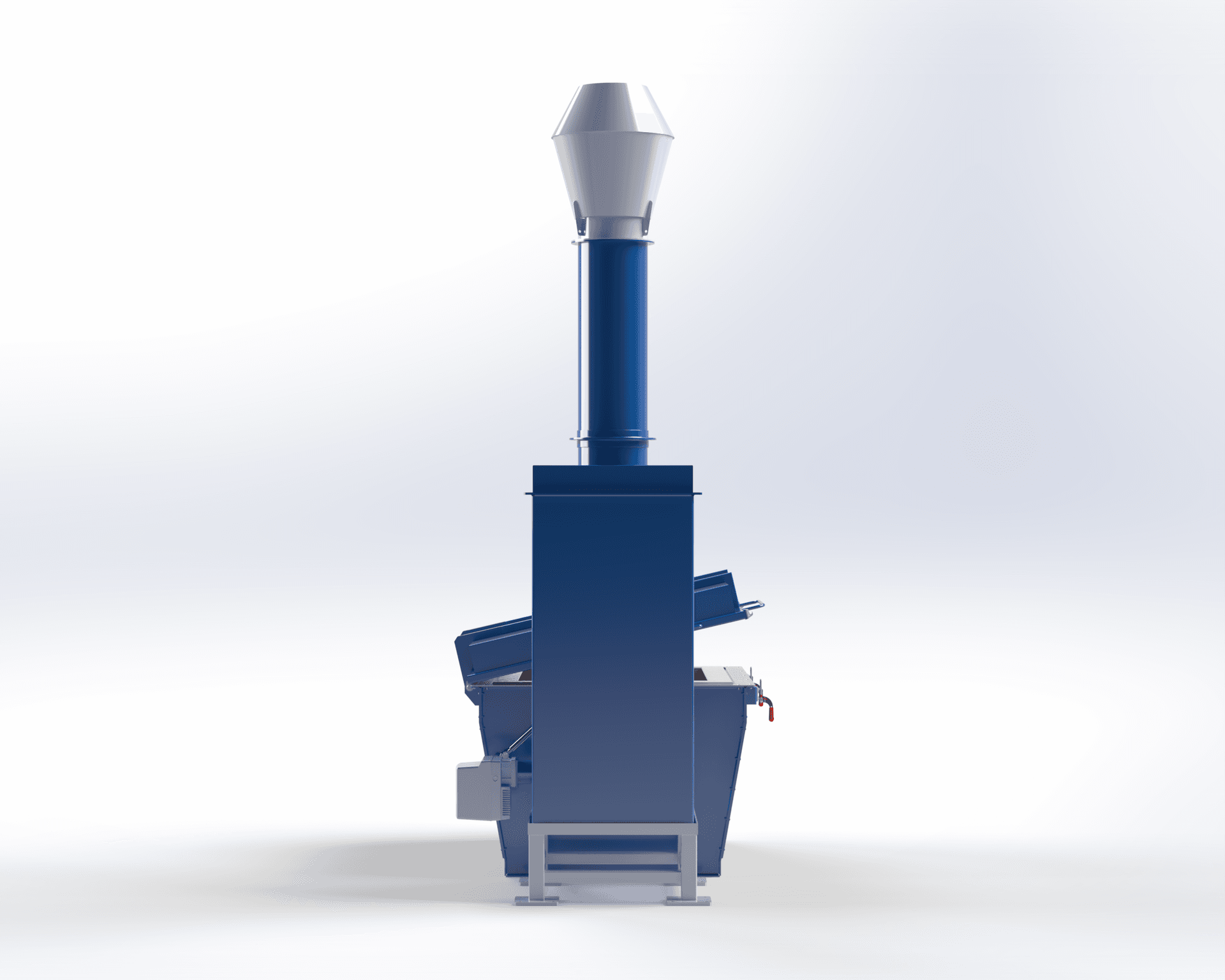
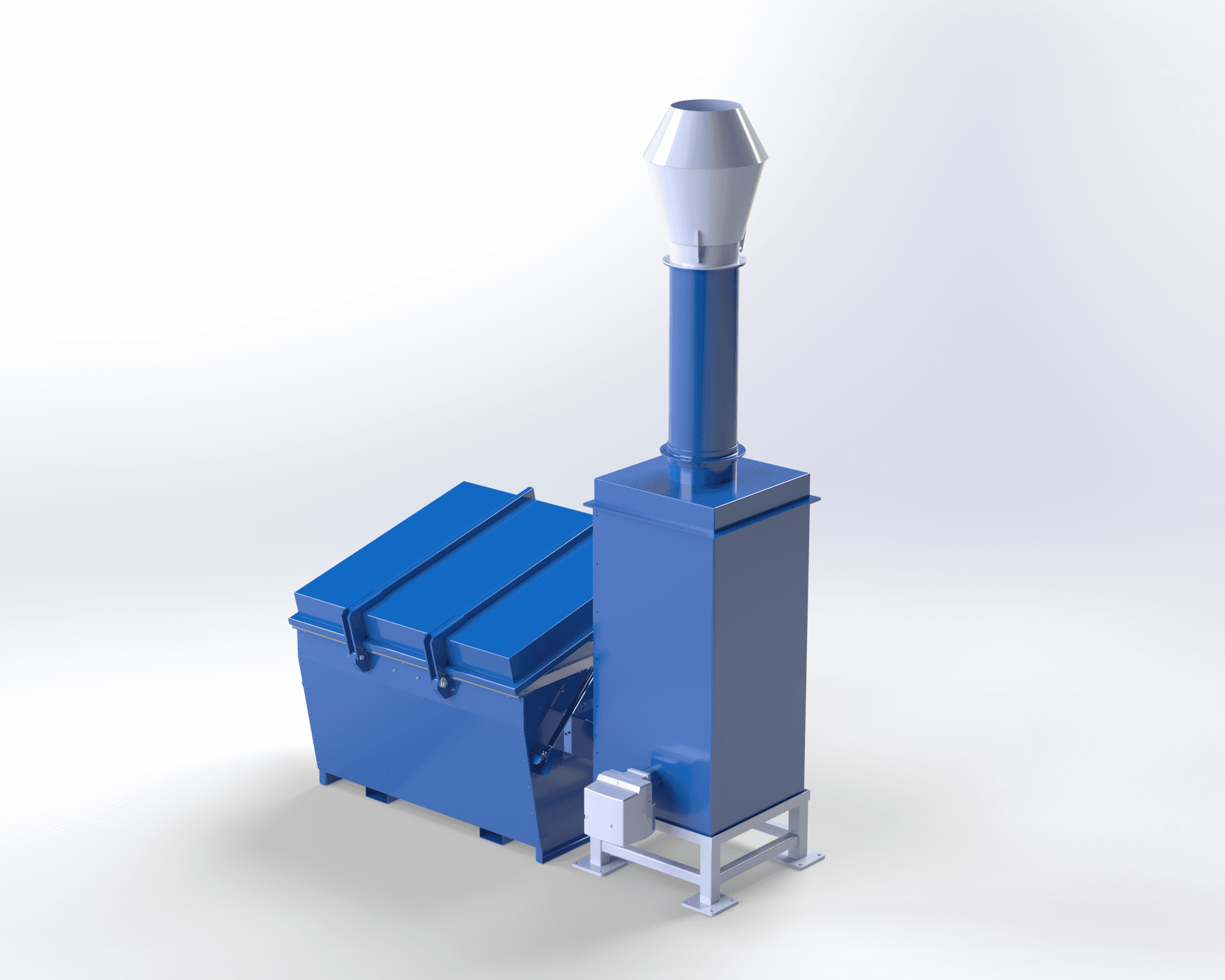
A 350 kg top-loading batch unit for farm and rural sites. Top loading suits bulky, awkward loads — bedding, crop residue, forestry waste — that a front door would fight, and the burn runs unattended once the chamber is charged.
450 kg per charge with a 1350 × 770 × 730 mm chamber. The middle AgriBurn, specified where a single daily burn has to clear a whole day of arisings rather than being run twice.
The largest AgriBurn at 500 kg per charge. Three burners across a 1540 mm chamber keep combustion even across a mixed, high-moisture agricultural load rather than burning a hot core and leaving unburnt edges.
5 Streams,
One Machine
All 5 destroy at the same condition, so one permitted AgriBurn covers the lot. What changes is the procedure and the waste codes.
Most crop residue is chopped, baled or ploughed in. The fraction that reaches an incinerator is the fraction that has to be destroyed rather than returned: a crop under a plant health notice, a glasshouse batch carrying a soil-borne pathogen, produce rejected at the pack-house with no feed or anaerobic-digestion outlet. AgriBurn units destroy it at a condition that kills pathogen and viable seed together.
Crop residue & plant waste in fullAdds a check on whether the load is under a plant health notice, and a cycle log kept against that notice. Volume, not weight, sets the charge size on baled or bulky residue.
Environmental permit
Required from the Environment Agency, SEPA or NIEA before the unit runs. An agricultural holding is not exempt because the waste is its own — a farm burning its own arisings in a permitted incinerator is still an operator, with the monitoring and record-keeping that comes with it.
Animal by-products approval where the load carries ABP
Manure-contaminated bedding and fallen stock are animal by-products under the retained ABP Regulation, and burning them needs the plant approved by APHA in addition to the environmental permit. A load of pure crop residue does not; a load of bedding out of a livestock building does. Know which one you are charging.
Open burning is not the fallback
The Crop Residues (Burning) Regulations restrict burning cereal straw and stubble in the open, and burning waste on a holding outside a permit or a registered exemption is an offence in its own right. Where a plant health notice requires destruction, the notice will specify what destruction means — a permitted incinerator satisfies it; a field fire generally does not.
Duty of care on the ash
Ash at 3–5% of input mass is still waste and still needs a transfer note if it leaves the holding. What changes is what it is: sterile mineral residue with no viable seed, rhizome or pathogen in it, rather than a controlled material that spreads what it touches.
What Ships
With The Unit
Identical whichever stream it is specified for. The operating procedure changes; the machine does not.
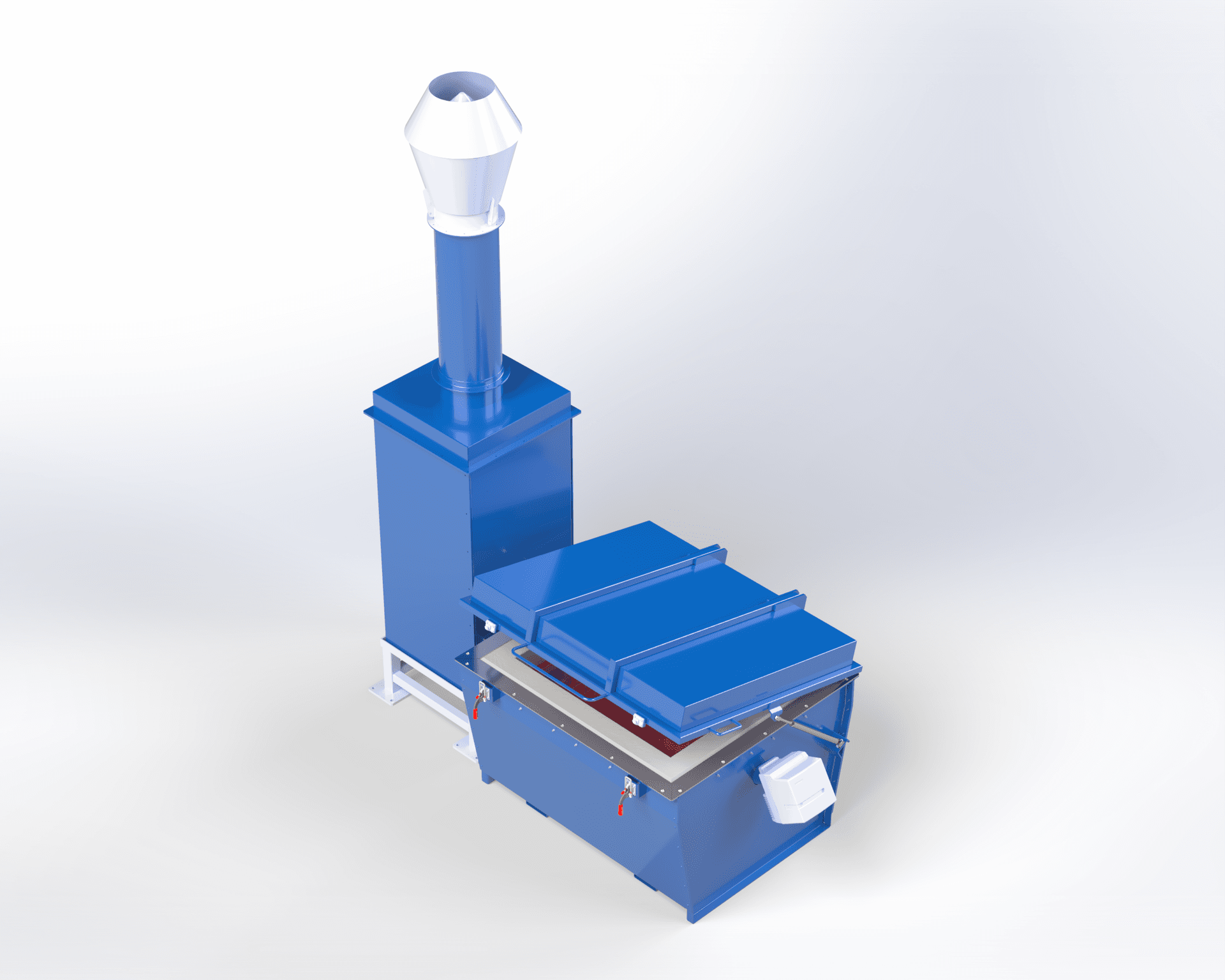
Dual-chamber unit
Primary chamber running 850–1,200°C with a secondary chamber holding flue gas above 850°C for two seconds — the Industrial Emissions Directive condition, met as built rather than as an option. This is the line between incineration and a bonfire, and it is the line the regulator draws too.
Three-burner set and fuel train
All three AgriBurn models carry three burners, configured for natural gas, LPG, diesel, biofuel or hydrogen. On a farm that usually means LPG or diesel, because that is what is already on site — fuel choice is a site decision and the combustion condition is identical whichever is specified.
Top-loading charge door
Bulky, awkward, tangled loads — bedding, brash, root balls, baled residue — are dropped in from above with a loader or grab rather than fed through a front door. Top loading is why these units take farm waste in the shape it actually arrives in.
IP6X control panel
PLC control with cycle logging and chamber thermocouples. Where a plant health notice or a feed withdrawal has to be evidenced, the cycle log is the record that the load reached and held the destruction condition.
Coretex refractory lining
Monolithic castable lining rated for the full temperature range, replaceable in service. Refractory is a wear item on any unit; on a farm unit taking wet, dirty, variable loads it is the item that decides service life.
Stack, dispersion data and commissioning
Stack supplied to the height your site-specific dispersion assessment calls for, with the emissions data the permit application references, plus on-site commissioning and operator training. Rural sites have neighbours and prevailing winds; the assessment is what sets the stack, not a catalogue figure.
How One Burn Runs,
Start To Finish
One charge is one countable event. That is what makes a batch unit auditable and a continuous one not.
The Same Cycle,
Whichever Stream
Every agricultural stream runs the cycle below. What differs between them is the procedure at the charge door and what the permit has to name — not the machine and not the combustion condition.
The unit is top-loaded with a loader, grab or by hand and the charge door closed. Farm loads are bulky before they are heavy: on the AGBI-500 the chamber is 1.19 m³ against a 500 kg rating, so baled straw, brash and bedding fill the box long before they reach the weight limit.
The primary chamber reaches operating temperature within 30 minutes and runs between 850°C and 1,200°C under starved-air conditions. Wet loads — green vegetation, fresh bedding, fish waste — spend the first part of the cycle driving off moisture before they burn, which is a fuel cost rather than a problem.
Combustion gases pass into the secondary chamber and are held above 850°C for two seconds. This is the condition that destroys plant pathogens, spores, viable seed and rhizome fragments rather than lofting them over the boundary the way an open fire does.
The unit cools with the door closed. At under 50 kg/h, heat-up, burn and cool-down make a full charge a cycle of roughly eight to eleven hours depending on the model — the practical planning unit on a farm is the cycle, not the hour.
Residue is raked out at 3–5% of input mass: sterile mineral ash with no viable biological material in it. Where the input was a plant-health or biosecurity load, that reduction from a controlled material to an inert residue is the entire point of the cycle.
What You Can Burn —
And What You Can't
Every stream has its own accepted list and its own exclusions. They sit on the 5 stream pages, not here.
Can you legally burn agricultural waste on site?
Technically, yes: the chamber destroys almost everything these streams produce at 850–1,200°C, and capability is rarely the constraint. What your site is allowed to burn is set by your environmental permit from the Environment Agency, SEPA or NIEA and the waste codes written into it, plus APHA approval, because animal by-products are regulated under their own rules. Open the stream you are dealing with for its accepted list and the materials that never go in whatever the permit says — or send us the codes you hold and we will tell you what they cover.
Send us your waste codesOne Machine,
All 5 Streams
What changes between streams is the operating procedure and the waste codes on the permit. The machine does not change.
Same Condition,
Every Stream
All 5 streams destroy at the same condition: 850–1,200°C in the primary chamber with flue gas held above 850°C for two seconds in the secondary. That is why one permitted AgriBurn covers the lot rather than needing a machine each. What differs is the procedure at the charge door and what the permit has to name.
These are batch units burning at under 50 kg/h, so a full charge is a complete cycle of roughly 8–11 hours across the range, first load to complete burn-down and confirmed at commissioning. Where a site runs several of these streams through one unit, size on the combined arisings rather than on whichever stream prompted the enquiry.
Charges = volume ÷ capacity. Days ≈ charges. Ash = 3–5% of what went in. Check the chamber volume as well as the weight rating: bulky loads fill the box first, dense ones reach the rating first.
Send your combined arisings across the streams you run and we will confirm the model, the charge count and the permit route.
Related Products
& Services
Complementary equipment and engineering services for your process.
Sizing and background
- [TOOL]Work out the burn rate for your own arisings
- [TOOL]Size the combustion air and flue gas duty
- [BLOG]Operating agricultural incinerators in compliance with local regulations
- [BLOG]Innovative designs for small-scale agricultural incinerators
- [BLOG]Disposing of agricultural packaging waste
- [BLOG]Integrating vibration analysis for incinerator predictive maintenance
- [BLOG]Advanced gas cleaning for ultra-low emission incinerators
Agriculture Questions
Answered against the published figures for the AgriBurn range, not a generic sheet.
An agricultural incinerator is a dual-chamber batch unit specified for farm waste that cannot be spread, composted, fed or collected. The primary chamber runs at 850–1,200°C under starved-air conditions; the secondary chamber holds the resulting flue gas above 850°C for two full seconds. That second chamber is the whole difference between an incinerator and a bonfire, and it is what a permit is written against. The material that ends up here is a small fraction of what a farm produces, and that is the honest framing. Straw is baled, muck is spread, silage wrap is collected, timber is chipped. Incineration is for the loads where those routes are closed: a crop under a plant health notice, knotweed arisings that become controlled waste the moment they are cut, a mortality event at a fish farm, grain condemned on mycotoxin, bedding out of a building under movement restriction. Two things make these loads awkward and they are not the same thing. Some are awkward because moving them is what spreads the problem — pathogens, spores, viable rhizome, notifiable disease. Others are awkward because nobody will take them: a condemned load has no onward market and a haulier needs a description before they will lift it. On-site destruction answers both, because the material stops existing on the holding that produced it. AgriBurn units are top-loading and batch-rated at 350, 450 and 500 kg per charge, burning at under 50 kg/h. Top loading matters more on a farm than anywhere else: brash, root balls, baled residue and tangled bedding go in from above with a loader in the shape they arrive in, rather than being cut down to fit a front door. Volume, not weight, is usually what fills the chamber.
Yes. Running an incinerator needs an environmental permit from the Environment Agency, SEPA or NIEA, and that applies to a farm burning its own arisings as much as to a commercial operator. Where the charge contains animal by-products — manure-contaminated bedding, fallen stock, fish mortalities — the plant also needs APHA approval under the retained ABP Regulation.
Because an open fire cannot hold 850°C for two seconds, and that condition is what destroys pathogens, spores and viable rhizome instead of lofting them over the boundary. Open burning of crop residue is separately restricted by regulation, and where a plant health notice requires destruction, it will normally be satisfied by a permitted incinerator and not by a field fire.
Size on the volume you have to clear per cycle, not on an hourly rate. These are batch units burning at under 50 kg/h, so a full charge is a complete cycle of roughly eight to eleven hours across the three models, which take 350, 450 and 500 kg per charge. Divide your standing volume by the capacity to get the number of charges, and allow a day per charge.
Often not — the chamber fills first. The AGBI-350 chamber is 0.48 m³, the AGBI-450 is 0.76 m³ and the AGBI-500 is 1.19 m³. Baled straw at roughly 120 kg/m³ reaches the top of an AGBI-500 at around 140 kg, well under its 500 kg rating, whereas grain at roughly 750 kg/m³ hits the weight limit with the chamber part-full. Size on whichever limit your material reaches first.
Yes, and it is the normal case on a farm. Green vegetation, fresh bedding and fish waste spend the first part of the cycle driving off moisture before they burn, which shows up as fuel consumption and cycle time rather than as a failed burn. Where material can be stood and drained first, it burns cheaper.
Mineral ash at 3–5% of input mass, sterile, with no viable seed, rhizome, spore or pathogen. It is still waste and still needs a transfer note if it leaves the holding, but it is inert residue rather than a controlled material.
Yes. Crop residue, invasive vegetation, bedding, notified timber and condemned feed all destroy at the same condition, so one permitted AgriBurn covers all six. What changes between them is the operating procedure, the waste codes on the permit, and whether APHA approval is also required for the loads carrying animal by-products.
Preservative-treated timber (creosote, CCA), agrochemical containers and pesticide residues, silage wrap and farm plastics, pressurised containers, batteries, asbestos sheeting from farm buildings, and any load whose route is a collection scheme rather than destruction. Each has its own reason, and each is listed on the relevant sub-sector page.
Ready to
Incinerate?
Send the stream, the volume and the site constraints. We will confirm the model, the permit route, and what the specification has to say to satisfy the regulator.
- Environmental permit
- Animal by-products approval where the load carries ABP
- Open burning is not the fallback
- Duty of care on the ash