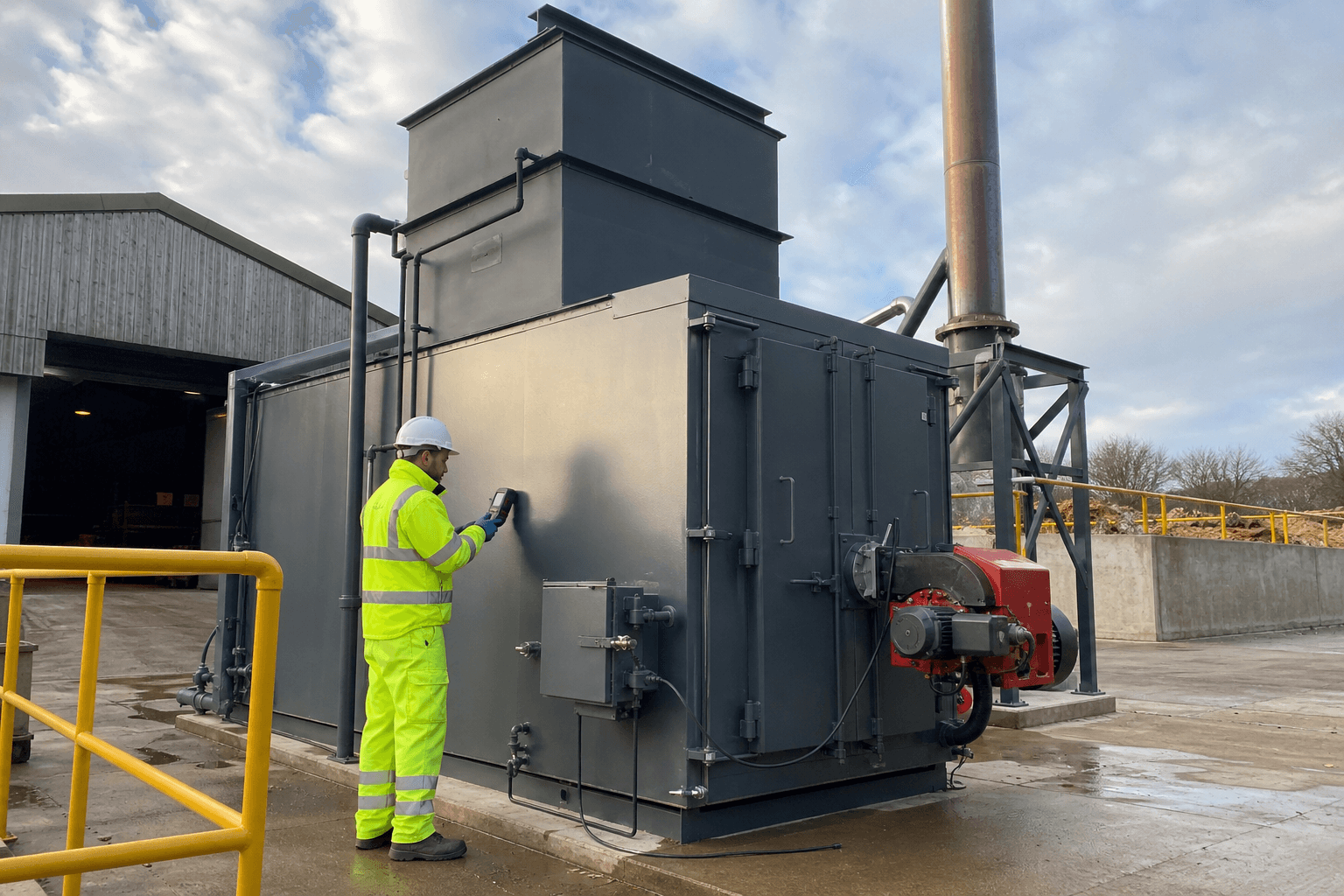
Poultry Incinerators
Daily house mortality and hatchery waste destroyed on the unit, without a collection point or a vehicle at the gate.
Poultry mortality is not an event, it is a daily figure. A 30,000-bird house losing 0.05% a day produces around fifteen birds every morning, and where those birds go decides whether the unit's biosecurity holds. AniBurn units destroy them on the site, the day they are picked up, without a collection point or a vehicle at the gate.
Three Models,
One Solution
150 kg per charge for veterinary practices, small farms and pet cremation. The chamber is tall relative to its load rating because carcass waste is bulky and wet — volume, not weight, is the binding constraint.
250 kg per charge with a 2880 mm chamber. The usual specification for a working livestock farm that needs fallen stock dealt with on site under biosecurity rules rather than held for collection.
The largest AniBurn: 300 kg per charge in a 3180 mm chamber. Sized for commercial pet crematoria and larger livestock units where a single daily cycle has to clear everything held in cold storage.
Which Model
Fits Your Volume
Pick a model to see what it clears in a day of poultry.
One charge a day clears a 30,000-bird house's morning walk — around fifteen birds, 30–45 kg — with room for a bad week. Feathered carcasses fill the chamber on volume long before the 150 kg rating.
APHA approval and environmental permit
Poultry carcasses are animal by-products, so the plant needs APHA approval under the retained ABP Regulation alongside an environmental permit from the Environment Agency, SEPA or NIEA. Two consents, two regulators.
Avian influenza: APHA directs
In a notifiable disease event APHA sets how birds are disposed of and how movements are controlled. Having an approved unit on site means the answer to 'how will you destroy them' already exists — the method still follows the direction.
Report wild bird finds, do not burn them
Dead wild birds on the holding, particularly waterfowl and birds of prey, are a surveillance signal. They are reported, not quietly disposed of; destroying one removes the sample APHA would test.
Duty of care on the ash
Ash needs a transfer note if it leaves the holding. From a poultry charge it is sterile mineral residue, which is what makes that movement an ordinary one rather than a biosecurity question.
Why Burn It
On Site
4 things change on the day this stream stops leaving the site.
No vehicle at the gate
A collection round visits several bird units in a day. On a site running dedicated footwear and vehicle disinfection, that lorry is the largest routine hole in the biosecurity plan. Destroying on site closes it.
The collection point stops existing
Carcasses waiting for a round attract wild birds, rodents and scavengers — the vectors avian influenza actually travels on. A same-day cycle removes the store, not just the carcasses.
A bad week is absorbed, not escalated
Mortality is not flat. A ventilation failure or a health knock multiplies the daily figure overnight, and that is the week when collection slots are hardest to get. On-site capacity does not need booking.
Hatchery waste has somewhere to go
Culled chicks, infertile eggs and shell are awkward for every route except destruction, and they arrive in volume on a fixed hatch cycle. The same unit clears them on the same schedule.
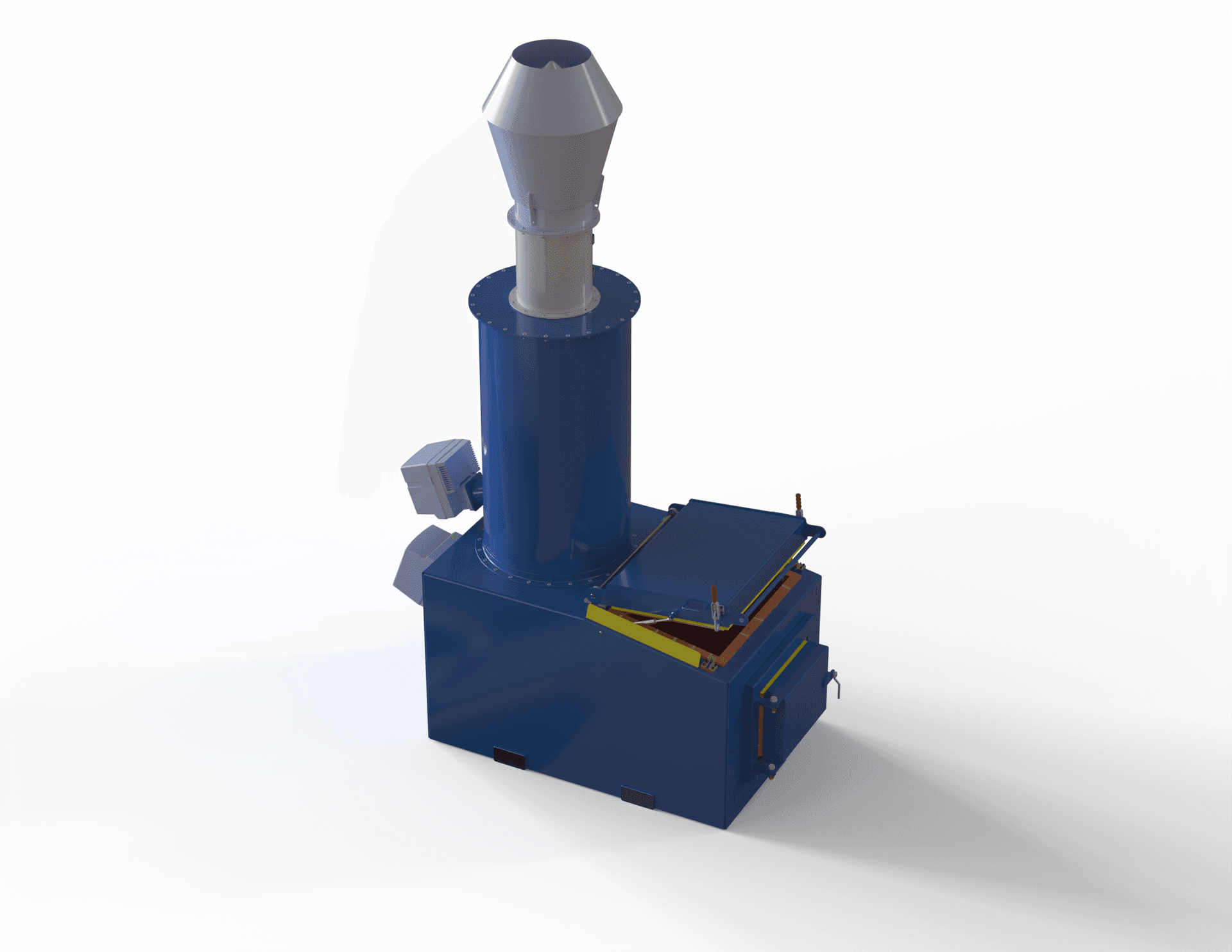
Dual-chamber unit
Primary chamber running 850–1,200°C with a secondary chamber holding flue gas above 850°C for two seconds. For animal by-products this is not a preference: it is the combustion condition an APHA-approved incineration plant has to meet.
Two-burner set and fuel train
All three AniBurn models carry two burners, configured for natural gas, LPG, diesel, biofuel or hydrogen. Carcass waste is wet, so burner duty on this stream is doing more evaporation than on any other — fuel choice is a site decision, the combustion condition is not.
What Ships
With The Unit
Identical whichever stream it is specified for. The operating procedure changes; the machine does not.
Dual-chamber unit
Primary chamber running 850–1,200°C with a secondary chamber holding flue gas above 850°C for two seconds. For animal by-products this is not a preference: it is the combustion condition an APHA-approved incineration plant has to meet.
Two-burner set and fuel train
All three AniBurn models carry two burners, configured for natural gas, LPG, diesel, biofuel or hydrogen. Carcass waste is wet, so burner duty on this stream is doing more evaporation than on any other — fuel choice is a site decision, the combustion condition is not.
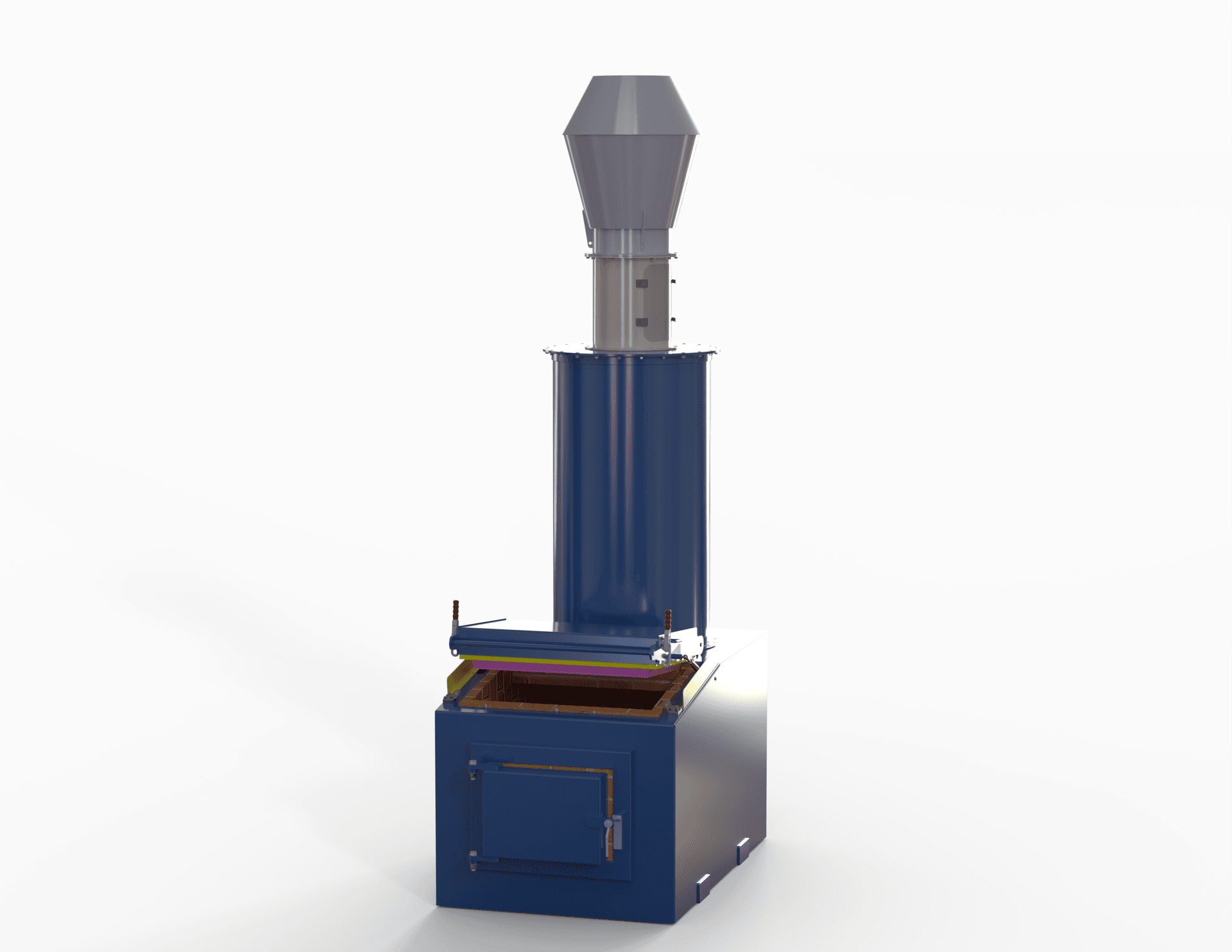
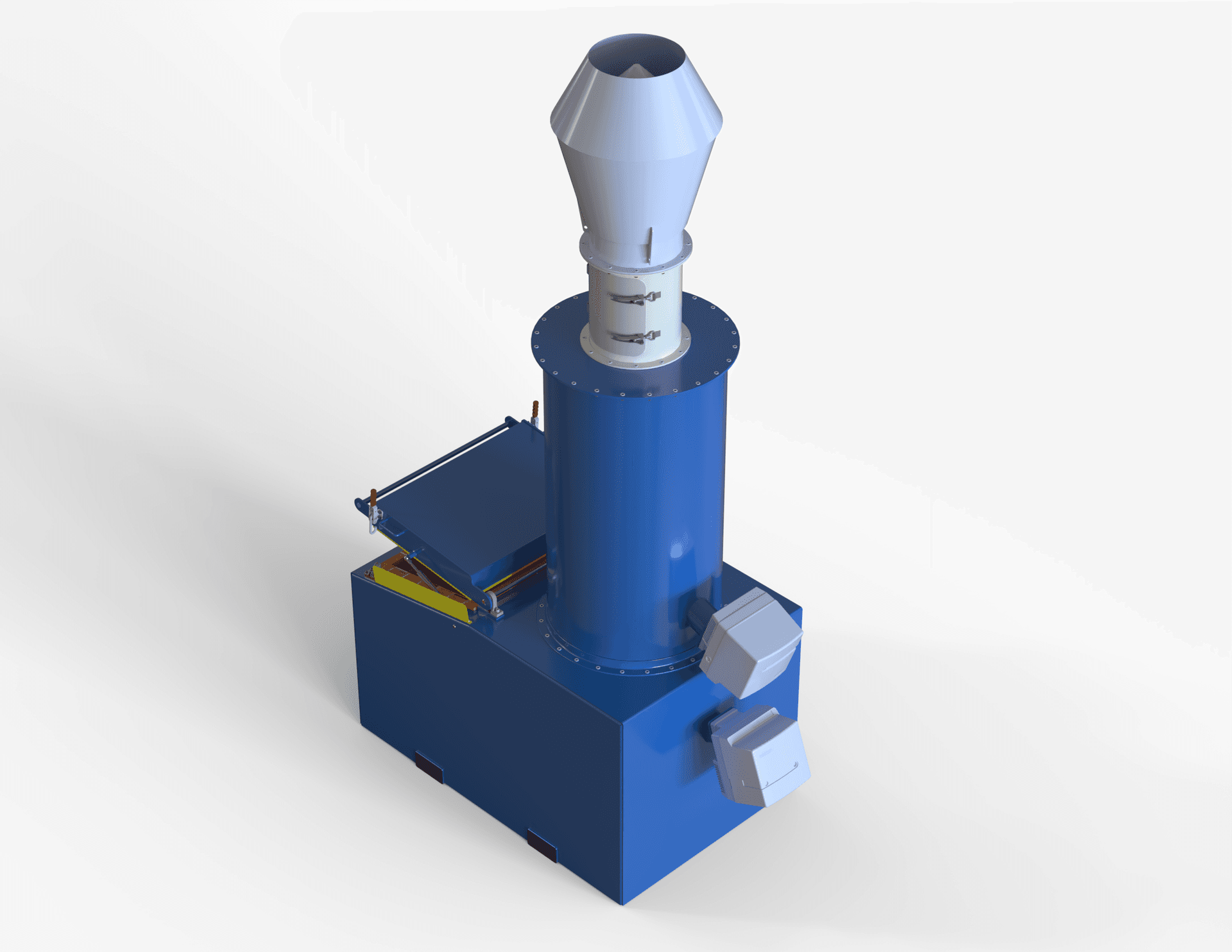
Top-loading charge door
Carcasses are dead weight and awkward to handle. Top loading means a carcass goes in from above with a hoist, loader or teleporter rather than being dragged through a door at chest height, which is the difference between a two-person job and a one-person one.
IP6X control panel
PLC control with cycle logging and chamber thermocouples. The cycle log is the record that a fallen-stock disposal, an APHA-directed cull or an individual pet cremation actually happened, and when.
Coretex refractory lining
Monolithic castable lining rated for the full temperature range, replaceable in service. Wet, fatty loads are the hardest duty a refractory sees, which makes lining quality the thing that decides service life on this stream rather than on any other.
Stack, dispersion data and commissioning
Stack supplied to the height your site-specific dispersion assessment calls for, with the emissions data the permit application references, plus on-site commissioning and operator training. On a livestock unit the neighbours are the reason the assessment matters.
How One Burn Runs,
Start To Finish
One charge is one countable event. That is what makes a batch unit auditable and a continuous one not.
One Cycle,
Start To Finish
Adds a daily rather than occasional cycle, and APHA direction during an avian influenza event. Birds are light and bulky, so the charge fills on volume long before the rating.
Birds go from the house to the unit on the daily walk rather than into a store. The whole biosecurity case for this stream rests on there being no interval and no collection point.
Bins tip in from above rather than being carried through a door. Watch volume, not weight: feathered carcasses fill the chamber long before a 150, 250 or 300 kg rating is reached.
Primary combustion at 850–1,200°C with flue gas held above 850°C for two seconds in the secondary chamber. That condition destroys avian pathogens along with the carcass rather than concentrating them in a heap.
The unit cools with the door closed. On a daily routine the cycle is planned around the morning walk, so the burn runs through the day and the unit is clear for the next one.
3–5% sterile mineral ash. Keep the cycle log against the daily mortality record — during an avian influenza investigation those two records are read together.
What You Can Burn —
And What You Can't
One charge takes the whole stream without pre-sorting. What must never enter it is a short, hard list.
Yes: accepted in a charge
No pre-sorting between these
- Daily house mortalityThe routine pick-up from broiler, layer and breeder houses, plus birds culled on welfare grounds during a house walk. Same-day clearance is the reason the unit is on site.
- Hatchery wasteCulled chicks, infertile eggs and shell — a stream that arrives daily and does not keep well in a bin.
- Thinning and depopulation casualtiesLosses at thinning, catching and loading, within the charge rating. These arrive in a burst rather than a trickle, which is what to size against.
- Seasonal and small-flock lossesTurkey, duck and goose mortality from seasonal units, free-range and pastured losses, and game bird rearing losses held on a poultry holding.
- Egg and product wasteEgg waste and broken product with no processing route left open to it.
- Litter recovered with a carcassBedding lifted with the bird rather than picked off it — it goes into the same charge.
No: never charged
Not a permit question — these stay out
- A full house depopulationA capacity limit, not a rule. Tens of thousands of birds is tens of tonnes; at 150–300 kg per charge and one charge a day, that is a bulk disposal route arranged with APHA, not an on-farm unit.
- Whole-house litterHundreds of tonnes with an established land-spreading and biomass route. Litter recovered with a carcass is fine; a shed clear-out is a different job with a different answer.
- Carcasses under an APHA direction that says otherwiseDuring a notifiable disease event APHA directs disposal, and the direction is the specification. An approved unit on site is a way of complying with it, never a way around it.
- Feed bags, packaging and egg traysPolymer and moulded fibre packaging melt or foul the chamber, and film can carry halogenated content that changes the permit condition. They have collection routes.
- Veterinary sharps and medicine containersClinical waste from a livestock unit has its own container and its own route. It should not arrive at the charge door mixed into a mortality bin.
- Dead birds found outside the unitWild bird carcasses on the holding are a notifiable-disease signal, not a disposal task. Report them before they are moved — picking one up and burning it destroys the evidence APHA needs.
Can you legally burn poultry on site?
Technically, yes: the chamber destroys almost everything on the accepted list at 850–1,200°C, and capability is rarely the constraint. Legally is a separate question. What your site is allowed to burn is set by your environmental permit from the Environment Agency, SEPA or NIEA and the waste codes written into it, plus APHA approval, because animal by-products are regulated under their own rules. The never-charged list is different again: those materials are out of scope for the unit or governed by a direction, and no permit wording brings them back in. Send us the codes you hold, or the ones you expect to apply for, and we will tell you which of this list they cover before anything is specified.
Send us your waste codesWhat size incinerator for a 30,000-bird poultry house?
Arithmetic on published model figures, not a customer reference. Your numbers go through the same steps.
How This
Was Worked Out
30,000 birds at a typical 0.05% daily mortality = ≈15 birds, or 30–45 kg — one part-loaded ABI-150 charge, leaving 1–2 kg of ash at 3–5% and no collection vehicle at the gate. The mortality rate here is typical rather than measured — substitute your own daily figure. Size on a bad week rather than an average one: the point of on-site capacity is the week you cannot book a collection.
1, part-loaded
1–2 kg
None
Send your daily or weekly arisings and we will confirm the model, the charge count and the permit route.
Related Products
& Services
Complementary equipment and engineering services for your process.
Sizing and background
- [TOOL]Work out the burn rate for your own arisings
- [TOOL]Size the combustion air and flue gas duty
- [BLOG]Optimising animal carcass incinerators for UK bio-security
- [BLOG]The long-term operational costs of animal carcass incinerators
- [BLOG]Training programmes for animal incinerator operators
- [BLOG]Minimising the environmental impact of animal incinerators
- [BLOG]Agricultural incinerators and aquaculture waste
Poultry Questions
Answered against the published figures for the models specified for this stream, not a generic range sheet.
A poultry incinerator is an APHA-approved dual-chamber unit sized for the mortality a bird unit produces as a matter of routine: daily pick-ups from broiler, layer and breeder houses, hatchery waste including culled chicks, infertile eggs and shell, and the birds condemned at thinning or depopulation. The defining feature of this stream is that it is continuous and predictable rather than exceptional. Every commercial house has a daily mortality figure, and the operator knows roughly what it is. That makes the disposal question an operational one — where do today's birds go, and what has to arrive on site for them to leave — rather than a contingency plan. Biosecurity is the reason on-site destruction wins on a poultry unit specifically. Bird units run the tightest biosecurity in UK livestock: dedicated footwear, vehicle disinfection, restricted entry. A collection round that visits several bird units in a day is the single largest routine breach of that discipline, and the collection point where the carcasses wait is a magnet for wild birds and vermin — the exact vectors avian influenza travels on. Birds are light. A 150 kg charge is a great many birds by count, and the chamber fills on volume well before the rating on feathered carcasses. Where the unit genuinely earns its place is in the arithmetic of a daily cycle: fifteen or forty birds a day is a routine burn, and the same unit absorbs a bad week without a phone call to anyone.
30,000 birds at a typical 0.05% daily mortality = ≈15 birds, or 30–45 kg — one part-loaded ABI-150 charge, leaving 1–2 kg of ash at 3–5% and no collection vehicle at the gate. The mortality rate here is typical rather than measured — substitute your own daily figure. Size on a bad week rather than an average one: the point of on-site capacity is the week you cannot book a collection.
By weight, a great many — by volume, fewer than you would think. Feathered carcasses are light and bulky, so the chamber fills well before the 150, 250 or 300 kg rating is reached. For a daily mortality routine that is rarely the constraint; for a thinning casualty batch, check volume first.
Yes, and that is the normal pattern on a bird unit. One cycle occupies most of a working day at under 50 kg/h, so the burn is usually planned around the morning house walk and runs through the day.
It removes the vehicle movement and the collection point, which are the two routine transmission routes. But APHA directs disposal during a notifiable disease event, and a full-house depopulation is beyond a 150–300 kg batch unit — that is a bulk route arranged with them.
Yes. Poultry carcasses are animal by-products, and they may only be incinerated in a plant approved under the retained ABP Regulation. That is in addition to the environmental permit, which is a separate consent from a different regulator.
Culled chicks, infertile eggs and shell are all accepted and arrive on a predictable hatch cycle, which makes them easy to schedule. Egg content is wet and costs fuel; drained and mixed with carcass material it burns without difficulty.
Litter recovered alongside a carcass, yes. A whole-house clear-out, no — that is hundreds of tonnes with an established land-spreading or biomass route, and it would be an expensive way to use a batch incinerator.
Report it rather than burn it. Dead waterfowl and birds of prey are avian influenza surveillance signals, and destroying one removes the sample APHA would want to test. Follow the reporting route first.
Collection is a per-visit or per-tonne charge with no capital cost; incineration is capital plus fuel with no per-carcass fee. The case for the unit is rarely price alone — it is that no vehicle enters the unit and no carcasses wait at a collection point.
Ready to
Incinerate?
Send the stream, the volume and the site constraints. We will confirm the model, the permit route, and what the specification has to say to satisfy the regulator.
- No vehicle at the gate
- The collection point stops existing
- A bad week is absorbed, not escalated
- Hatchery waste has somewhere to go