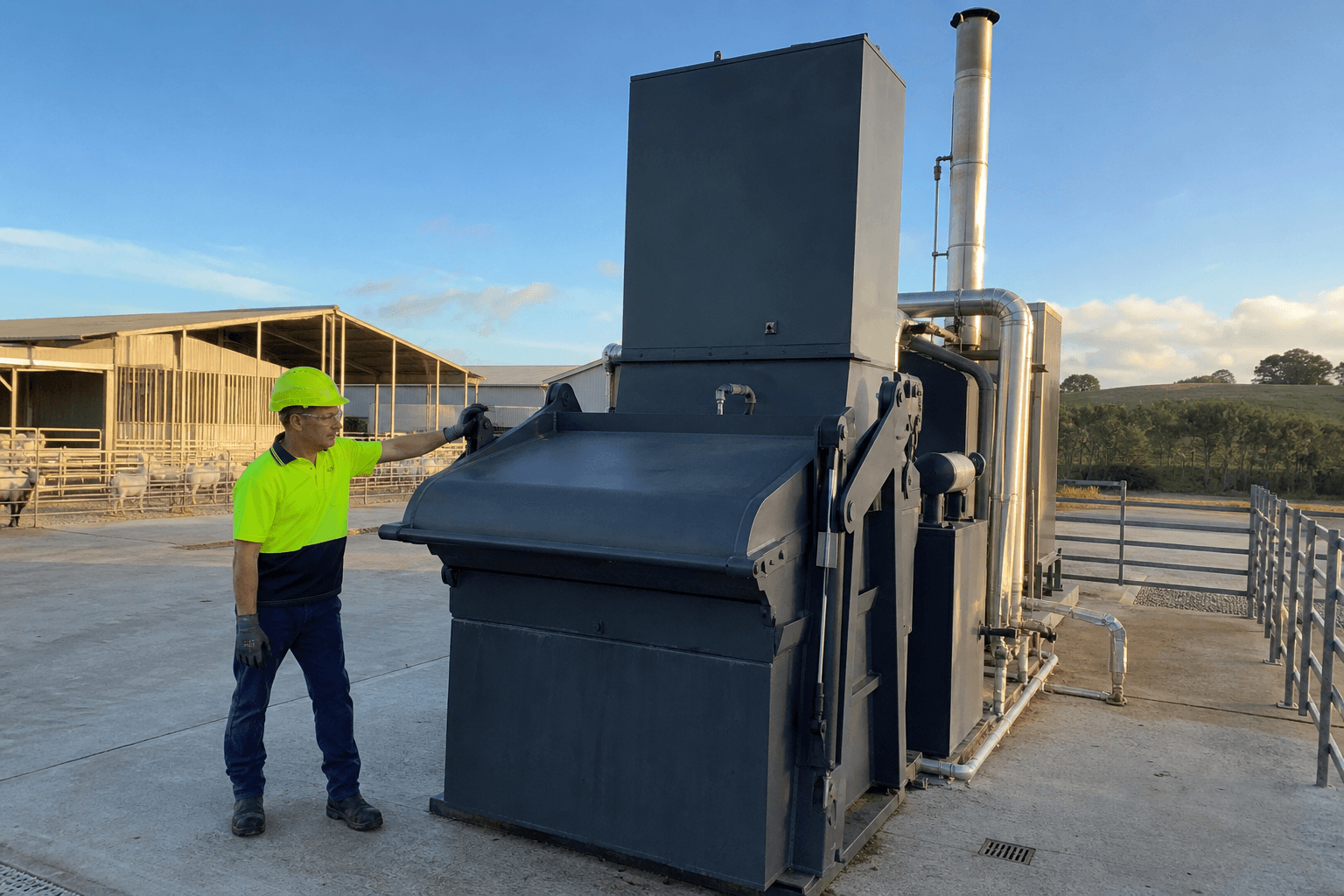
Goat Incinerators
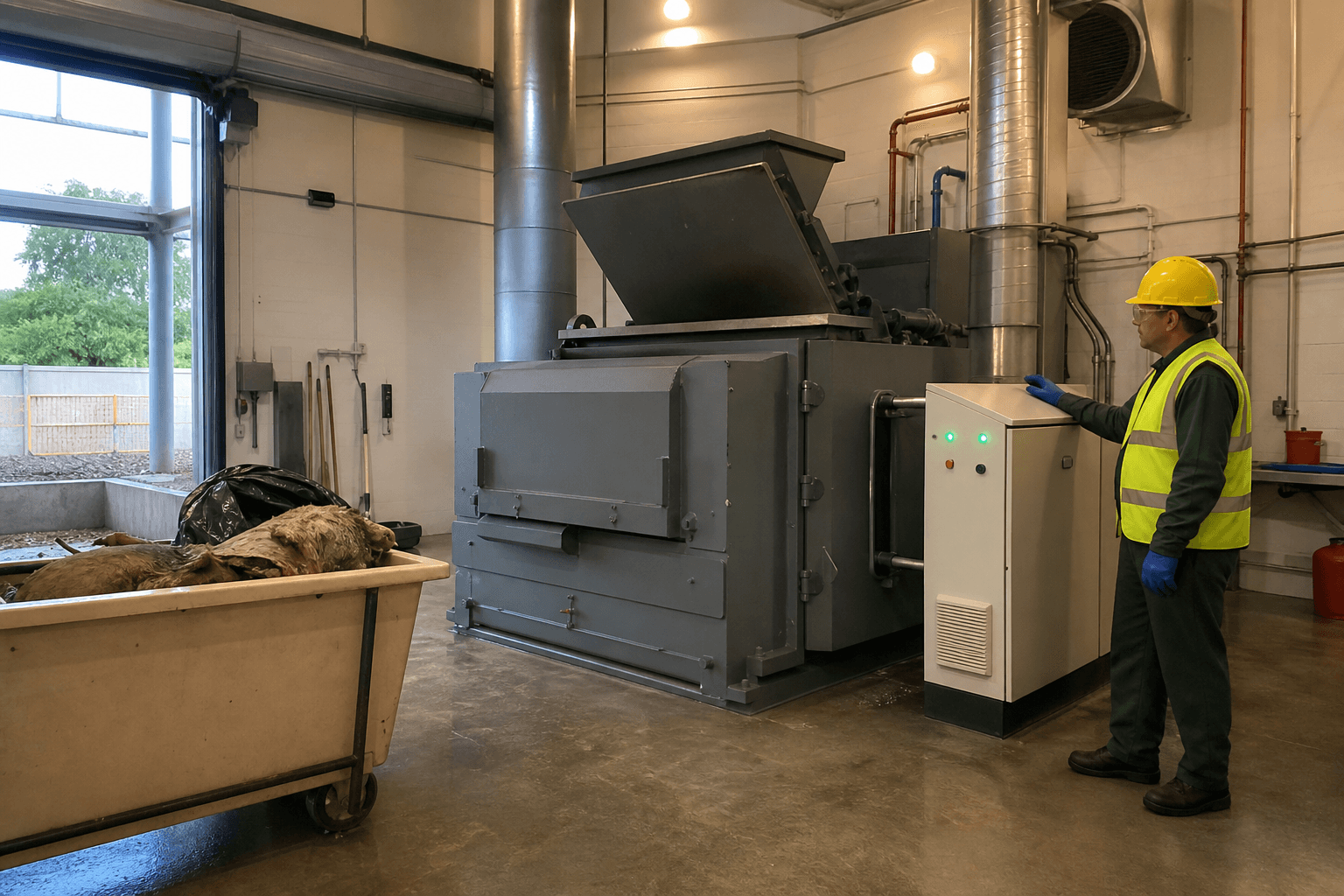
Kid losses and fallen adults destroyed on the unit, where a housed dairy herd's biosecurity depends on nothing waiting at the gate.
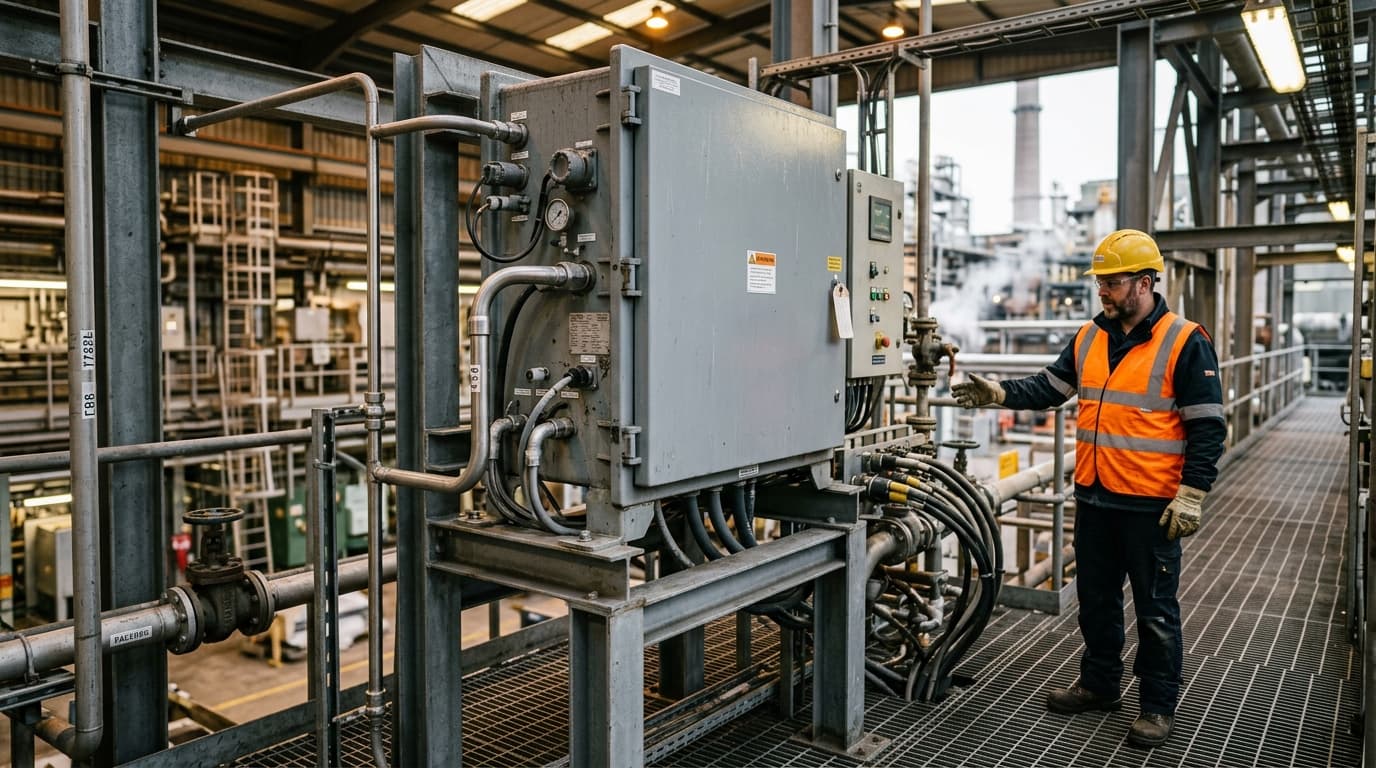
Commercial dairy goat units are large, housed and intensively managed, and the disease pressures that come with that — CAE, Johne's, cryptosporidium in kids — make holding carcasses for collection the wrong answer. AniBurn units destroy kid losses and fallen adults on the unit, in a housed environment where biosecurity is the whole management model.
Three Models,
One Solution
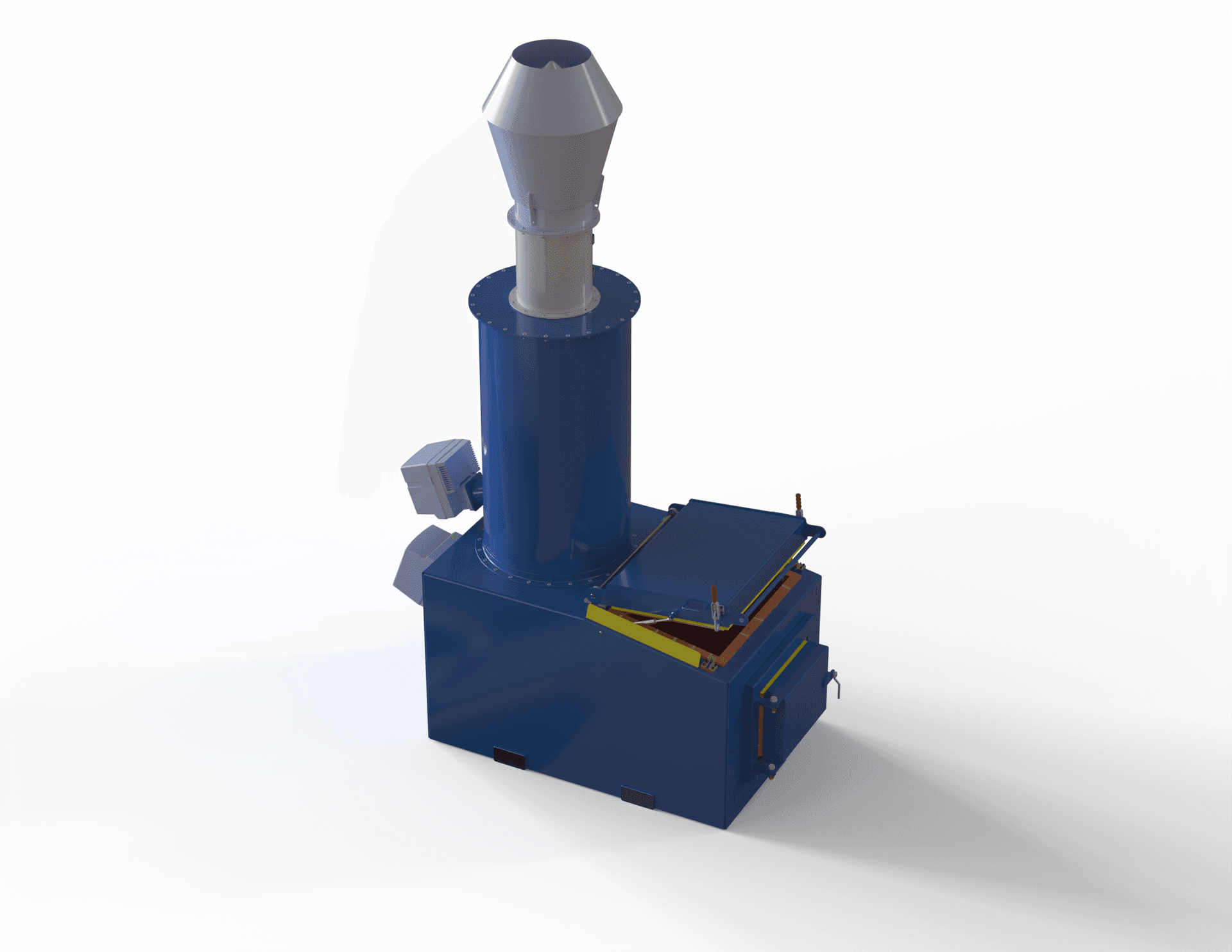
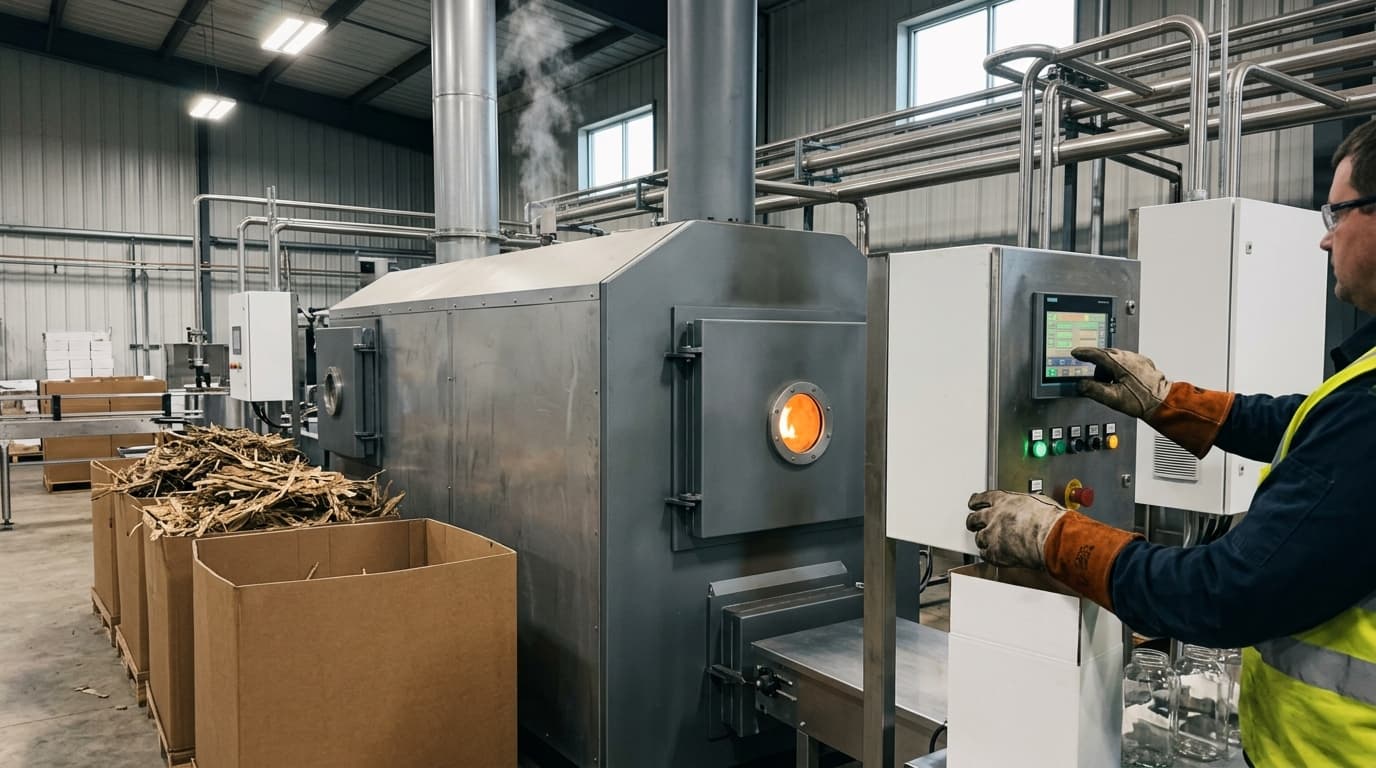
150 kg per charge for veterinary practices, small farms and pet cremation. The chamber is tall relative to its load rating because carcass waste is bulky and wet — volume, not weight, is the binding constraint.
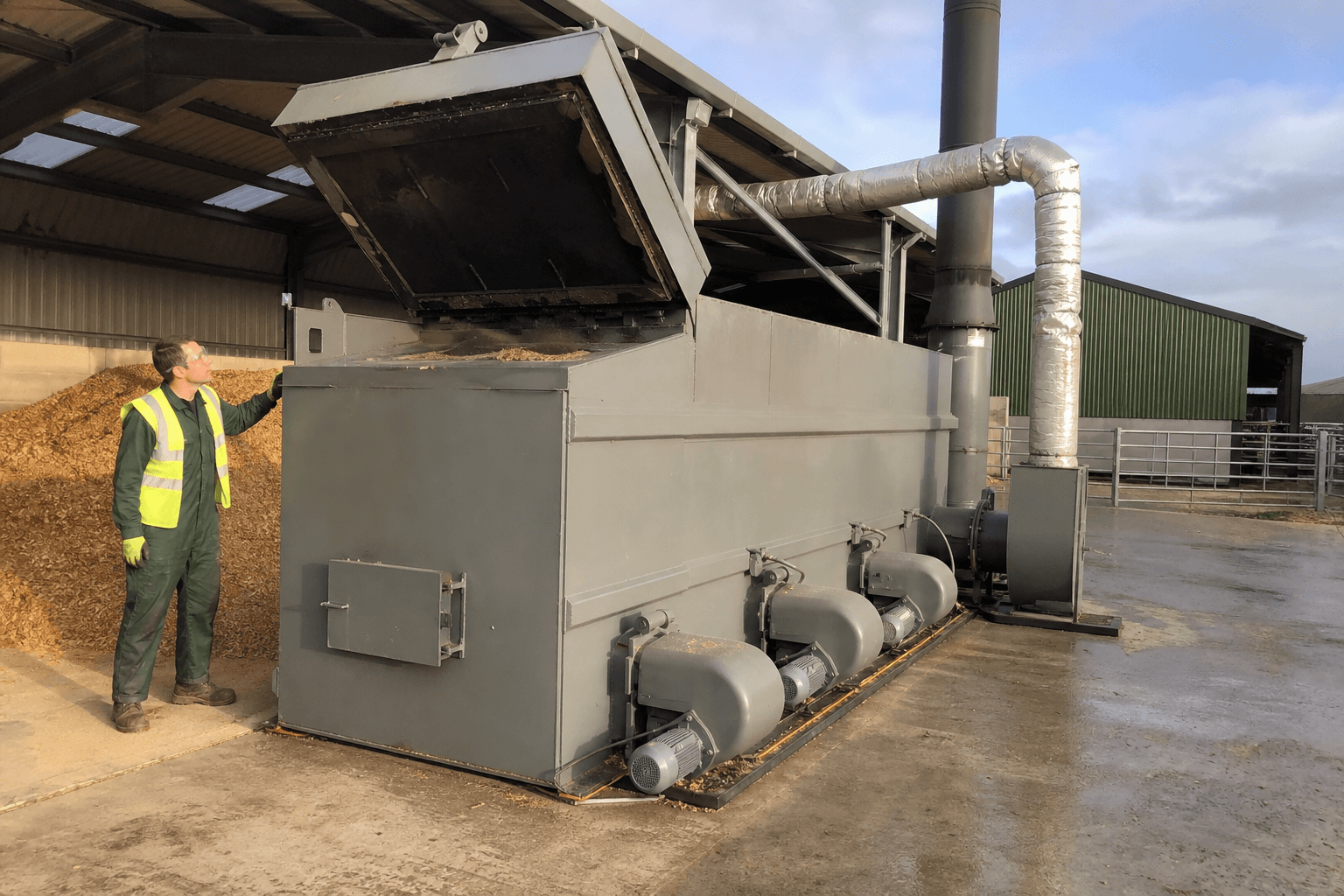
250 kg per charge with a 2880 mm chamber. The usual specification for a working livestock farm that needs fallen stock dealt with on site under biosecurity rules rather than held for collection.
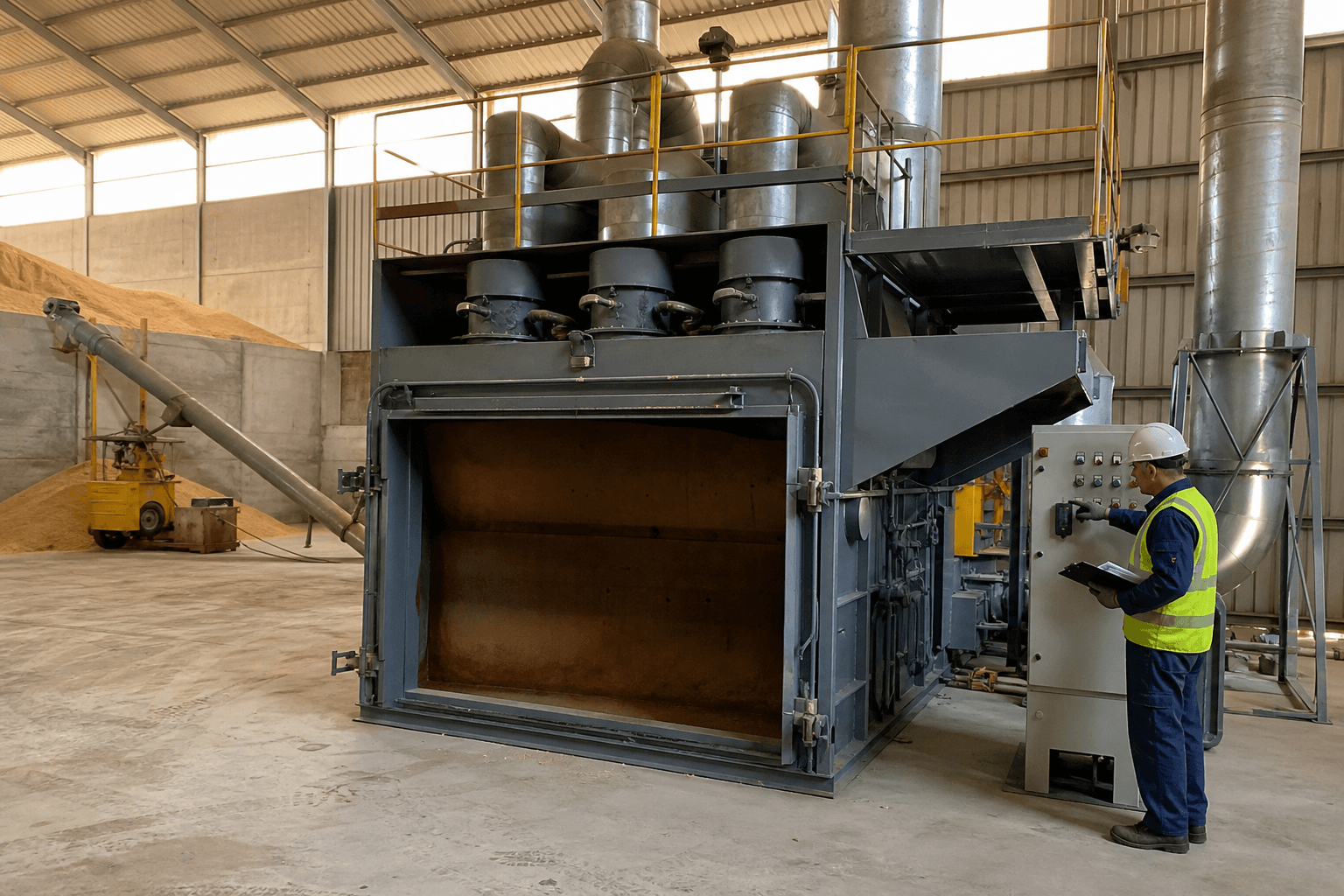
The largest AniBurn: 300 kg per charge in a 3180 mm chamber. Sized for commercial pet crematoria and larger livestock units where a single daily cycle has to clear everything held in cold storage.
Which Model
Fits Your Volume
Pick a model to see what it clears in a day of goats.
A kidding-season week on a housed dairy unit, where biosecurity depends on nothing waiting at the gate for a round.
TSE surveillance applies to goats
Goats over 18 months sit in the same surveillance class as sheep, and scrapie in goats is a live consideration. Where sampling is required it happens before destruction, not after.
APHA approval and environmental permit
Goat carcasses are animal by-products: the plant needs APHA approval under the retained ABP Regulation and an environmental permit from the Environment Agency, SEPA or NIEA.
Health scheme records
For an accredited CAE or Johne's herd, mortality and disposal records form part of what the scheme reviews. A dated cycle log against the herd record is the cleanest way to hold that up.
Burial is not permitted
On-farm burial of fallen stock has been unlawful since 2003 outside designated remote areas, and small herd size makes no difference to that.
Why Burn It
On Site
4 things change on the day this stream stops leaving the site.
Housed herds cannot afford the vehicle
A commercial dairy goat unit's biosecurity model is control of contact. A collection lorry that has been at other holdings arriving at the gate is the largest routine exception to it.
Kidding losses come in a wave
Like lambing, kidding concentrates the year's mortality into a short window. That is when collection is least convenient and when carcasses sitting near young stock matter most.
Health scheme accreditation stays intact
CAE and Johne's accreditation depend on documented control of movements and contacts. Destroying on site removes an entry from the list of things that have to be justified.
Small numbers, long distances
For fibre herds and smallholdings the driver is different: a handful of animals a long way from a round, where a collection call-out for one carcass is disproportionate.
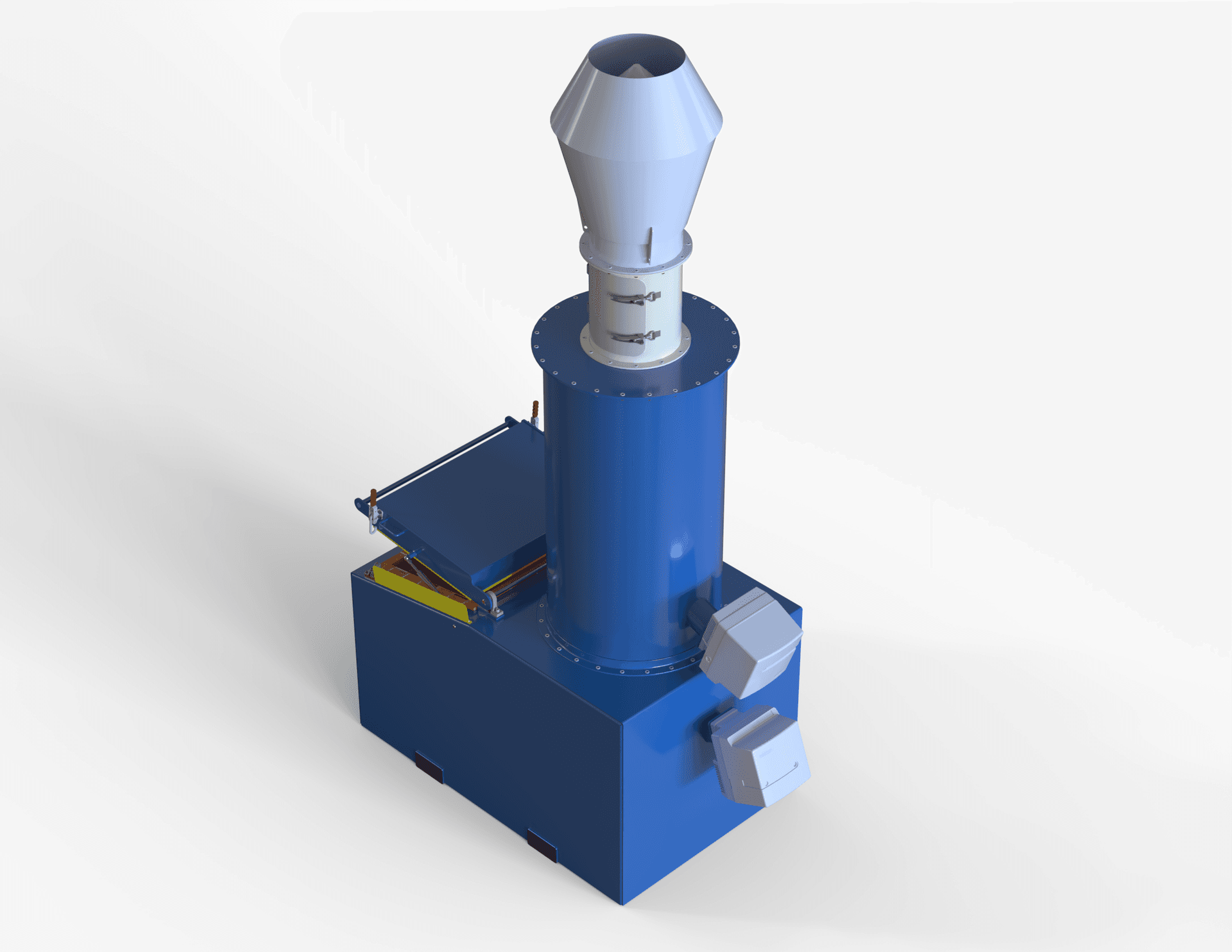
Dual-chamber unit
Primary chamber running 850–1,200°C with a secondary chamber holding flue gas above 850°C for two seconds. For animal by-products this is not a preference: it is the combustion condition an APHA-approved incineration plant has to meet.
Two-burner set and fuel train
All three AniBurn models carry two burners, configured for natural gas, LPG, diesel, biofuel or hydrogen. Carcass waste is wet, so burner duty on this stream is doing more evaporation than on any other — fuel choice is a site decision, the combustion condition is not.
What Ships
With The Unit
Identical whichever stream it is specified for. The operating procedure changes; the machine does not.
Dual-chamber unit
Primary chamber running 850–1,200°C with a secondary chamber holding flue gas above 850°C for two seconds. For animal by-products this is not a preference: it is the combustion condition an APHA-approved incineration plant has to meet.
Two-burner set and fuel train
All three AniBurn models carry two burners, configured for natural gas, LPG, diesel, biofuel or hydrogen. Carcass waste is wet, so burner duty on this stream is doing more evaporation than on any other — fuel choice is a site decision, the combustion condition is not.
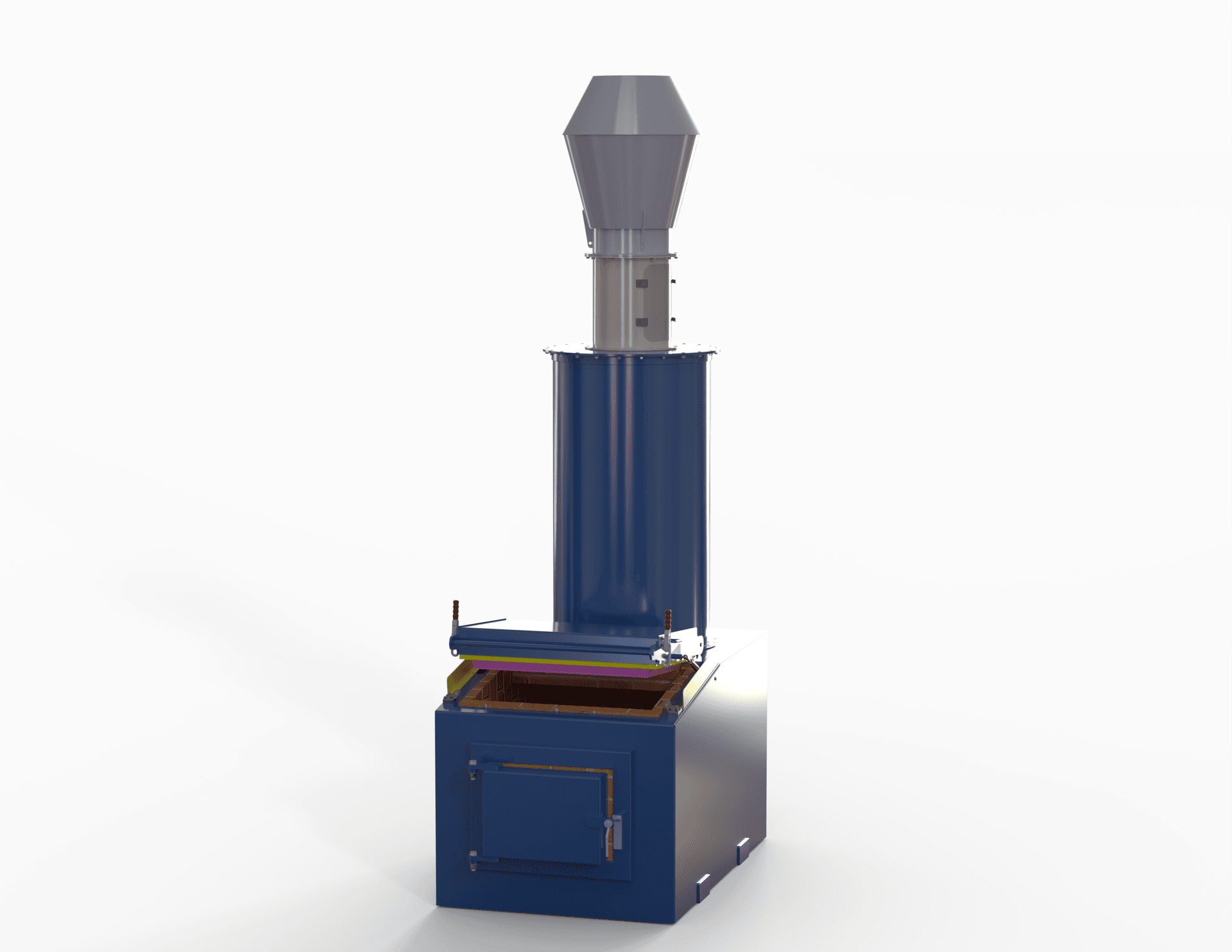
Top-loading charge door
Carcasses are dead weight and awkward to handle. Top loading means a carcass goes in from above with a hoist, loader or teleporter rather than being dragged through a door at chest height, which is the difference between a two-person job and a one-person one.
IP6X control panel
PLC control with cycle logging and chamber thermocouples. The cycle log is the record that a fallen-stock disposal, an APHA-directed cull or an individual pet cremation actually happened, and when.
Coretex refractory lining
Monolithic castable lining rated for the full temperature range, replaceable in service. Wet, fatty loads are the hardest duty a refractory sees, which makes lining quality the thing that decides service life on this stream rather than on any other.
Stack, dispersion data and commissioning
Stack supplied to the height your site-specific dispersion assessment calls for, with the emissions data the permit application references, plus on-site commissioning and operator training. On a livestock unit the neighbours are the reason the assessment matters.
How One Burn Runs,
Start To Finish
One charge is one countable event. That is what makes a batch unit auditable and a continuous one not.
One Cycle,
Start To Finish
Adds TSE surveillance for goats over 18 months — the same class as sheep — and a kidding-season peak that runs the unit hardest for a few weeks a year.
Goats over 18 months sit in the same TSE surveillance class as sheep and may require a sample before destruction. Establish it before the charge; scrapie surveillance in goats is not a formality.
Kid losses and afterbirth come out with the daily round rather than accumulating in a pen where young stock are housed. Cryptosporidium in particular is a contact problem.
Kids are light and adults manageable — a mixed charge of several kids and an adult doe is a normal kidding-season load, well inside the 150 kg rating.
Primary combustion at 850–1,200°C with two seconds above 850°C in the secondary chamber, which destroys the bacterial and protozoal loads a housed herd is managing along with the carcass.
3–5% sterile ash. Log against the herd record — for an accredited unit the mortality and disposal records are part of what the scheme inspects.
What You Can Burn —
And What You Can't
One charge takes the whole stream without pre-sorting. What must never enter it is a short, hard list.
Yes: accepted in a charge
No pre-sorting between these
- Kid lossesKid and stillborn losses — the bulk of any kidding-season charge, and the stream that has to clear the pen the same day.
- Adult doe and buck lossesDoes lost to kidding complications or metabolic disease, and buck losses within the charge rating.
- Kidding pen wasteAfterbirth and pen waste, with the bedding recovered alongside a carcass.
- Cull and casualty animalsAnimals that died before movement, including fibre and pet goats from smallholdings with no other route.
- Outbreak casualtiesLosses from a cryptosporidium or coccidiosis outbreak, cleared as the pen is cleared rather than held for collection.
- Veterinary and residue wastePost-mortem remains from an on-farm examination, and colostrum or milk condemned on residue in small quantities.
No: never charged
Not a permit question — these stay out
- Fallen goats over 18 months that have not been sampledGoats share the sheep TSE surveillance class. Where a sample is required it must be taken before destruction — the cycle ends the possibility permanently.
- Abortion material before a diagnosisCaprine abortion carries zoonotic risk, including to anyone pregnant on the holding, and the cause matters to the herd. Diagnose first, destroy after.
- Animals under an APHA directionA direction sets the disposal route and outranks the standing procedure, notifiable disease events included.
- Veterinary sharps, bottles and used dosing equipmentClinical waste from a herd has its own container and route. Housed dairy units generate a lot of it, and none of it belongs in a carcass charge.
- Bulk manure and yard scrapingsSemi-solid loads cannot be charged into a batch chamber and have their own management plan and land route.
- Feed bags, mineral buckets and packagingPolymer packaging melts rather than burns, can carry halogenated content that changes the permit condition, and has a collection route.
Can you legally burn goats on site?
Technically, yes: the chamber destroys almost everything on the accepted list at 850–1,200°C, and capability is rarely the constraint. Legally is a separate question. What your site is allowed to burn is set by your environmental permit from the Environment Agency, SEPA or NIEA and the waste codes written into it, plus APHA approval, because animal by-products are regulated under their own rules. The never-charged list is different again: those materials are out of scope for the unit or governed by a direction, and no permit wording brings them back in. Send us the codes you hold, or the ones you expect to apply for, and we will tell you which of this list they cover before anything is specified.
Send us your waste codesWhat size incinerator for a kidding-season week?
Arithmetic on published model figures, not a customer reference. Your numbers go through the same steps.
How This
Was Worked Out
14 kids at ≈4 kg = 56 kg, plus one doe at ≈70 kg and ≈20 kg of kidding waste — ≈146 kg, comfortably one ABI-150 charge, leaving 4–7 kg of ash at 3–5%. Liveweights here are typical rather than measured. On a housed commercial unit, size for the kidding peak and for the ability to clear a pen the same day rather than for an annual average.
ABI-150
1
4–7 kg
Send your daily or weekly arisings and we will confirm the model, the charge count and the permit route.
Related Products
& Services
Complementary equipment and engineering services for your process.
Sizing and background
- [TOOL]Work out the burn rate for your own arisings
- [TOOL]Size the combustion air and flue gas duty
- [BLOG]Optimising animal carcass incinerators for UK bio-security
- [BLOG]The long-term operational costs of animal carcass incinerators
- [BLOG]Training programmes for animal incinerator operators
- [BLOG]Minimising the environmental impact of animal incinerators
- [BLOG]Agricultural incinerators and aquaculture waste
Goats Questions
Answered against the published figures for the models specified for this stream, not a generic range sheet.
A goat incinerator is an APHA-approved dual-chamber unit handling the mortality of a goat herd: kid losses through the kidding season, adult does lost to kidding complications or metabolic disease, and the cull and casualty animals a commercial dairy unit produces year-round. An adult dairy goat at 55–80 kg and a kid at 3–5 kg both sit well inside a 150 kg charge. UK goat keeping splits into two very different populations, and the case for an incinerator differs between them. Commercial dairy units run several hundred to several thousand housed animals with milk contracts, health schemes and a biosecurity plan that a collection vehicle cuts straight through. Smallholders and fibre keepers have a handful of animals and an occasional loss, where the case rests on distance from a collection round rather than on herd health. The disease profile is what drives the housed units. Caprine arthritis encephalitis, Johne's disease and cryptosporidium in young kids are all managed by controlling contact, and a carcass held at a collection point is contact — with vermin, with wild birds, and with the vehicle that eventually collects it. Where a unit is running an accreditation scheme, that vehicle is a documented risk. Goats sit in the same TSE surveillance class as sheep: fallen animals over 18 months may require sampling before destruction. Scrapie is the reason, and it is a live consideration in goats rather than a formality — the sample has to be taken before the carcass reaches the chamber.
14 kids at ≈4 kg = 56 kg, plus one doe at ≈70 kg and ≈20 kg of kidding waste — ≈146 kg, comfortably one ABI-150 charge, leaving 4–7 kg of ash at 3–5%. Liveweights here are typical rather than measured. On a housed commercial unit, size for the kidding peak and for the ability to clear a pen the same day rather than for an annual average.
Yes. Goats sit in the same class as sheep — fallen animals over 18 months may require a sample, and scrapie in goats is a genuine surveillance concern rather than a technicality. The sample has to be taken before the carcass is destroyed.
Comfortably. An adult doe runs 55–80 kg, well inside the smallest model's 150 kg charge rating, and a kidding-season charge of several kids plus one adult still fits. Goats are not a species where the rating is the constraint.
For a handful of animals it usually is not, unless you are a long way from a collection round. The case is strongest on commercial housed dairy units where biosecurity, health scheme accreditation and a kidding-season peak all point the same way.
Both are managed by controlling contact. Destroying carcasses on site removes the collection vehicle and the holding point from the list of contacts you would otherwise have to justify to an accreditation scheme.
They go into a routine charge, and the sooner the better — crypto is a contact and environmental problem, so a carcass sitting in or near a kid pen is working against the treatment. Two seconds above 850°C ends the oocysts with the carcass.
Yes. Kidding waste is one of the streams an on-site unit handles best because it arrives continuously through the season and is unpleasant to store.
The approval attaches to the plant, not the species — an APHA-approved incinerator handling animal by-products covers the goats and the sheep on the same holding. Check the approval conditions cover the categories you are charging.
One cycle, most of a working day. At under 50 kg/h the burn is planned around the daily round, so the pens are cleared in the morning and the unit runs through the day.
Ready to
Incinerate?
Send the stream, the volume and the site constraints. We will confirm the model, the permit route, and what the specification has to say to satisfy the regulator.
- Housed herds cannot afford the vehicle
- Kidding losses come in a wave
- Health scheme accreditation stays intact
- Small numbers, long distances