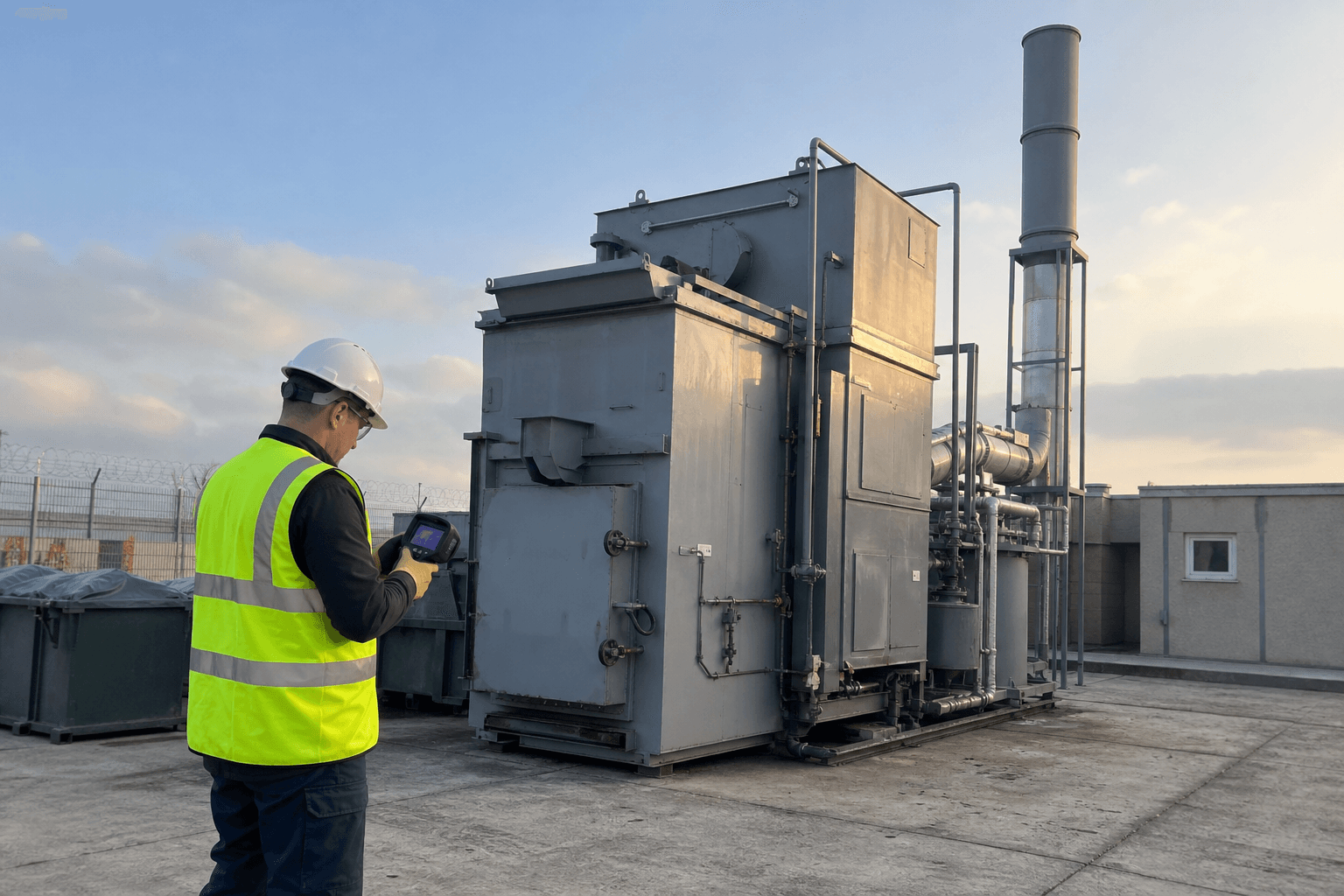
Ammunition & Ordnance Waste Incinerators
Packaging, propellant-contaminated consumables and range sweepings destroyed on site, without a contractor declaration.
Ranges and armouries generate a steady stream of material that is contaminated by association: fibre packaging, propellant-fouled wipes, expended links and cases, and range sweepings that no commercial contractor will accept without a declaration nobody wants to sign. AmoBurn units destroy that stream on site, in supervised batch cycles, and hand back inert metal and 3–5% mineral ash.
Three Models,
One Solution
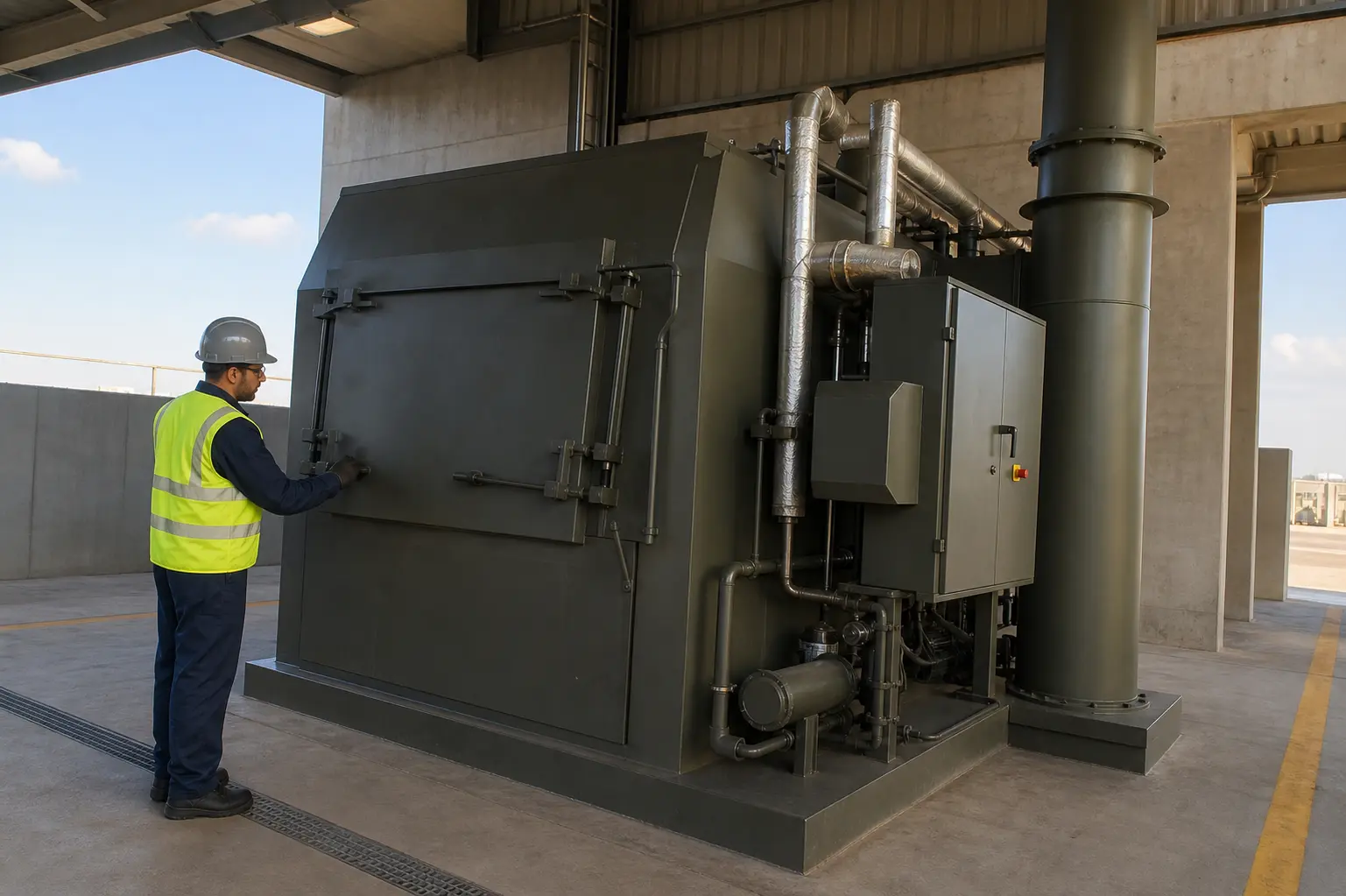
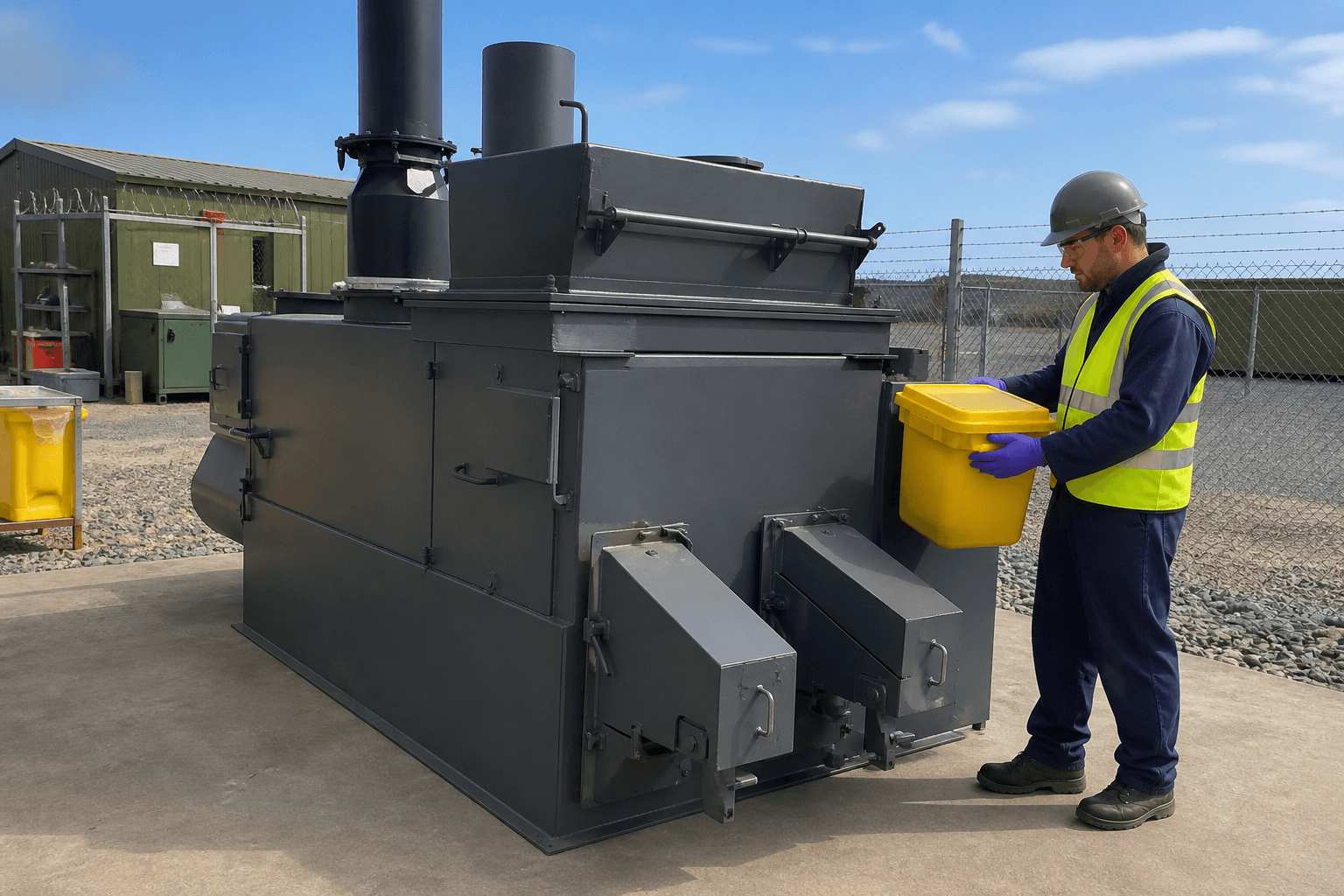
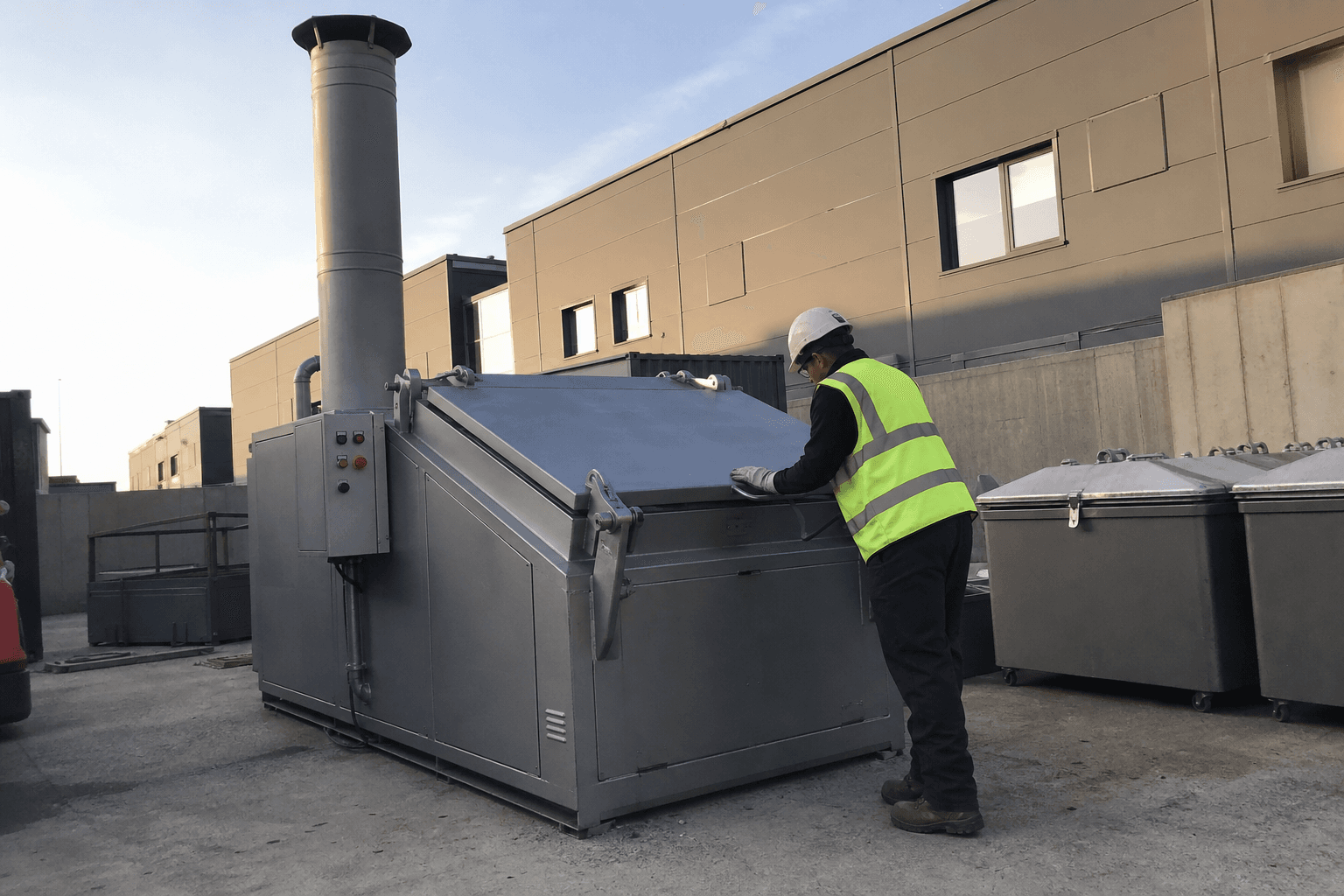
The compact AmoBurn: 150 kg per charge at 1.8 t, light enough to be relocated between sites. Used where destruction has to be witnessed and certified on site rather than handed to a third-party contractor.
250 kg per charge for established base infrastructure. The two-burner arrangement and 1250 mm chamber handle classified document destruction and ammunition-adjacent waste in the same unit.
The largest AmoBurn at 300 kg per charge. Specified where the secure-destruction requirement is continuous enough that a smaller unit would need several cycles a day to keep up.
Which Model
Fits Your Volume
Pick a model to see what it clears in a day of ammunition & ordnance waste.
A single armoury or range office: one supervised charge clears packaging, propellant-fouled rag and range sweepings, with inert metal recovered from the ash at the end of the cycle.
Not for live ordnance, UXO or bulk energetics
This has to be stated plainly: AmoBurn units are waste incinerators, not demolition or burning-ground equipment. Live ammunition, initiators, pyrotechnics, propellant in bulk and any suspected unexploded ordnance are outside their scope entirely and must go to specialist EOD disposal under the appropriate authority. Every charge must be certified free of energetic material by the establishment before loading.
Environmental permit
Required from the Environment Agency, SEPA or NIEA. Where the stream includes halogenated content above 1%, the secondary-chamber minimum rises from 850°C to 1,100°C — the units hold that condition, but it must be declared in the permit application rather than discovered at inspection.
Explosives licensing unaffected
The incinerator sits downstream of the licensed explosives area and does not alter the site's explosives licence or the storage conditions attached to it. It handles material only after it has been declared free of energetic content.
Duty of care on the residue
Ash and recovered metal are still waste and still need a transfer note. The change is what they are: ordinary residue and inert scrap, rather than a mixed load a contractor will not accept without a signature.
Why Burn It
On Site
4 things change on the day this stream stops leaving the site.
No contractor declaration required
The commercial route stalls on a signature: someone has to certify the load free of energetic material before a contractor will lift it. On-site destruction removes the counterparty entirely, and with it the accumulation that builds while the declaration is being argued about.
Propellant residue is destroyed, not diluted
Cleaning materials, wipes and PPE carry nitrocellulose and solvent residues. Landfill dilutes the problem and moves it; combustion at 850°C held for two seconds removes the organic fraction entirely, leaving mineral ash and inert metal behind.
Range sweepings become a routine cycle
Floor sweepings are mixed, dirty and high-volume — the classic stream that gets deferred. A scheduled batch cycle turns it into a predictable task with a known clearance rate rather than a growing corner of the store.
Relocatable between sites
At 1.8 tonnes the AMBI-150 can be moved between establishments or out to a temporary range rather than being fixed to one location for its service life. Ranges are not always where the permanent infrastructure is.
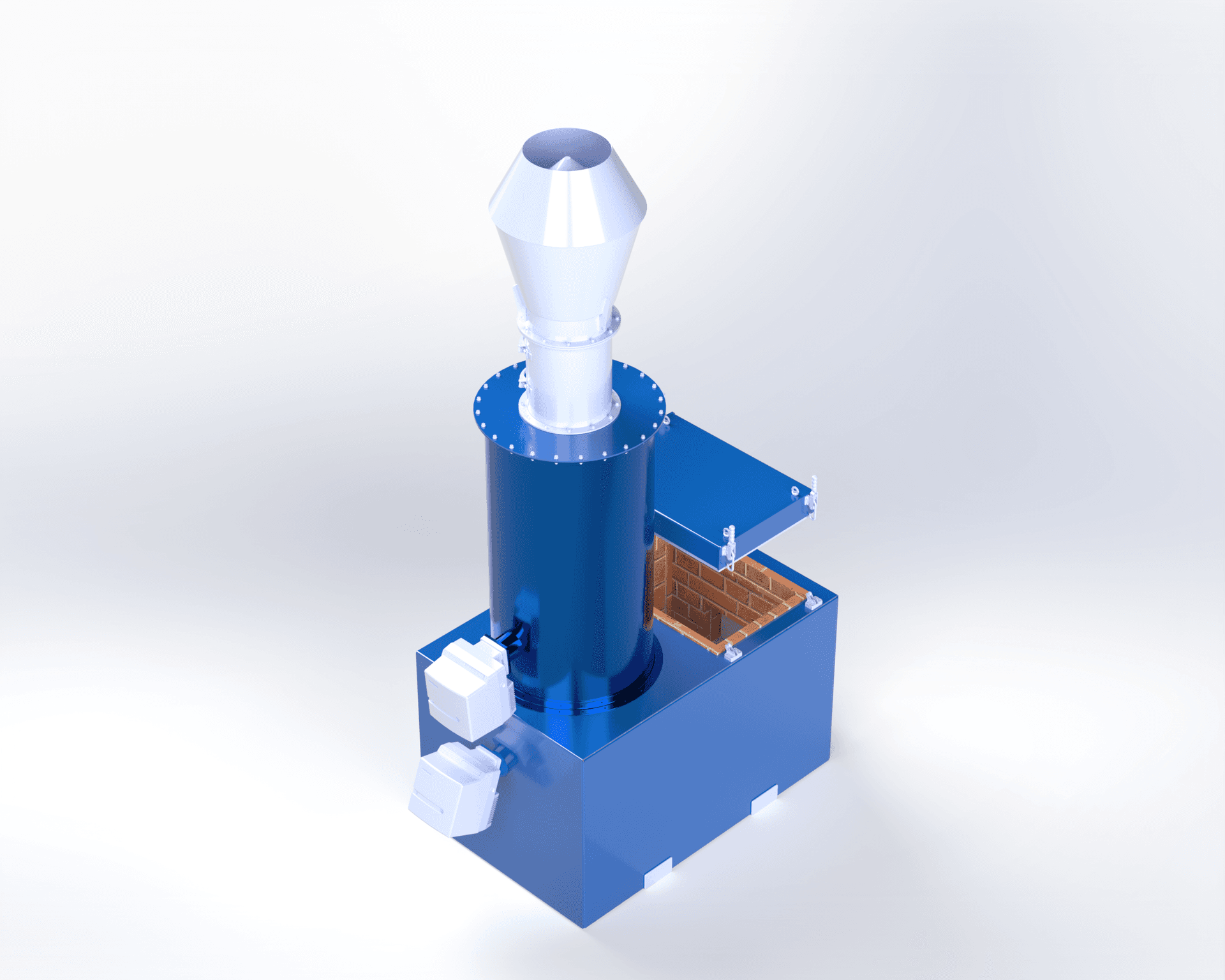
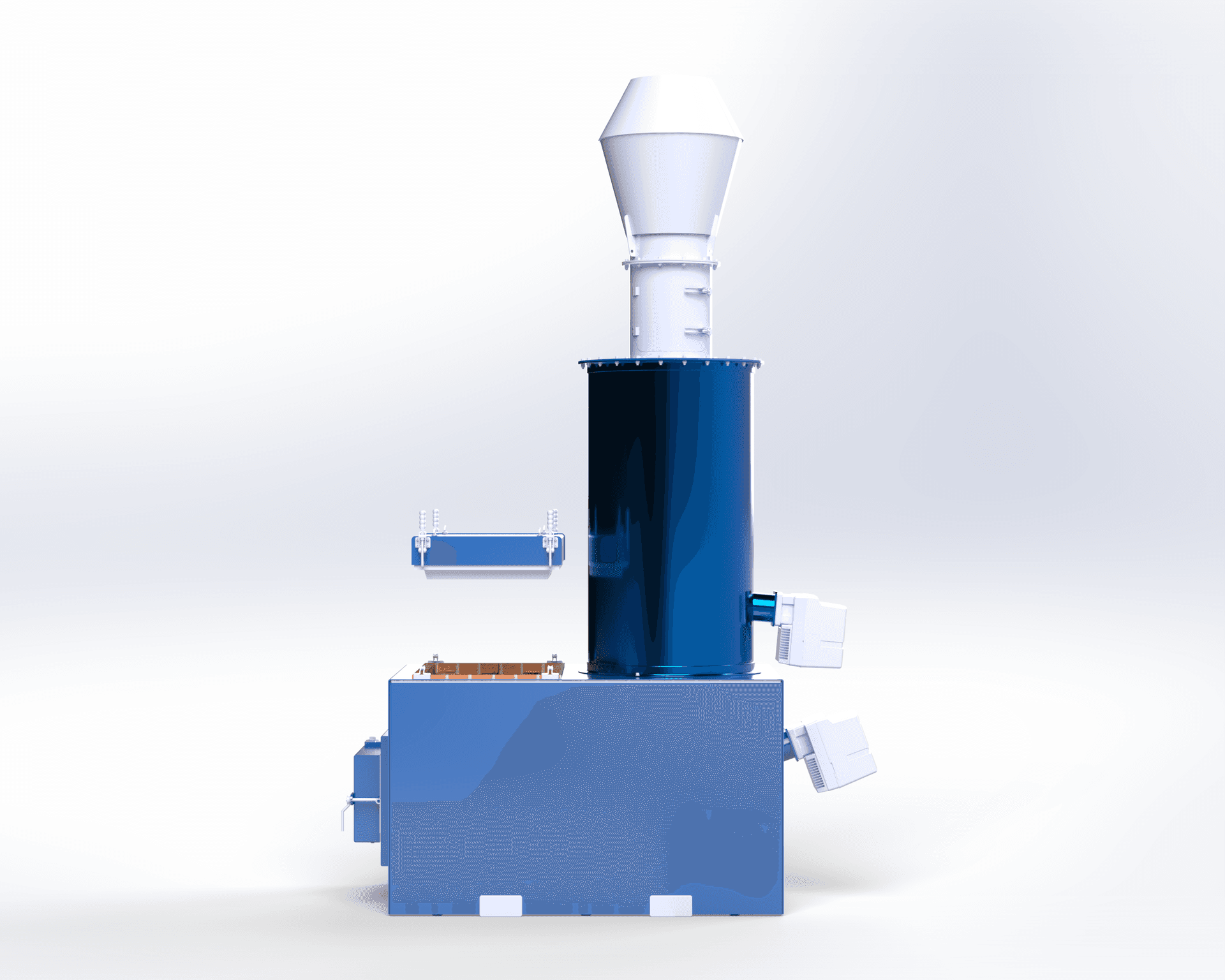
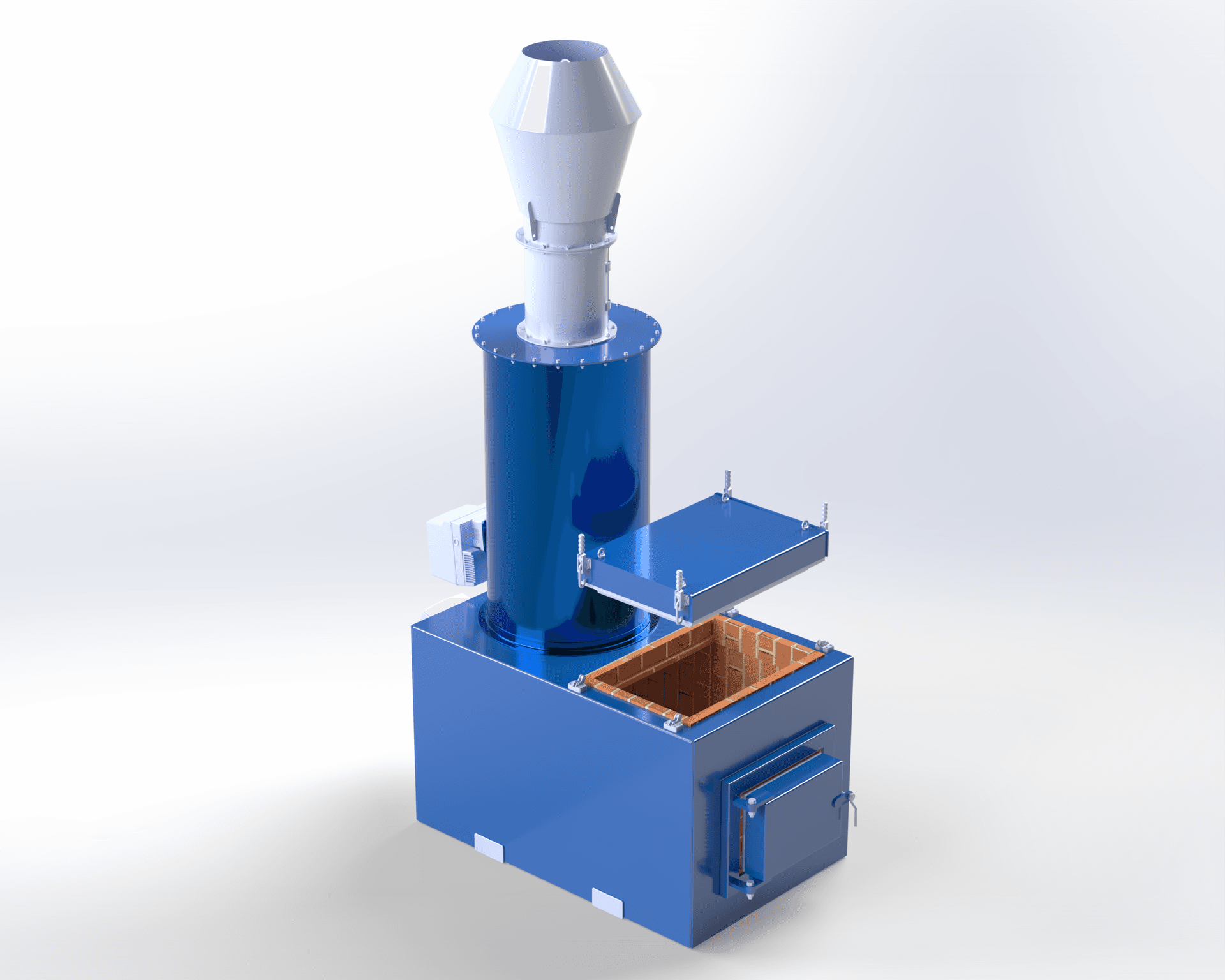
Dual-chamber unit
Primary chamber running 850–1,200°C with a secondary chamber holding flue gas above 850°C for two seconds — the Industrial Emissions Directive condition, met as built rather than as an option.
Burner set and fuel train
Configured for natural gas, LPG, diesel, biofuel or hydrogen. Fuel choice is a site decision; the combustion condition is identical whichever is specified.
What Ships
With The Unit
Identical whichever stream it is specified for. The operating procedure changes; the machine does not.
Dual-chamber unit
Primary chamber running 850–1,200°C with a secondary chamber holding flue gas above 850°C for two seconds — the Industrial Emissions Directive condition, met as built rather than as an option.
Burner set and fuel train
Configured for natural gas, LPG, diesel, biofuel or hydrogen. Fuel choice is a site decision; the combustion condition is identical whichever is specified.
IP6X control panel
PLC control with cycle logging, chamber thermocouples and interlocked charge door. The cycle record is what a destruction register entry is written against.
Coretex refractory lining
Monolithic castable lining rated for the full temperature range, replaceable in service rather than requiring the shell to be scrapped with it.
Stack and dispersion data pack
Stack supplied to the height your site-specific dispersion assessment calls for, with the emissions data the permit application has to reference.
Commissioning and operator training
On-site commissioning, a witnessed first burn, and training for the establishment personnel who will hold the charge-door key.
How One Burn Runs,
Start To Finish
One charge is one countable event. That is what makes a batch unit auditable and a continuous one not.
One Cycle,
Start To Finish
Adds the establishment's own certification that the charge is free of energetic material, and a metal-recovery step at ash-out. Permit declares halogenated content where solvents are in the stream.
Before anything is loaded, the establishment certifies the charge free of energetic material. This is an establishment procedure, not an incinerator function — the unit sits downstream of it. A charge that cannot be certified does not go in; it goes to EOD.
The unit is top-loaded from the holding area and the load recorded against the certification. The charge door is closed and interlocked, so the cycle covers exactly what was declared and nothing added afterwards.
Primary combustion reduces packaging, absorbents and PPE under starved-air conditions. Flue gas is held above 850°C for two seconds in the secondary chamber — 1,100°C where the stream carries halogenated content above 1% — which is what destroys the propellant and solvent residues rather than venting them.
The unit cools with the door interlocked. Allow for it in the schedule: heat-up, burn and cool-down together make one full charge a day's task on a batch unit rated under 50 kg/h.
Links, clips and case fragments are recovered from the ash as inert scrap and leave through the site's normal metals route. What remains is 3–5% mineral ash, which leaves as ordinary residue rather than as contaminated waste.
What You Can Burn —
And What You Can't
One charge takes the whole stream without pre-sorting. What must never enter it is a short, hard list.
Yes: accepted in a charge
No pre-sorting between these
- Ammunition packaging and transit materialFibre and cardboard boxes, liners and inserts, plus polymer transit packaging from ordnance deliveries. Bulky rather than heavy, so it fills the chamber before it reaches the rating.
- Expended cases, links and clipsBandoliers, clips, links and cases once certified free of energetic material. The metal is inert and separates at ash-out rather than burning.
- Propellant-fouled cleaning consumablesPatches, rags, wipes, brushes, swabs and disposable tooling from the armoury bench. Bore-cleaning solvent is accepted absorbed onto rag or granular absorbent, never as loose liquid.
- Armoury PPE and maintenance wasteContaminated gloves, coveralls and disposable PPE, with the oiled wipes, gasket material and packaging foam that come off routine maintenance.
- Range floor sweepingsButt-stop debris and sweepings, once the pre-charge check has cleared them of anything energetic. This is the stream where that check earns its place.
- Protectively marked documentationPaperwork accompanying a consignment where the documentation itself carries a marking. It goes in the same charge instead of needing its own destruction route.
No: never charged
Not a permit question — these stay out
- Live ammunition and small-arms roundsA waste incinerator has no containment for an energetic event. Live rounds go to EOD or an authorised demilitarisation route, without exception.
- Initiators, detonators, primers and fuzesThese function at temperatures well below the operating range and will do so inside the primary chamber.
- Pyrotechnics, flares and signal cartridgesRapid gas generation inside a sealed chamber. Not a combustion problem — a pressure one.
- Bulk propellant and explosive residuesOutside the scope of a waste incinerator entirely. Specialist energetic-waste plant exists for this and it is not this.
- Suspected UXO or any item of uncertain stateIf it cannot be certified, it is not certified. Uncertainty routes to EOD, not to the charge door.
- Pressurised containers and aerosolsSealed vessels rupture under heat. Depressurise and route separately, whatever the contents.
- Lithium and other cells from optics or comms kitThermal runaway inside a sealed chamber, plus a residue nobody wants in the ash. Batteries have their own route.
Can you legally burn ammunition & ordnance waste on site?
Technically, yes: the chamber destroys almost everything on the accepted list at 850–1,200°C, and capability is rarely the constraint. Legally is a separate question. What your site is allowed to burn is set by your environmental permit from the Environment Agency, SEPA or NIEA and the waste codes written into it. The never-charged list is different again: those materials are out of scope for the unit or governed by a direction, and no permit wording brings them back in. Send us the codes you hold, or the ones you expect to apply for, and we will tell you which of this list they cover before anything is specified.
Send us your waste codesWhat size incinerator for 900 kg of ammunition waste?
Arithmetic on published model figures, not a customer reference. Your numbers go through the same steps.
How This
Was Worked Out
900 kg standing ÷ 300 kg per charge = 3 charges on the AMBI-300, one per working day; ash at 3–5% of 900 kg is 27–45 kg, and the inert metal comes out with it. Substitute your own arisings: charges = volume ÷ capacity, ash = volume × 3–5%, and one charge is the planning unit for a working day.
Most of one working day
27–45 kg total
Separated at ash-out
None
Send your daily or weekly arisings and we will confirm the model, the charge count and the permit route.
Related Products
& Services
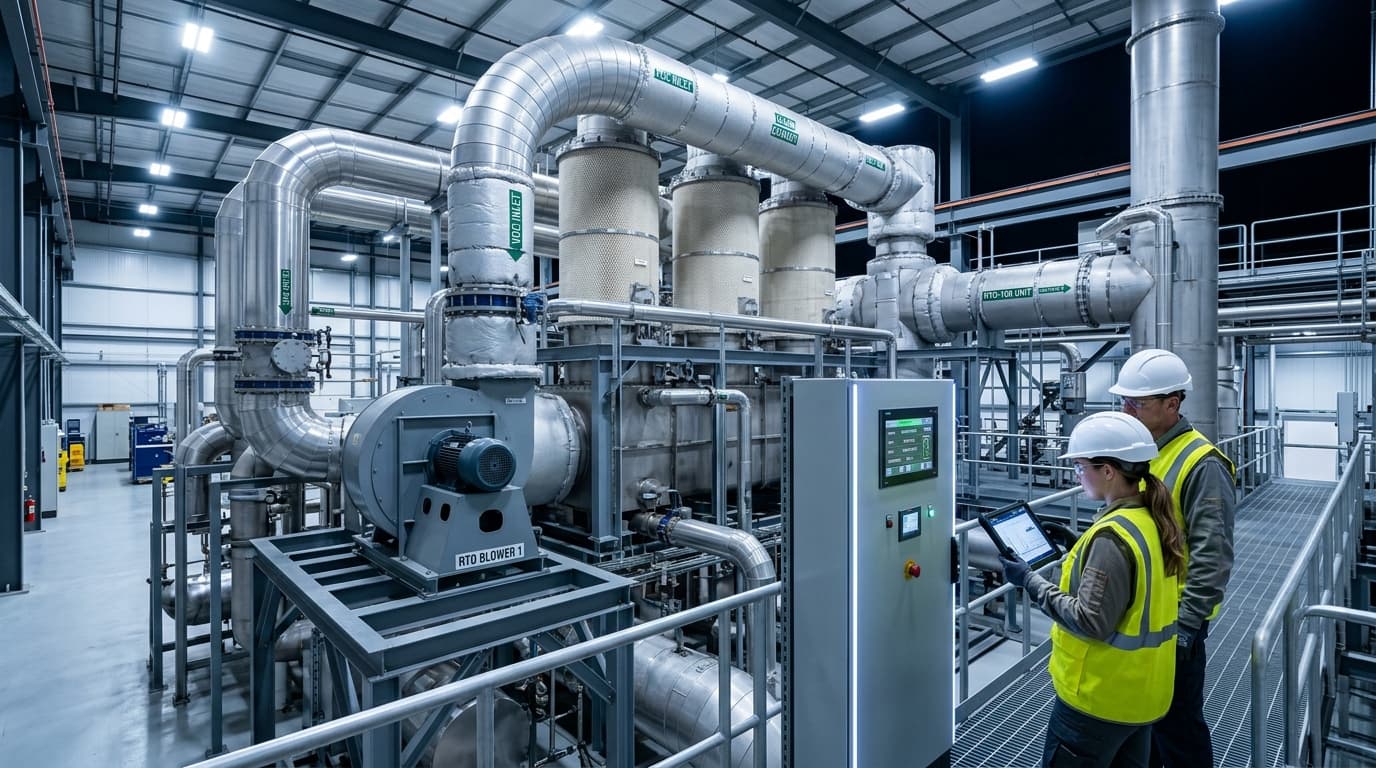
Complementary equipment and engineering services for your process.
Sizing and background
- [TOOL]Work out the burn rate for your own arisings
- [TOOL]Size the combustion air and flue gas duty
- [BLOG]Fuel-to-air ratio in ammunition incinerators
- [BLOG]NOx reduction in ammunition incinerators
- [BLOG]Advanced process control for ammunition incinerators
- [BLOG]Integrating vibration analysis for incinerator predictive maintenance
- [BLOG]Advanced gas cleaning for ultra-low emission incinerators
Ammunition & ordnance waste Questions
Answered against the published figures for the models specified for this stream, not a generic range sheet.
Ammunition waste, in the sense these units are specified for, is the non-explosive material that surrounds and contaminates munitions rather than the munitions themselves. That means fibre and cardboard packaging, bandoliers, clips and links, propellant-fouled cleaning materials, contaminated PPE, range floor sweepings, and the consumables generated by armoury maintenance. This material is awkward for exactly one reason: commercial waste contractors will not take it without a written declaration that it is free of energetic material, and few establishments are willing to sign that declaration for a mixed skip. The result is accumulation — a corner of the store that grows while the wording of the declaration is argued about, and which eventually becomes its own storage and fire-loading problem. Destruction runs at 850–1,200°C with a two-second secondary-chamber retention, which removes organic propellant residues along with the substrate carrying them. Nitrocellulose fouling, solvent residues, oils and the fibre or polymer they have soaked into all leave as flue gas and mineral ash. Metallic components — links, clips, case fragments — survive the burn and are recovered from the ash as inert scrap that can leave the site through the normal metals route. What this is not is a demilitarisation plant. Live rounds, initiators, pyrotechnics, bulk propellant and any suspected unexploded ordnance are outside the scope of a waste incinerator entirely and belong to specialist EOD disposal under the appropriate authority. The line is drawn at the establishment's own certification: every charge is declared free of energetic material before it is loaded, and the incinerator sits downstream of that declaration rather than in place of it.
900 kg standing ÷ 300 kg per charge = 3 charges on the AMBI-300, one per working day; ash at 3–5% of 900 kg is 27–45 kg, and the inert metal comes out with it. Substitute your own arisings: charges = volume ÷ capacity, ash = volume × 3–5%, and one charge is the planning unit for a working day.
No, and they must not be used for it. AmoBurn units are waste incinerators for packaging, propellant-contaminated consumables and range sweepings. Live ammunition, initiators, pyrotechnics, bulk propellant and any suspected UXO are outside their scope and require specialist EOD disposal under the appropriate authority. Every charge must be certified free of energetic material by the establishment before it is loaded.
Fibre and cardboard packaging, bandoliers, clips and links, propellant-fouled cleaning materials and wipes, contaminated PPE, range floor sweepings and armoury maintenance consumables. In short: the material that surrounds and contaminates munitions, once it has been certified free of energetic content.
Metallic items such as links, clips and case fragments do not combust. They survive the cycle and are recovered from the ash as inert scrap, which can then leave the site through the normal metals route rather than as contaminated waste.
Because the contractor needs a written declaration that the load is free of energetic material, and few establishments will sign that for a mixed skip. The practical result is that the waste accumulates while the declaration is negotiated. On-site destruction removes the counterparty and turns the problem into a scheduled cycle.
No. The unit sits downstream of the licensed explosives area and handles material only after it has been declared free of energetic content, so it does not alter the site's explosives licence or the storage conditions attached to it. It does require its own environmental permit.
The standard condition — 850°C held for two seconds in the secondary chamber — removes organic propellant residues along with the substrate carrying them. Where the stream includes halogenated organic content above 1%, the secondary-chamber minimum rises to 1,100°C. The units hold that condition, but it has to be declared in the permit application.
One charge per working day is the realistic planning figure, so an AMBI-300 clears around 1.5 tonnes in a five-day week. These are batch units burning at under 50 kg/h: heat-up, burn, cool-down and ash removal fill the day for a full charge. Size on the volume per cycle rather than on an hourly rate.
Yes. The AMBI-150 weighs 1.8 tonnes and the AMBI-300 2.4 tonnes, which keeps all three inside standard plant handling and needs no permanent civil works. On UK soil the permit still applies to the temporary site, and stack height comes from a dispersion assessment for where the unit actually stands.
Ready to
Incinerate?
Send the stream, the volume and the site constraints. We will confirm the model, the permit route, and what the specification has to say to satisfy the regulator.
- No contractor declaration required
- Propellant residue is destroyed, not diluted
- Range sweepings become a routine cycle
- Relocatable between sites