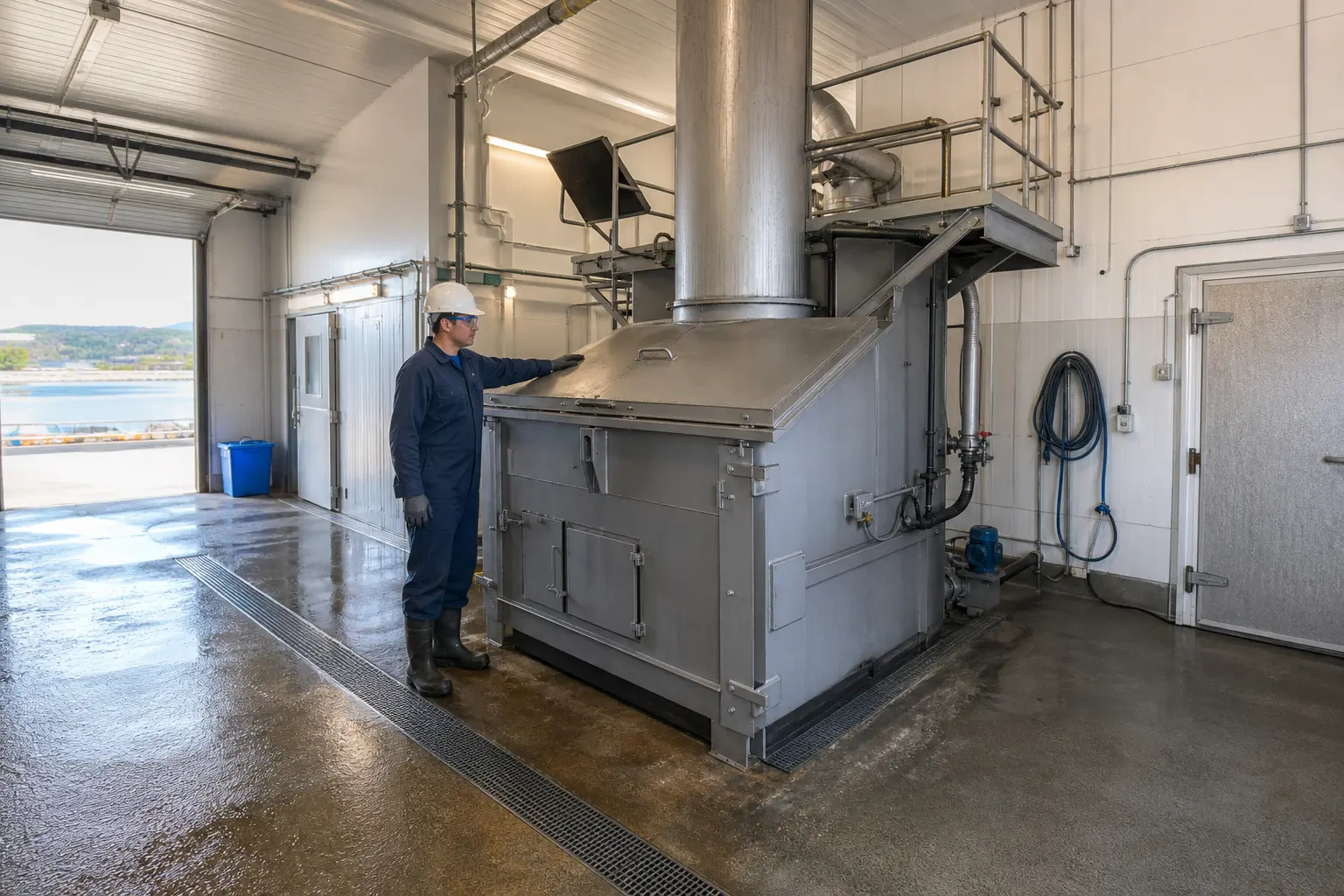
Aquaculture Waste Incinerators
Fish farm mortalities and hatchery losses destroyed on site, without a cold store waiting on a boat or a haulier.
Mortalities are a constant at any fish farm and a crisis at none of them until a disease event, when the daily trickle becomes a tonne a day. Sites that depend on haulage — or on a boat — discover the constraint at exactly the wrong moment. AniBurn units destroy morts where they are lifted, at 150 to 300 kg per charge, with no cold store waiting on a collection.
Three Models,
One Solution
150 kg per charge for veterinary practices, small farms and pet cremation. The chamber is tall relative to its load rating because carcass waste is bulky and wet — volume, not weight, is the binding constraint.
250 kg per charge with a 2880 mm chamber. The usual specification for a working livestock farm that needs fallen stock dealt with on site under biosecurity rules rather than held for collection.
The largest AniBurn: 300 kg per charge in a 3180 mm chamber. Sized for commercial pet crematoria and larger livestock units where a single daily cycle has to clear everything held in cold storage.
Which Model
Fits Your Volume
Pick a model to see what it clears in a day of aquaculture waste.
Morts are mostly water. Drain them first and one charge covers a hatchery or a small site's contained mortality event.
Animal by-product approval
Farmed fish mortalities are animal by-products under the retained ABP Regulation, and the plant burning them needs APHA approval alongside the environmental permit. Fish are not a special case here — the same approval regime that covers fallen livestock covers dead farmed fish.
Environmental permit
Required from the Environment Agency, SEPA or NIEA. Most UK finfish sites sit in Scotland, where SEPA is the permitting authority and also regulates the discharge and biomass consents the site already holds; the incinerator is an additional consent, not a variation of those.
Notifiable disease direction
Where ISA, VHS, IHN or another notifiable disease is diagnosed, the competent authority directs how mortalities are handled and how movements are controlled. Destroying on site keeps infective material off the network, but the method still follows the direction.
Duty of care on the ash
Ash needs a transfer note if it leaves the site. From a mortality charge it is sterile mineral residue rather than infective material, which is what makes the movement an ordinary one.
Why Burn It
On Site
4 things change on the day this stream stops leaving the site.
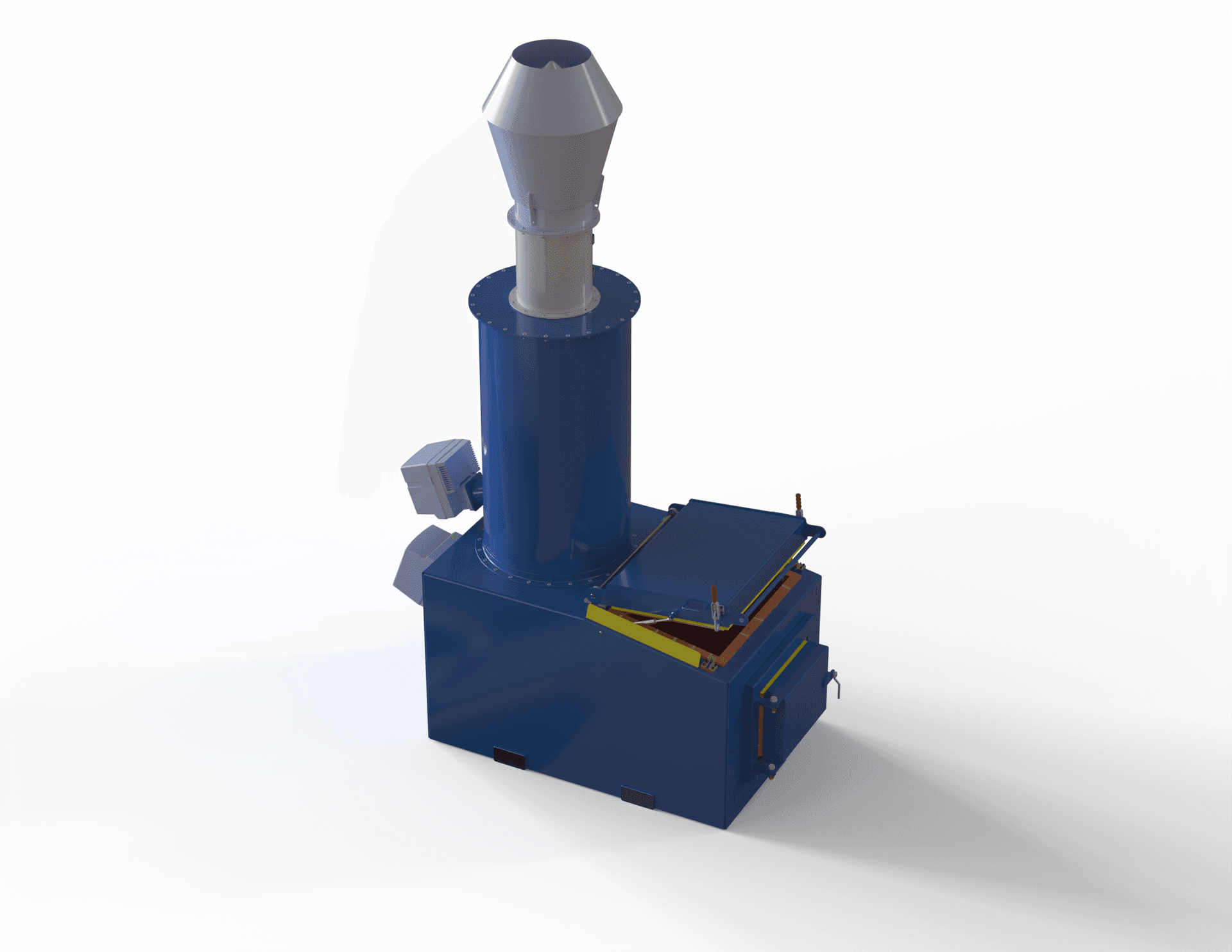
No collection to schedule
Remote sites pay for mortality removal in logistics rather than in gate fees — a workboat, a road movement, a slot on someone else's round. Destroying on site removes the schedule from the equation and with it the cold store that exists only to hold material until the schedule arrives.
The pathogen is destroyed with the fish
For ISA, VHS and koi herpesvirus, the mortality is the vector. Two seconds above 850°C ends both. Moving infected morts to a distant facility is a movement of infective material through the network you are trying to protect.
Event capacity that is already on site
Mortality rates rise fast in a disease event, and that is the moment collection capacity is scarce and movements are restricted. A permitted, approved unit on the shore base is capacity nobody else is bidding for.
The smell and scavenger problem ends daily
Ensilage and cold storage manage decomposition; they do not end it. A daily or weekly charge closes the loop on the day the morts are lifted, which is the difference between a routine and a growing problem in a bin.
Dual-chamber unit
Primary chamber running 850–1,200°C with a secondary chamber holding flue gas above 850°C for two seconds. For animal by-products this is not a preference: it is the combustion condition an APHA-approved incineration plant has to meet.
Two-burner set and fuel train
All three AniBurn models carry two burners, configured for natural gas, LPG, diesel, biofuel or hydrogen. Carcass waste is wet, so burner duty on this stream is doing more evaporation than on any other — fuel choice is a site decision, the combustion condition is not.
What Ships
With The Unit
Identical whichever stream it is specified for. The operating procedure changes; the machine does not.
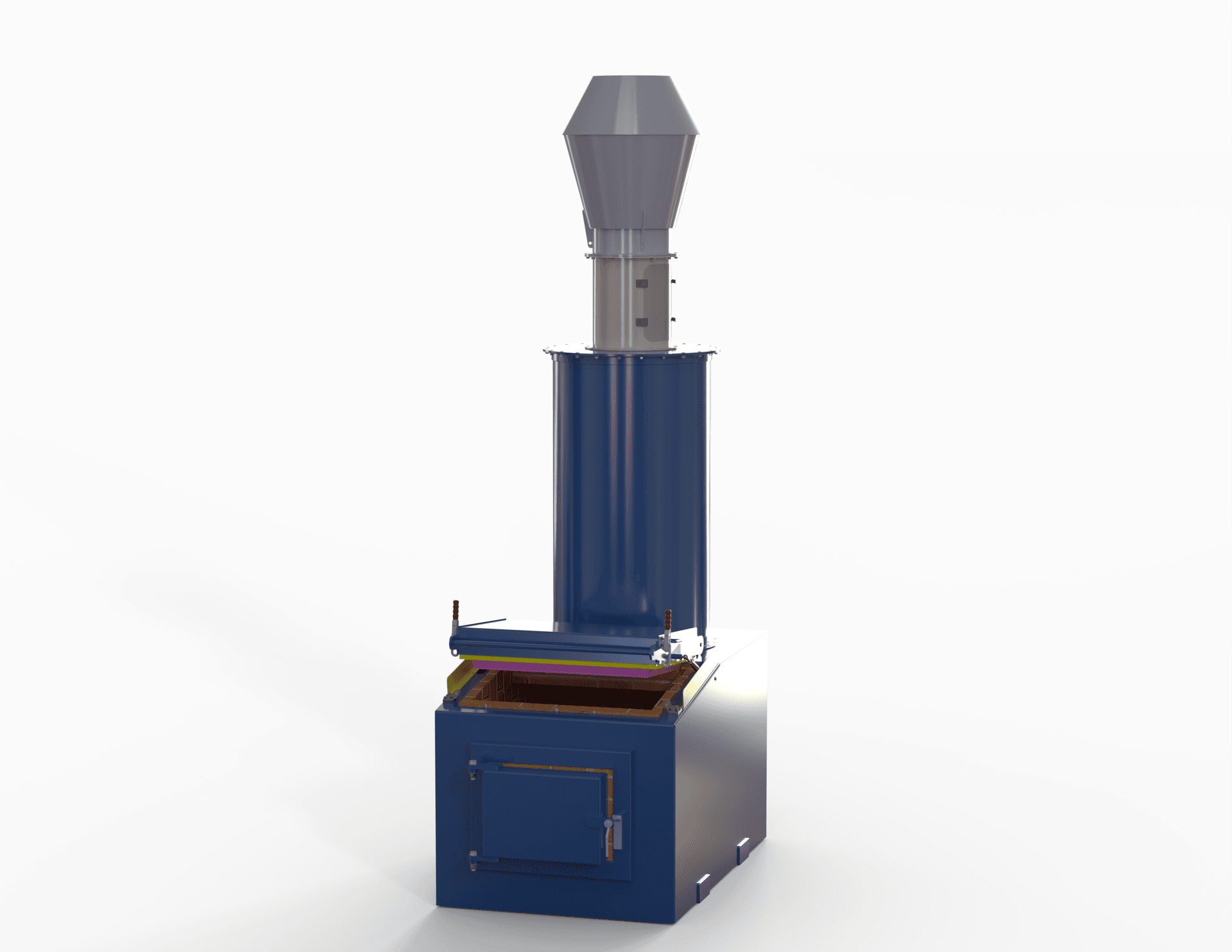
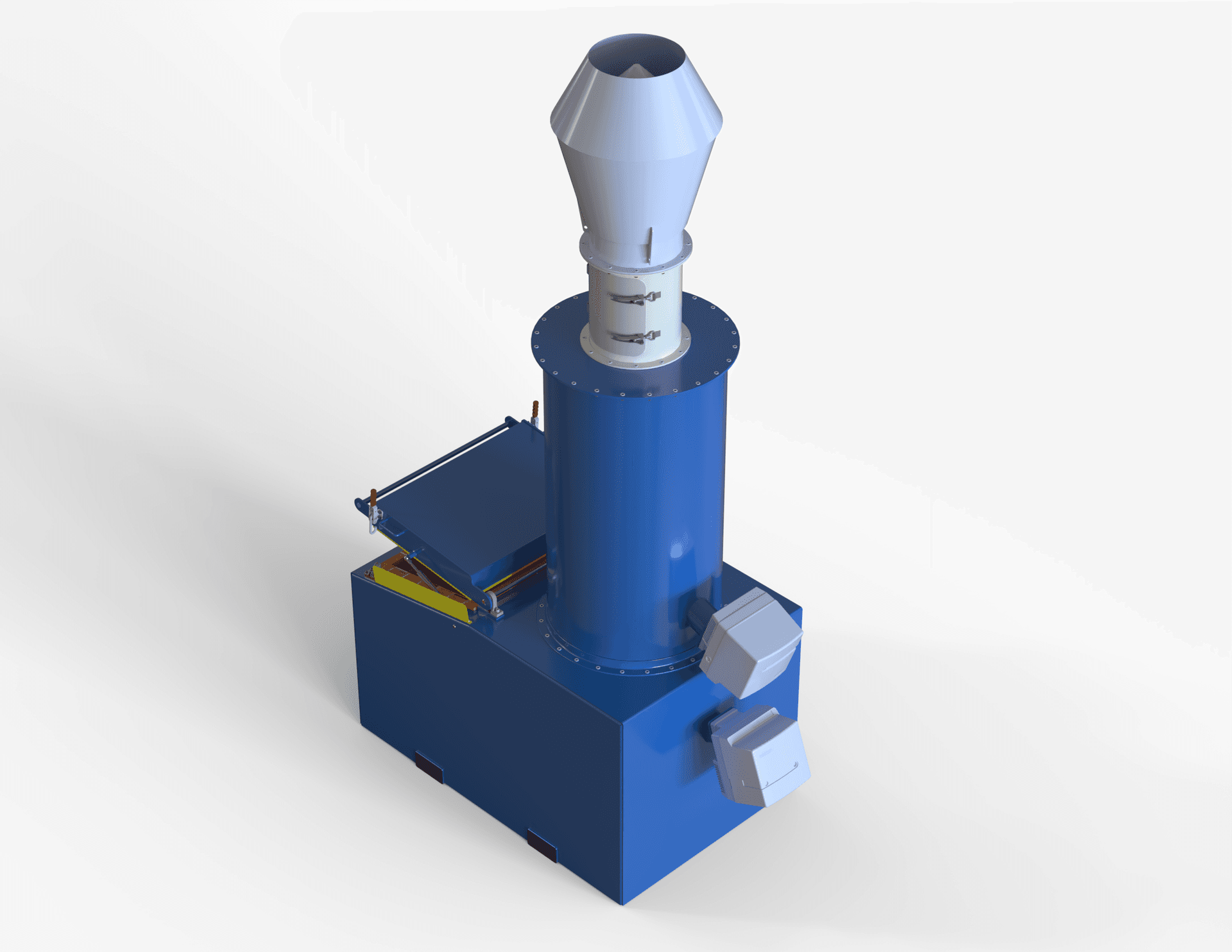
Dual-chamber unit
Primary chamber running 850–1,200°C with a secondary chamber holding flue gas above 850°C for two seconds. For animal by-products this is not a preference: it is the combustion condition an APHA-approved incineration plant has to meet.
Two-burner set and fuel train
All three AniBurn models carry two burners, configured for natural gas, LPG, diesel, biofuel or hydrogen. Carcass waste is wet, so burner duty on this stream is doing more evaporation than on any other — fuel choice is a site decision, the combustion condition is not.
Top-loading charge door
Carcasses are dead weight and awkward to handle. Top loading means a carcass goes in from above with a hoist, loader or teleporter rather than being dragged through a door at chest height, which is the difference between a two-person job and a one-person one.
IP6X control panel
PLC control with cycle logging and chamber thermocouples. The cycle log is the record that a fallen-stock disposal, an APHA-directed cull or an individual pet cremation actually happened, and when.
Coretex refractory lining
Monolithic castable lining rated for the full temperature range, replaceable in service. Wet, fatty loads are the hardest duty a refractory sees, which makes lining quality the thing that decides service life on this stream rather than on any other.
Stack, dispersion data and commissioning
Stack supplied to the height your site-specific dispersion assessment calls for, with the emissions data the permit application references, plus on-site commissioning and operator training. On a livestock unit the neighbours are the reason the assessment matters.
How One Burn Runs,
Start To Finish
One charge is one countable event. That is what makes a batch unit auditable and a continuous one not.
One Cycle,
Start To Finish
Adds animal by-product controls — APHA-approved plant alongside the environmental permit — and a drain step, because morts are mostly water and drained loads burn far cheaper.
Farmed fish mortalities are animal by-products; where a notifiable disease is diagnosed, the competent authority may direct how the material is handled. Establish which applies before charging — a direction sets the method.
Morts are mostly water, and water is what costs fuel. Draining ensilage liquor or free water before charging is the single biggest lever on cycle cost and cycle time on this stream.
Wet, heavy, awkward loads go in by grab or bin tipper from above rather than being handled through a door at chest height. Fish are dense: expect the weight rating to be reached with the chamber part-full, which is the opposite of the bedding case.
Primary combustion at 850–1,200°C, flue gas held above 850°C for two seconds in the secondary chamber. High moisture means a longer early phase before the load takes; that is normal for this stream and shows up as fuel, not as a failed burn.
3–5% sterile mineral ash. Log the cycle against the mortality record — where a disease event is running, the mortality figures and the disposal record are read together.
What You Can Burn —
And What You Can't
One charge takes the whole stream without pre-sorting. What must never enter it is a short, hard list.
Yes: accepted in a charge
No pre-sorting between these
- Routine pen and cage mortalitiesThe daily pick from cages and pens, and from tanks and raceways on land-based sites.
- Hatchery and juvenile lossesFry, smolt and hatchery losses, with broodstock and post-stripping mortalities.
- Culled stock under directionStock culled after a disease diagnosis, where the direction requires destruction on site rather than transfer.
- Harvest, grading and processing wasteGrading and harvest losses, plus fish waste off an on-site gutting or processing bench.
- Drained mortality silageAccepted drained. Undrained loads spend a large share of the fuel evaporating water before anything burns.
- Shellfish and damaged recoveriesShellfish mortalities, dead stock from relaying, and predator-damaged carcasses recovered from the pens.
No: never charged
Not a permit question — these stay out
- Undrained silage liquor and free waterLiquid cannot be charged into a batch chamber, and the water it carries is fuel spent for no destruction. Drain first — the liquor has its own handling route.
- Net and pen cleaning waste with antifoulantAntifouling coatings carry copper and biocides that end up in the ash and in the flue gas. Biofouling stripped from a clean net is one question; coating residue is a different waste with a different route.
- Ropes, netting and pen plasticsSynthetic rope and net melt rather than burn, can carry halogenated content that raises the secondary-chamber requirement to 1,100°C, and foul the chamber. They have a recycling route.
- Treatment chemicals, medicines and their containersVeterinary medicinal products and site chemicals are regulated waste with a dedicated route. Empty containers go back through the supply chain, not into a mortality charge.
- Polystyrene boxes and packaging from the harvest benchExpanded polystyrene burns dirty and fills a chamber with almost no mass. It belongs in the packaging waste stream.
- A mass mortality event at a large marine siteHonest capacity limit rather than a rule. At 150–300 kg per charge and roughly one charge per day, these units cover routine losses and a contained event. A mass cull running to tens of tonnes needs a bulk route arranged with the authority.
Can you legally burn aquaculture waste on site?
Technically, yes: the chamber destroys almost everything on the accepted list at 850–1,200°C, and capability is rarely the constraint. Legally is a separate question. What your site is allowed to burn is set by your environmental permit from the Environment Agency, SEPA or NIEA and the waste codes written into it, plus APHA approval, because animal by-products are regulated under their own rules. The never-charged list is different again: those materials are out of scope for the unit or governed by a direction, and no permit wording brings them back in. Send us the codes you hold, or the ones you expect to apply for, and we will tell you which of this list they cover before anything is specified.
Send us your waste codesHow many charges for 900 kg of fish mortalities?
Arithmetic on published model figures, not a customer reference. Your numbers go through the same steps.
How This
Was Worked Out
900 kg of drained mortalities ÷ 250 kg per charge = 4 charges on the ABI-250, run across about three days, leaving 27–45 kg of ash at 3–5% and no boat or road movement of dead stock. Fish are dense and wet: the 150, 250 and 300 kg ratings are reached with the chamber part-full, and undrained loads burn a significant part of the fuel evaporating water. Size a routine mortality figure on daily arisings and check it against what a bad week looks like, not an average one.
≈ 3
27–45 kg
None
Send your daily or weekly arisings and we will confirm the model, the charge count and the permit route.
Related Products
& Services
Complementary equipment and engineering services for your process.
Sizing and background
- [TOOL]Work out the burn rate for your own arisings
- [TOOL]Size the combustion air and flue gas duty
- [BLOG]Optimising animal carcass incinerators for UK bio-security
- [BLOG]The long-term operational costs of animal carcass incinerators
- [BLOG]Training programmes for animal incinerator operators
- [BLOG]Minimising the environmental impact of animal incinerators
- [BLOG]Agricultural incinerators and aquaculture waste
Aquaculture waste Questions
Answered against the published figures for the models specified for this stream, not a generic range sheet.
Aquaculture waste is the mortality and by-product stream from a fish or shellfish farming operation: routine morts lifted from pens and tanks, hatchery and smolt losses, culls following a disease diagnosis, harvest and grading losses, and the fish waste from an on-site processing bench. Fish are animals, and dead farmed fish are animal by-products under the retained ABP Regulation exactly as fallen livestock are. The routine volume is small and relentless. Divers or lift systems bring morts up daily; they go into ensilage, a cold store or a bin, and something has to happen to them before they become a smell, a scavenger problem and a biosecurity risk. The established routes — ensiling followed by collection for rendering or anaerobic digestion — work well where a lorry can reach the site on a predictable schedule. The constraint is geography. A large share of UK finfish production sits on sea lochs and islands where the shore base is a single-track road and the pens are reached by workboat. Every kilogram of mortality that leaves the site does so as a movement someone has to schedule, and during a disease event the daily figure can rise by an order of magnitude overnight — precisely when collection capacity is stretched and movement restrictions are in force. On-site incineration at 850–1,200°C with two-second retention destroys the pathogen along with the material, which matters for notifiable diseases such as infectious salmon anaemia, VHS and koi herpesvirus where the mortality itself is the vector. The plant needs APHA approval alongside the environmental permit, and the sizing has to be honest: at 150 to 300 kg per charge and one charge per working day, these units cover routine losses and a contained event, not a mass cull at a large marine site.
900 kg of drained mortalities ÷ 250 kg per charge = 4 charges on the ABI-250, run across about three days, leaving 27–45 kg of ash at 3–5% and no boat or road movement of dead stock. Fish are dense and wet: the 150, 250 and 300 kg ratings are reached with the chamber part-full, and undrained loads burn a significant part of the fuel evaporating water. Size a routine mortality figure on daily arisings and check it against what a bad week looks like, not an average one.
Yes. Dead farmed fish fall under the retained ABP Regulation exactly as fallen livestock do, so a plant incinerating them needs APHA approval in addition to an environmental permit. This catches operators out because fish feel like a different regime; they are not.
Where a lorry can reach the site on a predictable schedule, ensilage and collection work well. The case for on-site destruction is geography and timing: remote sea loch and island sites pay in logistics rather than gate fees, and during a disease event mortality rises exactly when collection capacity is stretched and movements are restricted.
Yes. Primary combustion at 850–1,200°C with two seconds above 850°C in the secondary chamber destroys viral and bacterial pathogens along with the carcass. For diseases where the mortality is itself the vector, that removes the infective material rather than transporting it across the network.
They should be. Morts are mostly water, and undrained loads spend a significant part of the cycle evaporating it. Draining free water and silage liquor first is the single biggest lever on both fuel cost and cycle time on this stream.
No, and it would be dishonest to imply otherwise. At 150–300 kg per charge and roughly one charge per working day, these units cover routine losses and a contained event. A mass cull running to tens of tonnes needs a bulk disposal route arranged with the competent authority.
Biofouling stripped from a clean net is organic material and burns. Antifouling coating residue is not — it carries copper and biocides that end up in the ash and the flue gas, and it has its own route. Rope, netting and pen plastics stay out regardless.
Much denser. Where bedding and vegetation fill the chamber long before the weight rating, drained morts reach the rating with the chamber part-full. On this stream the published capacity in kilograms is the real limit.
Same rules and an easier logistics case: the site has power, water and a hardstanding, so the unit sits alongside the rest of the plant. Mortalities from tanks and raceways are the same animal by-product as pen morts, with the same approval requirement.
Ready to
Incinerate?
Send the stream, the volume and the site constraints. We will confirm the model, the permit route, and what the specification has to say to satisfy the regulator.
- No collection to schedule
- The pathogen is destroyed with the fish
- Event capacity that is already on site
- The smell and scavenger problem ends daily