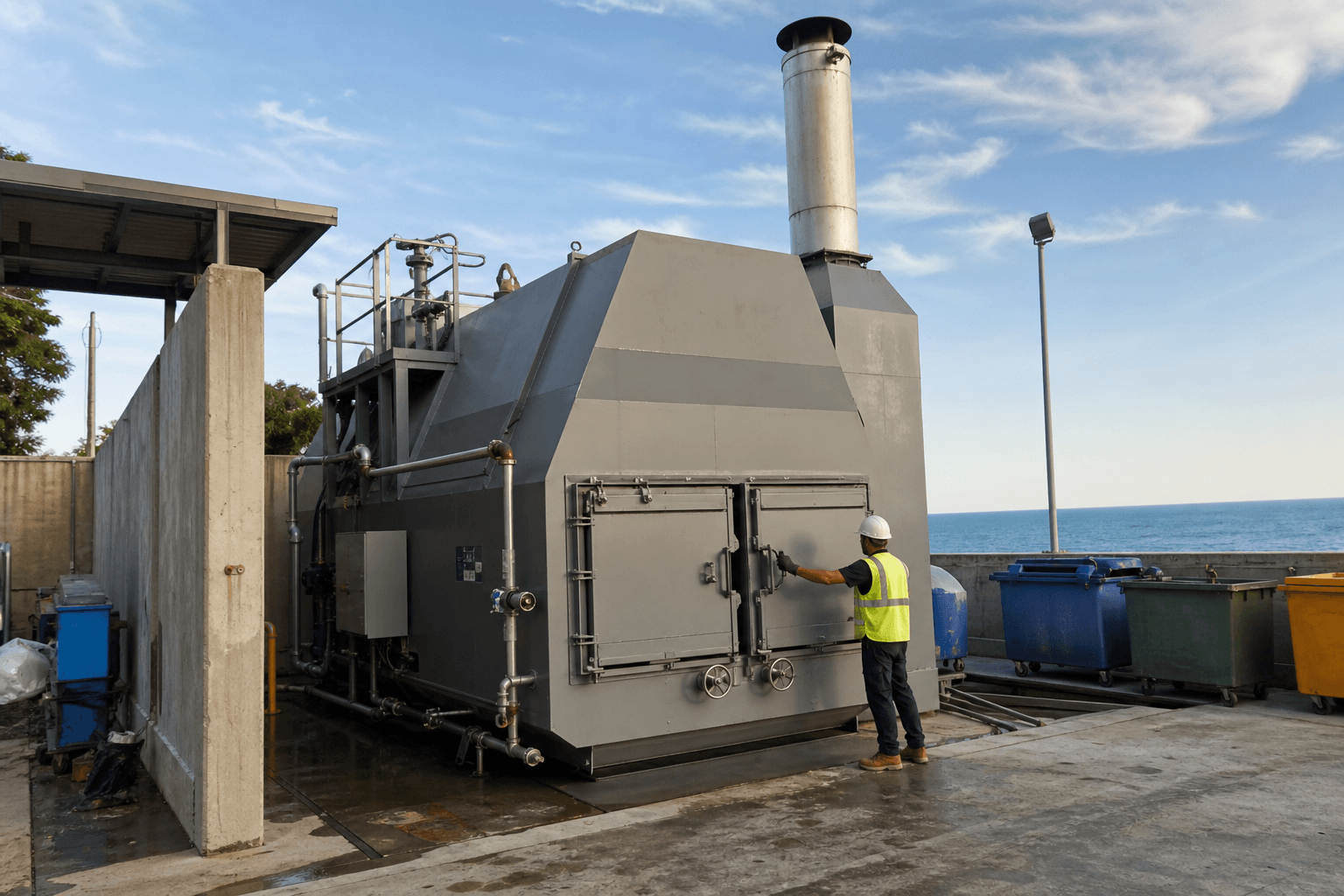
Marine Waste Incinerators
Beach clean debris, derelict fishing gear, harbour litter and vessel-generated waste.
A harbour authority collects waste it did not create from a sea that keeps delivering more of it. Beach cleans, harbour trash screens, derelict fishing gear and vessel waste all end up in the same yard — salt-laden, tangled and refused by every recycling route that sees it.
Four Models,
One Solution
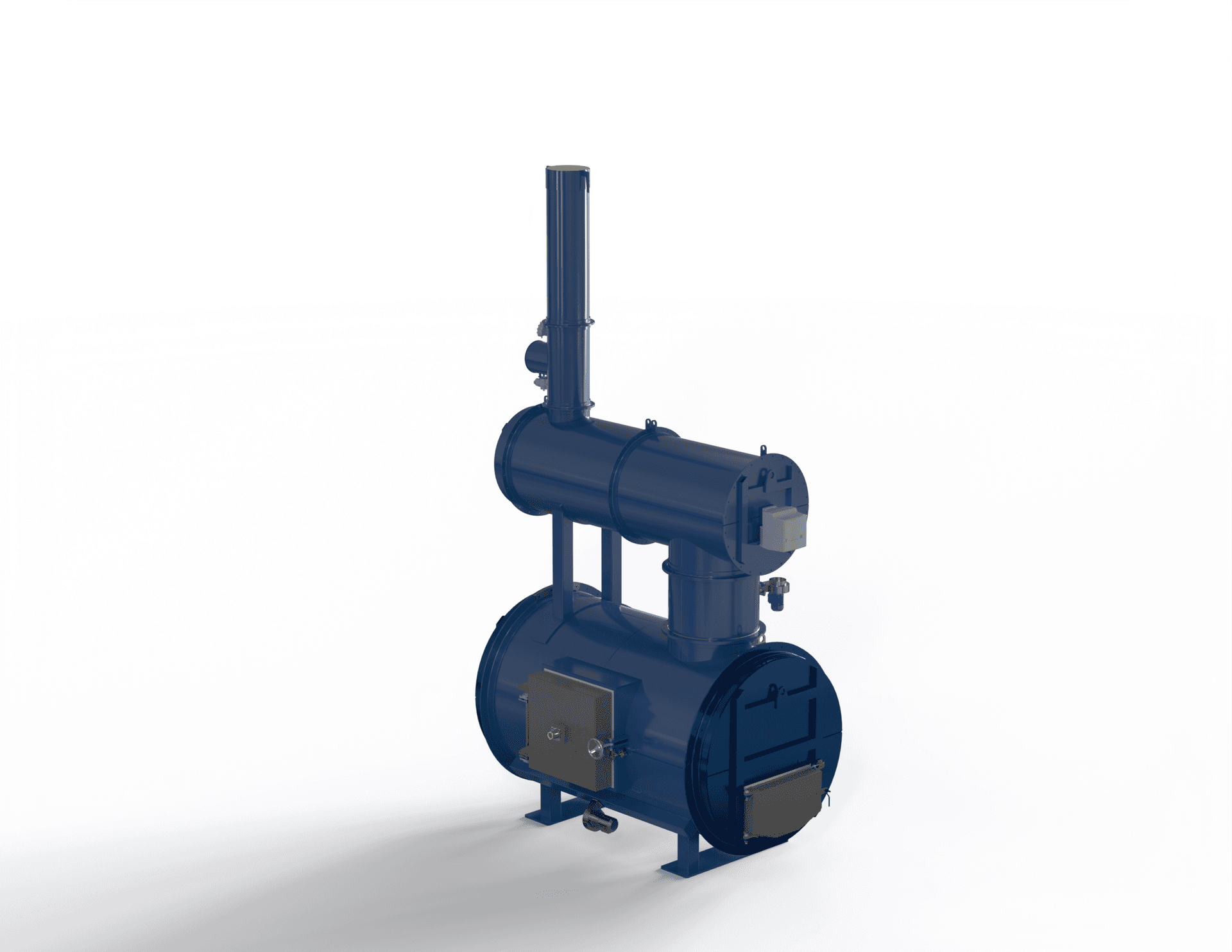
The entry point to the LitBurn range. A 3.3 m³ primary chamber and three burners give continuous 125 kg/h destruction in a footprint that fits a standard yard bay, which makes it the usual choice for a single-site operator replacing skip hire rather than a multi-site waste contract.
The most specified unit in the range. Chamber volume rises to 5.5 m³ for 250 kg/h continuous throughput while the external width grows by only 230 mm over the LBI-125, so sites that outgrow the smallest unit rarely have to rework the slab or the building line.
A 9.6 m³ chamber — nearly double the LBI-250 — for medium-scale industrial waste destruction. At this size most operators pair the unit with heat recovery, because the thermal output during a full shift is large enough to displace a dedicated water heater.
The largest LitBurn: a 16.2 m³ chamber running 500 kg/h continuously. Specified where waste arrives faster than a batch unit can clear it — large manufacturing sites, industrial estates, and operators consolidating several smaller waste contracts onto one machine.
Which Model
Fits Your Volume
Pick a model to see what it clears in a day of marine, harbour & beach debris.
A harbour, marina or coastal station clearing beach cleans and screen catch in a day and a half a week.
Declare 1,100°C as standard
Salt in the load means chlorides in the charge, so a marine stream should assume it exceeds 1% halogenated organic content and permit for the higher secondary-chamber minimum from the outset.
Port reception arrangements still apply
Waste landed from vessels sits inside the port's reception facility duties. Destroying it on the estate satisfies the disposal end of that, not the reception, recording or notification obligations.
International catering waste is separate
Category 1 material from vessels arriving internationally requires APHA-approved destruction and its own segregation. It never joins the general marine stream.
Recovery first where gear allows it
Metal, leadline and any gear with a genuine recycling or reuse route should take it. What justifies the chamber is the degraded, fouled, multi-polymer fraction that nobody will take.
Why Burn It
On Site
4 things change on the day this stream stops leaving the site.
Nobody will recycle it
Degraded, salt-laden, mixed marine plastic is refused by recyclers who take clean polymer. The alternative is landfill at standard rate, for waste the operation collected voluntarily.
Volume, not weight, fills the yard
Nets, ropes and beach plastics occupy enormous volume for very little tonnage, and harbour yards are among the most space-constrained sites there are.
Collection routes are long on the coast
Harbours, islands and coastal stations sit at the end of the same difficult routes as any remote site, with the same freight-priced disposal.
Beach clean programmes stop being disposal-limited
Volunteer and statutory cleans generate waste faster than a small yard can move it. On-site destruction means the programme is limited by tides and volunteers rather than by skips.
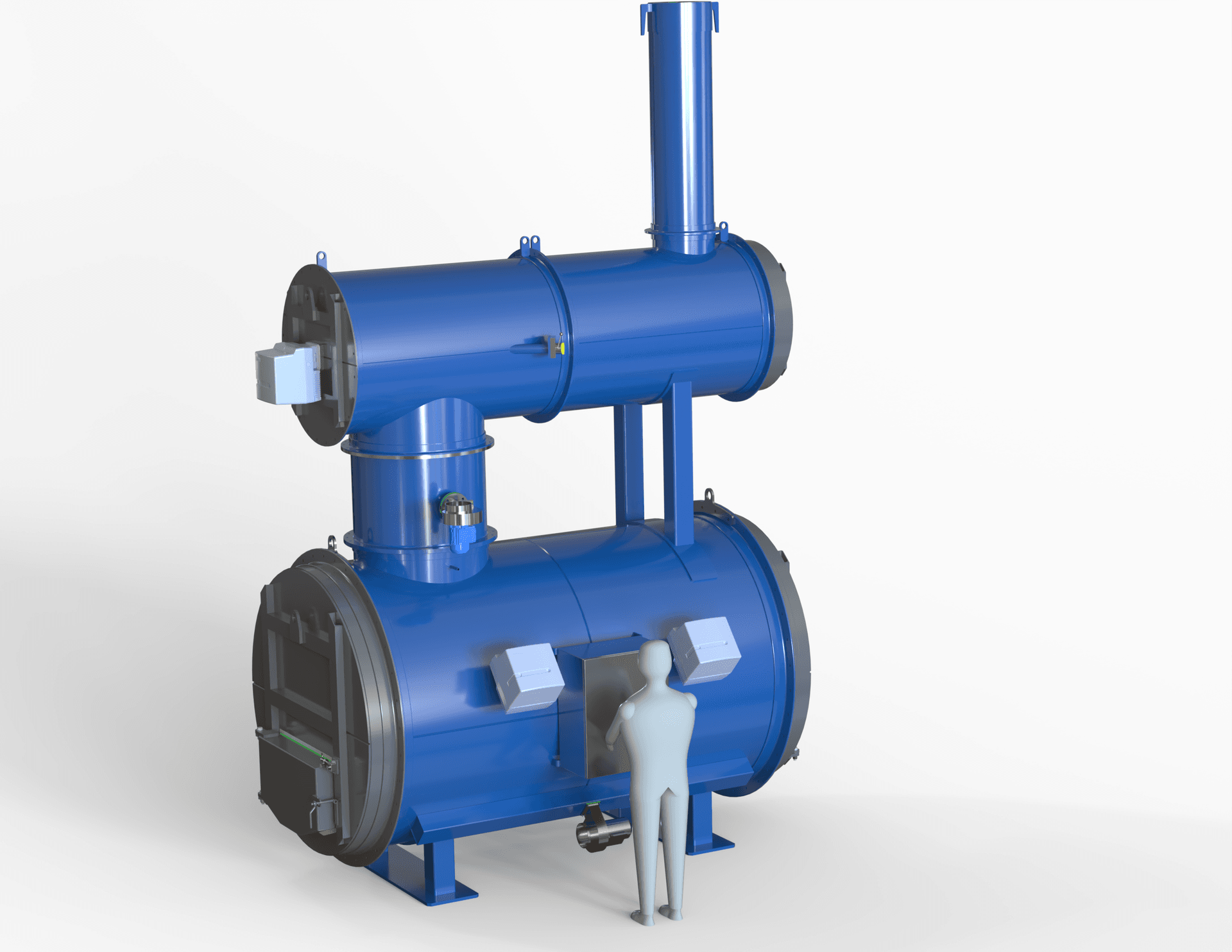
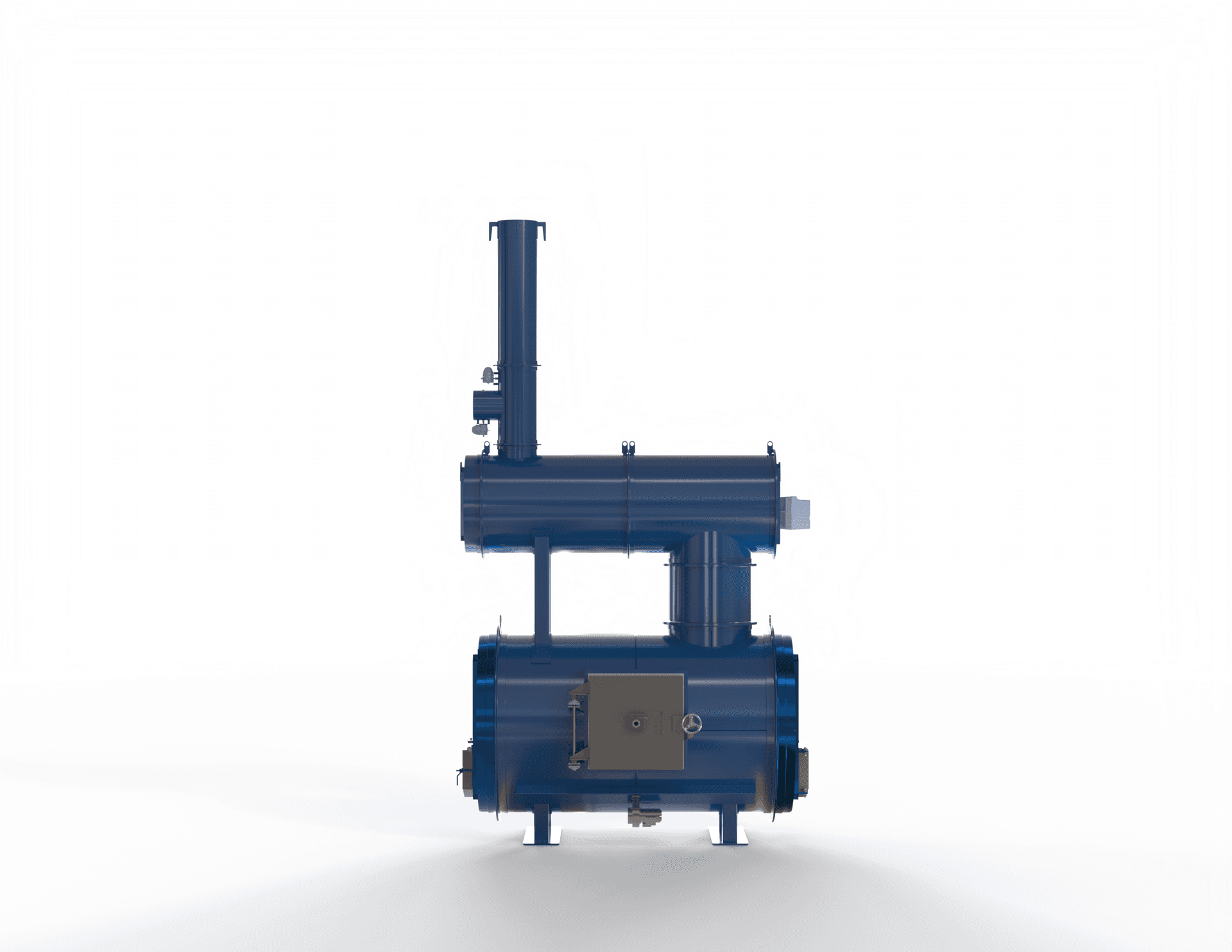
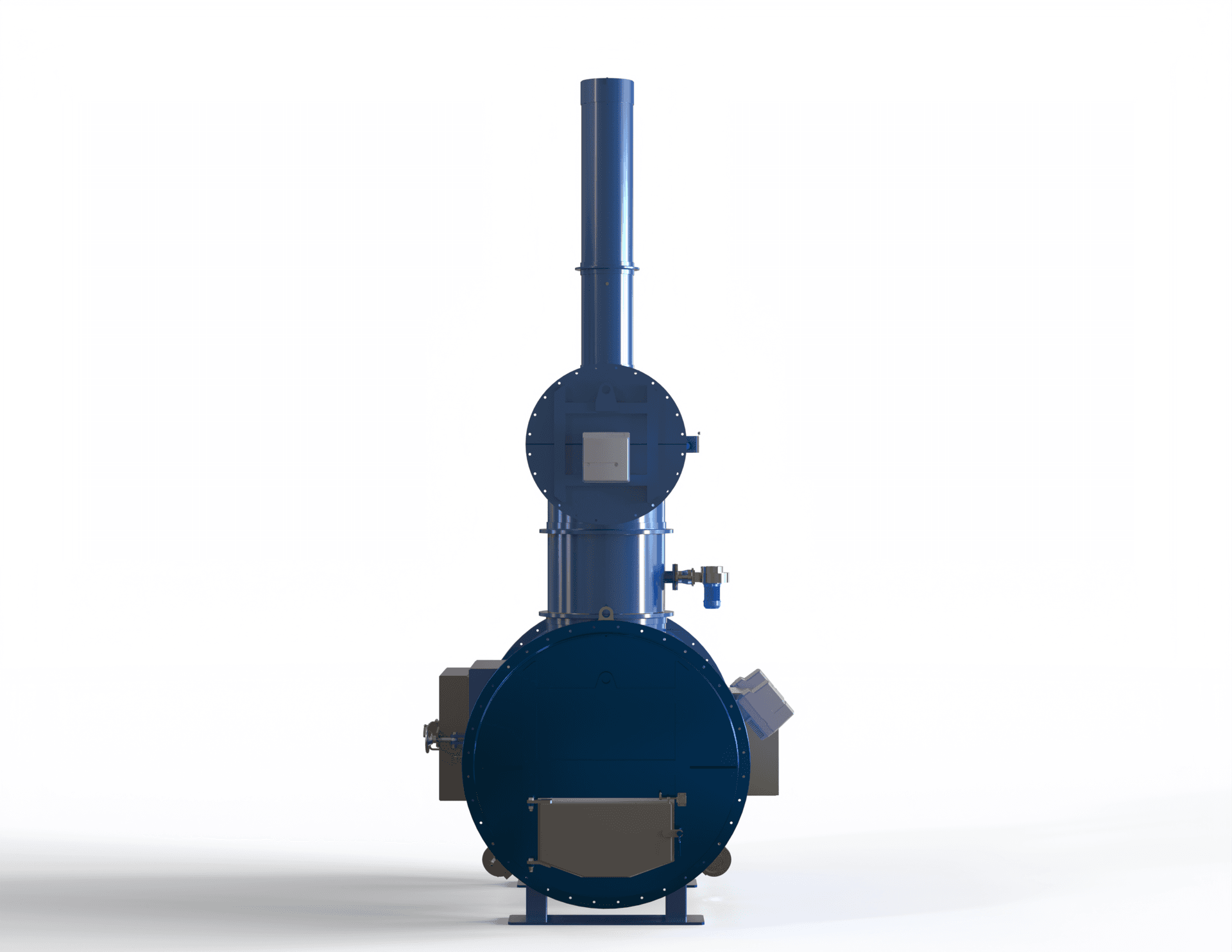
Dual-chamber unit, 1,100°C capable
Primary chamber running 850–1,200°C with a secondary holding flue gas above 850°C for two seconds. Environmental waste is the stream most likely to carry halogenated content — chlorinated solvents in contaminated arisings, salt-laden marine debris, POPs-bearing material — so the 1,100°C condition is stated here rather than treated as an exception.
Front dual-door loading
Charged through a front dual door at floor level, so bulk bags, tote bins and wheeled skips go in at the height a site telehandler already works at. Clearance waste arrives in whatever it was collected in, and it is not decanted.
What Ships
With The Unit
Identical whichever stream it is specified for. The operating procedure changes; the machine does not.
Dual-chamber unit, 1,100°C capable
Primary chamber running 850–1,200°C with a secondary holding flue gas above 850°C for two seconds. Environmental waste is the stream most likely to carry halogenated content — chlorinated solvents in contaminated arisings, salt-laden marine debris, POPs-bearing material — so the 1,100°C condition is stated here rather than treated as an exception.
Front dual-door loading
Charged through a front dual door at floor level, so bulk bags, tote bins and wheeled skips go in at the height a site telehandler already works at. Clearance waste arrives in whatever it was collected in, and it is not decanted.
IP6X control panel with cycle logging
PLC control with chamber thermocouples, interlocked charge door and a time-stamped temperature record per run. For hazardous waste produced and destroyed on one site, that log is the evidence behind a consignment record nobody drove anywhere.
Burner set and fuel train
Configured for natural gas, LPG, diesel, biofuel or hydrogen. This stream runs wet and dirty — flood silt, harbour arisings, screenings — so burner support does more work here than on a dry industrial charge.
Coretex refractory lining
Monolithic castable lining rated for the full range and replaceable in service. Environmental loads swing from saturated to solvent-bearing between one bag and the next, and the lining is specified for that cycling rather than for a steady feed.
Stack, dispersion data and commissioning
Stack to the height your site-specific dispersion assessment calls for, the emissions data pack the permit application references, on-site commissioning, a witnessed first run and operator training. Hazardous scope means a bespoke permit rather than standard rules, and the assessment is the long pole.
How One Burn Runs,
Start To Finish
One run is one countable event, reconciled against a manifest and evidenced by a time-stamped temperature log.
One Cycle,
Start To Finish
Adds 20 03 01 and port reception lines, and one material fact that governs the permit: salt means chlorides, so this stream declares the 1,100°C condition as a matter of course.
Metal, recoverable gear and anything with a reuse route come out. Hazardous finds — cylinders, drums, flares, ordnance-adjacent items — stop the process and go to their own routes.
Beach and screen arisings carry sand and water. Both are mineral or evaporative load that does nothing but slow the burn and swell the ash.
Nets, ropes and pots are cut and bundled so they feed rather than tangle. This is the one stream where the physical form of the waste is the handling problem.
Primary at 850–1,200°C with secondary retention above 850°C, and 1,100°C declared as standard because salt means chlorides in the charge.
Residue carries sand, shell and the metal fraction from gear. It runs well above 3–5% on beach arisings and should be budgeted accordingly.
What You Can Burn —
And What You Can't
One run takes the whole stream without pre-sorting. What must never enter it is a short, hard list.
Yes: accepted in a run
No pre-sorting between these
- Beach clean debrisMixed marine plastics, packaging, rope fragments and general litter collected from the strandline, drained and de-sanded.
- Derelict and end-of-life fishing gearNets, ropes, pots and floats beyond repair or reuse — multi-polymer composites with no recycling route once degraded.
- Harbour trash screen and boom catchFloating debris intercepted by screens, booms and litter traps, mixed with organic matter and saturated.
- Mooring and aquaculture plasticsEnd-of-life buoys, floats, mooring lines and aquaculture consumables, salt-laden and fouled with growth.
- Vessel-generated general wasteOrdinary refuse landed under port reception arrangements — excluding international catering waste, which has its own mandatory route.
- Contaminated absorbents from harbour spillsSorbents and booms used on fuel and oil spills in the harbour, drained to no free liquid.
No: never charged
Not a permit question — these stay out
- International catering waste from vesselsCategory 1 animal by-product requiring APHA-approved destruction under its own scope. Specified on the general waste sector, not folded in here.
- Flares, distress signals and munitions findsPyrotechnics and anything ordnance-adjacent are never charged. Flares have a dedicated disposal route and coastal finds go to the authorities.
- Gas cylinders, fuel tanks and drumsSealed vessels, common in harbour and beach arisings, and unidentifiable until opened by someone qualified to do it.
- Lead-cored line and metal gearLeadline and metal components go to metal recovery under their own classification rather than reporting to ash.
Can you legally burn marine, harbour & beach debris on site?
Technically, yes: the chamber destroys almost everything on the accepted list at 850–1,200°C, and capability is rarely the constraint. Legally is a separate question. What your site is allowed to burn is set by your environmental permit from the Environment Agency, SEPA or NIEA and the waste codes written into it, plus APHA approval, because animal by-products are regulated under their own rules. The never-charged list is different again: those materials are out of scope for the unit or governed by a direction, and no permit wording brings them back in. Send us the codes you hold, or the ones you expect to apply for, and we will tell you which of this list they cover before anything is specified.
Send us your waste codesWhat does a harbour's 1.5 tonnes a week take?
Arithmetic on published model figures, not a customer reference. Your numbers go through the same steps.
How This
Was Worked Out
1,500 kg a week against the LBI-125's 125 kg/h = about 12 hours, or a day and a half, leaving a sandy residue and no landfill run from a coastal yard. The tonnage understates the problem: nets and beach plastics fill the 3.3 m³ chamber long before they reach 125 kg. Cutting and bundling gear before charging changes throughput more than the rating does.
1,100°C — salt means chlorides
Above 3–5%
3.3 m³
2.5 t
Send your daily or weekly arisings and we will confirm the model, the run time and the permit route.
Related Products
& Services
Complementary equipment and engineering services for your process.
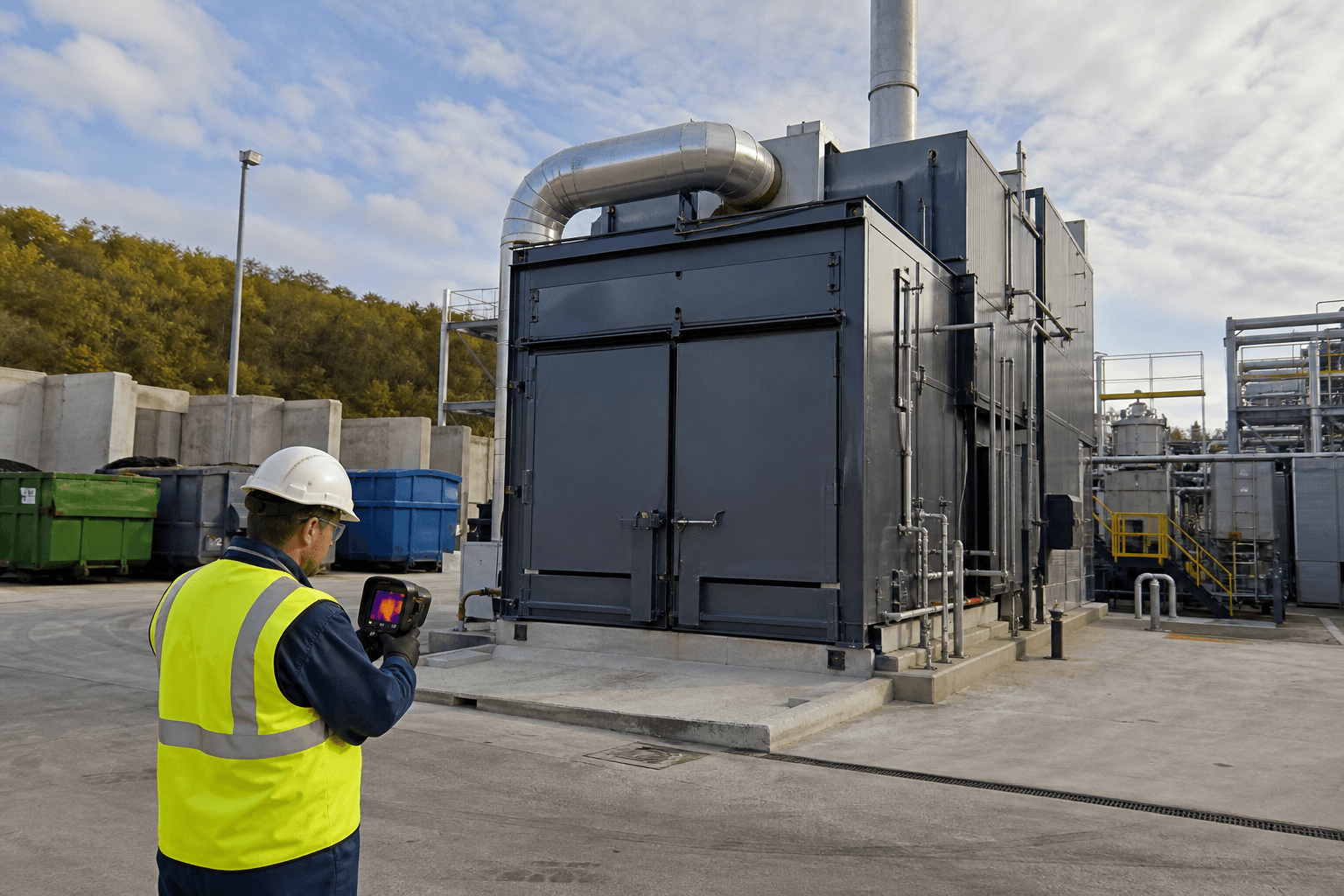
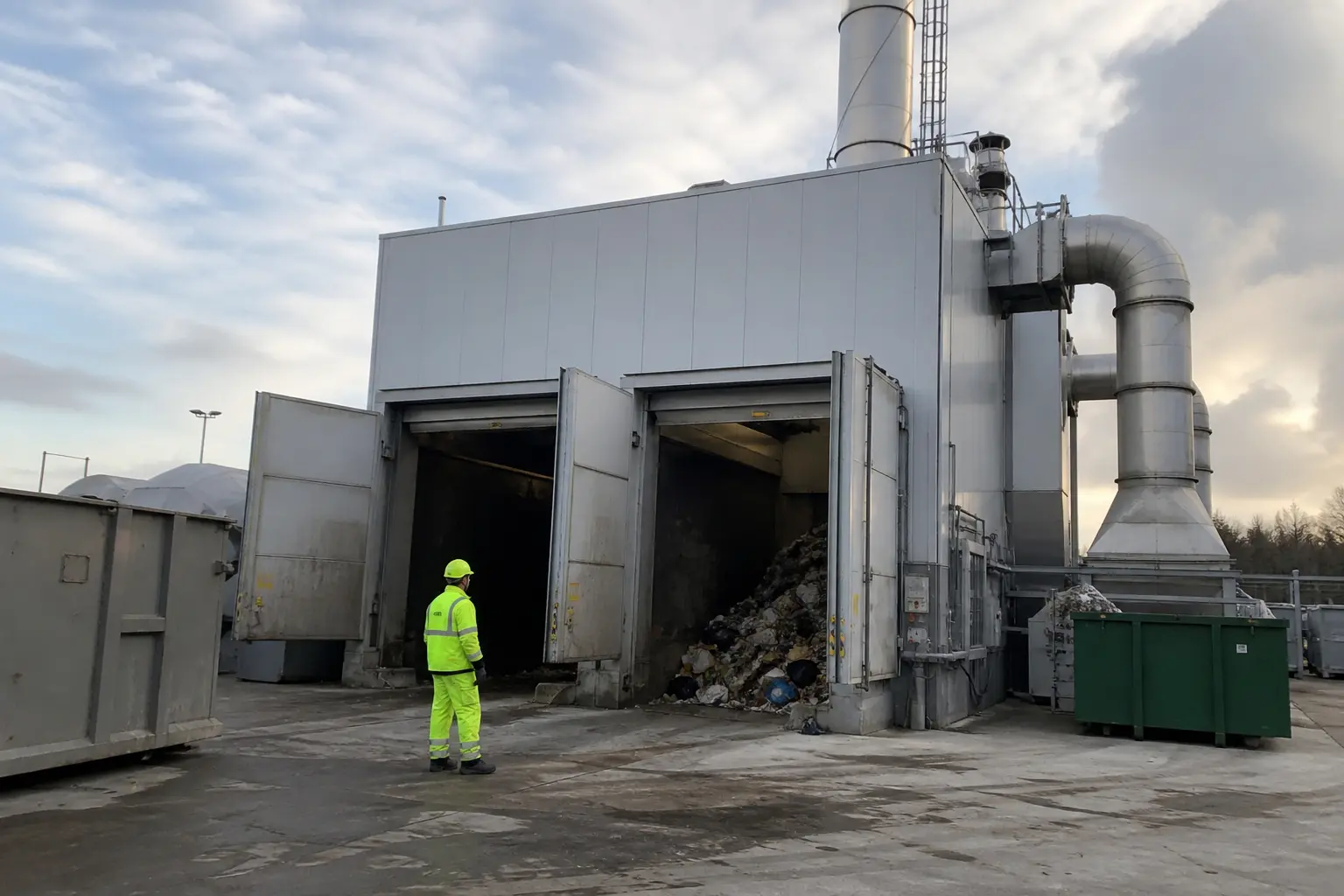
Sizing and background
- [TOOL]Work out the burn rate for your own arisings
- [TOOL]Size the combustion air and flue gas duty
- [BLOG]Ash management from industrial waste incinerators
- [BLOG]Integrating vibration analysis for incinerator predictive maintenance
- [BLOG]Advanced gas cleaning for ultra-low emission incinerators
- [BLOG]Evaluating flue gas cleaning systems in industrial incinerators
Marine, harbour & beach debris Questions
Answered against the published figures for the models specified for this stream, not a generic range sheet.
Marine and harbour arisings are what a coastal operation collects rather than produces: beach clean debris, harbour trash screen and boom catch, derelict and end-of-life fishing gear — nets, ropes, pots, floats — mooring and aquaculture plastics, and the general waste landed from vessels under port reception arrangements. Almost none of it is recyclable in practice. Marine plastics are degraded by ultraviolet and abrasion, contaminated with salt, sand, organic growth and hydrocarbons, and mixed beyond separation. Fishing gear is a composite of several polymers with metal and lead cores. Recyclers who accept clean polymer will not take any of it. Salt is the material fact that shapes the specification. Sodium chloride in the load means chlorides in the charge, so a marine stream should assume it crosses the 1% halogenated organic threshold and declare the 1,100°C secondary condition. It is also a corrosion consideration for the plant, which is a maintenance conversation rather than a permitting one. Waste landed from vessels sits inside the port's reception facility arrangements rather than being ordinary refuse, and international catering waste from vessels is Category 1 animal by-product with its own mandatory route — specified separately on the general waste sector.
1,500 kg a week against the LBI-125's 125 kg/h = about 12 hours, or a day and a half, leaving a sandy residue and no landfill run from a coastal yard. The tonnage understates the problem: nets and beach plastics fill the 3.3 m³ chamber long before they reach 125 kg. Cutting and bundling gear before charging changes throughput more than the rating does.
Because in this condition nobody will take it. Ultraviolet degradation, salt, sand, organic growth and hydrocarbon contamination put it outside every recycler's specification, and fishing gear is a multi-polymer composite with metal cores on top of that. Clean, sortable material should still go for recovery — this is about the fraction that cannot.
It has two effects. Chlorides mean the charge should be assumed to exceed 1% halogenated organic content, so the 1,100°C secondary condition is declared as standard. And salt is corrosive, which is a maintenance and inspection consideration for the plant rather than a permitting one.
Ordinary vessel refuse, yes, under the port's reception facility arrangements and with the codes named. Catering waste from vessels arriving internationally is Category 1 animal by-product with a mandatory approved route, and it is kept entirely separate.
Cut down and bundled. Whole nets and coiled rope tangle and feed unevenly, which is the practical handling problem on this stream — more than composition or moisture. Budget the cutting labour; it changes throughput more than moving up a model size does.
Never charged. Pyrotechnics and anything ordnance-adjacent go to their dedicated routes or to the authorities. Coastal arisings turn them up often enough that it belongs in the written procedure rather than in someone's judgement on the day.
More than the headline figure, because sand and shell do not burn. De-sanding at the landing point is worth the effort on both ends — it reduces the ash and stops mineral load slowing the burn.
Ready to
Incinerate?
Send the stream, the volume and the site constraints. We will confirm the model, the permit route, and what the specification has to say to satisfy the regulator.
- Nobody will recycle it
- Volume, not weight, fills the yard
- Collection routes are long on the coast
- Beach clean programmes stop being disposal-limited